Essential Catalan Phrases You Should Know
If you’re planning a trip to Catalonia or simply want to explore the Catalan language and culture, learning the most common Catalan phrases is essential. Whether it’s ordering food at a restaurant, asking for directions, or introducing yourself to a local, knowing popular Catalan phrases will help you communicate effectively and connect with the people around you. In this section, we’ll introduce you to some of the most useful Catalan phrases that will be essential during your travels or cultural exploration.
So, what are some of the most common Catalan phrases you should know? Keep reading to find out!
Basic Greetings and Expressions
When traveling to Catalonia, it’s always helpful to learn some basic greetings and expressions in Catalan to connect with locals. Here are some essential phrases to get you started:
| Greeting/Expression | Phrase |
|---|---|
| Hello | Hola |
| Goodbye | Adeu |
| Please | Si us plau |
| Thank you | Gràcies |
| Excuse me | Perdoni |
| Do you speak English? | Parles anglès? |
Additionally, here are some common expressions you may find useful:
- Com estàs? – How are you?
- Estic bé, gràcies. I tu? – I’m fine, thank you. And you?
- Què tal? – What’s up?
- Em dic… – My name is…
- Encantat/Encantada – Nice to meet you (male/female)
- No ho sé – I don’t know
With these basic greetings and expressions, you’ll be able to start conversations and communicate with locals, making your time in Catalonia all the more enjoyable.
Introducing Yourself
Introducing yourself is a crucial part of any social interaction, and doing so in Catalan will demonstrate your effort to connect with locals and their culture. Start with a simple greeting, such as “Bon dia” for “Good morning” or “Hola” for “Hello.”
To introduce yourself, say “Em dic [Your name]” which means “My name is [Your name].” You can add “Sóc de [Your nationality] to share your nationality, where “Sóc de” means “I’m from.” For example, “Em dic Maria i sóc de França” means “My name is Maria and I’m from France.
If you want to share more information about yourself, try using ” Tinc [Your age] anys” to say your age, which means “I am [Your age] years old.” You can also say “Sóc [Your job/profession]” to tell others about your job or profession, where “Sóc” means “I am.” For example, “Em dic Joan, i sóc advocat” means “My name is Joan and I am a lawyer.”
Remember to ask the other person’s name and how they are doing by saying “I tu?” which means “And you?” or “Com estàs?” which means “How are you?” You can respond to them with “Estic bé, gràcies” which means “I’m fine, thanks.”
Ordering Food and Drinks
Whether you’re dining at a fancy restaurant or grabbing a quick snack at a local cafe, ordering food and drinks in Catalan can be a fun and cultural experience. Here are some essential phrases to help you communicate your food and drink preferences.
Common Phrases for Ordering in Catalan
The following are some common Catalan phrases you can use to order food and drinks at restaurants or cafes:
| English | Catalan |
|---|---|
| Can we have a table for two, please? | Ens podeu donar una taula per a dos, si us plau? |
| What do you recommend? | Què recomaneu? |
| I would like to order… | Voldria demanar… |
| Can I see the menu, please? | Em podeu donar la carta, si us plau? |
| I’m a vegetarian. | Sóc vegetariana. |
| Could we have some bread, please? | Ens podeu portar pa, si us plau? |
| I’ll have a glass of red/white wine. | Vull un got de vi negre/blanc. |
| Do you have any dessert? | Teniu postres? |
Ordering in Catalan can be an opportunity to try new dishes or beverages that you may not have tasted before. Don’t be afraid to ask for recommendations or to try something new.
Asking for Directions
Getting lost in a new place can be daunting, but with these common phrases for directions in Catalan, you’ll be able to find your way around with ease:
| Phrase | Translation |
|---|---|
| Excuse me, can you help me? | Dispensi, em pot ajudar? |
| Where is…? | On és…? |
| How do I get to…? | Com arribo a…? |
| Is it far/close? | Està lluny/a prop? |
| Turn left/right | Giri a l’esquerra/dreta |
| Straight ahead | Tot recte |
| Thank you for your help | Gràcies per la seva ajuda |
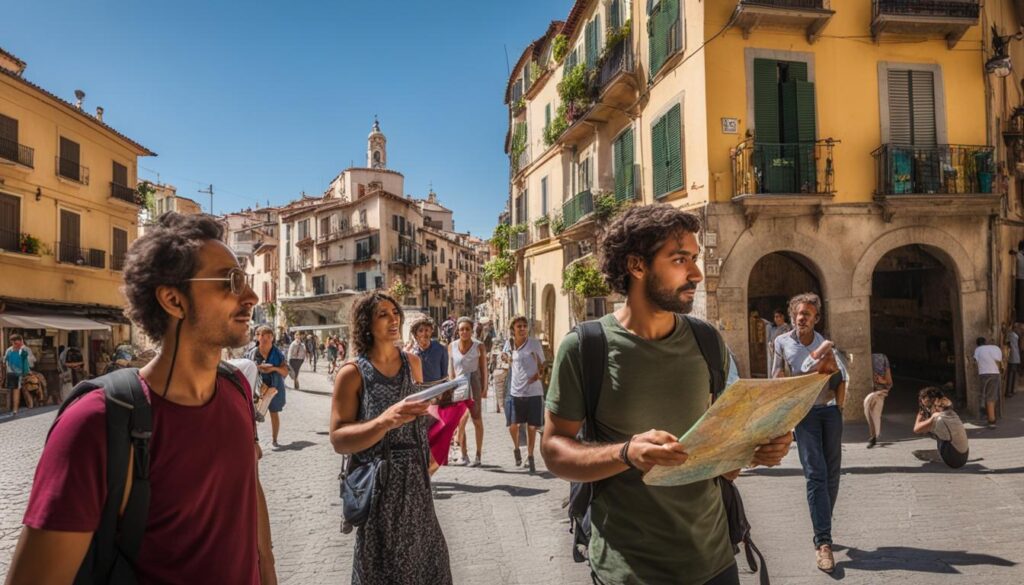
Remember, it’s always helpful to have a map on hand, so you can follow along as locals guide you to your destination. Don’t be afraid to ask for clarification or repetition if you didn’t quite understand the first time. With these useful Catalan phrases, you’ll be navigating Catalonia like a pro in no time!
Shopping and Bargaining
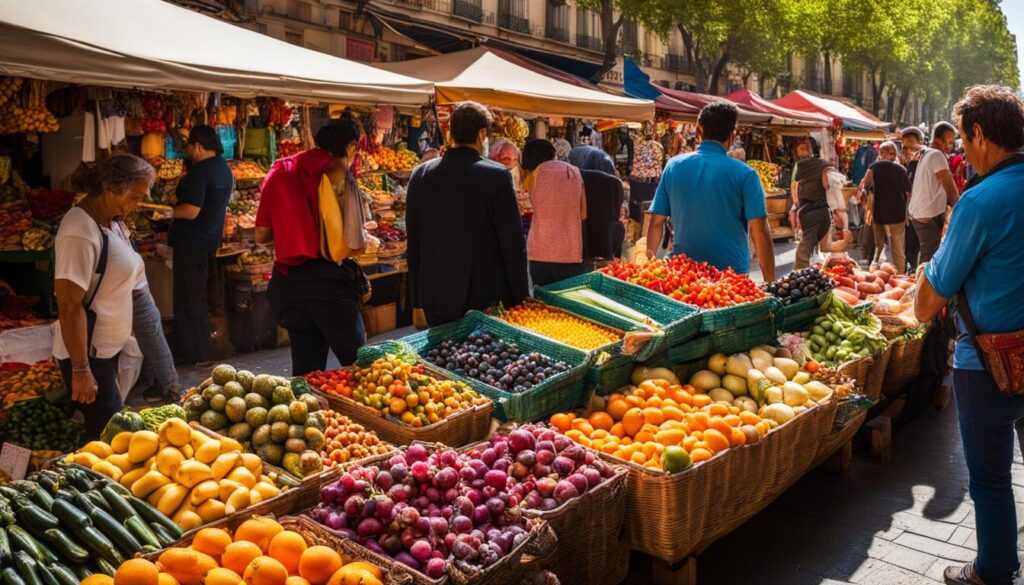
When visiting Catalonia, shopping is an experience not to miss. The souvenir shops and markets are full of unique goods, like artisan crafts, ceramics, local food, and wine. To make the most of your shopping experience, it’s helpful to learn a few Catalan phrases. Many vendors will appreciate your effort to communicate in their language. Here are some common phrases for shopping in Catalan:
- Bon dia – Good morning
- Què em recomana? – What do you recommend?
- Quin és el preu? – What is the price?
- Em pot fer un descompte? – Can you give me a discount?
- Em puc provar això? – Can I try this on?
- Em pot ajudar? – Can you help me?
- Puc pagar amb targeta o necessite efectiu? – Can I pay with a card or do I need cash?
If you want to bargain, keep in mind that it’s not common practice in Catalonia, especially in larger stores. However, you can try bargaining at local markets or street vendors – just don’t be too aggressive or disrespectful. Here are some phrases to help you negotiate:
- Quin és el millor preu que em pot fer? – What’s the best price you can give me?
- Crec que és una mica car, potser podem arribar a un acord? – I think it’s a bit expensive, can we come to an agreement?
- En altres llocs, el mateix producte costa menys. – In other places, the same product is cheaper.
Remember, shopping in Catalonia is not only about getting the best deal, but also about exploring the local culture and enjoying the experience. With some basic Catalan phrases under your belt, you’ll be able to engage with vendors and make the most of your shopping journey.
Transportation Phrases
Getting around Catalonia can be challenging if you don’t speak Catalan. However, with these essential transportation phrases, you’ll be traveling like a local in no time.
| Phrase | Translation |
|---|---|
| Vull anar | I want to go |
| Un bitllet | One ticket |
| On és l’estació de tren / autobús? | Where is the train/bus station? |
| Quan arriba el proper tren / autobús? | When does the next train/bus arrive? |
| Quanta costa un bitllet a … | How much is a ticket to… |
| Per favor, alliberi aquest seient? | Can you please vacate this seat? |
| Quina és la parada per a … | What is the stop for… |
| D’on surt el tren / autobús a … | Where does the train/bus depart for… |
Don’t forget to purchase your transportation tickets in advance to avoid delays and save money. If you’re unsure about which ticket to purchase, don’t hesitate to ask for assistance at the ticket counter. Additionally, keep in mind that some Catalan transportation systems require you to validate your ticket once you board.
Pro-tip: If you’re unsure about how to navigate the transportation system in Catalonia, consider downloading a map or transportation app to your smartphone before you go.
Emergency Situations
While no one wants to anticipate an emergency, it’s always best to be prepared. Here are some common emergency phrases in Catalan that will help you communicate effectively:
| Phrase in Catalan | English Translation |
|---|---|
| Ajuda! | Help! |
| Necessito ajuda mèdica. | I need medical help. |
| Han robat la meva cartera. | My wallet has been stolen. |
| On és l’hospital més proper? | Where is the nearest hospital? |
Remember, it’s always better to err on the side of caution in emergency situations. These phrases will enable you to communicate important information to those around you, helping to ensure a speedy resolution.
Cultural Etiquette
When traveling to Catalonia, it’s important to understand the cultural etiquette to show respect for the locals and enhance your interactions with them. Here are some insights into Catalan cultural customs:
| Cultural Custom | Description |
|---|---|
| Greetings | When greeting someone in Catalonia, it’s common to shake hands and exchange kisses on the cheek. Use formal titles like “Senyor” (Mr.) or “Senyora” (Mrs.) unless you have been invited to use a first name basis. |
| Mealtime | When dining out, it’s important to respect the local custom of eating your meal in its entirety. Refrain from asking for takeout containers and ordering only a few dishes to share. Additionally, be sure to dress appropriately and avoid being overly loud or boisterous. |
| Body Language | Catalans value personal space and may not stand as close to others when speaking as people from other cultures. Touching and other physical gestures should also be used with caution, as they may be seen as invasive or inappropriate. |
By following these cultural customs, you’ll demonstrate a deeper appreciation for Catalan culture and build stronger connections with the locals. Keep in mind that cultural etiquette can vary from region to region, so it’s always good to do a bit of research before you travel.
Miscellaneous Phrases
As you continue to explore Catalonia, there are various everyday situations where these miscellaneous Catalan phrases might come in handy:
- Si us plau – Please
- Gràcies – Thank you
- De res – You’re welcome
- Perdó – Excuse me
- Ho sento – I’m sorry
- Bé – Okay
- No ho sé – I don’t know
- Entenc – I understand
- No entenc – I don’t understand
Remember that learning these phrases can help improve your communication with locals and enrich your experience in Catalonia.
Conclusion
Congratulations! You have now learned the essential Catalan phrases that will help you navigate your travels and gain a deeper appreciation for the local culture in Catalonia. By mastering basic greetings, introductions, ordering food and drinks, asking for directions, shopping, transportation, emergency situations, cultural etiquette, and miscellaneous phrases, you have equipped yourself with a valuable skill set for your time in Catalonia.
Remember to practice these phrases as much as possible, whether it’s through conversation with locals or using language-learning resources. By doing so, you will become more confident in your abilities and enhance your overall experience in Catalonia.
We hope that this guide has been informative and helpful for you. Enjoy your travels and cultural exploration in Catalonia!