

Essential Backpacking Trip Packing List Guide
Are you wondering what to pack for a backpacking trip? Look no further! We’ve got you covered with our comprehensive guide to the must-have backpacking gear. As you plan your next adventure, consider this your go-to packing list for backpacking essentials. From clothing to camping gear and navigation tools to personal care items, we’ve included everything you need to make your trip a success.
Whether you’re a seasoned backpacker or new to the adventure, this guide will help you pack efficiently and effectively. You don’t want to be caught without a crucial item during your backpacking trip, so let’s dive into the essentials.
Not sure where to start? Don’t worry! We’ll cover everything you need to know, and then some. So dust off your backpack and let’s get started on your adventure of a lifetime.
Backpacking Gear Checklist
Embarking on a backpacking adventure requires careful planning and packing. The right gear can make all the difference in your trip’s success. To make sure you have everything you need, we’ve compiled a comprehensive backpacking gear checklist.
Clothing and Footwear
When planning your backpacking packing list, always consider the weather and temperatures you’ll encounter. Will it be chilly at night? Will you be crossing any streams or rivers? Clothing and footwear are crucial for your comfort and safety.
| Item | Qty |
|---|---|
| Moisture-wicking t-shirts | 2-3 |
| Quick-drying pants/shorts | 1-2 |
| Warm fleece or down jacket | 1 |
| Waterproof rain jacket | 1 |
| Hiking boots or shoes | 1 |
| Water sandals or shoes | 1 |
| Wool socks (or synthetic) | 3-4 |
| Warm hat and gloves | 1 |
| Gaiters (optional) | 1 |
Navigation and Safety Gear
Staying safe and on course is crucial for a successful backpacking trip. Be sure to research your route ahead of time and always carry the necessary navigation and safety gear.
| Item | Qty |
|---|---|
| Map and compass | 1 |
| GPS device (optional) | 1 |
| Headlamp or flashlight (with extra batteries) | 1-2 |
| First-aid kit | 1 |
| Bear spray (if necessary) | 1 |
| Whistle | 1 |
Essential Backpacking Gear
Certain pieces of backpacking gear are essential for a successful and comfortable trip. Pack only what you need, leave behind what you don’t.
| Item | Qty |
|---|---|
| Backpack (correct size and fit) | 1 |
| Tent (with rainfly) | 1 |
| Sleeping bag (with sleeping pad) | 1 |
| Cooking stove (with fuel) | 1 |
| Cooking pot and utensils | 1 |
| Water filtration system | 1 |
| Hydration system (water bottles, bladders, etc.) | 2-3 |
| Multi-purpose tool or knife | 1 |
| Sun protection (hat, sunglasses, sunscreen) | 1 |
By following this backpacking gear checklist, you can ensure that you have everything you need for an unforgettable adventure. Remember to pack efficiently and travel safely!
Choosing the Right Backpack
When it comes to backpacking, your backpack is the most important piece of gear. It’s not just a bag; it’s your home on the trail. Choosing the right backpack can make or break your trip, so it’s crucial to select one that fits your needs.
Consider the length of your trip, the terrain you’ll be hiking, and the weight you’ll be carrying. If you’re going on a minimalist backpacking trip, a smaller and lighter backpack may be ideal. Look for a backpack made of lightweight materials and with a minimalist design to keep your load light. Some great backpack options for minimalist backpacking include the Osprey Exos, Gossamer Gear Mariposa, and Granite Gear Crown2.

If you’re going on a longer trip or carrying more gear, a larger backpack may be necessary. Look for a backpack with adjustable straps and hip belts to ensure a comfortable fit. Some great options for longer trips include the Gregory Baltoro, Osprey Atmos, and Deuter Aircontact.
When choosing a backpack, consider the features that are important to you, such as pockets, ventilation systems, and hydration compatibility. Take the time to try on different backpacks and adjust the straps to find the perfect fit.
How to Choose the Right Size Backpack
| Type of Trip | Backpack Size (Liters) |
|---|---|
| Day Trip | 20-35 |
| Weekend Trip | 35-50 |
| Multi-Day Trip (3-5 days) | 50-80 |
| Extended Trip (5+ days) | 80+ |
When selecting a backpack, pay attention to the size and choose one that fits your trip’s length and equipment requirements. Use the table above as a general guide when selecting a backpack for your backpacking trip.
Choosing the right backpack may take some time and effort, but it will be worth it when you’re on the trail with a comfortable and functional pack.
Clothing and Footwear Essentials
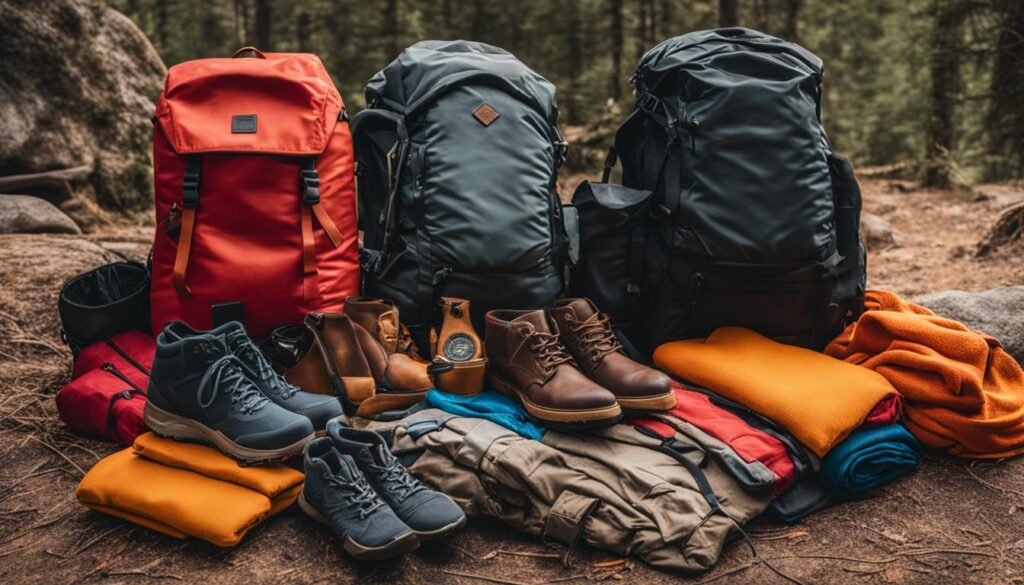
Proper clothing and footwear are essential for any backpacking trip. The right gear will not only keep you comfortable but also protect you from the elements. Here’s a packing list for clothing and footwear essentials:
| Item | Quantity |
|---|---|
| Hiking boots or shoes | 1 pair |
| Moisture-wicking socks | 3-4 pairs |
| Quick-dry pants or shorts | 1-2 pairs |
| Long-sleeved shirt for sun protection | 1 |
| Fleece jacket or sweater | 1 |
| Rain jacket or poncho | 1 |
| Sun hat or beanie | 1 |
| Gloves | 1 pair |
As for packing hacks, roll your clothes instead of folding them to save space. Use packing cubes or stuff sacks to keep your clothes organized and compressible. You can also wear your bulkiest items, like a jacket or boots, on the plane to save space in your backpack.
Don’t forget to break in your hiking boots or shoes before your trip to avoid discomfort or blisters. And always bring an extra pair of socks to keep your feet dry and comfortable.
Essential Camping Gear
When going on a backpacking trip, having proper camping gear is crucial for an enjoyable overnight stay. Here are some must-have items to include in your backpacking gear checklist:
| Item | Description |
|---|---|
| Tent | A lightweight, high-quality tent is an essential component of any backpacking trip. Look for a tent that is easy to set up, spacious enough to comfortably fit you and your gear, and provides adequate protection against the elements. |
| Sleeping Bag | A good quality sleeping bag will keep you warm and comfortable during the night. Look for a sleeping bag designed for backpacking, with a compact size and lightweight construction. |
| Sleeping Pad | A sleeping pad provides insulation and cushioning between you and the ground, ensuring a good night’s sleep. Look for a pad that is lightweight and easy to pack. |
| Cooking Kit | A lightweight cooking kit that includes a stove, fuel, and cooking utensils is essential for preparing meals on your backpacking trip. Look for a kit that is easy to clean and compact enough to fit in your backpack. |
| Water Filtration System | A water filtration system is essential for ensuring access to safe and clean drinking water while backpacking. Look for a system that is effective against a wide range of contaminants and easy to use. |
Remember to pack camping gear that is appropriate for the weather conditions you will encounter on your trip. With the right gear and a well-planned packing list, you’ll set yourself up for a enjoyable and comfortable backpacking experience.

Food and Water Essentials

Proper nutrition and hydration are crucial for any backpacking trip. It is important to pack enough food and water to sustain yourself through the journey. In this section, we’ll cover the must-have food and water items to include in your backpacking packing list.
Water
Water is the most important item to include in your backpacking packing list. Ensure that you have enough water for each day of your trip, at least 2-3 liters per day. It’s important to research water sources ahead of time and bring a reliable water filtration system or water treatment tablets. It’s also a good idea to pack a hydration system, like a hydration bladder or water bottles, for easy access to water while on the trail.
Food
When backpacking, it’s important to pack lightweight and calorie-dense food to keep you fueled throughout the day. Here are some essential food items to include in your backpacking packing list:
| Food Item | Description |
|---|---|
| Energy Bars | Lightweight and packed with calories, energy bars are a convenient and tasty snack while hiking. |
| Nuts | High in protein, fiber, and healthy fats, nuts make for a great nutritious snack on the go. |
| Dried fruits | Another nutritious and tasty snack, dried fruits also provide natural sugars to boost energy levels during long hikes. |
| Cheese and crackers | Protein-packed and carb-heavy, cheese and crackers are a satisfying snack that can be enjoyed as a lunch meal on the go. |
| Instant oatmeal and soups | Easy to prepare and lightweight, instant oatmeal and soups are perfect for a warm and comforting meal at the end of a long day of hiking. |
Make sure to also pack a lightweight stove, cooking pot, and utensils if you plan to cook hot meals on your trip. Remember to pack out any trash and leftover food to leave no trace of your visit.
Navigation and Safety Gear
When venturing into unknown territory, it’s crucial to have the right navigation and safety gear to protect yourself and ensure a safe and successful trip. Here’s a backpacking essentials checklist for navigation and safety gear:
| Item | Description |
|---|---|
| Map and Compass | Don’t rely solely on technology to navigate. Bring a detailed topographic map and a compass to ensure you’re heading in the right direction, and know how to use them. |
| GPS | While a map and compass are essential, a GPS device can be a helpful addition, providing more accurate and continuous updates on your location. |
| Headlamp or Flashlight | When hiking in the dark, a headlamp or flashlight is essential for navigating the trail. Make sure to also bring extra batteries and bulbs. |
| Personal Locator Beacon or Satellite Messenger | In case of an emergency, a personal locator beacon (PLB) or satellite messenger can be a lifesaver, allowing you to send an SOS signal and communicate your location to emergency services. |
| First Aid Kit | A well-stocked first aid kit with essentials like bandages, antiseptic, and pain relievers can help you treat injuries or illnesses on the trail. |
| Bear Spray | If hiking in bear country, bear spray is an essential safety item that could save your life in a potential bear encounter. Make sure to also know how to use it. |
By packing the right navigation and safety gear, you’ll have peace of mind while exploring the wilderness and can focus on the adventure ahead.
Personal Care and Hygiene Items
When packing for your backpacking trip, it’s important to remember personal care and hygiene items to keep yourself clean and healthy. Here are some must-have items for your backpacking packing list:
| Item | Description |
|---|---|
| Sunscreen | Protects your skin from harmful UV rays |
| Bug spray | Helps prevent insect bites and stings |
| Hand sanitizer | Kills germs and bacteria when water isn’t available |
| Toothbrush and toothpaste | Keeps your teeth and mouth clean and fresh |
| Biodegradable soap | Allows you to wash yourself, clothes, and dishes while minimizing environmental impact |
| Quick-drying towel | Used for drying yourself and cleaning up spills |
| Tissues or toilet paper | Used for personal hygiene and bathroom needs |
| Feminine products | For menstrual needs |
It’s important to keep these items in a waterproof bag to prevent moisture damage and leakage onto other items in your backpack.
Remember to pack out all trash, including used hygiene products, following Leave No Trace principles to minimize human impact on the environment.
Electronics and Accessories
While backpacking, you may want to have some essential electronics and accessories to enhance your overall experience. Here are some items to consider including in your backpacking gear checklist:
| Item | Description |
|---|---|
| Headlamp or flashlight | A headlamp or flashlight is essential for navigating in the dark. Make sure to bring extra batteries or a rechargeable option. |
| Solar-powered charger | A solar-powered charger can come in handy to keep your electronics charged during your backpacking trip. |
| Camera | Don’t forget to bring a camera to capture all the beautiful moments of your trip. Opt for a lightweight, durable option if possible. |
| Portable speaker | If you want to listen to music or podcasts while relaxing at your campsite, a portable speaker can make it more enjoyable. Choose a waterproof, lightweight option. |
| GPS device | A GPS device can be a lifesaver if you get lost. Make sure to bring a backup map and compass in case your device’s battery dies. |
Remember to only bring essential electronics and accessories to avoid adding unnecessary weight to your backpack. Don’t forget to pack them in waterproof bags to avoid damage from water or extreme weather conditions.
Miscellaneous Essentials
Aside from the backpacking essentials and must-have backpacking gear, there are a few miscellaneous items that can come in handy during your trip. These items include:
| Item | Description |
|---|---|
| Multi-tool | A versatile tool that includes pliers, knife blades, saws, and other useful functions. |
| Bear spray | A type of pepper spray formulated to deter aggressive bears and other wildlife. |
| Quick-dry towel | A compact towel that dries quickly and takes up less space in your backpack than a regular towel. |
| Insect repellent | To keep those pesky insects at bay while you’re on the trail. |
| Headlamp | A lightweight, hands-free light source for navigating in the dark. |
These miscellaneous essentials can make your backpacking trip more comfortable and safe. Consider adding them to your packing list!
Packing Tips and Tricks
When backpacking, packing efficiently is essential to make your trip more comfortable and enjoyable. Here are some valuable packing tips and tricks to help you optimize space and lighten your load:
- Roll your clothes: Instead of folding, roll your clothes to save space and reduce wrinkles.
- Use packing cubes: Packing cubes are a great way to compartmentalize your items, making them easier to find and reducing clutter in your backpack.
- Fill all the empty spaces: Utilize every bit of space in your backpack by filling empty spaces with smaller items like socks or toiletries.
- Choose multi-purpose items: When selecting gear and clothing, choose items that can serve multiple purposes to reduce weight and save space.
- Limit toiletries: Only pack the essentials for personal care and hygiene to save space and reduce weight. Consider using dry shampoo or wet wipes instead of bulky liquids.
- Wear your heaviest items: If you’re bringing heavier items like boots or a jacket, wear them instead of packing them to save space and reduce weight in your backpack.
By using these tips and tricks, you can pack more efficiently and be better prepared for your backpacking adventure.
Final Thoughts on Backpacking Packing List and Gear Checklist
With this comprehensive backpacking packing list and gear checklist, you are now well-equipped to embark on your backpacking adventure with confidence. Remember, personalization is key, and you should always pack based on your unique needs and preferences.
Whether you are a minimalist backpacker or prefer to pack a bit more, be sure to prioritize the essential items outlined in this guide. Your backpacking gear and equipment list should include the must-have gear, clothing and footwear, camping essentials, food and water items, navigation and safety gear, personal care items, electronics and accessories, and miscellaneous items.
Don’t forget to utilize some of the packing tips and tricks outlined in this guide to optimize space and lighten your load. And lastly, stay safe and have fun on your backpacking adventure!
We hope this backpacking packing list and gear checklist has been helpful in preparing you for your trip. Happy travels!


