Easter Island’s Top 10 Activities & Must-Sees
Why is Easter Island, the most remote place with people on it, a must-visit for people all over the world?
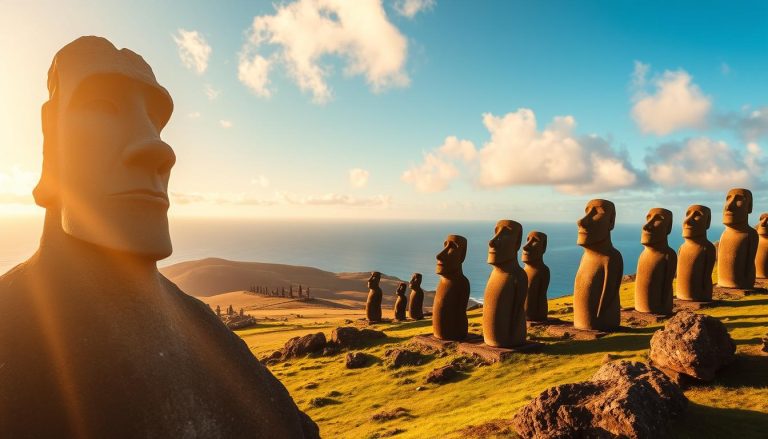
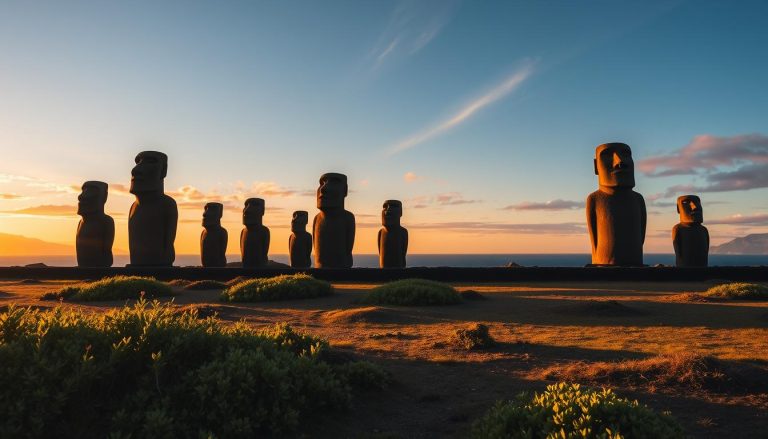
Easter Island, or Rapa Nui, lies over 4000 kilometers away from South America. It’s more than just a remote spot; it’s a door into the old Rapa Nui culture and their amazing moai statues. In this guide, discover Easter Island’s top 10 attractions that mix adventure, history, and stunning views.
See the famous Ahu Tongariki with its 15 moai. They show the island’s strong spirit. At Anakena Beach, you’re greeted by awesome sculptures. This guide points out Easter Island’s spots you can’t miss. The history in places like Rano Raraku and Orongo will make you want to explore more.
Find out when to see amazing views from Rano Kau or swim in clear waters near the underwater moai. Renting a car costs about US$80 a day. You can also rent surfboards for half a day at US$22. Easter Island has lots of activities for every visitor.
Are you eager to learn about Father Sebastian Englert at the museum with no entry fee? Or see the detailed petroglyphs at Papa Vaka? Let this guide lead the way. You’ll discover the best of Easter Island’s top 10 sights and activities.
Ahu Tongariki
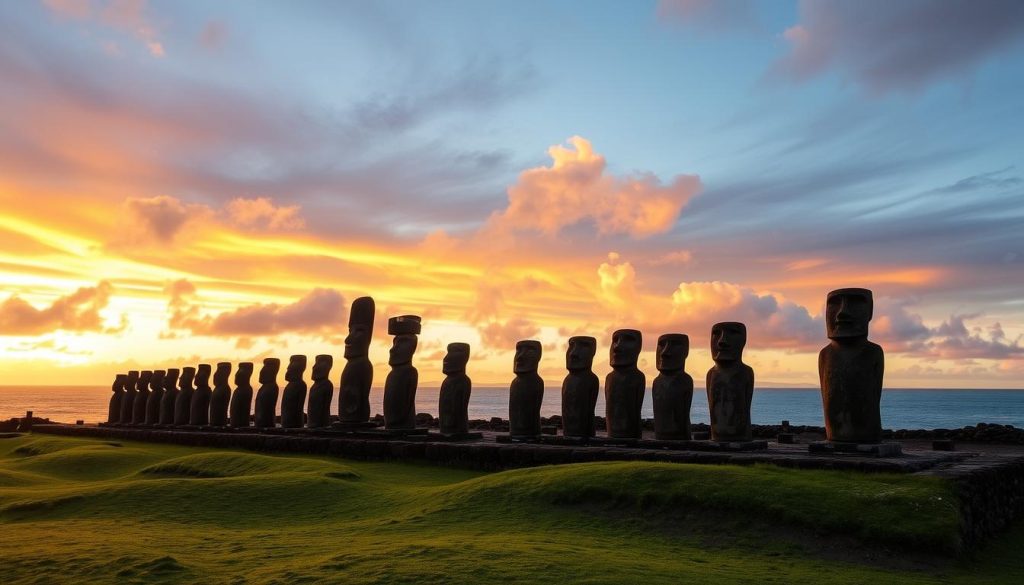
Ahu Tongariki is the biggest ceremonial site on Easter Island, known for its 15 grand moai statues. These statues stand at an average of 13 feet tall and weigh over 14 tons. They were carved from stone from 1250 to 1500 AD. This place is a key landmark on Easter Island. It offers a view that shows the island’s mystery and beauty.
The Iconic Moai Statues
The 15 moai statues at Ahu Tongariki are some of the island’s most amazing creations. They show the ancient Rapa Nui people’s skill in crafting. These statues look stunning at sunrise, creating a beautiful scene in the early morning light. A visit here lets you explore the history of the moai. It is also a top activity on Easter Island.
Best Time and Tips for Visiting
For the best visit, come to Ahu Tongariki at dawn. This gives you cooler weather and fewer people around. Sunrises here are usually between 7:20 AM and 8:30 AM in the summer (January to March). Plan to come at this time for beautiful views and to miss the big tour groups. Remember to bring a jacket for the cold morning and a camera to take pictures of this iconic spot.
Rano Raraku
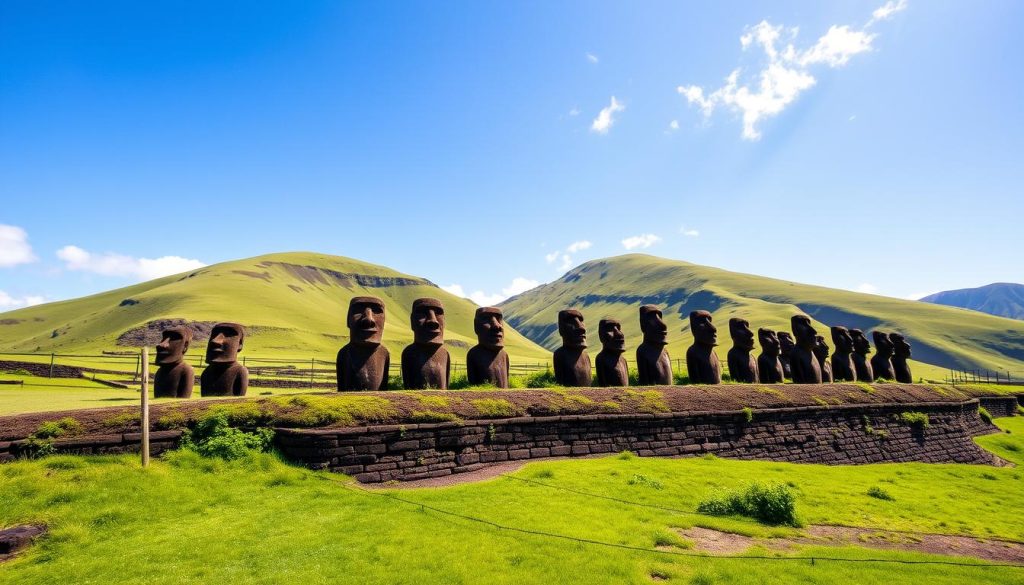
Rano Raraku is the main quarry on Rapa Nui, known for its role in Easter Island’s history. It’s filled with unfinished Moai statues. These figures show how the Rapa Nui people once made sculptures.
The Moai Quarry
Rano Raraku is where most of the iconic Moai statues were made. The statues can be really tall, with some over 30 feet. This site produced about 95% of all Moai. Many still remain today, half carved and connected to the rock.
Historical Significance
Rano Raraku isn’t just any historic site on Easter Island. It’s a place where intense work met cultural rituals. Visitors can see this for themselves. They pay around $80 USD for a ticket that lasts two weeks. For the best experience, take a guided tour. Be ready to walk over some rocky paths.
Quick Facts
| Aspect | Details |
|---|---|
| Location | 15 kilometers from Hanga Roa |
| Entrance Fee | $80 USD per person |
| Statues Height | Up to 30 feet |
| Percentage of Moai Carved | Approximately 95% |
Anakena Beach
Anakena Beach is the biggest and prettiest beach on Easter Island. It’s known for its golden sands and clear waters. This contrasts with the mostly rocky coast of the island. It’s a key spot for anyone visiting, blending natural beauty with historical depth.
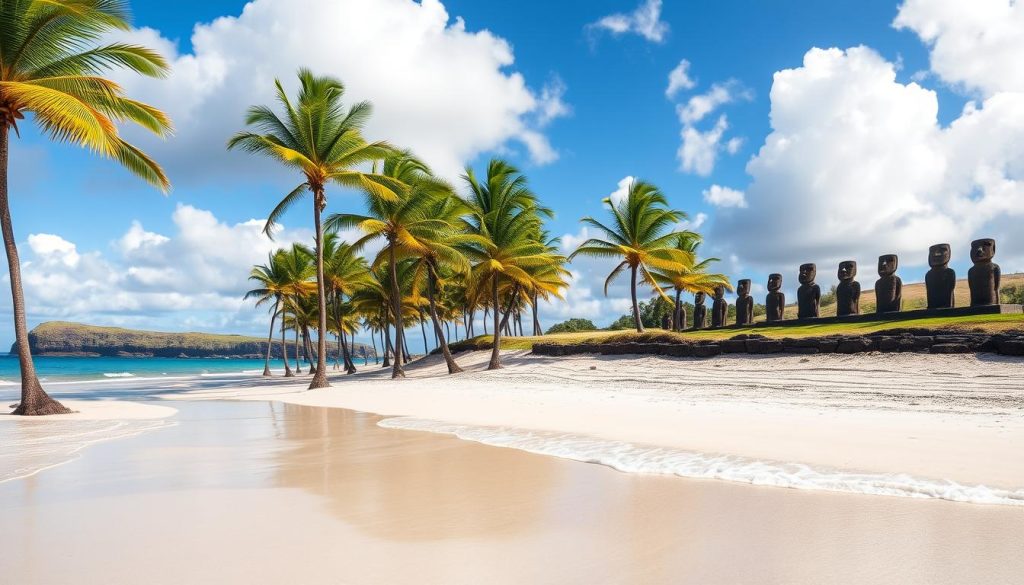
The beach has a long history, dating back to 700-1000 AD. It’s where King Hotu Matu’a first landed, starting the island’s history. Today, Anakena Beach relaxation is easy to find. There are a couple of restaurants and some souvenir shops by the water. Visitors usually stay for an hour or two, enjoying the water and calm environment.
Anakena isn’t just for relaxing; it’s also a top site on Easter Island. You’ll see wild horses and a lovely coconut grove around it. Plus, eight moai statues stand guard over the beach. These statues make the beach a great place for sunbathing, swimming, and enjoying the view.
Going to Anakena Beach is free, which is great for those watching their budget. But remember, getting to Easter Island can be costly. LATAM is the only airline flying there, with routes from Santiago, Chile, or Tahiti.
The best time for a relaxing visit to Anakena Beach is between January to March. This is summer in the southern hemisphere, offering warm weather and long days. With its rich history, cultural significance, and natural beauty, Anakena Beach stands out as a prime location on Easter Island.
Ahu Nau Nau
Ahu Nau Nau is located at the beautiful Anakena Beach. It’s one of the top spots to visit on Easter Island. Here, you get to see moai statues that are very well-kept. Some even have red scoria topknots on them.
Historical Moai with Topknots
At Ahu Nau Nau, the moai stand out because of their intricate details. They have topknots made from red scoria, giving them a unique look. These statues have been protected by sand for a long time. This has kept them from weathering away.
This careful preservation lets us see the ancient artistry almost as it was. It shows how skilled the Rapa Nui people were at carving and inscribing.
Restoration and Preservation
The moai at Ahu Nau Nau got a new lease on life thanks to work done by archaeologists in the late 20th century. This work highlights how vital it is to look after places like Easter Island. Experts took them apart and put them back together carefully. They made sure the statues would last longer and still mean something to us.
Nowadays, the focus is on keeping the effects of weather and visitors from harming these statues. This shows the island’s dedication to keeping its history alive for all to see in the years to come.
| Aspect | Details |
|---|---|
| Location | Anakena Beach |
| Topknots | Red Scoria |
| Preservation | Buried in sand for centuries |
| Restoration Year | 1978 |
Ahu Akivi
Ahu Akivi is a remarkable site in the middle of Easter Island. It is known for its unique setup compared to other landmarks. Here, unlike most moai that look towards the land, the seven moai at Ahu Akivi look towards the sea. This special setup does not just make the scene more beautiful. It also shows the important role these statues had in watching the stars.
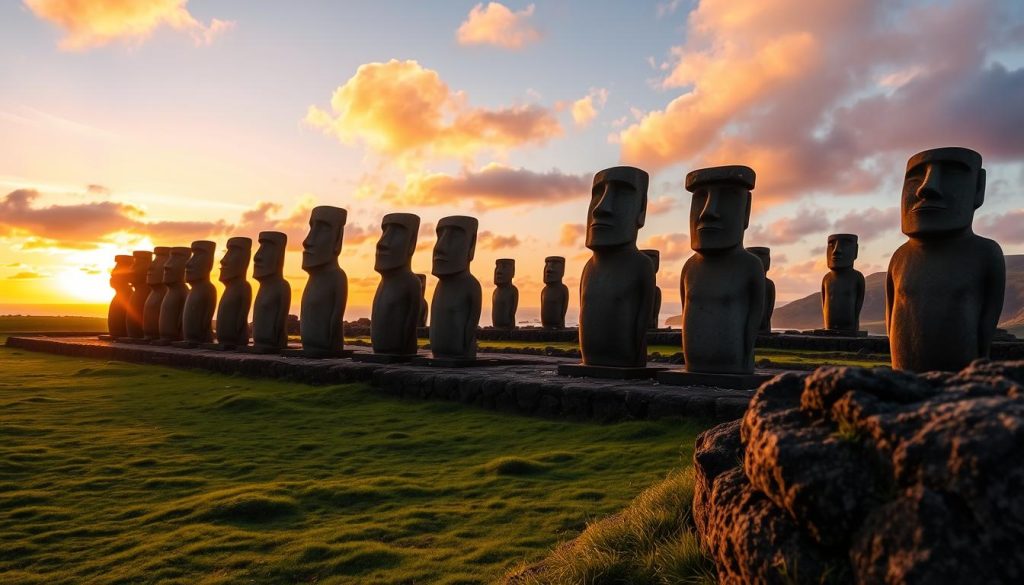
These moai are lined up with the sunset at the spring equinox and the sunrise at the fall equinox. This shows how much the Rapa Nui people knew about astronomy. For visitors to Ahu Akivi, this place offers a deep look into the island’s rich culture.
If you’re planning a trip to Easter Island, don’t forget to buy the National Park ticket. It costs about $80 USD each. This ticket lets you into many special places, including Ahu Akivi, for two weeks. So, you can see all the important sites on the island at your own speed.
Here’s a table to help you plan your visit to Ahu Akivi and other sites on Easter Island:
| Activity | Details |
|---|---|
| National Park Ticket | $80 USD per person, valid for 2 weeks |
| Number of Moai at Ahu Akivi | 7 |
| Typical Moai Height | Up to 30 feet |
| Best Time to Visit | Spring and Fall Equinox |
| Notable Features | Ocean-facing moai, Astronomical Alignment |
Rano Kau
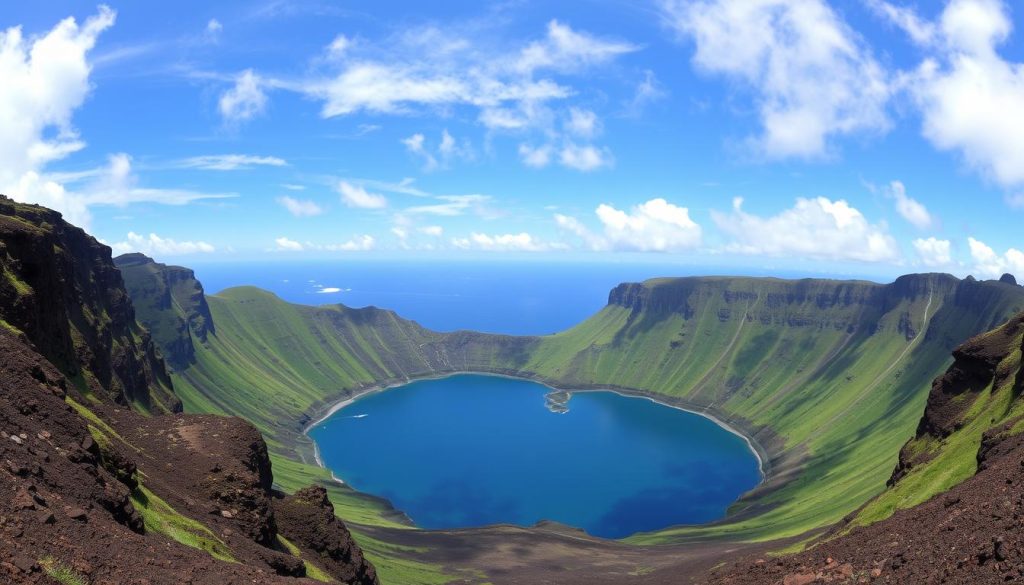
Rano Kau, the highest of the three volcanoes on Easter Island, showcases the island’s ancient charm. It has a stunning crater lake and lush ecosystem, drawing visitors from around the world. This spot is a must-see for its natural beauty.
Extinct Volcano and Crater Lake
Rano Kau, an extinct volcano, captures imaginations with its vast crater. A freshwater lake, full of life, sits in this crater. This creates a vibrant oasis in a typically dry area. A hike around the crater is a journey through breathtaking views. It offers a chance to deeply connect with Easter Island’s beauty.
Flora and Fauna in the Crater
The crater of Rano Kau is a haven for diverse plant and animal life. Here, unique reeds grow, important to local traditions. Nature lovers will find the area’s biodiversity fascinating. It’s more than a hike; it’s a chance to see Easter Island’s ecosystem up close.
Best Views and Photo Spots
The views from the crater’s edge are incredible. The lookout point provides broad vistas of the ocean and island. This makes it a top spot for photos in Easter Island. For those short on time, driving to the viewpoint is an option. This lets visitors enjoy the scenery and take stunning photos.
Orongo
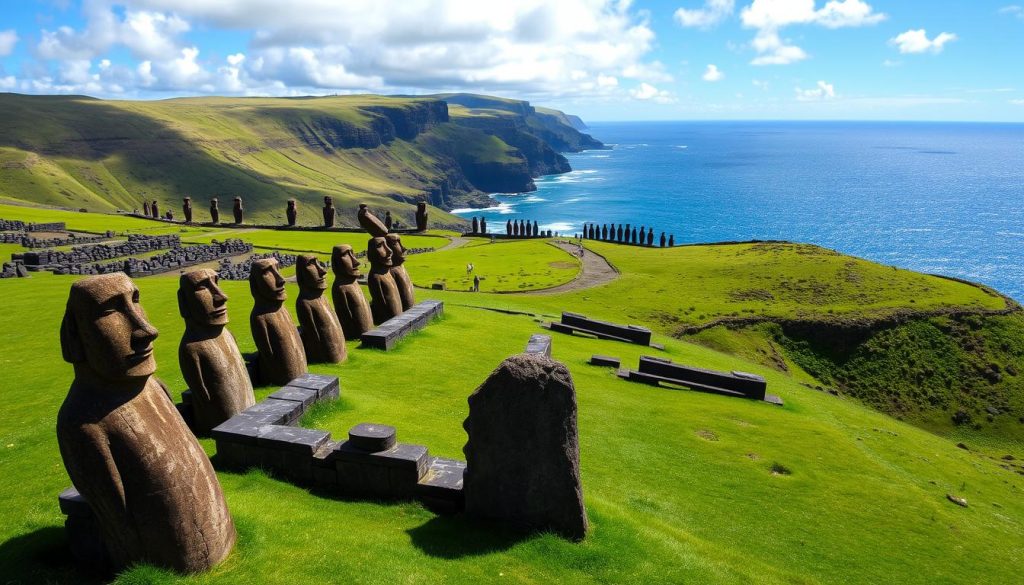
Visiting Orongo lets you dive into Easter Island’s rich history. It’s perched on a cliff by Rano Kau. From here, you can learn about the ancient traditions of Rapa Nui. Orongo is famous for its history and the Birdman competition, a key part of the Easter Island festivals.
Ceremonial Village
Orongo is not just a beautiful spot. It’s an old village filled with myths and history. It has 53 stone houses with small doors and grass roofs. These were used during the Birdman competition. The site shows the Rapa Nui people’s unique culture and dives into their community life and beliefs.
The Birdman Competition
The Birdman contest is core to Rapa Nui’s ancient traditions. It was an annual contest to find the island’s leader. Competitors swam to Motu Nui, got a sooty tern’s egg, and brought it back to Orongo. This challenge showed strength and linked human and divine worlds. Today, Orongo’s visitors see this event’s traces and learn about Easter Island’s culture.
| Feature | Detail |
|---|---|
| Type | Ceremonial Stone Village |
| Historical Significance | Annual Birdman Competition |
| Main Attraction | 53 Stone Houses |
| Key Activity | Egg Retrieval Race |
| Location | Atop Rano Kau’s Cliff |
Hanga Roa Church
In the heart of Easter Island sits Hanga Roa Church. This special church shows how Christian and Rapa Nui elements come together, making it a must-see spot. The building’s design is a treat for the eyes, mixing traditional styles with local symbols. It feels calm and spiritually uplifting.
Inside, wooden carvings showcase biblical stories with a local twist. This mix of beliefs and art is truly intriguing. A visit lets you see how the island’s faith is both ancient and blended.

The church isn’t just for prayer; it’s also key to Easter Island’s culture. Walking its halls, you might see locals keeping traditions alive. This gives deep insight into the islanders’ spirituality. It stands out as a rich cultural spot in Easter Island.
Remember, Hanga Roa Church is an active, sacred spot. Dress and act respectfully. Going to Sunday services can deepen your understanding of local beliefs. This will make your trip even more memorable.
Father Sebastian Englert Anthropological Museum
When you visit the Anthropological Museum, you discover Easter Island’s rich history. The Father Sebastian Englert Museum, founded in 1973, has around 15,000 objects. These collections give a deep look into the island’s cultural legacy.
Artifacts and Exhibits
Among the museum’s items are stone tools and the unique moai coral eye. The collection highlights toki (hatchets) and hoe (knives). These exhibit the island ancestors’ ingenuity and craftsmanship. The Permanent Exhibition Hall shows a part of the collection. It offers a vivid peek into Easter Island’s past.
The museum welcomes visitors from Tuesday to Friday, 09:30 to 17:30, and weekends and holidays from 09:30 to 12:30. It is closed on Mondays and certain holidays like December 25th, January 1st, Good Friday, and May 1st. Entry to the Anthropological Museum is free. This makes it easy for all who wish to learn about Easter Island’s history.
The Legacy of Father Sebastian Englert
Father Sebastian Englert’s legacy is an integral part of the museum. He spent 30 years on Easter Island, passing away in 1969. His work included gathering and protecting Rapa Nui’s artifacts and culture. His notable works, like the Rapanui-Spanish Dictionary (1938) and The Land of Hotu Matu’a (1948), enriched our knowledge of Easter Island.
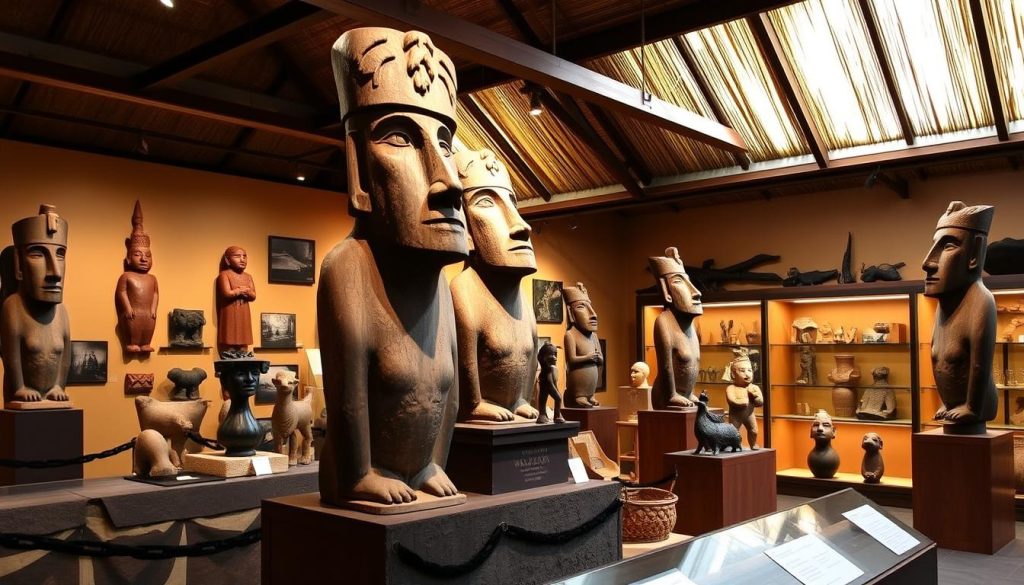
Honoring Father Sebastian Englert’s legacy deepens our appreciation for the museum’s anthropological treasures. Visiting the Anthropological Museum, you do more than see artifacts. You honor the memory of a man who gave his life to save and explore Rapa Nui’s culture and history.
Top 10 Things to Do in Easter Island
Exploring Easter Island is an unforgettable adventure. It is full of amazing places, rich culture, and special activities. This guide on Easter Island activities will help you enjoy your trip fully.
- Moai Statues at Ahu Tongariki: See the amazing Moai statues at Ahu Tongariki. It’s the biggest ceremonial area on the island.
- Rano Raraku: Learn about the past at Rano Raraku. This quarry is where the Moai statues were made. It shows the island’s ancient culture.
- Anakena Beach: Enjoy the white sands of Anakena Beach. It has a rich history as the first place Easter Island’s settlers arrived.
- Ahu Nau Nau: Check out Ahu Nau Nau. It has well-kept Moai statues with unique topknots, beautifully restored.
- Ahu Akivi: See Ahu Akivi’s Moai statues facing the sea. This offers a special view of these ancient figures.
- Rano Kau: Climb the extinct volcano, Rano Kau. Enjoy the stunning views of the crater lake, amidst lush greenery.
- Orongo Ceremonial Village: Visit Orongo village. It’s known for detailed petroglyphs and the yearly Birdman contest.
- Hanga Roa Church: Experience the religious life at Hanga Roa Church. It blends Rapa Nui traditions with Catholic symbols.
- Father Sebastian Englert Anthropological Museum: Explore the island’s history at this museum. It displays artifacts and exhibits from Rapa Nui.
- Tapati Rapa Nui Festival: Try to visit during this lively festival in February. It showcases traditional music, dance, and contests, celebrating island culture.

Wondering what to do in Easter Island? These top sights offer a look into its exciting history and beauty. Easter Island mixes adventure with cultural discovery. It promises a journey you’ll never forget.
Follow this Easter Island activities guide to plan your visit. Make sure you see all the best spots. Each place and activity will make your trip more meaningful. You’ll connect deeply with the island’s unique history and its beautiful landscapes.
Petroglyphs at Papa Vaka
The petroglyphs at Papa Vaka are Easter Island’s amazing art wonders. They show the ancient Rapa Nui’s symbolic language. Situated about 2,300 miles from the closest populated island, these carvings offer a peek into the island’s vast cultural history.
Historical Rock Carvings
Visiting Papa Vaka lets you discover petroglyphs that are centuries old. These carvings cover many topics, like ocean creatures and sky symbols. They give us a cool look into Rapa Nui’s beliefs and everyday life. The detailed art of Easter Island shows the people’s strong bond with their surroundings.
Birdman Figure
The Birdman is a major icon found in Papa Vaka tours. He’s big in Rapa Nui myths and their yearly Birdman contest. The Birdman carvings reveal the story’s importance and help us grasp the island’s traditions and beliefs.
Best Times to Visit
For the best petroglyph viewing, come early morning or late afternoon. These hours give the nicest light. Although the sun can be strong, a good sunscreen can protect you. This soft light also makes it easier to see the carvings’ fine details. Don’t forget to add Papa Vaka’s incredible art to your trip list.
Here’s a table to help you plan:
| Aspect | Details |
|---|---|
| Location | 2,300 miles from Pitcairn Island; 2,290 miles from mainland Chile |
| Best Light Conditions | Early mornings or late afternoons |
| Average Temperature | 60°F (15°C) to 77°F (25°C) |
| UV Index | High; suggested SPF 50 sunscreen |
Conclusion
Easter Island is a truly special place that draws people from all corners of the globe. Sitting 3,746 kilometers west of Chile, it’s also called Rapa Nui. This island is not just remote; it’s filled with rich culture and history. The famous moai statues, beautiful Anakena Beach, and volcanic craters like Rano Kau give us a peek into an ancient civilization.
It’s important to know how to get to Easter Island. You can fly directly from Santiago. Keep in mind, flight schedules change in peak and low seasons. Tickets can cost up to $1,200 USD during busy times. So, planning ahead can save you money. Once there, you’ll find amazing archaeological sites, breathtaking landscapes, and a deep history that you won’t forget.
Easter Island is more than a travel spot; it’s a symbol of human spirit and creativity. There are efforts to protect its unique culture for the future. By using these travel tips, you can dive deep into the wonders of Easter Island. You’ll be touched by the mysterious moai and the island’s incredible views. Easter Island offers a journey that’s both moving and memorable.