Discover the Incredible Geothermal Wonders in Rotorua
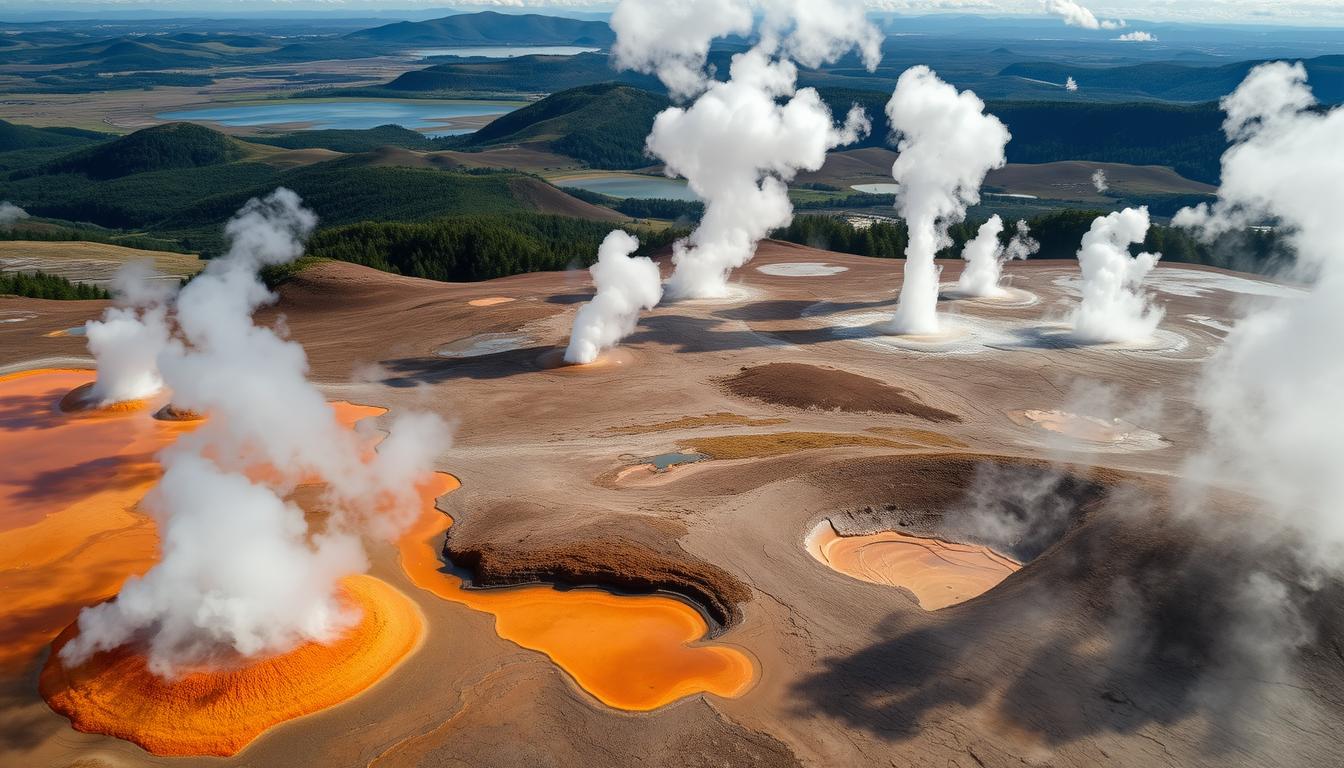
Are you ready to see one of the Earth’s most amazing sights? Rotorua’s landscape shows the incredible power of our planet.
Unique geothermal sights like spouting geysers and colorful sinter terraces are truly mesmerizing. They have amazed visitors for centuries.
Exploring this geothermal wonderland reveals nature’s incredible artistry. The area’s must-see spots are truly amazing. This makes Rotorua a place unlike any other.
The Volcanic Wonderland of Rotorua: New Zealand’s Geothermal Hotspot
Exploring Rotorua reveals its special spot in the Taupo Volcanic Zone. This area is famous for its geothermal activity. It’s part of the Pacific Ring of Fire, a zone of intense seismic and volcanic activity.
This zone stretches from New Zealand, along Asia’s eastern edge, through the Philippines, Japan, and the Aleutian Islands. It goes down the western coast of North and South America.
The Taupo Volcanic Zone: Understanding Rotorua’s Location
Rotorua is in the Taupo Volcanic Zone, known for extensive volcanic activity. This zone is 300 kilometers long and 50 kilometers wide. It goes from Mount Ruapehu in the south to White Island in the north.
The zone has many volcanoes, including Mount Tarawera, which erupted in 1886. It’s also famous for its geothermal features like hot springs, geysers, and mud pools. These features come from groundwater and hot rocks beneath the surface.
A Brief History of Volcanic Activity in the Region
Rotorua’s volcanic history is long and complex, spanning thousands of years. The most recent big eruption was Mount Tarawera in 1886. This eruption was so powerful it changed the area’s landscape, creating new geothermal features.
Some key events in Rotorua’s volcanic history include:
- The formation of Lake Rotorua around 240,000 years ago
- The eruption of Mount Tarawera in 1886
- Ongoing geothermal activity that continues to shape the region
The Science Behind Rotorua’s Geothermal Activity
Under Rotorua’s surface, a lively geothermal system works its magic. It’s the reason for the hot springs, geysers, and colorful minerals. This system comes from the area’s special geology. Here, groundwater meets hot rocks, creating the sights and sounds Rotorua is famous for.
How Geothermal Features Form
Features like hot springs and geysers in Rotorua start with groundwater and Earth’s heat. Rainwater goes down, gets hot, and then comes back up. This water can cool and form pools or shoot up as geysers, based on its pressure and temperature.
The area’s volcanic past also plays a part. The Taupo Volcanic Zone brings the heat and the right structures for these activities.
Unique Minerals and Their Vibrant Colors
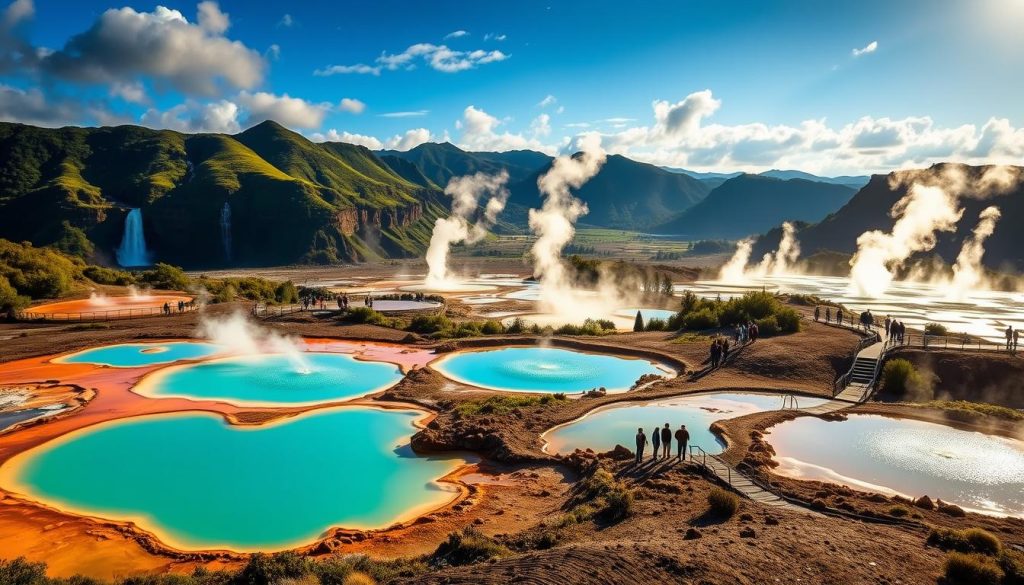
The bright colors of Rotorua’s geothermal spots come from special minerals. When heated water cools, minerals like silica, sulfur, and iron oxide settle out. This creates colors from yellow and orange to red and green. For instance, the Champagne Pool at Wai-O-Tapu shines with these minerals.
| Mineral | Color Produced | Example Location |
|---|---|---|
| Silica | White, Cream | Champagne Pool |
| Sulfur | Yellow | Wai-O-Tapu |
| Iron Oxide | Red, Orange | Pohutu Geyser |
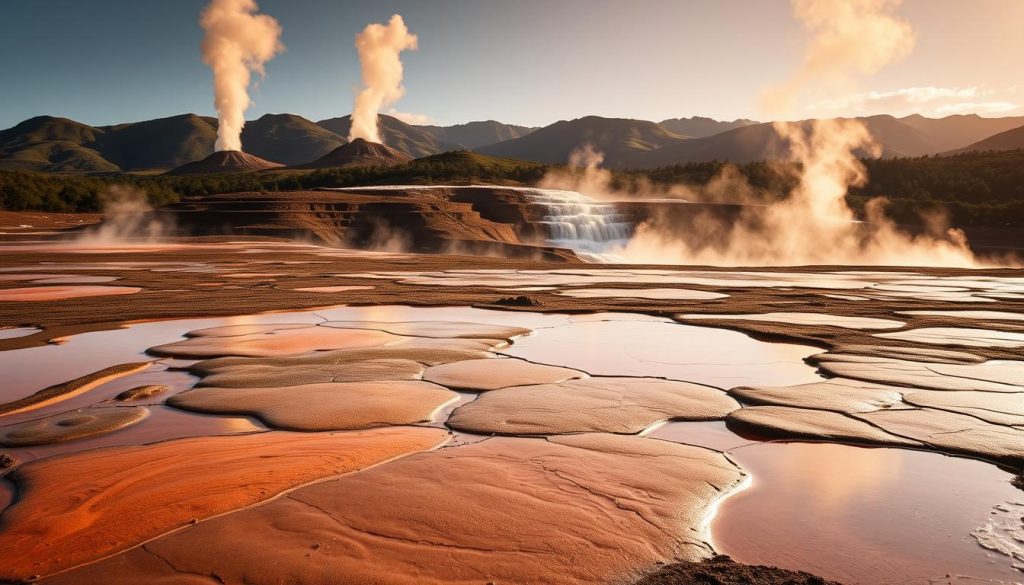
Must-See Geothermal Wonders in Rotorua: Top Attractions
Looking for an unforgettable experience? Rotorua’s geothermal wonders will amaze you with their stunning beauty. This area is a hotspot for geothermal activity, with many attractions that show nature’s incredible power.
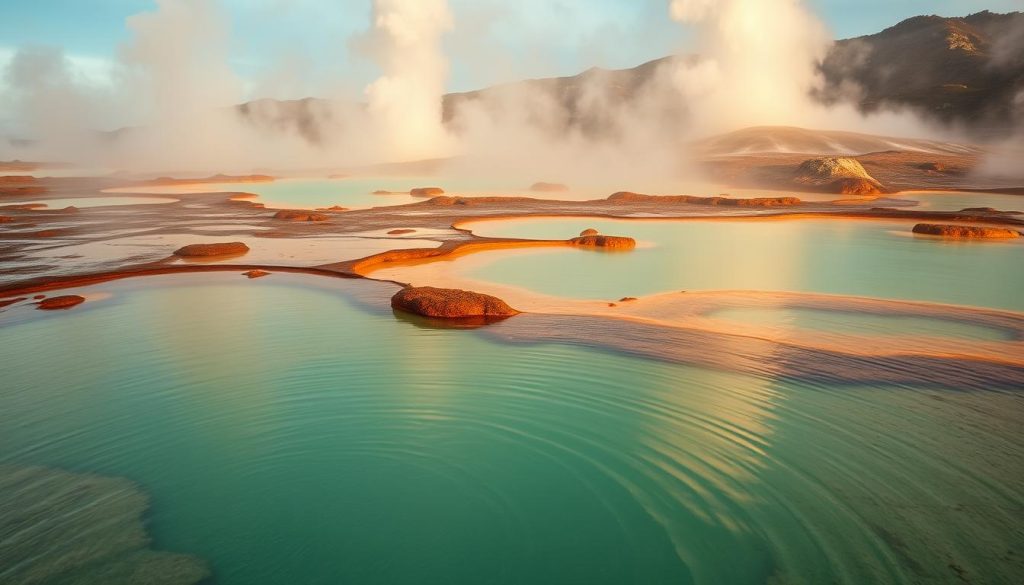
Wai-O-Tapu Thermal Wonderland
Wai-O-Tapu Thermal Wonderland is a top spot in Rotorua. It’s known for its colorful and fascinating geothermal features.
The Lady Knox Geyser
The Lady Knox Geyser is a main attraction, erupting daily at 10:15 am. It shoots water high into the air, creating a thrilling and beautiful spectacle.
The Artist’s Palette
The Artist’s Palette is another highlight. It’s a colorful hot spring with vibrant hues from unique minerals. The colors range from blues and greens to oranges and yellows, perfect for photographers.
Te Puia and the Pohutu Geyser
Te Puia is home to the Pohutu Geyser, one of the largest in the Southern Hemisphere. The geyser erupts often, and visitors can see it up close.
Te Puia is more than geysers. It’s a place to learn about Māori culture and traditions. You can gain insights into the local iwi’s history and customs, adding cultural depth to your visit.
Whakarewarewa Thermal Village
Whakarewarewa Thermal Village shows the Māori people’s connection to geothermal landscapes. You can explore the village, learn about traditional cooking, and see the famous Pōhutukawa Tree.
The village is surrounded by geothermal features. It’s a great place to see Rotorua’s natural beauty and cultural heritage.
Visiting Rotorua’s geothermal wonders is an unforgettable experience. Each location offers a unique view of the area’s natural and cultural significance. Whether you’re into geology, culture, or just nature, Rotorua has something for everyone.
Spectacular Mud Pools and Hot Springs
Exploring Rotorua’s geothermal wonders reveals stunning mud pools and hot springs. These sights are not just beautiful but also good for your health. They are a must-see for anyone visiting.
Hell’s Gate Mud Spa and Sulfur Pools
Hell’s Gate Mud Spa is a top spot for mud bathing. It uses natural sulfur pools for a unique, healing experience. Mud bathing softens and nourishes your skin, while the sulfur pools add extra health benefits.
Mud Bathing Experiences
At Hell’s Gate, you can enjoy a relaxing mud bath. The natural minerals deeply nourish your skin. It’s both calming and refreshing, leaving you feeling new.
“The mud bath at Hell’s Gate was the highlight of our trip to Rotorua. It was an unforgettable experience!”
Kuirau Park: Free Geothermal Experiences
Kuirau Park is perfect for those wanting to see Rotorua’s geothermal sights without spending money. It offers free access to mud pools and hot springs. You can explore the park and see these natural wonders up close.

Kuirau Park is great for families or those watching their budget. It gives a fascinating look at Rotorua’s geothermal world. With its free entry and easy location, it’s a top way to see Rotorua’s geothermal wonders.
Geothermal Lakes and Colorful Pools
Exploring Rotorua reveals geothermal lakes and vibrant pools. These natural wonders show off the area’s unique geology. They offer breathtaking scenery and fun activities.
The Champagne Pool: Nature’s Color Palette
The Champagne Pool is a standout in Rotorua, known for its bright colors. Minerals like orpiment and stibnite create these hues. Standing by the pool, you’ll see colors swirl, perfect for photographers.
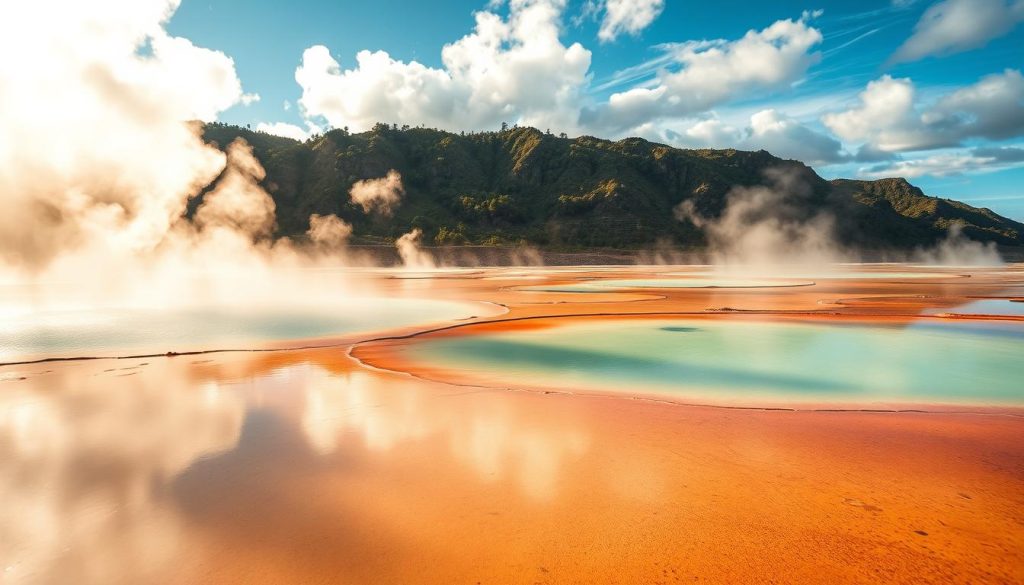
Lake Rotorua and Its Geothermal Features
Lake Rotorua is a key geothermal spot. It’s not as colorful as some pools but has scenic walking trails and picnic spots. Visitors can enjoy walks around the lake, seeing wildlife and enjoying the calm.
Blue Baths and Government Gardens
The Blue Baths are in the Government Gardens, a historic spot. The therapeutic mineral waters are rich in silica and minerals. After soaking, you can explore the gardens, a peaceful escape.
These geothermal lakes and pools make Rotorua special. Whether you love geology, photography, or just relaxing, Rotorua has something for everyone.
Experiencing Rotorua’s Geothermal Spas and Wellness
Dive into Rotorua’s geothermal wonders, where wellness meets stunning beauty. The geothermal spas here are famous for their healing powers. They offer a mix of relaxation and natural beauty.
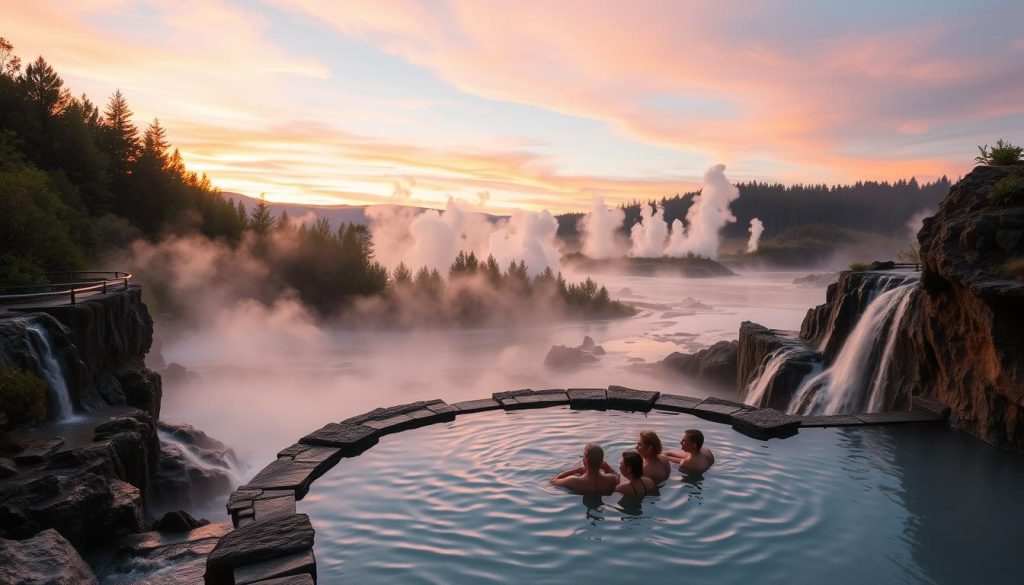
Polynesian Spa: Relaxation in Mineral Waters
Polynesian Spa is a top geothermal spa, known for its calm atmosphere. It offers mineral-rich baths that are good for your health. The spa’s luxurious setting and peaceful vibe make it perfect for unwinding.
Waikite Valley Thermal Pools
Waikite Valley Thermal Pools offer a great geothermal bathing experience. They are surrounded by natural beauty. The pools have crystal-clear waters and a beautiful view, making it a great place to relax.
Therapeutic Benefits of Geothermal Bathing
Geothermal bathing has many therapeutic benefits. It can help with muscle tension and improve blood flow. The mineral-rich waters are known for their healing properties, making it a popular activity in Rotorua.
By visiting Rotorua’s geothermal spas, you get to enjoy natural beauty and wellness. Whether you go to Polynesian Spa or Waikite Valley Thermal Pools, you’ll leave feeling refreshed and relaxed.
Māori Culture and Geothermal Traditions
Māori culture and geothermal traditions are deeply connected in Rotorua. They offer a unique look into the area’s history and spiritual importance. The geothermal features are not just natural wonders. They are also closely tied to the Māori people’s history, spiritual practices, and daily life.
Traditional Cooking Methods Using Geothermal Heat
The Māori have used geothermal heat for cooking for generations. They have passed down traditional cooking methods. One key method is the use of hangi meals and steam boxes.
Hangi Meals and Steam Boxes
A hangi is a traditional Māori cooking method. It uses heated rocks in a pit oven. The geothermal heat warms these rocks, cooking the food on top.
This method not only cooks the food but also adds a unique flavor. Steam boxes use geothermal steam to cook food. They provide a moist and flavorful way to prepare meals.
| Cooking Method | Description | Benefits |
|---|---|---|
| Hangi | Cooking food in a pit oven using heated rocks | Unique flavor, traditional method |
| Steam Boxes | Cooking food using geothermal steam | Moist and flavorful, energy-efficient |
Cultural Significance of Thermal Areas to Local Iwi
The thermal areas in Rotorua are very important to the local iwi (tribes). They are seen as sacred and connected to ancestral lands and historical events. The geothermal features are believed to have spiritual energy, or mana.
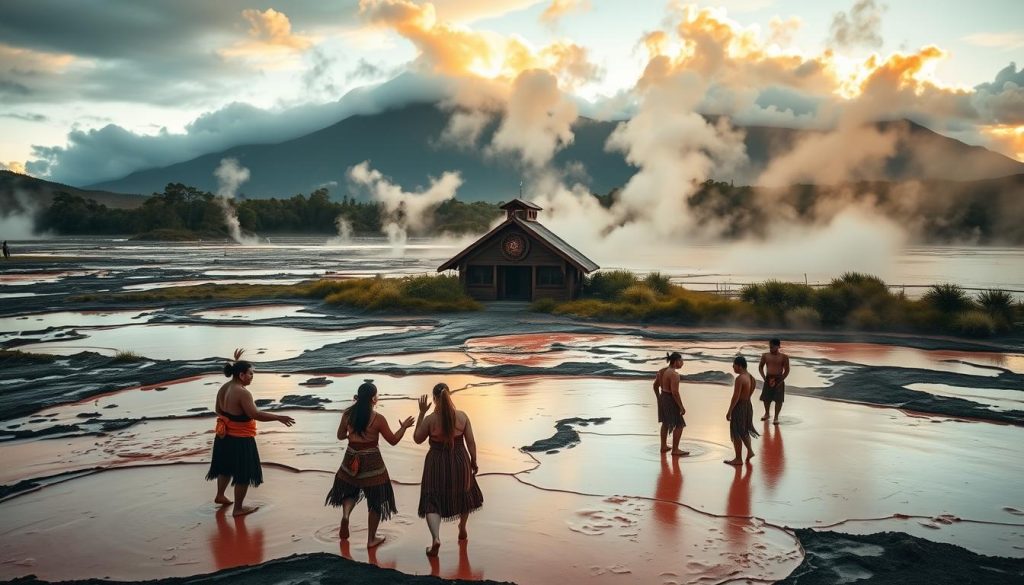
Understanding the cultural importance of these areas helps us appreciate the region’s natural wonders. It also shows respect for the people who have lived here for centuries.
Planning Your Visit to Rotorua’s Geothermal Parks
When planning your trip to Rotorua, knowing the best times to visit geothermal parks is key. These wonders are a big draw, and with some planning, you’ll have a great time.
Best Times to Visit and Weather Considerations
Rotorua is open all year, but the best time varies. Summer (December to February) is busy with warm weather perfect for outdoor fun. For fewer crowds, try the shoulder season (March to May or September to November), which is still nice.
Recommended Geothermal Tours and Packages
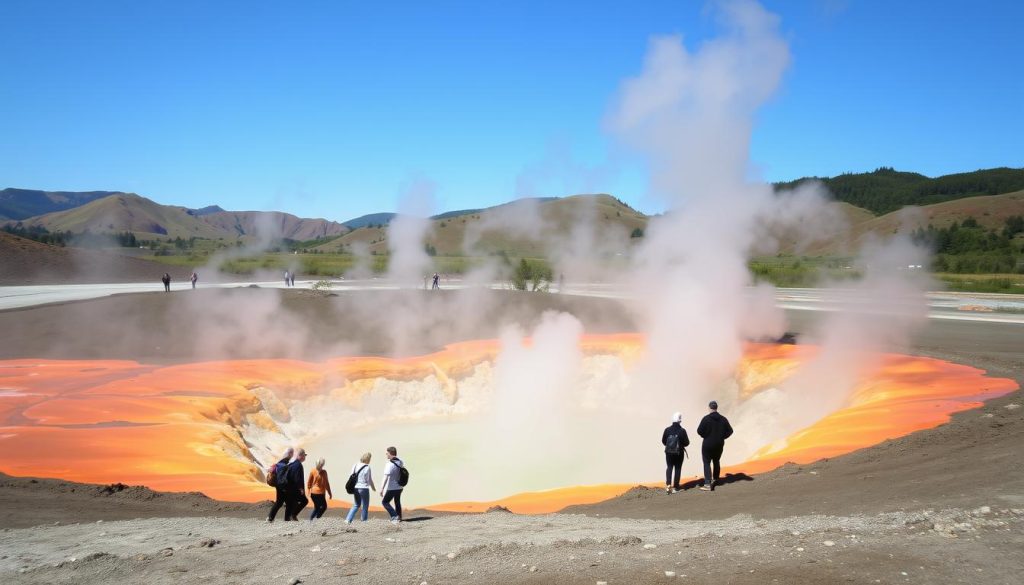
For the best Rotorua geothermal sites, join a guided tour. Many tours include visits to places like Wai-O-Tapu and Te Puia. They share interesting facts about the geology and culture of these spots.
Accommodation Options Near Geothermal Sites
Rotorua has many places to stay, from fancy hotels to cozy motels and lodges. Many are close to geothermal sites, making it easy to explore. Book early, as it gets busy during peak season.
Safety Tips for Exploring Geothermal Areas
Exploring Rotorua’s geothermal parks safely is crucial. Always follow marked paths, as the ground can be hot and unstable. Watch out for steam vents and hot pools, and never touch or climb on geothermal features. Also, keep an eye on kids at all times.
With careful planning, your visit to Rotorua’s geothermal parks will be safe and fun. Whether you’re drawn to the natural beauty, cultural importance, or health benefits, Rotorua has something for everyone.
Conclusion: The Unforgettable Experience of Rotorua’s Geothermal Landscape
Rotorua’s geothermal landscape is truly unforgettable. It combines natural beauty, cultural significance, and fun activities. You’ve seen the colorful pools of Wai-O-Tapu and the relaxing spas of Polynesian Spa.
Learning about the science and culture of Rotorua’s geothermal sites adds to your experience. Whether you’re soaking in the waters or seeing the Champagne Pool’s colors, it’s an experience you won’t forget.
When planning your visit, think about the best times to go and the tours you want. Also, look for places to stay near the geothermal sites. Rotorua offers a mix of natural wonders and cultural experiences, making it a memorable trip.