

Discover Sustainable Travel Options in Cape Town
Are you ready to explore one of Africa’s most stunning destinations while minimizing your environmental footprint? Cape Town is a paradise for eco-conscious travelers. It boasts breathtaking landscapes, vibrant culture, and a growing eco-friendly vibe.
As you plan your trip, you’ll find many responsible travel options in this beautiful city. From eco-lodges to environmentally friendly activities, there’s something for everyone. You can immerse yourself in the local culture, enjoy the region’s natural beauty, and support local communities. All while making a positive impact on the environment.
With its unique blend of natural beauty and eco-friendly attractions, Cape Town is perfect for those seeking a sustainable travel experience. Let’s explore the best options for making your trip unforgettable and environmentally friendly.
Why Cape Town Sustainable Travel Matters
Choosing sustainable travel in Cape Town is crucial. It helps protect the city’s environment and culture. As a traveler, you can positively impact this stunning city.
Environmental Challenges Facing the Region
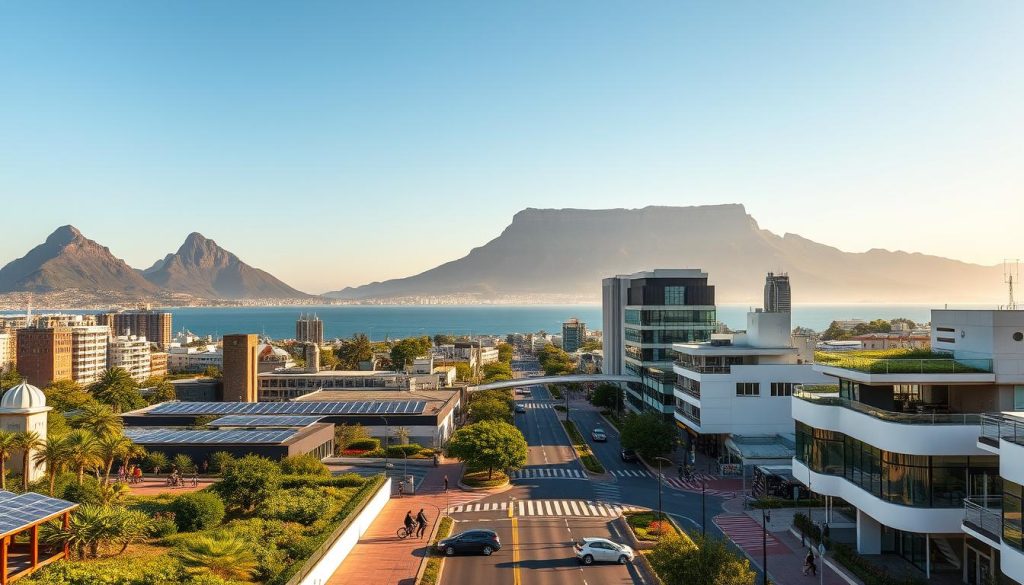
Cape Town is dealing with big environmental problems. These include severe water shortages and the impact of tourism on local ecosystems. The city’s unique wildlife is at risk from climate change, pollution, and habitat loss. By using sustainable practices in Cape Town, you can help solve these issues.
The Positive Impact of Responsible Tourism
Eco-conscious travel in Cape Town has a big positive effect. Supporting local conservation and choosing eco-friendly tour operators helps preserve the city’s beauty. It also helps local communities by creating jobs and boosting the economy, making your trip more meaningful with green experiences in South Africa.
Being thoughtful about your travel choices lets you enjoy Cape Town while helping it stay sustainable. This way, your trip not only enriches your experience but also helps keep Cape Town beautiful for the future.
Planning Your Eco-Friendly Trip to Cape Town
Your eco-friendly adventure in Cape Town starts with planning. This includes picking the best time to visit and packing the right essentials. To enjoy your trip while being green, consider these tips.
Best Seasons for Sustainable Visits
The spring (September to November) and autumn (March to May) seasons are the best times to visit Cape Town. The weather is mild, perfect for outdoor fun and exploring without the crowds.
Pre-Trip Sustainability Preparation
Before you go, there are steps to make your trip greener.
Carbon Offset Programs for Your Flight
Think about offsetting your flight’s carbon emissions. You can do this by supporting carbon offset programs. These help fund projects that cut down greenhouse gas emissions.
Packing Essentials for Eco-Conscious Travelers
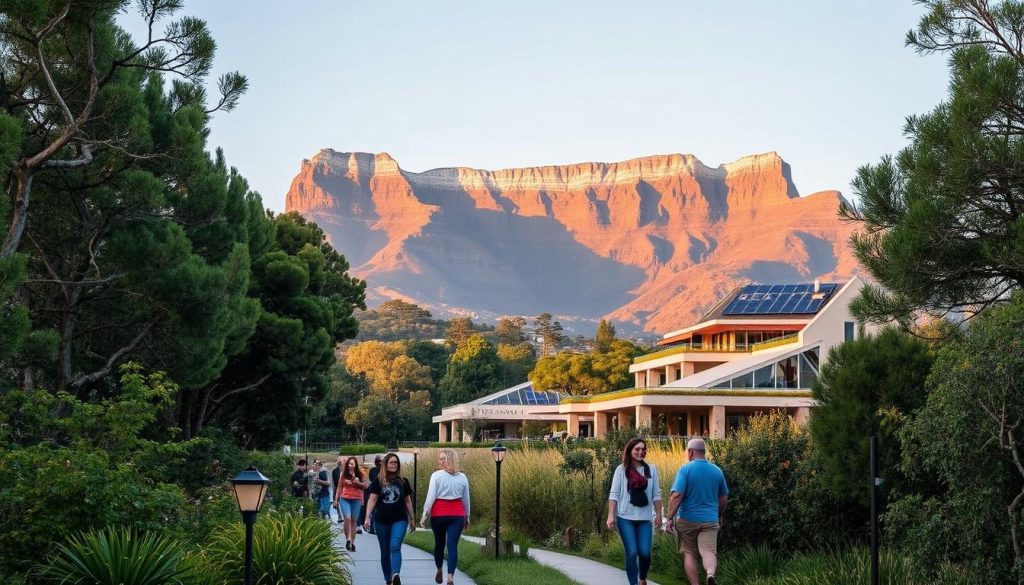
Choosing the right items can greatly reduce your environmental impact. Don’t forget reusable water bottles, cloth bags, and eco-friendly toiletries.
| Packing Essential | Eco-Friendly Alternative | Benefit |
|---|---|---|
| Plastic Water Bottles | Reusable Stainless Steel Bottles | Reduces plastic waste |
| Single-use Bags | Cloth Bags | Minimizes plastic bag usage |
| Chemical-based Toiletries | Natural, Biodegradable Toiletries | Lessens water pollution |
Green Transportation Around the City
Cape Town has many ways to travel that are good for the planet. You’ll find it easy and fun to get around without harming the environment.
MyCiTi Bus Network and Public Transit
The MyCiTi bus network is key to Cape Town’s public transport. It’s a green way to see the city. You can easily get to famous spots without a car.
This system helps cut down on pollution. It’s perfect for those who want to travel lightly on the earth.
Bicycle-Friendly Routes and Rental Options
Cape Town loves cycling as a green way to move around. It has bike paths for a slow, scenic ride. You can rent bikes for different adventures.
Cycling here lets you see the city’s beauty up close. It’s a fun way to see the green spots of Cape Town.

Electric Vehicle Services and Rideshares
Cape Town is getting more electric vehicles and rideshares. These are good for the planet and easy to use. They help Cape Town become greener.
Using these green ways to travel lets you enjoy Cape Town. You also help make it a better place for the future.
Sustainable Accommodation Options
Cape Town offers many ways to travel green. You can find eco-friendly hotels, guesthouses, and hostels. These places are not only comfy but also help the local community and environment.
Fair Trade Certified Hotels and Eco-Lodges
Cape Town has many Fair Trade certified hotels and eco-lodges. They follow strict rules to be sustainable and fair. These places use renewable energy, reduce waste, and help the community.
Choosing these hotels supports local people and the planet. It’s a way to travel responsibly.
Green-Certified Guesthouses in Cape Town
Green-certified guesthouses in Cape Town are great for those who care about the planet. They use energy-saving lights, save water, and recycle. Plus, they help with local conservation and support community projects.

Eco-Friendly Hostels and Community Stays
Eco-friendly hostels and community stays offer a special way to see local life. They use sustainable methods like composting and recycling. Staying here helps the local economy and lets you see Cape Town’s true culture.
Choosing green places to stay in Cape Town helps the environment. Whether it’s a Fair Trade hotel, a green guesthouse, or an eco-hostel, you’re making a difference. Your choice helps keep Cape Town beautiful and its culture alive.
Conscious Dining and Local Food Experiences
Exploring Cape Town reveals a vibrant food culture that values local and sustainable practices. The city’s food scene is dedicated to eco-friendly dining. This ensures your visit is both tasty and sustainable.
Farm-to-Table Restaurants
Cape Town boasts many farm-to-table restaurants. They focus on using local ingredients, cutting down on carbon emissions and supporting local farmers. These places offer fresh, seasonal meals, highlighting Cape Town’s best produce. Harvest Table and The Greenhouse are known for their innovative menus and green commitment.

Sustainable Seafood Initiatives
Being by the coast, seafood is a big part of Cape Town’s food scene. Many restaurants now choose sustainable seafood. They get their fish from local fisheries that fish responsibly. The Boathouse and Quayside Seafood Grill are great examples, offering tasty, eco-friendly seafood dishes.
Organic Markets and Food Artisans
Cape Town’s organic markets and food artisans show the city’s lively food culture. Places like Green Market Square and Farmers’ Market at the Botanical Gardens have organic produce, artisanal cheeses, and handmade foods. These markets let you taste local flavors and support small farmers and artisans, boosting the local economy.
| Establishment | Type | Sustainability Feature |
|---|---|---|
| Harvest Table | Farm-to-Table | Locally sourced ingredients |
| The Boathouse | Seafood | Sustainable seafood practices |
| Green Market Square | Organic Market | Variety of organic produce |
Dining at these places and visiting local markets supports Cape Town’s green attractions. It also helps the city’s eco-conscious travel efforts. Enjoy the city’s food while promoting sustainable tourism.
Ethical Wildlife and Nature Experiences
Exploring Cape Town reveals many ethical wildlife encounters. These support conservation efforts. The city offers chances to connect with its wildlife while promoting sustainable tourism.
Responsible Marine Wildlife Encounters
Cape Town is famous for its marine wildlife. There are many ways to see it responsibly. Guided tours that focus on conservation and education are available.
Ethical Shark Diving and Whale Watching
Shark diving and whale watching are big in Cape Town. Pick operators that use responsible and sustainable practices. This ensures these experiences help protect marine life.
For example, some tours let you dive with great white sharks. It’s an exciting experience that also supports research and conservation.
Penguin Conservation at Boulders Beach
Boulders Beach is home to African penguins. Guided tours there support conservation efforts. You’ll learn about protecting these endangered birds.
The conservation at Boulders Beach shows how tourism can help wildlife.
Sustainable Safari Options Near Cape Town
Looking for a safari? There are sustainable options near Cape Town. These safaris are in conservation areas and help local communities.
| Safari Operator | Location | Conservation Focus |
|---|---|---|
| ABC Safaris | Near Cape Town | Wildlife conservation and community support |
| XYZ Wildlife Tours | Cape Winelands | Habitat restoration and animal rehabilitation |
Supporting Wildlife Rehabilitation Centers
Cape Town has wildlife rehabilitation centers for injured animals. Visiting these centers helps their important work. Many offer interactive experiences and educational programs.
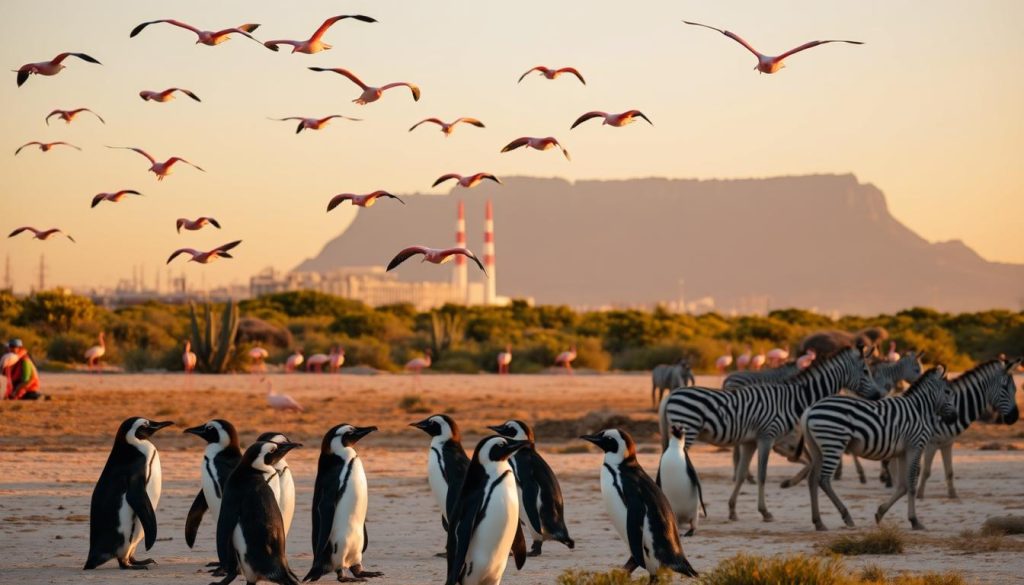
Participating in ethical wildlife and nature experiences enhances your travel. It also helps protect Cape Town’s natural heritage. By choosing responsible tours and supporting local conservation, you make a positive environmental impact.
Cape Town’s Green Spaces and Conservation Areas
Cape Town is famous for its natural beauty. It has many green spaces and conservation areas. These places offer a peaceful break from city life and help keep the environment balanced.
Kirstenbosch National Botanical Garden
The Kirstenbosch National Botanical Garden is a top attraction in Cape Town. It covers over 528 hectares and has more than 7,000 plant species. Many of these plants are found only in South Africa. Visitors can see different landscapes and enjoy the plants all year round.

Table Mountain National Park Sustainable Practices
Table Mountain National Park is a key green space in Cape Town. It uses sustainable practices to protect the environment. The park has programs to manage invasive species and prevent fires. Visitors can hike, climb rocks, and see amazing views of the city.
Cape Point Nature Reserve and Conservation Efforts
The Cape Point Nature Reserve is a crucial area within Table Mountain National Park. It has many plants and animals, including endangered ones. The reserve works to restore habitats, manage wildlife, and prevent fires. These efforts aim to keep the area’s beauty and biodiversity safe.
By visiting these green spaces and conservation areas, you help Cape Town’s efforts to protect its nature. You support eco-friendly travel and help preserve the city’s natural heritage.
Community-Based Tourism Initiatives
Joining community-based tourism helps the local economy and lets you see Cape Town’s diverse communities up close. This type of tourism makes your trip better and helps local people make a living.
Township Tours That Empower Local Communities
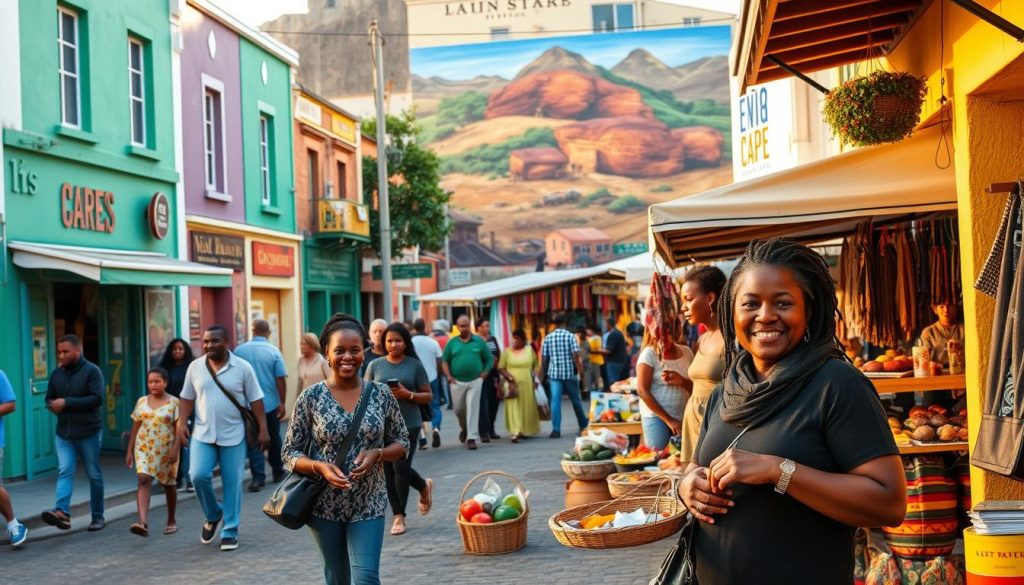
Township tours show you what daily life is like in Cape Town. You’ll see the culture, history, and strength of these lively communities. By going on a tour, you help local guides and businesses, boosting the community’s economy.
Cultural Exchanges and Homestay Programs
Cultural exchanges and homestays let you dive into local life. You can live with a host family, eat meals together, and try traditional activities. This builds connections and understanding between cultures.
Artisan Workshops and Sustainable Craft Shopping
Artisan workshops teach you about traditional crafts and support local artists. Buying handmade items helps keep cultural traditions alive and supports sustainable shopping.
| Initiative | Description | Benefits |
|---|---|---|
| Township Tours | Guided tours through local townships | Supports local guides and businesses |
| Cultural Exchanges | Immerse in local culture and traditions | Fosters cross-cultural understanding |
| Artisan Workshops | Learn traditional crafts and buy handmade products | Preserves cultural heritage and supports local artisans |
By taking part in community-based tourism, you’re traveling responsibly in South Africa. You’re also helping the local economy. Think about staying in sustainable accommodation in Cape Town to make your eco-friendly tourism experience in Cape Town even better.
Local Conservation Projects Visitors Can Support
When you visit Cape Town, you can help local projects that protect the environment. These efforts not only enrich your trip but also help the area’s green goals.
Water Conservation Initiatives
Cape Town has struggled with water issues, making saving water key. You can help by joining the Table Mountain Fund’s Water Conservation Program. This helps protect water sources. Your actions support the city’s green efforts.
Beach Cleanup Programs and Marine Protection
The coast of Cape Town is precious, and you can help keep it clean. Groups like Surfrider Foundation Africa hold regular cleanups. This way, you help marine life and keep beaches tidy. Your help supports eco-friendly travel in Cape Town.
Reforestation and Habitat Restoration Volunteering
Planting trees is crucial for Cape Town’s wildlife. You can volunteer with One Tree Planted to help. They work on restoring habitats and promoting green spaces in South Africa. Your help keeps the area beautiful.
| Conservation Project | Description | How to Participate |
|---|---|---|
| Water Conservation | Protecting Cape Town’s water sources | Join the Table Mountain Fund’s Water Conservation Program |
| Beach Cleanups | Preserving marine life and beaches | Participate in Surfrider Foundation Africa’s cleanups |
| Reforestation | Restoring habitats and biodiversity | Volunteer with One Tree Planted |
Practical Tips for Minimizing Your Environmental Impact
Exploring Cape Town can be fun and eco-friendly. Simple actions can help reduce your impact on the environment. This way, you help keep the city beautiful for others in the future.
Water-Saving Strategies During Your Stay
Water is precious in Cape Town, more so during the dry season. Short showers and turning off taps while brushing teeth save water. Also, report any leaks to your place of stay.
Many places in Cape Town use water-saving devices. Look for low-flow showerheads and toilets in your accommodation.
Waste Reduction and Recycling in Cape Town
Reducing waste and recycling are key to lessening your impact. Carry reusable items like water bottles, bags, and coffee cups. Restaurants and cafes in Cape Town often have recycling bins.
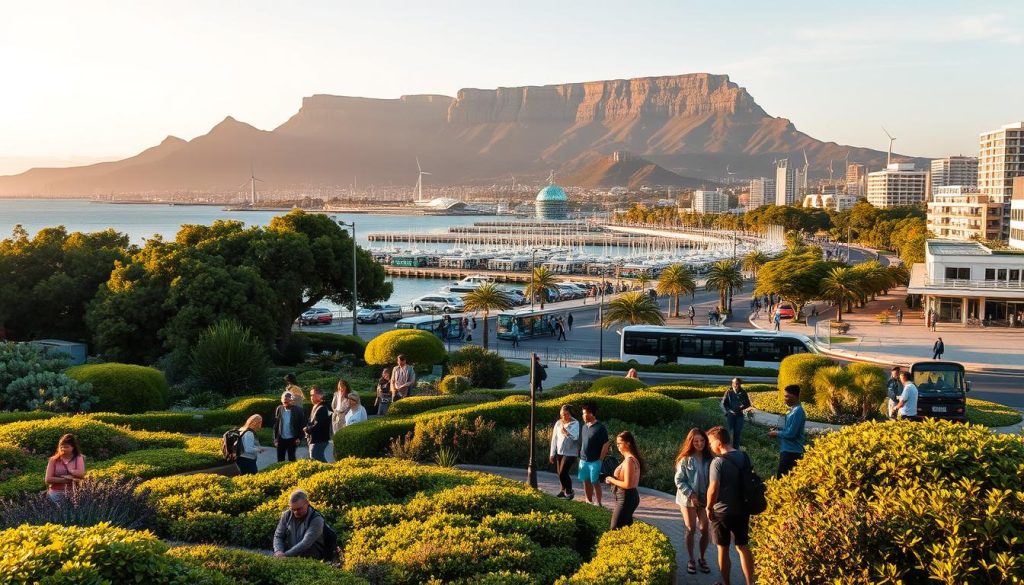
Sustainable Photography and Nature Etiquette
Photography in Cape Town should be done responsibly. Keep a safe distance from animals and avoid disturbing their habitats. Never litter or remove plants or rocks.
By following these tips, you can greatly reduce your environmental impact. Every small action helps. Together, we can keep Cape Town beautiful for all.
Conclusion: The Future of Sustainable Tourism in Cape Town
Cape Town is leading the way in sustainable tourism. More eco-friendly projects and responsible travel are popping up. When you visit, choosing eco-conscious travel Cape Town practices makes your trip better. It also helps protect this stunning city.
The outlook for Cape Town sustainable travel is promising. The city will keep focusing on being green and saving the environment. By picking green experiences South Africa offers, you help local communities and conservation. This ensures Cape Town stays a lively spot for future visitors.
As Cape Town grows, its dedication to green tourism will stay strong. This makes it an exciting time to see all it has to offer.





