Discover St. John’s with Your Self-Guided Walking Tour
St. John’s, Newfoundland is one of the oldest permanently settled cities in North America, with European fishing activity documented here from the early 1500s. The city sits on a steep hillside rising from a natural harbour, and its compact downtown makes it unusually walkable. The main self-guided walking circuit covering Water Street, Duckworth Street, the Colonial Building, Bannerman Park, and Signal Hill covers approximately 5 to 6 kilometres and takes 3 to 4 hours at a relaxed pace, depending on time spent at individual sites.
Why choose self-guided St. John’s walking tours
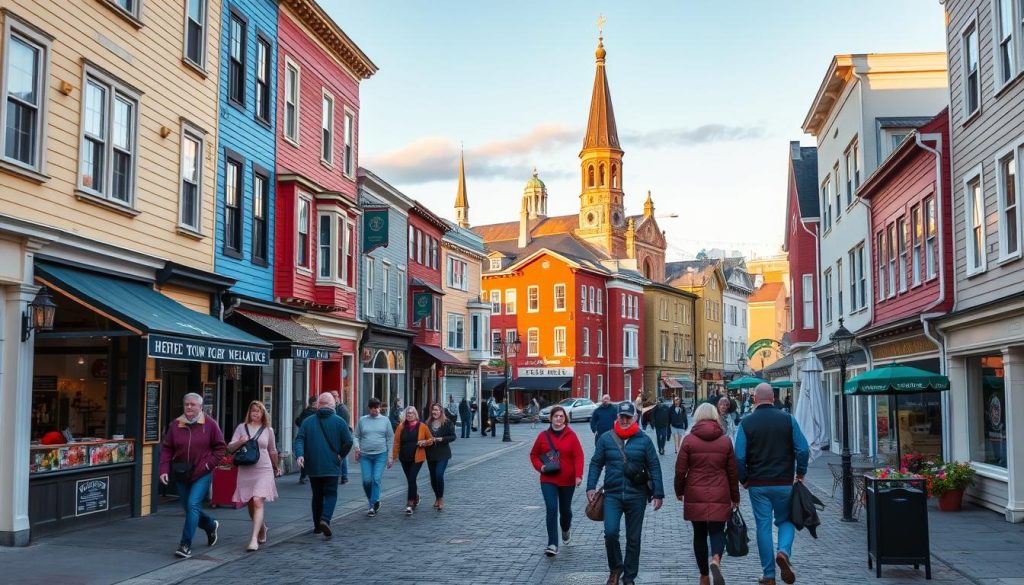
Self-guided walking is the most practical format for St. John’s because the city’s historic core is dense and interconnected — most significant landmarks lie within 15 minutes on foot of each other. Organized tours run at fixed departure times, which limits flexibility at sites that reward lingering, particularly Signal Hill and the Newman’s Wine Vaults. A self-guided approach lets you spend an hour at the Rooms provincial museum or walk down to Quidi Vidi Village without running to catch a group.
The St. John’s Visitor Centre, located near the harbourfront, distributes free walking tour maps that identify the main heritage routes and highlight the Historic East End and Streets of Old Downtown circuits. Printed route guides are also available from Tourism Newfoundland and Labrador online before your trip.
Essential routes for downtown St. John’s walking tours
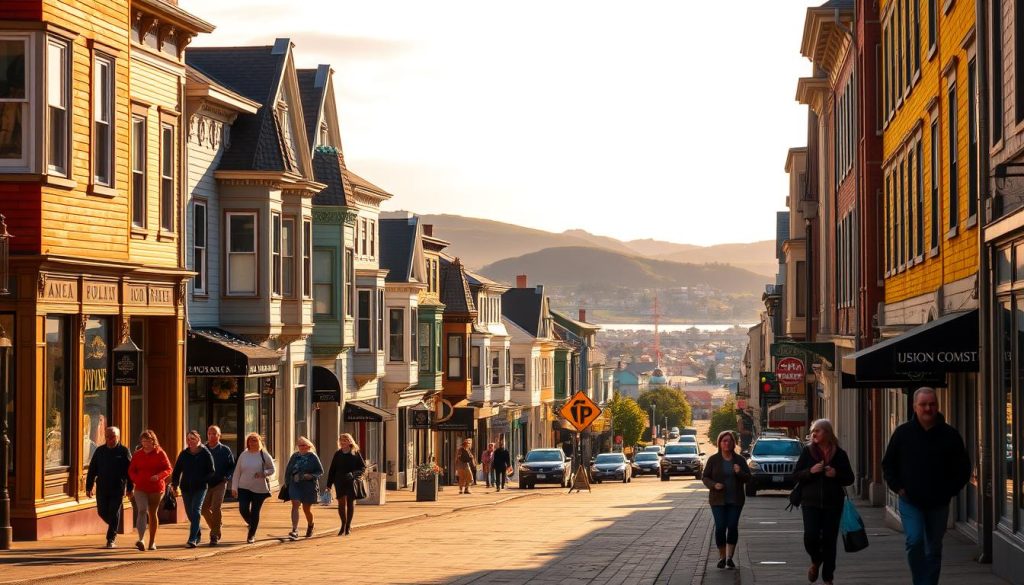
The core downtown circuit begins at the harbourfront on Water Street and covers approximately 3 kilometres through the city centre. Water Street itself is one of the oldest continuously used commercial streets in North America, running along the waterfront as it has since the 17th century. From Water Street, walking uphill to Duckworth Street takes you past the courthouse and older commercial buildings before continuing west toward Bannerman Park.
Bannerman Park, opened in 1892, is a free public green space at the western edge of the historic core. It serves as a natural rest stop midway through the downtown circuit. From the park, the Colonial Building is immediately adjacent — it was completed in 1850 in Ionic Revival style using Irish limestone and served as Newfoundland’s seat of government for more than a century. Walking the full downtown circuit takes approximately 2 hours at a moderate pace.
| Route Segment | Distance | Duration | Key Stops |
|---|---|---|---|
| Harbourfront to Duckworth Street | ~0.5 km | ~10 min | Water Street, Harbour, War Memorial |
| Duckworth to Bannerman Park | ~1.2 km | ~20 min | Duckworth Street, courthouse, residential heritage blocks |
| Bannerman Park to Colonial Building | ~0.2 km | ~5 min | Colonial Building (free exterior; heritage site) |
| Return via Gower Street | ~1.2 km | ~20 min | Jellybean Row coloured row houses, Anglican Cathedral |
| Signal Hill extension (from downtown) | ~2 km uphill | ~35–45 min walk | Signal Hill NHS, Cabot Tower, harbour overlook |
Must-see historical landmarks along your route
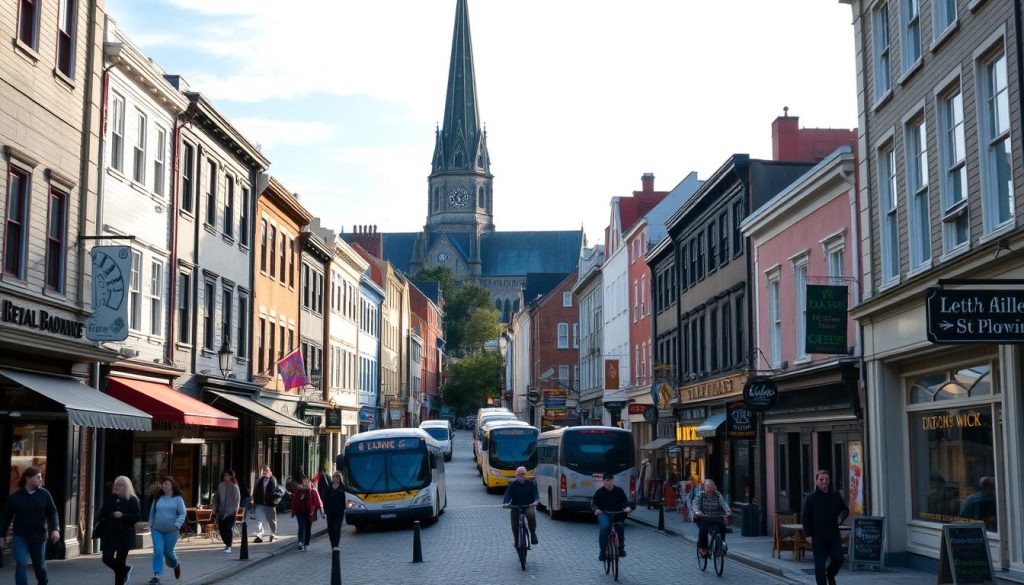
The Basilica Cathedral of St. John the Baptist, a Roman Catholic cathedral on Military Road, was completed in 1855 in Irish-Romanesque style and is free to visit during public hours. The Anglican Cathedral of St. John the Baptist on Church Hill (near Duckworth Street) is another landmark open to visitors at no charge.
Newman’s Wine Vaults at 436 Water Street date from at least the 18th century and served as aging caves for port wine shipped by the Newman company from Portugal. The discovery that Newfoundland’s cold, stable cave conditions improved port wine quality led to centuries of transatlantic trade. The vaults are now a provincial heritage site and museum, with admission approximately $5 to $8 CAD as of 2026.
| Landmark | Admission (2026 est.) | Key Fact |
|---|---|---|
| Basilica Cathedral of St. John the Baptist | Free | Completed 1855, Irish-Romanesque style |
| Anglican Cathedral of St. John the Baptist | Free | Church Hill, dating from 19th century |
| Colonial Building | Free (exterior) | Completed 1850, Irish limestone, Ionic Revival |
| Newman’s Wine Vaults | ~$5–$8 CAD | 18th-century port wine aging caves, 436 Water Street |
| Signal Hill NHS / Cabot Tower | ~$4.25 CAD adult | Site of 1901 Marconi transatlantic wireless signal |
| The Rooms | ~$10 CAD adult | Provincial museum, gallery, and archives; opened 2005 |
| Bannerman Park | Free | Opened 1892; public green space near Colonial Building |
Hidden gems and local secrets
Signal Hill National Historic Site, approximately 2 kilometres from the city centre, is where Guglielmo Marconi received the first transatlantic wireless signal on December 12, 1901. The Cabot Tower at the top of Signal Hill sits at 155 metres above sea level and overlooks the Narrows — the entrance channel to St. John’s Harbour. Adult admission to Signal Hill NHS is approximately $4.25 CAD as of 2026; Parks Canada Discovery Pass holders enter free.
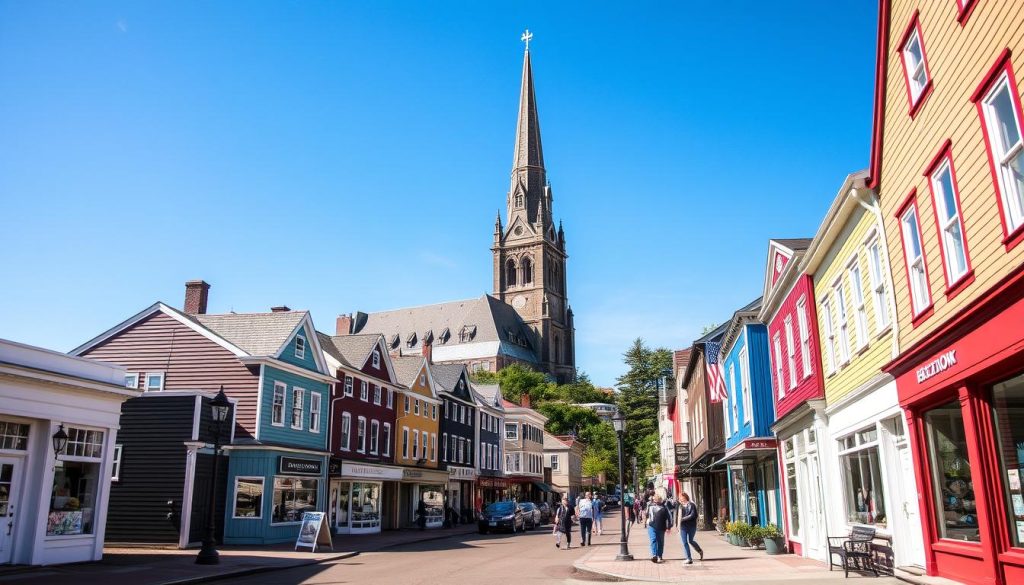
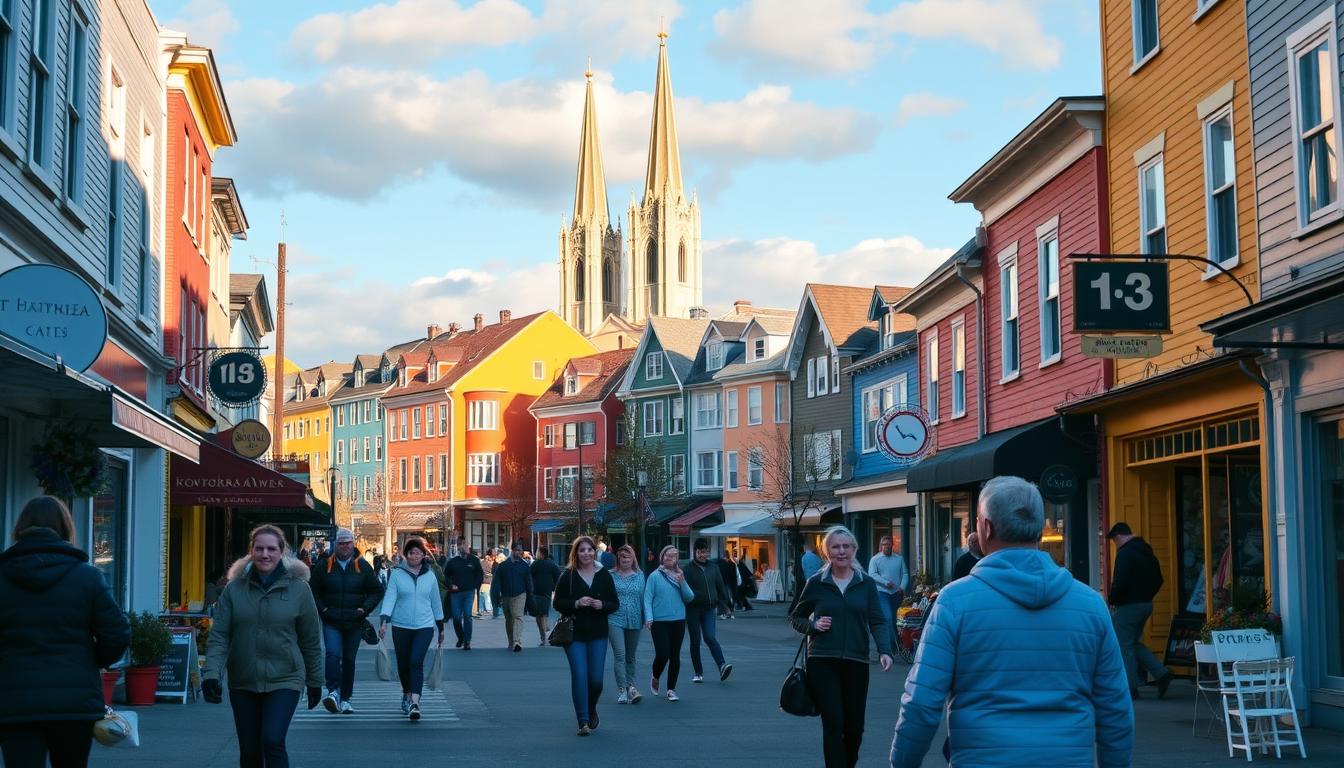
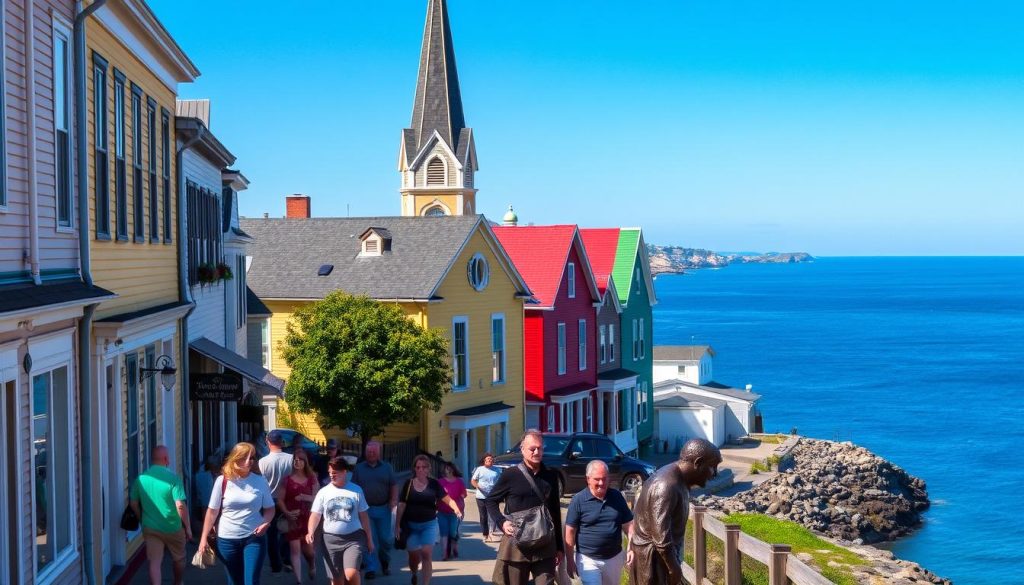
Jellybean Row refers to the tightly packed, brightly painted Victorian row houses along Gower Street and Prescott Street, a short walk uphill from Water Street. These are private residences and are best appreciated from the street. George Street in the city centre is a one-block entertainment district known for its concentration of pubs and live music venues, including O’Reilly’s Irish Newfoundland Pub, which hosts traditional Newfoundland music most evenings.
Quidi Vidi Village, about 1.5 kilometres northeast of Signal Hill, is a sheltered fishing settlement that retains its traditional character. Quidi Vidi Brewery, founded in 1996, operates from a converted heritage building at 35 Barrows Road in the village and offers tours and tastings. Summer visitors to St. John’s Harbour may spot humpback whales in the approaches to the Narrows, and Atlantic puffins are visible from Signal Hill and Cape Spear during the June to August nesting season.
Seasonal considerations for your walking tour
July and August are the warmest and most reliably dry months for walking, with daytime temperatures typically 17 to 22°C. St. John’s is one of the foggiest cities in North America, and fog can reduce visibility at Signal Hill and the harbourfront at any time of year. June remains cool (average 12 to 16°C) and frequently foggy; September and early October offer more settled weather with fewer visitors and temperatures around 12 to 18°C.
Winter walking (November through March) is feasible on cleared streets but Signal Hill paths may be icy. The Royal St. John’s Regatta, held on the first Wednesday in August, is North America’s oldest continuing sporting event and takes place on Quidi Vidi Lake — crowds are significant across the city on regatta day.

Safety tips and navigation guidelines
St. John’s downtown is very safe for walking, though the terrain is significantly hilly. The climb from Water Street to Gower Street (Jellybean Row) involves a sustained uphill grade; the walk to Signal Hill is steeper still. Visitors with limited mobility should plan around the grade or take a taxi to Signal Hill and walk back down.
Street layout in the old city centre is irregular and does not follow a grid, so downloading an offline map (Google Maps or maps.me) is more reliable than printed maps for navigation between specific addresses. The harbourfront orientation point is useful when you lose your bearings — if you can see the harbour, you’re at the base of the hill; everything uphill leads toward the residential heritage neighbourhoods.
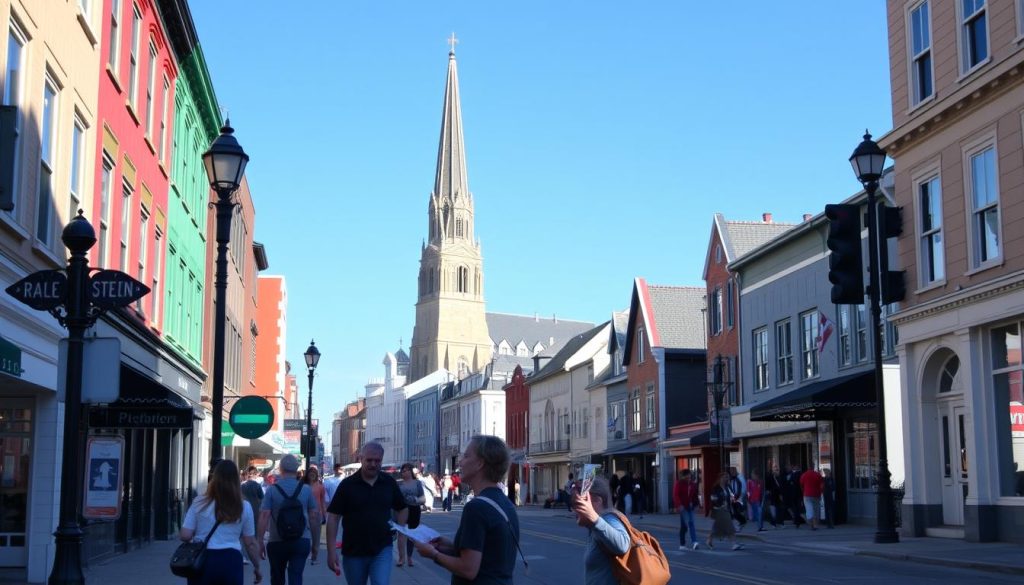
Where to rest and refresh during your tour
The Rooms cafe, inside the provincial museum at 9 Bonaventure Avenue, is a good mid-tour stop for visitors doing the downtown circuit — admission gets you into the museum as well. On Water Street, several independent cafes and restaurants are within easy reach of the harbourfront. Bannerman Park has public benches and is a natural stopping point midway through the downtown route. On Signal Hill, the interpretation centre at the base of the hill has restrooms and a small retail area.
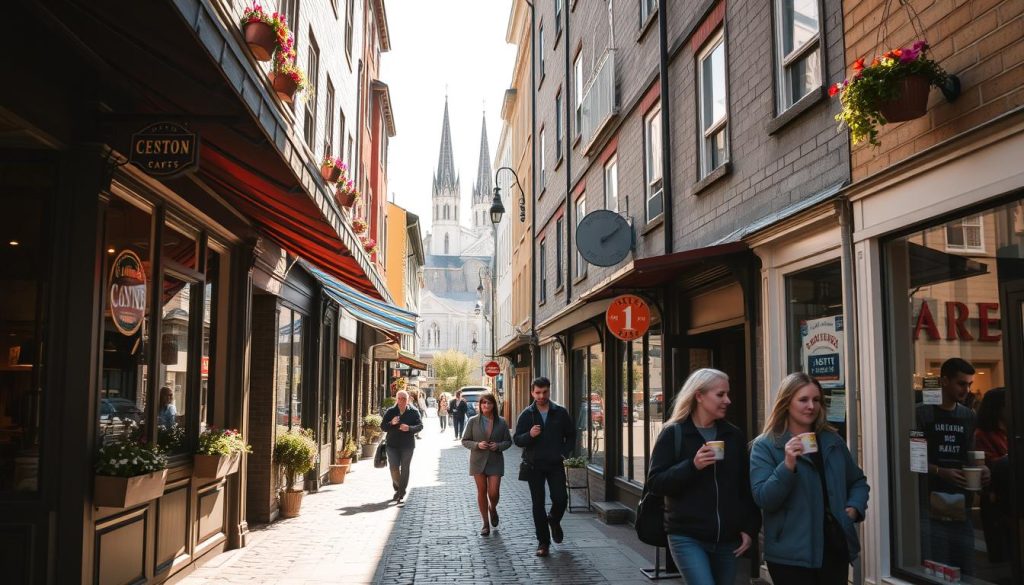
Where to stay in St. John’s
St. John’s accommodation ranges from full-service chain hotels near the downtown core to boutique properties in heritage buildings. All options below are within walking distance or a short taxi ride from the main walking tour routes. Approximate 2026 nightly rates listed in CAD.
| Property | Type | Price/Night (2026 est.) | Notes |
|---|---|---|---|
| Sheraton Hotel Newfoundland | Full-service hotel | $160–$280 CAD | 115 Cavendish Square; adjacent to Confederation Hill, 5 min walk to downtown |
| Delta Hotels by Marriott St. John’s Conference Centre | Full-service hotel | $150–$260 CAD | 120 New Gower Street; indoor pool, on-site restaurant |
| Alt Hotel St. John’s | Boutique hotel | $130–$220 CAD | Duckworth Street, walkable to all downtown landmarks |
| Murray Premises Hotel | Heritage boutique | $140–$230 CAD | 5 Beck’s Cove; converted 19th-century waterfront warehouse |
Frequently asked questions about St. John’s self-guided walking tours
How long does a self-guided walking tour of St. John’s take?
The core downtown circuit — Water Street, Duckworth Street, Bannerman Park, Colonial Building, and Gower Street (Jellybean Row) — covers approximately 3 kilometres and takes about 2 hours at a relaxed pace. Adding Signal Hill extends the total to about 5 to 6 kilometres and 3 to 4 hours. Adding Quidi Vidi Village makes it a full-day itinerary of 8 to 10 kilometres.
Is Signal Hill worth visiting on a self-guided tour?
Yes. Signal Hill National Historic Site offers the best harbour overlook in the city and is the location where Marconi received the first transatlantic wireless signal in December 1901. The Cabot Tower at the summit provides panoramic views of the Narrows and the open Atlantic. Adult admission is approximately $4.25 CAD as of 2026. The walk from downtown takes about 35 to 45 minutes uphill; most visitors take a taxi up and walk back down.
What is Jellybean Row?
Jellybean Row refers to the tightly clustered, brightly painted Victorian row houses on Gower Street and Prescott Street in the historic residential neighbourhood uphill from Water Street. The houses are private residences and not open to visitors, but the streetscape is one of the most photographed in St. John’s and is a standard stop on any self-guided downtown walking route.
Are there admission fees for walking tour landmarks in St. John’s?
Several major sites charge admission as of 2026: Signal Hill NHS (~$4.25 CAD adult), The Rooms provincial museum (~$10 CAD adult), and Newman’s Wine Vaults (~$5–$8 CAD). Most churches, Bannerman Park, and the exterior of the Colonial Building are free. A budget of $20 to $25 CAD covers the main paid sites for one adult.
What is the best time of year for walking tours in St. John’s?
July and August offer the warmest temperatures (17 to 22°C) and the longest daylight hours, but also the most visitors. September and early October are often less crowded with similar weather. Spring (May and June) is cool and frequently foggy but acceptable for walking. St. John’s is one of the foggiest cities in Canada, so clear days at Signal Hill — with full harbour and ocean views — should not be assumed in any season.
Is St. John’s walkable for visitors without a car?
The downtown core and Signal Hill are walkable from most central accommodation. Quidi Vidi Village (1.5 km from Signal Hill) and Cape Spear (15 km from downtown, easternmost point of North America) are better reached by taxi or car. Metrobus public transit serves some routes but coverage is limited compared to larger Canadian cities. Most visitors exploring the walking tour circuit do not need a car for the first day or two.
What wildlife can you see during a St. John’s walking tour?
From Signal Hill and the Cabot Tower, visitors in June through August can often spot Atlantic puffins nesting on the cliffs near the Narrows. Humpback whales sometimes appear in the approaches to St. John’s Harbour during summer months, visible from the Signal Hill overlooks or from the harbourfront. Cape Spear, 15 kilometres south of the city, offers some of the most reliable whale and seabird viewing in eastern Newfoundland during the summer season.