

Discover Pakse’s Silk Weaving Villages
Ever wondered how a simple thread turns into a colorful tapestry? In Pakse’s traditional silk weaving villages, like Ban Saphai, this magic happens. Located 15 kilometers from Pakse on Don Kho island, this village showcases the skill passed down through generations.
As you explore this beautiful area, you’ll meet local weavers. They are passionate about Laos silk weaving. Their work creates stunning Lao traditional textiles that share stories of heritage and identity.
The Rich Heritage of Silk Weaving in Pakse
The art of silk weaving in Pakse is a shining example of the area’s rich history and skill. Local artisans work hard to keep this tradition alive. They connect their creativity with the community’s heritage, making each piece special.
Silk weaving is more than just making clothes; it’s a key part of Laotian identity. The process starts with growing mulberry trees and ends with beautiful patterns on wooden looms. These textiles show off the artisans’ talent and are symbols of cultural pride.
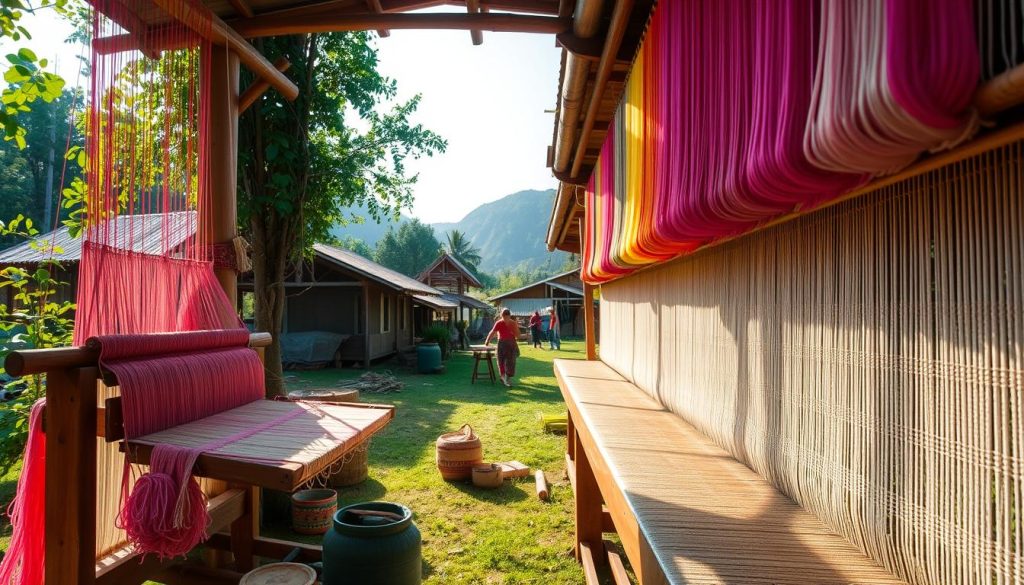
In Pakse, silk textiles tell stories of social status and heritage. They show pride and unity in the Lao Loum community. Preserving this craft is vital to keep these traditions alive for future generations.
Local artisans keep the silk weaving tradition alive, strengthening Pakse’s connection to its past. This craft is a bridge between today and yesterday in Laos.
Pakse Traditional Silk Weaving Villages
In the heart of Pakse, you’ll find vibrant silk weaving traditions. These thrive in local villages like Ban Saphai and Ban Samane. These villages are known for their dedication to the craft.
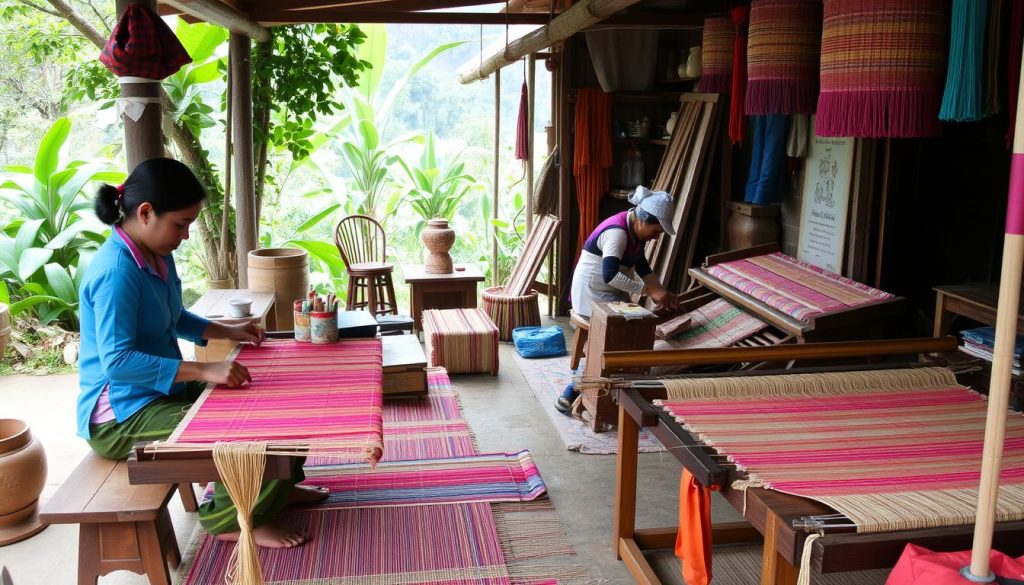
As you explore, you’ll hear the sound of looms. Skilled artisans create intricate silk fabrics. These fabrics have adorned Loatian culture for generations.
Exploring Ban Saphai and Ban Samane
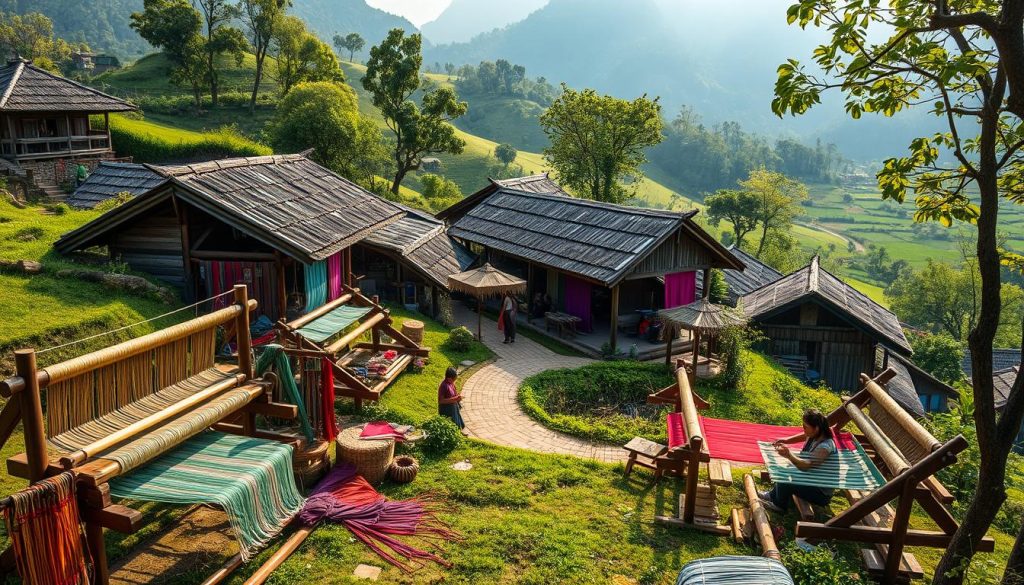
Ban Saphai is on Don Kho, a small island in the Mekong River. It offers a close-up view of traditional silk weaving. The village is 15 kilometers upstream from Pakse.
Here, you’ll see vibrant colors and patterns unique to Lao silk. In Ban Samane, you can witness similar practices. Each village adds its own flair to the silk weaving techniques.
Both villages show a strong commitment to craftsmanship. This tradition has been passed down through generations.
Generation-Old Techniques and Craftsmanship
The silk weaving techniques in these villages are more than skills. They represent a deep-rooted culture and heritage. Families in Ban Saphai have kept these traditions alive.
They often invite visitors to observe and participate in the weaving process. The hand-weaving process requires patience and attention to detail. This results in exquisite products that reflect the local culture.
Whether you’re looking for silk scarves, clothing, or textiles, you’ll be impressed. The craftsmanship in Ban Saphai and Ban Samane is unmatched.
The Artisans of Pakse
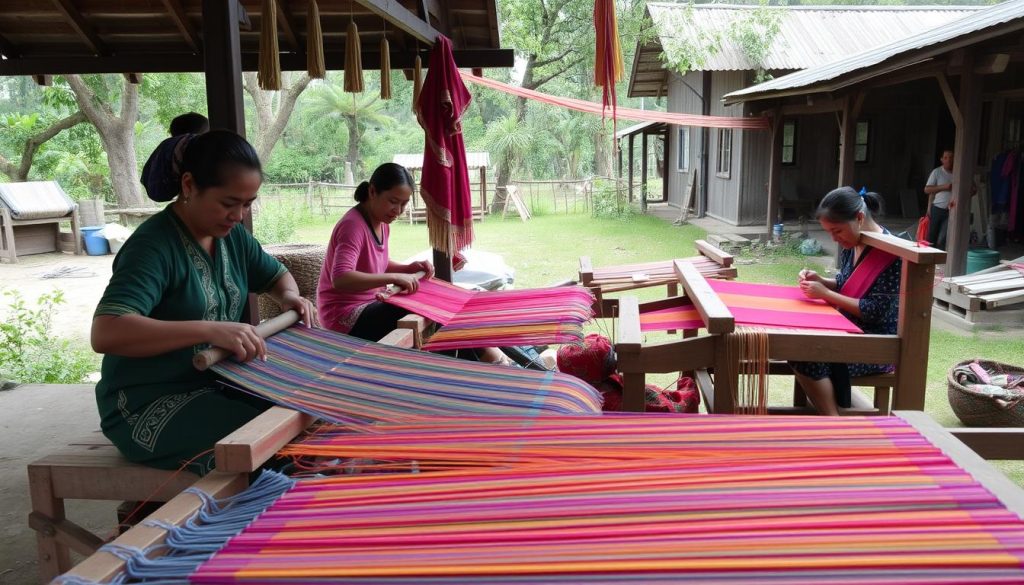
Pakse is home to talented artisans who spend their lives weaving silk. These local weavers are passionate and precise, making high-quality silk textiles. Their work is both practical and ceremonial, showing the rich culture of Laos.
Meet the Local Weavers
The artisans in Pakse come from different backgrounds and have their own specialties. Many start learning from their families at a young age, often around ten. This apprenticeship builds skill and a deep connection to the craft.
Each weaver has a unique story, showing their journey through generations of craftsmanship.
Skills Passed Through Generations
Skills passed down through generations are key to Pakse’s silk weaving. Traditional techniques like warp stripes and ikat are still used today. Despite modern changes, many artisans stick to authentic methods.
This dedication keeps their craft alive and ensures patterns like dok chan and dok keo last.
- The Mat Mi technique, requiring careful design and dyeing, highlights the artisans’ dedication.
- Lai Chok and Lai Kit techniques serve to create intricate designs, emphasizing fine workmanship.
- The Ghot technique showcases unique tapestry methods, offering a glimpse into the complexity of their craft.
Master weavers play a big role in guiding the community. They help keep cultural practices alive. Thanks to these artisans, silk weaving in Pakse continues to grow, keeping traditions alive.
Sustainable Weaving Practices
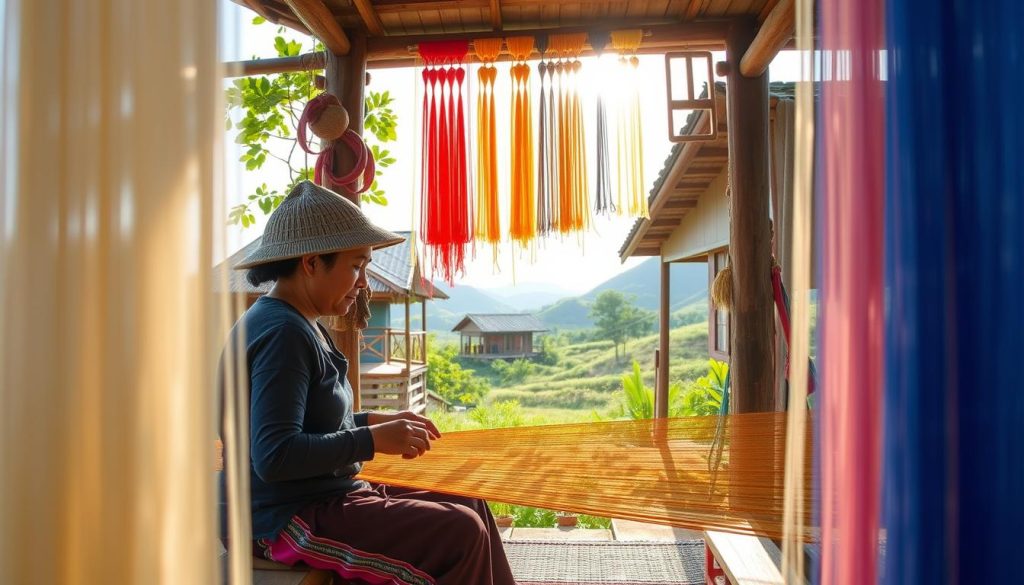
The silk weaving industry in Pakse is moving towards sustainable practices. These practices help the environment and support local economies. Artisans use eco-friendly methods to make silk, keeping their surroundings safe.
Environmentally Friendly Approaches
Artisans focus on using renewable resources for silk production. They choose natural dyes and fibers that are good for the environment. They also use traditional techniques that have been passed down for generations.
This way, they make high-quality silk with a low carbon footprint. Local weaving communities also use methods that save water and energy. These practices improve the quality of textiles and help protect the area’s biodiversity.
Supporting Local Economies
Sustainable weaving practices have a big impact on local economies. By supporting local artisans, you help the community grow. This creates jobs that support families and strengthens the community.
As more people look for eco-friendly products, demand for sustainable silk goes up. This trend helps local economies and encourages more artisans to use green practices. It makes Pakse’s culture and economy stronger.
| Practice | Description | Benefits |
|---|---|---|
| Natural Dyes | Utilizing plant-based materials for coloring textiles | Minimizes chemical waste and promotes biodiversity |
| Water Conservation | Techniques that significantly reduce water use during production | Preserves local water supply and ecosystem |
| Community Sourcing | Purchasing raw materials from local producers | Strengthens local economies and reduces transportation emissions |
Cultural Heritage Preservation in Laos
Silk weaving is a key part of Laos’ cultural heritage. It’s not just a craft but a way to show the social and cultural identity of many groups. Exploring silk weaving in Laotian culture reveals a deep history and importance.
Importance of Silk Weaving in Laotian Culture
Silk weaving is vital in Laotian families. About two million women have learned to weave, often from their mothers. They use traditional methods and materials, like wood and bamboo, to make their looms.
The vertical heddle floor loom is a symbol of this craft. It’s used by Lao Loum women.
Community Efforts in Preserving Traditions
Communities work hard to keep their traditions alive. They hold workshops, festivals, and educational programs to spread the word. In Ban Phanom village, families keep old techniques alive, using natural fibers and dyes.
Visitors can join workshops and meet local artisans. It’s a chance to dive into these traditions.
| Community Efforts | Description |
|---|---|
| Workshops | Opportunities for learning weaving techniques from master artisans. |
| Festivals | Cultural events showcasing traditional textiles and weaving practices. |
| Educational Programs | Initiatives aimed at teaching younger generations about silk weaving. |
| Visitor Engagement | Hands-on experiences that connect tourists with local weaving traditions. |
The Unique Lao Traditional Textiles
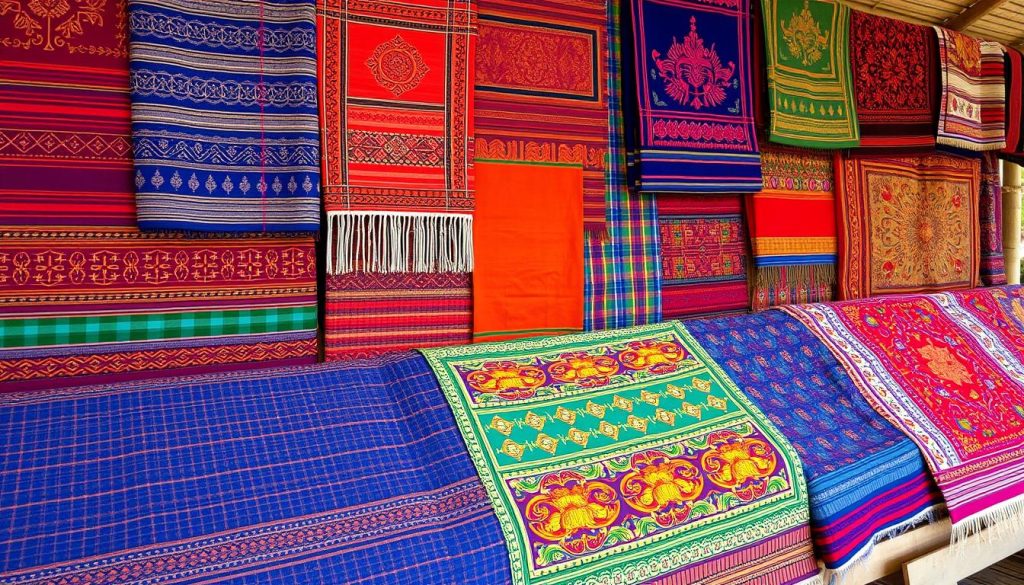
Lao traditional textiles show the country’s rich culture. They mix art and tradition, showing what it means to be Lao. Each piece tells a story, filled with symbols from local tales, beliefs, and social status.
Types of Fabrics and Patterns
Traditional Lao textiles use many fabrics, like cotton and silk. They come in solid colors and detailed patterns. The weaving methods have been passed down, making each fabric special and meaningful.
Artisans use threads to make complex designs. These designs often tell stories or show important parts of Lao life.
Symbolism in Textile Designs
The designs in Lao textiles come from deep folklore and beliefs. Colors and patterns mean different things. For example, some colors might mean good luck and happiness.
Other designs might link to spiritual practices. This art form is more than just decoration. It’s a way to share cultural values and identity with the Lao people.
Visiting the Silk Weaving Villages
Exploring the silk weaving villages near Pakse is a unique experience. It lets you dive into local life in Pakse. You’ll see traditional weaving and learn about the area’s culture.
How to Get to Ban Saphai
To get to Ban Saphai, take a bus or sawngthaew from Pakse. These options are affordable, costing about 20,000K. With growing interest, more day trips are available, making it easier to visit.
What to Expect on Your Visit
Your visit to Ban Saphai will be interactive. You’ll see the weaving process up close and learn about the weavers’ skills. The real charm of Pakse’s silk villages is the genuine experiences they offer.

You can also buy beautiful silk products from the weavers. This supports the local economy. Remember, prices can be negotiated, making these items affordable treasures. This visit is more than shopping; it’s about supporting traditional weaving.
Understanding Silk Weaving Techniques
Exploring silk weaving in Pakse opens a world of tradition. It starts with picking the finest silk threads. This step is key to making beautiful fabrics.
Artisans add their own touch to each piece. This makes the textiles not just beautiful but also a part of Laos’ culture.
The weaving process is full of details. From back-strap looms to ikat techniques, every step is a work of art. Weavers often get ideas from local artifacts or nature.
For example, Sharon made a unique blouse fabric. Jan, on the other hand, is learning to weave shibori designs. This shows how these methods can be passed on to new weavers.
Workshops and classes also play a big role. They teach new techniques like Doubleweave and woven shibori. This helps keep the art of weaving alive in Pakse.





