Differences Between North and South Korea Explained
The Korean peninsula, once a unified country, has been divided into two distinct nations since 1945. Over the decades, North and South Korea have developed significant divergences in political systems, economic structures, cultural traditions, and daily living conditions. Understanding these contrasts is essential for comprehending the complexities of the Korean Peninsula and its global implications. This article compares the political, economic, cultural, military, and demographic differences between the two countries.
Political differences between North and South Korea
North and South Korea have vastly different political systems and ideologies that shape their government structures, leadership, and policies. In North Korea, the Supreme Leader holds absolute power, while in South Korea, power is dispersed among the President, Prime Minister, and National Assembly. North Korea follows the ideology of Juche, which promotes self-reliance and independence, while South Korea operates as a liberal democracy. Furthermore, North Korea functions as a single-party state under the Korean Workers’ Party, which suppresses dissent and political opposition, while South Korea’s multi-party democracy fosters freedom of expression and open debate.
The two Koreas also have divergent policies across human rights, economics, and foreign relations. North Korea’s political isolationism has resulted in strained relations with most of the international community, while South Korea actively engages in international diplomacy and maintains strategic alliances with the United States, Japan, and other democratic nations. These foundational political differences have produced vast disparities in development and living standards between the two countries.
Economic contrasts between North and South Korea
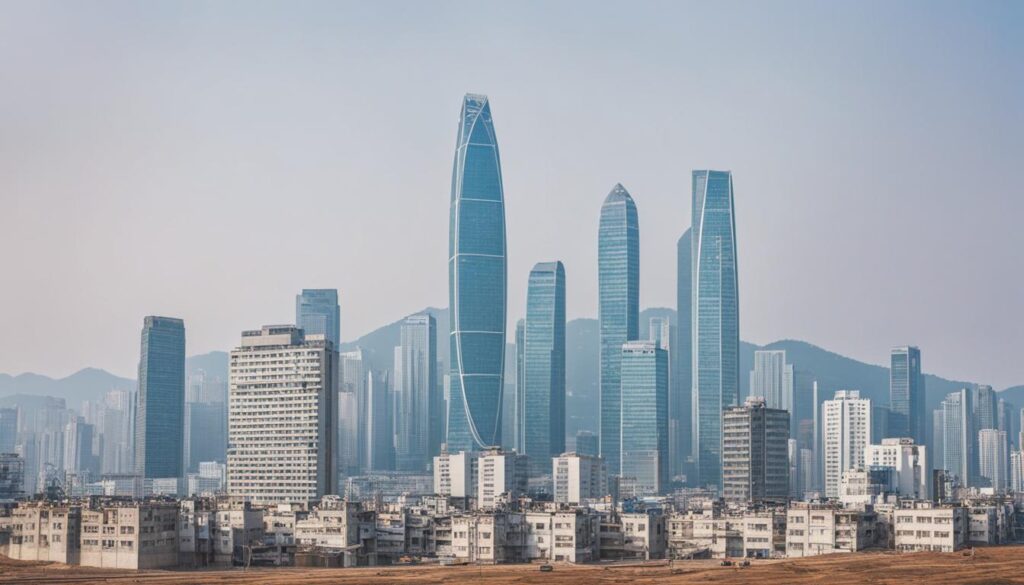
The economic differences between North and South Korea are among the starkest of any two neighboring countries in the world. The most significant contrast is the gap in GDP. South Korea’s nominal GDP is estimated at approximately $1.7 trillion (as of recent estimates), while North Korea’s GDP is estimated at approximately $28 billion. These figures represent a ratio of roughly 60 to 1. North Korea does not publish reliable national economic statistics, so external estimates carry significant uncertainty.
South Korea’s economy has become one of the world’s leading exporters of electronics, automobiles, and petrochemicals, driven by major conglomerates including Samsung, Hyundai, LG, and SK Group. North Korea’s economy relies heavily on agriculture and mining, lacks the infrastructure necessary to increase industrial output, and has faced significant international economic sanctions since 2006 related to its nuclear weapons program. These disparities result in major differences in living standards and access to basic amenities including electricity, clean water, and healthcare.
| South Korea | North Korea | |
|---|---|---|
| GDP (nominal, approx.) | ~$1.7 trillion | ~$28 billion (est.) |
| Per capita GDP (nominal, approx.) | ~$33,000 | ~$1,100 (est.) |
| Exports | ~$630 billion | ~$1.7 billion (pre-sanctions peak) |
| Foreign direct investment | Active participant in global FDI | Near zero due to sanctions |
(Note: North Korea does not publish economic data. External estimates vary and carry high uncertainty.)
Cultural variances between North and South Korea
The cultural differences between North and South Korea reflect the broader divergences in their political and economic systems. These differences appear across language, food, music, literature, and art.
Language is one of the most apparent cultural distinctions. Both countries share the Korean language base, but North Korea has developed distinct vocabulary and terminology reflecting its political ideology, and the standard dialect differs from Seoul-based Korean. South Korea has adopted a significant number of English loanwords and has modernized the language’s written and spoken forms in ways that have diverged from the North over 80 years of separation.
Food culture reflects the contrasts in resources and openness. North Korean cuisine emphasizes hearty, filling dishes well-suited to an agricultural economy, including rice, noodle soups, and kimchi, which both Koreas regard as a national food. South Korean cuisine has diversified into a globally recognized culinary tradition, including dishes like bibimbap, bulgogi, samgyeopsal, and a wide range of fermented and seafood preparations. South Korea’s food industry is a major cultural export, with Korean cuisine gaining international recognition alongside Korean pop culture.
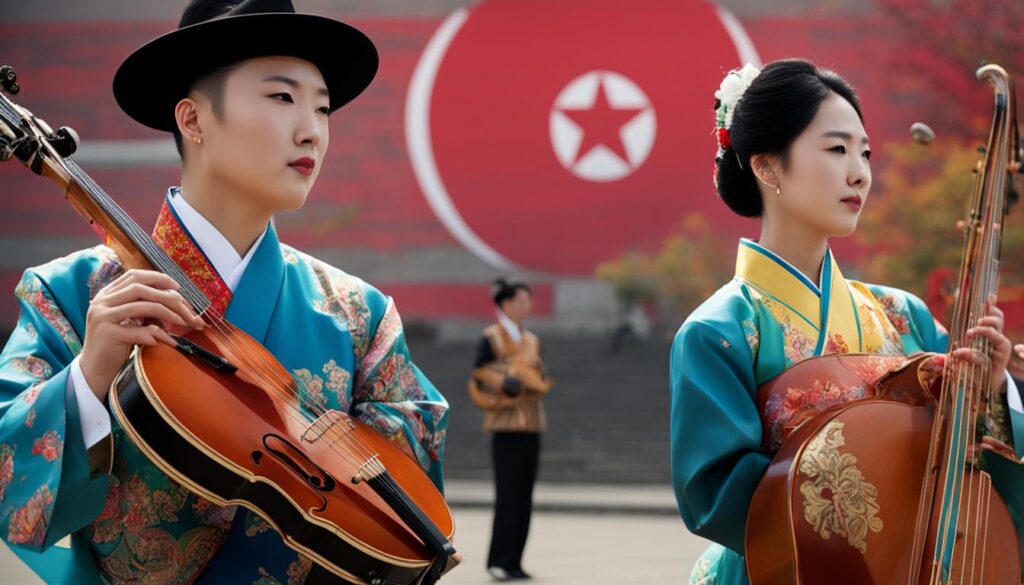
Traditional music also diverges significantly. North Korea focuses on revolutionary-themed music and orchestral productions that reinforce political themes, while South Korea produces a wide variety of music genres, including K-pop, which has become a global phenomenon. BTS, BLACKPINK, and other K-pop acts have created an international Korean cultural wave (Hallyu) that includes film, television dramas, beauty, and fashion alongside music.
Korea cultural comparison table
| Category | North Korea | South Korea |
|---|---|---|
| Language | Korean with distinct dialect and political vocabulary | Modern Korean with significant English loanwords |
| Food | Hearty stews, soups, kimchi; rice-focused | Diverse: bibimbap, bulgogi, seafood, globally exported cuisine |
| Music | Revolutionary-themed, state-approved orchestral and choral | K-pop, hip-hop, rock, classical; globally distributed |
| Literature | Socialist realism centered on revolution and leadership | Wide range from traditional poetry to contemporary fiction and graphic novels |
| Art | State-directed; primarily serves propaganda purposes | Liberal and diverse; internationally exhibited |
Daily life contrasts in North and South Korea
Daily life in North and South Korea differs in almost every measurable dimension due to their divergent political and economic systems. In North Korea, the government controls most aspects of daily life, and citizens have limited access to information and outside resources. In South Korea, life is modern and urbanized, with one of the highest standards of living and technology adoption rates in Asia.
Education is compulsory in both countries, but quality and content differ substantially. North Korean education is highly regulated and centers on political ideology alongside standard subjects. South Korea has a highly competitive education system internationally recognized for its academic rigor; South Korean students consistently rank among the top performers in the OECD’s PISA international education assessments.
Healthcare in South Korea is among the most developed in Asia, with near-universal health insurance coverage under the National Health Insurance Service (NHIS) and a network of world-class hospitals in Seoul and major cities. Healthcare in North Korea is nominally universal under the government system but is significantly underfunded and limited in practice, particularly outside Pyongyang.
| North Korea | South Korea | |
|---|---|---|
| Electricity access | Primarily limited to Pyongyang and major cities | Near-universal (99.9% of population) |
| Internet access | Closed national intranet (Kwangmyong); no public internet access | 98%+ of population; among fastest average internet speeds globally |
| Mobile phones | State-controlled domestic network; no international calls | Highly developed; Samsung and LG are domestic manufacturers |
| Transportation | Limited paved roads; outdated public transit | Modern KTX high-speed rail, extensive subway systems in Seoul and other cities |
Military postures of North and South Korea
The military postures of North and South Korea are among the defining characteristics of the Korean Peninsula. North Korea has one of the largest standing militaries in the world relative to its population and has pursued nuclear weapons and ballistic missile development as central elements of its national defense strategy. Its standing army comprises approximately 1.2 million active personnel, with an estimated 6 million reserve personnel.
South Korea maintains a standing army of approximately 500,000 active personnel and has focused on building a technologically advanced defense infrastructure. South Korea’s defense is enhanced by a mutual defense treaty with the United States, which maintains approximately 28,500 US troops in South Korea under United States Forces Korea (USFK).
North Korea’s military spending is estimated at approximately 15 to 20 percent of GDP. South Korea spends approximately 2.7 percent of GDP on defense, which in absolute terms represents substantially more due to the GDP differential. North Korea has conducted six confirmed nuclear weapons tests (2006, 2009, 2013, 2016 twice, and 2017) and has conducted numerous ballistic missile tests including intercontinental ballistic missile (ICBM) range tests in recent years. The nuclear and missile programs remain the central point of tension between North Korea and the international community.
International relations of North and South Korea
North Korea maintains its closest international relationships with China and Russia, which provide diplomatic cover in the UN Security Council and limited economic support. China is North Korea’s most significant trading partner and diplomatic ally. South Korea is closely aligned with the United States under the 1953 Mutual Defense Treaty and is a member of the United Nations, OECD, and G20.
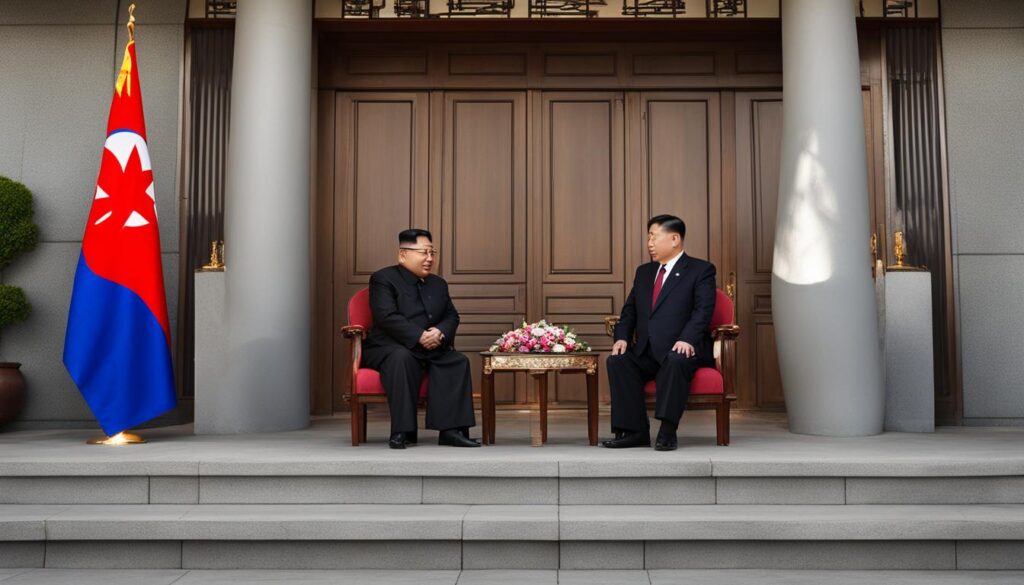
The 2018 inter-Korean summit between Kim Jong-un and South Korean President Moon Jae-in at Panmunjom produced the Panmunjom Declaration, expressing commitment to denuclearization and improved relations. A subsequent summit between Kim Jong-un and US President Donald Trump in Singapore in June 2018 was the first meeting between a sitting US president and a North Korean leader. These diplomatic efforts did not produce lasting agreements, and North Korea resumed ballistic missile testing in subsequent years. As of 2025, inter-Korean relations remain at a low point, with North Korea having declared South Korea an adversarial foreign state.
North and South Korea marched together under a unified Korean flag at the opening ceremony of the 2018 Winter Olympics in Pyeongchang, South Korea, and fielded a combined women’s ice hockey team, a significant symbolic gesture amid an otherwise tense period.
Human rights situations in North and South Korea
The human rights situations in North and South Korea differ fundamentally. North Korea is consistently rated as one of the most repressive governments in the world by international human rights organizations including Human Rights Watch and Amnesty International. The country maintains a system of political prison camps (kwanliso) estimated to hold 80,000 to 120,000 people, where conditions include forced labor, inadequate food, and reports of torture. Freedom of speech, press, assembly, and religion are severely restricted. Citizens have no right to leave the country without government authorization.
South Korea is a democracy with constitutional protections for freedom of speech, assembly, and religion, and is considered to have strong human rights protections overall. Challenges include restrictions on speech related to national security (the National Security Act has been criticized for its broad application), treatment of migrant workers and refugees, and discrimination against LGBTQ+ individuals, who do not have legal recognition for same-sex partnerships.
Demographic differences between North and South Korea
The population of North Korea is estimated at approximately 26 million, while South Korea’s population is approximately 51.7 million, meaning South Korea has roughly twice the population of the North. South Korea’s population density is approximately 527 people per square kilometer; North Korea’s is approximately 214 people per square kilometer.
The median age in South Korea is approximately 44 years, reflecting an aging demographic profile with one of the lowest birth rates in the world (South Korea’s total fertility rate has fallen below 1.0 in recent years, the lowest of any OECD nation). North Korea’s median age is estimated at approximately 35 years, giving it a relatively younger population. Life expectancy in South Korea is approximately 83 years, among the highest in Asia; North Korea’s life expectancy is estimated at approximately 72 years, though data reliability is limited.
Where to stay if visiting South Korea
North Korea is effectively closed to independent tourism. South Korea, by contrast, is a well-developed tourist destination accessible to most international travelers without a visa for stays up to 90 days (varies by nationality). Seoul is the primary base for most visitors.
The Shilla Seoul at 202 Dongho-ro in the central business district is one of Seoul’s flagship luxury hotels, operated by Samsung’s hospitality arm, with a 23,000-square-meter outdoor garden and proximity to Gyeongbokgung Palace and Bukchon Hanok Village. Rates start from approximately $350 per night as of 2026. The Four Seasons Hotel Seoul at 97 Saemunan-ro in the Gwanghwamun area, opened in 2015, is positioned near the major government and cultural sites of central Seoul, with rates from approximately $400 per night. Lotte Hotel Seoul at 30 Eulji-ro in Jung-gu has been operating since 1979 and offers central downtown access to Myeongdong shopping and Namsan mountain, with rates from approximately $200 per night.
Outside Seoul, Gyeongju (the historic capital of the Silla Kingdom) and Busan (South Korea’s second city, known for Haeundae Beach and Gamcheon Culture Village) are the most-visited destinations. The Hilton Gyeongju near Bomun Lake offers access to Bulguksa Temple and Seokguram Grotto, both UNESCO World Heritage Sites, from approximately $180 per night.
Frequently asked questions
When and why was Korea divided into North and South?
Korea was divided in 1945 following Japan’s defeat in World War II, when the Soviet Union occupied the peninsula north of the 38th parallel and the United States occupied the south. These occupation zones became the basis for two separate governments: the Democratic People’s Republic of Korea (North Korea) established in 1948 under Kim Il-sung, and the Republic of Korea (South Korea) established in 1948 under Syngman Rhee. The Korean War (1950 to 1953) cemented the division, ending in an armistice rather than a peace treaty, which means North and South Korea remain technically in a state of war.
What is Juche and how does it shape North Korea?
Juche is the official state ideology of North Korea, developed by founding leader Kim Il-sung and formalized in the 1970s. It emphasizes self-reliance, national independence, and the central role of the Korean Workers’ Party and its leadership. Juche serves as both a political philosophy and a near-religious doctrine; Kim Il-sung and his successors (Kim Jong-il and Kim Jong-un) are treated with reverence in state ceremonies and propaganda. The ideology has influenced North Korea’s foreign policy of isolation, its rejection of international aid conditions, and its commitment to developing an independent military deterrent including nuclear weapons.
Can tourists visit North Korea?
Tourists from most Western countries face extreme restrictions or outright prohibitions on visiting North Korea. The US government has banned US nationals from traveling to North Korea since 2017. When tours were available, they were tightly controlled with visitors accompanied by government minders and access limited to approved sites in and around Pyongyang. North Korea closed its borders to virtually all foreign visitors during the COVID-19 pandemic and had not fully reopened to general tourism as of early 2025. South Korea, by contrast, is open to international tourists from most countries without a visa for stays up to 90 days.
What is the DMZ and can visitors see it from South Korea?
The Demilitarized Zone (DMZ) is the roughly 4-kilometer-wide buffer zone running 250 kilometers across the Korean Peninsula along the Military Demarcation Line established by the 1953 armistice. The Joint Security Area (JSA) at Panmunjom within the DMZ is the only point where North and South Korean soldiers stand face-to-face. South Korea offers organized guided tours to the DMZ from Seoul, covering sites including the Third Tunnel of Aggression (a North Korean-dug infiltration tunnel discovered in 1978), the Dora Observatory, and Dorasan Station. Tours operate regularly from Seoul and can be booked through the Korean Tourism Organization or authorized tour operators.
How does internet access differ between North and South Korea?
South Korea has one of the fastest average internet speeds in the world, with near-universal access and a highly developed digital economy. Citizens can freely access the global internet and social media. North Korea operates a closed domestic intranet called Kwangmyong, which contains a curated selection of state-approved content. North Korean citizens have no access to the global internet. Access to foreign media, including South Korean television dramas and K-pop music, is officially illegal in North Korea and can result in severe punishment, though smuggled USB drives containing foreign content have reportedly circulated widely within the country.
What is the status of Korean reunification?
Reunification of the Korean Peninsula has been a stated goal of both governments, though the practical and ideological obstacles are significant. South Korea maintains a Ministry of Unification specifically to manage inter-Korean affairs and reunification planning. North Korea declared in 2023 that it no longer regards South Korea as a partner for reunification and explicitly defined South Korea as a “principal enemy state,” a significant hardening of its official position. Most analysts consider reunification unlikely in the near term given the economic disparities, political incompatibilities, and North Korea’s nuclear deterrent posture.
How large are the militaries of North and South Korea compared to neighboring countries?
North Korea’s military of approximately 1.2 million active personnel is the fourth or fifth largest in the world by total active personnel, a remarkable figure for a country of 26 million people. South Korea’s military of approximately 500,000 active personnel is supported by the US-South Korea mutual defense alliance and the presence of approximately 28,500 US troops. Japan maintains approximately 250,000 active Self-Defense Force personnel. China’s People’s Liberation Army has approximately 2 million active personnel. The concentration of military force on the Korean Peninsula relative to the countries’ populations is among the highest in the world.