Candomblé in Salvador: What to Expect as a Visitor
Thinking about visiting Salvador? You might wonder if you can join a Candomblé ceremony. Candomblé in Salvador is a special way to connect with the local culture and community. It’s a blend of African heritage and vibrant traditions, making it a key part of the city’s identity.
Attending a ceremony lets you dive into the rhythms and rituals of this Afro-Brazilian religion. It’s a truly immersive experience.
Visitors often have questions about what a Candomblé ceremony in Salvador is like. There are tours that last 3 hours, led by local guides who speak many languages. They include Portuguese, English, and Spanish.
The tours get high marks, with a rating of 4.3 out of 5. This shows most people have a great time. Whether you want to learn about Candomblé’s history or feel the ceremony’s energy, it’s a memorable and enriching experience.
Understanding Candomblé: A Sacred Afro-Brazilian Religion
Exploring Candomblé in Salvador reveals a rich and complex faith. It has roots in West Africa and blends African paganism with Portuguese Catholicism. This mix creates a unique cultural practice that defines Salvador.
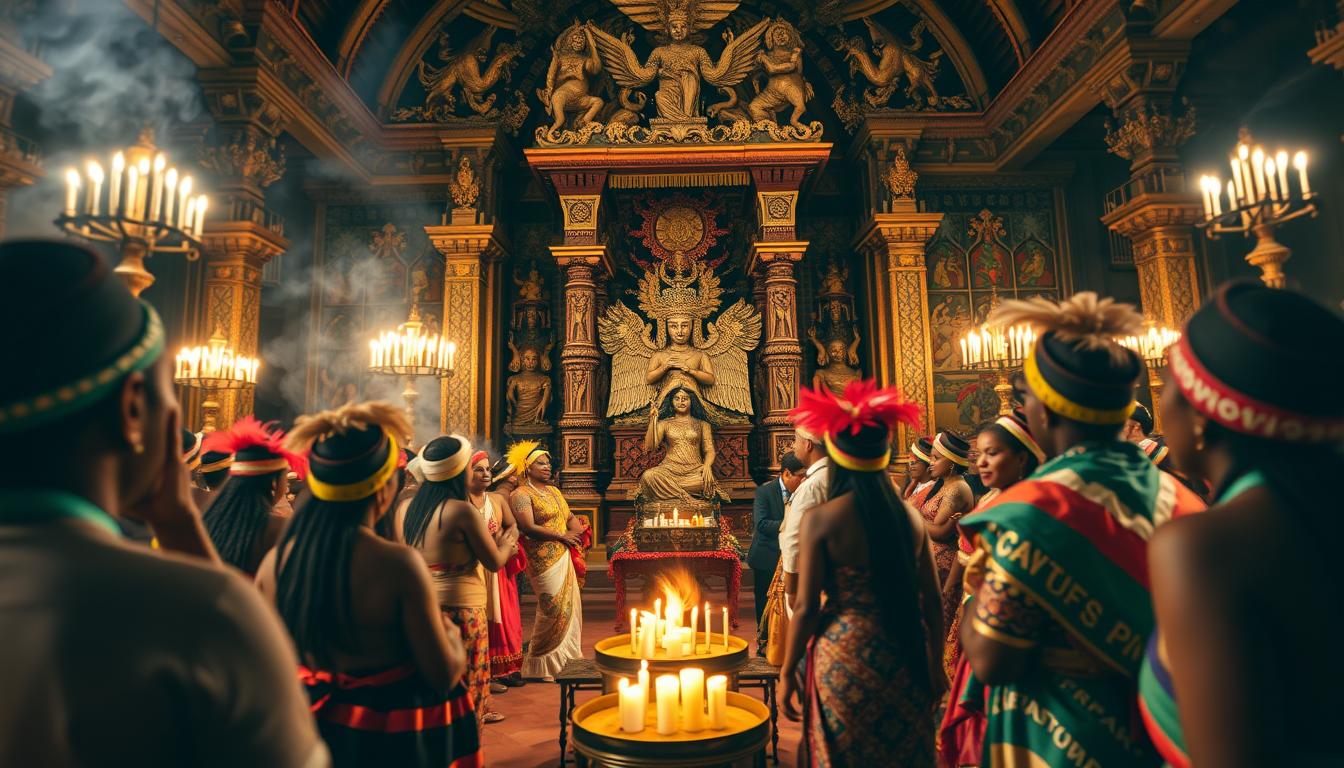
At a Salvador Candomblé ceremony, you’ll see a lively mix of music, dance, and spirituality. The Candomblé tradition Salvador is famous for its energetic rituals. These include colorful costumes, rhythmic drums, and wild dancing.
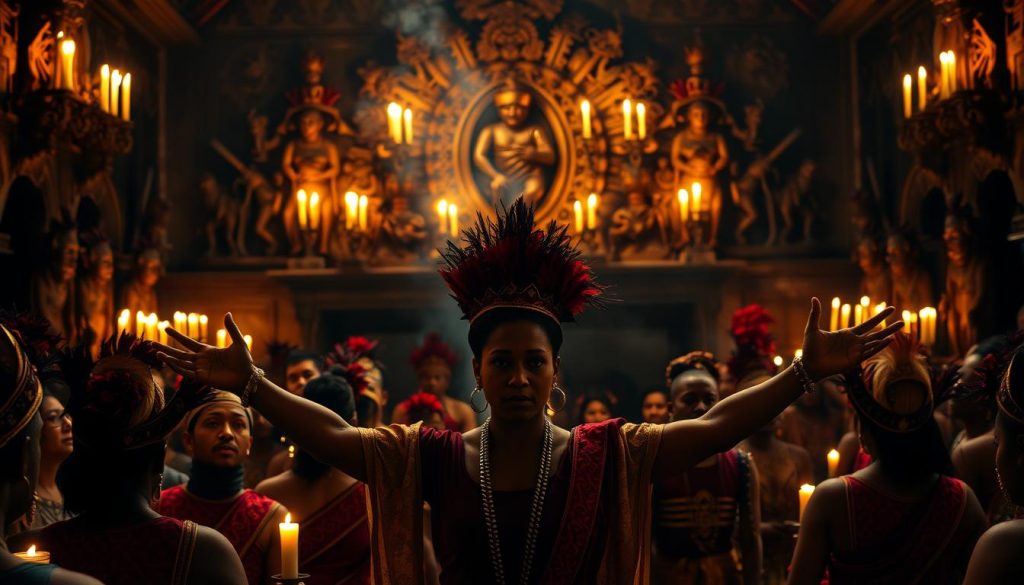
To grasp Candomblé’s importance in Salvador, knowing its history is key. The city’s African diasporic community shaped it, bringing their traditions from West Africa. Over time, Candomblé has become a big part of Salvador’s culture, mixing African, Portuguese, and indigenous influences.
Some key aspects of Candomblé include:
- Its origins in West Africa and the transatlantic slave trade
- The syncretic blend of African paganism and Portuguese Catholicism
- The importance of music, dance, and trance in worship services
- The recognition of sixteen Orixas (sub-deities) created by the Supreme Creator, Olódùmarè
The Spiritual Significance of Salvador as Brazil’s Religious Capital
Exploring Salvador reveals its deep Afro-Brazilian culture and history. It’s known as “Black Rome” of Brazil. The city is filled with Candomblé temples, making it a key spot for those interested in Afro-Brazilian spirituality.
The city’s roots in Candomblé, coming from West African ethnic groups, are strong. Afro-Brazilian spirituality is a big part of Salvador’s identity. The city is a center for this unique culture. The Iemanjá’s Day festival is a major event here, drawing thousands.
Salvador’s spiritual importance goes beyond festivals. It has many Candomblé temples, or terreiros, which are sacred for worship and growth. These temples are crucial to the Candomblé religion, showing the city’s Afro-Brazilian heritage.
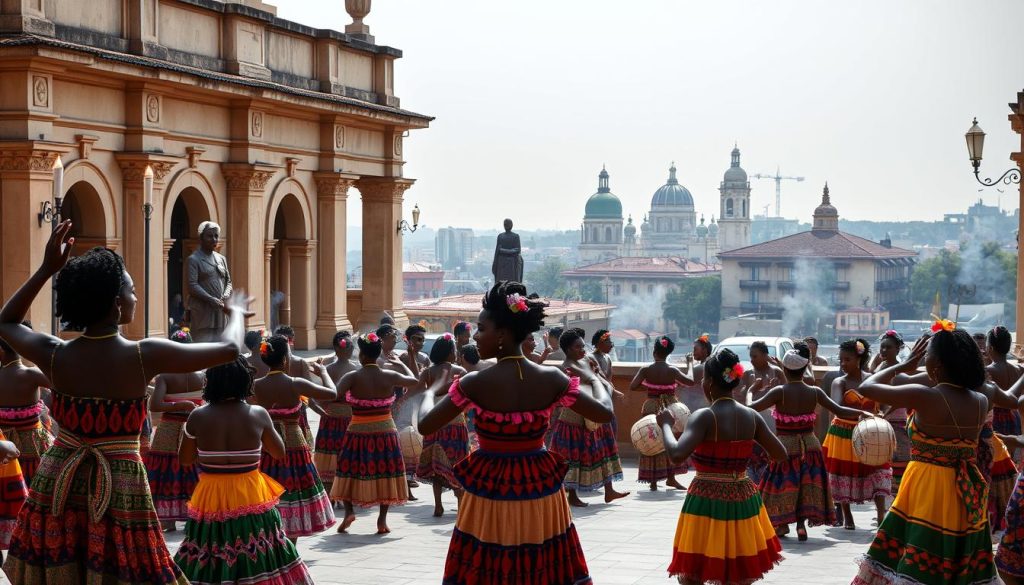
As Brazil’s religious capital, Salvador offers a rich experience. It’s perfect for those interested in Candomblé or just wanting to dive into the city’s culture. With its history, architecture, and warm people, Salvador is a top destination for Afro-Brazilian culture.
Terreiros: The Sacred Temples of Candomblé
Exploring Salvador’s culture leads you to terreiros, the sacred temples of Candomblé. These temples are key for Candomblé practice in Salvador. They also highlight the city’s rich cultural heritage. Salvador has over 1,155 terreiros, more than its Catholic churches.
A visit to Salvador isn’t complete without seeing these important terreiros. Some must-see places include:
- Terreiro do Gantois
- Terreiro da Casa Branca
- Terreiro do Ilê Axé Opô Afonjá
The architecture and symbols of these terreiros show Candomblé’s deep cultural roots in Salvador. The religious hierarchy is crucial, with priests and priestesses at the heart of the community.
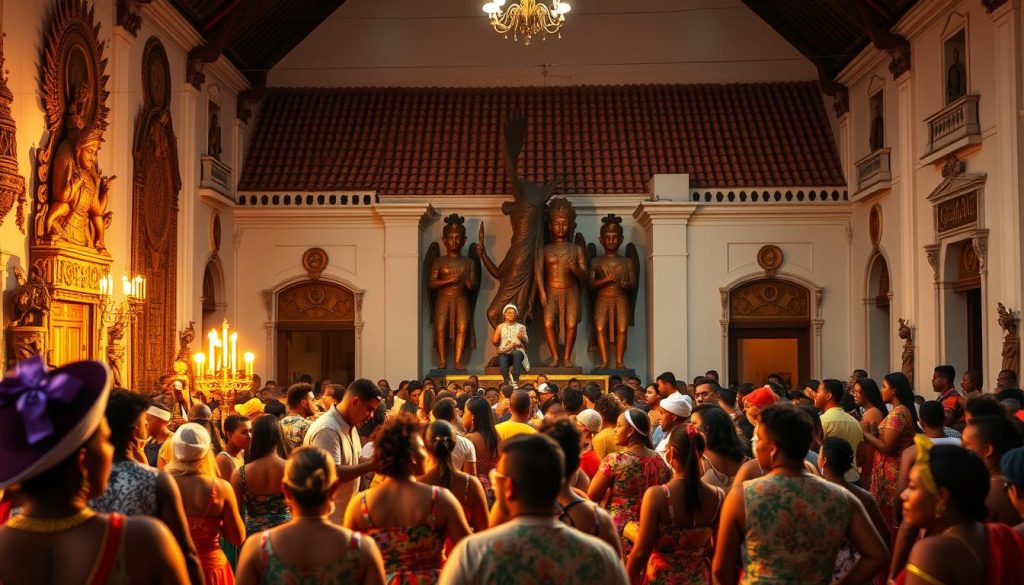
Exploring Candomblé reveals each terreiro’s unique history, symbolism, and cultural importance. This enriches your experience in Salvador and deepens your understanding of Candomblé.
| Terreiro | Location | Significance |
|---|---|---|
| Terreiro do Gantois | Salvador | One of the oldest and most important terreiros in Salvador |
| Terreiro da Casa Branca | Salvador | Known for its beautiful architecture and symbolic elements |
| Terreiro do Ilê Axé Opô Afonjá | Salvador | A significant cultural and spiritual center in Salvador |
Can I Attend a Candomblé Ceremony in Salvador?
Visiting Salvador can be a great chance to see a Candomblé ceremony. Visiting a Candomblé ceremony Salvador lets you dive into the city’s culture. To do this, you must be respectful and follow the rules.
Guided tours are a good way to see a Candomblé ceremony. These tours teach you about the tradition’s history and importance. You’ll visit places like the Afro-Brazilian Museum and the Pierre Verger Foundation.

When you go to a Candomblé ceremony, dress code matters. Wear clothes that cover your knees and shoulders. Avoid shorts and sleeveless tops. Being respectful and open-minded makes your visit meaningful and enriching.
Types of Candomblé Ceremonies and Celebrations
In Salvador, you’ll find many Candomblé ceremonies and celebrations. Each one shows the tradition’s richness and diversity. From big festivals to small rituals, each event is special and meaningful. Attending a Candomblé ceremony in Salvador is a chance to feel the community’s vibrant energy.
A Candomblé ceremony in Salvador is a unique experience. The city’s culture and beauty make it perfect. You’ll see captivating rhythms, intricate dances, and colorful costumes. It’s an immersive experience.
Public Festivals
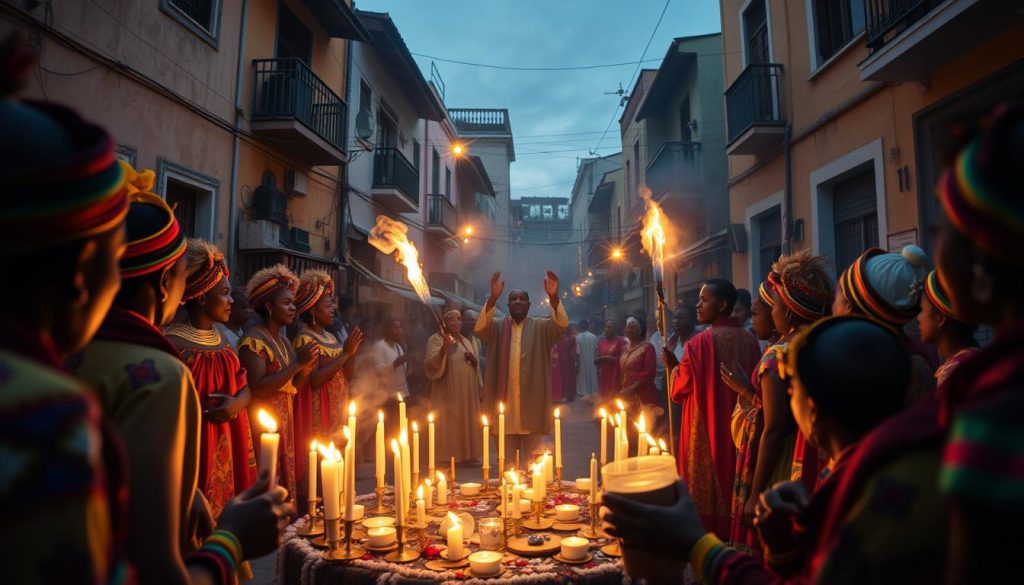
Public festivals, or festas, are key in Candomblé. They bring the community together to honor the orixás and celebrate important dates. Some notable festivals include:
- New Year’s Eve celebrations, which mark the beginning of a new year and the cycle of life
- The Festa do Bonfim, a festival that honors the Senhor do Bonfim, a revered orixá in Candomblé
- The Festa de Iemanjá, a celebration of the goddess of the sea and fertility
Private Rituals
Private rituals are intimate ceremonies held in Candomblé temples. They are for initiates and community members. These rituals honor the orixás and seek guidance and protection.
Seasonal Celebrations
Seasonal celebrations are vital in Candomblé. They mark important dates in the agricultural cycle and the seasons. These celebrations include music, dance, and offerings to the orixás. They are times for the community to come together and thank the earth for its bounty.
What to Wear and Bring to a Ceremony
Attending a Candomblé ceremony in Salvador requires proper attire and items. Wear white or light-colored clothes to show respect. This tradition is also seen during the Festival of Yemanja, where devotees honor the goddess in white.
Before going to a Candomblé ceremony, think about bringing a small gift. This gesture is common during the Festival of Yemanja. It’s a way to appreciate the community and the ceremony. Dressing modestly and offering a gift shows respect for the Can I attend a Candomblé ceremony in Salvador community.
Here are some additional tips to keep in mind:
- Dress modestly, covering your knees and shoulders
- Avoid wearing shorts and sleeveless tops
- Bring a small gift or offering, such as a basket or a donation
- Be respectful of the ceremony and the participants
By following these guidelines, you can have a positive and respectful experience at a Candomblé ceremony in Salvador. Approach the ceremony with an open mind and a desire to learn about the Candomblé in Salvador community.
Cultural Etiquette and Respectful Behavior
Attending an Authentic Candomblé ceremony in Salvador requires cultural awareness and respect. This experience can be unique and enriching. But, it’s important to be sensitive to the community and their traditions.
Photography and Recording Rules
Respecting photography and recording rules is key. Usually, taking photos or videos is not allowed. It can be distracting and disrupt the ceremony. Always ask permission before capturing any moments.
Interaction Guidelines
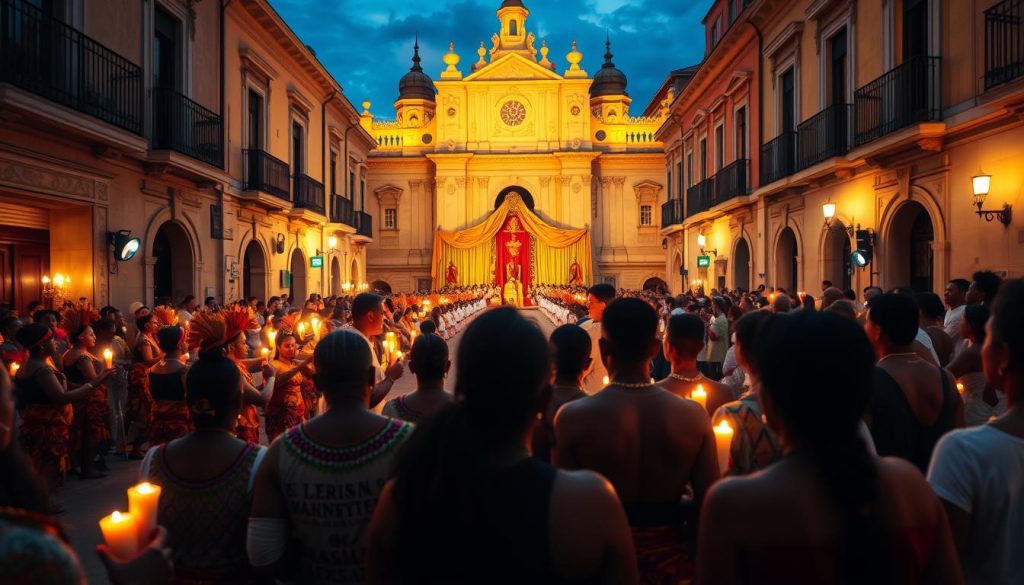
Interacting with participants and leaders must be respectful. Dress modestly and avoid physical contact. Don’t interrupt the ceremony. It’s also important to respect cultural norms and traditions.
Common Mistakes to Avoid
Common mistakes include breaking photography rules and not dressing modestly. Being unaware of cultural norms is also a mistake. Avoid interrupting and not following instructions from leaders.
- Respect the photography and recording rules
- Dress modestly and avoid physical contact
- Be mindful of the cultural norms and traditions
- Avoid behaviors that may be considered offensive or disrespectful
By following these guidelines, you can have a meaningful experience at an Authentic Candomblé ceremony in Salvador. Visiting a Candomblé ceremony is a unique opportunity. Approach it with sensitivity and respect.
The Role of Music and Dance in Ceremonies
When you attend a Candomblé ceremony in Salvador, you’ll see how music and dance are key. Each orixá has its own dance and rhythm, showing their unique spirit. Drums are used because they’re thought to talk to the orixás.
In a Salvador Candomblé ceremony, dance is more than just moving. It’s a way to connect with the orixás and show respect. The orixás take over the dancers, using them to share divine energy. This mix of music, dance, and spirituality is what makes Candomblé ceremonies special in Salvador.
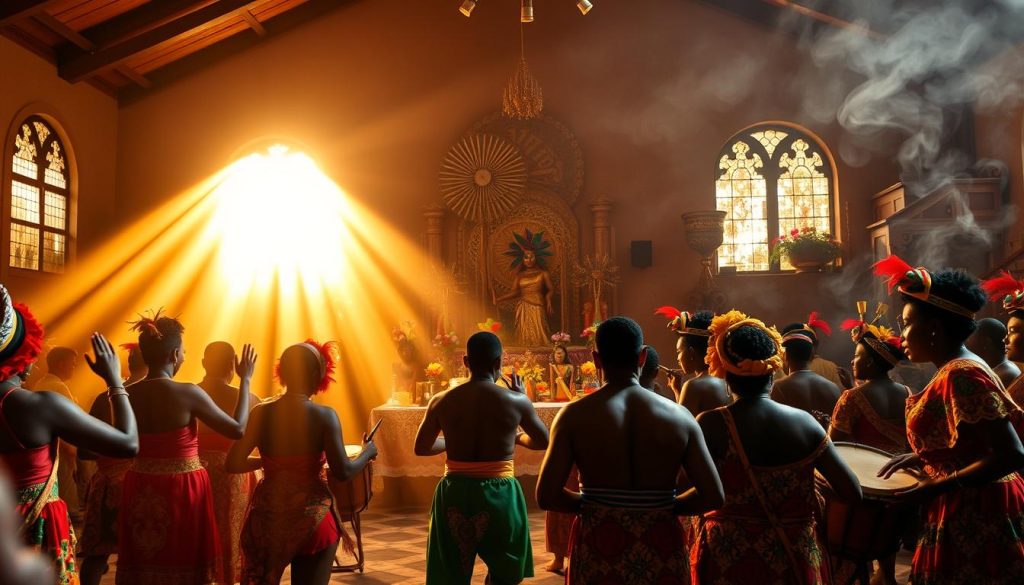
- Drums: used to communicate with the orixás
- Rattles: used to purify and protect the participants
- Bells: used to invoke the orixás and mark the beginning of the ceremony
These instruments, along with the dance, make the ceremony a unique and powerful experience. It’s what makes Candomblé ceremonies in Salvador stand out.
Understanding Candomblé Deities (Orixás)
Exploring Candomblé in Salvador reveals the importance of Orixás, deities in this Afro-Brazilian religion. Each Orixá has its own powers and role, making them key to the culture in Salvador. The influence of African cultures on Candomblé is clear, given the 5.5 million Africans brought to Brazil.
The Orixás are seen as having supernatural powers. People in Candomblé honor twelve or more main deities. Becoming part of Candomblé in Salvador takes up to seven years, including a head-shaving ritual and 21 days of isolation.
Some important Orixás include:
- Exu, the messenger god
- Oxalá, the god of creation
- Oxum, the goddess of love and beauty
Candomblé ceremonies are crucial, involving animal sacrifices and community meals. The use of African languages like Yorúba and Kimbundu enriches the experience.

In Salvador, Candomblé is a vital part of the city’s heritage. About 170,000 people in Brazil practice it. This shows the lasting impact of African cultures in the area.
Finding Authentic Ceremonies as a Visitor
Planning to visit an Authentic Candomblé ceremony Salvador? It’s key to find trusted local resources. This way, you’ll truly experience Candomblé’s essence and its role in Salvador’s culture. When Visiting a Candomblé ceremony Salvador, you’ll see Afro-Brazilian religious practices and traditions up close.
To fully enjoy your visit, keep these tips in mind:
- Find tour guides who know a lot about Candomblé and its history.
- Connect with local resources like Terreiro do Gantois, which hosts monthly ceremonies.
- Be respectful of the ceremony and its people. Follow any rules given by your guide or local resource.
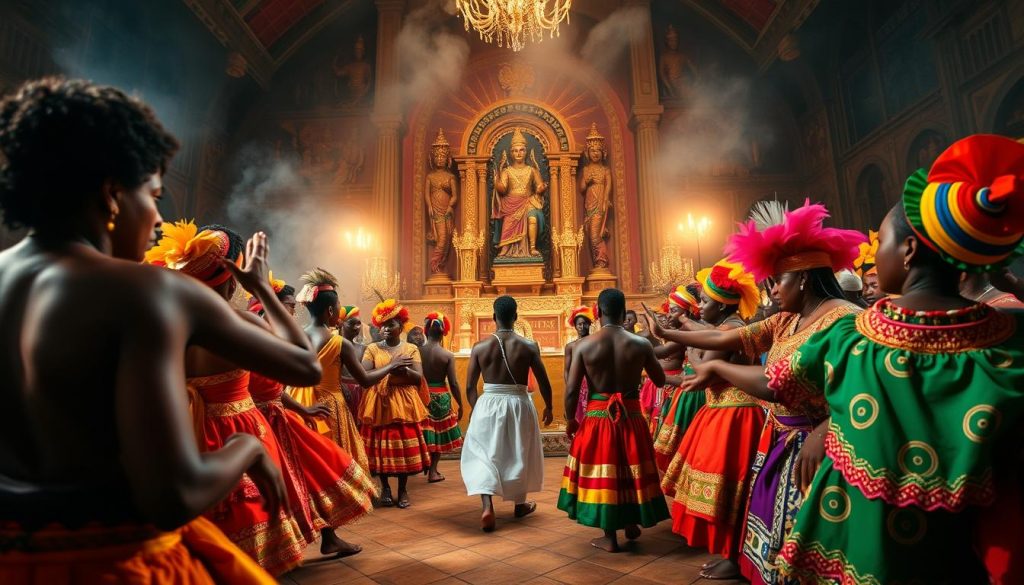
By doing your research and finding real ceremonies, you’ll dive into Salvador’s lively culture. You’ll also learn more about Candomblé. Always be respectful and open-minded. This way, your visit to Visiting a Candomblé ceremony Salvador will be unforgettable and enriching.
Best Times to Experience Candomblé in Salvador
Planning your visit to Salvador? Wondering when to see Candomblé’s vibrant culture? The answer is during public festivals and celebrations. These events let you dive into the tradition and culture of Candomblé in Salvador. You’ll see the sights, sounds, and rhythms of this Afro-Brazilian religion.
For the best experience, visit during the peak festival season. The streets buzz with music, dance, and colorful costumes. You’ll see elaborate processions, vibrant market stalls, and delicious food. All these are key parts of the Candomblé ceremony in Salvador.
Some top times to see Candomblé in Salvador include:
- Public festivals, which show the vibrant culture of Candomblé in Salvador
- Celebrations, where you can see the tradition and culture of Salvador Candomblé
- Seasonal events, which highlight the unique customs and practices of Candomblé in Salvador
Attending these events lets you feel the real spirit of Candomblé in Salvador. You’ll understand the importance of Salvador Candomblé in the city’s culture. So, plan your visit for one of these exciting events. Get ready to dive into the vibrant world of Candomblé in Salvador.
Conclusion: Embracing Cultural Respect While Experiencing Candomblé
As you leave Salvador, remember to carry cultural respect and sensitivity with you. Candomblé is not just a show for visitors. It’s a deep tradition that shapes the city’s identity. By being open-minded and respectful, you can dive deep into Salvador’s spiritual heritage.
In Pelourinho, a UNESCO World Heritage Site, you’ll see over 300 years of Afro-Brazilian history. The city has 20 churches and many cultural centers. These places show how important Candomblé is to the local community.
Salvador is alive with culture, thanks to its 200 annual events and festivals. These celebrate Afro-Brazilian traditions. With 60% of the population being Afro-Brazilian, the city’s heritage is everywhere. Enjoying local foods and music shows the importance of these traditions.
By respecting and being sensitive to the culture, your visit to Salvador will be rewarding. It will also honor Candomblé and the Afro-Brazilian community. As you leave, let Salvador’s spirit inspire you to learn more about Brazil’s diverse cultures.