Bumthang’s Sustainable Weaving & Craft Co-ops
Have you ever thought about how a single thread can connect beautiful textiles, cultural identity, and community strength? In Bumthang, Bhutan, this is what sustainable weaving and handicraft cooperatives do. They are known for their rich weaving heritage, like Yathra weaving.
These cooperatives lead in promoting sustainable weaving. They don’t just make textiles; they support eco-friendly practices and traditional techniques. This aligns with the values of this unique culture.
Exploring Bumthang’s handicraft cooperatives reveals their big impact on local economies and preserving Bhutanese heritage.
Introduction to Weaving Culture in Bumthang
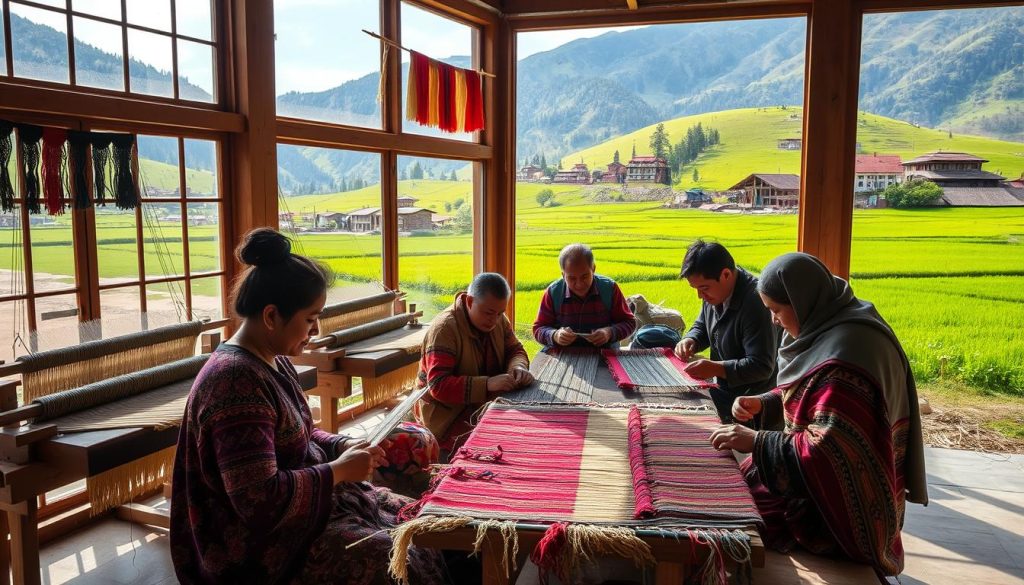
The weaving culture in Bumthang is a treasure trove of history and art. It shows the skill and traditions of its people. This tradition, called Thagzo, has been passed down for generations. It stands for pride and community identity.
In almost every home, you’ll find a loom. This shows how important handcrafted textiles are in Bumthang life.
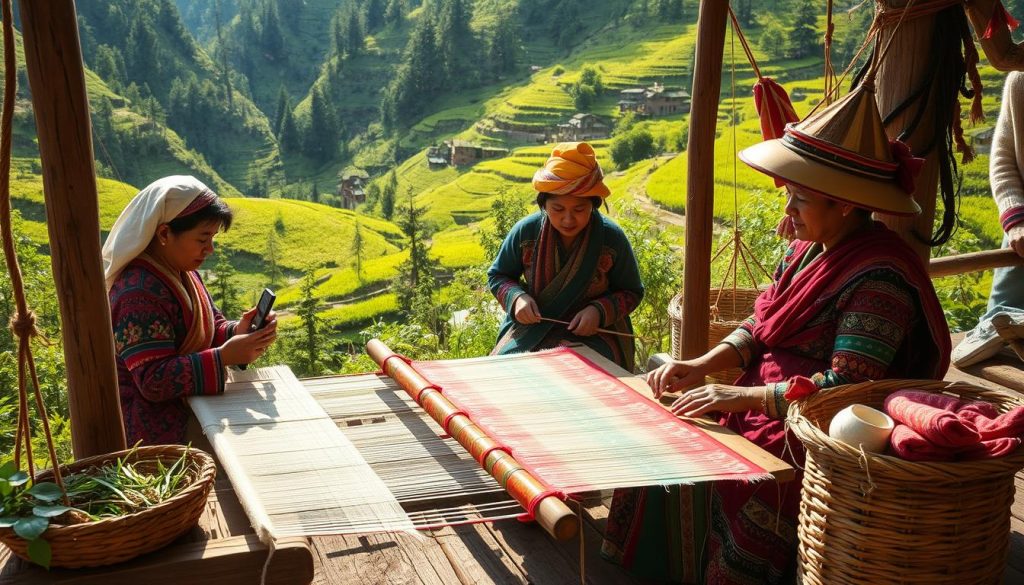
The colors and designs in these textiles tell stories of family and spirituality. They are more than clothes; they are expressions of who we are. They capture the heart of Bhutan’s heritage.
Since the 1960s, Bhutan’s textiles have caught the world’s eye. They are now seen as symbols of Bhutan’s identity. They show the skill and cultural value in every piece. Learning about Bumthang weaving helps us see how traditions stay alive in a changing world.
Sustainable Weaving and Handicraft Cooperatives in Bumthang
The world of sustainable weaving and handicraft in Bumthang is all about keeping traditions alive and caring for the planet. Local artisans come together in these cooperatives. They work as a team to keep their craft alive and reach more people with their work.
These groups focus on making things in a way that’s good for the environment. Bhutan’s forests help them use materials that are safe for the planet. They make sure their textiles are not only beautiful but also kind to the earth.
These cooperatives help people, mainly women, make a difference in their communities. The Handicraft Association of Bhutan helps many small businesses grow. When you buy from them, you help the environment and support local people.
These efforts do more than just help artisans. They make people proud of their community. People want to buy textiles that are made with care and tell a story. Buying from these cooperatives means you connect with the people who make these beautiful items.
The Art of Yathra Weaving
Yathra weaving is a key part of Bhutan’s rich culture. It shows the hard work and skill of many generations. You’ll learn about the detailed steps and how nature helps create these colorful textiles.
History and Tradition of Yathra Weaving
Yathra weaving has been around for centuries in Bhutan. It got a boost in the early 1900s thanks to the royal family. They brought in new tools and ways to make Yathra fabrics.
The use of ‘thrue tha’s, or horizontal frame looms, led to unique patterns and bright colors. These reflect Bhutan’s culture and nature.
Materials and Techniques
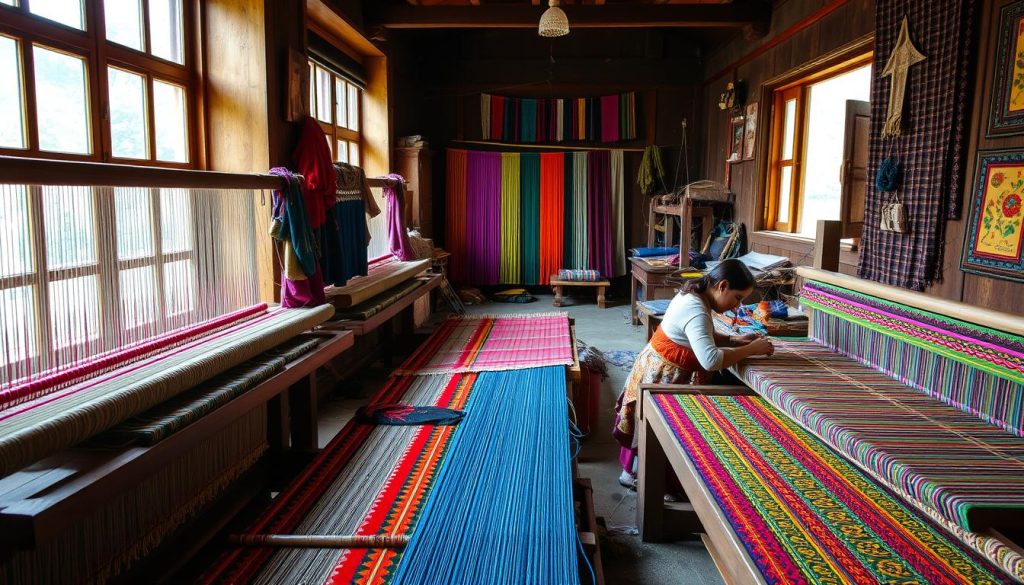
Sheep wool is at the heart of Yathra weaving. Natural dyes give the textiles their bright colors and make them last longer. The way artisans use local resources shows their care for the environment.
The weaving process is a mix of skill and tradition. Each piece is not just useful but also a beautiful work of art.
| Material | Properties | Uses in Yathra Weaving |
|---|---|---|
| Sheep Wool | Durable, Warm | Main fabric for Yathra textiles |
| Natural Dyes | Vibrant, Eco-friendly | Coloring the wool |
| Threads | High tensile strength | Weaving intricate patterns |
The mix of traditional techniques and quality materials keeps Yathra weaving alive. It’s a vital part of Bhutan’s culture.
The Role of Women in Bumthang Weaving
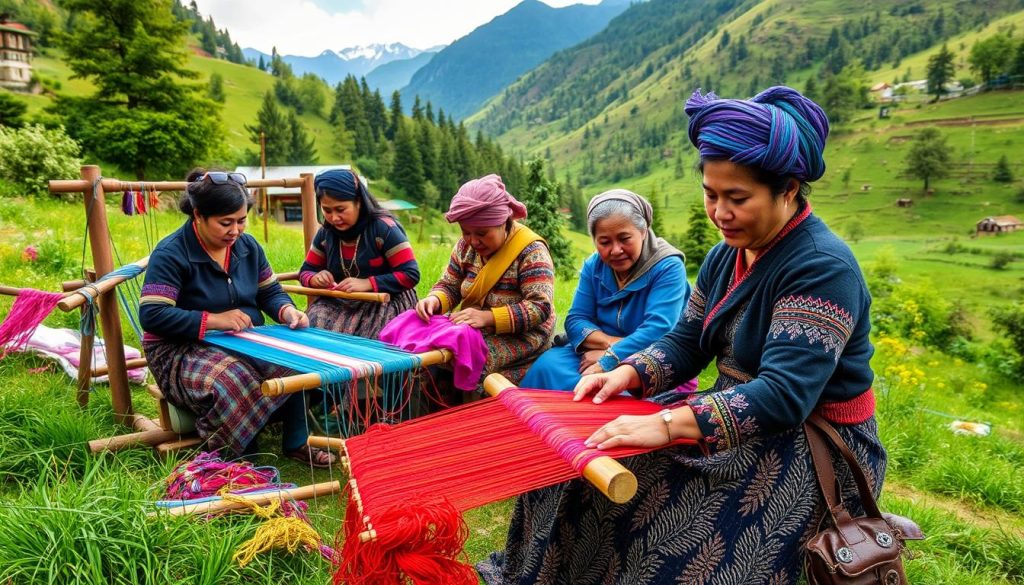
Women are key in Bumthang’s weaving culture, thanks to community-based programs. These programs help women develop skills and gain financial freedom. Women in cooperatives work together, creating beautiful textiles and building strong bonds.
Community-Based Weaving Programs
These programs are crucial for empowering women in Bumthang. They teach weaving techniques, preserve cultural heritage, and encourage new designs. The weaving sessions also foster friendship and skill sharing, helping the craft grow.
Socio-Economic Impact on Families
Weaving has a big impact on families in Bumthang. Women in cooperatives earn money from their textiles, improving family life. This income helps support children’s education and brings economic stability. It also strengthens women’s roles in family and community decisions.
Eco-Friendly Artisan Groups in Bumthang
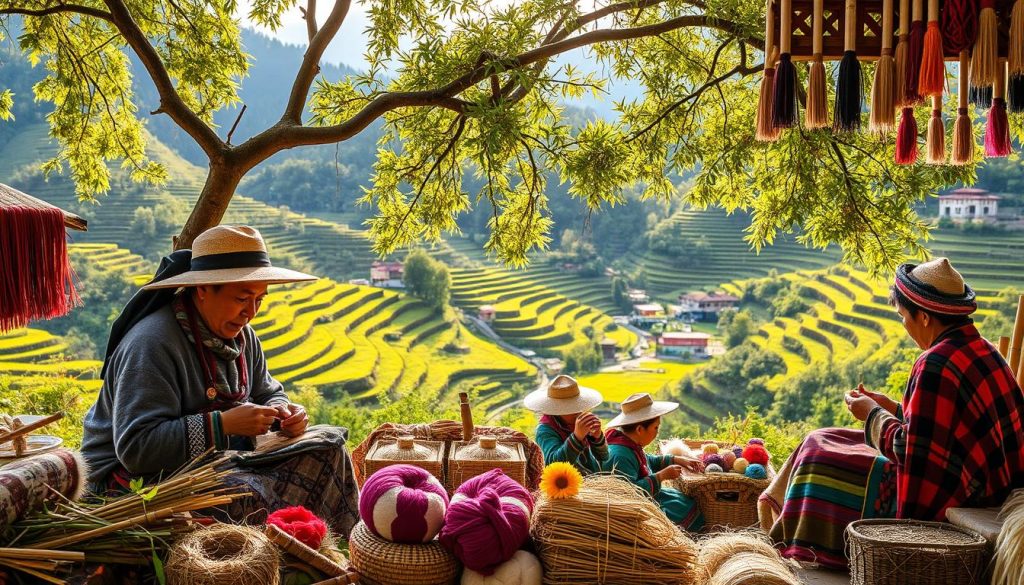
In Bumthang, eco-friendly artisan groups are key in promoting sustainable crafts. They focus on natural dyes and local materials. This makes their textiles both beautiful and good for the environment.
Utilizing Natural Dyes and Materials
The use of natural dyes in Bumthang ensures colors come from plants and minerals. This method keeps traditional techniques alive and reduces harm to the environment. It also adds a unique touch to Yathra textiles and supports sustainability.
Environmentally Conscious Weaving Practices
These groups focus on weaving that’s good for the planet. They use methods that reduce waste and source materials responsibly. This approach helps protect local ecosystems and combines craftsmanship with environmental care.
| Initiative | Description | Impact |
|---|---|---|
| Sustainable Design-led Hotels | Percentage of eco-friendly accommodations | X% |
| Tree Donation Campaign | Financial support for tree planting | £10,000 |
| Impact Increase | Positive contributions from artisan groups | Y% |
| Community Support | Assistance through Partners in Development Programme | Improved quality of life |
| Demonstration Farm | Establishment for integrated farming | Model community-managed farm |
Ethical Hand-Weaving Initiatives
Ethical hand-weaving in Bumthang is key to community growth and green practices. It boosts artisans’ lives and keeps the area’s culture alive.
Supporting Local Economies
Helping local economies in Bumthang is a main goal. About 60% of families make money from weaving. Weaving groups help artisans get fair pay, keeping money in the community.
Local groups have helped grow these cooperatives. This strengthens the area’s economy.
Ensuring Fair Trade Practices
Fair trade is crucial in Bumthang’s weaving. Weaving groups ensure artisans get paid right for their work. They focus on clear prices and contracts, building trust.
This fair way of working improves artisans’ lives. It also encourages buyers to value Yathra weaving more.
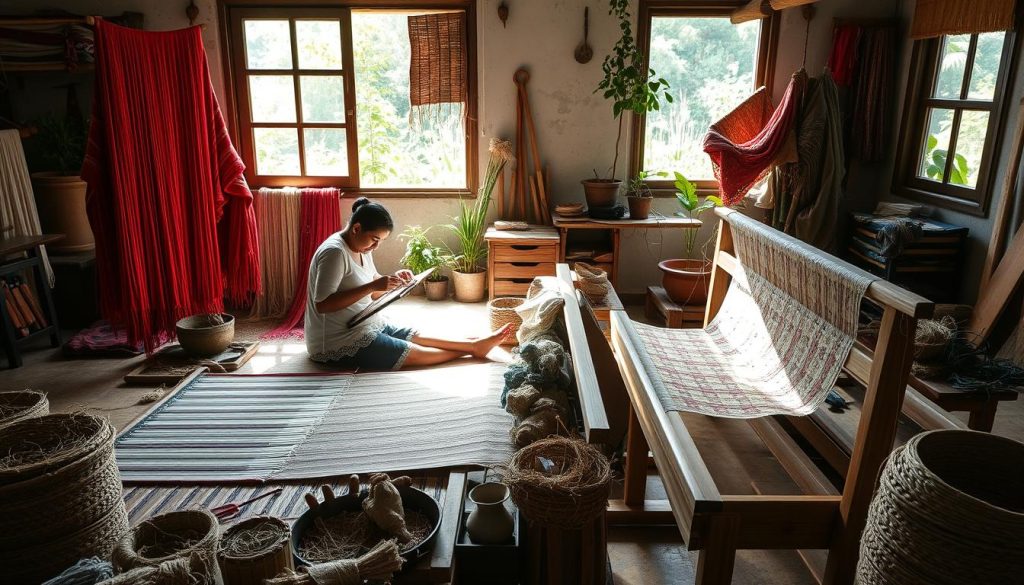
Significance of Handcrafted Textiles in Bumthang
Handcrafted textiles are very important in Bumthang. They show the art and culture of the area. Yathra fabrics are special, showing the value of textiles in Bhutan.
Cultural Identity through Textiles
Textiles in Bhutan mean more than just clothes. Each piece tells a story of the people. You can see the culture, beliefs, and care for nature in these textiles.
The bright patterns in Yathra fabrics show the community’s values. They help keep the local identity strong, even with changes like globalization.
Uses of Yathra Fabrics in Daily Life
Yathra fabrics have many uses in Bumthang. They are used for:
- Traditional clothing for different events
- Warm blankets and bed covers
- Rain cloaks for the weather
- Decorations that keep cultural beauty alive
This shows how important Yathra fabrics are in daily life. They also help connect you to the community. Recently, Yathra textiles have become popular in modern fashion, making them relevant for the future.
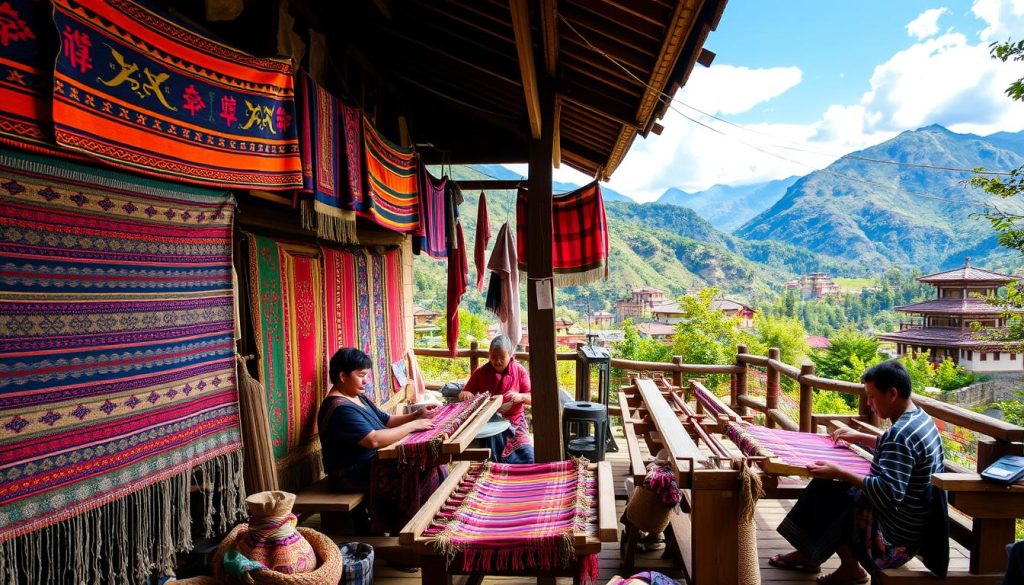
| Type of Fabric | Traditional Uses | Cultural Significance |
|---|---|---|
| Yathra | Clothing, blankets, rain cloaks | Symbol of local identity and community |
| Kira | Women’s formal wear | Reflection of social status and heritage |
| Gho | Men’s formal attire | Expression of cultural pride |
Challenges Faced by Weaving Cooperatives
Weaving cooperatives in Bumthang face many challenges that affect their growth. These issues show the struggle to keep cultural heritage alive while meeting modern needs. The rise in market competition in Bumthang is a big threat to traditional artisans.
Market Competition and Globalization
Global markets growing means more mass-produced textiles, threatening local crafts. This competition in Bumthang makes artisans face fast trends from industrial manufacturing. They have a chance to be known worldwide but must balance quality and quantity.
Preserving Traditional Techniques
Keeping traditional weaving techniques alive is a big challenge. Modern ways often replace old skills, hurting artisans’ identity. To keep these techniques, cooperatives must teach them to the next generation. Combining old traditions with new needs is key to preserving culture and meeting market demands.
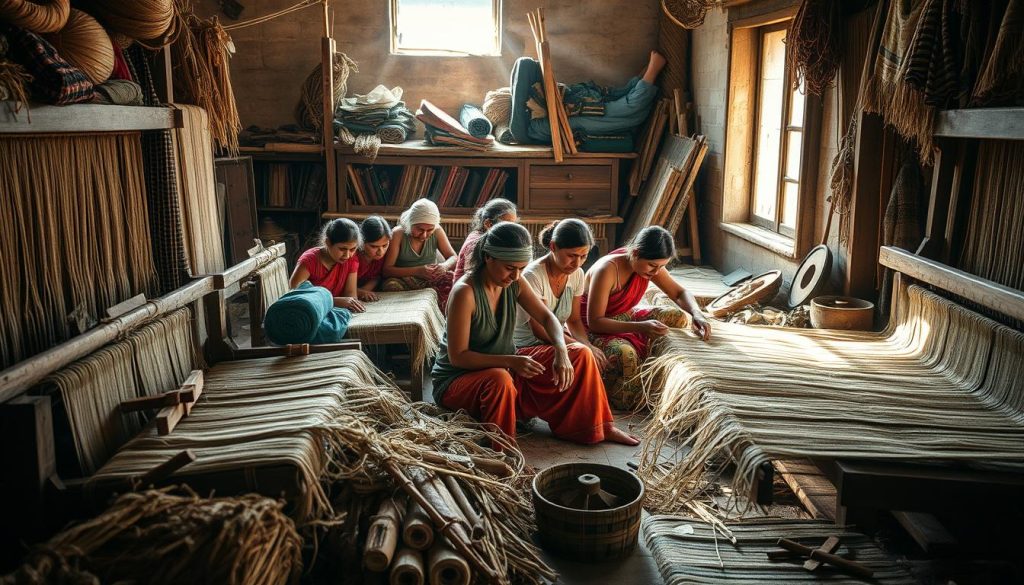
Success Stories from Bumthang Weaving Cooperatives
The success stories in weaving from Bumthang show how cooperative efforts can change lives. These groups work together, improving Yathra textiles and boosting local economies. They also help build stronger communities.
Highlighted Cooperative Initiatives
Many cooperative efforts have helped bring back traditional weaving. They hold workshops and fairs to show off their work. This has helped artisans get their products seen by more people.
Working with fashion designers has also helped. It lets artisans show off their skills in new ways. Some successful cooperatives include:
- Mayan Hands, which supports local artisans by buying their work directly.
- Unidas Para Vivir Mejor, a group that focuses on fair trade and sustainable textiles.
Impact of Weaving on Local Development
Weaving has a big impact on Bumthang’s development. It creates jobs for many, including women. This helps improve their lives and gives them more power.
The cooperatives also help the community in many ways. They make people work together and solve problems as a team. The benefits are clear:
| Impact Area | Description |
|---|---|
| Economic Growth | More chances for local artisans to sell their work, thanks to markets and partnerships. |
| Job Creation | More jobs for artisans, mainly women, which helps their families financially. |
| Social Cohesion | Stronger community bonds as cooperatives bring members together. |
| Cultural Heritage Preservation | Support for keeping traditional techniques alive, ensuring knowledge is passed down. |
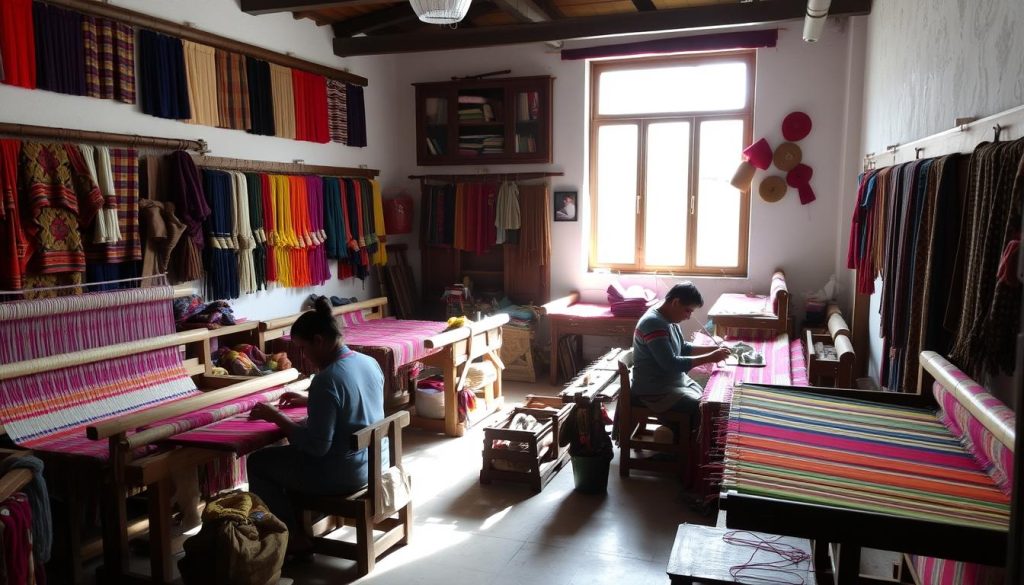
Future of Sustainable Weaving in Bumthang
The future of weaving in Bumthang is full of promise. Artisans are using new tech and designs, changing traditional weaving. They mix old ways with new trends, making Yathra fabrics more appealing.
You’ll see new materials and styles. This mix attracts different customers. It’s a chance for unique and modern products.
Prospective Innovations in Weaving
New ideas in Bumthang keep the craft alive and interesting. Artisans work with designers and business people. This leads to new products that people all over the world want.
These partnerships create exciting collections. They also help keep the craft sustainable. This is key to keeping the tradition alive.
Expanding Market Access for Artisans
It’s important to help artisans reach more people. Using online stores and trade fairs helps them show their work. This boosts demand for their handmade items.
It also lets artisans in Bumthang join the global market. This growth opens doors for cultural exchange. It shows how important traditional weaving is today.
Conclusion
The weaving culture in Bumthang is a mix of sustainability, tradition, and community spirit. Artisans working together in cooperatives protect their cultural heritage. They also help local development and care for the environment.
By focusing on the future of weaving cooperatives, they show the value of sustainable practices. These practices keep Bumthang’s rich artistry alive.
Artisans in Bumthang are committed to innovation and reaching more markets. Their efforts show a path to success that combines new methods with old traditions. They use eco-friendly ways to make their craft grow, helping the environment and local people.
Keeping this weaving tradition alive is key for future generations. Supporting local cooperatives will make them stronger and keep Bumthang’s weaving art alive for years.