Avoid Fees by Consolidating Airport Bags
Ever been hit by high airport baggage fees? Airlines keep raising their charges. Last year, travelers spent over $6.8 billion on baggage fees. That’s a lot! You can cut these costs by packing smarter and consolidating your airport bags.
Merging your luggage saves money, especially now. Big airlines like United and American Airlines have raised their bag fees to about $35-$40 each. If you’re traveling with family or friends, combining bags could halve your checked bag fees. Want to know more about saving money this way? Keep reading to learn how bag consolidation can help you save on travel costs.
Understanding Airline Baggage Policies
Airline baggage policies are important when flying. They affect your travel experience. Knowing them well can save you money and reduce stress.
Standard Baggage Fees
Checked bag fees have changed a lot since 2008. Initially, they were about $15. Now, they’re more like $30 to $35. Southwest Airlines is unique because it offers two free checked bags.
Delta Airlines charges about $45 for a second checked bag on domestic flights. Checking a bag for a round trip can add $60 to $70 to your cost. In 2022, passengers spent about $6.8 billion on baggage fees, 17% more than in 2019.
Weight and Size Restrictions
Be aware of weight and size limits for bags. Checked bags can be up to 50 pounds. If a bag is over, you might pay more than $100. Carry-ons usually can be up to 15 pounds, but this varies.
Some budget airlines have different baggage fee rules. Cards that waive these fees are good for people who fly often. It’s worth checking the benefits they offer.
Baggage handling has gotten better with technology like RFID. This has made tracking and getting your bags faster and more reliable.
| Airlines | Free Checked Bags | Checked Bag Fees |
|---|---|---|
| Southwest Airlines | 2 | $0 |
| Delta Airlines | 0 | $45 for the second bag |
| Spirit Airlines | 0 | $39 (Booking) / $99 (Gate) for carry-on |
| Qatar Airways, Etihad Airways, Emirates, and Air India | Varies | Free |
Benefits of Consolidating Airport Bags
Putting all your travel bags together has many benefits, like lowering travel costs. By choosing luggage consolidation, you pay less in baggage fees. This is really handy on flights with airlines such as United Airlines, where two checked bags might cost you $180 for a round trip.
For families, this means a big chance to save on travel costs. Imagine a family of four reducing their fees by merging four bags into two. It doesn’t just save money but makes traveling easier. It’s a smart move for frequent flyers who face different checked baggage fees.
Some airline perks and credit cards encourage bag consolidation. For example, the Delta SkyMiles® Gold American Express Card offers a free first checked bag for up to nine people on the same booking. United MileagePlus Premier members can also get free checked baggage, depending on their status.
Southwest Airlines is unique because they don’t charge for the first two checked bags. Similarly, JetBlue waives baggage fees for active-duty military and their families traveling for fun. These perks make luggage consolidation even more worthwhile.
Combining your bags can save more money than buying premium tickets. For instance, Sun Country Airlines charges $50 for the first and second checked bags. By planning and combining bags, you save more than you would by splurging on more expensive tickets. This makes traveling smarter and cheaper.
| Airline | Free Baggage Allowance | Cost for Two Checked Bags (Round-Trip) |
|---|---|---|
| Southwest Airlines | Two checked bags free | $0 |
| United Airlines | One personal item and one carry-on | $180 |
| JetBlue | Two checked bags free for military | $0 |
| Sun Country Airlines | One personal item | $100 (if paid in advance) |
How to Effectively Combine Bags
Efficiently combining your bags can save you a lot on baggage fees. With fees reaching up to $40 per extra bag, packing smarter can help you save a lot. We’ll explore some practical tips for packing that can help you bring everything in fewer bags.
Condensing Tips for Families
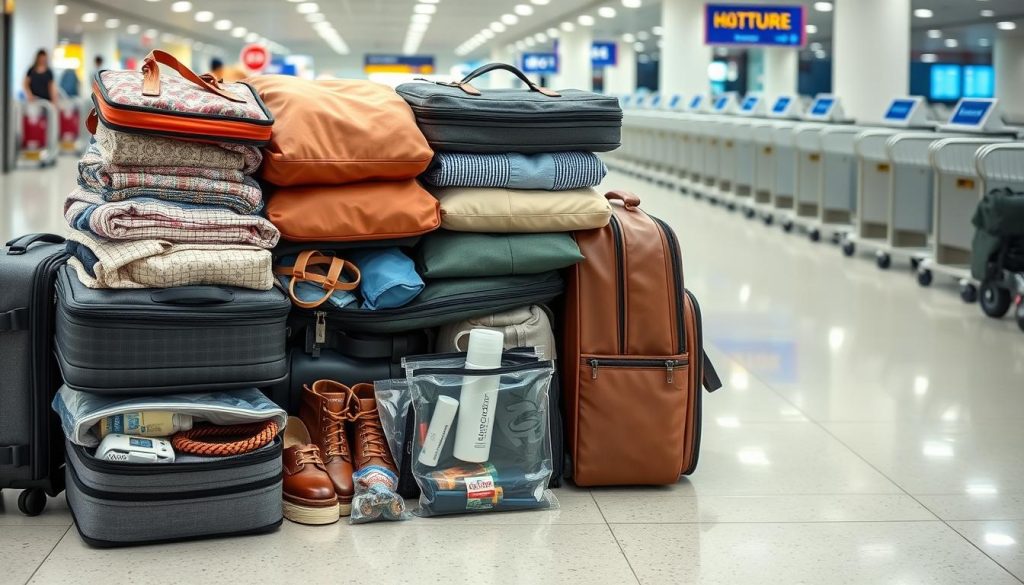
For families, handling many bags, especially with kids, can be tough. By packing smarter, you can lower stress and save money. Here are the best tips:
- Plan and prioritize essentials: Only pack what you absolutely need. Leave behind items easily found at your destination.
- Utilize multi-functional items: Choose clothing and gear that can serve multiple purposes.
- Share space: Allocate one large bag to share among family members instead of individual smaller bags.
- Distribute weight evenly: To avoid overweight fees, ensure no single bag exceeds airline limits.
Using Packing Cubes and Techniques
Thinking about using packing cubes can make a big difference. These cubes help you keep your luggage organized and make more space. Here’s what to do:
- Color-code cubes: Assign different colors for each family member to easily identify their belongings.
- Roll your clothes: This technique reduces wrinkles and makes better use of space within the cubes.
- Layer heavier items: Place heavier items at the bottom and lighter ones on top to maintain balance and prevent damage.
By following these tips, you can pack your bags well, avoid extra fees, and travel more smoothly.
Considerations for Weight and Size Limits
When you fly, knowing the limits for your carry-on and checked bags is key to avoid extra costs. Making sure your luggage fits the airline’s rules for size and weight helps dodge high fees. These fees can add up quickly.
Avoid Overweight Fees
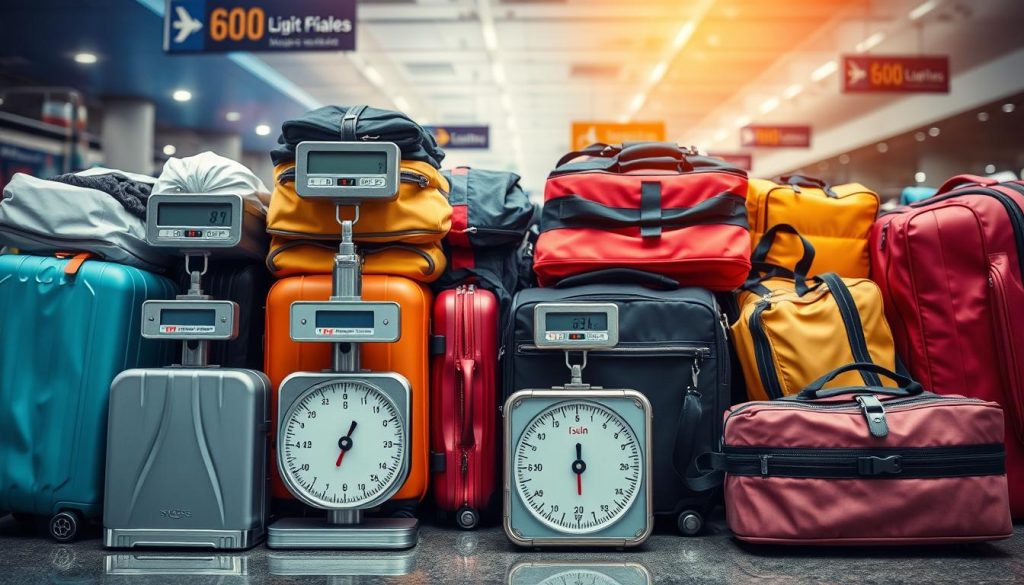
Packing smart can help you stay away from heavy bag fees. Airlines usually allow up to 50 pounds for a checked bag. Going over this limit could mean paying up to a few hundred dollars more. For instance, flying with Delta means $35 for the first bag and $45 for the second if they’re under 50 pounds. United, however, lets business and first-class flyers bring bags up to 70 pounds at no extra cost.
Families can share their total weight limit to save on fees. Spreading items across bags can keep each one within the weight limit and reduce costs.
Maximizing Carry-On Allowance
Getting the most from your carry-on lets you pack smarter. American Airlines allows a carry-on of 22 by 14 by 9 inches. Personal items can be up to 18 by 14 by 8 inches. Allegiant charges for carry-ons beyond 10 by 16 by 22 inches, with fees from $10 to $75. Their personal items can go up to 8 by 14 by 18 inches.
Using all available space means more items with no extra charge. Packing tricks like rolling your clothes can make more fit. This way, you can bring more without paying more.
Knowing and using each airline’s rules for bag size and weight can save you money. It helps you skip extra charges for heavy bags.
Utilizing Airline Credit Cards for Fee Waivers
Airlines make more than $4 billion each year from checked bag fees. This makes the baggage fee waivers from airline credit cards very appealing to those who travel often. By using these cards, you can save a lot on travel costs.
To get these fee waivers, you must have certain airline credit cards. For example, the Delta SkyMiles® Gold American Express Card offers free checked bags for the cardholder and up to eight companions. This can lead to big savings, especially since Delta charges $35 for each bag on domestic flights.

Most major U.S. airlines charge from $35 to $45 for the first checked bag on domestic flights. The United℠ Explorer Card, for example, saves you up to $160 per round trip for two people with its free checked bag benefit. Cards like the United Club℠ Infinite Card save even more by covering first and second checked bags. This can save you up to $360 per round trip for two people.
Some cards offer benefits for several travelers on the same booking. For instance, Delta’s baggage fee waivers can apply to up to eight more passengers. However, other airlines might offer this only to the cardholder. Also, there’s often a seven-day wait for new cardholders to get these benefits.
Generally, these baggage fee waivers are for domestic flights. But the rules can change for international flights or those shared with partner airlines. So, knowing your airline credit card’s specific rules for baggage fees is key to saving money and having a smoother trip.
- Delta SkyMiles® Gold American Express Card: Save on free checked bags for up to eight companions
- United℠ Explorer Card: Offers significant savings of up to $160 per roundtrip
- Citi® / AAdvantage® Platinum Select® World Elite Mastercard®: Provides free first checked bag on domestic American Airlines flights, saving $70 to $80 per round-trip flight
- Alaska Airlines Visa Signature Card: Save up to $70 on every round-trip flight
- JetBlue Plus Card: Allows saving on checked bags for up to three companions
In summary, airline credit cards are great for saving on baggage fees. For those who often pay these fees, the benefits can outweigh the annual card fees. This helps reduce the total cost of travel.
Should I Consolidate Airport Store Bags to Avoid Extra Fees?
Deciding to merge airport store bags depends on cost, ease, and dodging extra charges. The average price for keeping luggage in the US is $6 per bag for the first day. Each additional day costs $4. With Nannybag, you also get insurance up to €1,500 (about $1,600). This could make combining your bags a wise money move.
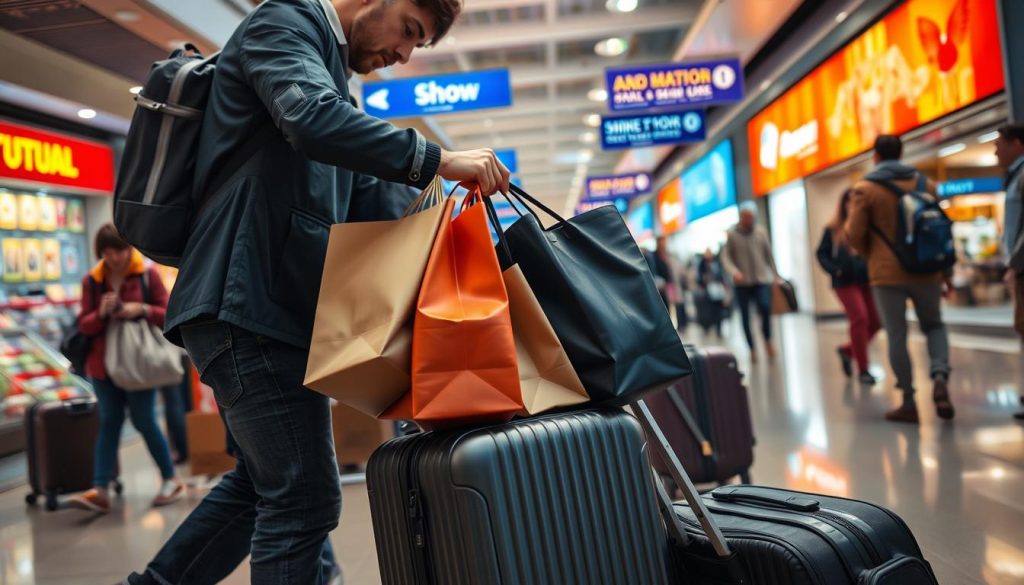
When thinking about merging bags to skip extra fees, watch the weight carefully. For example, Amsterdam Schiphol airport sees about 50 million travelers a year. It’s a busy place. Carrying too much might lead to overweight charges. Usually, passengers have a 15 lbs carry-on, a 30 lbs free checked bag, and a 40 lbs additional large bag.
Here’s a comparison of different services’ storage costs and insurance coverages:
| Service | Cost per Bag (First 24 hours) | Additional Day Rate | Insurance Coverage |
|---|---|---|---|
| Nannybag | €6 ($6.45) | €5 ($5.40) | €1,500 ($1,600) |
| Stasher | £6 ($7.90) | £5 ($6.60) | £1,000 ($1,200) |
| BAGBNB | €5 ($5.40) | N/A | €500 ($540) |
| Love the Layover | $1/hour + $2 fee | N/A | $2,000 ($2,170) |
| Knock Knock | $2/hour | $12/day | $500/bag |
For the best results, look closely at your travel plan and when you need your stuff. Locker rentals at Tokyo Narita airport cost between 300 Yen ($3) and 500 Yen ($5). They are available from 3 to 8 days. This might save more money than sending two large bags via FedEx from Austin to Norway, which could cost $650 to $800. Skipping extra fees by consolidating airport bags needs careful packing and smart planning.
Booking Higher-Class Tickets
Thinking about whether to book higher-class tickets? It can seem expensive at first. Yet, you often get great benefits that make it worth the cost. Let’s look at the costs and benefits, including more than just baggage perks.
Comparative Cost Analysis
It’s key to look at the costs side by side. Even though first or business class costs more upfront, you usually don’t pay extra for checked bags. Let’s see an example:
| Class | Checked Bag Fees | Baggage Weight Limit |
|---|---|---|
| Economy | $40 (first bag), $45 (second bag) | 50 lbs |
| First/Business | Complimentary | 70 lbs |
If we check the numbers, booking a fancier ticket may save you money with baggage fees and let you bring more stuff. Plus, companies charging for each segment make the saving even greater.
Additional Benefits Beyond Baggage
Booking a higher-class ticket isn’t only about the baggage. It also comes with many perks. These perks improve your travel, like:
- Priority boarding and check-in: Skip the long lines and get on the plane early. This means quick access to your seat and the overhead bins.
- Comfortable seating: Seats in these sections are bigger and have more legroom. This makes longer flights much easier to handle.
- Enhanced in-flight services: Enjoy better meals, drinks, and entertainment. This can make your flight feel more like a luxury experience.
- Access to exclusive airport lounges: Wait for your flight in comfort with free food, drinks, and Wi-Fi in peaceful spots.
In the end, higher-class tickets might seem pricier at first. But with the extra baggage space, priority services, and better flight experiences, they offer good value. They’re especially worth it for those who travel a lot.
Early Luggage Declarations to Save Money
Booking your bags online early can help you save a lot. It’s much cheaper than doing it at the gate last minute. This method is not just easy but also light on your wallet.
Online Booking Discounts
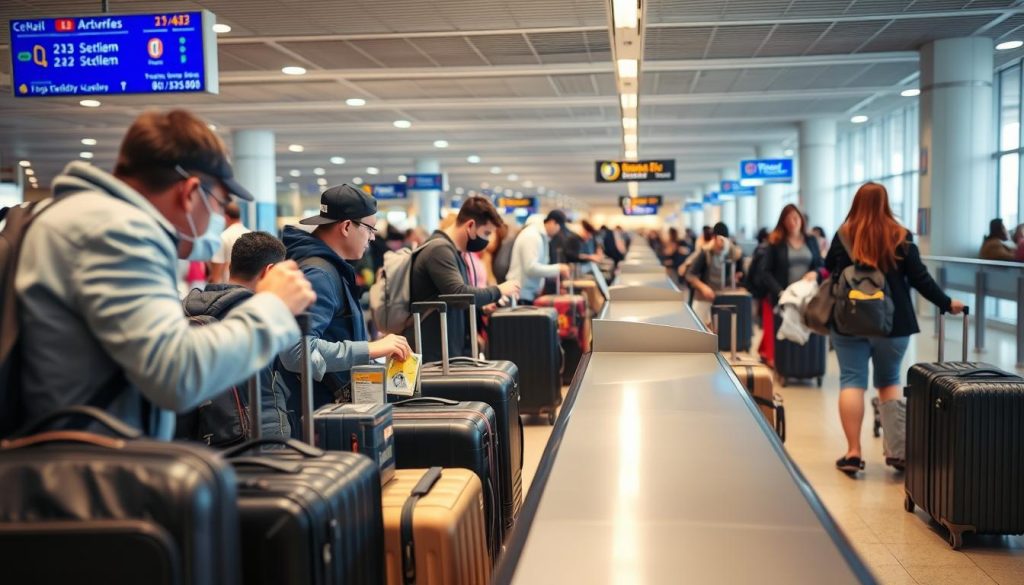
Booking your flight online means you get lower bag fees with airlines like Spirit Airlines. Such discounts are great for those trying to save money. For instance, Spirit charges $30 to $50 for an early online bag check but $65 at the gate.
Delta might ask for $25 for your first bag online, while American charges about $35. Early declarations make things easier, saving money for families and regular travelers.
Gate Check-In Strategies
Using smart gate check-in tips can also save you money. Get there early to avoid last-minute fees. Check-ins and bag declarations through kiosks or apps help manage costs better.
Look into each airline’s rules and keep your luggage within size and weight limits. By declaring your luggage early, you can make the most of your travel budget.
| Airline | Online Bag Fees (First Bag) | Gate Bag Fees (First Bag) |
|---|---|---|
| Spirit Airlines | $30 – $50 | $65 |
| Delta Airlines | $25 | $25 |
| American Airlines | $35 | $40 |
| JetBlue | $35 | $50 |
Leverage Airline Loyalty Programs
Joining airline loyalty programs can make your trips better and cheaper. These programs offer perks that can make travel smoother and more enjoyable. They save you money too.
Elite Status Advantages
Getting elite status in airline loyalty programs comes with many benefits. These perks make travel more comfortable and less expensive. For instance:
- Priority boarding makes 70% of passengers happier.
- Extra baggage allowance matters to over 70% of travelers.
- Lounge access influences 40% of frequent flyers. Another 30% stick with an airline for it.
- Not paying for bags saves over $1,200 a year.
Frequent Flier Perks
Frequent flyers get even more perks. Some benefits include:
- 60% of consumers like personalized offers which make trips better.
- Fast-track security and customs with TSA PreCheck, CLEAR, and Global Entry save hours.
- Free changes or cancellations are a big deal for business travelers, like what Southwest Airlines offers.
Let’s look at baggage allowances benefits:
| Airline | Standard Baggage Allowance | Increased Baggage Allowance |
|---|---|---|
| Airline A | 23 kg | 32 kg |
| Airline B | 20 kg | 30 kg |
| Airline C | 25 kg | 35 kg |
Knowing how to use airline loyalty programs and their elite status advantages is key. They help frequent travelers improve their trips. Stay loyal to airlines that offer great rewards.
Investing in Lightweight and Compliant Luggage
Travel smart by choosing luggage that meets airline standards. This helps avoid extra fees. Lightweight luggage saves time and money.
Choosing Ultrathin Luggage
Pick ultrathin, lightweight luggage for easier travel. Non-wheeled bags should weigh 2 to 4 pounds. Wheeled ones should not be over 7.5 pounds. Your bag should be light, letting you pack more.
Look for bags with double-post handles; they’re sturdier. Chain zippers, with their interconnected teeth, are a good choice. Also, bags with TSA-compliant locks are smart picks. They allow security to check without damaging the lock.
Weighing Your Bags Before Check-In
Weigh your bags at home to avoid airport fees. A home scale helps you keep within limits. Overweight baggage fees add up, so knowing the weight beforehand matters.
Packing cubes help organize and save space. They make going through security faster too. You can pack smarter and keep your luggage’s weight and size in check.
| Type of Luggage | Recommended Weight |
|---|---|
| Non-Wheeled | 2 to 4 pounds |
| Wheeled | No more than 7.5 pounds |
Key Packing Tips to Avoid Extra Fees
Smart traveling starts with good planning. Following simple packing tips can help avoid extra fees. Keep your luggage below 22 lbs to save on check-in costs, especially for far trips. Packing for just a week makes moving around easier too.
Choosing a bag around 35 to 40 liters fits most carry-on limits, preventing overpacking. Lightweight options like the Osprey Farpoint 40 or Cabin Zero Classic save on weight. The Osprey’s Daylite Pack is also light, ideal for keeping under airline weight limits.
Here’s a practical clothing list:
- 6 to 7 shirts or t-shirts
- 7 pairs of underwear, or 3 if you wash them often
- 3 pairs of pants or shorts, depending on the climate
- 3 socks for hot places, 7 for cold ones
- 1 pair of hiking shoes, everyday shoes, and flip-flops
Rolling clothes instead of folding saves up to 20% more space. Compression bags and packing cubes help too. About 70% of people find cubes make organizing and unpacking easier.
Toiletries should be under 100 ml to meet airline rules. Using travel-sized bottles makes your bag lighter, helping to stay within weight limits.
A packing checklist can prevent spending on checked luggage fees, saving around $50. It also reduces stress for 60% of travelers. Keeping important items in your carry-on avoids troubles since 25% of checked bags get delayed or lost.
Lastly, use digital travel documents more. They’ve become 50% more popular recently, offering easy access and less clutter. Today, over 75% of travelers organize their trips on smartphones.
Conclusion
Learning how to pack for travel smartly can save frequent flyers money. Knowing the rules for airline bags helps you avoid extra charges. Packing wisely and using loyalty programs can dramatically lower your costs.
Using airline credit cards and buying business or first-class tickets bring more perks, including free bag checks. Early luggage check-ins and light bags that meet airline standards make travel smoother and cheaper. The perks of airport ICS systems and duty-free shopping also reduce travel costs.
Being prepared is key to saving money and enhancing your travel. By packing your bags thoughtfully and watching out for fees, your travel budget goes further. Use these tips to travel better and save money on every trip.