Banff on a Budget: Free and Cheap Things to Do in the National Park
Banff is expensive by Canadian standards, and there’s no point pretending otherwise. Hotel rooms in peak season can run $300-500 CAD per night, a burger and beer on Banff Avenue costs $25-30, and the Banff Gondola charges $75 per adult. But the national park itself, the reason everyone comes, is remarkably accessible on a tight budget. The mountains, trails, lakes, and wildlife don’t charge extra.
This guide focuses on what’s actually free, what’s cheap, and where the real savings are for visitors who want to experience Banff without the resort-town price tag.
The Parks Canada Pass: Your First Cost
You need a valid Parks Canada pass to be in Banff National Park. There’s no way around this. A daily adult pass costs $11 CAD (about $8 USD). If you’re staying more than a week or plan to visit other national parks during your trip, the Discovery Pass at $73 CAD covers unlimited entry to all Parks Canada sites for an entire year. Families and groups of up to 7 people arriving in the same vehicle can buy a family/group daily pass for $22 CAD.
You can buy passes at the park gates, at the Banff Visitor Centre on Banff Avenue, or online through the Parks Canada website. In summer, buying online in advance saves time at the gate.
Free Things to Do in Banff
Hiking
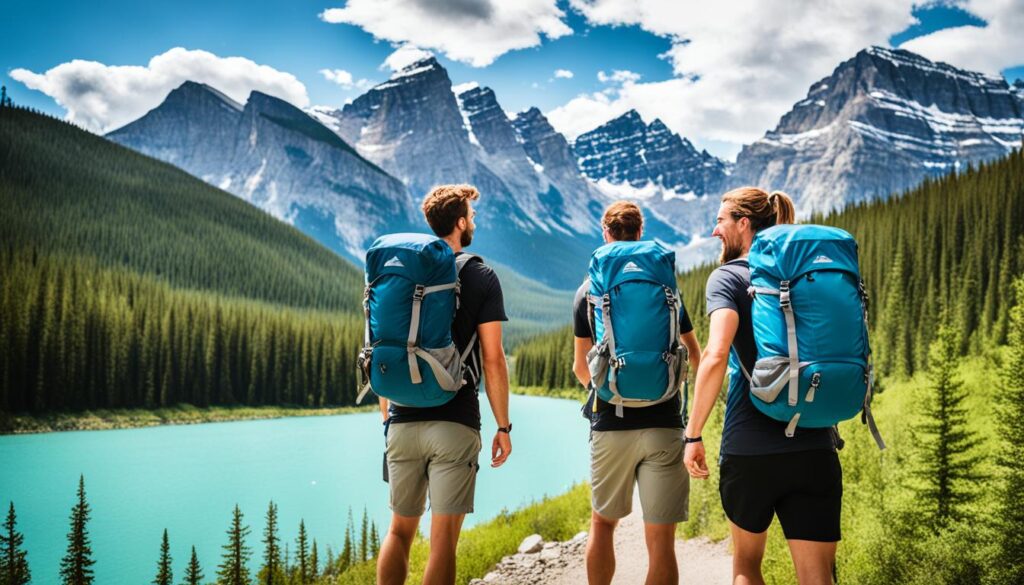
Once you have your park pass, every trail in Banff is free. The trail network is massive, and some of the best hikes in the Canadian Rockies don’t cost anything beyond the gas to reach the trailhead.
For easy walks close to town: Tunnel Mountain (short, steep, great views of the Bow Valley, about 2 hours round-trip), Bow Falls (a flat 15-minute walk from downtown to a wide cascade on the Bow River), and Surprise Corner (a viewpoint overlooking the Fairmont Banff Springs Hotel with the Bow River below).
For moderate day hikes: Johnston Canyon (the most popular trail in the park, 5.4 km to the Upper Falls, paved and busy in summer but genuinely spectacular), Sulphur Mountain via the trail instead of the gondola (5.5 km one way, gaining 655 meters of elevation, arriving at the same summit the $75 gondola takes you to), and the Fenland Trail (a flat 2 km loop through a montane wetland, good for wildlife).
For bigger days: Cory Pass Loop (challenging, 13 km with 915 m elevation gain, dramatic exposed ridgeline), Plain of Six Glaciers from Lake Louise (a classic alpine approach ending at a historic teahouse), and Sentinel Pass from Moraine Lake (one of the highest maintained trails in the Rockies at 2,611 m).
Wildlife viewing
Banff has elk, bighorn sheep, mountain goats, black bears, grizzly bears, and occasionally wolves and cougars. Elk graze openly on the lawns around town, especially in fall during the rut. The Bow Valley Parkway (Highway 1A) between Banff and Lake Louise is the best road for spotting wildlife. Drive slowly and pull over safely if you see animals. Parks Canada enforces a minimum distance of 30 meters from elk and deer, and 100 meters from bears, wolves, and cougars.
Lake Louise and Moraine Lake
Both lakes are free to visit (covered by your park pass), but getting there in summer requires planning. Private vehicle access to Moraine Lake is restricted from June through mid-October. You must take the Parks Canada shuttle (reserve in advance, about $8 CAD round-trip) or a commercial shuttle. Lake Louise has its own parking pressure. Arrive before 8 AM or use the shuttle from the overflow lot. Both lakes are worth the logistical effort.
Cheap Activities Worth Paying For
Banff Upper Hot Springs
The Upper Hot Springs are the only public bathing hot springs in the Banff townsite. Admission is about $9 CAD for adults. The outdoor pool sits at 1,585 meters elevation with views of Mount Rundle. The water is naturally heated to around 37-40°C. Towel and swimsuit rentals are available if you forgot yours. This is not a luxury spa experience, it’s a public pool fed by hot mineral water, and at $9 it’s one of the best-value activities in town.
Note: the Cave and Basin National Historic Site nearby is a museum and interpretive center, not a place you can swim. It’s worth visiting (about $8 CAD admission) for the history of how the hot springs discovery led to the creation of Canada’s national park system.
Banff Legacy Trail
This paved 26 km multi-use trail runs between Banff and Canmore with dedicated separation from vehicle traffic. It’s free to use, and biking it is one of the best ways to see the valley. Bike rentals in Banff town start around $15-20 CAD per hour or $40-60 for a full day. Several shops on Banff Avenue and Bear Street rent bikes.
Minnewanka Loop Drive
A free scenic drive from Banff to Lake Minnewanka, Two Jack Lake, and Johnson Lake. The loop is about 24 km and offers picnic spots, short walks, and swimming at Johnson Lake (one of the few lakes in the park warm enough to swim in summer). No extra fees beyond your park pass.
Budget Accommodation
Accommodation is the biggest expense in Banff, but there are real options below the resort price range.
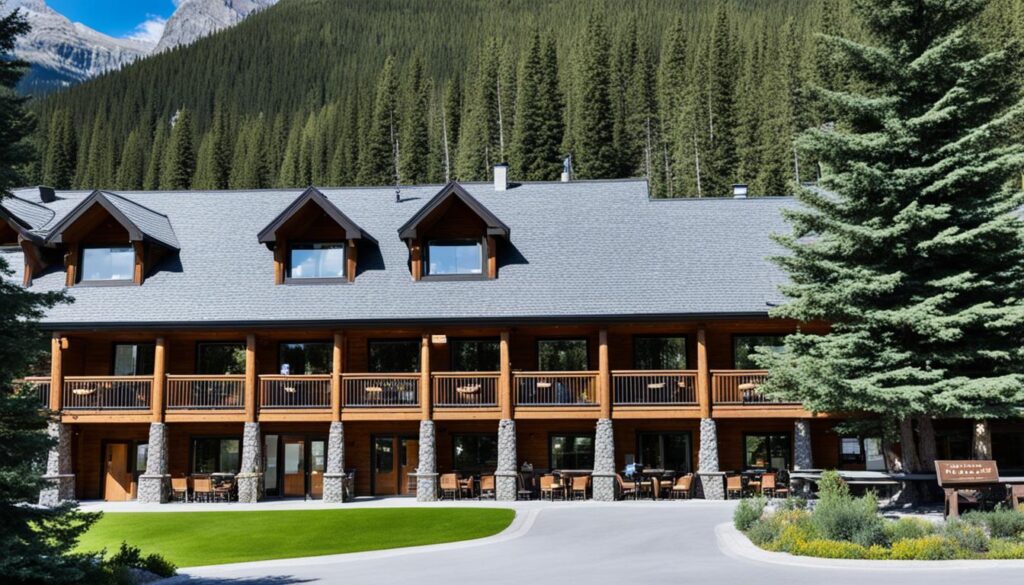
HI Banff Alpine Centre is the main hostel, located on Tunnel Mountain Road about 3 km from downtown. Dorm beds run $45-65 CAD per night depending on season. Private rooms are available for more. The hostel has a kitchen, which is essential for budget travelers because restaurant meals in Banff add up fast.
Camping is the cheapest option. Tunnel Mountain Village I and II campgrounds are the closest to town (walking distance). Sites cost $28-39 CAD per night for a tent site. Two Jack Lakeside campground is about 12 km from town and is one of the most scenic campgrounds in the Rockies, with sites directly on the lakeshore. All campgrounds fill quickly in July and August. Reserve through the Parks Canada reservation system as early as possible.
Canmore, about 25 minutes east of Banff town, generally has cheaper hotels and vacation rentals than Banff itself. It’s outside the park boundary (no park pass needed just to stay there), and the drive into Banff is easy.
Eating Cheap in Banff
Restaurant prices in Banff are high because the town is inside a national park with limited commercial development. A few strategies make a real difference.
Self-catering is the biggest money saver. The IGA grocery store on Marten Street and the Safeway-branded Sobeys on Elk Street are the two main grocery options. Buy supplies and cook at your hostel or campground. A week of self-catered meals can save $200-300 per person compared to eating out.
For eating out on a budget: Tooloulou’s on Banff Avenue does Cajun-inspired food at reasonable prices. Melissa’s Missteak is a Banff institution with breakfast and lunch options that won’t destroy your budget. The Old Spaghetti Factory offers large portions at lower prices than most Banff Avenue restaurants. Coyotes Southwestern Grill has a good-value lunch menu.
For coffee, skip the Starbucks and try Whitebark Café or Wild Flour Bakery for better quality at similar prices.
Getting Around on a Budget
Roam Transit is Banff’s local bus system. Single fares are $2 CAD within Banff town. The Route 1 to Lake Minnewanka, Route 6 to Lake Louise ($10 CAD), and the Moraine Lake shuttle are the most useful routes for visitors. Day passes and multi-day passes bring the per-ride cost down further.
From Calgary, the most affordable option is the Banff Airporter or On-It regional transit (seasonal, about $10 CAD each way when running). Renting a car gives more flexibility, especially for early-morning trailhead access, but adds parking pressure and fuel costs. If you’re staying in Banff town and focusing on nearby trails, you can get by without a car using Roam Transit and your feet.
Sample Budget: 5 Days in Banff
Here’s what a realistic 5-day budget trip looks like for one person:
Park pass: $55 CAD (5-day). Hostel: $250 CAD (5 nights at $50/night average). Groceries: $100 CAD. Eating out (3-4 meals): $80 CAD. Hot Springs: $9 CAD. Bike rental (1 day): $50 CAD. Roam Transit: $20 CAD. Total: approximately $564 CAD ($415 USD).
That’s under $85 USD per day for five days in one of the most spectacular national parks in the world. The key savings come from hosteling or camping, self-catering most meals, and focusing on the free hiking and wildlife viewing that make Banff worth visiting in the first place.
Frequently Asked Questions
Is Banff too expensive for budget travelers?
No. Banff town is expensive (hotels and restaurants are priced for the resort market), but the national park itself is very affordable. A park pass costs $11 CAD per day, every trail is free, wildlife viewing is free, and the hot springs cost $9 CAD. By hosteling or camping and self-catering most meals, a full Banff trip costs under $100 USD per day.
Do I need a car in Banff?
Not necessarily. Roam Transit connects Banff town to Lake Minnewanka, Lake Louise, and Moraine Lake (seasonally). If you stay in Banff town and focus on nearby trailheads, public transit and walking work well. A car is helpful for early-morning starts and accessing more remote areas like the Icefields Parkway.
Can I swim in the hot springs in Banff?
Yes, at the Banff Upper Hot Springs ($9 CAD admission). The Cave and Basin National Historic Site is a museum, not a swimming facility. There are no free public hot springs within Banff National Park itself.
When is the cheapest time to visit Banff?
Shoulder seasons (mid-September to mid-November, and April to mid-June) offer lower accommodation prices and thinner crowds. Late September is particularly good: fall colors are out, summer crowds have gone, and the weather is usually still suitable for hiking. Avoid the weeks around Canada Day (July 1) and the August long weekend for the highest prices.
Do I need to reserve parking or shuttles for Lake Louise and Moraine Lake?
Yes, in summer (June through mid-October). Moraine Lake Road is closed to private vehicles during this period. You must reserve a Parks Canada shuttle or take a commercial shuttle. Lake Louise parking fills by 8 AM most summer mornings. Reserve shuttle spots through the Parks Canada website as soon as dates open, they sell out.
Is Canmore a cheaper alternative to staying in Banff?
Generally yes. Canmore is 25 minutes east of Banff, outside the national park boundary, and typically has lower hotel and vacation rental prices. It has its own restaurants, shops, and nearby trails (including the Ha Ling Peak hike). The tradeoff is that you’ll drive into the park each day and need a park pass for entry.