Discover Historical Landmarks of New York City
Have you ever wondered about the secrets and stories hidden within the bustling streets of New York City? Behind its iconic skyline lies a rich tapestry of history, waiting to be explored. From towering monuments to captivating architecture, New York City is home to some of the most remarkable historical landmarks in the world. Embark on a journey through time as we uncover the fascinating stories behind these NYC iconic sites. Are you ready to dive into the history of the Big Apple?
As you immerse yourself in the history of New York City, you’ll discover famous monuments that have witnessed pivotal moments and shaped the city’s identity. From the Statue of Liberty standing tall as a symbol of freedom to Ellis Island, the gateway through which millions of immigrants entered the country, these landmarks offer glimpses into America’s past.
But historical landmarks in New York City are not limited to grand monuments alone. The city’s architectural treasures also play a significant role in showcasing its past. From the majestic Empire State Building to the iconic Brooklyn Bridge, each structure tells a unique story of engineering prowess and human achievement.
Moreover, New York City’s cultural heritage is on full display at renowned institutions like the Metropolitan Museum of Art. With its vast collection of historical artifacts, this museum offers a glimpse into various periods and artistic movements. And if nature meets history is what you seek, Central Park provides a tranquil oasis in the heart of Manhattan, a respite from the city’s hustle and bustle.
So, are you ready to uncover the secrets of New York City’s historical landmarks? Join us as we delve into the stories, admire the architecture, and appreciate the cultural heritage that makes these sites truly iconic. Let’s embark on a journey to discover the rich history rooted in the streets of the Big Apple.
Uncovering the Past: A Journey Through NYC’s History
New York City, often referred to as the “Big Apple,” is not only a vibrant metropolis but also a city steeped in history. From its humble beginnings as a Dutch trading post to its status as a global hub of commerce, New York City has played a pivotal role in shaping the nation’s cultural and political landscape. Exploring the famous monuments and landmarks scattered throughout the city is like taking a journey through time, allowing you to uncover the fascinating stories of its past.
Famous Monuments in NYC
No visit to New York City would be complete without marveling at its famous monuments. These iconic landmarks not only symbolize the city’s enduring spirit but also serve as visual reminders of its rich history. Let’s take a closer look at some of the most renowned monuments in NYC:
- The Statue of Liberty: Standing tall on Liberty Island, the Statue of Liberty is a symbol of freedom and democracy. It was a gift from France to the United States and has welcomed millions of immigrants seeking a better life.
- The Empire State Building: An architectural marvel, the Empire State Building offers breathtaking views of the city from its observation deck. This Art Deco skyscraper has become an enduring symbol of New York City.
- The Brooklyn Bridge: Spanning the East River, the Brooklyn Bridge is an engineering masterpiece. It connects Manhattan to Brooklyn and has been a vital transportation route since its completion in 1883.
These famous monuments in NYC not only showcase the city’s historical significance but also offer visitors a glimpse into its vibrant culture and spirit.
| Monument | Description |
|---|---|
| Statue of Liberty | Symbol of freedom and democracy |
| Empire State Building | Iconic Art Deco skyscraper with breathtaking views |
| Brooklyn Bridge | Engineering masterpiece connecting Manhattan and Brooklyn |
Exploring these landmarks in New York City is like stepping back in time and immersing yourself in the city’s rich history and culture. Whether you’re strolling through Central Park, marveling at the architectural wonders of the Flatiron Building, or taking in the glitz and glamor of Times Square, each monument tells a unique story of the city’s evolution.
“New York City is not merely a metropolis. It is a monument to the American spirit, a testament to our ability to dream big and make those dreams a reality.” – Mayor Michael Bloomberg
So, the next time you find yourself in New York City, be sure to explore its famous monuments and landmarks. These iconic sites not only offer a window into the city’s past but also serve as a reminder of the enduring legacy of this remarkable city.
Captivating Architecture: NYC’s Historic Buildings
When it comes to exploring the historical landmarks of New York City, the captivating architecture found within these iconic buildings is truly a sight to behold. From majestic skyscrapers to elegant brownstones, the city’s architectural heritage is a testament to its rich history and cultural significance. Whether you’re an architecture enthusiast or simply appreciate the beauty of well-designed structures, these must-see landmarks in NYC will leave you awe-inspired.
1. Empire State Building
One of the most iconic structures in the New York City skyline, the Empire State Building stands as a symbol of architectural excellence. Completed in 1931, this Art Deco masterpiece held the title of the world’s tallest building for nearly four decades. Its towering height and stunning design continue to attract visitors from around the globe, offering breathtaking views of the city from its observatories.
2. Flatiron Building
Situated in the heart of Manhattan, the Flatiron Building is a true architectural gem. Its distinctive triangular shape and Beaux-Arts style make it a beloved landmark among locals and tourists alike. Dating back to 1902, this historic structure has witnessed the transformation of New York City over the years, serving as a reminder of the city’s rich architectural heritage.
3. Chrysler Building
The Chrysler Building is another iconic example of NYC’s historical architecture. With its distinctive Art Deco design and iconic spire, this skyscraper stands as a testament to the city’s architectural prowess. Completed in 1930, it held the title of the world’s tallest building for a brief period and continues to be celebrated for its grandeur and elegance.
4. St. Patrick’s Cathedral
A stunning example of Gothic Revival architecture, St. Patrick’s Cathedral is a must-visit landmark for both its religious significance and architectural splendor. Located on Fifth Avenue, this renowned cathedral boasts towering spires, intricate stained glass windows, and a majestic interior that reflects the mastery of its craftsmanship.
5. Brooklyn Bridge
While primarily known for its engineering marvel, the Brooklyn Bridge also showcases remarkable architectural elements. Completed in 1883, this historic suspension bridge connects Manhattan to Brooklyn and features intricate Gothic-inspired arches and decorative details. Walking across the bridge offers not only stunning views of the city but also a chance to appreciate its architectural grandeur.
6. Grand Central Terminal
Grand Central Terminal, often referred to as Grand Central Station, is not only a transportation hub but also a true architectural masterpiece. With its Beaux-Arts design, grand concourse, and celestial ceiling mural, this iconic landmark has become a symbol of the city’s architectural heritage. Whether you’re catching a train or simply exploring the bustling terminal, the beauty of its design is sure to leave a lasting impression.
The historical buildings of New York City are not only visually captivating but also tell the story of the city’s past. By visiting these architectural marvels, you’ll gain a deeper appreciation for the rich history and cultural significance of the Big Apple.
The Statue of Liberty: Symbol of Freedom
The Statue of Liberty is an iconic symbol of freedom and one of the most important sites in New York City. This historic landmark stands tall on Liberty Island in New York Harbor, welcoming visitors from all over the world.
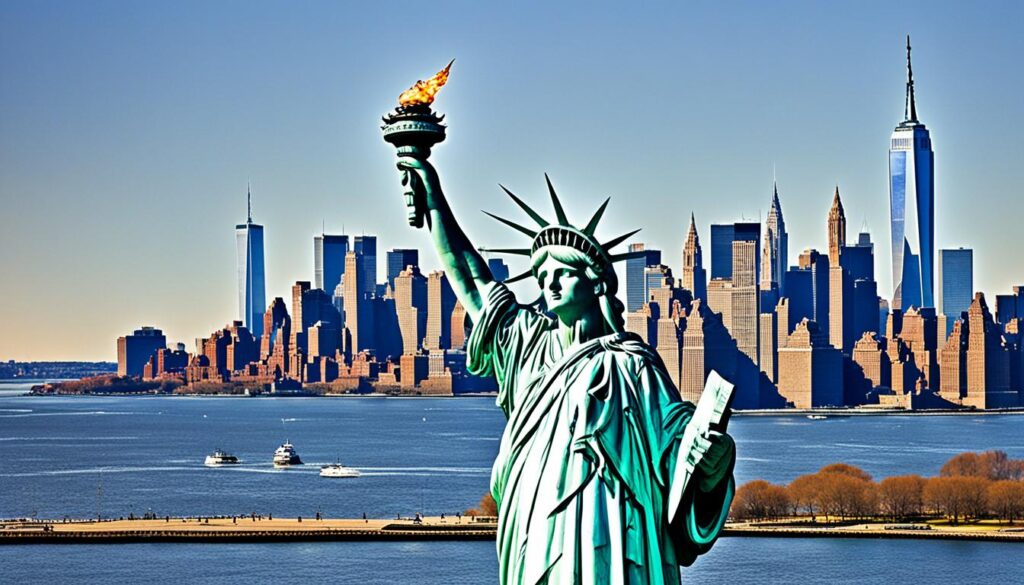
Designed by French sculptor Frédéric Auguste Bartholdi and dedicated in 1886, the Statue of Liberty was a gift from France to the United States. It represents the friendship between the two countries and the ideals of liberty and democracy.
The statue is a masterpiece of engineering, with its copper exterior and steel framework. Standing at 305 feet tall, it is a symbol of hope and freedom for millions of immigrants who arrived in America seeking a better life.
Visitors can take a ferry to Liberty Island to get a closer look at this iconic statue. The pedestal of the statue houses a museum that provides historical context and exhibits about the statue’s construction and significance.
Interesting Facts about the Statue of Liberty:
- The statue’s official name is “Liberty Enlightening the World.”
- The seven rays on the statue’s crown represent the seven continents.
- The statue’s tablet bears the date of the United States Declaration of Independence.
- The Statue of Liberty has been featured in numerous movies, TV shows, and works of art, becoming a symbol of American culture.
“Give me your tired, your poor, your huddled masses yearning to breathe free.”
These famous words from the poem “The New Colossus” by Emma Lazarus are engraved on a bronze plaque inside the pedestal of the Statue of Liberty, reminding visitors of America’s welcoming spirit.
| Height | 305 feet |
|---|---|
| Weight | 225 tons |
| Number of steps to the crown | 354 |
| Number of windows in the crown | 25 |
Ellis Island: Gateway to America
When exploring the historical landmarks of New York City, one site that stands out for its significant role in shaping America’s diverse population is Ellis Island. Located in the Upper New York Bay, this iconic island served as the country’s primary immigration station from 1892 to 1954.
During this period, Ellis Island welcomed millions of immigrants, providing them with their first glimpse of the land of opportunity, hope, and freedom. As immigrants arrived by boat, they were processed and inspected at Ellis Island before being admitted into the United States. This rigorous process included medical examinations, legal assessments, and interviews to determine their eligibility for entry.
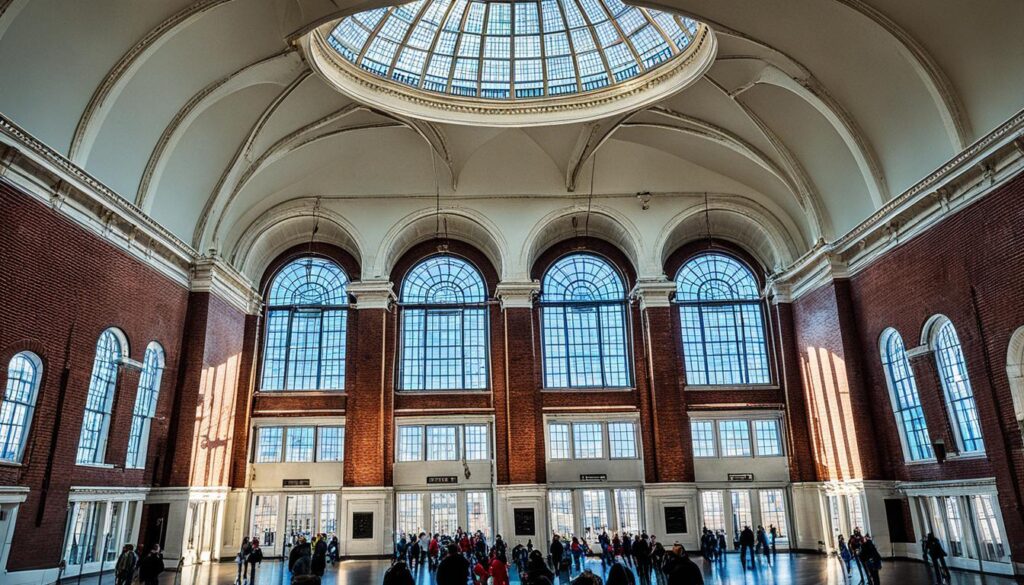
Ellis Island played a crucial role in the history of immigration to America, becoming a symbol of both hope and assimilation. It epitomized the American Dream, offering people from all walks of life the chance to pursue a better future.
The immigration experience at Ellis Island was not always easy, as many individuals faced language barriers, cultural challenges, and uncertainty when starting their new lives. However, the determination, resilience, and contributions of these immigrants have left an indelible mark on the fabric of American society.
“Give me your tired, your poor, your huddled masses yearning to breathe free.” – Emma Lazarus
Today, Ellis Island stands as a reminder of America’s immigrant history and serves as a museum, preserving the stories and experiences of those who passed through its gates. Visitors can explore the restored halls, exhibits, and archives that tell the poignant tales of hope, hardship, and perseverance.
The Journey Begins: Arriving at Ellis Island
Immerse yourself in the history of Ellis Island by envisioning the journey that countless immigrants undertook. Step into the shoes of those who left behind their homelands in search of a new beginning. Experience the emotional rollercoaster they felt as they embarked on a voyage into the unknown.
Voices of the Past: Stories of Immigration
Listen to the voices of the past as you explore the stories of individual immigrants. From tales of courage and resilience to accounts of separation and sacrifice, these personal narratives provide a deep understanding of the human experience and the challenges faced by those who sought a better life on American soil.
| Ellis Island Museum Highlights | Opening Hours |
|---|---|
| Exhibits showcasing the immigrant experience | 9:30 am to 5:00 pm |
| Audio tours available in multiple languages | Closed on Mondays |
| Panoramic views of the Statue of Liberty | Last ferry departs at 3:30 pm |
| Research facilities for genealogy enthusiasts |
Plan your visit to Ellis Island and explore this historically significant landmark, which continues to educate and inspire visitors from around the world. Embark on a journey through time and discover the stories of courage, resilience, and the pursuit of the American Dream.
Empire State Building: A Sky-High Experience
When it comes to iconic landmarks in NYC, the Empire State Building undoubtedly reigns supreme. This towering skyscraper has become an enduring symbol of the city’s resilience, offering visitors a truly unforgettable experience.
Rising 1,454 feet above the bustling streets of New York City, the Empire State Building stands as a testament to human ingenuity and architectural brilliance. Completed in 1931, it held the title of the tallest building in the world for nearly four decades. Today, it remains one of the most recognizable structures on the city’s skyline.

Ascending to the building’s observatories is an exhilarating experience. From these lofty heights, you’ll be treated to breathtaking panoramic views of the city that never sleeps. Whether you visit during the day to admire the sprawling urban landscape or at night to witness the glittering lights below, the Empire State Building offers a perspective like no other.
Beyond its incredible views, the Empire State Building also holds a special place in popular culture. From movies like “King Kong” to its cameo appearances in countless television shows, this architectural marvel has cemented its status as an enduring symbol of New York City.
“The Empire State Building is more than just a feat of engineering; it represents the spirit and ambition of New York City. It’s a must-visit attraction that encapsulates the essence of the Big Apple.”
During your visit to the Empire State Building, be sure to explore the exhibits that showcase its history and significance. From the construction process to its role during World War II, you’ll gain a deeper understanding of the building’s rich heritage.
Whether you’re a history enthusiast, architecture lover, or simply seeking unparalleled views of the city, the Empire State Building is an unmissable stop on any visit to New York City.
Brooklyn Bridge: Connecting Past and Present
When exploring the historical landmarks of New York City, the Brooklyn Bridge stands out as a remarkable engineering marvel that effortlessly connects the past with the present. Spanning the East River, this iconic bridge serves as a vital link between Manhattan and Brooklyn, embodying the city’s historical significance and architectural grandeur.
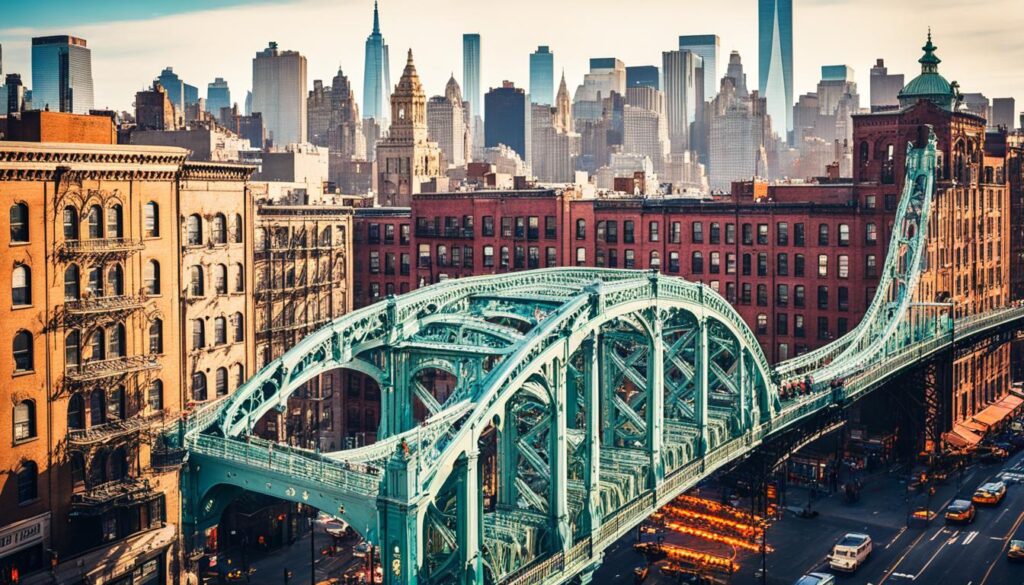
The construction of the Brooklyn Bridge began in 1870 and was completed in 1883, making it one of the oldest suspension bridges in the United States. Designed by the renowned engineer John Augustus Roebling and later overseen by his son Washington Roebling, the bridge showcases impeccable craftsmanship and meticulous attention to detail.
“The Brooklyn Bridge is the most beautiful of all bridges. It possesses the greatest technical perfection, nobility, and richness of material.” – Architect Le Corbusier
The architectural splendor of the Brooklyn Bridge is evident in its Gothic-inspired towers and intricate cable suspension system. As you walk or drive across this historic landmark, you’ll be captivated by stunning views of the New York City skyline and the flowing waters of the East River.
Today, the Brooklyn Bridge not only serves as a vital transportation route but also as a popular tourist attraction. Visitors can stroll along the pedestrian walkway, taking in breathtaking panoramic vistas, or simply marvel at the bridge’s structural magnificence.
For a deeper appreciation of the Brooklyn Bridge’s history and significance, consider visiting the Brooklyn Bridge Park or the nearby Brooklyn Historical Society. These attractions offer valuable insights into the bridge’s construction, its impact on the surrounding communities, and the enduring legacy it holds within the city.
Fun Facts about the Brooklyn Bridge:
- The Brooklyn Bridge was the world’s longest suspension bridge at the time of its completion, stretching over 5,989 feet.
- It was designated a National Historic Landmark in 1964, recognizing its cultural and historical importance.
- Approximately 150,000 vehicles, 4,000 pedestrians, and 2,600 cyclists cross the bridge daily.
| Year Completed | Location | Total Length (including approaches) |
|---|---|---|
| 1883 | Manhattan and Brooklyn, New York City | 5,989 feet |
The Metropolitan Museum of Art: A Cultural Haven
The Metropolitan Museum of Art, commonly referred to as “The Met,” is a must-see landmark in New York City. Located on the eastern edge of Central Park, The Met is one of the world’s largest and most influential art museums, showcasing historical artifacts and works of art from various periods.
With its vast collection spanning over 5,000 years of human history, The Met offers visitors a unique and immersive cultural experience. From ancient Egyptian artifacts to European masterpieces, the museum houses a diverse range of art forms, including paintings, sculptures, decorative arts, and textiles.
Stepping into The Met is like embarking on a journey through time and artistry. As you wander through its elaborate galleries and exhibition spaces, you’ll encounter renowned works by artists such as Vincent van Gogh, Pablo Picasso, and Rembrandt.
Not only does The Met showcase traditional art, but it also embraces contemporary and modern pieces, ensuring a dynamic collection that appeals to a wide audience.
“The purpose of art is washing the dust of daily life off our souls” – Pablo Picasso
The museum’s architecture further enhances the overall experience. The iconic Beaux-Arts facade, adorned with grand fountains and sweeping staircases, creates a sense of grandeur and sophistication.
Visiting The Met allows you to delve into different cultures, expand your knowledge, and appreciate the beauty and creativity that exists throughout history.

Notable Collections at the Metropolitan Museum of Art
The Metropolitan Museum of Art houses countless remarkable collections, each offering a unique perspective on global culture and history. Here are a few notable collections to explore during your visit:
- The Egyptian Art Collection: Discover ancient artifacts, such as sarcophagi, mummies, and intricate hieroglyphics, that provide insights into the fascinating world of ancient Egypt.
- The Greek and Roman Art Collection: Explore the art and mythology of Ancient Greece and Rome through a stunning collection of sculptures, vases, and architectural fragments.
- The American Wing: Immerse yourself in American art and decorative objects, including iconic portraits, landscapes, and furniture from the colonial period to the present day.
- The Asian Art Collection: Journey through the artistic traditions of Asia, with a vast collection that includes Buddhist sculptures, Chinese decorative arts, and Japanese prints.
- The Costume Institute: Experience the intersection of fashion and art with a collection that spans centuries of clothing and accessories, showcasing the evolution of style and design.
With so much to explore, it’s advisable to plan your visit in advance and prioritize the collections that resonate with your interests.
Central Park: Nature meets History
Central Park is a historical and iconic green oasis situated in the heart of Manhattan, New York City. Spanning 843 acres, this sprawling urban park offers a tranquil escape from the bustling city, providing visitors with a harmonious blend of natural beauty and historical significance.
Designed by Frederick Law Olmsted and Calvert Vaux, Central Park was established in 1857 and has since become one of the most important sites in New York City. It holds a special place in the hearts of both locals and tourists alike, and its historical landmarks have become symbols of the city’s rich heritage.
The park’s historical landmarks offer a glimpse into the past, showcasing the remarkable architectural and cultural heritage of New York City. From the iconic Bow Bridge, constructed in the 19th century, to the Bethesda Terrace and Fountain, a focal point for gatherings and performances, each landmark tells a unique story.

Central Park serves as a haven for nature enthusiasts, boasting lush greenery, serene lakes, and meandering pathways. Whether you’re strolling through the peaceful Conservatory Garden, admiring the picturesque landscape at the Jacqueline Kennedy Onassis Reservoir, or picnicking in Sheep Meadow, the park offers countless opportunities to embrace the beauty of nature.
While exploring Central Park, you’ll also encounter various recreational activities and attractions. Enjoy a leisurely bike ride along the scenic paths, participate in a game of baseball or soccer on one of the many fields, or visit the Central Park Zoo to observe diverse wildlife species up close.
Additionally, Central Park hosts numerous cultural events throughout the year, including concerts, theater performances, and art installations. These events add to the park’s vibrant atmosphere and offer visitors a chance to immerse themselves in New York City’s thriving cultural scene.
In conclusion, Central Park is not only a place of natural beauty but also a historical landmark that encapsulates the essence of New York City. Whether you’re seeking a peaceful retreat or a cultural experience, this iconic park provides a perfect blend of nature and history, making it one of the most important sites in New York City’s landscape.
Times Square: The Crossroads of the World
If you’re looking for a vibrant and iconic site in New York City, look no further than Times Square. Known as the “Crossroads of the World,” this bustling hub of entertainment is a must-visit destination for locals and tourists alike.
Times Square is famous for its dazzling billboards that light up the sky, creating an electrifying atmosphere day and night. Walking through the square, you’ll be surrounded by towering screens showcasing the latest Broadway shows, Hollywood blockbusters, and advertisements for world-renowned brands.
But Times Square is not just about the bright lights and flashy billboards. It’s also home to some of the city’s most iconic landmarks and attractions. The area is brimming with exciting theaters, including the historic Lyceum Theatre and the iconic New Amsterdam Theatre. Catching a show on Broadway is an experience you won’t want to miss.
“Times Square is a place like no other. The energy, the lights, the iconic billboards—it’s truly a spectacle. Walking through Times Square feels like stepping into a movie scene. It’s a must-visit destination for anyone visiting New York City.”
Times Square is also famous for its annual New Year’s Eve celebration, where thousands gather to watch the iconic ball drop at midnight. It’s a festive and unforgettable experience that attracts people from all over the world.
Whether you’re looking for world-class restaurants, exciting shopping opportunities, or simply want to immerse yourself in the vibrant atmosphere, Times Square has it all. It embodies the spirit and energy of New York City, making it one of the most iconic sites in the Big Apple.

Top Attractions in Times Square:
- Broadway theaters
- Hard Rock Cafe
- Ripley’s Believe It or Not! Times Square
- Madame Tussauds New York
- The TKTS booth for discounted Broadway tickets
The High Line: A Modern Revitalization
Experience the unique charm of the High Line, an iconic landmark that perfectly blends the past with the present. This elevated park, built on a historic freight rail line, showcases innovative urban design and offers breathtaking views of the city skyline. You don’t want to miss this prime example of NYC’s historical architecture and its transformation into a vibrant green space.

A Historic Transformation
The High Line was once a vital post-industrial rail system that transported goods through Manhattan’s industrial landscape. Today, it stands as a testament to the city’s commitment to preserving its history while embracing sustainable development.
“The High Line represents the perfect marriage between a city’s architectural past and its present-day urban renaissance.” – Architectural Digest
Walking along the High Line, you’ll be captivated by the seamless integration of greenery and modern design elements. The park features a curated landscape that showcases native plants, unique art installations, and even a charming water feature.
A Scenic Urban Retreat
As you stroll along the High Line, take in the stunning vistas of the city skyline. The elevated nature of the park provides opportunities for uninterrupted views, allowing you to immerse yourself in the beauty of New York City from a unique perspective.
Escape the bustling streets below and find tranquility in the High Line’s peaceful seating areas and cozy nooks. It’s the perfect spot to relax, read a book, or simply enjoy the vibrant atmosphere of this revitalized urban oasis.
Art, Culture, and Community
The High Line isn’t just a park; it’s a cultural hub. Throughout the year, it hosts a variety of events, including art exhibitions, film screenings, and live performances. Don’t forget to check the park’s schedule to see what exciting activities are happening during your visit.
As you explore the High Line, you’ll also come across thought-provoking art installations by renowned artists. These unique works of art add an extra layer of intrigue and creativity to the park, making it a destination that offers something for everyone.
Whether you’re a nature enthusiast, history buff, or art lover, the High Line is a must-visit destination that embodies the spirit of New York City. Immerse yourself in the rich history, architectural beauty, and vibrant atmosphere of this modern revitalization.
Next: Section 12: Conclusion.
Conclusion
Exploring the historical landmarks of New York City is an immersive experience that allows you to delve into the city’s captivating past and uncover its rich heritage. From famous monuments to iconic architecture, New York City offers a plethora of must-see sites that showcase its historical significance.
The Statue of Liberty, standing tall as a symbol of freedom, and Ellis Island, the gateway to America for millions of immigrants, provide profound insights into the nation’s history and cultural diversity. The Empire State Building, with its breathtaking views, represents the resilience of the city, while the Brooklyn Bridge connects the past to the present, showcasing remarkable engineering and design.
The Metropolitan Museum of Art, Central Park, Times Square, and the High Line are all vital landmarks that offer unique experiences, blending art, nature, and urban vitality. By visiting these sites, you can gain a deeper understanding of New York City’s historical and cultural importance.
Embark on a journey through time and immerse yourself in the historical landmarks of New York City. Whether you are a local resident or a visitor to the city, exploring these sites will leave you with a profound appreciation for the history and cultural heritage that make New York City truly unique.