Uncover the Beauty of Traditional Pottery in Djerba
Have you ever wondered what lies beyond Djerba’s beautiful beaches? This island off Tunisia’s coast holds a rich cultural heritage. It’s reflected in its handmade pottery.
The village of Guellala is Djerba’s main pottery center. Here, artisans have been making Tunisian ceramics for centuries. Their work shows the island’s long history and cultural importance.
Exploring traditional pottery in Djerba reveals stories and techniques passed down through generations. Each piece is a unique reflection of the island’s heritage.
The Rich Heritage of Djerbian Pottery
Exploring Djerbian pottery reveals a tale of tradition and skill. It’s shaped by the island’s history and cultural exchanges. This pottery is more than art; it’s a glimpse into the island’s heart and its people.
Ancient Origins of Pottery Making in Tunisia
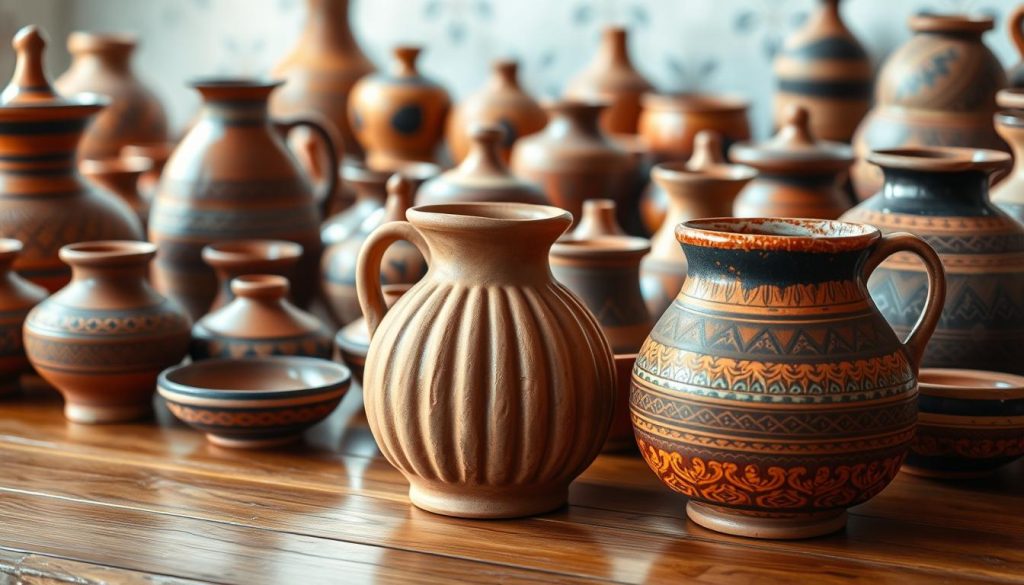
Pottery in Tunisia has ancient roots, with Djerba being a key place. The island’s location in the Mediterranean made it a hub for cultures. Each culture added to the pottery techniques, using local clay and traditional methods.
| Cultural Influence | Contribution to Pottery |
|---|---|
| Phoenician | Introduction of new firing techniques |
| Roman | Development of intricate designs |
| Arab | Incorporation of Islamic motifs |
Cultural Significance in Djerbian Society
Djerbian pottery is deeply rooted in Djerba’s society. It reflects the island’s history, values, and daily life. Pottery is more than a craft; it’s a key part of the island’s identity.
Recently, Djerba has faced challenges like political instability and the COVID-19 pandemic. But, efforts are underway to revive its cultural heritage, including pottery. By supporting local artisans, visitors help preserve Djerba’s cultural traditions.
Traditional Pottery in Djerba: A Living Art Form
The art of traditional pottery in Djerba is alive and thriving. It shows the island’s rich cultural heritage. You’ll see unique techniques and craftsmanship in Djerbian ceramics.
Distinctive Characteristics of Djerbian Ceramics
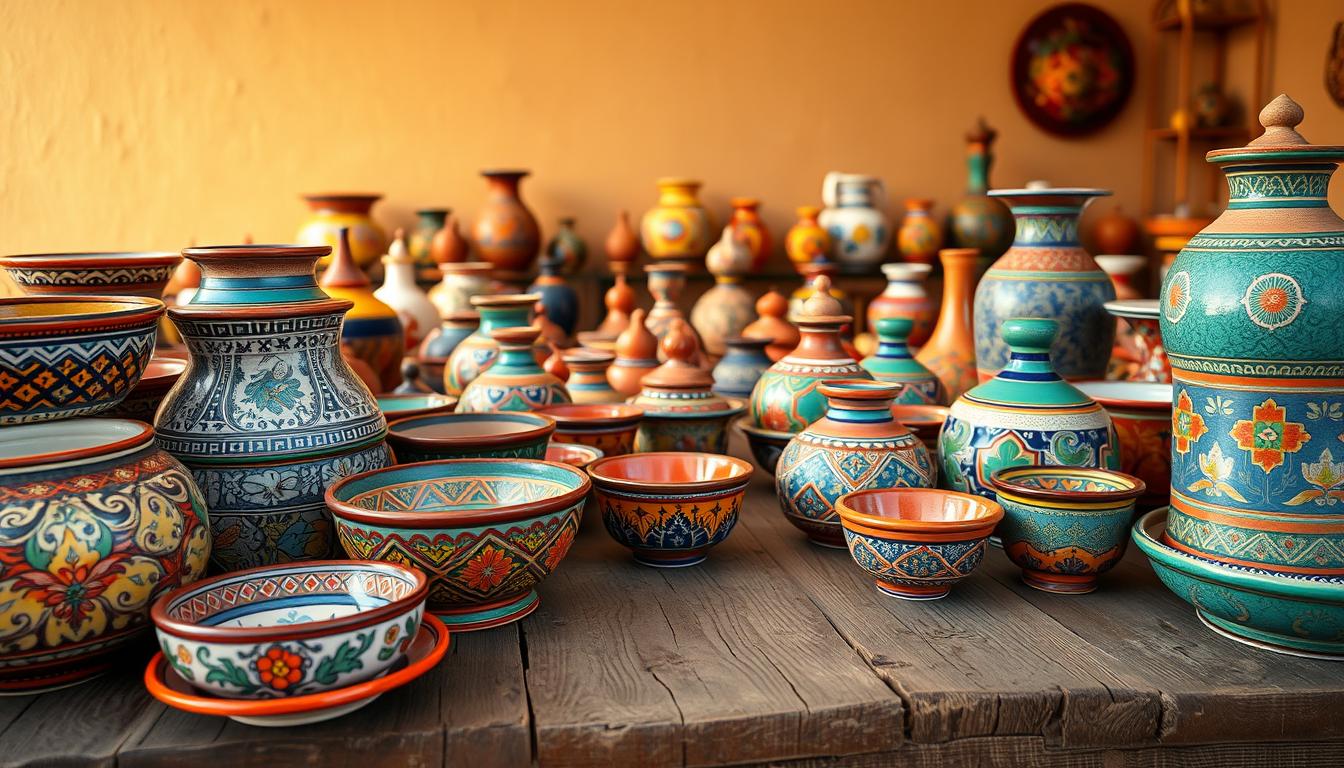
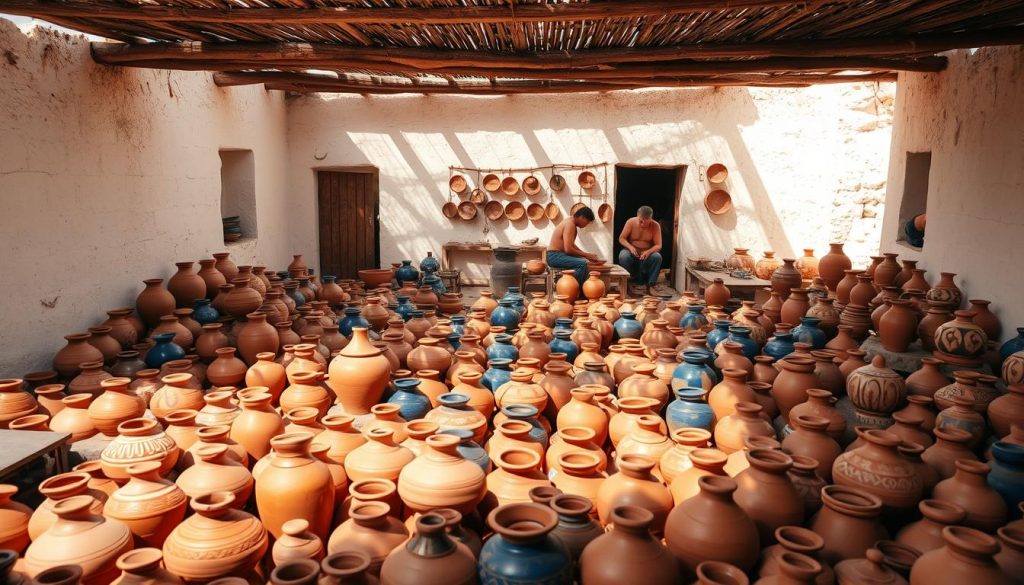
Djerbian ceramics stand out with vibrant colors and intricate designs. These are key features of the island’s ceramic art. The pottery often has geometric patterns and floral motifs, showing the island’s cultural influences.
The unique traits of Djerbian ceramics show the skill and creativity of local artisans.
| Characteristic | Description |
|---|---|
| Vibrant Colors | Use of bright, bold colors to create visually striking pieces |
| Intricate Designs | Complex patterns and motifs that reflect the island’s cultural heritage |
| Geometric Patterns | Use of geometric shapes to create visually appealing designs |
How Pottery Reflects Island Life and History
The local crafts of Djerba, including traditional pottery, offer a glimpse into the island’s history and daily life. The pottery often shows scenes of everyday life, like fishing and agriculture. It also depicts historical events and cultural traditions.
By looking at these pieces, you can understand the island’s rich cultural heritage. Traditional pottery in Djerba is a key part of the island’s identity. It reflects the island’s history, culture, and craftsmanship.
The Guellala Pottery Village is a great example. It captivates visitors with its vibrant colors and rich artistic traditions. It showcases generations of craftsmanship that define the island’s cultural heritage.
The Master Artisans of Djerba
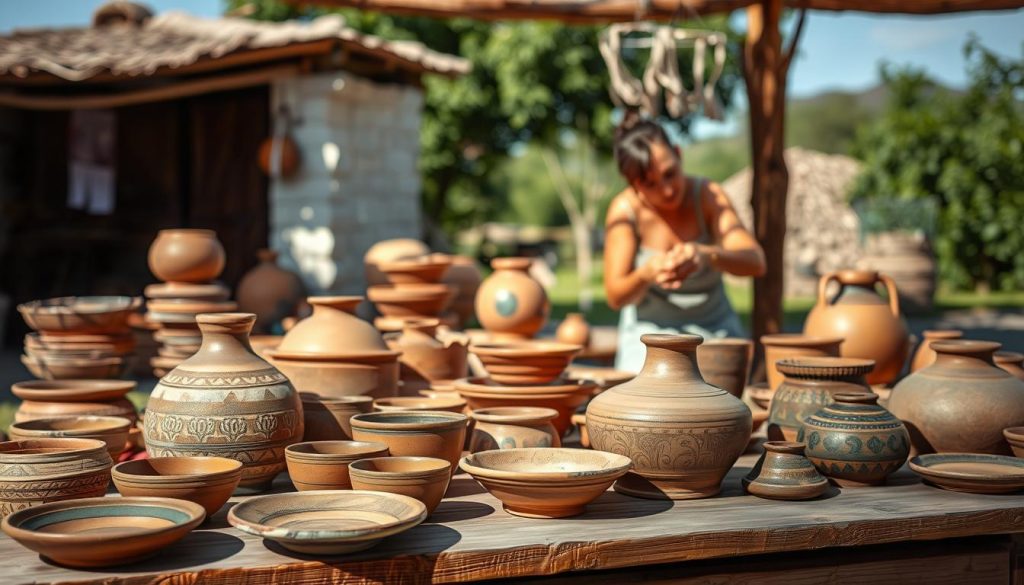
Exploring Djerba, you’ll meet master artisans who keep the island’s pottery alive. These skilled craftsmen protect traditional techniques passed down through generations.
Generational Knowledge Transfer
Pottery in Djerba is deeply rooted in tradition. Artisans learn early, often from family members. This ensures the craft’s secrets are kept alive for future generations.
Many start in family workshops, learning the art of pottery. This apprenticeship model keeps traditions alive while encouraging innovation.
Prominent Pottery Families and Their Contributions
Djerba boasts several influential pottery families. Their work is celebrated locally and worldwide. These families keep Djerbian pottery traditions alive.
| Family Name | Contribution | Notable Works |
|---|---|---|
| Ben Hammouda | Innovative glazing techniques | Decorative plates, vases |
| Aloui | Traditional shaping methods | Handmade pottery, ceramics |
| Guellala | Preservation of ancient designs | Traditional Djerbian pottery |
These families are key to Djerbian pottery’s future. They keep the craft vibrant and relevant today.
“The art of pottery is not just about creating functional items; it’s about preserving our heritage and cultural identity.” – A Djerbian artisan
Materials and Tools of the Trade
Exploring Djerba’s traditional pottery shows the importance of local materials and tools. Artisans use materials and techniques passed down through generations. This makes their pottery unique.
Local Clay Sources and Preparation
Djerbian pottery starts with local clay, known for its quality. Artisans find clay in specific island spots. They soak, knead, and wedge it to clean and shape it right.
| Clay Source | Characteristics | Use in Pottery |
|---|---|---|
| Guellala Region | High plasticity, fine texture | Ideal for intricate designs and fine pottery |
| Midoun Area | Coarser texture, durable | Used for larger, more robust pieces |
Traditional Tools Used by Djerbian Potters
Djerbian potters use traditional tools for centuries. They have wooden modeling tools, metal ribs, and wire cutters. Each tool has a special role in shaping pottery. Using these tools requires skill and precision, passed down through generations.

Natural Pigments and Glazes
Djerbian pottery’s colors come from natural sources like oxides and minerals. These natural pigments mix with other substances to create colors. The glazes not only make the pottery look good but also make it last longer.
“The beauty of Djerbian pottery lies in its connection to the land and the traditions of the island. The use of local materials and natural pigments gives the ceramics a unique, earthy quality that is highly prized.” – A Djerbian Artisan
The mix of local clay, traditional tools, and natural pigments makes Djerbian pottery special. It shows the island’s cultural heritage and the skill of its artisans.
Step-by-Step: The Pottery Making Process
To understand Djerbian pottery, we must explore how it’s made. The artisans of Djerba have honed their skills over generations. Their work shows the island’s culture and history beautifully.
Clay Preparation Techniques
The journey starts with clay preparation. Djerbian potters get their clay from local sources. They clean, soak, and knead it to make it ready for crafting.
You can join a pottery workshop to see this process. There, you’ll learn how to prepare the clay for shaping.
Forming and Shaping Methods
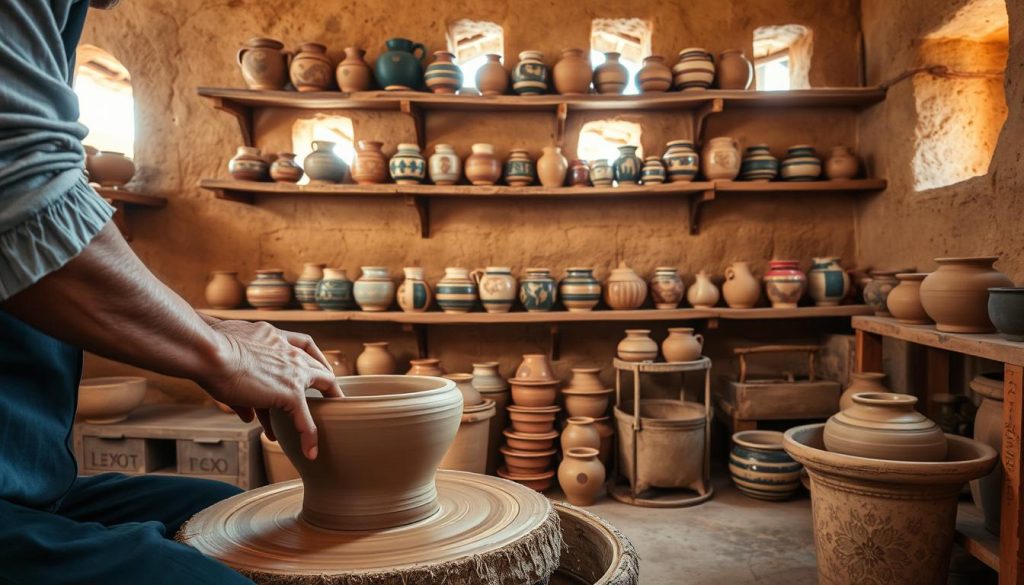
With the clay ready, artisans use traditional methods to shape it. They might use a potter’s wheel or hand-building. This requires skill and attention to detail.
As you watch, you’ll see the ceramic art in each piece. It’s amazing to see how they bring their vision to life.
Firing and Finishing Processes
After shaping, the pottery is dried and fired in a kiln. This firing process is key for durability and color. Djerbian potters use traditional kilns and methods.
Then, the pottery is glazed and fired again. This creates a durable, long-lasting finish. The result is stunning artisan pottery that shows Djerba’s traditions.
| Process Stage | Description | Techniques Used |
|---|---|---|
| Clay Preparation | Cleaning, soaking, and kneading local clay | Traditional soaking and kneading methods |
| Forming and Shaping | Crafting the clay into desired forms | Potter’s wheel and hand-building techniques |
| Firing and Finishing | Drying, firing, and glazing the pottery | Traditional kiln firing and glazing methods |
Distinctive Styles and Designs of Traditional Pottery Djerba
Exploring Djerba’s traditional pottery opens a world of unique designs. These designs reflect the island’s rich cultural heritage. The pottery is not just beautiful but also carries deep symbolic meanings.
Symbolic Patterns and Their Meanings
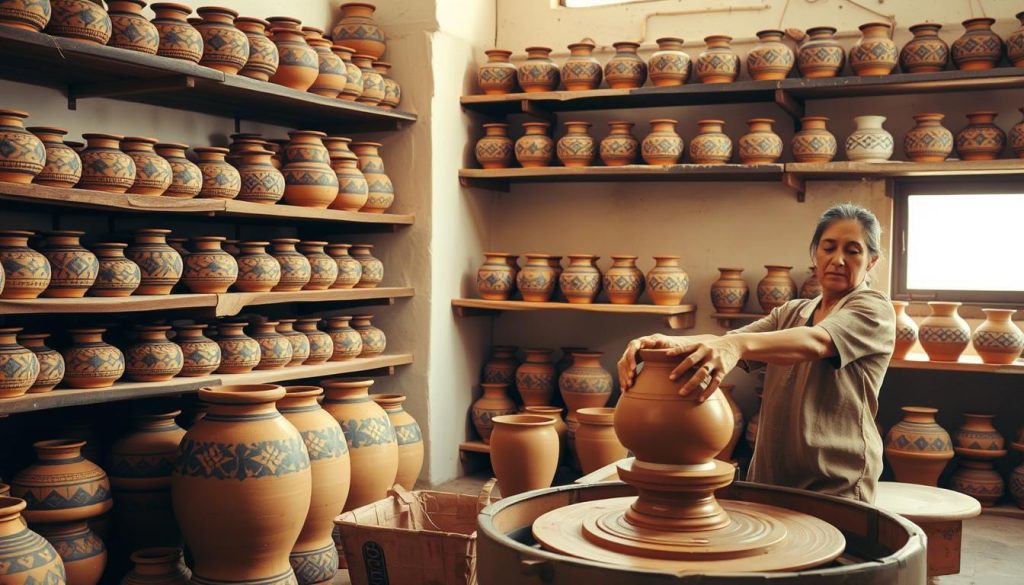
The pottery of Djerba features intricate patterns and symbols with deep meanings. For example, certain geometric patterns are believed to ward off evil spirits. Others symbolize fertility and prosperity. These designs are not just for show; they tell stories and communicate cultural values.
- Geometric patterns that symbolize protection and good fortune.
- Floral motifs that represent fertility and the cycle of life.
- Animal designs that signify strength and resilience.
Regional Variations Within Djerba
Djerbian pottery shares common traits but also shows regional variations. Different villages have their own styles, techniques, and designs. For instance, Guellala is famous for its pottery workshops where artisans create beautiful pieces that tell the island’s stories.
Exploring these regional variations gives us a deeper look into Djerba’s culture. Each piece of pottery, made from local clay and traditional motifs, showcases the island’s rich artisanal heritage.
Where to Experience Pottery Making in Djerba
To dive into Djerba’s pottery culture, check out the island’s top pottery spots. You’ll find everything from traditional villages to modern museums and cultural centers. Here, you can see pottery making up close.
Famous Pottery Village: Guellala
Guellala, or Qallala, is Djerba’s most famous pottery village. It sits on a hill and has been making pottery for centuries. Walking through, you’ll see many workshops where artisans make stunning ceramics the old way.
The Djerba: Pottery Village and Heritage Museum Tour lets you explore the island’s rich culture.
Museums and Cultural Centers
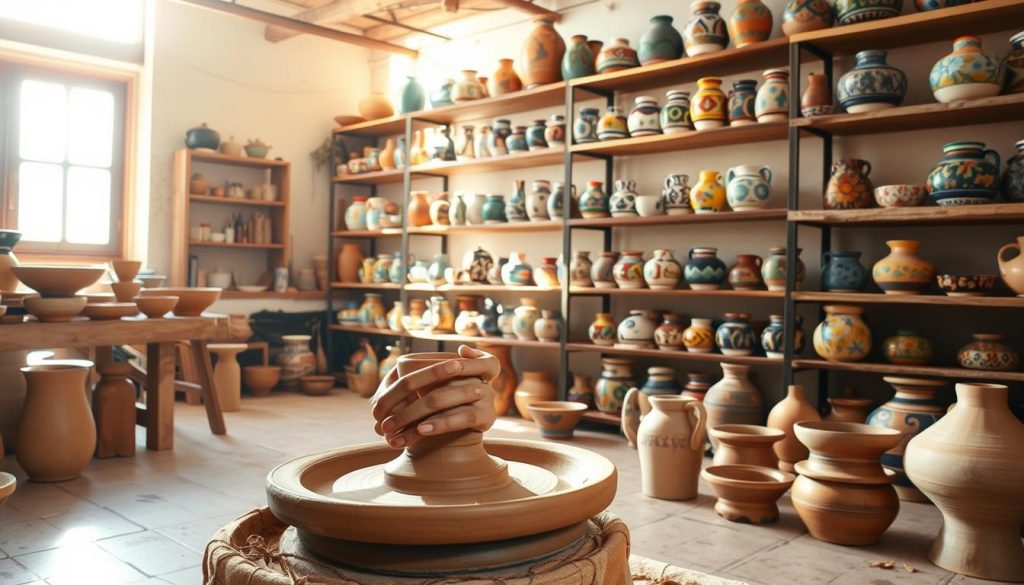
Djerba has many museums and cultural centers that highlight pottery’s importance. They offer deep insights into the craft, showing traditional methods and tools. These places are great for learning more about local crafts.
Recommended Artisan Workshops to Visit
For a hands-on experience, visit a recommended artisan workshop in Djerba. Here, you can join a pottery workshop and make your own ceramic piece. It’s a chance to learn about artisan pottery and take home a special souvenir.
| Location | Type | Description |
|---|---|---|
| Guellala Village | Pottery Village | Traditional pottery workshops and sales outlets |
| Djerba Museum | Cultural Center | Exhibits on Djerbian history and pottery |
| Local Artisan Workshop | Workshop | Hands-on pottery making experience |
Participate in a Pottery Workshop
Dive into the world of traditional Djerbian pottery with a hands-on workshop. Djerba is famous for its pottery heritage. Here, visitors can work with local artisans and learn ancient techniques.
Hands-on Learning Experiences for Visitors
Skilled artisans will teach you the basics of Djerbian ceramics in a workshop. You’ll get to work with local clay and make your own pottery. These workshops are fun and interactive, letting you explore your creativity and learn about Djerba’s pottery culture.
- Learn traditional pottery-making techniques from local experts.
- Create your own unique ceramic piece to take home.
- Gain insight into the cultural and historical context of Djerbian pottery.
What to Expect in a Traditional Pottery Class
In a Djerban pottery class, you’ll be warmly welcomed by local artisans. They’ll introduce you to the materials and tools used in pottery. Then, you’ll practice shaping and decorating pottery with traditional methods.
Key aspects of the pottery class include:
- Introduction to local clay and pottery tools.
- Practical experience in shaping and decorating pottery.
- Firing and glazing techniques to finalize your ceramic piece.
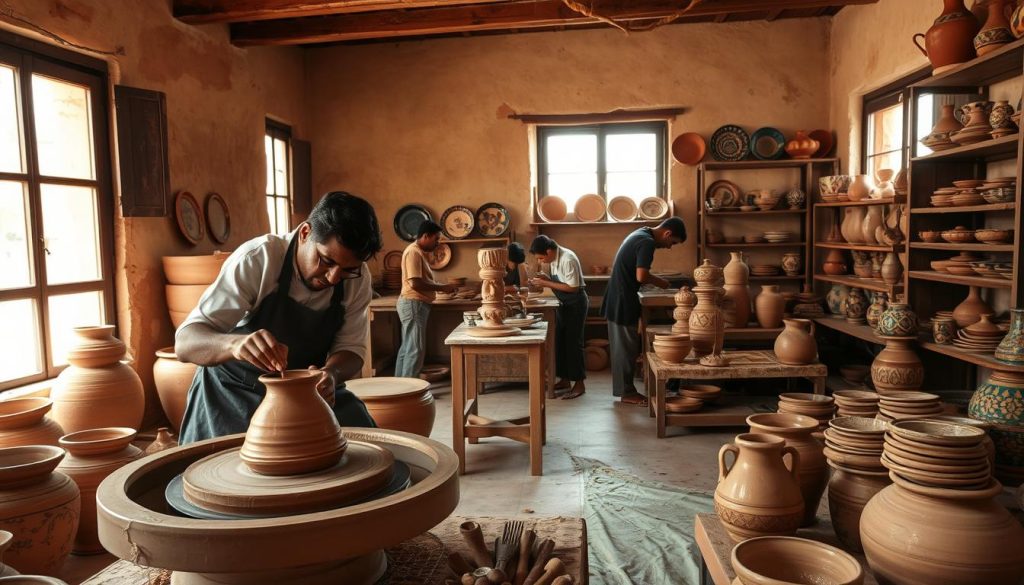
Djerbian Pottery in Context: Mediterranean Ceramic Traditions
Djerbian pottery shows the island’s place in the Mediterranean. It’s a key cultural item that tells the island’s story. It shows how Djerbia has connected with other cultures.
Comparisons with Other North African Pottery
Djerbian pottery is similar to other North African pottery but also stands out. It uses local clay and natural colors, like Moroccan and Algerian pottery. But, its techniques and designs are special, showing the island’s unique culture and geography.
Looking at North African pottery, we see a web of cultural sharing. Here’s a table that shows some of these similarities and differences:
| Pottery Tradition | Clay Sources | Common Designs |
|---|---|---|
| Djerbian | Local clay | Geometric patterns |
| Moroccan | Varied clay sources | Intricate tile work |
| Algerian | Local and imported clay | Floral motifs |
Influences and Exchanges Across the Mediterranean
The Mediterranean has always been a place of cultural sharing. Djerbian pottery shows this, with influences from the Phoenicians, Romans, and Arabs. The island’s location helped in sharing goods, ideas, and art.
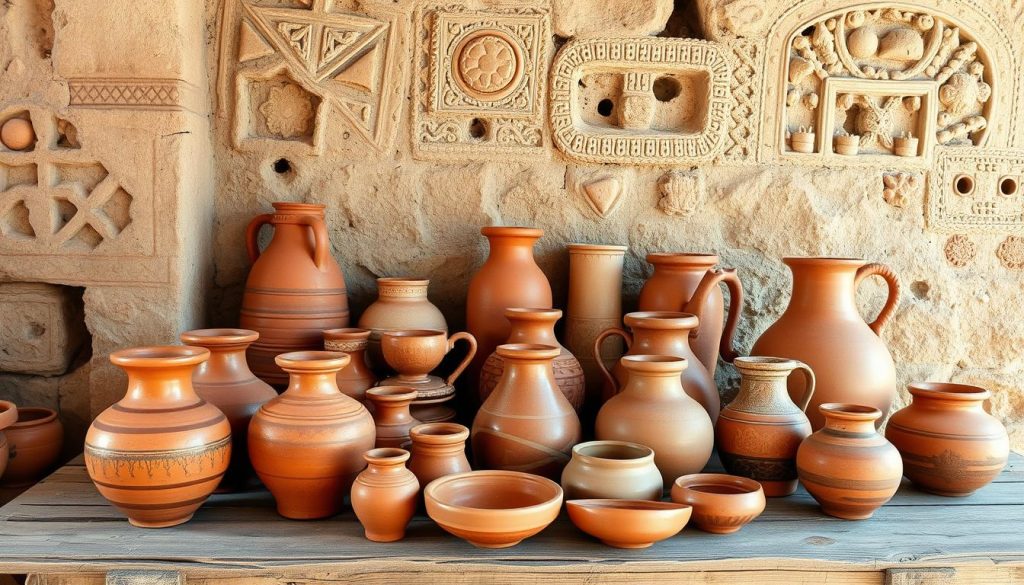
Exploring Djerbian pottery, you’ll see these influences come together. This creates a unique tradition that’s both Djerbian and part of the Mediterranean’s heritage.
Conclusion: Preserving Djerba’s Pottery Heritage for Future Generations
As you finish exploring Djerbian pottery, it’s clear that saving this heritage is key for the future. The island’s rich culture is a treasure for both locals and visitors from Tunisia. They come to see and experience it.
By supporting local artists and joining pottery workshops, you help keep this ancient craft alive. You’ll meet the skilled artisans who keep the traditions going. You’ll also gain a deeper appreciation for Djerbian pottery’s beauty and importance.
Exploring local crafts lets you see what makes Djerbian pottery special. It shows the importance of artisan pottery in the island’s culture. Your visit will not only deepen your understanding of Djerbian pottery. It will also help the local community keep this craft alive.