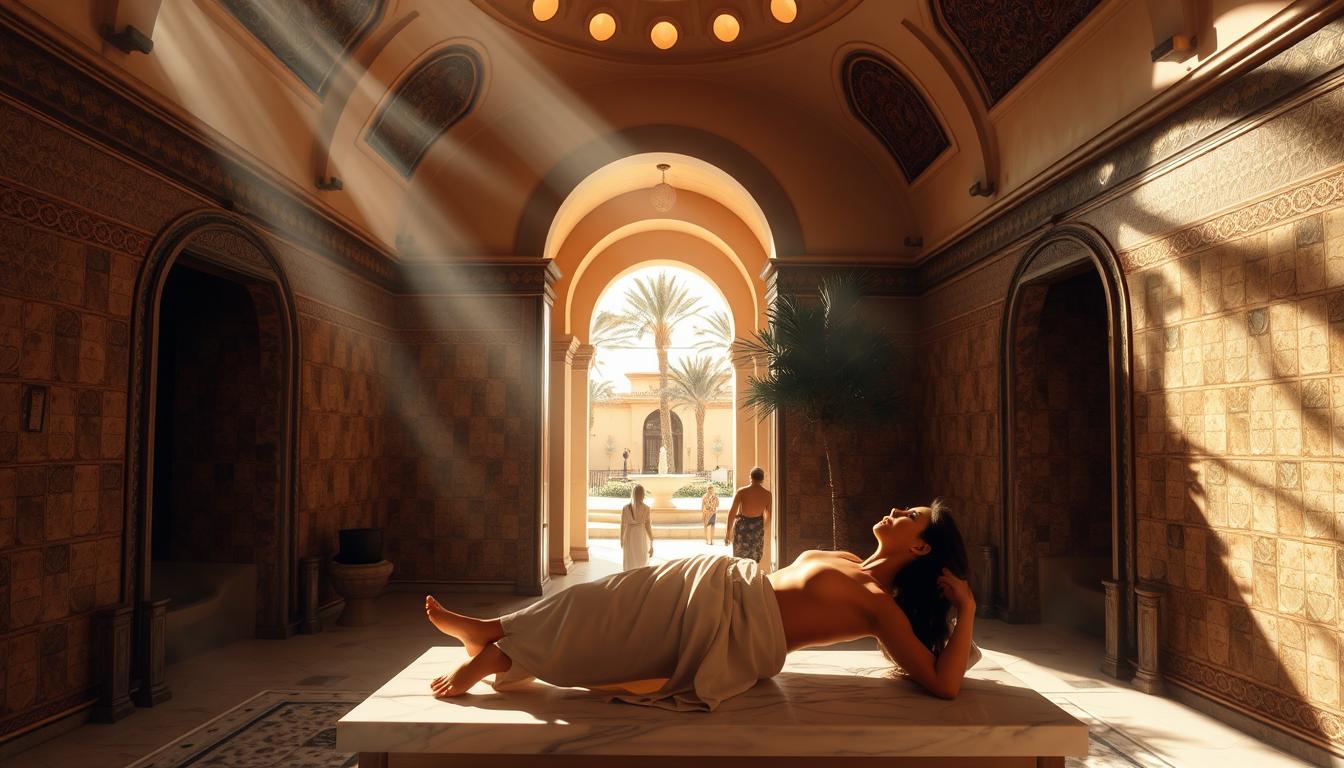
Discover the Traditional Hammam Experience in Tunis
Ever wondered about unwinding in a centuries-old bathing ritual? It’s a mix of Arab and Roman cultures. You’re about to dive into the world of Tunisian hammam rituals.
The hammam, or Turkish bath, is a key part of relaxation and socializing. As you experience it, you’ll see why it’s so loved.
Exploring the hammam experience reveals its rich history. You’ll see how it’s been kept alive for generations. It’s why Tunis visitors keep coming back.
The Ancient Art of Hammam: A Tunisian Cultural Treasure
Discover the ancient art of Hammam, a key part of Tunisian culture for centuries. It’s more than a place to wash; it’s a full-body, mind, and spirit experience. For ages, Hammam has stood for wellness, cleanliness, and social gatherings.
Origins of the Hammam Tradition in North Africa
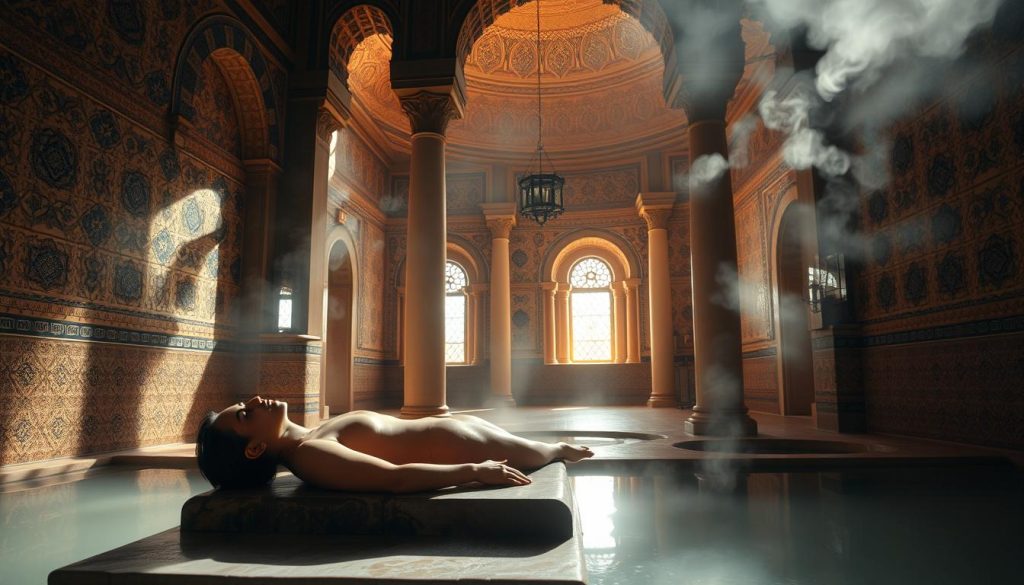
The Hammam tradition goes back to the Roman era in North Africa. It was adopted and shaped by various cultures, becoming a core part of Tunisian life. The Hammam’s design and rituals reflect influences from Romans, Arabs, and Ottomans, creating a unique cultural mix.
The Hammam is more than a bathhouse. It’s a social spot for relaxation, chat, and rituals. It plays a key role in Tunisian life, offering physical and spiritual cleansing and fostering community ties.
Cultural Significance in Tunisian Society
In Tunisian society, the Hammam is a sacred place for tradition and celebration. Women come together for big events like weddings and births. It’s also a symbol of Tunisian hospitality, welcoming guests with special rituals.
The Hammam culture in Tunis shows the country’s rich history and diversity. By experiencing the Hammam, you join a long-standing cultural tradition that’s still alive in modern Tunisia.
What Makes the Traditional Hammam Experience in Tunis Unique
The traditional hammam in Tunis is a journey through ancient traditions and stunning architecture. When you enter one of these bathhouses, you step into a world of rich culture and spiritual renewal.
The Architecture and Layout of a Tunisian Hammam
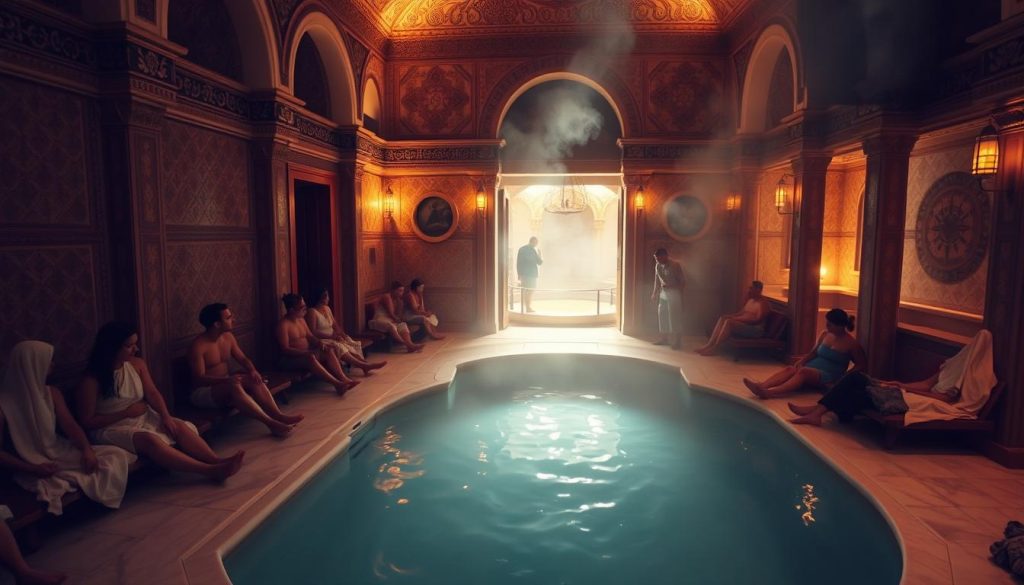
Tunisian hammams are found in historic buildings, like those in Tunis’s medinas. They have vaulted ceilings and marble-lined rooms, offering a serene and luxurious feel. The layout includes rooms of different temperatures, helping visitors adjust to the heat.
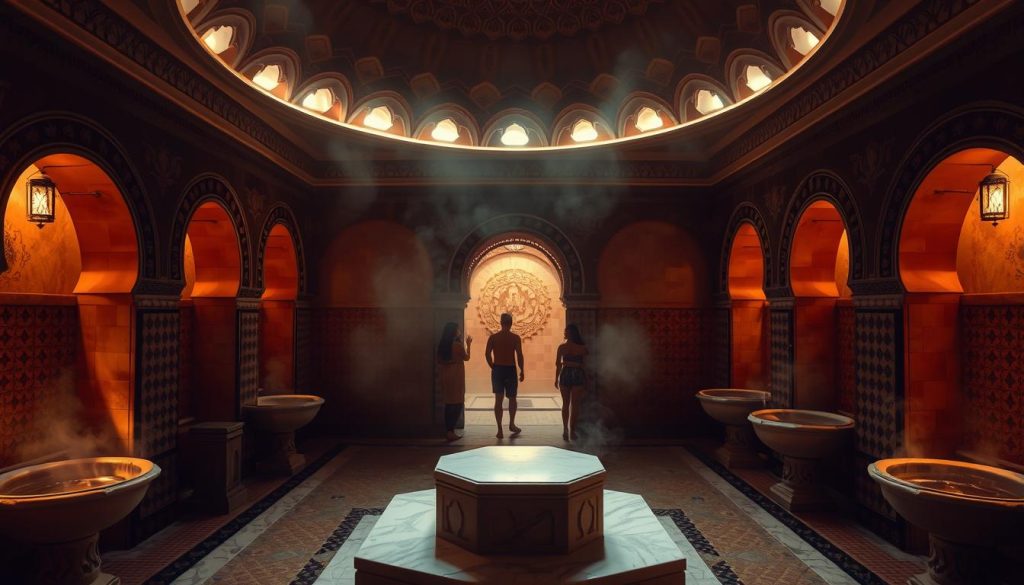
The hammam’s design is both beautiful and practical. It helps visitors move from warm to hot rooms smoothly. This design makes the experience unique and unforgettable.
| Feature | Description | Benefit |
|---|---|---|
| Vaulted Ceilings | Characteristic architectural feature | Creates a sense of grandeur and space |
| Marble-Lined Rooms | Luxurious material used for walls and floors | Provides a cool, smooth surface and enhances the aesthetic |
| Gradual Temperature Change | Series of rooms with increasing heat | Allows for acclimation, enhancing the comfort and safety of the experience |
The Spiritual and Social Dimensions
The hammam in Tunis is more than just beautiful architecture. It’s a place for spiritual and social practices. Locals come to cleanse their bodies and socialize, creating a sense of community and peace.
Visitors can dive into the local culture with a Tunis hammam treatment. It’s a chance to experience Tunisian hospitality and warmth, making the visit unforgettable.
The Step-by-Step Process of a Tunisian Hammam
Visiting a Hammam in Tunis is a unique experience. It combines socializing, spiritual cleansing, and physical rejuvenation. Knowing the steps can make your visit better and help you enjoy the Tunisian hammam rituals more.
Preparation: What to Bring and Wear
Before you go, make sure you’re ready. Bring a towel, a change of clothes, and flip-flops. Hammams are communal, so you’ll be nude at times. But don’t worry, a towel or maghraba will keep you modest.
The Warming Room (Maslakh) Experience
The Hammam starts in the Maslakh, a warm room. It’s heated by steam, helping your body adjust. Here, you can relax and get ready for what’s next, often with soothing music.
The Hot Room (Harara) Rituals
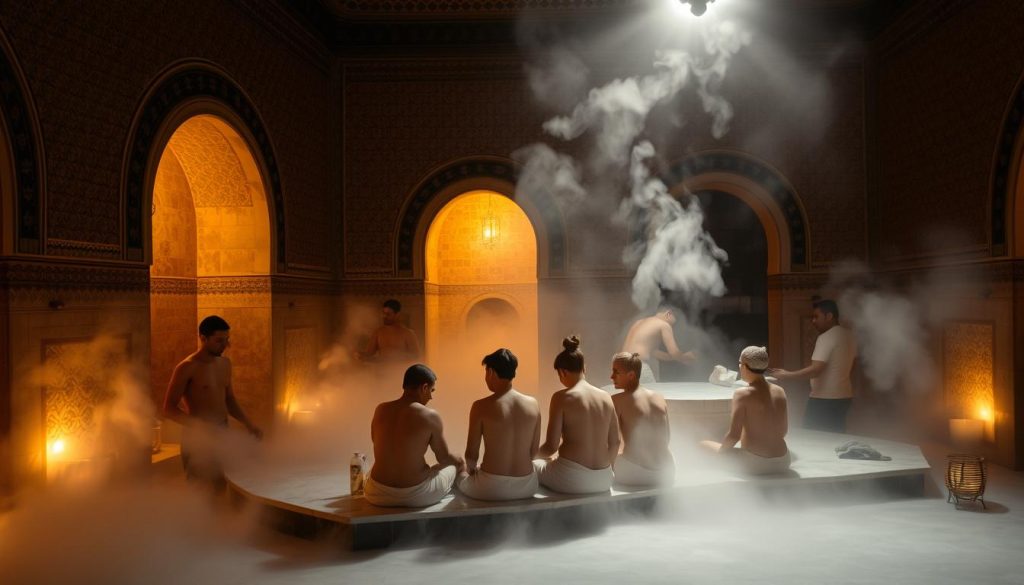
Next, you go to the Harara, the hot room. The heat opens your pores and prepares your skin. You’ll use black soap (savon noir) and a kessa glove for exfoliation, leaving your skin smooth.
The Exfoliation and Massage Techniques
Exfoliation is key in the Hammam ritual. The kessa glove scrubs away dead skin, then you rinse. After, a massage with essential oils relaxes you and nourishes your skin. This combo rejuvenates your skin and relaxes your muscles.
After your Hammam visit, you’ll feel refreshed. It’s a mix of socializing, spiritual cleansing, and relaxation. Whether it’s a traditional Hammam or a modern Tunis spa and hammam, the rituals are timeless.
Traditional Products and Treatments Used in Tunisian Hammams
Tunisian hammams are famous for their special mix of traditional products and treatments. These ancient rituals have been perfected over centuries. They combine natural ingredients with healing techniques for a complete wellness experience.
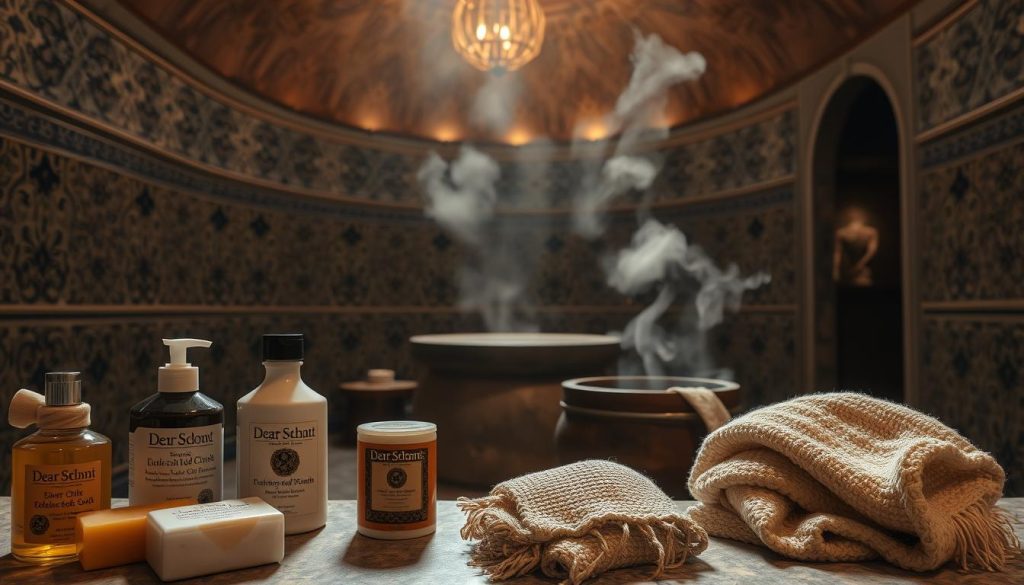
Black Soap (Savon Noir) and Its Benefits
Black soap, or Savon Noir, is a key product in Tunisian hammams. It’s full of antioxidants and cleanses the skin deeply. This leaves your skin feeling smooth and refreshed.
Rhassoul Clay: Nature’s Skin Purifier
Rhassoul clay is another important ingredient. It’s a mineral-rich clay from the Atlas Mountains. It draws out impurities from the skin, making it clean and refreshed.
In the hammam, Rhassoul clay is mixed with water to make a paste. This paste is applied to the body for a detoxifying and nourishing treatment.
Essential Oils and Aromatherapy Elements
Essential oils are a big part of the Tunisian hammam experience. They help with both physical and mental health. Oils like lavender, rose, and orange blossom are used for their calming effects.
The aromatherapy adds to the sensory experience. It makes the ritual even more immersive and rejuvenating.
Tunisian hammams offer a unique and enriching experience. They not only rejuvenate the body but also calm the mind. By enjoying these rituals, you’re part of a centuries-old tradition that’s a big part of Tunisian culture and wellness.
Health and Wellness Benefits of the Hammam Experience
When you enter a Hammam in Tunis, you’re not just walking into a bathhouse. You’re starting a journey to overall wellness. This ancient tradition offers a complete health and wellness approach.
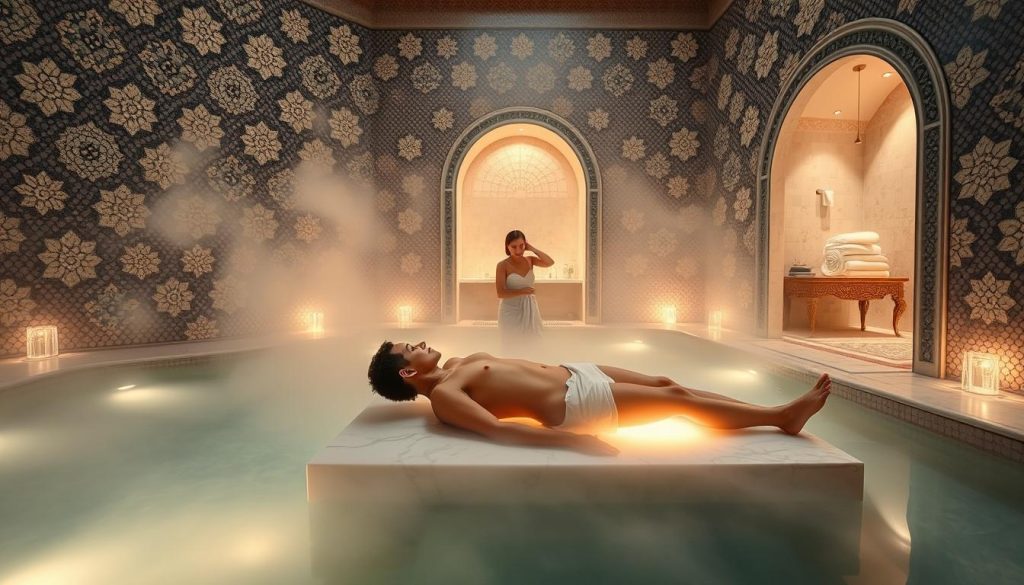
Physical Benefits: Detoxification and Skin Rejuvenation
The Hammam offers many physical benefits, like detoxification and skin rejuvenation. You’ll get a deep scrub with black soap and Rhassoul clay. This removes dead skin cells and cleanses your skin.
This ritual makes your skin feel smooth and bright. It also boosts your body’s health by removing toxins.
| Physical Benefits | Description |
|---|---|
| Detoxification | Removal of toxins from the body through sweating and scrubbing |
| Skin Rejuvenation | Exfoliation and nourishment of the skin using natural products like Rhassoul clay |
Mental and Emotional Benefits: Stress Relief and Relaxation
The Hammam also offers mental and emotional benefits. Its calm atmosphere and warmth are ideal for stress relief and relaxation.
The aromatherapy, with essential oils, adds to the relaxation. It calms your mind and soothes your senses. This way, you leave feeling refreshed both physically and mentally.
Top Hammams to Visit in Tunis
Explore the rich tradition of Tunisian hammams by visiting these top spots in Tunis. The city boasts a variety of hammams, each providing a unique experience.
Luxury Hammam Experiences
Hammam Dar El Jeld stands out as a luxury hammam in Tunis. It offers an authentic hammam in Tunisia experience with top-notch amenities. Enjoy traditional Tunisian scrubbing and massages in a lavish setting.
Authentic Local Experiences
Hammam Kachachine is perfect for a local experience. It’s a favorite among both locals and visitors, offering a genuine Tunis spa and hammam vibe. The traditional rituals and treatments here are a must-try.
Historical Bath Houses
The Medina Hammams are historical bath houses that take you back in time. These hammams are not just for cleansing but also serve as social hubs. Visiting these hammams is like stepping back in history.
Modern Spa Hammams for First-Timers
For those new to hammams, modern spa hammams in Tunis are ideal. They mix traditional practices with modern amenities, making them perfect for first-timers.
| Hammam Name | Type | Notable Features |
|---|---|---|
| Hammam Dar El Jeld | Luxury | High-end amenities, traditional Tunisian treatments |
| Hammam Kachachine | Authentic Local | Genuine local experience, traditional rituals |
| Medina Hammams | Historical | Historical significance, social hub |
| Modern Spa Hammams | Modern | Blends traditional with modern amenities |
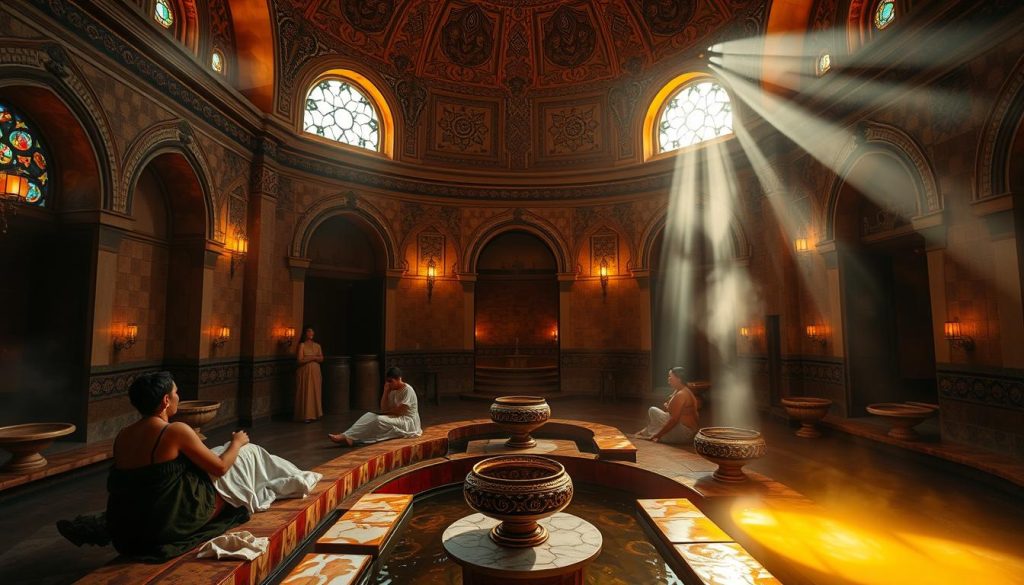
Each hammam in Tunis offers a unique take on the traditional Tunisian hammam experience. Whether you seek luxury, authenticity, history, or modern amenities, Tunis has a hammam for you.
Hammam Etiquette and Pricing: What American Visitors Should Know
Before you dive into a traditional Tunisian hammam, knowing the local rules and costs is key. The hammam is a big deal in Tunis. Being respectful of local customs will make your visit better.
Respecting Cultural Norms and Practices
At a hammam, it’s important to respect the culture. Hammams are usually for men or women only. You’ll need to be okay with being naked and cover up when moving around. Also, remember to wash before going into the steam room.
Communication Tips and Useful Phrases
Even if some staff speak English, knowing Arabic can help a lot. Say “hello” (as-salamu alaykum), “thank you” (shukraan), and “excuse me” (afwan). It makes your visit smoother.
Typical Pricing and What’s Included
Hammam prices in Tunis vary, but expect to pay 20 to 50 Tunisian Dinar (about $7 to $17 USD). This usually covers the steam room, a scrub, and a massage. Some fancy hammams might charge more for extra services.
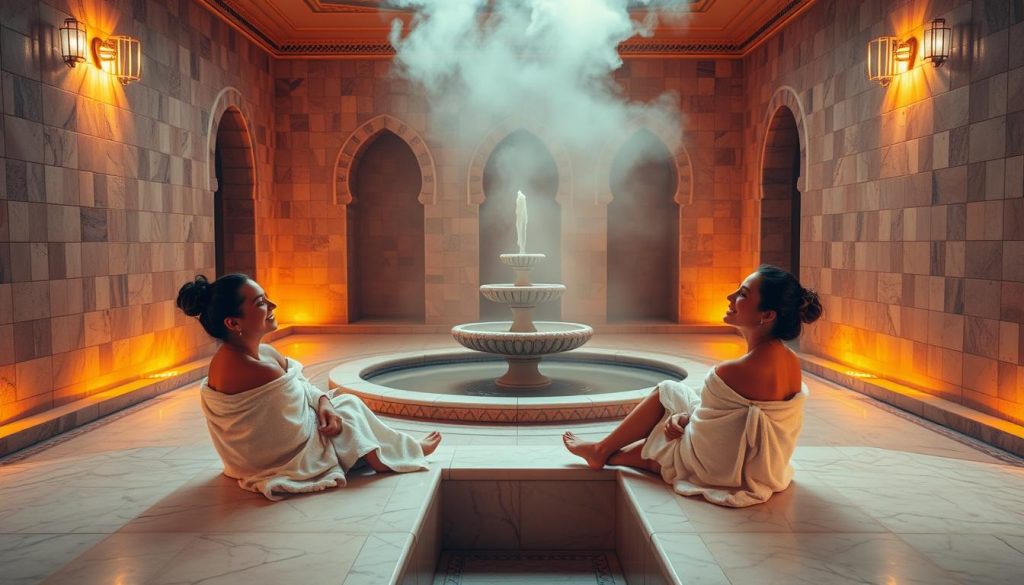
Knowing the etiquette and prices lets you dive into the Tunisian hammam rituals and enjoy the Hammam culture in Tunis fully.
When to Experience a Hammam During Your Tunis Visit
Choosing the right time for your hammam visit in Tunis can make a big difference. Knowing when to go helps you avoid the crowds and enjoy the traditional steam bath rituals fully.
Best Times of Day for Your Hammam Visit
Going to a hammam in the morning is great for a calm experience. The early hours are usually less busy, offering a peaceful steam bath. On the other hand, late afternoon or early evening visits can be relaxing after a day of seeing Tunis. Some hammams even have special evening sessions or packages for a better experience.
Seasonal Considerations for the Optimal Experience
The best time to visit a hammam in Tunis depends on your weather and crowd preferences. Spring and autumn are the best seasons, with mild and pleasant weather. These times make your visit to the hammam or the city’s sites more enjoyable.
Summer is hot, and winter is mild but not ideal for outdoor activities before a hammam. By picking the right time of day and season, you can make your hammam visit unforgettable and refreshing.
Conclusion: Embracing the Timeless Tradition of Tunisian Hammams
Exploring Tunis’s rich culture means trying a traditional hammam. Hammams offer a mix of physical and spiritual renewal, along with social bonding. We’ve covered the history, importance, and benefits of hammams in this article.
The beauty of Tunisian hammams lies in their architecture and treatments. Knowing how to enjoy a hammam fully involves understanding the process and local customs. This way, you can dive deep into this ancient tradition.
When you visit Tunis, look for top hammams like Hammam Dar El Jeld and Hammam Kachachine. They offer a true Tunisian hammam experience. Embracing these traditions will refresh your body and mind, and deepen your cultural understanding.