Take Authentic Moroccan Cooking Classes in Tangier
Have you ever wondered what makes Moroccan cuisine so unique and flavorful?
Imagine yourself in Tangier, surrounded by exotic spices and sizzling tagines. Blue Door Cuisine’s cooking classes let you dive into Moroccan dishes. You’ll learn to appreciate the local culinary heritage.
You’ll explore Morocco’s flavors and traditions. From tagines to pastries, you’ll learn it all. By the end, you’ll be ready to make these dishes at home.
The Rich Heritage of Moroccan Cuisine
Exploring Moroccan cuisine reveals a rich mix of flavors and traditions. Moroccan food culture combines Berber, Arabic, and Mediterranean influences. This reflects the country’s strategic position and cultural diversity.
A Fusion of Berber, Arabic, and Mediterranean Influences
Moroccan cuisine’s unique taste comes from blending different cultures. Berber traditions use local ingredients. Arabic influences add complex spice blends. The Mediterranean diet also plays a big role, with olive oil, citrus, and fresh produce being key.
- Olive oil and preserved lemons
- Fresh herbs like parsley and cilantro
- Spices such as cumin, coriander, and cinnamon
The Ceremonial Importance of Food in Moroccan Culture
In Moroccan culture, food is more than just food; it’s a key part of social gatherings and celebrations. Traditional dishes like tagine and couscous are often at the heart of these events. Food is prepared and shared with a focus on generosity and community.
Food’s importance in Moroccan culture is also seen in traditional dining etiquette. Meals are seen as chances to bond with family and friends. Understanding this cultural context deepens your appreciation of the cuisine and cooking classes.
Why Tangier is a Culinary Destination
Tangier is a place where cultures meet, offering a unique culinary journey. Its location at the crossroads of cultures has shaped its food scene.
Tangier’s Unique Position at the Crossroads of Cultures
Tangier’s history as a trading center has mixed Berber, Arabic, and Mediterranean flavors in its food. This mix is seen in the variety of dishes and ingredients used.
The Blend of Mediterranean and Atlantic Flavors
The city’s food is a mix of Mediterranean and Atlantic tastes. It focuses on fresh seafood and local produce. This mix makes Tangier’s food special.
Local Markets and Fresh Ingredients
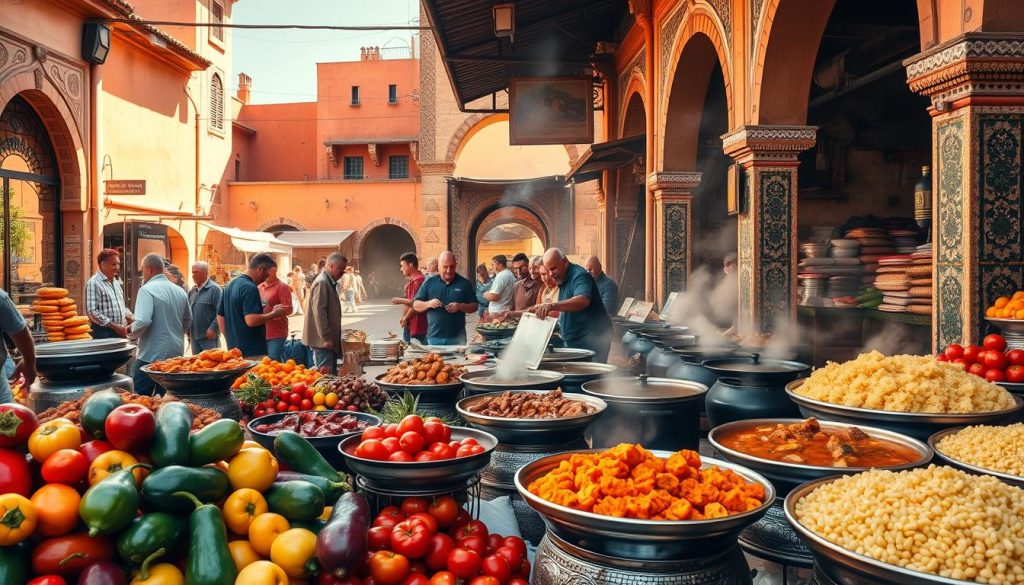
Local markets in Tangier are key to its cuisine. They offer fresh ingredients needed for traditional Moroccan dishes. Exploring these markets is a big part of the cooking class.
| Market | Fresh Produce |
|---|---|
| Grand Socco Market | Fresh vegetables, fruits, and spices |
| Tangier Medina Market | Local cheeses, olives, and seafood |
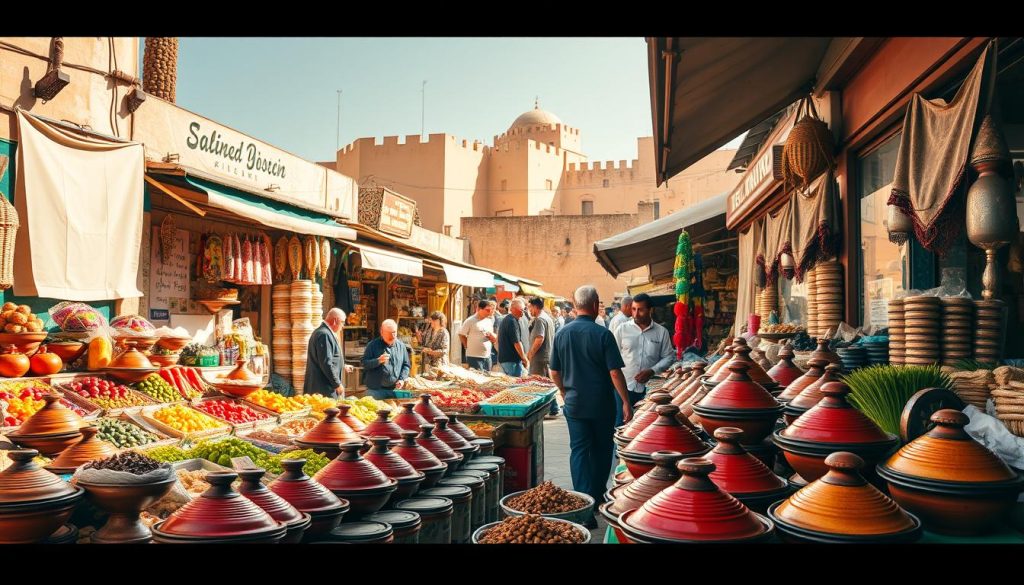
Authentic Moroccan Cooking Classes in Tangier
Dive into Morocco’s rich flavors with cooking classes in Tangier. These classes give you a deep dive into traditional Moroccan cooking.
What to Expect from a Typical Class Experience
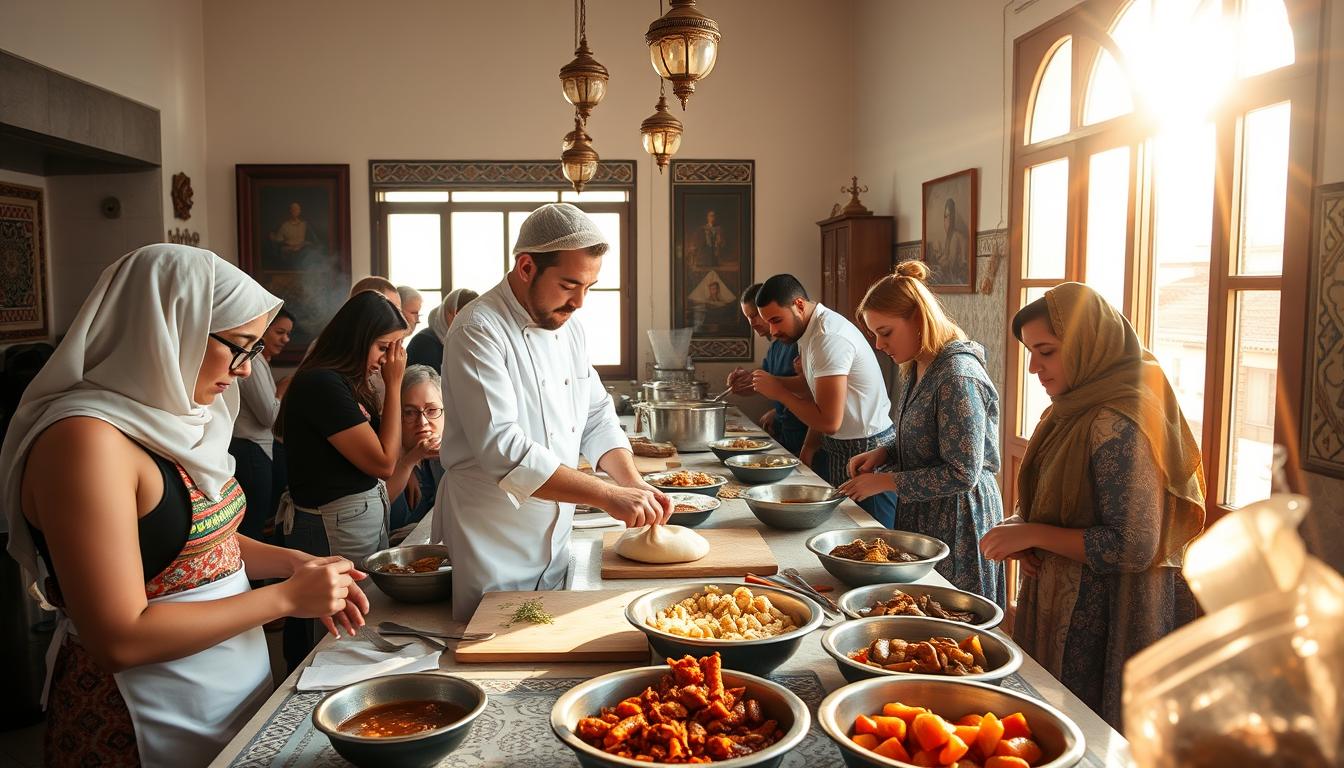
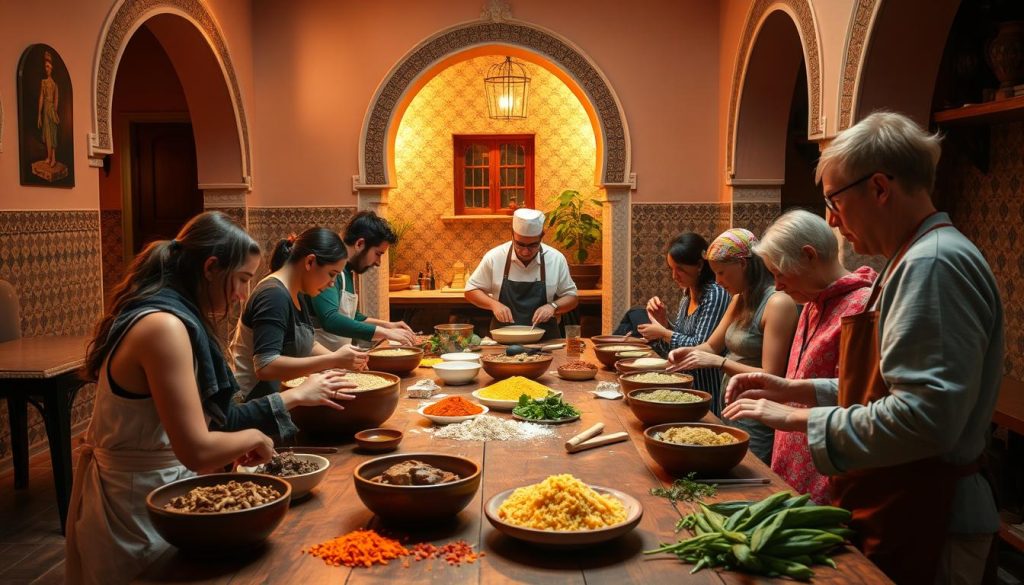
Expect a hands-on cooking class where you’ll make traditional Moroccan dishes. You’ll learn about tagine and couscous recipes and techniques. Experienced chefs will teach you, sharing tips on Moroccan cooking traditions.
Market Tours and Ingredient Selection
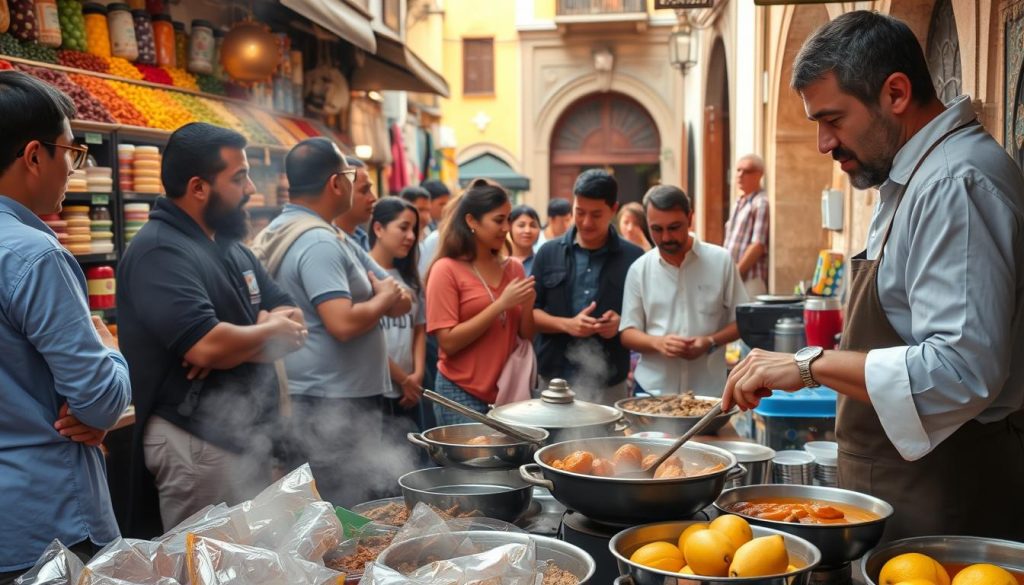
Many classes include a market visit to learn about fresh ingredients. You’ll pick the best produce and understand spices and herbs. This enhances your cooking skills and deepens your cultural appreciation.
Pricing and Value Considerations
Prices vary based on class type, duration, and what’s included. Think about the skills, recipes, and cultural insights you’ll gain. Many find it a memorable culinary adventure worth the cost.
Choosing a Tangier cooking class is more than learning recipes. It’s a cultural dive into food, tradition, and community.
Top Cooking Schools and Workshops in Tangier
If you want to learn Moroccan cooking, Tangier has many schools and workshops. You can find classes led by professional chefs or family-run workshops. Each offers a unique way to learn.
Established Cooking Schools with Professional Chefs
In Tangier, you can find cooking schools with professional chefs. They offer classes that include market tours and hands-on cooking. You’ll learn about Moroccan ingredients and cooking methods.
You’ll gain a deep understanding of Moroccan cuisine. You’ll also learn how to make authentic dishes at home.
Family-Run Workshops and Home Cooking Experiences
Family-run workshops offer a personal touch. You’ll feel like part of the family. These workshops show you how to cook like a local, using local ingredients and recipes passed down through generations.
You’ll learn the art of Moroccan cooking in a cozy setting. Often, it’s in the family’s own home.
Hotel and Riad-Based Cooking Programs
Hotels and riads in Tangier also offer cooking classes. These programs mix cooking with cultural experiences. You’ll visit local markets and enjoy the dishes you’ve made.
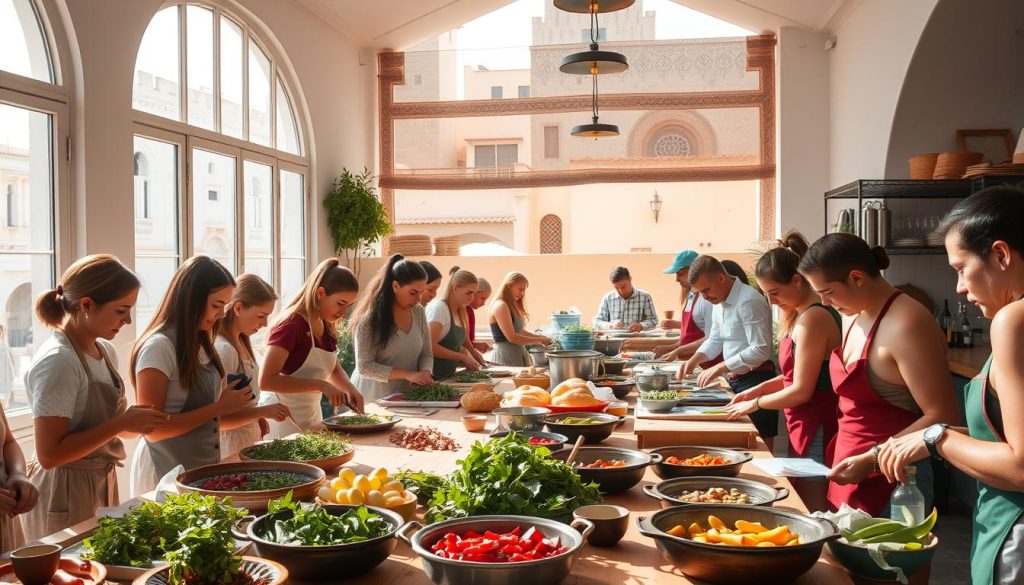 These programs are great for a unique culinary and cultural experience. They’re open to both hotel guests and visitors.
Essential Moroccan Dishes You’ll Learn to Make
In Tangier, you’ll dive into authentic Moroccan cooking. You’ll explore the rich flavors and techniques of North African cuisine. Moroccan cooking classes are hands-on, letting you get into the heart of traditional recipes.
Mastering the Art of Tagine
The tagine is a key dish in Moroccan cuisine. It’s a slow-cooked stew made in an earthenware pot. You’ll learn to make different tagines with tender meat, dried fruits, and spices. The secret to a great tagine is slow cooking, which blends flavors perfectly.
Perfecting Couscous Techniques
Couscous is a big deal in Moroccan cooking. You’ll learn how to steam it to get that fluffy texture. It’s often served with veggies and meats. Getting couscous right is about finding the right steam balance.
Creating Flavorful Moroccan Salads and Starters
Moroccan salads and starters are full of life and fresh ingredients. You’ll learn to make Zaalouk (eggplant stew) and B’stilla (savory pie). These dishes use spices, herbs, and local produce.
Traditional Pastries and Sweet Treats
No Moroccan meal is complete without sweet treats. You’ll make Ma’amoul (shortbread-like cookies) and Ghoriba (sweet cookie). These are perfect for mastering Moroccan baking.
- Learn to make traditional Moroccan pastries
- Understand the use of local ingredients like almonds and honey
- Discover the art of presenting Moroccan desserts
The Spice Palette of Moroccan Cooking
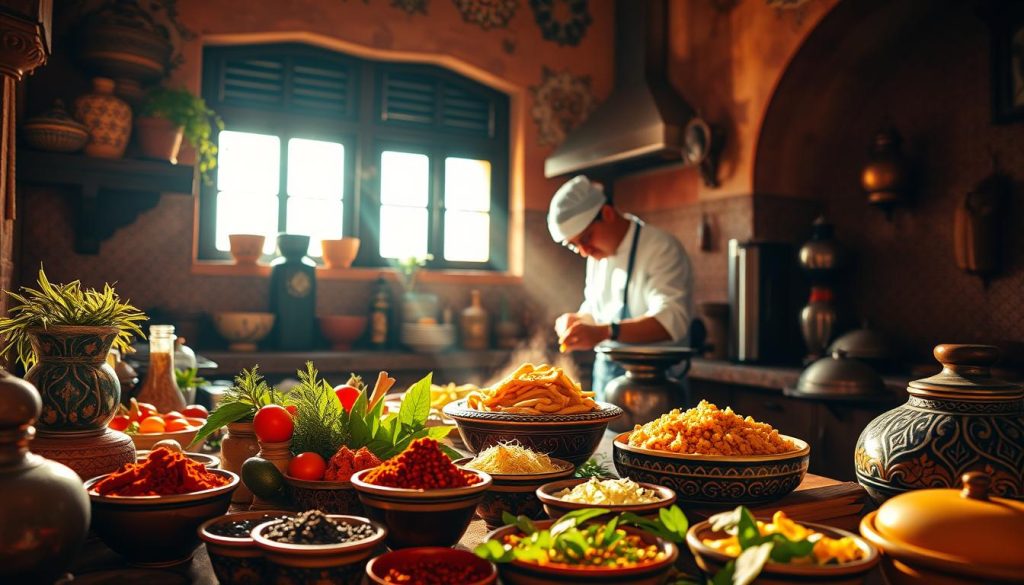
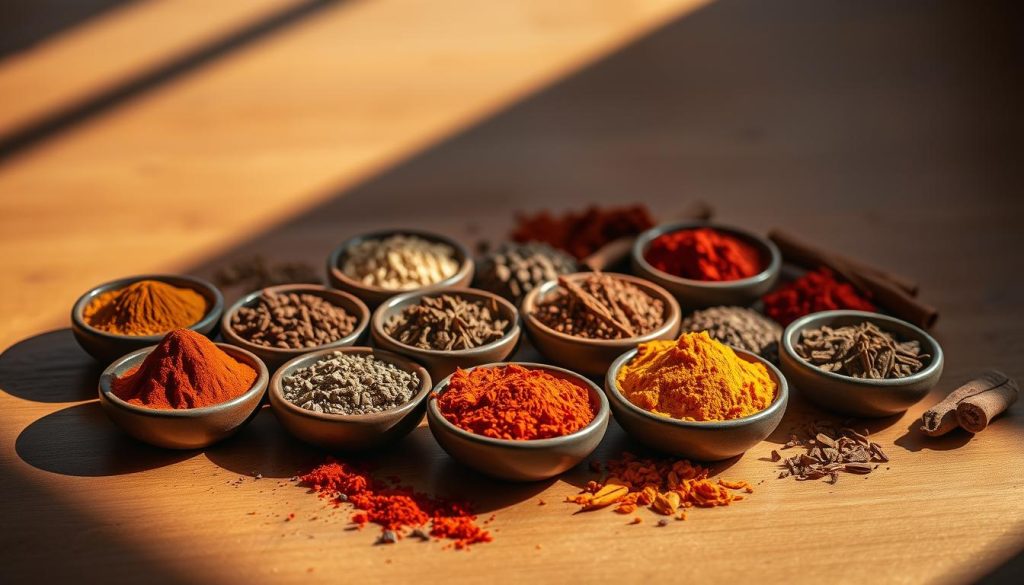
Moroccan cuisine is known for its complex and aromatic spice palette. This palette is key to making its dishes stand out. Spices are not just added for flavor; they are the base of Moroccan dishes.
Essential Spices and Their Culinary Uses
Moroccan cooking uses a variety of essential spices. Cumin and corriander add warmth. Cinnamon and ginger bring depth. Turmeric adds color and health benefits. Knowing how to use these spices is important for mastering Moroccan recipes.
Creating Your Own Ras el Hanout Blend
Ras el hanout, or “head of the shop,” is a key Moroccan spice blend. To make your own, mix different spices in the right amounts. A typical blend includes cumin, coriander, cinnamon, turmeric, and cardamom. You can adjust the amounts to make it your own.
The Art of Balancing Flavors in Moroccan Cuisine
Balancing flavors is an art in Moroccan cooking. It’s about mixing spices to create harmony. The goal is to balance sweet, sour, salty, and bitter elements. This ensures Moroccan dishes are complex yet harmonious, offering a rich experience.
Cultural Immersion Through Cooking
When you start cooking lessons in Tangier, you’ll find that it’s more than just learning recipes. It’s about diving into Moroccan culture. Cooking classes in Tangier are a journey into the heart of Moroccan traditions.
Traditional Dining Etiquette and Customs
Dining is a big deal in Moroccan culture. You’ll learn about washing hands before and after meals. You’ll also learn to eat with your right hand, which shows respect.
Knowing these customs makes you appreciate the food more. It’s a key part of the cooking experience.
The Social Significance of Shared Meals
Meals are central to Moroccan social life. In cooking classes, you’ll see how meals unite families and friends. It’s about building community and feeling a sense of belonging.
Tea Ceremonies and Hospitality Traditions
Moroccan tea ceremonies are a big part of their hospitality. You’ll learn to make “Atay,” the traditional Moroccan tea. Serving tea is a way to show respect and welcome guests.
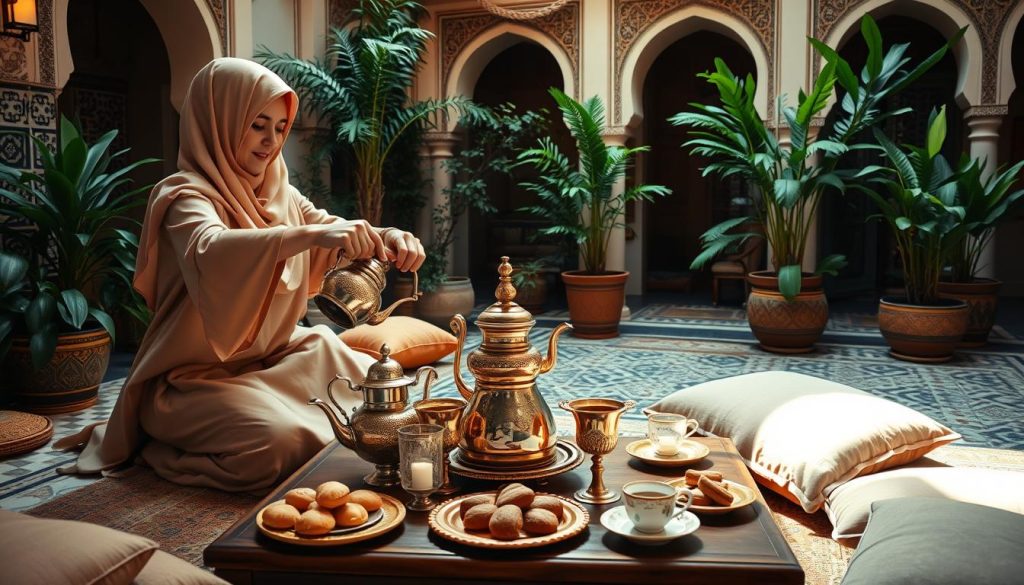
These cultural elements make cooking classes in Tangier special. The best classes teach you to cook delicious Moroccan dishes. They also let you experience Morocco’s lively culture.
Practical Tips for Your Culinary Adventure
Starting a culinary adventure in Tangier means understanding the local culture and being ready. As you dive into hands-on Moroccan cooking, a few tips can make your experience better.
Language Considerations and Communication
Many cooking schools welcome visitors from around the world. But, knowing a few Arabic phrases can really help. Saying “Marhaba” (hello) and “Shukraan” (thank you) can make your time in Tangier’s cooking workshops more enjoyable.
Best Times to Visit for Seasonal Ingredients
Tangier’s food scene is shaped by its location by the Mediterranean and Atlantic. Spring (March to May) and autumn (September to November) are the best times to visit. You’ll find the freshest ingredients, like juicy tomatoes and fragrant herbs.
What to Bring and How to Prepare
Wear comfy clothes and bring a good apron for cooking classes. You’ll be hands-on, from chopping veggies to mixing spices. Don’t forget a notebook to jot down recipes and tips from your Tangier cooking workshops.
Booking in Advance vs. Last-Minute Options
Booking early is usually best, as it secures your spot, even during busy times. It also helps you plan your culinary journey and arrange for getting to cooking schools or markets.
Conclusion: Bringing Morocco’s Flavors Home
After finishing your authentic Moroccan cooking classes in Tangier, you’ll know how to make Moroccan dishes at home. You’ll learn to make traditional recipes. This way, you can share Moroccan cuisine with your loved ones.
Moroccan food shows the country’s rich culture. Learning about these dishes helps you appreciate Morocco’s history and traditions. It makes you understand the cultural background of Moroccan cuisine.
Now, you can bring Morocco’s lively flavors to your kitchen. You’ll create unforgettable meals. These meals will impress everyone who tries them.