Experience the Craft of Fes Ceramic Workshops
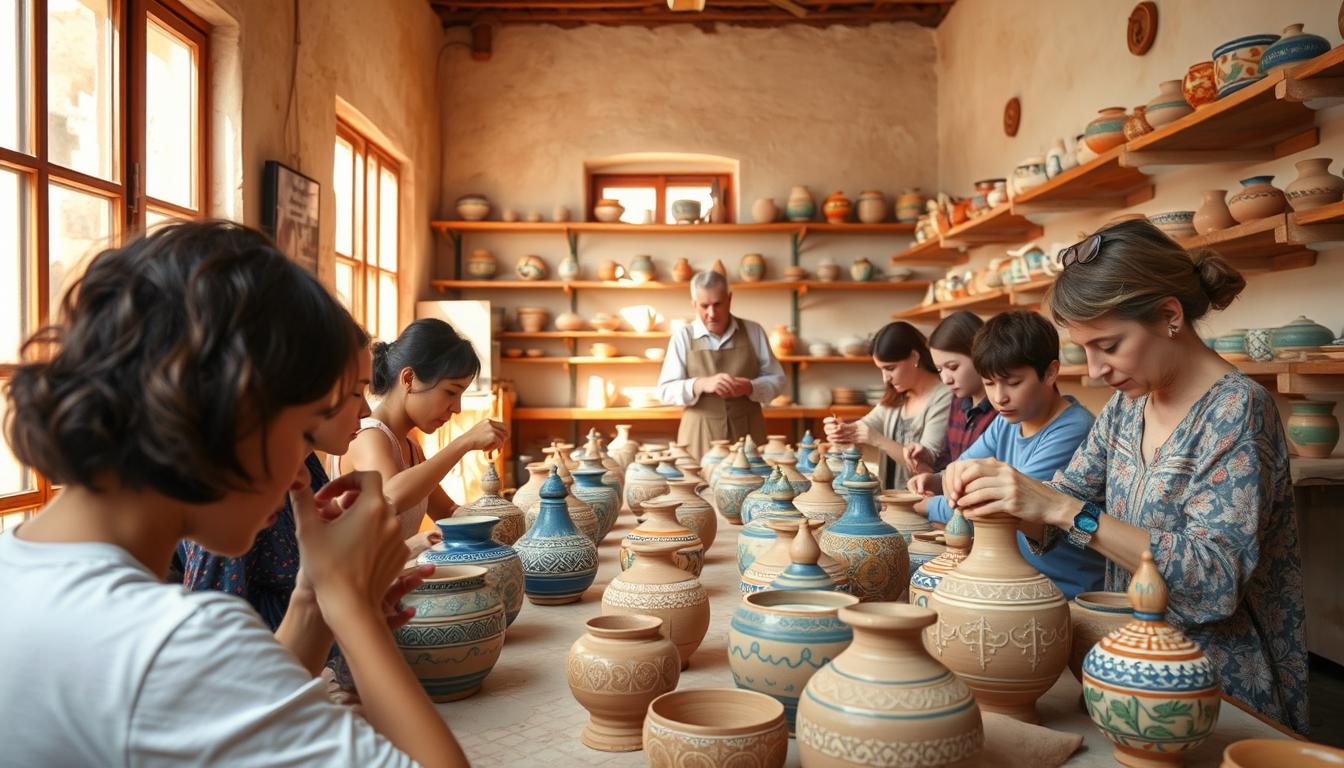
Have you ever wondered what it would be like to shape and mold traditional pottery with your own hands?
In the heart of Morocco lies a city renowned for its rich cultural heritage and exquisite craftsmanship. Fes Pottery Art offers hands-on workshops where you can immerse yourself in the art of traditional pottery and mosaic making.
As you explore the world of ceramic art, you’ll discover the significance of Fes in the world of ceramics. You’ll also experience the joy of creating something beautiful with your own hands.
The Rich Heritage of Fes Ceramics
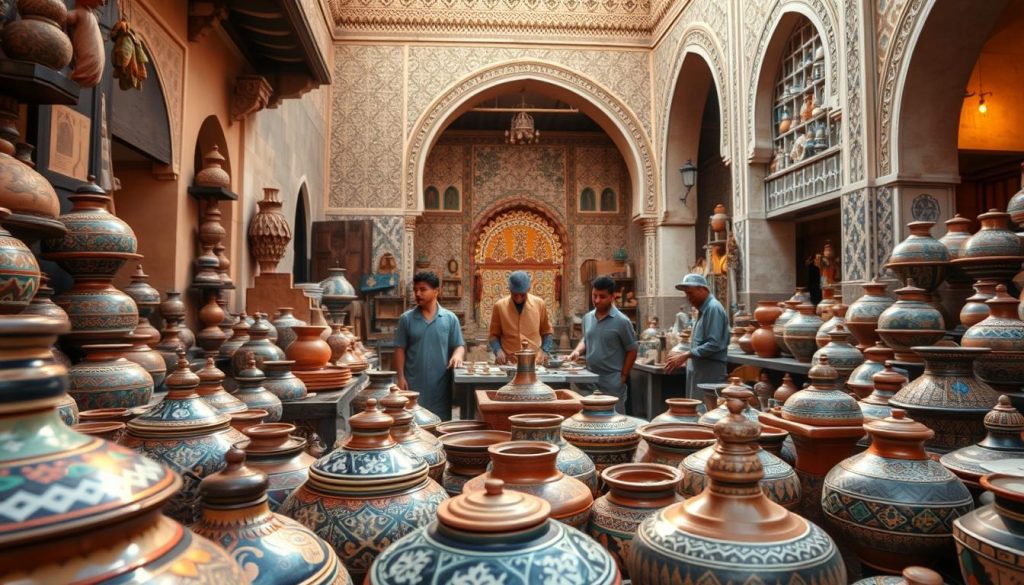
When you enter Fes, you’re surrounded by the rich history of its ceramics. This shows Morocco’s skill in making things. The city’s workshops are filled with old pottery techniques passed down through families.
Historical Significance of Pottery in Moroccan Culture
Pottery is key in Moroccan culture. It’s not just for use; it’s also a way to show art. In Fes, the pottery’s designs tell the city’s cultural story.
| Period | Influence on Fes Ceramics |
|---|---|
| Medieval | Introduction of Islamic geometric patterns |
| 16th Century | Incorporation of Andalusian ceramic techniques |
| Modern Era | Revival of traditional techniques with modern twists |
Evolution of Fes Ceramic Techniques Through Centuries
The story of Fes ceramics is one of cultural mix and change. Over time, potters have added new styles, like Islamic patterns and Andalusian methods. This mix has created a unique style.
Key techniques include:
- Hand-painting intricate designs
- Using traditional glazes
- Employing the potter’s wheel
This mix of old and new has kept Fes ceramics popular today.
Understanding the Art of Traditional Pottery in Fes
Stepping into the world of Fes ceramics, you’re surrounded by a rich pottery tradition. This art form has been cherished for generations by skilled artisans.
The Structure and Organization of a Traditional Workshop
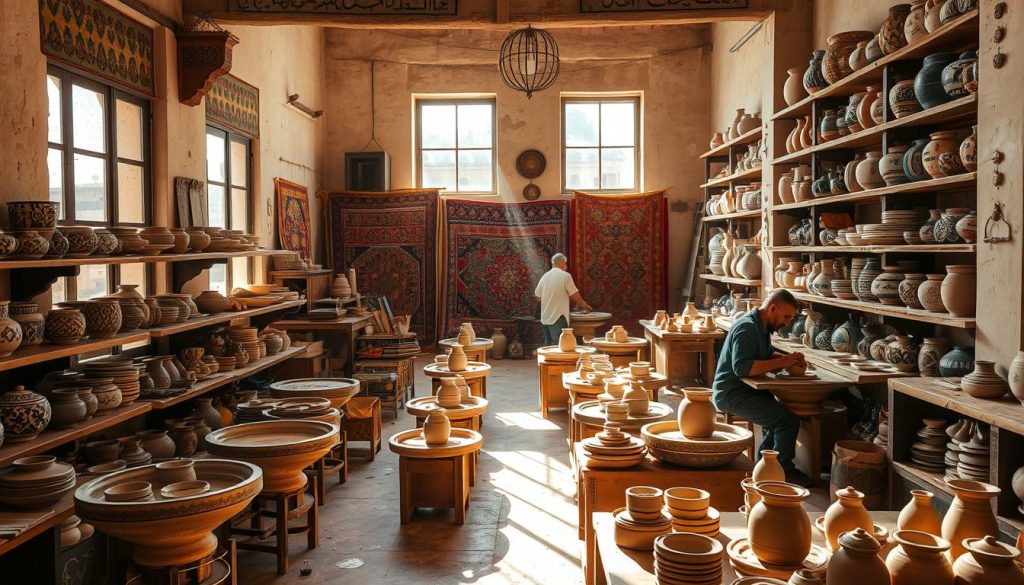
In Fes, a pottery workshop is centered around a master potter. These workshops are often family-run. Knowledge and techniques are passed down from father to son.
The workshop is divided into areas for different pottery-making stages. This setup ensures efficiency and quality in the ceramics produced.
Tools and Materials Used in Authentic Fes Pottery
Making authentic Fes pottery requires traditional tools and materials. Artisans use simple tools and the potter’s wheel for more complex tasks.
Clay Types and Preparation Methods
Fes pottery uses clay from local deposits. The clay is soaked, kneaded, and wedged to remove air pockets. This process makes the clay ready for use.
Traditional Kiln Designs and Firing Techniques
Fes potters use ancient kiln designs. These kilns are wood-fired. The firing process is carefully controlled to get the right colors and textures.
| Material | Source | Use in Pottery |
|---|---|---|
| Clay | Local deposits | Primary material for pottery |
| Glaze | Local minerals | Decoration and protection |
| Wood | Local forests | Kiln firing |
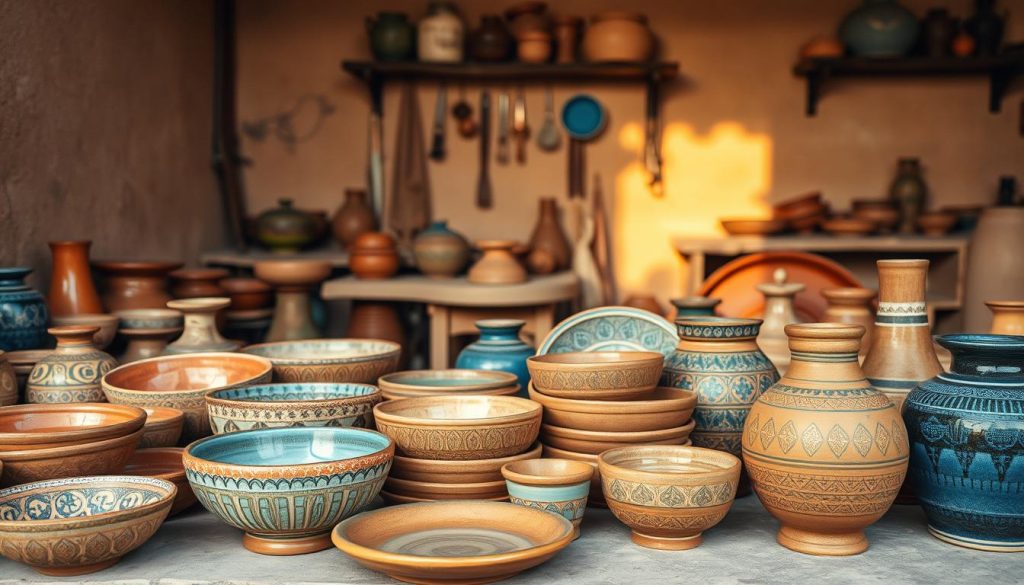
Learning about the tools and materials in Fes pottery shows the craftsmanship in each piece. From clay preparation to firing, every step showcases the artisan’s skill and dedication.
Distinctive Features of Fes Ceramic Art
Fes ceramic art is a mix of old and Islamic styles. This blend creates a unique look that is both beautiful and full of cultural history.
Iconic Blue and White Color Palette
The blue and white colors of Fes ceramics are famous. They look great and hold deep cultural and historical value. The blue glaze, made from cobalt oxide, was very valuable in the past.
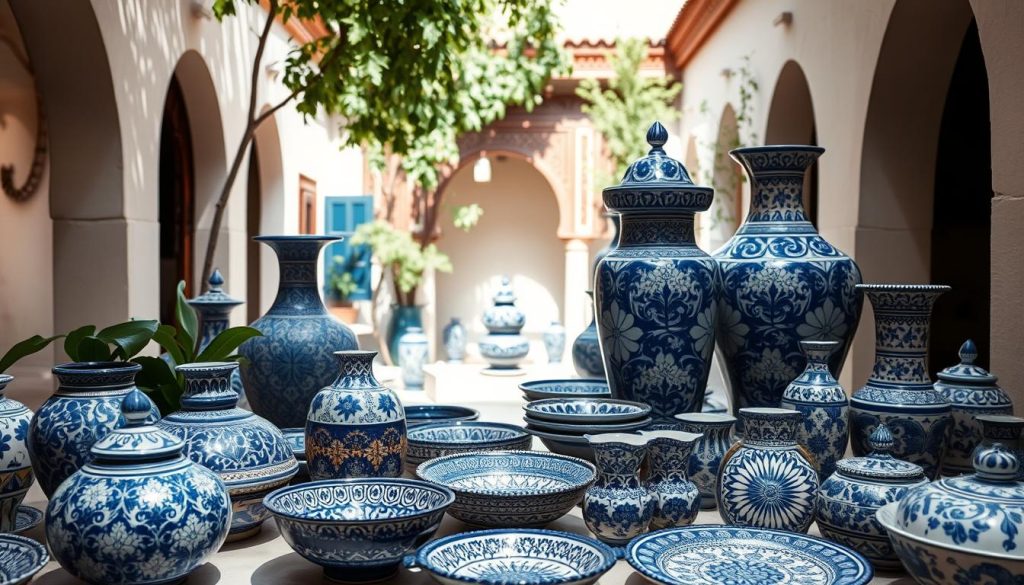
Geometric Patterns and Islamic Influences
Geometric patterns are key in Fes ceramic art, showing Islamic art’s impact. These patterns, full of detail, make the pottery more interesting. They show the creativity of Fes ceramic artists.
Regional Variations Within Fes Pottery Styles
Fes ceramics have traditional styles, but there are also local differences. Each area in Fes has its own way of making pottery, making it more varied. You can see these differences in local workshops, where you can learn about Fes pottery.
| Feature | Description | Significance |
|---|---|---|
| Blue and White Color Palette | Derived from cobalt oxide, this iconic color combination is visually striking. | Cultural and historical significance. |
| Geometric Patterns | Intricate and complex, reflecting Islamic art influences. | Adds depth and meaning to the pottery. |
| Regional Variations | Diverse techniques and motifs across different regions. | Contributes to the richness of Fes ceramic art. |
Popular Fes Ceramic Workshops for Visitors
Fes is perfect for ceramic painting classes and pottery courses thanks to its long history in pottery. The city has many workshops for visitors. They offer both traditional and modern pottery experiences.
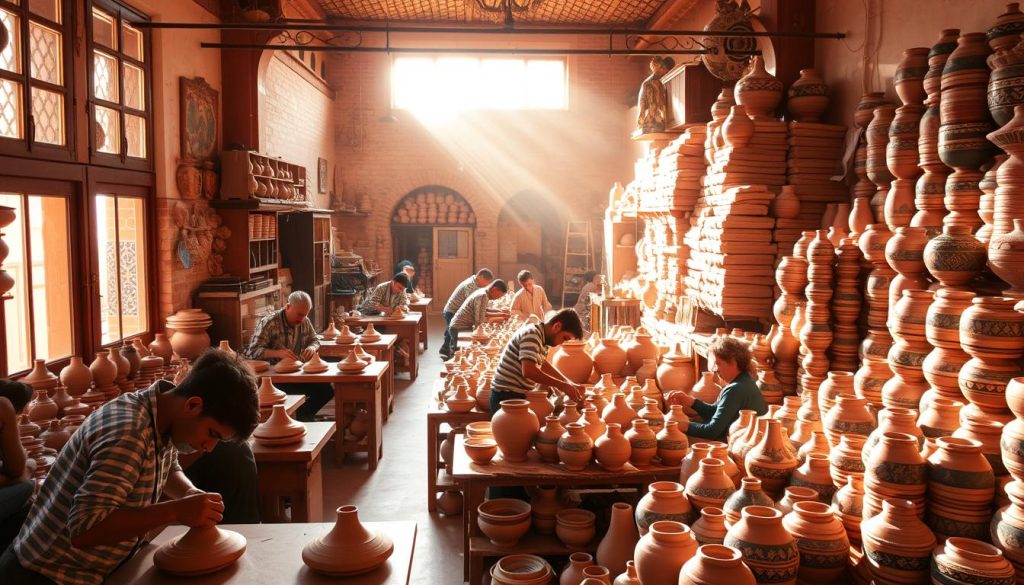
Art Naji: A Premier Ceramic Experience
Art Naji is a top choice for a real ceramic experience in Fes. It’s famous for its traditional methods and top-notch craftsmanship. You’ll learn from artisans with years of experience.
The workshop is friendly, great for both newbies and experienced ceramic artists.
Pottery Workshops in the Medina
The Medina of Fes is a treasure trove of pottery workshops. Walking its narrow streets, you’ll find many studios. Here, local artisans show off their skills.
These workshops let you see and try traditional pottery-making. Many welcome visitors and teach you to make your own ceramics.
Modern Studios Offering Contemporary Approaches
Fes also has modern studios that mix new techniques with traditional pottery. These places offer a fresh take on ceramic art. They use new designs and materials.
Visitors can see how old techniques meet new ideas. Many studios offer classes, letting you try out new pottery methods.
Choosing a traditional workshop or a modern studio in Fes will make your trip unforgettable. The city’s rich pottery history and friendly artisans make it perfect for ceramic lovers.
What to Expect During a Fes Ceramic Workshop
Joining a Fes ceramic workshop is like starting a creative journey in Morocco’s pottery world. These workshops are all about diving deep into Fes ceramics. You’ll get to explore the rich heritage of pottery.
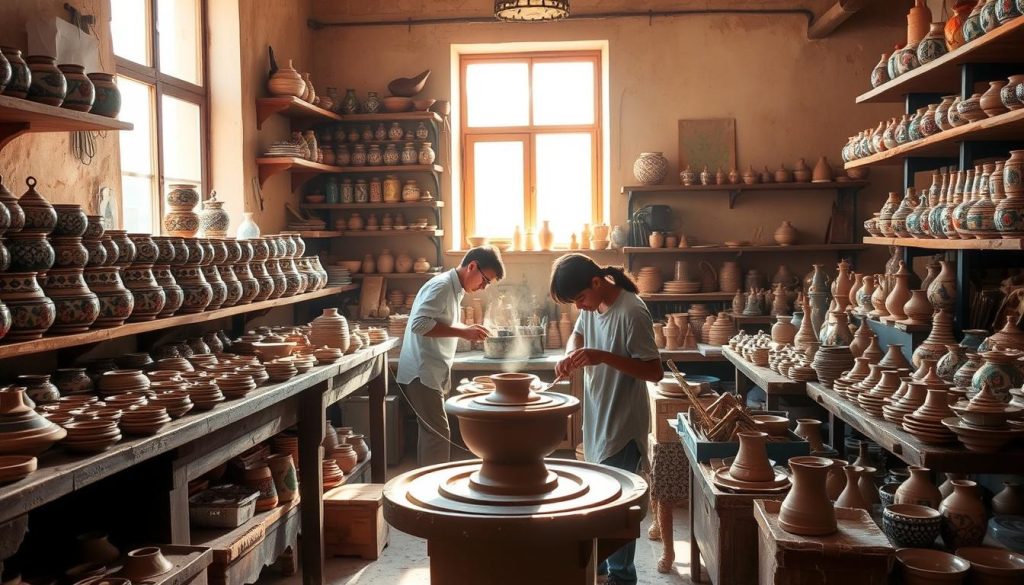
Typical Workshop Structure and Duration
Workshops in Fes usually last from half a day to a full day. This time lets you learn the basics of ceramics and practice. You’ll start with an introduction, then learn how to shape and decorate your piece.
Skill Levels and Accessibility for Beginners
Fes pottery workshops welcome everyone, no matter your skill level. Instructors will guide you every step of the way. They make sure beginners feel at ease, offering a supportive space to learn and create.
Some benefits for beginners include:
- Personalized instruction tailored to your skill level
- Hands-on experience with traditional pottery techniques
- The opportunity to create your own ceramic piece to take home
Language Considerations and Interpreter Services
Many instructors speak some English, but Arabic or French might be their first language. Some workshops offer interpreter services or teach in multiple languages. It’s wise to ask about language support when booking.
Knowing what to expect makes your Fes ceramic workshop more enjoyable. You’ll get to explore Moroccan pottery in a fun and rewarding way.
Step-by-Step Process of Creating Your Own Ceramic Piece
Starting your journey in Fes ceramic workshops, you’ll learn how to make your own ceramics. This journey includes several steps, from preparing the clay to glazing the final piece.
Clay Preparation and Centering Techniques
The first step is preparing the clay. You’ll learn to remove air pockets by wedging the clay. Then, you’ll center the clay on the potter’s wheel, a skill that takes patience and practice.
Wheel Throwing Basics for Beginners
After centering, you’ll start shaping the clay into your desired form. You’ll learn to control the wheel’s speed and apply gentle pressure to shape the clay.
Common Mistakes and How to Correct Them
Beginners often face issues like uneven walls or misaligned centers. Your instructor will teach you how to fix these problems by adjusting your technique.
Achieving the Perfect Form
Creating the perfect form is a mix of technique and creativity. You’ll learn to refine your piece, making it both beautiful and functional.
Hand-Building Alternative Methods
If you’re interested in different techniques, hand-building offers many creative options. You’ll learn to build pieces using coiling, pinching, or slab construction.
Glazing and Decoration Processes
The final steps are glazing and decorating your piece. You’ll learn about traditional Fes glazes and how to apply them. You’ll also learn how to add decorative elements.
Throughout the process, you’ll work closely with experienced artisans. They will share their knowledge and skills. By the end of the workshop, you’ll have a unique piece of handcrafted ceramics to take home.
| Step | Description | Techniques Involved |
|---|---|---|
| 1 | Clay Preparation | Wedging, Centering |
| 2 | Shaping | Wheel Throwing, Hand-Building |
| 3 | Refining | Trimming, Smoothing |
| 4 | Glazing and Decoration | Glaze Application, Decorative Techniques |
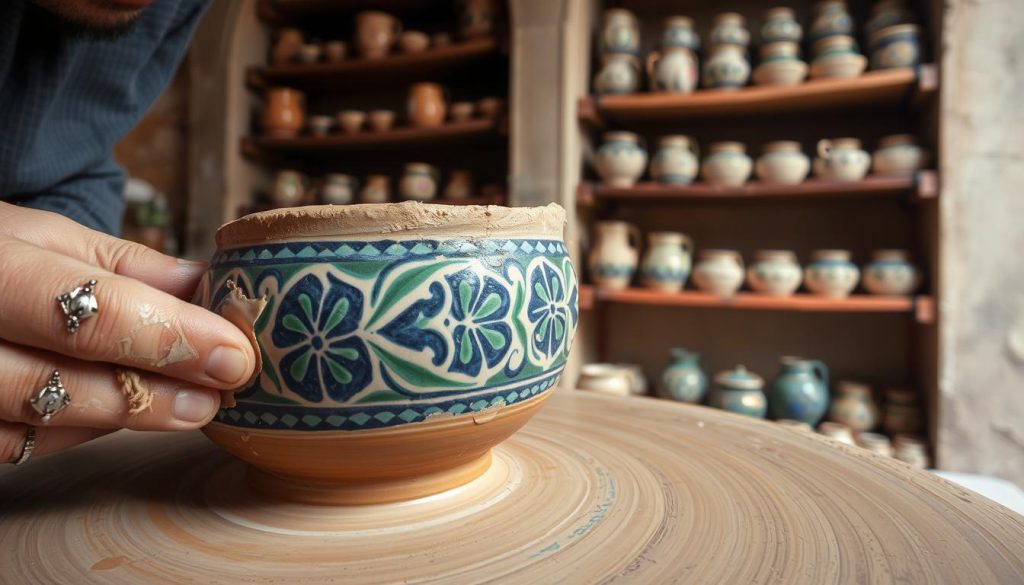
Exploring Ceramic Painting Classes in Fes
Ceramic painting classes in Fes open a door to Moroccan pottery’s intricate designs. You get to try your hand at creating pieces that reflect Fes’s rich cultural heritage.
Learning Traditional Moroccan Motifs
Traditional Moroccan motifs in Fes ceramics are more than just pretty. They hold deep symbolic meanings. In these classes, you’ll discover the stories behind these patterns and their role in Moroccan culture.
Symbolism in Fes Ceramic Designs
Fes ceramic designs are filled with symbols. You’ll see geometric patterns, floral motifs, and calligraphy. Each symbol has its own message, like unity or the infinite.
Color Theory in Traditional Moroccan Pottery
Colors in Moroccan pottery mean a lot. Blue, for example, is linked to protection and spirituality. Learning about color theory in Fes ceramics deepens your appreciation for the craft.
Techniques for Applying Glazes and Colors
Applying glazes and colors is key in Fes ceramics. You’ll learn how to use different techniques to get the perfect look. From smooth to textured, you’ll master it all.
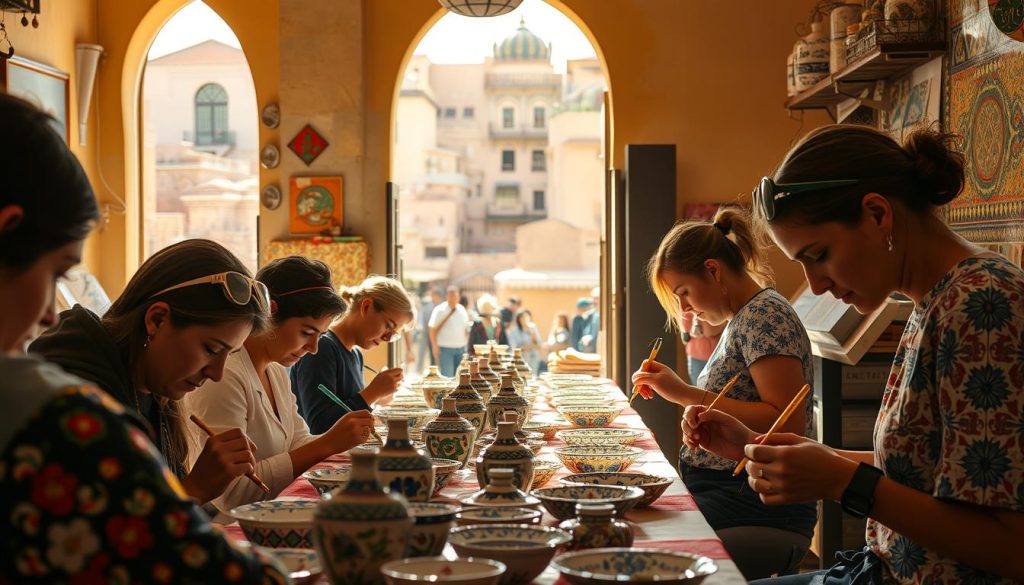
With these skills, you can make your own unique ceramics. They’ll show off the beauty and tradition of Fes pottery.
Planning Your Visit to Fes Ceramic Workshops
When planning your trip to Fes, think about the timing and logistics for visiting a pottery studio or creative clay workshop. Fes is famous for its rich ceramic heritage. It offers many workshops where you can learn about traditional Moroccan pottery.
Best Time of Year for Workshop Availability
The spring (March to May) and autumn (September to November) are the best times to visit Fes ceramic workshops. The weather is mild and pleasant during these periods. It’s perfect for exploring the city’s historic medina and visiting workshops without the summer heat.
Most workshops are open all year, but it’s wise to check ahead of time, even in off-peak seasons.
Booking in Advance vs. Walk-in Options
While some workshops welcome walk-ins, it’s best to book in advance, mainly during peak seasons. Booking early ensures you get a spot and helps the workshop prepare for you. Many workshops offer online booking or can be reached through local tour operators.
Workshop Costs and What’s Included
Prices for Fes ceramic workshops vary, usually from $20 to $50 per person for a half-day session. Most workshops provide all you need, like clay, glazes, and tools. Some may also offer lunch or a guided tour of the medina. Always check what’s included when booking to plan your day right.
- Typical costs: $20-$50 per person
- Materials provided: clay, glazes, tools
- Additional services: lunch, guided tours
Bringing Your Creations Home: Shipping and Customs Considerations
After perfecting your craft in a Moroccan pottery workshop, you’ll want your artwork to arrive safely. The next step is figuring out how to get it home without damage.
Packing Techniques for Fragile Ceramics
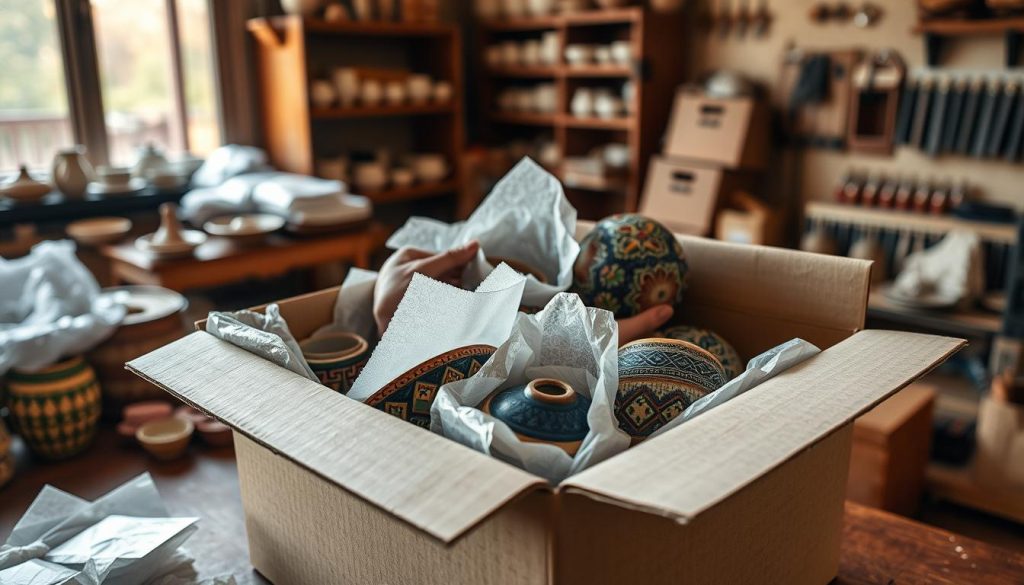
Protecting your ceramics during shipping is key. Wrap each piece in bubble wrap. Use sturdy boxes with lots of cushioning to prevent movement.
International Shipping Options from Morocco
Shipping your ceramics from Morocco offers several choices. Choose a reputable shipping company that handles fragile items well. Compare rates and services, including insurance to protect your creations.
Some pottery courses in Fes might help with shipping recommendations. With careful planning, your ceramics will last for years, reminding you of your Moroccan workshop experience.
Conclusion: The Enduring Magic of Fes Ceramic Craftsmanship
You’ve seen the deep history of Fes ceramics. It’s a key part of Moroccan culture. By joining a Fes ceramic workshop, you get to dive into this old tradition. You can make your own ceramics, just like the locals do.
Looking back on your time in Fes, you’ll remember it well. You’ll recall shaping clay and adding beautiful glazes. Seeing your work turn into art is unforgettable.
Fes ceramic workshops are more than just fun. They let you see the city’s rich past and culture. Working with local artists and learning their ways helps keep this ancient craft alive.
When you go back home, your ceramics from Fes will remind you of your adventure. You can show them off or use them every day. They’ll always bring back the magic of Fes and its amazing ceramics.