Explore the Flavors of Fes: Top Moroccan Dishes
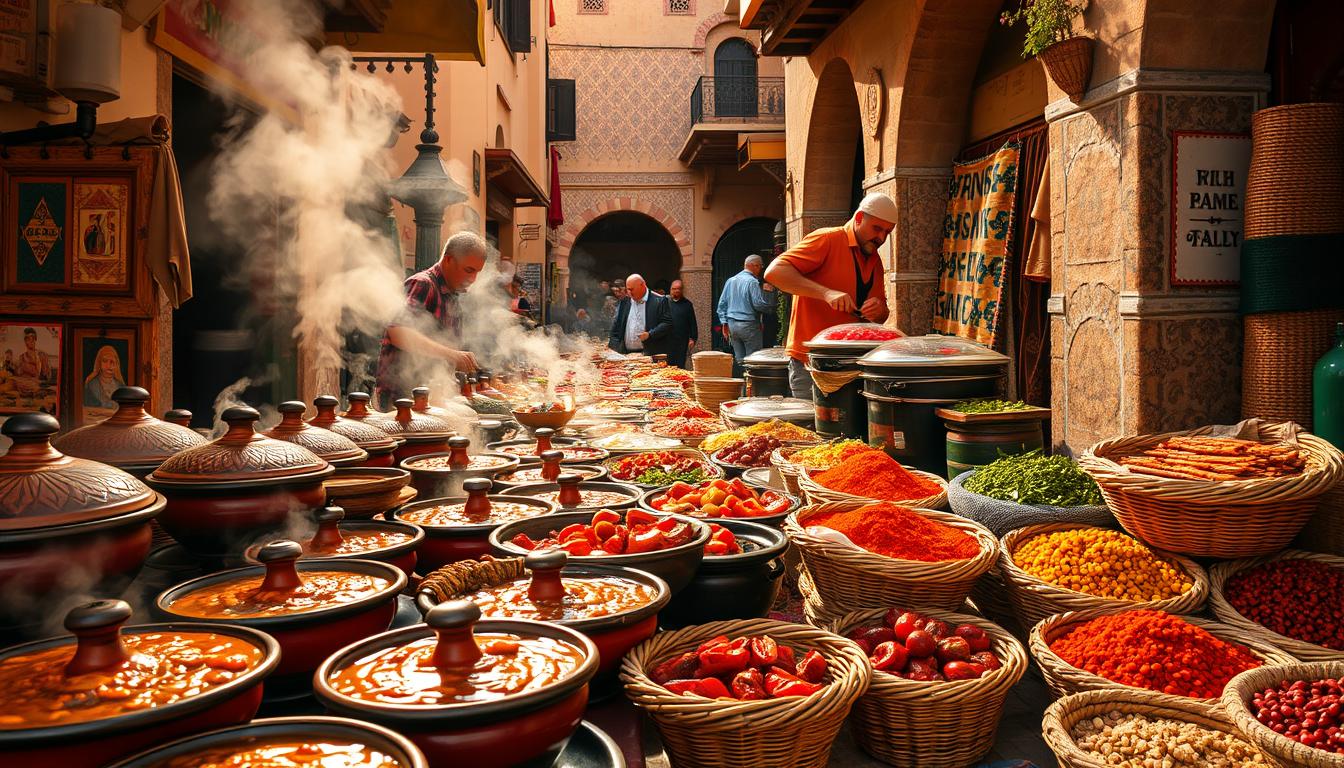
Ever wondered what makes Moroccan cuisine special? Walking through Fes’s ancient streets, you’ll catch the scent of exotic spices and slow-cooked meats. It’s like stepping into a world of rich flavors and culinary history.
Fes, Morocco’s oldest imperial city, is a mix of Berber, Arab, Mediterranean, and African cultures. This mix has created a unique taste that is both rich and aromatic.
Exploring the best Moroccan dishes in Fes, you’ll see how the city’s history, geography, and culture shape its food. From hearty tagines to sweet pastries, Fes’s flavors are waiting for you to try.
The Culinary Heritage of Fes
Fes, Morocco’s ancient capital, is famous for its rich food culture. This culture has grown over centuries through cultural exchange and history. You can taste the true Moroccan cuisine in Fes, where old cooking ways are still used.
Historical Significance of Fes in Moroccan Cuisine
Fes’s role in Moroccan food is huge. As one of the oldest imperial cities, it has mixed many cultures. This mix has shaped Moroccan cuisine.
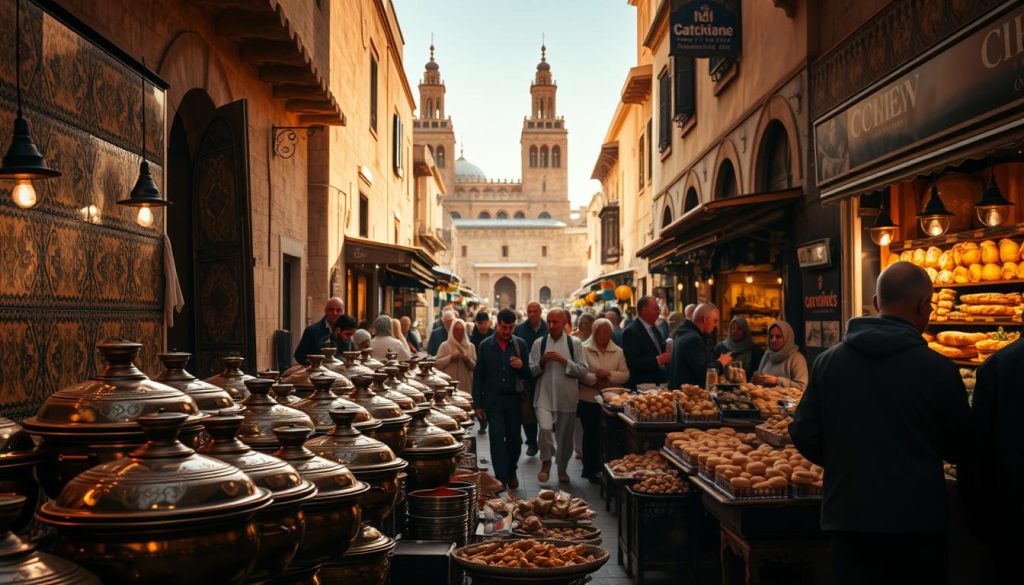
The city’s ancient medina, a UNESCO World Heritage site, is full of traditional riads and cooking schools. Here, the art of Moroccan cooking is taught from one generation to the next.
Influences on Fes Cooking Traditions
Fes’s cooking ways have been shaped by many cultures, like Arab, Mediterranean, and African. This mix is seen in the variety of ingredients and spices used. For example, preserved lemons, olives, and spices like cumin and coriander are common.
The traditional tagine dish, cooked in a clay pot, is a key part of Fes’s food scene. It shows the city’s skill in cooking.
| Influence | Description | Examples |
|---|---|---|
| Arab | Introduction of spices and sweets | Dates, almonds, honey |
| Mediterranean | Use of olive oil and preserved lemons | Preserved lemons, olives |
| African | Incorporation of local ingredients | Grains, spices, meats |
What Are the Best Moroccan Dishes to Try in Fes?
In Fes, you’ll find a world of flavors that show off Moroccan cuisine. The city’s food scene is shaped by its history and culture. It’s a top spot for anyone who loves food.
Overview of Fes’ Signature Dishes
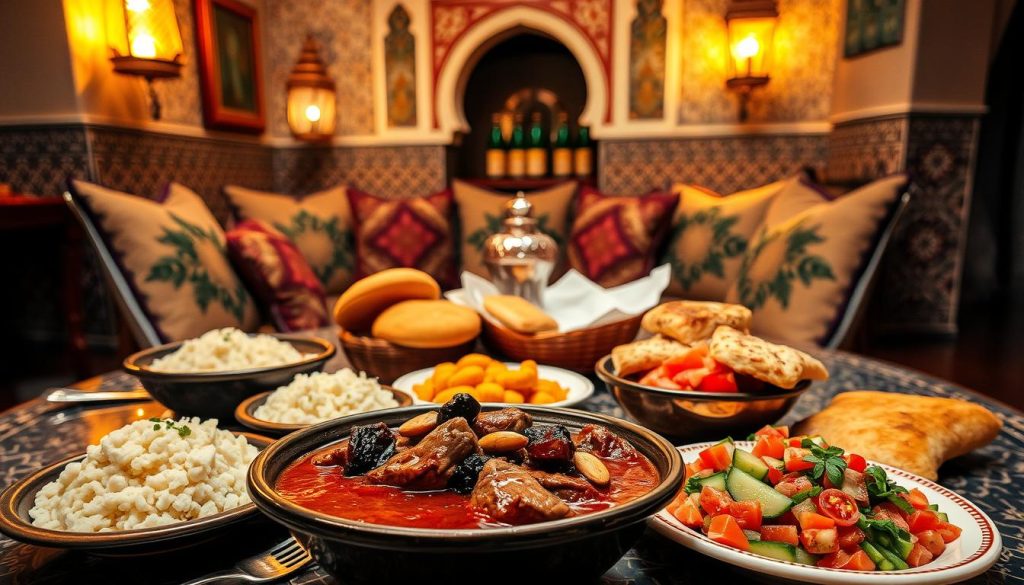
Fes is famous for its tagines, couscous, and pastilla. Tagines are slow-cooked stews made in special pots. You can try lamb, chicken, or veggie tagines, all with unique spice blends.
Couscous is a big deal on Fridays, served with veggies and meats. Pastilla is a pie with layers of pastry, filled with meat, onions, and spices. It’s great as a starter or dessert.
Seasonal Specialties Worth Seeking Out
Fes has special dishes all year round. During Ramadan, try chebakia (sesame cookies) and sellou (almonds, sesame seeds, and coconut). In summer, cool off with zaalouk (eggplant salad) and b’stilla with seafood.
Visiting Fes at different times lets you taste the city’s full food range.
Tagine Treasures: Slow-Cooked Delights
Exploring Fes’s culinary scene, you’ll find the rich flavors of tagines. These slow-cooked stews are a key part of Moroccan cuisine. They get their unique taste and texture from cooking in clay pots.
Lamb Tagine with Prunes and Almonds
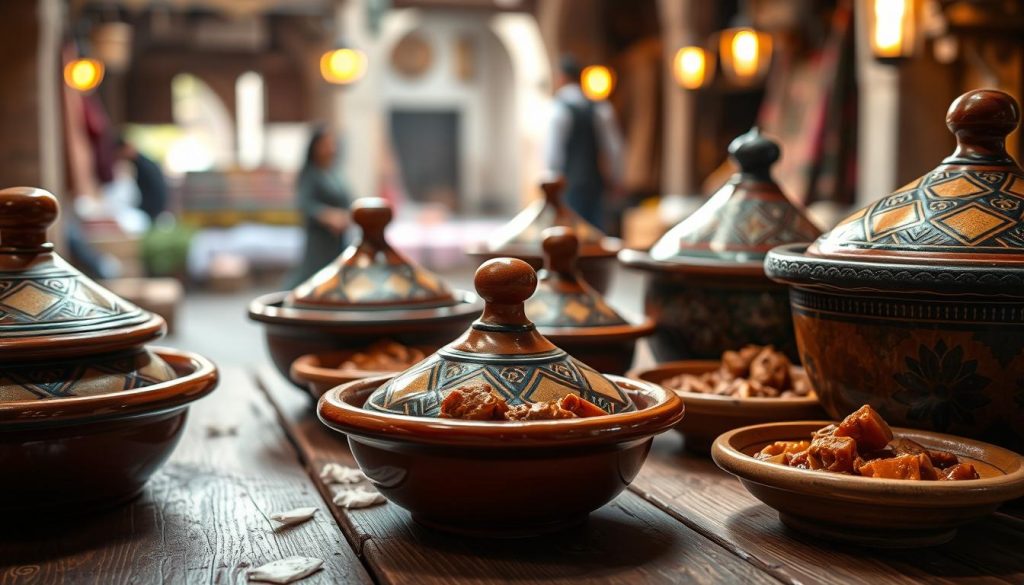
The lamb tagine with prunes and almonds is a favorite in Fes. It’s a perfect mix of flavors. The lamb, prunes, and almonds blend together in a rich stew.
This slow-cooking process makes the flavors combine beautifully. It’s a culinary experience you won’t forget.
Chicken Tagine with Preserved Lemons and Olives
Try the chicken tagine with preserved lemons and olives for something new. It has a tangy and salty taste. The preserved lemons and olives add a bold contrast to the chicken.
This dish shows how versatile tagines can be. It highlights the creativity of Moroccan cuisine.
Kefta Tagine with Eggs
Kefta tagine with eggs is another favorite. It features meatballs made from ground beef and lamb. Cooked with eggs and spices, it’s a hearty dish.
It’s perfect for a filling meal. The combination of flavors is satisfying.
Vegetable Tagines for Non-Meat Eaters
Vegetable tagines are great for those who don’t eat meat. They showcase a variety of vegetables cooked in a traditional tagine pot. These tagines are just as flavorful as their meat-based counterparts.
They have a rich broth and tender vegetables. They’re sure to please anyone.
In Fes, you’ll find many tagines to try, whether you like meat or vegetables. The slow-cooking process gives these stews a unique flavor. They’re a must-try when visiting Fes.
Couscous Creations: The National Dish
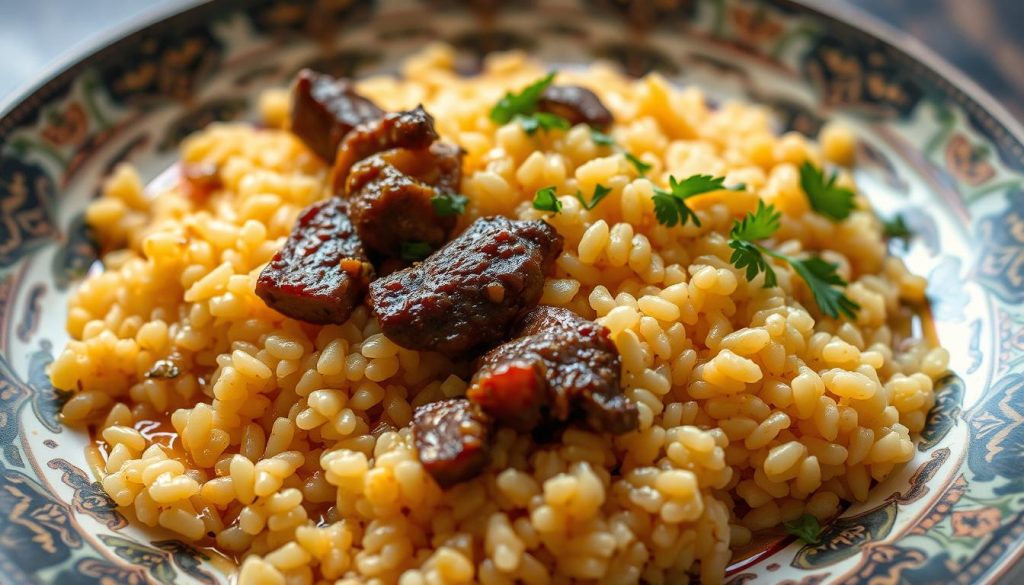
In Fes, couscous is more than a dish; it’s a cultural symbol. This traditional North African staple is key to Moroccan cuisine. Fes celebrates it, often on Fridays, bringing families and friends together.
Traditional Friday Couscous
In Fes, Friday couscous is a cherished tradition. It’s made with tender veggies, fragrant spices, and sometimes meat. You can join a local family for lunch or visit a traditional restaurant to try it.
Regional Variations Found in Fes
Fes has its own couscous style, showing the city’s rich history and culture. Different spices, veggies, or meats make each dish unique. Try the local couscous to see the city’s culinary flair.
Sweet Couscous Dessert Options
Couscous isn’t just for savory meals; it’s also in sweet desserts. In Fes, you might find couscous with almonds, honey, and cinnamon. These desserts offer a sweet twist to couscous.
Trying traditional Friday couscous or sweet desserts, couscous is a must in Fes. It’s a memorable culinary experience that showcases the city’s vibrant culture.
Moroccan Breads and Pastries
When you try authentic Moroccan dining in Fes, you’ll see breads and pastries are key. Moroccan food has many breads and pastries, each with its own special ingredients and ways of making them.
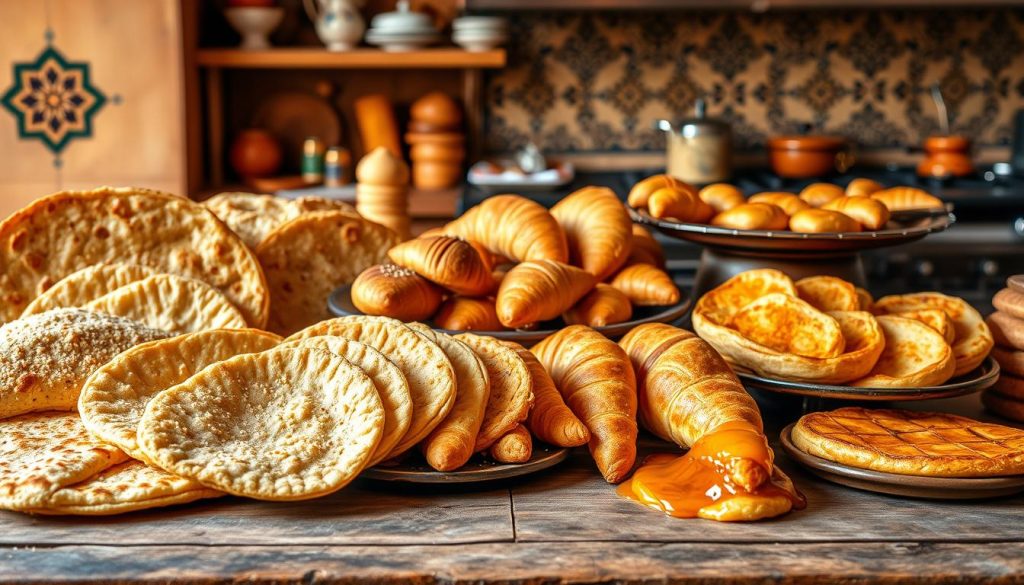
These traditional breads and pastries are important for Moroccan meals. They help bring out the flavors of the dishes. Let’s look at some popular ones you can try in Fes.
Khobz: The Essential Moroccan Bread
Khobz is a must-try in Moroccan food, a round, crusty bread baked in a shared oven. It’s made with flour, water, yeast, and salt. But it’s the baking that makes it special. You’ll see khobz with tagines and other dishes, used to soak up sauces.
Msemen and Rghaif: Flaky Delights
Msemen and Rghaif are Moroccan pancakes, layered with butter and folded into squares. Msemen has fillings like onions, meat, or spices. Rghaif is best with honey or jam. Both are flaky and show off Moroccan bread-making skills.
Harcha: Semolina Bread
Harcha is a semolina bread that’s both filling and tasty. It’s made with semolina flour and cooked on a griddle. This gives it a crispy outside and soft inside. Enjoy it with butter, honey, or jam for a sweet treat.
Savory Soups and Starters
Exploring Fes’s culinary scene reveals a world of savory soups and starters. These dishes highlight Moroccan cuisine’s rich flavors. They also show the country’s diverse cultural heritage.
Harira: The Beloved Soup of Morocco
Harira is a traditional Moroccan soup. It’s made with tomatoes, lentils, chickpeas, and spices. Often eaten as a starter or light meal, it’s rich in protein and fiber.
You can enjoy it with lemon and fresh herbs.
Bissara: Fava Bean Soup
Bissara is a hearty fava bean soup. It’s loved in Morocco, mainly in the cold months. Made with fava beans, garlic, and olive oil, it’s nourishing and flavorful.
It’s served with olive oil and cumin, adding to its charm.
Zaalouk and Other Flavorful Salads
Zaalouk is a flavorful eggplant salad. It’s a key part of Moroccan cuisine. Cooked eggplant, tomatoes, garlic, and spices make it rich and tangy.
Other salads like chakchouka and mixed greens with preserved lemons are also great. These salads add variety to your meal.
Street Food Sensations in Fes
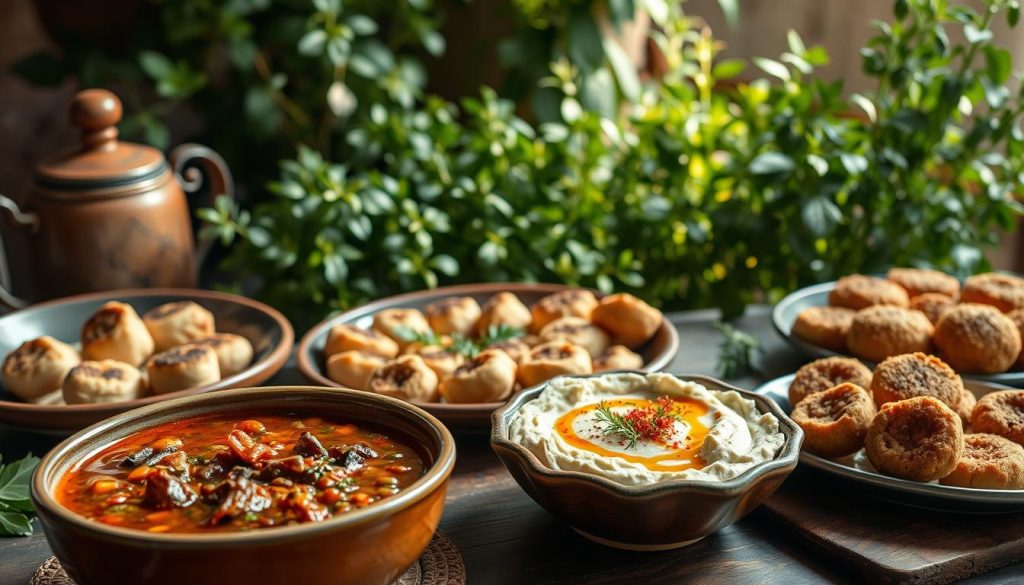
Fes’s street food is a mix of savory and sweet, showing off the city’s rich food culture. As you wander the medina, you’ll find many street food options. They highlight the flavors and traditions of Moroccan cuisine.
Brochettes and Grilled Meats
Brochettes are a big deal in Fes’s street food scene. They are skewers of marinated meat, grilled to perfection. You can get them with lamb, beef, or chicken, served with spices and bread.
The smoky taste of these grilled meats is a key part of Fes’s street food.
Snail Soup: A Local Delicacy
Snail soup is a unique treat for the brave in Fes. It’s made with snails in a flavorful broth. It’s a warm, comforting dish that’s a must-try for authentic Fes flavors.
Sfenj and Other Fried Treats
Don’t miss out on sfenj, a fried doughnut enjoyed with coffee or tea. It’s a favorite street food, great for a quick snack or dessert. You can also try msemen and rghaif, flaky pancakes that are tasty and filling.
Sandwiches and Wraps in the Medina
The medina of Fes has many sandwiches and wraps. They’re filled with grilled meats, preserved lemons, and olives. These portable meals are perfect for exploring Fes’s ancient streets, offering a taste of local cuisine on the go.
Sweet Endings: Moroccan Desserts
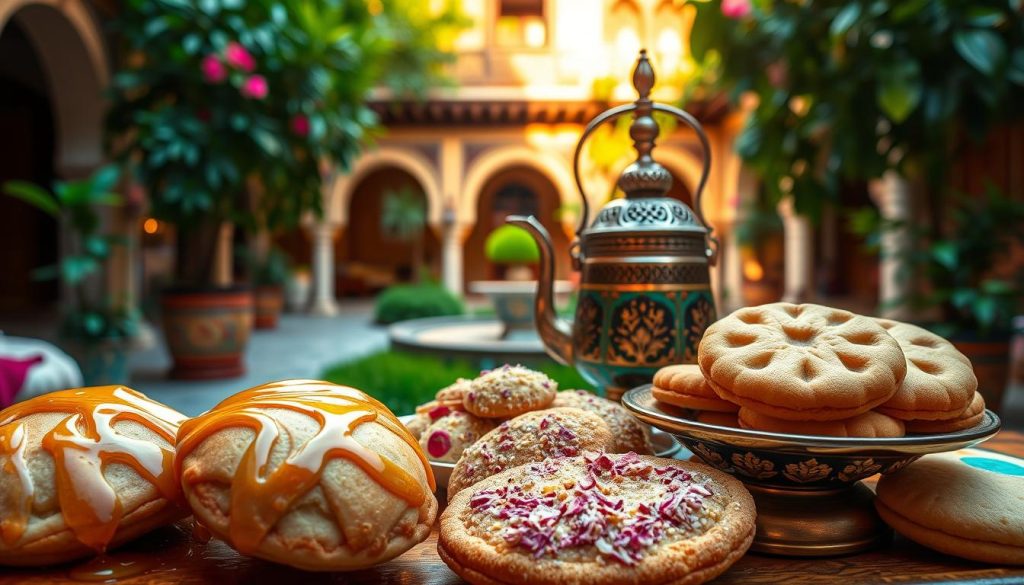
Exploring Fes’s culinary scene reveals a world of sweet treats. Moroccan desserts blend traditional flavors and techniques. They reflect the country’s rich cultural heritage.
Pastilla: The Sweet and Savory Masterpiece
Pastilla is a traditional Moroccan dessert. It perfectly mixes sweet and savory flavors. This pastry has layers of flaky dough, filled with almonds, sugar, and spices.
It sometimes includes meat or chicken in savory versions. The sweet version is a highlight of Moroccan cuisine. It shows the country’s skill in blending flavors.
Chebakia and Sellou: Ramadan Favorites
During Ramadan, chebakia and sellou become favorites. Chebakia are deep-fried cookies soaked in honey and sprinkled with sesame seeds. They offer a delightful crunch and sweetness.
Sellou is a rich dessert made from ground almonds, sesame seeds, and honey. It’s often served during special occasions. These desserts show the diversity and richness of Moroccan sweets.
Honey-Soaked Pastries and Cookies
Honey-soaked pastries and cookies are common in Moroccan bakeries. Treats like makroud, made with dates and honey, are popular. Various cookies soaked in honey syrup are also favorites.
These desserts are not only delicious but also highlight honey’s importance in Moroccan cuisine. Honey adds sweetness and depth to pastries.
| Dessert | Main Ingredients | Occasion |
|---|---|---|
| Pastilla | Almonds, Sugar, Spices | Special Occasions |
| Chebakia | Honey, Sesame Seeds, Flour | Ramadan |
| Sellou | Almonds, Sesame Seeds, Honey | Ramadan, Special Occasions |
Mint Tea and Moroccan Coffee Culture
Exploring authentic Moroccan dining in Fes reveals mint tea’s deep meaning. It’s more than a drink; it’s a sign of welcome and community. Mint tea and coffee in Morocco show the country’s rich traditions and warm hospitality.

The Art of Moroccan Tea Service
Making and serving mint tea is an art in Morocco. Mint tea mixes green tea, fresh mint, and sugar. It’s poured high to create a frothy top, seen as lucky.
This act is a sign of respect and hospitality to guests.
Coffee Traditions in Fes
Coffee also holds a special place in Moroccan culture, mainly in Fes. Coffee is served in small cups and is common in cafes. The coffee scene in Fes is lively, with people meeting in cafes to chat.
| Aspect | Mint Tea | Coffee |
|---|---|---|
| Preparation | Green tea, fresh mint, sugar | Strong coffee, often served black |
| Cultural Significance | Symbol of hospitality and community | Social gatherings and cafes |
| Serving Style | Poured from a height | Served in small cups |
Where to Eat in Fes: From Street Food to Fine Dining
As you explore Fes’ ancient alleys, you’ll find a world of flavors. From street food to fine dining, every meal here is unforgettable.
Navigating the Medina Food Scene
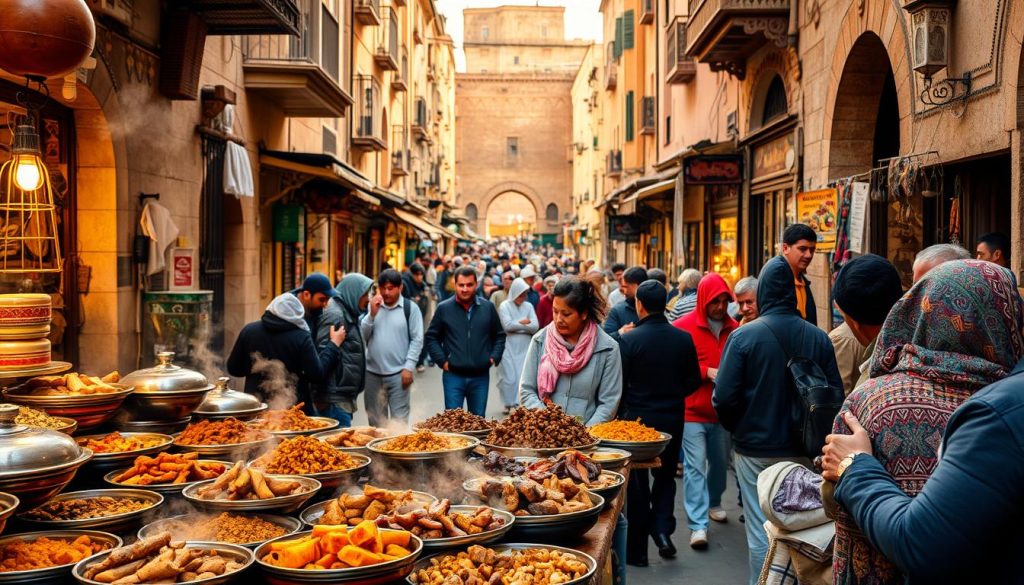
Exploring Fes’ food scene is an exciting journey. Start by visiting the souks, where you can find fresh orange juice and traditional pastries. Don’t miss out on trying brochettes or sfenj, sweet fried doughnuts.
Recommended Restaurants and Food Tours
For a more organized dining experience, check out Fes’ top restaurants. They serve traditional Moroccan dishes with a modern twist. Joining a food tour is also a great idea. You’ll visit markets, take cooking classes, and taste food at different places.
Dining Etiquette and Cultural Tips
Respecting local customs is key when dining in Fes. Always eat with your right hand, as the left is considered unclean. Also, be ready for lively conversations and laughter, as locals love to share stories during meals.
Conclusion: Embracing the Flavors of Fes
Exploring Fes’s culinary delights reveals a world of flavors and traditions. You’ll find slow-cooked tagines, the national dish couscous, savory soups, and sweet pastries. Fes offers a unique taste experience. So, what are the best Moroccan dishes to try in Fes? The answer is in the variety of traditional dishes that highlight the city’s cultural heritage.
While exploring the medina, don’t miss out on local street food like brochettes and sfenj. Also, visit recommended restaurants to taste the authentic flavors of Fes. Fes’s mix of traditional and modern cuisine makes it a memorable culinary destination. Whether you love food or want to experience local culture, Fes’s flavors will amaze you and inspire your next food adventure.