Your Guide to Sustainable Travel in Johannesburg
Are you ready to explore one of Africa’s most vibrant cities while minimizing your environmental footprint? Johannesburg, a melting pot of culture, history, and natural beauty, is an exciting destination for eco-conscious travelers.
Eco-friendly accommodations and responsible tourism activities are on the rise, making it easier than ever to plan a green trip to this bustling metropolis.
From exploring the city’s vibrant neighborhoods to adopting eco-friendly transportation options, you’ll discover that Johannesburg offers a unique blend of traditional and modern experiences that cater to every kind of traveler.
The Rise of Eco-Tourism in Johannesburg
Johannesburg is leading the way in green tourism. Eco-tourism is growing fast here, thanks to the city’s dedication to the environment. This change is making the tourism industry more sustainable, focusing on lessening the impact of travel.
Johannesburg’s Environmental Transformation
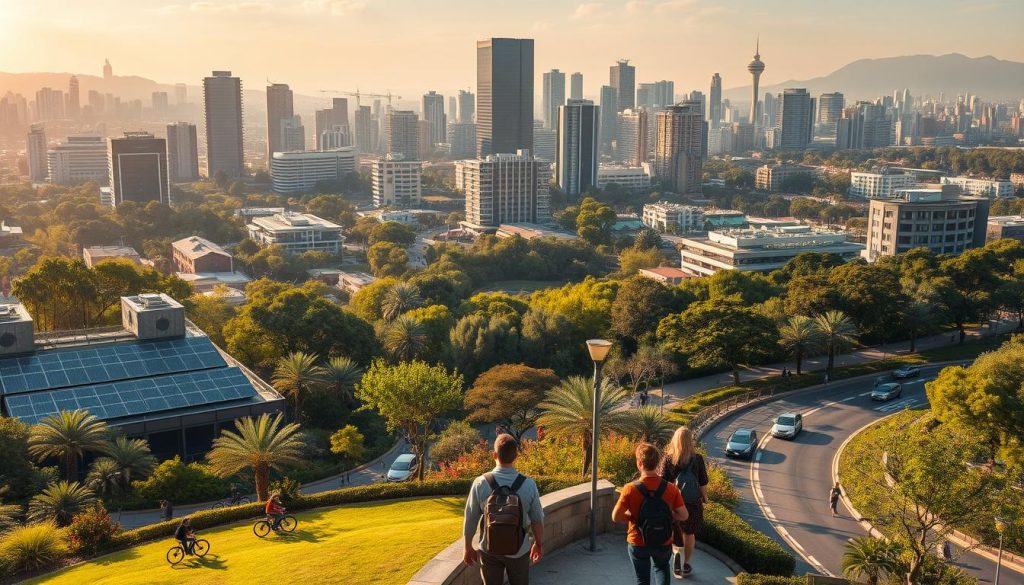
In recent years, Johannesburg has made big changes for the environment. The city is working hard to cut down pollution, save water, and protect nature. Green initiatives like new parks and green areas have made the city better for the environment.
How Tourism Impacts Local Ecosystems
Tourism can be good or bad for local ecosystems. It can help protect nature and raise awareness, but it can also harm habitats and increase pollution. To lessen these negative effects, Johannesburg is using sustainable tourism practices to reduce its environmental impact.
| Environmental Impact | Positive Effects | Negative Effects |
|---|---|---|
| Habitat Destruction | Conservation Efforts | Pollution Increase |
| Resource Depletion | Economic Benefits | Habitat Disruption |
By choosing green tourism and supporting conservation, visitors can help Johannesburg stay sustainable.
Planning Your Green Journey to Johannesburg
Starting a green journey to Johannesburg means planning carefully. You aim to lessen your environmental impact. Think about when you go and how your travel affects the city’s nature.
Optimal Seasons for Sustainable Exploration
The best time to see Johannesburg is from May to September. The weather is nice and dry. It’s perfect for outdoor fun and exploring without the summer heat or rainy season troubles.
Traveling in the best season makes your trip better. It also helps the city by not overloading its resources and buildings.
Carbon Offsetting Your Trip to South Africa
Carbon offsetting is key to a greener trip to Johannesburg. It involves figuring out your carbon emissions and helping projects that cut down greenhouse gases. This way, you balance out your travel’s environmental harm.
“Carbon offsetting is not just about mitigating the negative impacts of travel; it’s about contributing to a more sustainable future for our planet.”
To offset your carbon, follow these steps:
- Use a good carbon calculator to find out your emissions.
- Put money into projects like planting trees or using clean energy.
- Help local green efforts in Johannesburg.
| Carbon Offset Project | Impact | Investment |
|---|---|---|
| Reforestation | Reduces CO2 levels, supports biodiversity | $10/ton CO2 |
| Renewable Energy | Promotes sustainable energy sources | $15/ton CO2 |
Sustainable Travel Initiatives in Johannesburg
Johannesburg is leading the way in sustainability with exciting projects for eco-conscious travelers. The city is working hard to lessen its environmental impact. This is shown in many projects and programs.
Joburg’s Green City Project
The Joburg Green City Project is a big push for sustainable growth and less carbon emissions. It includes green buildings, better waste management, and boosting eco-tourism.
Local Conservation Organizations to Support
In Johannesburg, local groups are dedicated to saving the environment and supporting green tourism. They need our help and donations to keep going. Key groups include the Johannesburg Conservation Trust and the South African National Parks.

Eco-Certification Programs in South Africa
Eco-certifications are key for tourism to be green. In South Africa, you can find EarthCheck and Green Globe certifications. These help travelers choose greener options.
| Initiative | Description | Impact |
|---|---|---|
| Joburg Green City Project | Promotes sustainable development and reduces carbon footprint | Reduced environmental impact |
| Local Conservation Organizations | Protects the environment and promotes eco-tourism | Conservation of natural resources |
| Eco-Certification Programs | Ensures tourism operators adhere to sustainable practices | Informed tourism choices |
Supporting these efforts helps Johannesburg become greener. It also makes your travel more responsible.
Navigating Johannesburg Sustainably
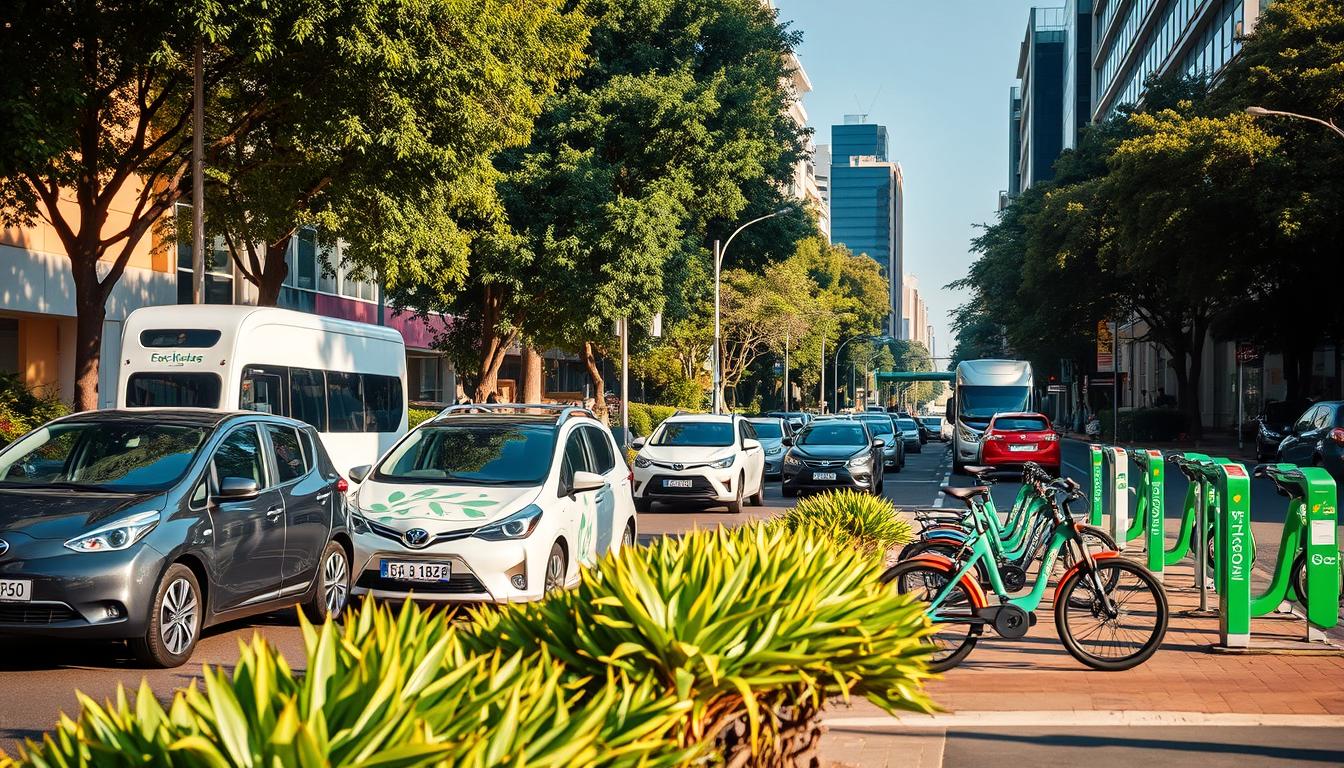
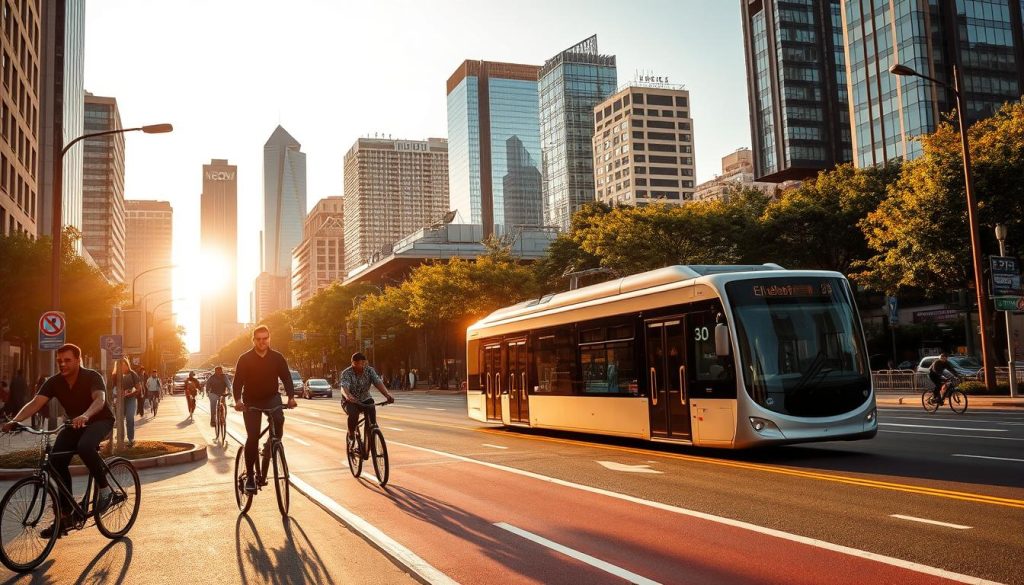
You can travel around Johannesburg in an eco-friendly way. The city has a modern public transit system. This makes it easy to move around without harming the environment.
The Gautrain and Public Transit Network
The Gautrain is a fast rail link that goes to the airport and other key places. It’s a good choice for traveling. Johannesburg’s public transit network is wide, with buses adding to the Gautrain. Using these can cut down your carbon footprint a lot.
Eco-Friendly Ride-Sharing and Taxi Services
Johannesburg also has green ride-sharing and taxi services. Many companies use hybrid or electric cars. These services are flexible and convenient for those who don’t like public transport.
Walkable Districts for Responsible Exploration
Johannesburg has walkable areas for exploring on foot. Places like Melville and Maboneng are lively and safe for walkers. They let you see the local culture and views while being kind to the planet.
Choosing these green travel options helps the tourism industry in Johannesburg. Whether you’re on the Gautrain, ride-sharing, or walking, every choice helps.
Eco-Certified Accommodations in Johannesburg
Johannesburg offers many sustainable places to stay, from luxury hotels to budget-friendly hostels. You can enjoy the city’s culture and attractions while being kind to the environment.
Luxury Green Hotels in Sandton and Rosebank
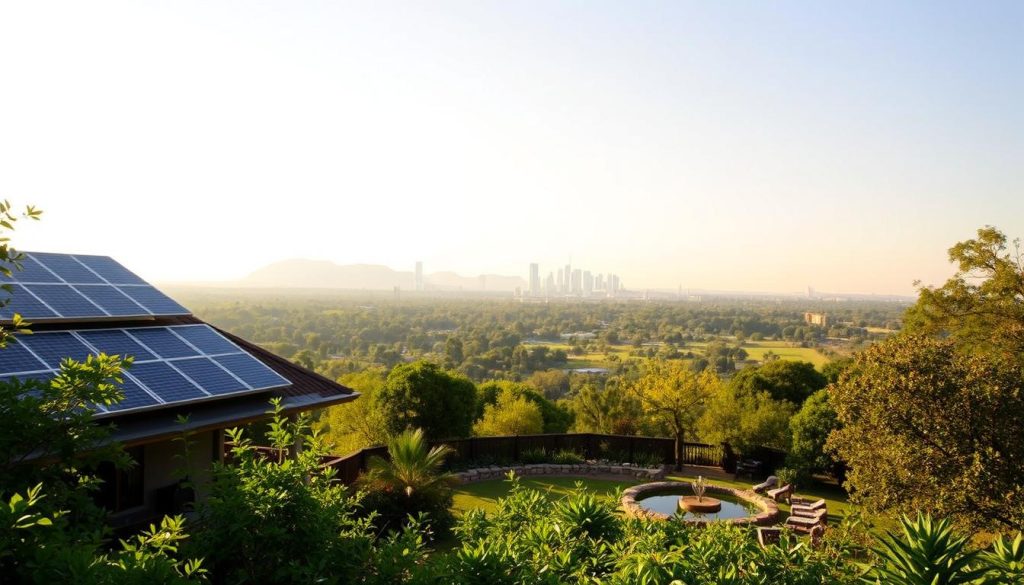
Sandton and Rosebank have some of Johannesburg’s top green hotels. These hotels are both fancy and eco-friendly. They use less energy, reduce waste, and offer green amenities.
Some hotels even use solar power and collect rainwater. This shows their commitment to being green.
Sustainable Boutique Lodgings in Melville and Maboneng
Melville and Maboneng are lively places with a focus on culture and sustainability. Their boutique lodgings use local materials and save water. They also teach guests about being eco-friendly.
Staying here supports local businesses. It also lets you see Johannesburg’s unique side.
Budget-Friendly Eco-Hostels and Guesthouses
Even on a tight budget, you can choose eco-friendly places to stay. Johannesburg has hostels and guesthouses that are both affordable and green. They have shared spaces that help guests meet and reduce waste.
| Accommodation Type | Location | Eco-Friendly Features |
|---|---|---|
| Luxury Green Hotels | Sandton, Rosebank | Solar power, rainwater harvesting |
| Sustainable Boutique Lodgings | Melville, Maboneng | Locally sourced materials, minimized water usage |
| Budget-Friendly Eco-Hostels | Various locations | Communal facilities, eco-friendly practices |
Choosing eco-certified places to stay helps Johannesburg become more sustainable. Whether you want luxury, charm, or something affordable, there’s a place for you in this lively city.
Farm-to-Table Dining Experiences
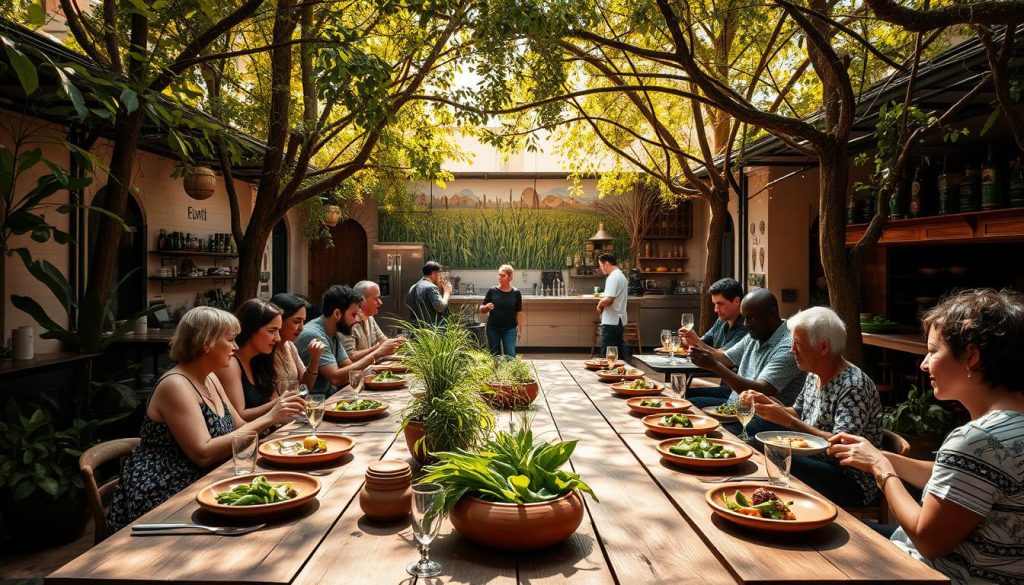
Exploring Johannesburg reveals a lively food scene focused on farm-to-table dining. This method ensures you get the freshest ingredients. It also helps local farmers and cuts down on food transport’s carbon footprint.
Johannesburg’s Sustainable Restaurant Scene
Johannesburg boasts many restaurants dedicated to sustainability. They use local ingredients to reduce their environmental impact. Notable establishments include those with zero-waste policies and direct farm sources.
Local Organic Markets and Food Halls
Local organic markets and food halls showcase Johannesburg’s sustainable food scene. They offer organic produce, artisanal goods, and prepared foods. Supporting local vendors, these spots are in Braamfontein and Sandton.
| Market Name | Location | Notable Features |
|---|---|---|
| Braamfontein Market | Braamfontein | Organic produce, local crafts |
| Sandton Food Hall | Sandton | Upscale dining options, gourmet products |
Traditional South African Cuisine with an Eco-Twist
Traditional South African dishes are getting an eco-friendly makeover. Restaurants use local foraged ingredients and sustainable cooking methods. For example, braai restaurants use local meats and sustainable woods.
Choosing farm-to-table dining means you enjoy tasty meals and support local communities and the environment. It’s a key part of ethical tourism activities.
Johannesburg’s Green Attractions
Johannesburg’s green spots mix nature, culture, and community projects. As you wander the city, you’ll find many efforts. These promote green living and offer great experiences.
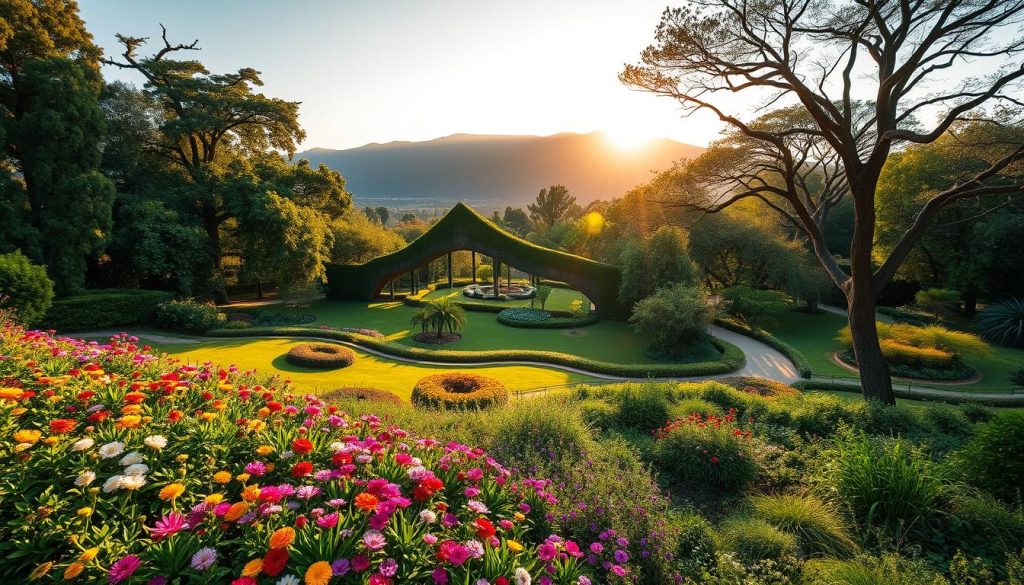
Exploring the Johannesburg Botanical Gardens
The Johannesburg Botanical Gardens is a stunning green area. It has many local plants and a calm vibe. You can take guided tours, learn about saving nature, and see the gardens’ beauty.
Eco-Tours of Soweto and Township Initiatives
Eco-tours in Soweto show the township’s history and culture. These tours help local businesses and teach you about community projects. They make a big difference.
Some popular eco-tour initiatives include:
- Guided tours of Soweto’s historic sites
- Visits to local community projects
- Cultural exchange programs
The Sustainable Side of Constitution Hill and Museums
Constitution Hill, a former prison, is now a museum. It’s a key green spot in Johannesburg. It shows South Africa’s history and democracy. You can see the museum, learn about democracy, and admire the green design.
Visiting Johannesburg’s green spots makes your trip better. It also helps the city’s green efforts and community projects.
Ethical Wildlife Experiences Near Johannesburg
Just beyond Johannesburg, a world of responsible wildlife encounters awaits. It’s a chance to connect with nature. The areas around the city have many wildlife reserves and sanctuaries. They offer a range of ethical experiences for visitors.

Responsible Safari Options in Nearby Reserves
For those eager to experience a safari, there are many options in nearby reserves. These safaris let you see wildlife in their natural habitats. They also support conservation efforts and local communities.
Some of the top reserves near Johannesburg include:
- Pilanesberg Game Reserve
- Madikwe Game Reserve
- Wolwedans Private Game Reserve
The Johannesburg Zoo Conservation Programs
The Johannesburg Zoo is involved in many conservation programs. By visiting, you support these efforts. You help protect endangered species.
The zoo’s conservation work includes breeding programs, habitat restoration, and educational programs. These help raise awareness about wildlife conservation.
Bird Sanctuaries and Rehabilitation Centers
For bird lovers, there are bird sanctuaries and rehabilitation centers near Johannesburg. These places care for injured birds and provide a safe home for various species.
Visiting these sanctuaries lets you see many bird species. It also supports their conservation work. Many offer guided tours and educational programs. These help you understand and appreciate birdlife.
Community-Based Tourism in Johannesburg
In Johannesburg, community-based tourism is changing how we see the city. It lets you dive deep into the city’s culture and history by connecting with locals.
Supporting local artisans is a big part of this experience. The Maboneng Precinct is a place where creativity thrives. Here, you can find unique, handmade crafts and artwork.
Supporting Local Artisans in Maboneng Precinct
When you visit the Maboneng Precinct, you help local artisans and learn about their work. It’s a place filled with street art, independent shops, and cultural events.
Township Tours That Empower Communities
Township tours show you the lives of Johannesburg’s people. They highlight the community’s strength and kindness. These tours help local people and create jobs.
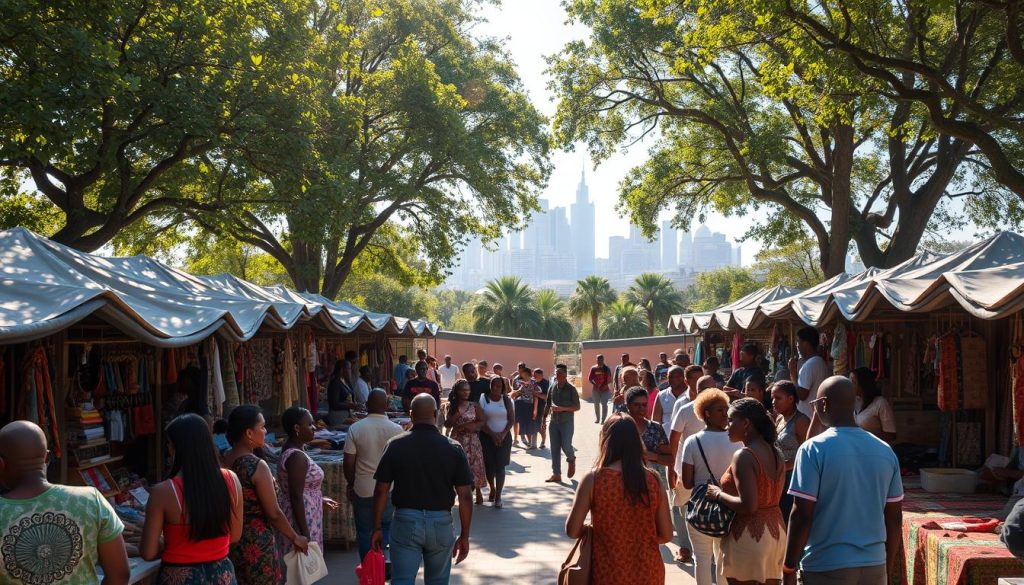
Cultural Exchanges and Homestay Opportunities
For a real connection, try a cultural exchange or homestay. Living with a local family, you share meals and stories. It’s a great way to understand the city’s rich heritage.
By joining community-based tourism, you make your trip better. You also help the local economy and build cultural bridges.
Sustainable Shopping and Souvenirs
Johannesburg has many ethical tourism activities. You can find sustainable shopping spots. These places let you buy unique South African items while helping local artists.
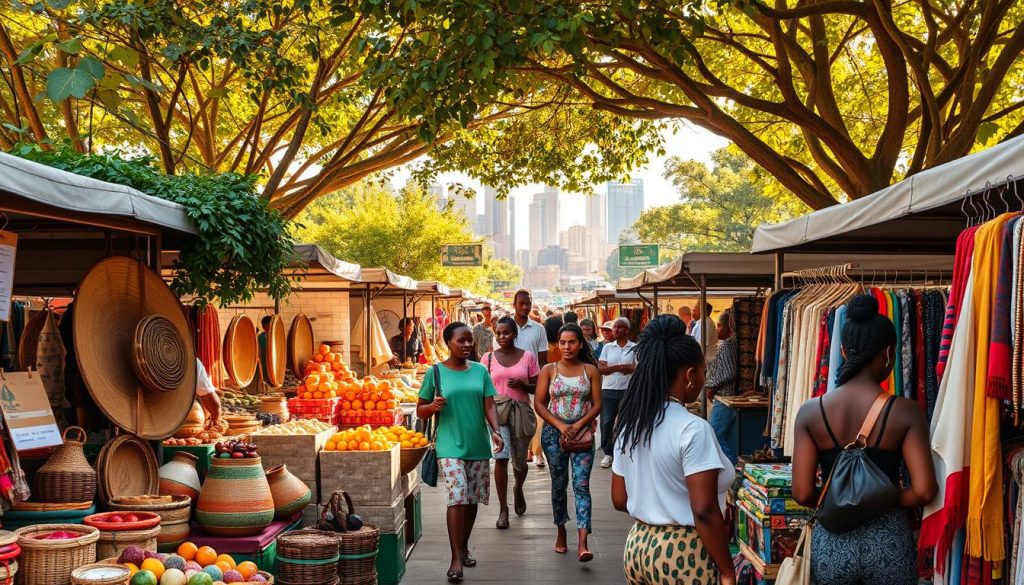
Fair Trade Markets and Craft Centers
Check out fair trade markets and craft centers for real, handmade goods. These places help local artists show off their talents. You’ll find everything from traditional crafts to modern pieces, all made with love.
Upcycled and Eco-Friendly South African Products
Search for items made from recycled or sustainable materials. These products help reduce waste and support green living. You can find cool, eco-friendly items like home decor and fashion accessories.
Avoiding Environmentally Harmful Souvenirs
Be careful when buying souvenirs. Stay away from items that harm the environment or local people. Choose products that are certified as eco-friendly or sustainable instead.
Day Trips with an Eco-Focus
Exploring beyond Johannesburg reveals eco-friendly day trips. These trips highlight the area’s natural beauty and green tourism efforts.
The region around Johannesburg is full of attractions for day trips. You can enjoy culture, history, and outdoor activities.
The Cradle of Humankind World Heritage Site
A trip to the Cradle of Humankind is a journey through human history. It’s a UNESCO World Heritage Site known for its archaeological value and sustainable tourism.
Magaliesberg Biosphere Reserve Excursions
The Magaliesberg Biosphere Reserve is a mix of natural beauty and biodiversity. You can go on guided hikes, horseback riding, or just enjoy the views.
| Destination | Activities | Eco-Friendly Features |
|---|---|---|
| Cradle of Humankind | Guided tours, fossil exploration | Sustainable tourism practices, conservation efforts |
| Magaliesberg Biosphere Reserve | Hiking, horseback riding, bird watching | Biodiversity conservation, eco-lodges |
| Sustainable Vineyard Tours | Wine tastings, vineyard tours | Organic farming, eco-friendly wine production |
Sustainable Vineyard Tours in Nearby Regions
Wine lovers will find great sustainable vineyard tours nearby. Many vineyards use eco-friendly practices, making wine tasting feel guilt-free.
Conclusion: Making a Positive Impact Through Sustainable Travel in Johannesburg
When you travel to Johannesburg, you can help the environment and local communities. Choose eco-friendly places to stay and support activities that care for the planet. This way, you help make tourism better for everyone.
There are many ways to travel responsibly in Johannesburg. You can stay in green hotels or join local tours that help the community. These options let you see the city while doing good for it.
Think about how your travel choices affect the planet and people. Plan your trip to Johannesburg with care. Pick options that are good for the environment and support local people.