Discover the Captivating Fijian Fire Walking Ritual
Have you ever seen a cultural practice that leaves you speechless? The ancient ritual of walking on hot stones is one such cultural experience. It has amazed travelers for centuries.
You’re about to learn about the magic of this ritual. It’s a key part of the islanders’ rich heritage. You’ll see how this cultural practice is still important today.
The Ancient Origins of Fijian Fire Walking
Fijian fire walking has a fascinating legend behind it. It’s deeply rooted in the spiritual beliefs and cultural heritage of the Fijian people. Walking on hot stones or embers is more than a show; it’s a significant ritual passed down through generations.
The Legend of Tunaiviqalita
The legend of Fijian fire walking tells the story of Tui Naiviqalita, a warrior. He was given the power to walk on fire by a spirit god. This legend shows the Fijian people’s strong belief in the spiritual world and their connection to their ancestors.
The Gift from the Spirit God
The story of Tui Naiviqalita getting the gift of fire walking is key to Fijian cultural identity. It shows the tribe’s connection to the divine and their ancestors. This ritual holds deep spiritual significance.
Passing Down the Sacred Knowledge
The knowledge and practice of fire walking were passed down through Tui Naiviqalita’s bloodline. It became a vital part of Fijian cultural heritage. This tradition is kept alive through rigorous training and spiritual preparation.

| Aspect | Description | Significance |
|---|---|---|
| Legend | The story of Tui Naiviqalita | Foundation of fire walking tradition |
| Spiritual Significance | Connection to ancestors and divine | Cultural identity and heritage |
| Knowledge Transfer | Passed through generations | Continuation of the tradition |
Learning about Fijian fire walking’s origins gives us a glimpse into Fiji’s cultural and spiritual world. This traditional practice amazes people all over the world. It connects the past and present in a unique way.
Cultural Significance in Fijian Society
Fijian fire walking shows the islanders’ rich heritage and their bond with ancestral spirits. It’s a lively way to show courage, faith, and dedication. It celebrates community spirit and the ties between the living and their ancestors.
Spiritual Meaning Behind the Ritual
The fire walking ritual is very spiritual for Fijians. It shows their faith and connection to their ancestors. It’s believed to connect them to the spiritual world, proving their divine protection.
Connection to Ancestral Spirits
This ritual is key to Fijian beliefs, focusing on the bond between the living and their ancestors. Walking on fire shows respect and reverence for their spirits.
Demonstration of Divine Protection
Fire walking also shows divine protection. Participants believe their ancestors keep them safe, letting them walk on fire without harm. This shows the Fijian people’s strong faith.
The fire walking ritual has many meanings. Some are:
- A celebration of community spirit and unity
- A demonstration of faith and spiritual connection
- A showcase of cultural heritage and tradition
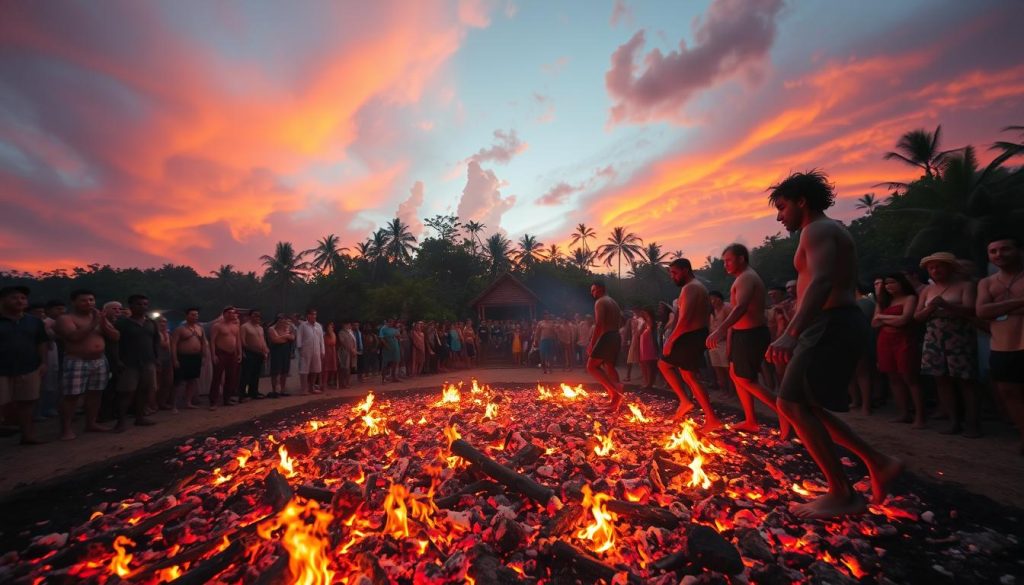
Seeing the Fijian fire walking ritual is a cultural experience deeply rooted in Fijian society. This South Pacific performance is a unique and captivating display of faith, courage, and community spirit.
The Science Behind Walking on Fire
Fire walking is more than just bravery; it’s based on cool science. Watching a fire ceremony in Fiji becomes even more exciting when you know the science behind it.
Understanding the Leidenfrost Effect
The Leidenfrost effect is key to fire walking. It happens when a liquid forms a shield between an object and heat. When a fire walker steps on hot stones, the moisture on their feet turns to vapor. This vapor shield protects their skin from burns.
Physics of Heat Transfer
Heat transfer is vital in fire walking. The quick vaporization of moisture acts as a cushion. This reduces heat transfer to the skin. It’s a great example of physics in action during a traditional Fijian ritual.
Why Fire Walkers Don’t Get Burned
Fire walkers avoid burns thanks to the Leidenfrost effect. The short time they touch the hot stones and their technique also help. 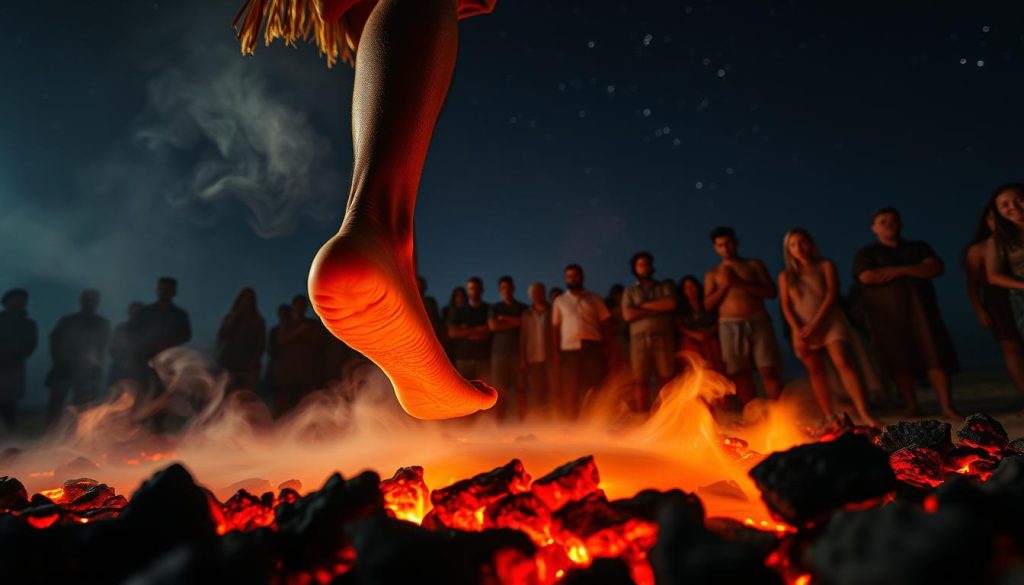 Knowing this science makes the Fijian fire walking show even more thrilling.
Preparation for the Ritual
Getting ready to see the Fijian fire walking ritual? It’s key to know the detailed prep that goes into this indigenous ritual. The ceremony is more than just walking on fire. It’s a complex process with many steps to ensure safety and success.
Gathering and Preparing the Materials
To start, specific woods and stones are gathered for the fire pit. These materials are chosen with care, based on ancient knowledge. This tradition has been passed down for generations.
Selecting the Right Stones
The stones for the fire pit are picked for their ability to hold and spread heat. Volcanic rocks are often chosen for their strength and heat retention.
Building the Fire Pit
After picking the stones, the fire pit is built. It’s made in a traditional earth oven or lovo. The stones are arranged to spread heat evenly. The fire is lit, and the stones are heated for hours.
Before the ritual, participants go through spiritual cleansing. They seek protection and strength from their ancestors. This spiritual prep is as important as the physical setup of the fire pit.
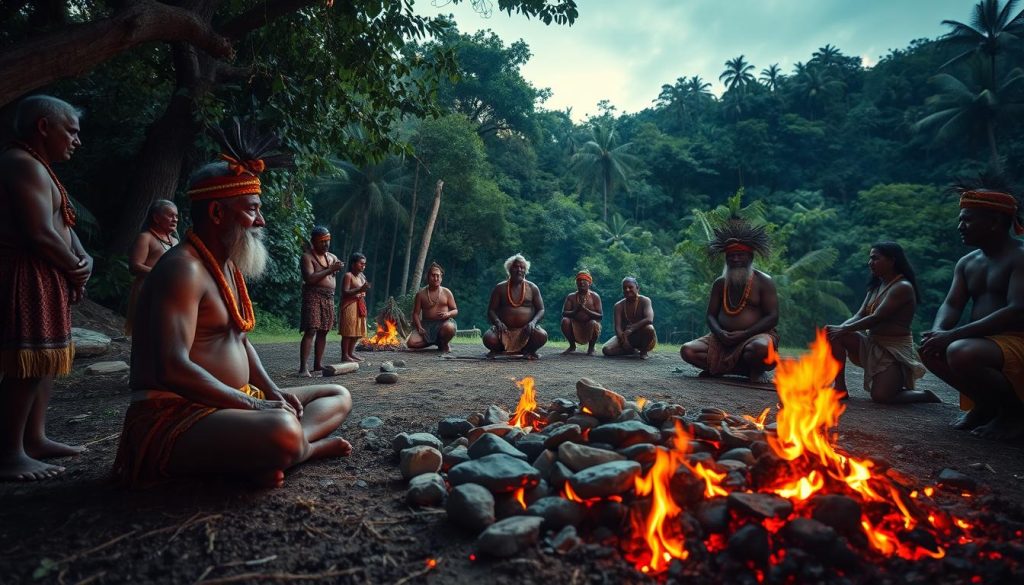
The prep for the Fijian fire walking ritual is detailed and combines tradition with spirituality. Knowing about these steps can make you appreciate this traditional fire walking ceremony more.
The Ceremonial Process Step by Step
The Fijian fire walking ceremony is a detailed ritual. It requires careful preparation. Watching the Fijian fire walking show, you’ll see the steps of this South Pacific performance.
Building and Heating the Lovo (Earth Oven)
The ceremony starts with making the lovo, or earth oven. Stones are heated to high temperatures. This is key for the fire walking ritual.
Wood Selection and Arrangement
Choosing and arranging wood for the lovo is important. Hardwoods are used for their high heat value. The wood is set up in a way to get the most heat.
Heating Duration and Temperature
The stones are heated for hours until they glow red-hot. This shows they’re ready for the fire walking.
As the stones heat up, excitement grows. The participants, with traditional music and chants, get ready. They will walk on the hot stones, showing their faith and strength.
The steps of the Fijian fire walking ceremony are:
- Preparation of the lovo
- Heating the stones to the required temperature
- Participants preparing for the ritual with traditional music and chants
- Walking across the hot stones
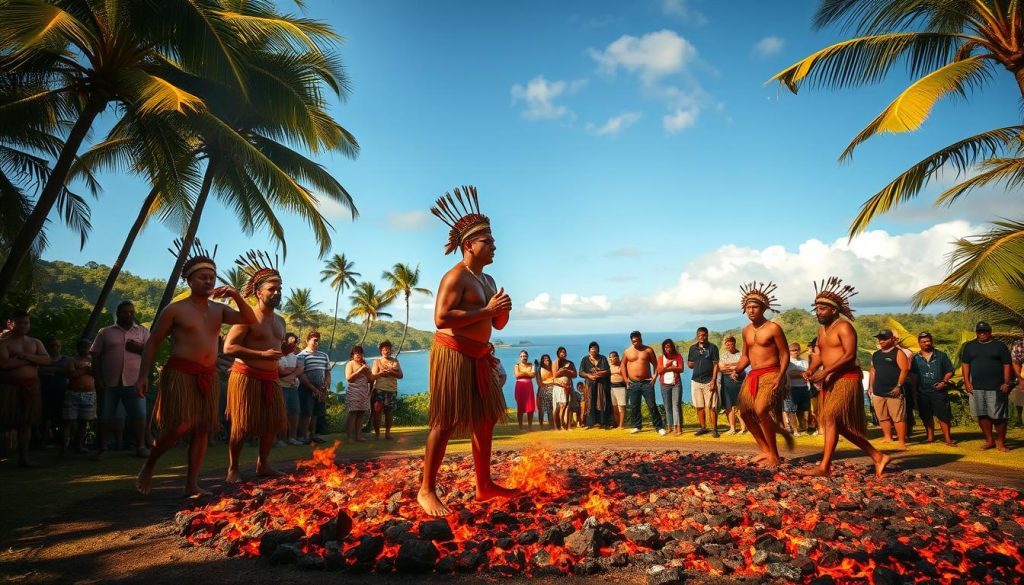
This is more than just bravery. It shows the spiritual strength of the participants. As a spectator, you get to see Fiji’s rich culture in an unforgettable way.
Experiencing an Authentic Fijian Fire Walking Show
Looking for a unique cultural experience in Fiji? A traditional fire walking show is a must-see. These events mix cultural heritage with amazing performances.

Traditional Village Demonstrations
Traditional village demonstrations let you see the Fijian fire walking ritual up close. You’ll learn about the cultural meaning behind it. These shows are both fun and educational, showing you Fijian traditions.
Beqa Island Performances
Beqa Island is famous for its fire walking shows. The island’s fire walkers have perfected their craft over generations. Their performances are a top highlight of Fiji.
Authentic Community Celebrations
Joining or watching authentic community celebrations with fire walking is a deep cultural experience. These events show the heart of Fijian culture and community life.
Seeing a Fijian fire walking show, whether in a village or on Beqa Island, is unforgettable. It’s a mix of excitement and learning about Fijian culture. It’s a truly enriching experience.
What to Expect as a Spectator
As a spectator at a Fijian fire walking ritual, you’ll see an ancient indigenous ritual. It’s a sight that shows bravery and spiritual connection. The ceremony is both captivating and meaningful.
Etiquette and Respectful Behavior
To have a good time and respect the local culture, it’s key to be mindful. The fire walking ritual is a special event. It’s important to understand and respect its traditions.
Appropriate Dress and Conduct
You should dress modestly and act with respect. Don’t take pictures or interrupt the ritual. It’s important to let the ceremony unfold naturally.
Cultural Sensitivities to Be Aware Of
Knowing the local customs is crucial. Here are a few things to keep in mind:
- Remove your shoes before entering the ceremonial area, if required
- Avoid direct eye contact or disrespect
- Don’t touch or handle sacred objects or materials
By respecting these cultural norms, you’ll make the experience better for everyone. It’s a chance to learn and appreciate a unique tradition.
Personal Testimonials: Witnessing the Incredible Feat
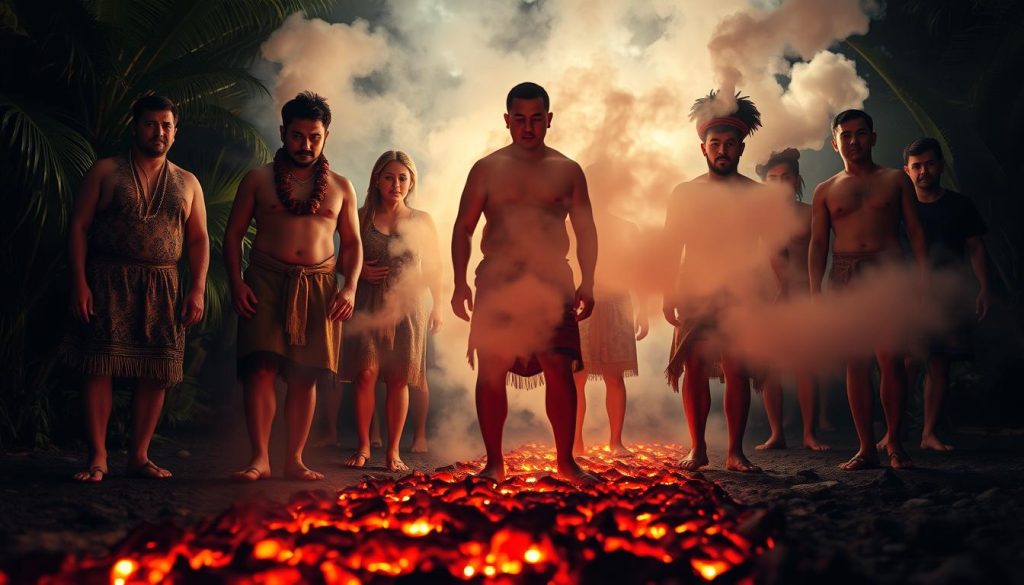
Watching the Fijian fire walking show is awe-inspiring. It shows the bravery and spiritual strength of the participants. This ceremony is a key part of Fiji’s rich culture, making it a deeply moving experience.
Visitor Experiences and Reactions
People who see the thrilling fire ceremony are often amazed. It’s not just a show; it’s a spiritual journey that touches the heart.
First-Time Observers
For many, it’s their first time seeing such a unique tradition. They feel disbelief and wonder as the participants get ready. The air is filled with excitement and anticipation.
Emotional Impact
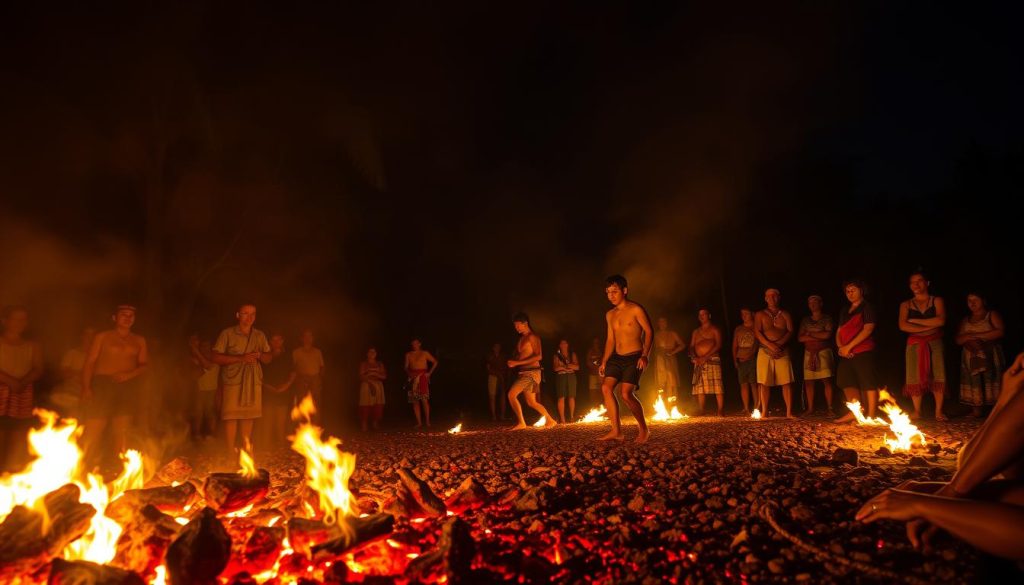
Seeing the Fijian fire walking ritual has a deep emotional effect. Many visitors feel a deep respect for the participants and their culture. It’s a transformative experience that leaves a lasting impression.
Modern Adaptations and Tourism Impact
The Fijian fire walking ritual is changing with more tourists. It aims to keep its true spirit while entertaining visitors. This balance is key to keeping the tradition alive for the future.
Balancing Authenticity and Entertainment
The fire walking ritual has grown, adapting to tourism needs. Yet, it still holds its traditional heart. This balance is vital to keep the culture alive for generations to come.
Preserving Sacred Elements
The ritual’s sacred parts are kept safe through careful planning. For example, the Saibaiwiri clan still performs it. This keeps the tradition in the right hands.
Adapting for Tourist Audiences
To welcome tourists, the ritual is shown in a controlled setting. This is often in a traditional village. It lets visitors see the event while respecting the culture.
| Aspect | Traditional | Modern Adaptation |
|---|---|---|
| Performance Setting | Sacred grounds | Traditional village demonstrations |
| Performers | Saibaiwiri clan | Still performed by Saibaiwiri clan |
| Audience | Local community | Tourists and locals |
A local cultural expert notes,
“The fire walking ritual is a key cultural experience. It shows Fiji’s heritage. By adapting for tourism, we share our traditions and keep our identity.”
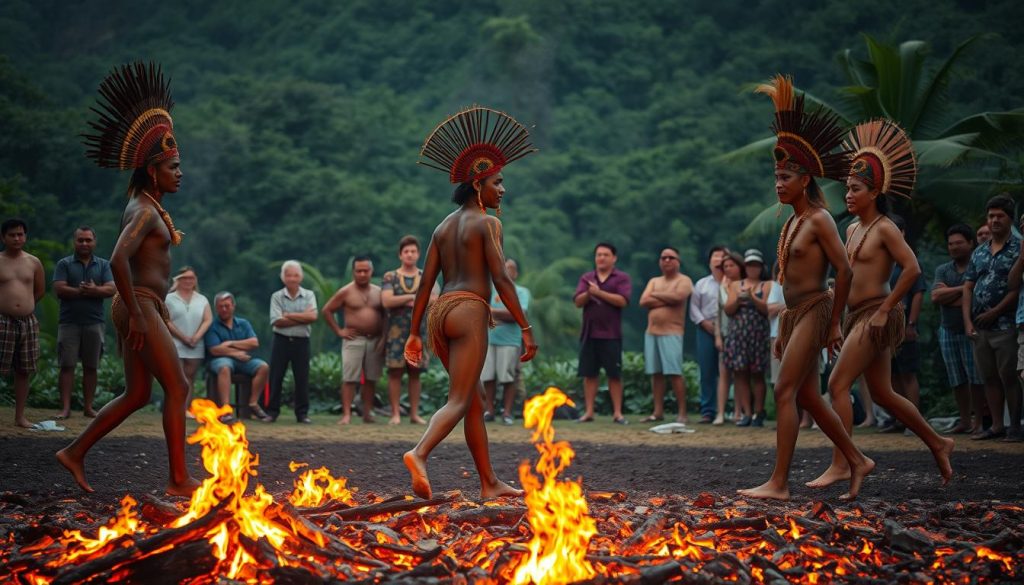
See this amazing cultural event by visiting Fiji. You can watch it in a traditional village. As a viewer, you’ll see its beauty and help the local economy.
Conclusion: The Enduring Legacy of Fijian Fire Walking
The Fijian fire walking ritual shows the lasting impact of Fijian culture. You’ve seen how this ancient tradition still draws people from all over. It’s a true marvel that continues to amaze everyone who sees it.
Seeing a Fijian fire walking show is more than just watching a stunt. It’s a chance to learn about the traditions that have been kept alive for so long. This ritual is a big part of who the Fijian people are. Keeping it alive is key to preserving their cultural heritage.
Thinking about this ritual makes you realize how vital it is to keep cultural traditions alive. The Fijian fire walking ritual reminds us of the incredible diversity of cultures worldwide. Its lasting impact will keep inspiring and captivating people for many years.