Discover the Best Trails to Machu Picchu for Your Adventure
What are the different trails to Machu Picchu that can lead you to this incredible Inca citadel? There are many Machu Picchu trekking routes to choose from. The Inca Trail, Salkantay Trek, and Lares Trek are just a few options, each offering unique experiences and challenges. As you consider your adventure, you may wonder, what are the different trails to Machu Picchu that will give you the most unforgettable experience?
Understanding the different trails to Machu Picchu and their characteristics is essential to planning your trip. The various Machu Picchu trekking routes offer distinct experiences, from the classic Inca Trail to the more scenic Salkantay Trek. By exploring what are the different trails to Machu Picchu, you can make an informed decision and choose the one that suits your preferences and abilities, ensuring an unforgettable journey to this ancient wonder.
What Are the Different Trails to Machu Picchu?
Planning your trip to Machu Picchu reveals many Best hiking trails to Machu Picchu. These trails vary in length and difficulty, fitting all kinds of adventurers. You can pick from short 1 or 2-day hikes to longer 6, 7, or 8-day treks.
Think about the trail’s length and how hard it is. The Inca Trail takes 4 days, while the Salkantay Trek is 5 days. The Lares Trek is the shortest, reaching Machu Picchu in just 3 days.
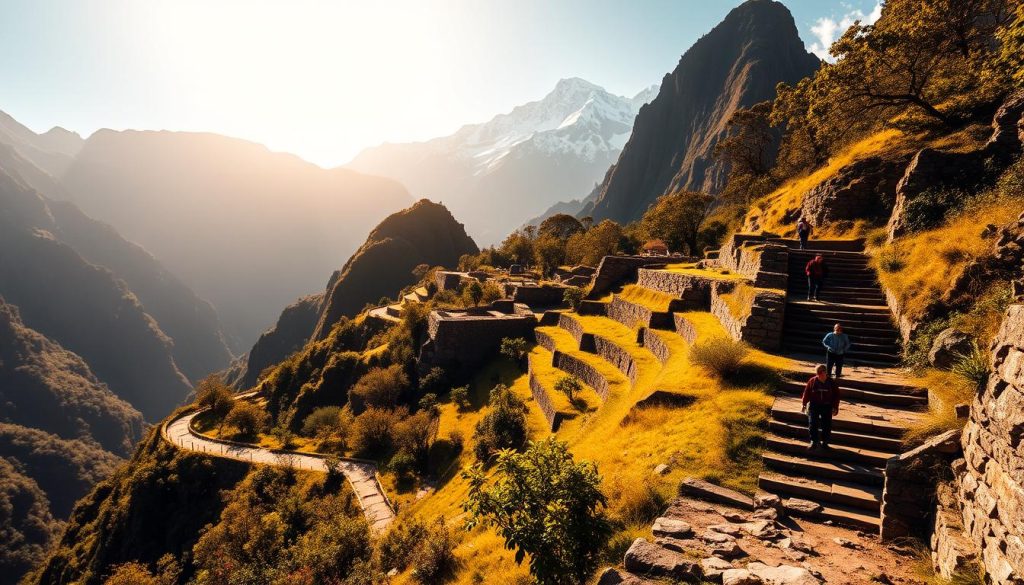
Each trail offers a unique experience. You’ll see historic Inca ruins and breathtaking Andean views. Here are some things to consider:
- Trail duration: Ranging from 1 to 8 days
- Difficulty level: From easy to challenging, with steep sections and large stone steps
- Scenic views: Including historic Inca ruins and stunning Andean landscapes
Knowing the Machu Picchu trek options and Best hiking trails to Machu Picchu helps you choose wisely. Pick the trail that matches your needs and preferences.
The Classic Inca Trail Experience
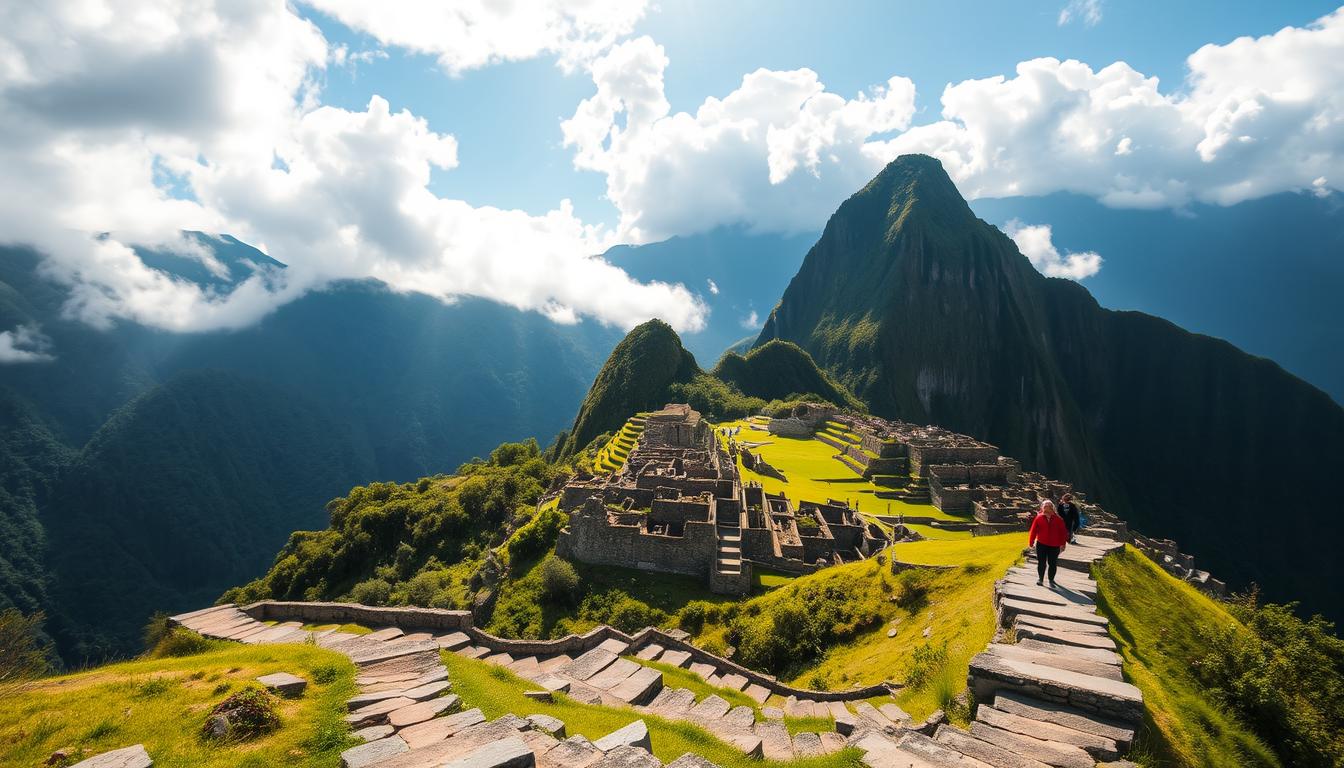
As you start the Inca Trail to Machu Picchu, you follow the Incas’ path. They built this trail over 500 years ago. The 4-day, 3-night journey covers about 56 km, passing through stunning Andean landscapes and cloud forests.
With a daily hike of 10-16 km, you’ll enjoy the views and learn about the trail’s history. The Inca Trail is a special trek, with only 500 people allowed each day. This includes tourists, porters, and guides.
This rule helps keep the trail beautiful and offers a personal experience. You’ll have guides and porters with you. They share stories about the trail’s history and culture.
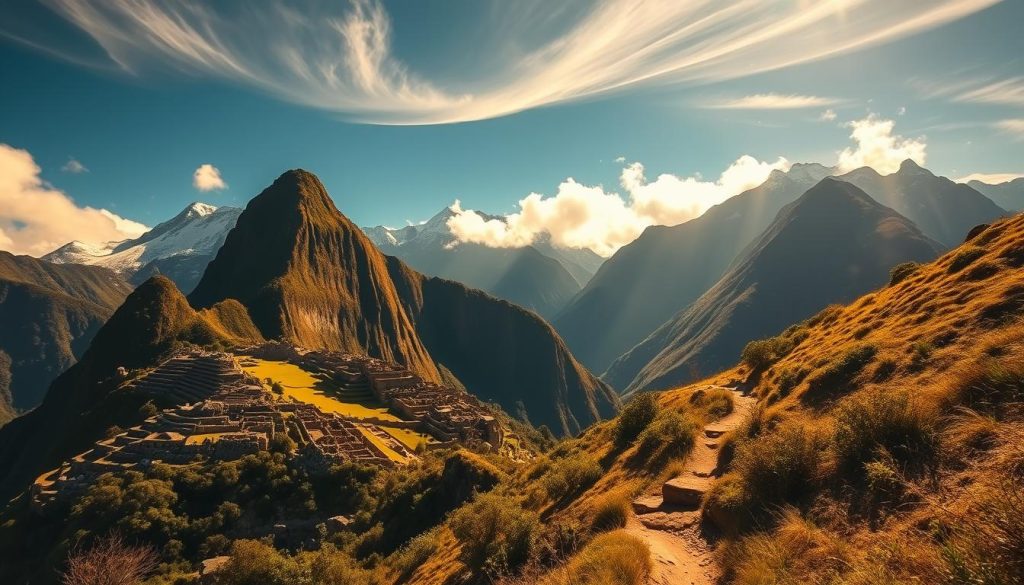
- Hiking through the Sun Gate, with stunning views of Machu Picchu
- Exploring the ancient Inca ruins, including Wiñaywayna and Phuyupatamarca
- Experiencing the rich cultural heritage of the Andean people
The Inca Trail to Machu Picchu is an unforgettable journey. It mixes natural beauty, history, and culture. It’s a top trek in the world, loved by many.
Salkantay Trek: The Scenic Mountain Route
The Salkantay Trek is a standout for its stunning views and tough terrain. It spans about 74 kilometers over 5 days. You’ll see amazing Andean landscapes and get to see mountains and valleys from afar.
The trek’s high point, Salkantay Pass, is at 4,650 meters. Before starting, it’s key to get used to the high altitude. Spend 2 to 3 days in Cusco to acclimatize. This trek is tougher than the Inca Trail because of its longer path and varied terrain.
Altitude Considerations
The trek begins at 3,800 meters in Soraypampa. The highest point, Salkantay Pass, is at 4,650 meters. It’s important to know about altitude sickness and take steps to avoid it.
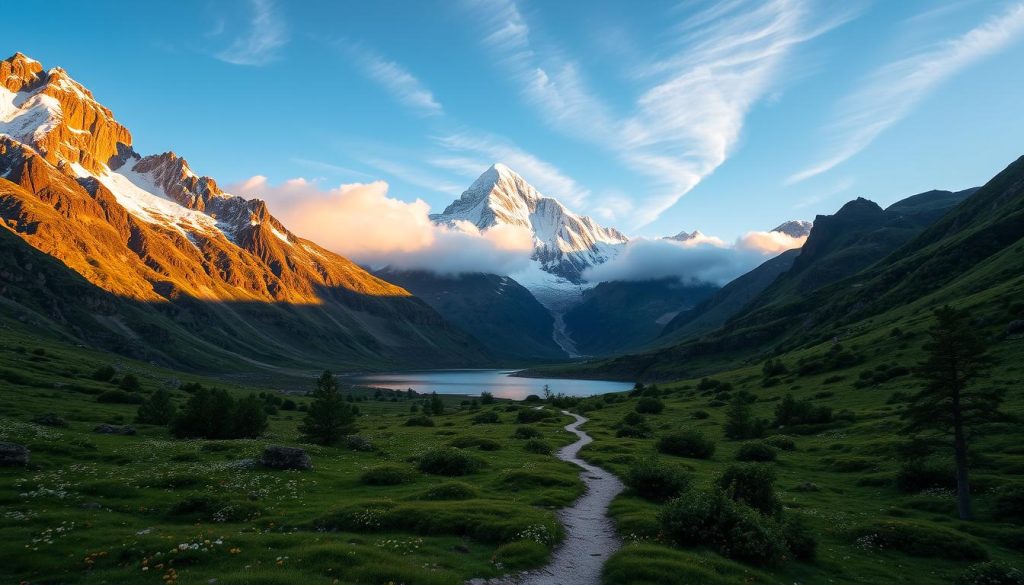
Highlights Along the Way
The Salkantay Trek is a unique path to Machu Picchu. You’ll see the Salkantay Mountain, cloud forests, and jagged peaks. The trek goes through different Andean areas, making it an exciting journey.
While hiking, you’ll enjoy stunning views and learn about local culture. The Salkantay Trek is challenging but the scenery and experiences make it worth it.
Lares Trek: Cultural Immersion Path
The Lares Trek is a 4-day, 38 km journey. It offers a deep dive into Andean culture and stunning views. It’s a great choice for those looking for a different Machu Picchu trek experience.
Here are some key highlights of the Lares Trek:
- Duration: 4 days
- Total trekking distance: 38 km
- Highest altitude reached: 4,750 meters at Condor Pass
- Cultural immersion: 25% of the trek involves visiting villages and engaging with locals
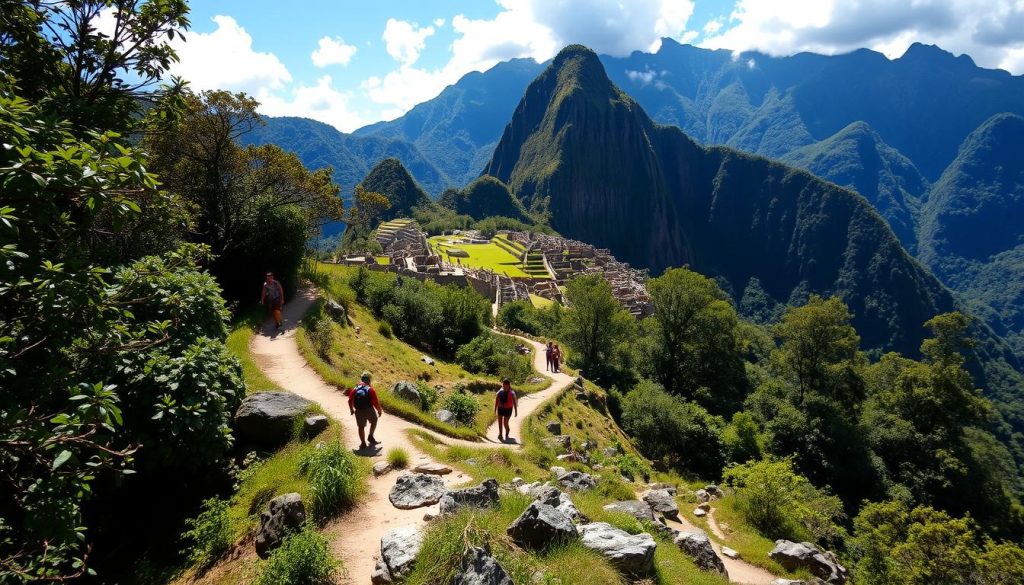
The Lares Trek is perfect for those wanting a less crowded path. It’s important to think about the physical challenges and altitude. With its rich culture and beautiful landscapes, it’s a top pick for a unique trek.
Short Inca Trail: Perfect for Limited Time
The Short Inca Trail is a great choice for those with short time frames. It’s a 2-day trek that packs a punch, offering stunning views and a deep dive into Machu Picchu’s history. You’ll explore the Andean landscapes and the ruins of Machu Picchu.
On your journey, you’ll pass through the Sun Gate. Here, you’ll see amazing views of mountains and valleys. The trail is moderately easy, making it perfect for many travelers. Day 1 involves about 6 to 7 hours of hiking, including breaks. Day 2 is easier, with a 2 to 3 hour tour at Machu Picchu.
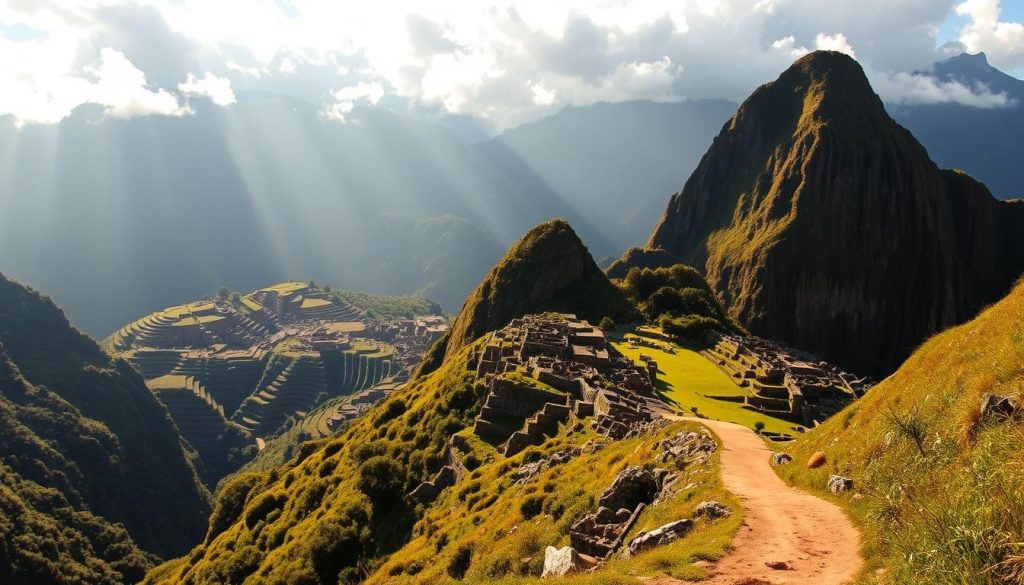
To get the most out of your Short Inca Trail, preparation is key. Here are some important details to remember:
- Duration: 2 days
- Hiking distance on Day 1: 13 km (8 miles)
- Highest altitude reached: 2,700 m (8,858 ft) at the Sun Gate
- Group size: Small-group tours for personalized service
Choosing the Short Inca Trail lets you see Machu Picchu’s beauty, even with limited time. It offers stunning views, rich history, and moderate hiking. It’s a top choice for those looking for an unforgettable adventure.
Choosing the Best Season for Your Trek
When planning your Machu Picchu trek, picking the right time is key. The dry season, from April to October, is perfect for trekking. You’ll enjoy clear skies and dry trails. Daytime temperatures are usually between 17 to 19°C, while nights can get chilly, below 10°C.
The best months for the Inca Trail are May to September. June, July, and August are the busiest times. These months have the best weather, with little rain. For a quieter trek, April or May are good, with lush green scenery.
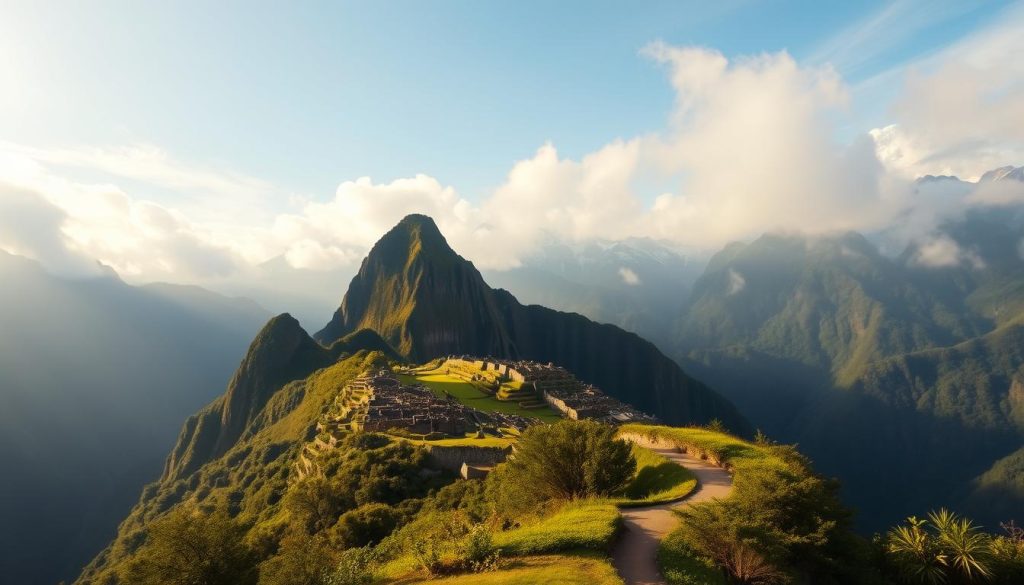
Avoid the wet season, from November to March, as trails can be muddy. The Inca Trail is closed in February for maintenance. Picking the right season ensures a great adventure and stunning views in Peru.
Some important dates to remember include:
- April: The dry season starts, with rainfall at 40 mm.
- May: Great for trekking, with rainfall at 10 mm.
- June and July: The busiest months, with rainfall at 2 mm.
By planning with these dates in mind, you’re set for an amazing Machu Picchu trek.
Essential Gear and Packing List
When getting ready for your Machu Picchu trek, it’s important to pack the right gear. This ensures a comfortable and enjoyable trip. Aim to bring what you need without carrying too much weight. Remember, the maximum weight for your gear, including your sleeping bag and mat, should be 15 kg.
Make sure to pack weather-appropriate clothing for different temperatures. Also, bring sturdy hiking boots. A first aid kit and a good backpack are must-haves. Choose a backpack that’s both comfortable and durable, as you’ll be carrying it for a while.
Here are some key items to include in your packing list:
- Hiking boots
- Layers for cold weather
- Waterproof jacket
- First aid kit
- Backpack (30-36 liters)
- Trekking poles (optional)
Stay hydrated by drinking 2-3 liters of water each day. With the right gear and a well-thought-out packing list, you’ll be set for your Machu Picchu trek. You’ll be ready to enjoy your adventure.
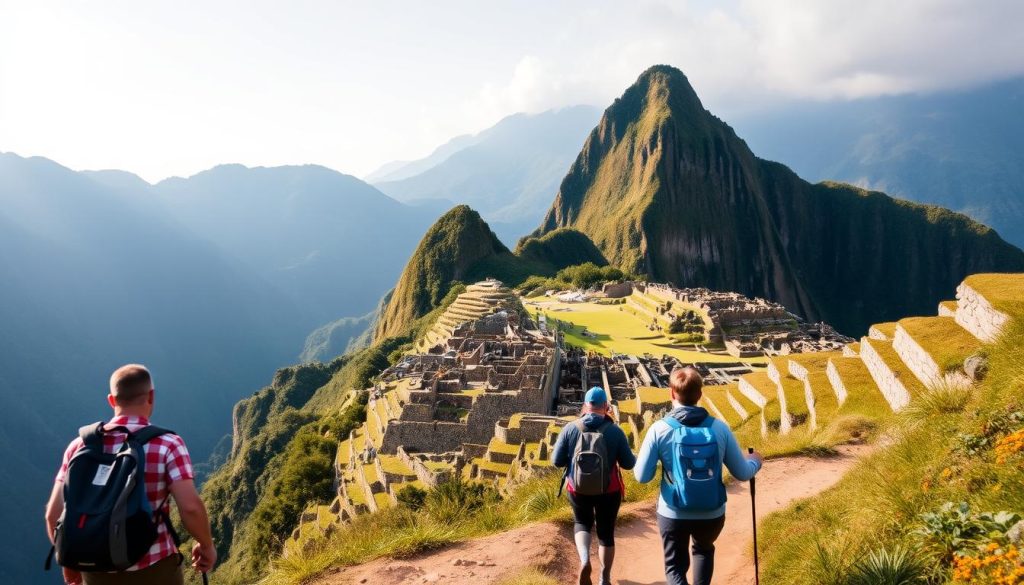
Check the weather forecast before you go and pack for it. With the right gear and preparation, you’ll have a successful and enjoyable Machu Picchu trek.
| Item | Recommended Quantity |
|---|---|
| Trekking socks | 4-6 pairs |
| Base layers | 2 tops, 1 bottom |
| Trekking shirts | 4-7 |
Permits and Booking Requirements
Planning a hike on the Inca Trail to Machu Picchu? You need to know about permits and booking. The Peruvian government limits daily visitors to 500 to protect the trail. This includes 300 for staff and 200 for trekkers.
To get a permit, book your tour 3 to 6 months early, more so in peak season (May to August). Companies like Alpaca Expeditions often get permits, making them a solid choice. Remember, the Inca Trail is closed in February for maintenance, so plan your trip around that.
Here are some important booking tips for the Inca Trail to Machu Picchu permit:
- Classic Inca Trail (4 days) permits are limited to 500 spaces daily, including support staff, cooks, and guides.
- Short Inca Trail (2 days) permits are limited to 250 spaces daily, including support staff and guides.
- Permits for 2025 are recommended to be booked 6-8 months in advance due to high demand.
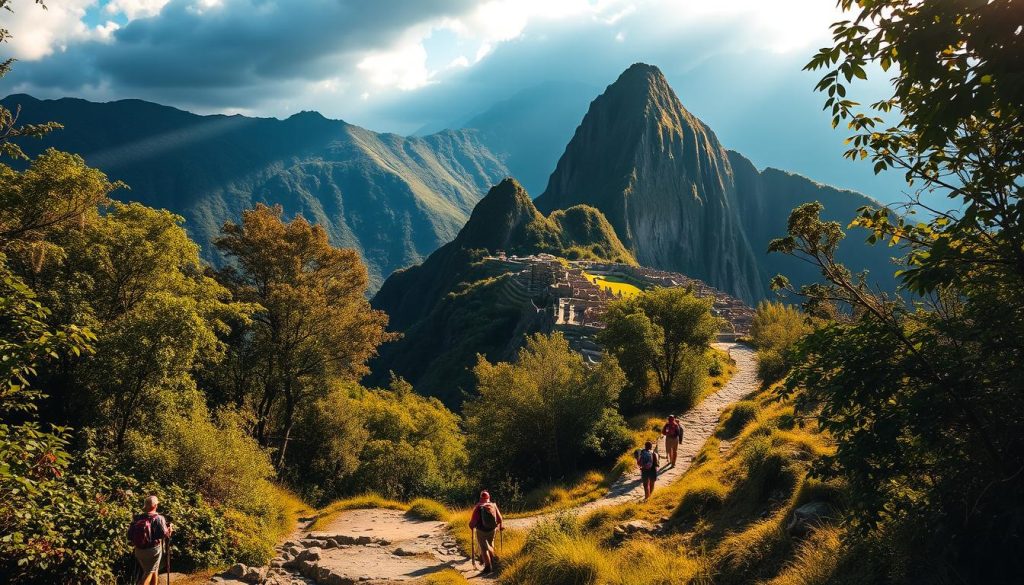
Understanding permits and booking ensures a great trip to the Inca Trail to Machu Picchu. Plan early, choose a good tour operator, and get ready for an unforgettable adventure.
Physical Preparation and Altitude Acclimatization
To conquer the Machu Picchu trails, it’s crucial to prepare your body and mind. Start your physical training 3-6 months before your trek. Focus on cardiovascular exercises like brisk walking, jogging, or cycling for 30 minutes, 3-4 times a week.
Strength training is also key. Target your legs and core with squats, lunges, and planks. This will help you face the Inca Trail’s challenges.
Acclimating to high altitudes is just as important. Arrive in Cusco or the Sacred Valley a few days early. This lets your body adjust to lower oxygen levels.
Drink plenty of water and take it easy. Engage in light activities to help your body adapt. The “climb high, sleep low” strategy can also help with altitude sickness.
With a good training plan and focus on altitude acclimatization, you’ll be ready for your Machu Picchu adventure. You’ll enjoy the stunning landscapes and rich cultural heritage.