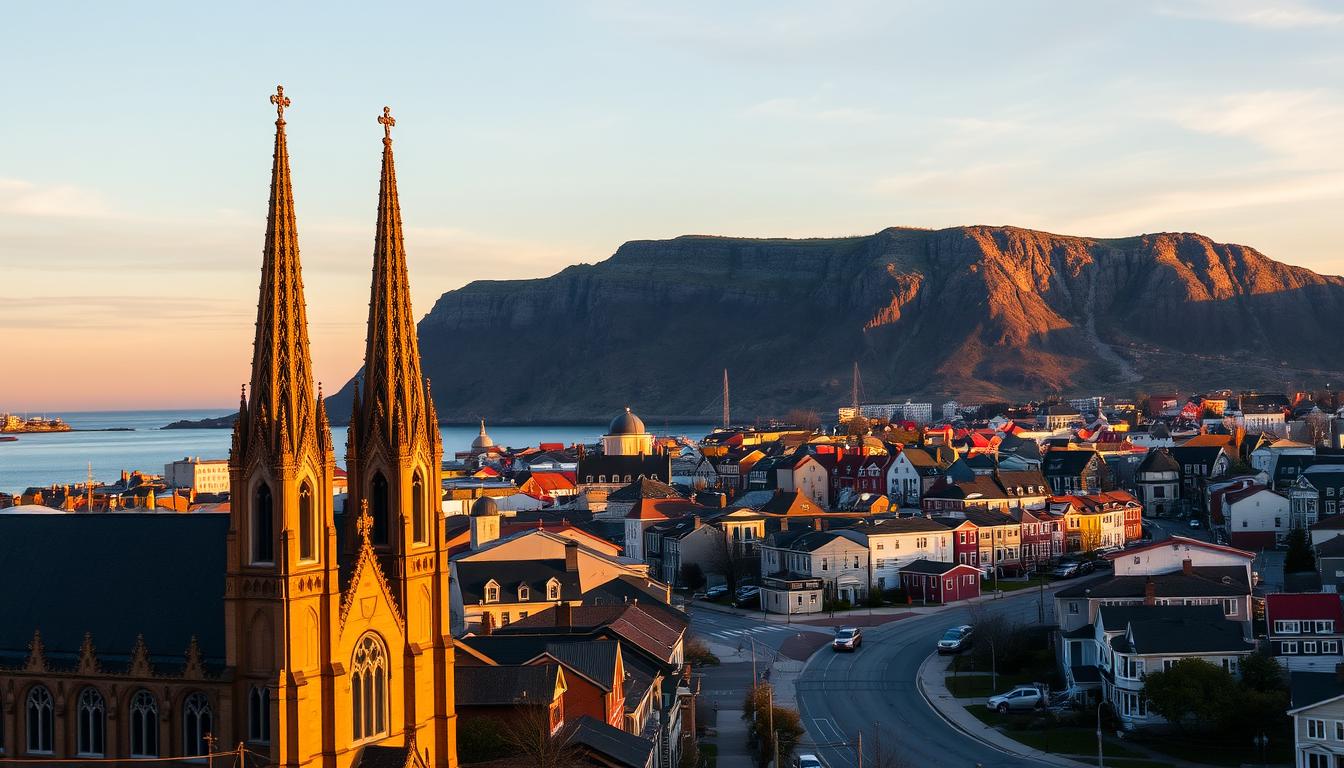
Explore the Historic Sites of St. John’s, Newfoundland
What historic sites can be found in St. John’s? As you plan your trip to this charming city, you might wonder about its historic landmarks. St. John’s has a rich history, dating back to the 16th century. It’s home to sites like Commissariat House and Cupids Cove Plantation, showcasing its cultural and historical heritage.
You can discover various historical places in St. John’s, each with its own story. These sites let you experience the city’s vibrant atmosphere.
Exploring the city, you’ll see that its historic sites tell stories of its past. From old streets to historic buildings, every part of the city whispers tales of history. What historic sites can be found in St. John’s? The city’s landmarks, historical places, and the people who shaped its history hold the answers.
What Historic Sites Can Be Found in St. John’s? An Overview
Exploring St. John’s reveals a wealth of historic sites. With 172 listed sites, you’ll find many St. John’s tourist attractions. These sites range from federal to municipal recognition, offering something for everyone.
St. John’s historic sites vary in recognition. The federal government recognizes 35, the provincial 45, and the municipal 92. This shows the city’s rich history and the effort to preserve it. You can find a detailed St. John’s historical sites list online.
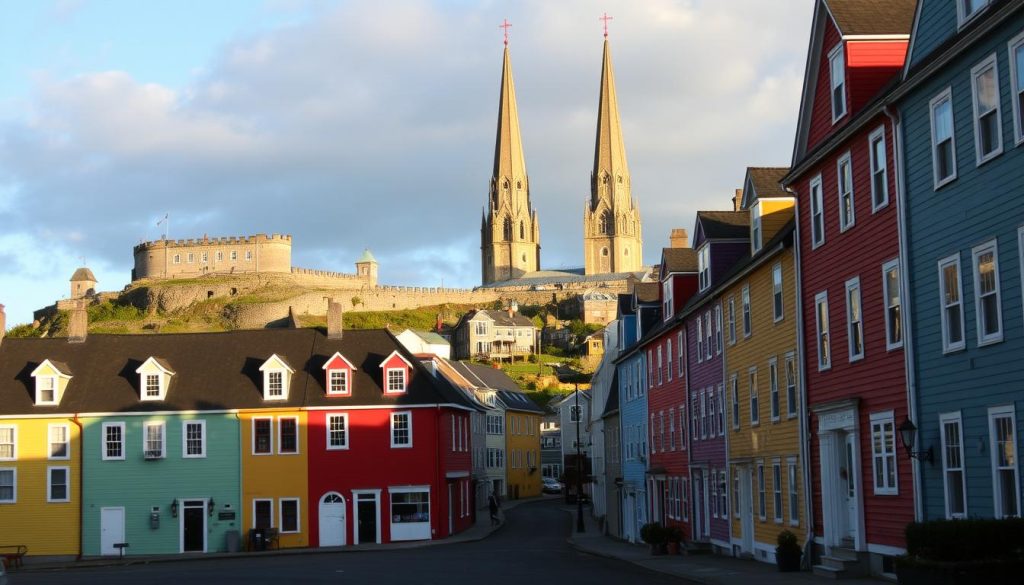
Some sites in St. John’s go back to the 18th century. They give a peek into the city’s past. With coordinates for each site, planning your visit is easy. St. John’s offers a variety of historic places to see.
Here’s a quick look at St. John’s historic sites:
- Total number of historic sites: 172
- Sites recognized by the federal government: 35
- Sites recognized by the provincial government: 45
- Sites recognized by the municipal government: 92
Signal Hill National Historic Site: St. John’s Most Iconic Landmark
When you explore St. John’s landmarks, Signal Hill National Historic Site is a standout. It offers amazing views of the city. It’s a key spot for those interested in St. John’s history. The mix of history and beauty makes it a memorable visit.
Signal Hill has 5 kilometres of trails, like the North Head Trail. It gives panoramic views of the city and the ocean. The site also has the Johnson GEO CENTRE, teaching about the Earth’s history. Plus, the Signal Hill Tattoo shows off the Royal Newfoundland Regiment’s drills.
The site is famous for Guglielmo Marconi’s first transatlantic wireless signal in 1901. This event started a new communication era. Now, visitors can see the Visitor Centre, with guided tours and a history show.
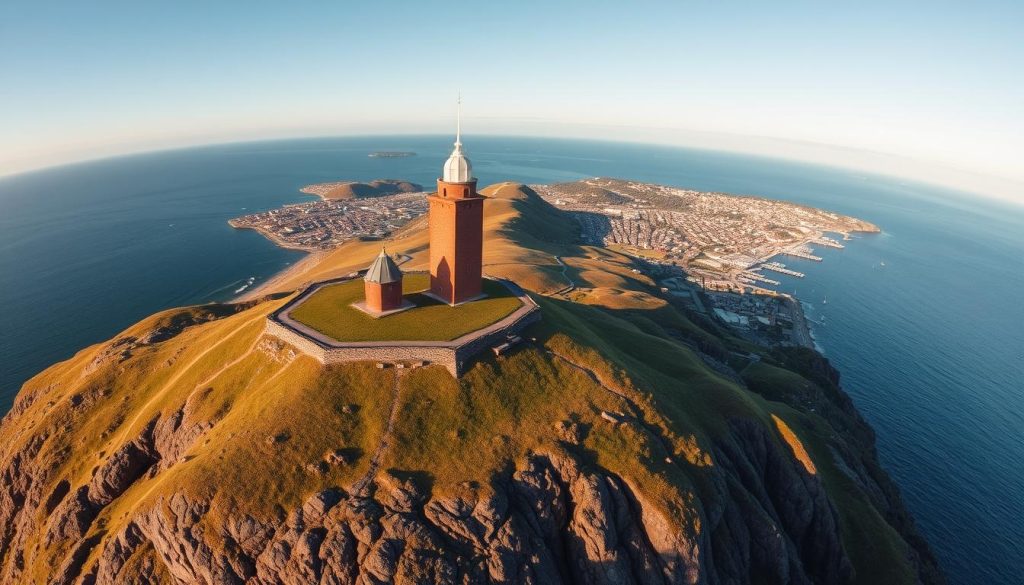
- Cabot Tower, a three-story octagonal tower on top of a square two-storey base
- The Imperial Powder Magazine, built circa 1798
- The Quonset hut, built circa 1941
- The Second World War Magazine, built circa 1940-1945
Signal Hill’s historic buildings and landmarks make it a special place. It’s perfect for those who love St. John’s landmarks and history.
The Historic Battery District and Its Colorful Houses
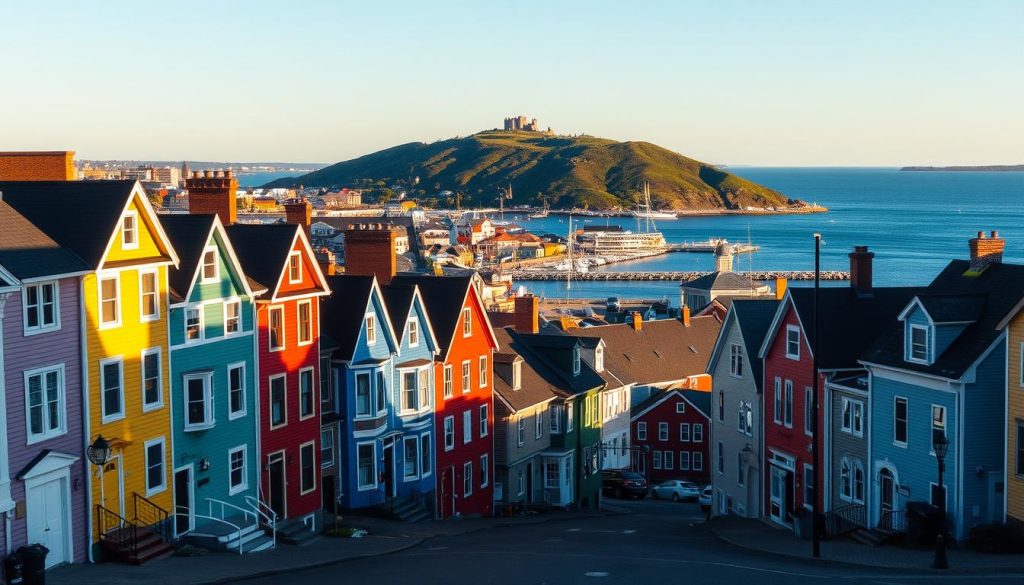
When you visit St. John’s cultural landmarks, don’t miss the Battery District. This neighborhood is famous for its colorful wooden houses against a steep cliff. It’s one of the world’s most stunning harbors, with amazing views of the city and ocean.
The Battery District is at 47°34′08.01″N 52°41′25.49″W. It’s a unique spot with a history of avalanches. But, St. John’s has spent about $300,000 to make it safer.
Walking through the Battery District is a top urban walk. You’ll see colorful houses and a steep cliff. The views of the city and ocean are incredible. The locals are very friendly, making you feel at home.
Some interesting facts about the Battery District include:
- The area is home to a variety of colorful, ramshackle wooden homes
- The walk through the neighborhood is one of the best urban walks in the world
- The city has invested in mitigating risks associated with rock slides and avalanches
- The local population is known for being welcoming and friendly
Cape Spear Lighthouse: The Easternmost Point in North America
When you visit St. John’s historic sites, don’t miss Cape Spear Lighthouse. It’s 12 kilometers southeast of St. John’s. This lighthouse is not just a key attraction but also the easternmost point in North America. It’s where you can see the first sunrise every day, offering a unique and stunning view.
The Cape Spear Lighthouse has a long history, starting in 1836. It guided ships safely until 1955, when a new tower was built. The old lighthouse is the oldest in Newfoundland and Labrador, and it’s protected under the Heritage Lighthouse Protection Act. You can explore the lighthouse and learn about its rich history and importance in St. John’s.
Some key facts about Cape Spear Lighthouse include:
- It is the easternmost point in North America, excluding Greenland.
- It is the oldest surviving lighthouse in Newfoundland and Labrador.
- It was completed in 1836 and served as a residence for the lighthouse keeper and his family for over 150 years.
- A modern lighthouse tower was built at Cape Spear in 1955.
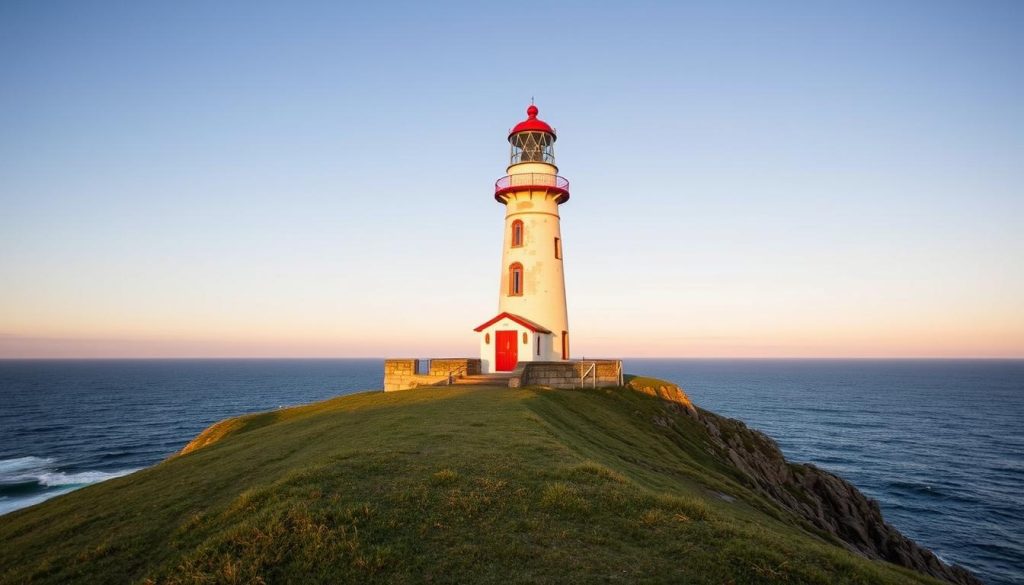
Cape Spear Lighthouse is a major historic landmark and a favorite among tourists. Visitors can see icebergs, whales, and seabirds during certain seasons. The weather here changes quickly, so it’s important to stay on trails and avoid the rocky edges near the water. Visiting Cape Spear Lighthouse lets you see why it’s a cherished spot in St. John’s.
Downtown St. John’s Heritage Buildings
Exploring downtown St. John’s, you’ll find many heritage buildings. The city’s architecture shows its rich history, with many buildings from the 19th century. Water Street is a key area, with historic buildings like the 205 Water Street, built in 1913.
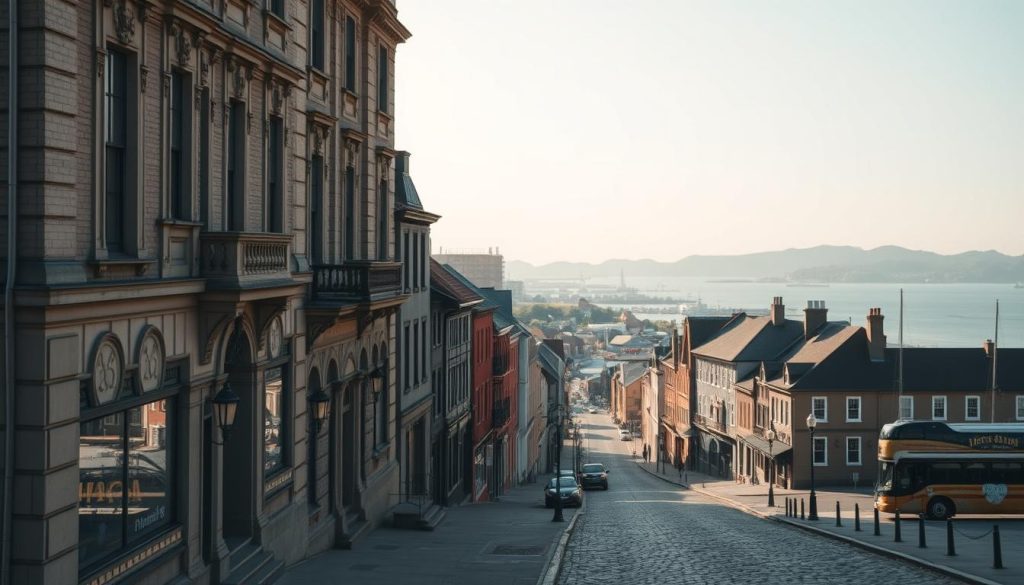
Water Street’s Historic Architecture
Water Street is filled with landmarks, like the Thompson Building from 1847. It has been updated and is now a Registered Heritage Structure. The buildings here use materials like concrete, thanks to the Great Fire of 1892.
Notable Churches and Religious Sites
Downtown St. John’s has many churches and religious sites. The Anglican Cathedral stands out with its beautiful stained-glass windows and stone carvings. These places are key to the city’s spiritual history.
Historic Commercial Buildings
The city’s commercial buildings, like the Baine Johnston Company building, now a bank, show its economic past. These buildings highlight the city’s role as a trading center. Exploring these landmarks, you’ll see a city proud of its heritage and dedicated to preserving its history.
Military Heritage Sites and Fortifications
Exploring St. John’s heritage sites reveals a rich military history. You’ll find various fortifications and defense systems that shaped the city. Fort Townshend, a key landmark, shows the city’s strategic role in North America’s defense.
Fort Townshend was built between 1775 and 1779 under Captain Robert Pringle. It was meant to protect St. John’s from French and American attacks. This highlights the city’s vulnerability and the need for strong defenses. In 1951, it was named a National Historic Site of Canada.
Some notable military sites in St. John’s include:
- Fort Townshend: A British fortification built to defend the city from French and American attacks
- Fort Pepperrell: A military base established by the United States during World War II, which played a significant role in the city’s military history
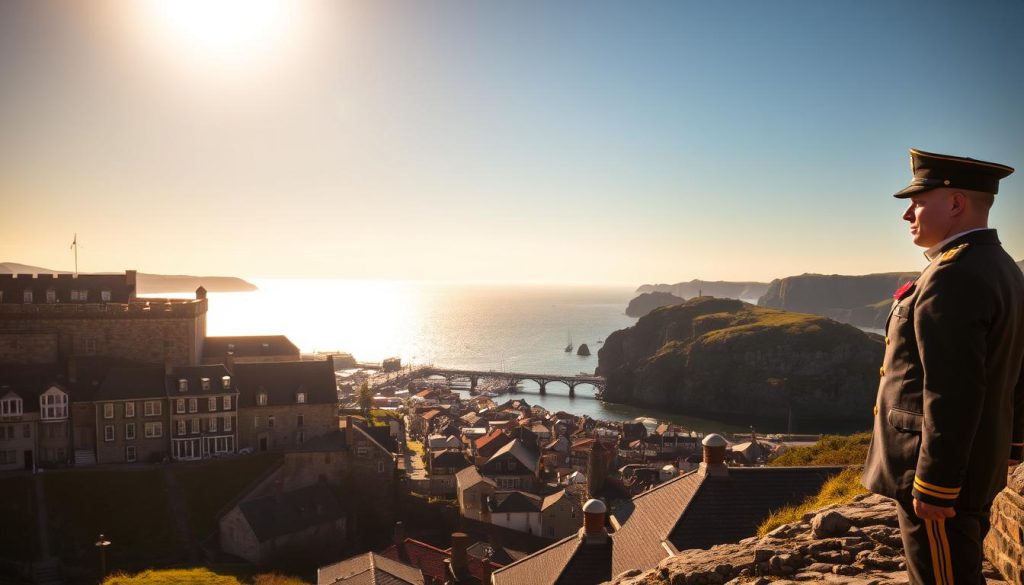
These sites show St. John’s military past and its resilience. By visiting, you can understand the city’s history and its role in North American defense.
Colonial Building and Government House: Political Heritage
Exploring St. John’s historical places, you’ll find the Colonial Building and Government House. These sites highlight the city’s political past. The Colonial Building, built in 1850, was the government’s home until 1960. It’s a key spot for anyone interested in St. John’s history.
The building’s design and history are captivating. It stands out with its 88-foot front and large main hall. You can take tours and attend events to learn more about its past.
Photographers will love the Colonial Building. Its 1880 frescoes and detailed architecture make for great photos. When you visit, don’t forget to take pictures of the building and the area around it.
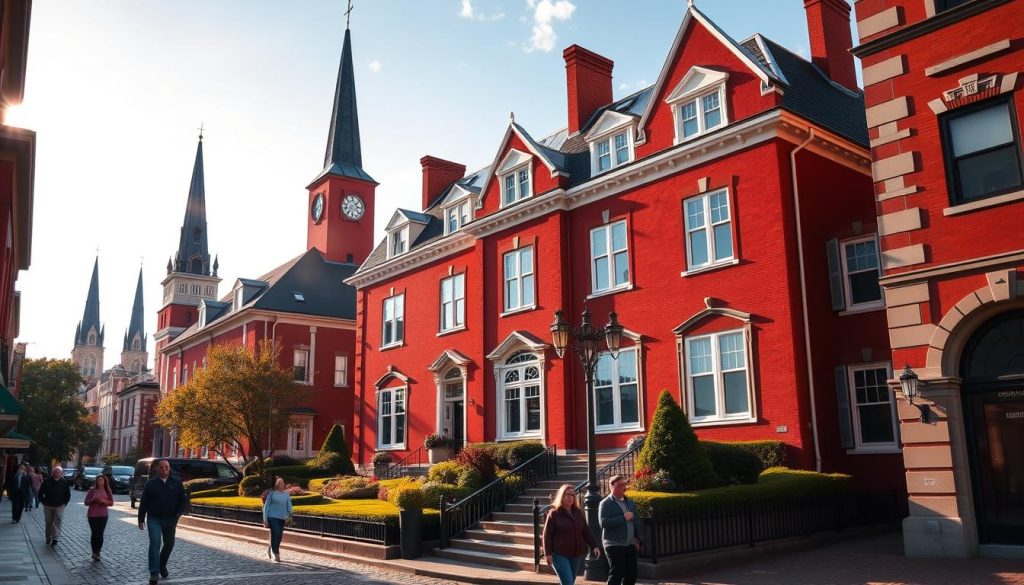
- Construction began in 1847 and was completed in 1850
- The building served as the seat of government in Newfoundland and Labrador until 1960
- It was named a Provincial Historic Site in 1974
- Extensive renovations began in 2010 to preserve the building’s historic significance
Visiting the Colonial Building and Government House lets you understand St. John’s political history. These sites are perfect for history buffs, architecture fans, or photographers. They are essential stops for anyone exploring St. John’s.
Best Times to Visit St. John’s Historic Sites
Planning your trip to St. John’s? Think about the best times to see its historic sites. Places like Signal Hill National Historic Site and Cape Spear Lighthouse are special in different seasons.
St. John’s has many activities and events for all interests. You can hike, take photos, or enjoy historical reenactments and festivals. This city is full of life and history.
Seasonal Considerations
Summer is great for outdoor fun. Spring and autumn have nice weather and fewer people. Winter is quiet, perfect for photos and thinking.
Special Events and Historical Reenactments
St. John’s has many events and reenactments all year. Check the city’s events calendar for festivals, concerts, and historical shows. They make the city’s history come alive.
Photography Tips and Viewing Hours
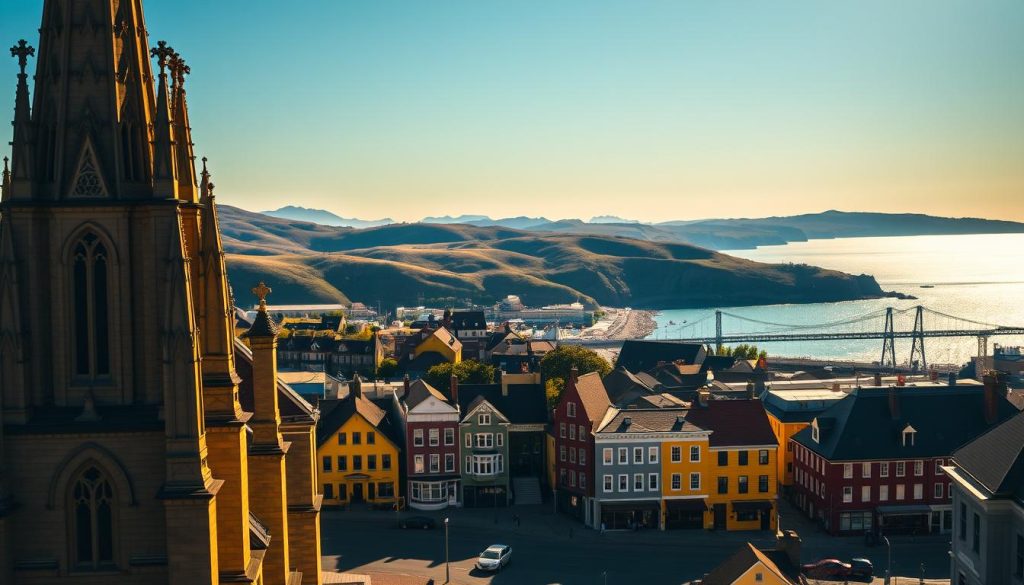
For amazing photos, visit during the golden hour or at sunrise and sunset. Make sure to check the viewing hours for each site. They change with the season and day.
| Season | Best Time to Visit | Activities |
|---|---|---|
| Summer | June to August | Hiking, outdoor festivals |
| Spring | April to May | Photography, historical reenactments |
| Autumn | September to October | Festivals, scenic drives |
| Winter | December to February | Photography, historical demonstrations |
Conclusion: Embracing the Living History of St. John’s
Exploring St. John’s, Newfoundland, reveals a city that mixes old heritage with today’s life. You’ll see the famous Signal Hill and the Battery District. These St. John’s cultural landmarks and St. John’s heritage sites share a story of a city that has stood the test of time.
St. John’s is more than its buildings and views. It’s the friendly locals who make it special. By talking to guides, joining historical events, and diving into local traditions, you’ll feel the city’s spirit. St. John’s welcomes you to experience its history and make memories that last a lifetime.