Uncover Yangon Attractions Beyond Shwedagon
What if everything you think you know about Yangon is just the tip of the iceberg? The iconic Shwedagon Pagoda is a highlight, but there’s more to see. Yangon, with over 6 million people, is Myanmar’s largest city. It’s a mix of rich heritage and history.
Since the early ’90s, tourism in Myanmar has grown. Now, visitors explore more of Yangon’s landmarks and hidden gems. Places like Kandawgyi Park and Chinatown show Yangon’s charm. Are you ready to find out what’s beyond the famous pagoda?
Introduction to Yangon’s Rich Heritage
Yangon is a city full of history, culture, and stunning architecture. It’s known for its Cultural attractions in Yangon, blending colonial charm with traditional Buddhist designs. Walking through the streets, you’ll see old pagodas next to new buildings. This shows the city’s story of strength and change.
The city’s heritage reflects its complex past, with influences from colonial times and a strong spiritual side. Exploring Yangon tourist spots, you’ll see how different cultures come together. The people here, from many ethnic groups and religions, make the city warm and diverse.
Visiting places like the Shwedagon Pagoda or markets, you’re stepping back in time. Every part of Yangon shows a special part of Myanmar’s history. You’ll see amazing buildings and the lively city life that goes on every day.

The Essence of Yangon: A Brief Historical Context
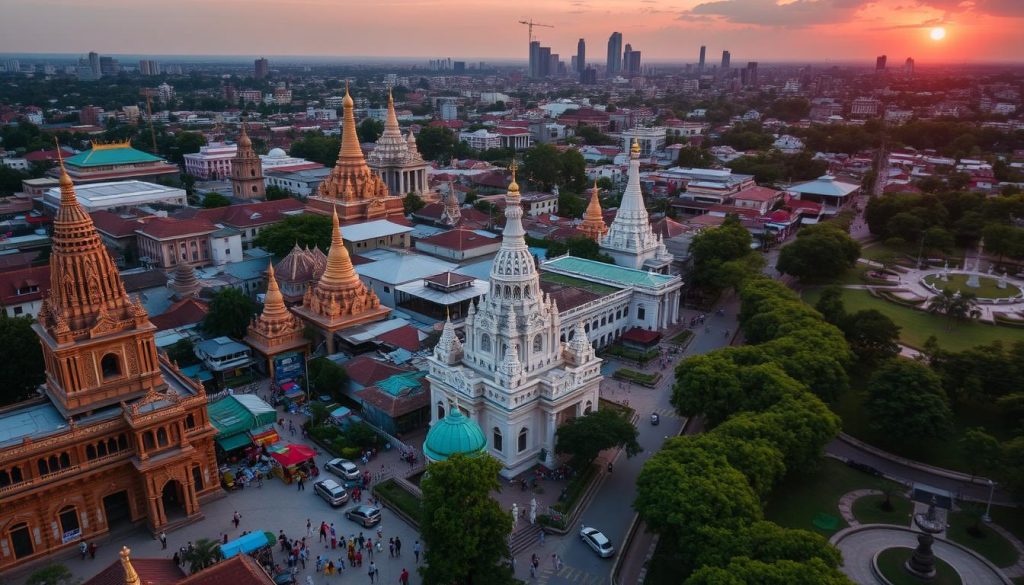
To grasp Yangon’s essence, you must dive into its rich history. This city began as a small fishing village in the 11th century. It grew rapidly, becoming a key commercial center under British rule from 1852 to 1948.
This era shaped many Yangon landmarks we see today. You can admire colonial buildings and lively markets. These features reflect the city’s past.
World War II made Yangon a key battleground, boosting its importance. The fight for independence also shaped the city’s identity. Walking through Yangon, you’ll feel the echoes of its past.
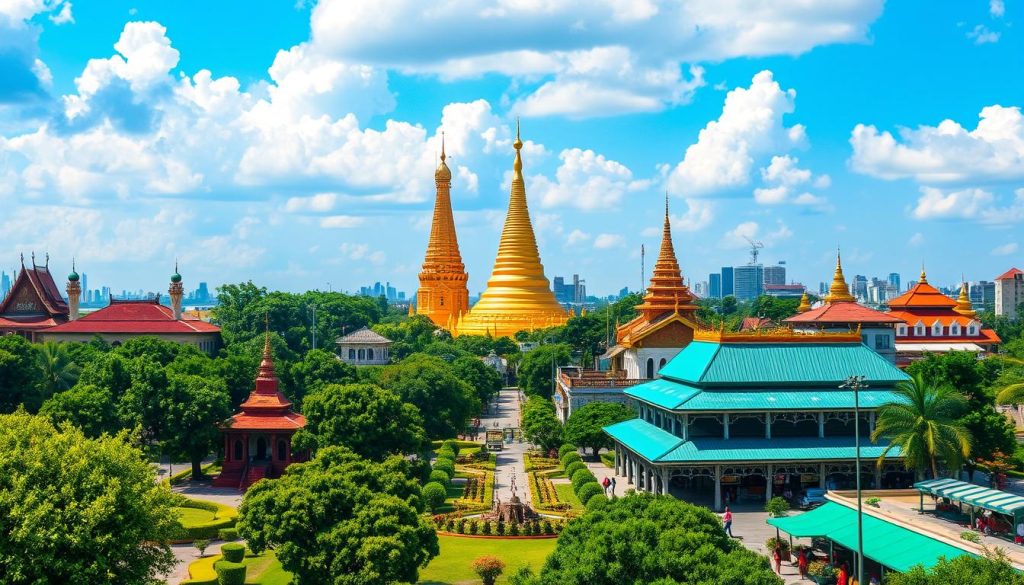
Places like Shwedagon Pagoda hold a special place in the city’s heart. This ancient pagoda, over 2,600 years old, stands tall at 325 feet. It’s surrounded by 64 smaller stupas, making it a symbol of Yangon’s heritage.
Every corner of Yangon tells a story. It invites you to explore its mysterious history. The Shwedagon Pagoda, with its grandeur and spiritual significance, is a must-see.
| Historical Feature | Description |
|---|---|
| Shwedagon Pagoda | One of the oldest pagodas, over 2,600 years old, rising 325 feet high. |
| Chauk Htat Gyi Pagoda | Features a 65-meter-long reclining Buddha, showcasing 108 sacred symbols on its feet. |
| Yangon Population | Home to over 5 million people, it is the largest city in Myanmar. |
| Colonial Architecture | Many existing structures reflect the city’s rich colonial past. |
| Modern Development | Surge in high-rise buildings from the 1990s due to private investment. |
Must-see attractions in Yangon beyond Shwedagon Pagoda
Yangon is more than just the Shwedagon Pagoda. It’s a city full of culture and history. Here are some attractions you can’t miss.
Chaukhtatgyi Paya: The Reclining Buddha
Chaukhtatgyi Paya has a huge reclining Buddha statue, 65 meters long. It’s even bigger than the famous one in Bago. It’s just 10 minutes from Shwedagon Pagoda. You can visit for free, but donations are welcome.
For a quiet visit, go early in the morning or late in the afternoon. This way, you can avoid the crowds.
Kandawgyi Park: A Peaceful Escape
Kandawgyi Park is a calm spot in the city. It’s around Kandawgyi Lake and offers beautiful views of Shwedagon Pagoda. You’ll need to pay 300 kyats to enter, and 500 kyats for camera use.
It’s perfect for a walk or a moment of peace. The park is a great place to relax and think.
Bogyoke Aung San Market: A Cultural Shopping Experience
Bogyoke Aung San Market is a must-see for shoppers. It has stunning colonial buildings and lots of handicrafts. With over 2,000 stalls, you can find jewelry, clothes, and more.
The market closes at 5pm. So, plan your visit to enjoy the lively atmosphere and find unique gifts.
| Attraction | Location | Entry Fee | Highlights |
|---|---|---|---|
| Chaukhtatgyi Paya | Near Shwedagon Pagoda | Free (donations welcome) | 65m Reclining Buddha |
| Kandawgyi Park | Downtown Yangon | 300 kyats (500 kyats with camera) | Views of Shwedagon, peaceful escape |
| Bogyoke Aung San Market | Near downtown | Not specified | Handicrafts, local shopping experience |
Exploring Yangon Landmarks
Yangon is a city full of culture and history. It has places that show its past and present. Here, you’ll find famous landmarks that make your trip better.
Sule Pagoda: A City Icon
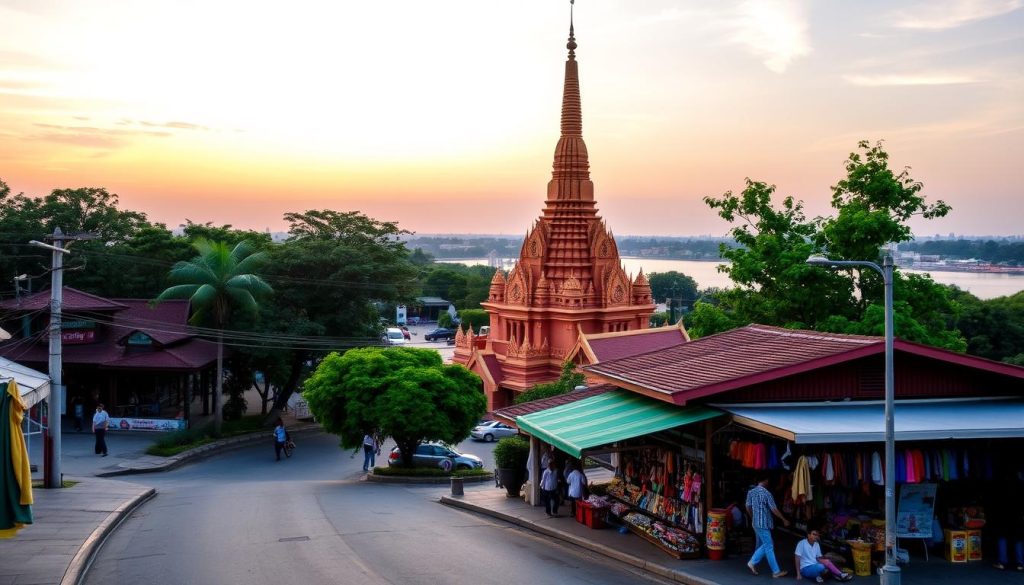
Sule Pagoda is a key spot in downtown Yangon. It’s a mix of architectural styles, showing the city’s varied influences. It’s at a busy roundabout, drawing both locals and tourists.
It’s a lively place where people and cars move around. It’s also a great spot to start exploring nearby sights.
Rangoon Tea House: Dive into Burmese Cuisine
Rangoon Tea House is a must-visit for local food. It offers traditional Burmese dishes in a cozy setting. The menu is full of flavors that show off the local culture.
It’s also a great place to unwind after seeing Yangon’s landmarks. The food and service are top-notch.
Maha Wizaya Pagoda: A Hidden Gem
Maha Wizaya Pagoda is a beautiful but often overlooked site. It has detailed designs and a calm vibe. Its architecture and spiritual value make it special.
It’s a quiet spot for those looking for a peaceful experience. Despite being less crowded, it’s a key part of Yangon’s cultural heritage.
| Landmark | Description | Significance |
|---|---|---|
| Sule Pagoda | Iconic structure at a city roundabout | Cultural and historical symbol |
| Rangoon Tea House | Popular dining location for local cuisine | Showcases Burmese culinary traditions |
| Maha Wizaya Pagoda | Less-known pagoda with serene atmosphere | Represents spiritual heritage |
Delving into Yangon’s Hidden Gems
Exploring Yangon’s hidden gems makes your trip unforgettable. It shows the city’s deep history and lively culture. Two spots are special, giving you a peek into the city’s architecture and food.
Lower Pansodan Street: Colonial Architecture
Lower Pansodan Street is a gem of colonial-era buildings. It shows the grand British influence in Myanmar from the 19th century. Walking here, you see buildings that mix British and Burmese styles.
But, these historic buildings are facing threats from modern development. This mix of old and new is perfect for photos and learning about history.
Chinatown: A Culinary Adventure
Chinatown is a feast for your senses. The streets buzz with food vendors, offering everything from dumplings to desserts. Here, you can also enjoy Burmese tea and meet friendly locals.
This place is a highlight of Yangon. It’s where you can truly experience the city’s flavors and colors.
Off the Beaten Path: Unique Attractions in Yangon
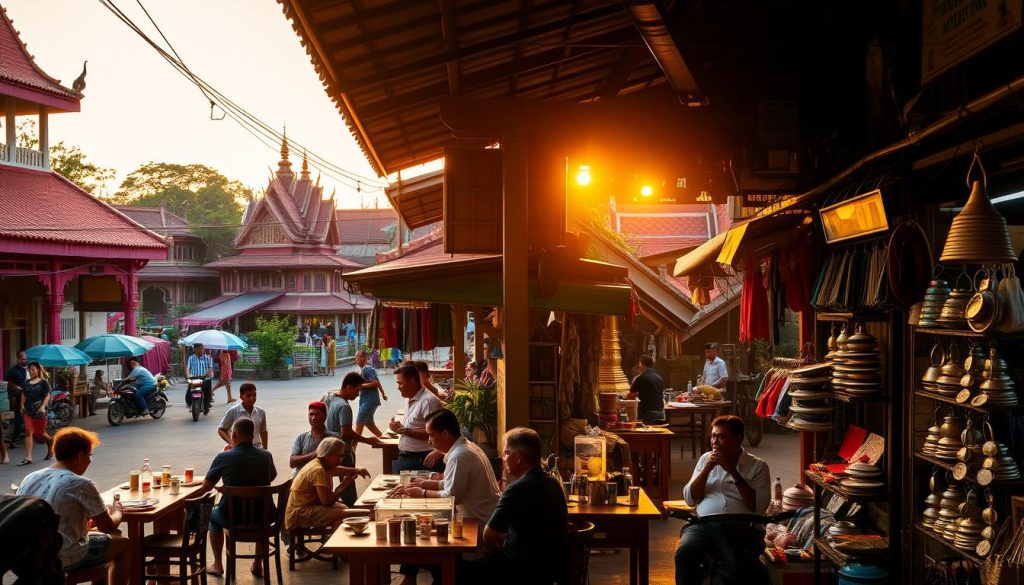
Exploring Yangon means more than just visiting famous spots. Off the beaten path, you’ll find hidden gems that show the real local culture. Places like the Circle Line Train and Happy World Amusement Park offer unforgettable experiences.
Circle Line Train: A Local Experience
The Circle Line Train lets you see Yangon like a local. It goes around the city, showing you markets, neighborhoods, and people. In about three hours, you get a feel for suburban life.
This ride is a must for anyone wanting to see Yangon’s unique side.
Happy World Amusement Park: Fun for All Ages
Happy World Amusement Park is great for families. It has rides, games, and attractions for everyone. You can enjoy exciting rides, tasty treats, and a lively vibe.
It’s a perfect break from the usual travel plans, showing Yangon’s fun side.
Cultural Attractions in Yangon
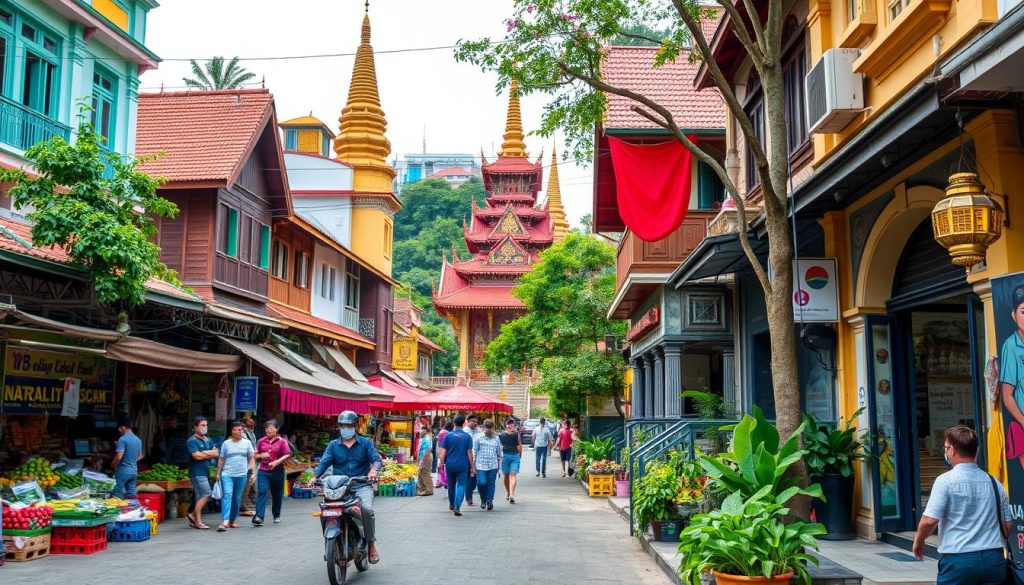
Exploring Yangon’s cultural attractions gives a peek into Myanmar’s rich heritage. The city’s diversity shines through its unique sites. These highlight both religious significance and community leisure.
The Snake Temple: An Unusual Pilgrimage
This temple is a peaceful spot with life-sized pythons. It’s a special place for pilgrims. Visitors take a ferry to Dala Village to get there, making it a unique cultural experience.
The Snake Temple mixes nature with reverence. It draws those interested in unique spiritual practices.
People’s Square and Park: Relax and Unwind
People’s Square and Park is a lively green space in the city. It’s perfect for relaxing in the urban setting. The park has big lawns, greenery, and paths for walks.
It’s a place where locals and tourists meet for picnics, exercise, and socializing. Its beautiful setting is great for unwinding after seeing Yangon’s busy spots.

Yangon Sightseeing: A Traveler’s Guide
Exploring Yangon offers a mix of culture and history. Start at the Shwedagon Pagoda, a 99-meter high icon. It’s a must-see in Yangon. Visit early morning or late evening for a peaceful experience.
Remember to respect local customs at the pagoda. You can’t wear shoes inside, so carry them in a backpack. The entrance costs 10,000 kyats (about $8). Guided tours can help you understand its history better.
Don’t miss the local food scene. Street food tours let you try 3 to 5 local dishes. Bogyoke Aung San Market is a great place to find local crafts and clothes. Try the strong tea with condensed milk at tea houses.
The markets in Yangon are lively and important to locals. For a deeper cultural experience, visit Vicittarama Buddhagaya Monastery. It’s a place to learn about traditions and support the community.
Top Places to Visit in Yangon
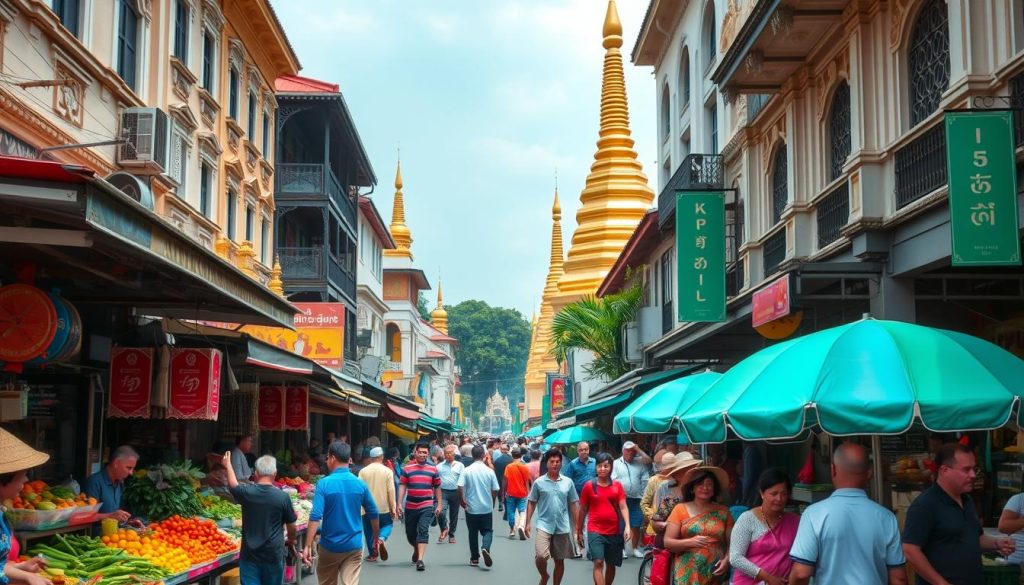
Exploring Yangon’s vibrant culture is exciting. You can dive into local markets and enjoy the street food scene. These spots are among the top places to visit in Yangon. They show the city’s unique flavors and community life.
Markets are full of fresh produce and handicrafts. They offer great chances to connect with local life.
Exploring Local Markets and Street Food
Bogyoke Aung San Market is a treasure trove. It showcases traditional textiles, handicrafts, and fresh produce. Street food vendors across the city serve dishes that highlight Burmese cuisine.
Try mohinga or grilled skewers on 19th Street. These dishes are a must for experiencing Yangon’s authentic flavors. The street food culture is a must-see attraction in Yangon, beyond Shwedagon Pagoda.
Uncovering Yangon’s Street Art Scene
Yangon’s street art scene is growing. It turns ordinary walls into colorful canvases, showcasing local talent and creativity. As you explore the city, look for striking murals that tell stories of Burma’s history and culture.
From political pieces to abstract designs, the street art adds a dynamic visual element. It offers a unique perspective on contemporary life in Yangon. This art scene is among the top places to visit in Yangon.
Getting Around in Yangon: Transportation Options
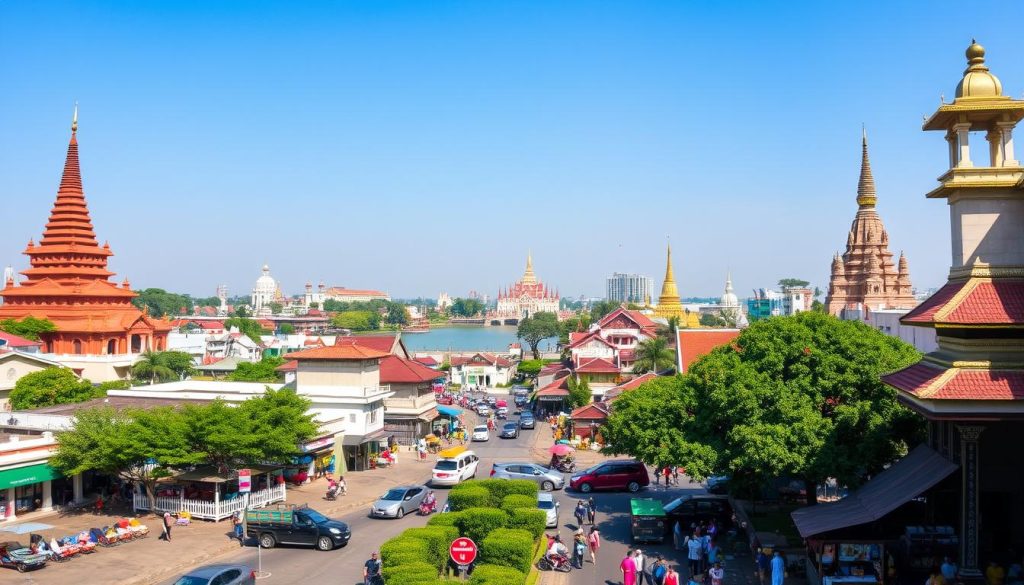
Exploring Yangon is an exciting adventure with many ways to get around. The city’s transportation makes sightseeing easy and fun. Public buses are a cheap way to see the sights. Taxis are also easy to find, either by hailing one on the street or using the Grab app. They cost between $1 and $2, making them a good choice for those who want comfort.
The circular train is a great way to see Yangon’s lively neighborhoods. It runs a loop around the city, offering a unique view of local life. Walking is another great option, letting you get up close to the city’s sights and sounds. You can explore markets, try street food, and meet locals, adding depth to your trip.
| Transportation Type | Cost | Convenience |
|---|---|---|
| Public Bus | Low-cost | Less convenient, can be crowded |
| Taxi | $1 – $2 | Very convenient, with Grab |
| Circular Train | Low-cost | Great for sightseeing, slower pace |
| Walking | Free | Very immersive experience |
Getting around Yangon is key to enjoying the city. Each transport option offers a special way to experience Yangon’s culture and history. This makes your trip both convenient and fun.
Best Times to Visit Yangon for Tours and Attractions
The Best times to visit Yangon are from November to February. This period offers warm days and cool nights. It’s perfect for exploring outdoors and seeing Yangon landmarks like the Shwedagon Pagoda and Kandawgyi Park.
From June to October, the wet season brings high humidity and rain. It’s not the best time for outdoor activities. The hottest months, March to May, can reach up to 46 degrees Celsius. It’s very hot and challenging to explore during these months.
Here’s a detailed look at the seasonal temperatures and typical experiences:
| Season | Months | Temperature Range (°C) | Best Activities |
|---|---|---|---|
| Dry Season | November – February | 20 – 30 | Exploration of outdoor attractions, photography, relaxation in parks |
| Wet Season | June – October | 25 – 35 | Visit indoor museums, enjoy local cafés |
| Hot Season | March – May | 30 – 46 | Limited outdoor activities, short visits to landmarks |
Choosing the right time to visit Yangon makes your trip better. Knowing when to go helps you plan around cultural events and festivals. This way, you get a deeper understanding of the city’s vibrant culture.
Conclusion
Yangon is a city full of culture and history, ready for you to explore. While the Shwedagon Pagoda is famous, there’s much more to see. Places like Kandawgyi Lake and Bogyoke Aung San Market offer unique experiences and insights into local life.
The city’s hidden gems, like Chinatown and the Circle Line train, show both old and new sides of Yangon. By visiting these spots, you can see how people live, try real Burmese food, and feel the city’s energy. Every corner of Yangon has stories and memories waiting to be found.
Exploring Yangon beyond the Shwedagon Pagoda reveals a whole new world. So, get ready to explore and discover the city’s charm. With every step, you’ll not only see landmarks but also feel the city’s lively spirit.