

Unlock Scenic Shots: Top Landscape Photography Tips
If you’re looking to enhance your outdoor photography skills and capture stunning scenic imagery, you’re in the right place. In this section, we’ll provide you with essential landscape photography tips that will take your captures to the next level. From mastering composition techniques to understanding camera settings and overcoming common challenges, our tips will help you create breathtaking outdoor imagery.
Whether you’re a novice or a seasoned photographer, our tips will provide you with the necessary knowledge and insights to succeed in landscape photography. With the right techniques, equipment, and inspiration, you can capture the beauty of nature and unlock your full potential as a photographer.
Understanding Landscape Photography Composition
One of the essential factors that distinguish outstanding landscape photography is effective composition. This is especially crucial as your image’s composition determines how the viewers perceive the image’s subject and other elements.
To achieve visually appealing and balanced compositions in landscape photography, you need to understand the fundamental principles of composition. This section explores three principles of composition in landscape photography: leading lines, rule of thirds, and framing.
Leading Lines
Leading lines are powerful visual elements that draw the viewer’s gaze through the image and towards the subject. They are effective in creating depth in the image and can be used to lead the viewer’s eye to the subject, either by a straight path or a curved line. In landscape photography, leading lines are often found in natural terrain such as roads, paths, or rivers.
Rule of Thirds
The rule of thirds is a fundamental principle of composition used to create balanced and harmonious images. This principle involves dividing the image into thirds both vertically and horizontally, creating nine equal parts and identifying four points where the lines intersect. The subject of the image should be placed at one of these four points or along the lines, creating balance and harmony.
Framing
Framing is another compositional technique that can add depth and interest to your landscape photographs. It involves using natural or artificial elements in the foreground to frame the subject in the background, creating a sense of depth and perspective. It can be achieved by using trees, arches, or other natural features.
By understanding these compositional techniques, you can create visually stunning images that draw the viewer’s attention to the subject and evoke emotions. Experiment with these techniques and apply them to your landscape photography.
Essential Landscape Photography Techniques
To capture breathtaking landscapes, it’s vital to master essential techniques that make the most of outdoor lighting, natural textures, and other factors that affect image quality. Here are some landscape photography tips to help you improve your skills and take stunning photographs.
- Bracketing: This technique involves taking multiple shots of the same landscape at different exposures to capture a wide dynamic range. Use auto-bracketing, or manually adjust exposure for each shot. Then, blend the images together in post-processing for a stunning final image.
- Long Exposure: Use this technique to create silky, smooth effects on waterfalls or other water bodies in your landscape. This technique blurs any movement in your image, adding a sense of mystery and dreaminess.
- Focus Stacking: This technique involves taking multiple shots of the same landscape at varying focus points and blending them together in post-processing to achieve enhanced depth of field throughout the image.
- Exposure Blending: Take multiple shots of your landscape at different exposures to capture the desired level of brightness and darkness in different elements of the scene, such as the sky and the foreground. Combine these images in post-processing for a well-exposed final image.
Use these techniques to experiment with different perspectives on landscapes, and see how they affect your final images.
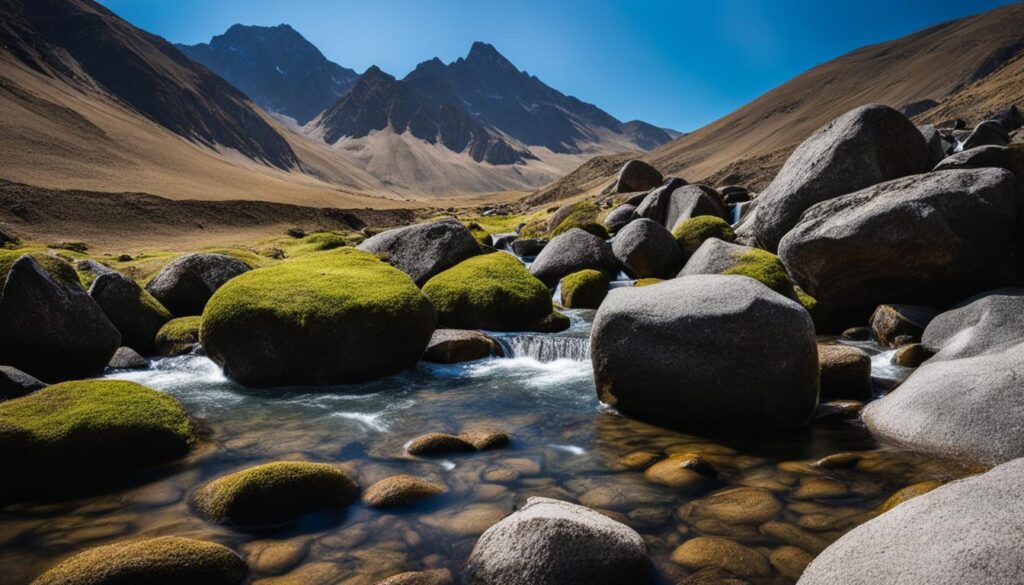
“Using essential landscape photography techniques means that you can create stunning images that capture the beauty of natural environments, and helps you to showcase your creativity in a way that highlights your unique style.”
Experimenting with different techniques over time will help you develop your own style and skills.
Mastering Landscape Photography Equipment
With the right equipment, capturing stunning landscapes becomes much easier. Here are some essential landscape photography equipments:
| Equipment | Advantages |
|---|---|
| Tripod | A stable platform to keep the camera steady, especially useful when using slow shutter speeds or capturing lengthy exposures; it eliminates the risk of camera shake and allows you to get sharp images. |
| Filters | Filters can help improve the image quality while capturing landscapes. Polarizing filter is great for reducing glare and reflections, Neutral Density filter is essential when capturing long exposures to create soft, silky flowing water, and Graduated Neutral Density filter is useful when balancing the exposure between the sky and the land in a landscape photo. |
| Remote Shutter Release | A remote allows you to take photos without touching the camera by eliminating the chance of camera shake and also enables you to capture lengthy exposures with ease. |
| Wide-Angle Lenses | Wide-angle lenses are well suited for landscape photography, providing an expansive view and allowing to capture more in a single frame. They offer broad depth-of-field, making everything in the frame appear in focus. |
Remember to pack these essential landscape photography equipment in your bag on your next outdoor adventure, and you’ll be well on your way to capturing breathtaking landscapes that’ll leave you awe-inspired.

Perfecting Landscape Photography Settings
To capture stunning outdoor shots, it’s essential to master landscape photography settings. With the right combination of ISO, aperture, and shutter speed, you can optimize exposure, depth of field, and capture motion in your outdoor scenes.
Start by selecting the lowest possible ISO setting for your camera. This will ensure the highest image quality with minimal digital noise. To adjust your aperture, try setting it between f/8 and f/16 to give your landscape shots maximum depth of field.
Shutter speed is an essential element in helping to capture motion in your scenery. If you want to freeze motion, use a fast shutter speed (around 1/250 seconds). Conversely, if you wish to blur motion such as waterfalls or streams, use a slower shutter speed (around 1/30 seconds or slower).
Experiment with different combinations of these settings to see what works best for your environment and subject matter, and don’t be afraid to adjust them as needed.
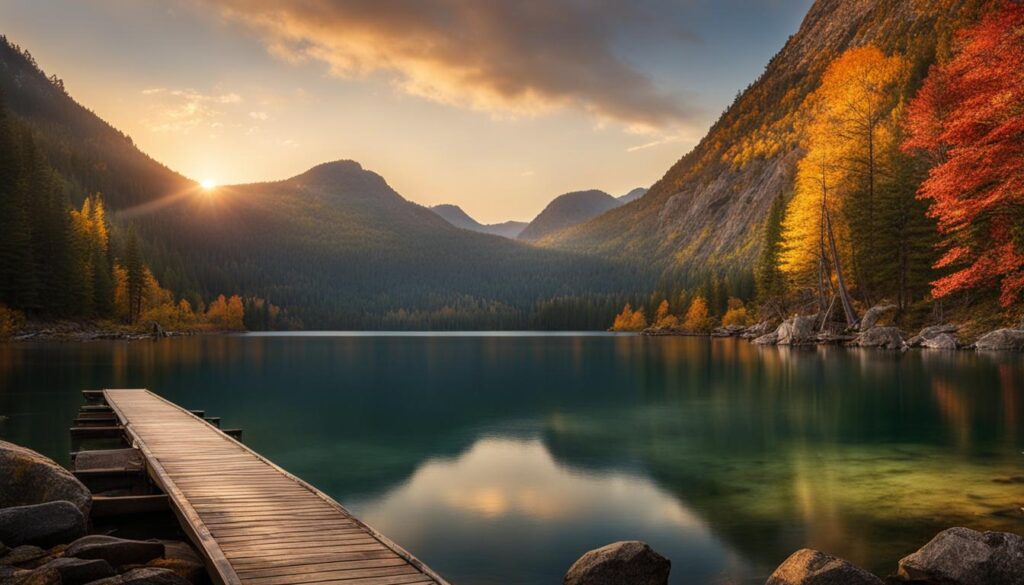
Sample Settings Chart
| Conditions | Aperture | Shutter Speed | ISO |
|---|---|---|---|
| Overcast and Hazy | f/8 – f/11 | 1/60 – 1/125 | ISO 100 – 400 |
| Bright Sunny Weather | f/16 – f/22 | 1/250 – 1/500 | ISO 100 – 200 |
| Sunrise and Sunset | f/11 – f/16 | 1/30 – 1/125 | ISO 800 – 1600 |
“Knowing your camera settings will help you capture your vision without frustration” – John Shaw
Finding Inspiration for Landscape Photography
Are you feeling uninspired with your landscape photography? Look no further! Here are some tips to help you find new inspiration:
1. Scout Unique Locations
Scouting amazing locations is a great way to spark your creativity and capture unique images. Research different locations in your area, travel to new places, and try shooting from different angles to create stunning, one-of-a-kind images.
2. Analyze Lighting Conditions
Lighting plays a crucial role in landscape photography. Analyzing natural light can help you capture the best shots. Golden hour, blue hour, and stormy weather all offer different opportunities to capture stunning scenery. Utilize these different lighting conditions to create compelling and evocative images.
3. Use Different Times of Day
Utilize different times of the day to capture unique images. Early morning and late evening provide the opportunity to capture breathtaking sunrises and sunsets. Nighttime photography also offers the chance to explore astrophotography and light painting techniques.
“Landscape photography is the supreme test of the photographer – and often the supreme disappointment.” – Ansel Adams
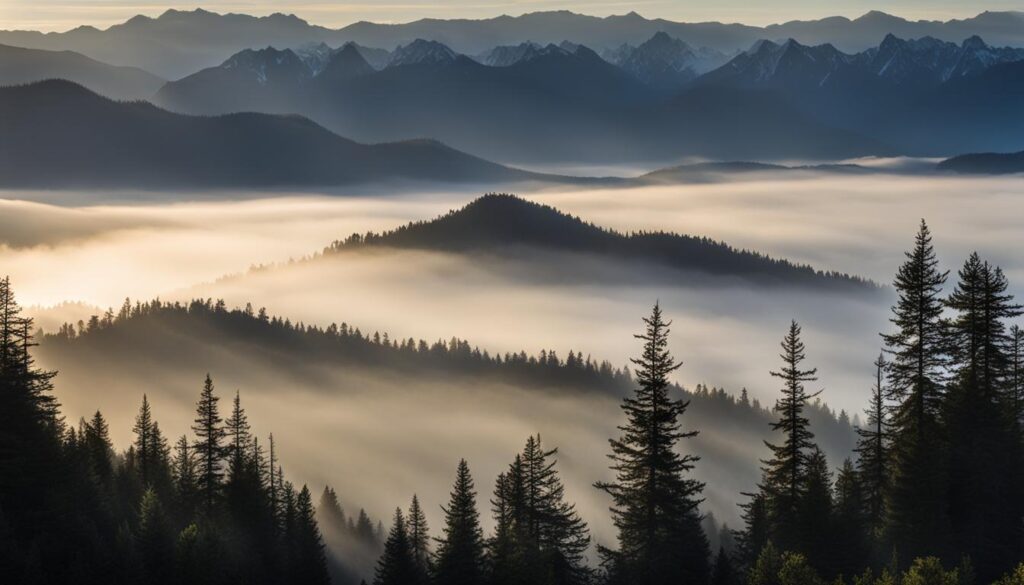
4. Draw Inspiration from Other Photographers
A great way to find inspiration is by looking at other photographers’ work. You can find inspiration on social media platforms like Instagram, 500px, and Flickr, and photography blogs and online communities. Look for techniques that you admire and try to incorporate them into your own photography.
5. Attend Photography Workshops and Events
Attending photography workshops and events can provide you with new techniques, inspiration, and opportunities to network with professionals. Look for workshops and events related to landscape and outdoor photography in your area or online.
6. Create Personal Projects
Creating personal projects is a great way to explore your creative side and challenge yourself. Try creating a themed photo series or a multi-day photography challenge to help you push your boundaries and explore new techniques.
Overcoming Common Landscape Photography Challenges
Landscape photography can be a challenging task, from unpredictable weather conditions to finding the right composition. However, with proper planning and the right techniques, these common challenges can be conquered. Here are some useful landscape photography tips and advice to help overcome some of the difficulties you may encounter during a photoshoot:
Dealing with difficult lighting
Lighting is a crucial element in landscape photography, but it can also be one of the trickiest aspects to get right. In harsh lighting conditions, it might be challenging to get a balanced exposure that captures all the details in the scene. Here are some tips to help:
- Shoot during golden hour for soft, warm lighting
- Use a neutral density filter to balance exposure and reduce highlights
- Experiment with HDR techniques to capture greater dynamic range
Note: Experimenting with lighting and filters can lead to some unique and creative visual effects, so don’t be afraid to try new things.
Selecting the right focal point
When it comes to landscape photography, selecting the right focal point can make or break your image. Here are some tips to help you choose:
- Look for natural elements in the scene that can serve as a focal point, like a tree or mountain
- Use leading lines to draw the viewer’s attention to the main subject
- Utilize the rule of thirds for a visually balanced composition
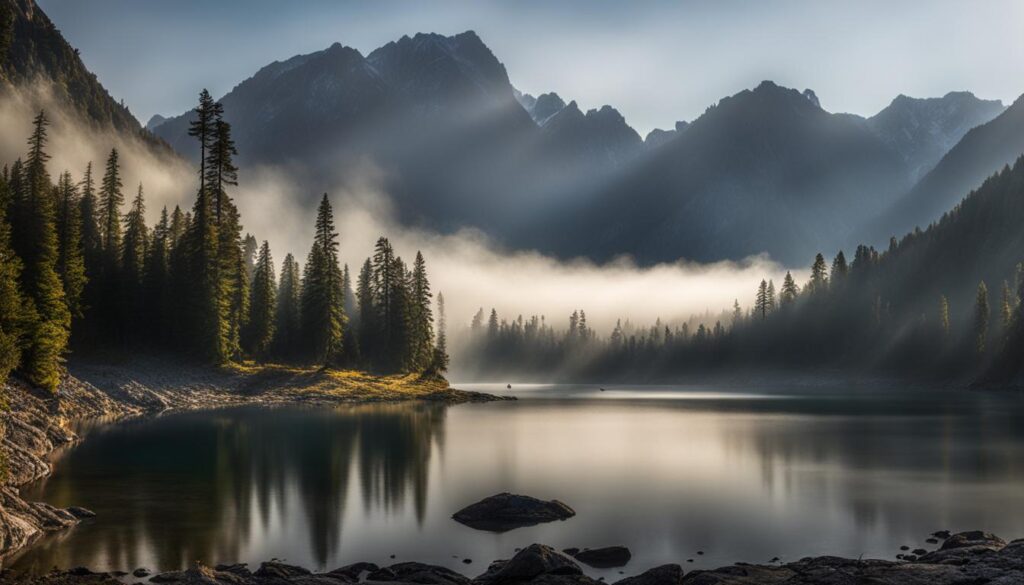
“Landscape photography is the supreme test of the photographer – and often the supreme disappointment.” – Ansel Adams
Choosing the right settings
Understanding how to adjust your camera settings can be the difference between capturing an average image and a stunning landscape photograph. Here are some key settings to consider:
- Use a small aperture for a greater depth of field
- Adjust shutter speed to capture motion, such as a flowing waterfall
- Keep ISO low to avoid noise and maintain image quality
Remember, practice makes perfect. Don’t be afraid to experiment with different settings and techniques to discover what works best for you in different situations.
Post-Processing Tips for Stunning Landscape Photography
Once you have captured your stunning landscape shots, it’s time to enhance them using post-processing techniques. Follow these landscape photography tips to create breathtaking scenic imagery:
1. Fine-Tune Colors
Adjust the color saturation and hue to create a more vibrant and balanced color palette in your landscape photographs. Use selective adjustments to highlight specific color tones for a more dynamic effect.
2. Adjust Exposure
Make adjustments to the exposure settings to ensure that your landscape scenes have the right exposure levels. Use exposure blending techniques to balance the highlights and shadows in your landscape photos, creating a more natural and balanced-looking image.
3. Selective Edits
Use selective editing tools to adjust specific areas of an image, such as contrast, brightness, and sharpness. With careful attention to detail, you can fine-tune your photographs to create more visually appealing and captivating landscapes
“Post-processing can be just as important as taking the photo when creating truly impactful landscape images.”
By following these landscape photography tips and post-processing techniques, your outdoor captures will be able to reach new heights, showcasing the true beauty of nature.
Conclusion
Congratulations! You have learned essential landscape photography tips to elevate your outdoor captures and create stunning scenic imagery. By understanding the fundamental principles of composition, exploring different techniques, mastering essential equipment, and adjusting camera settings, you can capture breathtaking outdoor shots.
To find inspiration for your landscape photography, you can discover unique locations, analyze lighting conditions, and utilize different times of the day. In addition, overcoming common challenges encountered in landscape photography is vital. By dealing with difficult lighting situations and selecting the right focal point for your outdoor subjects, you can capture the best outdoor shots.
Finally, post-processing your images using the right techniques like fine-tuning colors, adjusting exposure, and making selective edits can help you bring out the best in your scenic shots. We hope this article has been informative and provided valuable landscape photography tips for enhancing your outdoor captures. Now go out and capture some breathtaking outdoor images!


