
Essential Tips for Stunning Travel Photos Guide
Are you an avid traveler who loves to capture memories of your journeys? Or, are you new to travel photography and desire to enhance your skills? No matter your experience level, you want to take stunning travel photos that bring your adventure to life and share your unique perspective. But, what are the essential tips for taking stunning travel photos?
In this guide, we’ll present you with expert tips and techniques for taking stunning travel photos that capture the essence of your journey. With our travel photography tips, you’ll learn how to master composition and lighting, select the right camera settings, capture candid moments, and create stunning landscapes and portraits that reflect your travel experiences.
With our essential tips and your creative eye, you’ll soon be capturing beautiful travel photos that you can share with friends and family. So, let’s get started!
Understanding Composition Rules for Travel Photography
If you want to take stunning travel photos, understanding composition rules is essential. Composition refers to the arrangement of elements within a photo. By following these rules, you can create visually pleasing and balanced shots that capture the beauty of your travels.
Here are some fundamental composition rules for travel photography:
- Rule of thirds: Divide your photo into thirds, both horizontally and vertically, to create nine parts. Place the focal point of your shot at the intersection of these lines to create a more balanced and visually appealing photo.
- Leading lines: Use natural or man-made lines, like roads or bridges, to draw the viewer’s eye into the photo and lead them towards the focal point.
- Fill the frame: Get up close to your subject and fill the frame to create a more powerful composition that captures all the details and textures.
- Capture unique perspectives: Experiment with different angles and perspectives to create a more unique and visually interesting shot.
Now that you understand the basics of composition rules, let’s explore some travel photo ideas that can take your shots to the next level.
| Travel Photo Idea | Description |
|---|---|
| Street Photography | Explore the streets of your destination to capture the local culture and people. Use leading lines and unique angles to create visually interesting shots. |
| Nature Photography | Take advantage of the natural beauty of your destination to capture stunning landscape photos. Use the rule of thirds to create balanced shots and fill the frame to capture all the details. |
| Food Photography | Food is an essential part of travel experiences. Capture the vibrant colors and textures of local cuisine by using the rule of thirds and experimenting with different angles. |
| Architecture Photography | From ancient temples to modern skyscrapers, capture the unique architecture of your destination. Use leading lines to create visually dynamic shots and experiment with different angles to capture all the details. |
By understanding composition rules and trying out some creative travel photo ideas, you can take stunning shots that capture the essence of your travels. Remember to experiment, have fun, and keep practicing to hone your photography skills.
Mastering Lighting Tips for Travel Photos
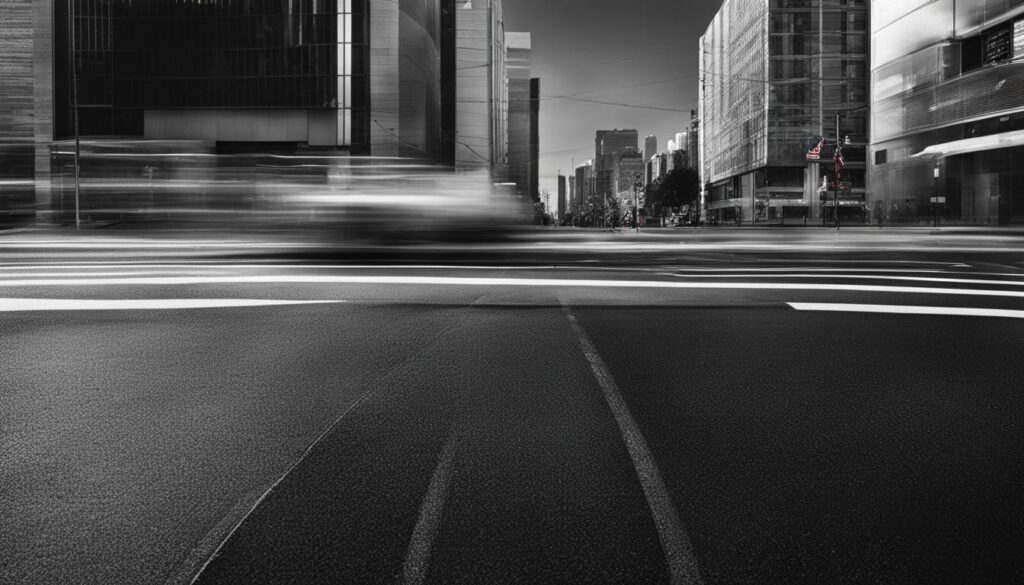
Lighting is one of the most important aspects of photography and can make or break a photo. In travel photography, lighting is especially crucial as you may have to work with different lighting conditions. But don’t worry, with these essential lighting tips, you’ll be able to capture stunning travel photos in any situation.
1. Understand golden hour photography
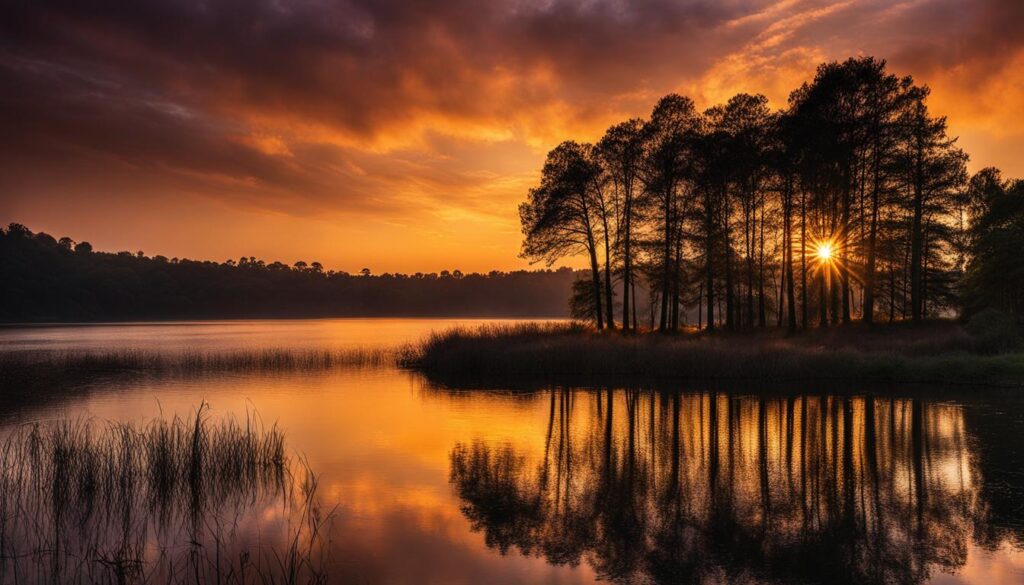
Golden hour is the time of day just after sunrise or just before sunset when the sun is low in the sky, creating a warm, golden light. This is considered the best time of day for photography, especially for landscapes and portraits. Make sure you plan ahead to capture the shots you want during golden hour.
2. Utilize natural lighting
Natural lighting is your best friend when it comes to photography, so try to make the most of it. Avoid using flash or artificial lighting whenever possible. Use the sun, clouds, shadows, and reflections to your advantage to create interesting and dynamic shots.
3. Learn to work with challenging lighting situations
While natural lighting is great, sometimes you have to work with challenging lighting conditions such as harsh midday sun, low light, and backlighting. To overcome these situations, consider adjusting your camera settings, using a reflector or diffuser, or even changing the angle of your shot.
4. Experiment with creative lighting techniques
Once you have a good understanding of lighting basics, feel free to experiment with creative lighting techniques. This could include using artificial lighting such as a flashlight or neon signs for night photography, or playing with shadows and light reflections to create interesting patterns in your shots.
By implementing these lighting tips for travel photos, you’ll be able to elevate your travel photography and capture stunning shots no matter the lighting condition. Remember to practice and experiment to find the techniques that work best for you.
Choosing the Right Camera Settings for Travel Photography
When it comes to capturing stunning travel photos, selecting the appropriate camera settings can make a significant difference. Understanding your camera’s settings and features is essential to optimize the shots you take during your travels. Here are some key factors to consider when selecting the right camera settings for your travel photography:
Shutter Speed
Shutter speed determines how long your camera’s shutter remains open when taking a photo. A high shutter speed freezes motion, making it ideal for capturing fast-moving subjects such as wildlife or sports. A low shutter speed lets in more light and is best for capturing low-light scenes or creating intentional motion blur.
Aperture
Aperture controls the amount of light that enters your camera’s lens. It also affects depth of field, which is how much of the photo appears in focus. A low aperture (represented by a wider f-stop number) lets in more light and creates a narrow depth of field, ideal for portraits or isolating a subject from the background. A high aperture (represented by a smaller f-stop number) creates a wider depth of field, useful for landscape photography.
ISO
ISO measures your camera’s sensitivity to light. A higher ISO can be useful in low-light situations, but too high an ISO results in digital noise or graininess in the photo. Typically, a lower ISO (between 100-400) is best for outdoor photography in good lighting.
White Balance
White balance adjusts the color temperature of your photos to match the light source. Choosing the correct white balance can make a significant difference in the look and feel of your photos. For example, setting the white balance to “Daylight” for outdoor shots will make the colors appear more natural, while setting it to “Cloudy” can add warmth.
Keep in mind that experimenting with different camera settings can provide you with a better understanding of your camera’s capability, and your personal preferences for specific scenarios.
Tips for Capturing Candid Moments on Your Travels
Candid moments can add a sense of authenticity and emotion to your travel photos. However, capturing these moments can be challenging, as they are often fleeting and unpredictable. Here are some travel photography tips to help you capture genuine and compelling candid shots on your next trip:
1. Blend in with the crowd
When you’re in a new place, it’s natural to feel like an outsider. However, blending in with the crowd can help you capture more candid photos. Dress like the locals, and avoid making eye contact with your subjects. This will help you blend in and capture more natural shots.
2. Anticipate the moment
One of the keys to capturing candid shots is to anticipate the moment before it happens. Keep your camera ready and be prepared to snap a photo at a moment’s notice. Look for interesting interactions between people or unexpected events that could make for a great photo.
3. Use a long lens
Using a long lens can help you capture candid shots from a distance, without drawing attention to yourself. This is particularly useful for photographing people without them knowing, which can lead to more genuine and spontaneous shots.
4. Be patient
Candid shots don’t always happen quickly, so be patient and wait for the right moment. Find a good spot and wait for interesting things to happen around you. This could be anything from a street performer attracting a crowd to a child playing with a stray dog.
“Photography is the art of observation. It has little to do with the things you see and everything to do with the way you see them.” – Elliott Erwitt
By following these travel photography tips, you’ll be able to capture candid moments that add authenticity and emotion to your travel photos. Remember to be patient, anticipate the moment, and blend in with the crowd to create compelling and genuine shots.
Utilizing Framing and Leading Lines in Travel Photography
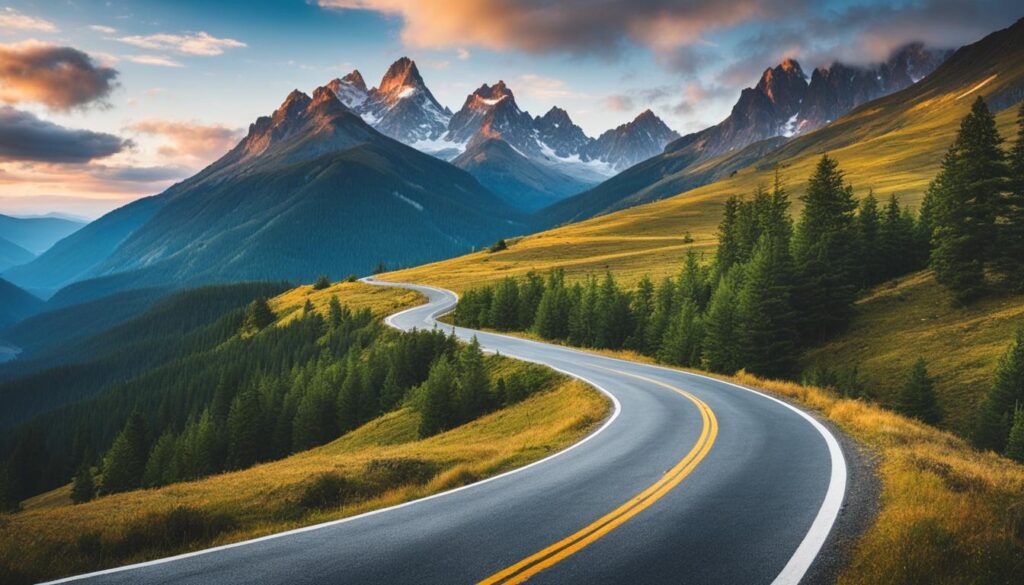
When it comes to capturing stunning travel photos, framing and leading lines can add depth and visual interest to your shots. A well-framed photo draws attention to the subject, highlighting its importance and creating a more impactful image. Meanwhile, leading lines provide a sense of direction and movement, guiding the viewer’s eye through the photo and creating a more dynamic composition.
There are several ways to use framing and leading lines in your travel photography. For example, you can frame your subject with natural elements such as trees, arches, and windows. You can also use man-made structures, such as bridges or doorways, to frame your subject. When it comes to leading lines, you can use natural elements such as roads, rivers, or shorelines. You can also create leading lines through the use of man-made structures such as fences or railings.
Tips for Incorporating Framing and Leading Lines into Your Travel Photography
- Look for natural and man-made elements that can provide framing for your subject
- Experiment with different angles and perspectives to find the perfect framing for your shot
- Use leading lines to guide the viewer’s eye through the photo
- Look for leading lines that create a sense of depth and movement in your shot
- Practice using framing and leading lines to add visual interest and impact to your travel photos
By utilizing framing and leading lines in your travel photography, you can create stunning and dynamic images that capture the essence of your destination.
Tips for Creating Stunning Landscape Photography
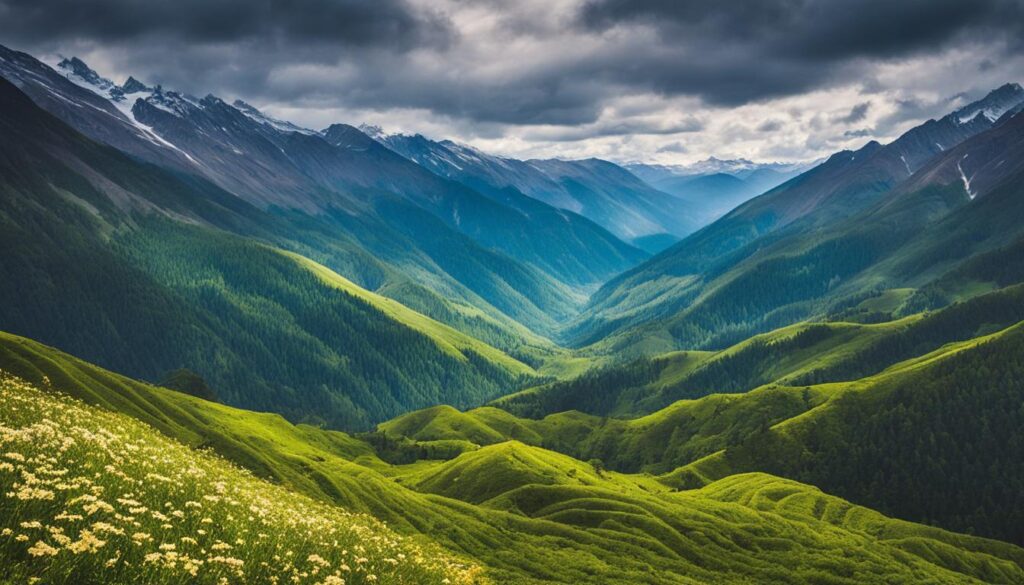
When you’re out on an adventure, landscapes can make for some of the most captivating travel photos. Whether it’s a mountain range, a secluded beach, or a vast desert, landscapes offer incredible opportunities for stunning travel photography. In this section, we’ll provide some must-know tips and techniques to help you capture breathtaking landscape photos during your travels.
Find the Best Vantage Points
One of the most important elements in landscape photography is the composition of your shot. To capture a stunning landscape photo, you’ll need to find a vantage point that provides a unique and captivating view. Scout your surroundings and explore different angles to find the best location. Look for leading lines, symmetry, and patterns that can make your image stand out.
Understand Composition and Framing
Composition is the foundation of any good photograph, and landscape photography is no exception. Understanding basic composition rules, such as the rule of thirds and the use of leading lines, can help you create compelling landscape photos. Framing can also be a useful technique to emphasize the subject of your photo, whether it’s a single tree or a distant mountain.
Utilize Natural Elements
Natural elements, such as rocks, trees, and water, can add depth and visual interest to your landscape photos. Look for ways to incorporate these elements into your shots, whether it’s through foreground interest, framing, or using them as a leading line.
Experiment with Lighting
Lighting can have a significant impact on the mood and tone of your landscape photos. Experiment with different lighting conditions, such as golden hour or blue hour, to capture stunning and unique images. Don’t be afraid to play with lighting and shadows to create dramatic effects.
By utilizing these essential travel photography tips, you’ll be equipped to create remarkable landscape shots that capture the beauty and essence of your destination.
Capturing Authentic Portraits of People and Culture
When traveling, capturing portraits of the people and cultures you encounter is an excellent way to document your trip and convey the atmosphere of your destination. However, approaching strangers for a photo can be intimidating, and capturing authentic portraits can be challenging. Here are some travel photography tips to help you take authentic and respectful portraits of people and cultures.
1. Start with Genuine Interest
Before you pull out your camera, make an effort to connect with the person you want to photograph. Take the time to understand their culture and learn a few key phrases in their language. This will show that you have a genuine interest in them and their culture. It is always important to ask permission before taking someone’s photo. Not only is it respectful, but it can also lead to a more natural and authentic portrait.
2. Capture Real Moments
Instead of asking someone to pose, try to capture real moments as they unfold. This approach can lead to more authentic and candid portraits. Observe your surroundings closely and look for genuine interactions. Focus on facial expressions, emotions, and actions that tell a story. Remember to be patient and wait for the perfect moment.
3. Respect Cultural Sensitivities
Be aware of cultural sensitivities when photographing people and cultures. Some cultures may not allow photography, so it is essential to respect their wishes. In other cultures, it may be considered disrespectful to show the soles of your feet or photograph religious ceremonies. Do your research and ask locals for advice before taking photos in unfamiliar cultures.
4. Use the Right Camera Settings
Choosing the right camera settings can make a significant difference in your portraits. Use a wide aperture to create a shallow depth of field and focus on the subject’s eyes. This will create a beautiful, soft background that doesn’t distract from the subject. Consider using natural light, or if necessary, a reflector or diffuser. Additionally, use your camera’s portrait mode or shoot in RAW format to have more flexibility in post-processing.
“Photography is a way of feeling, of touching, of loving. What you have caught on film is captured forever… it remembers little things, long after you have forgotten everything.” – Aaron Siskind
Tips for Post-Processing and Editing Travel Photos
Editing is a crucial step in taking your travel photos to the next level. Whether you’re a professional photographer or a casual traveler, editing can transform your images into stunning works of art. Here are some tips and techniques for post-processing and editing your travel photos:
1. Start with Basic Adjustments
Before diving into advanced editing techniques, start by adjusting the basics. This includes straightening the horizon, cropping the image, and correcting the exposure, contrast, and color balance. Resizing the image is also important to ensure it looks its best in digital or print format.
2. Use Filters and Presets
If you’re short on time or don’t have extensive editing skills, consider using filters and presets. These are pre-made adjustments that can quickly add a certain mood or style to your images. Popular editing software such as Lightroom and Photoshop offer a range of filters and presets to choose from.
3. Try Creative Enhancements
If you want to take your editing skills to the next level, try experimenting with creative enhancements. This includes adding texture, applying selective color adjustments, and sharpening the image. You can also play with the tone curves and split toning to create unique and personalized looks.
4. Don’t Overdo It
While editing can transform your images, it’s important not to overdo it. Overly processed photos can look artificial and lose the essence of the original scene. Always aim for a natural and balanced edit, and don’t be afraid to step away from the screen and come back with fresh eyes.
“Editing is like fine-tuning a musical instrument: you adjust until the perfect balance is achieved.”
By following these editing tips for travel photos, you can enhance your images and create stunning works of art. Remember, the key to successful editing is to keep it natural and balanced. Happy editing!
Showcasing Your Travel Photos: Print or Digital?
Now that you’ve captured stunning travel photos using our essential travel photography tips, it’s time to showcase and share them with the world.
The decision to print or share your travel photos digitally can be tough. Let’s weigh the pros and cons of each option.
| Digital | ||
|---|---|---|
| Quality | High-quality prints can be made from your photos, bringing out fine details in your shots. | Viewing your photos on a digital screen may not always provide the same level of image quality as a physical print. |
| Durability | Printed photos can last for years if stored properly and not exposed to harsh environments and light. | Digital photos can be lost or damaged if not backed up properly; hard drives can fail, and digital files can become corrupted. |
| Accessibility | Printed photos can be displayed in homes, offices, and galleries, with no need for additional technology or devices. | Digital photos can be easily shared and viewed by anyone with internet access, and you can store an almost infinite number of photos on your computer or in the cloud. |
| Cost | Printing your photos can be costly, especially for large prints or professional services. | Sharing your digital photos online is often free of cost, except for those of us who prefer to use paid photo sharing platforms and services. |
As you can see, both printed and digital photos have their pros and cons. Consider your personal preferences, the type of photos you’re displaying, and your budget before making a decision.
Regardless of how you choose to share your travel photos, we recommend selecting a few of your best shots and printing them for framing or gifting to loved ones. A physical print creates a unique and memorable keepsake.
Up next, we’ll wrap up our guide to taking stunning travel photos with final thoughts and recommendations. Stay tuned!
Conclusion:
By implementing these essential tips for taking stunning travel photos, you’ll be able to capture your adventures like never before. From mastering composition and lighting to utilizing camera settings and editing techniques, you’ll be equipped with the knowledge and skills to create remarkable travel photos. Start applying these tips on your next journey and watch your photography skills soar!


