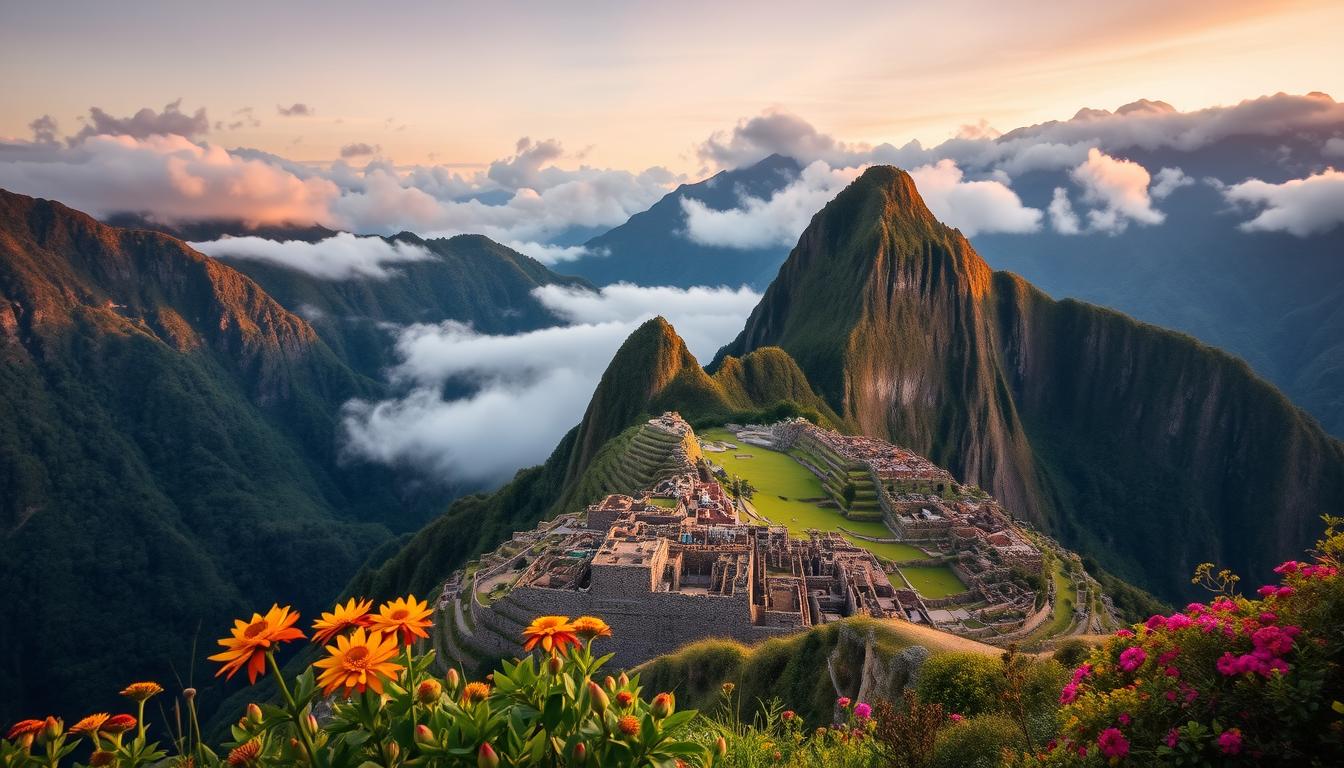
Explore Top 10 Things to Do in Machu Picchu
Want to get the most out of your trip to an amazing ancient fortress? Located high in the Andes, Machu Picchu draws millions with its mystery. Let’s explore the top things to see and do that make your visit truly memorable.
Picture yourself at the famous Sun Gate or climbing Huayna Picchu. This place is full of incredible experiences waiting for you. Discover stunning architecture, dive into rich history, and take guided tours. They make sure you experience every bit of your adventure at Machu Picchu.
Let’s dive into the top attractions at Machu Picchu. We’ll reveal the captivating views and sounds of this timeless spot.
Introduction to Machu Picchu
Machu Picchu is a stunning example of Inca engineering and architecture. It’s perched about 2,430 meters above sea level. This UNESCO World Heritage site attracts 1.5 million people every year. This guide provides a mix of history and practical travel tips for Machu Picchu.
Overview of Machu Picchu
Machu Picchu covers 13 km² and is full of archaeological wonders. The site has remarkable temples, terraces, and more. The Temple of the Sun and the Intihuatana are key to understanding Inca spirituality and science.
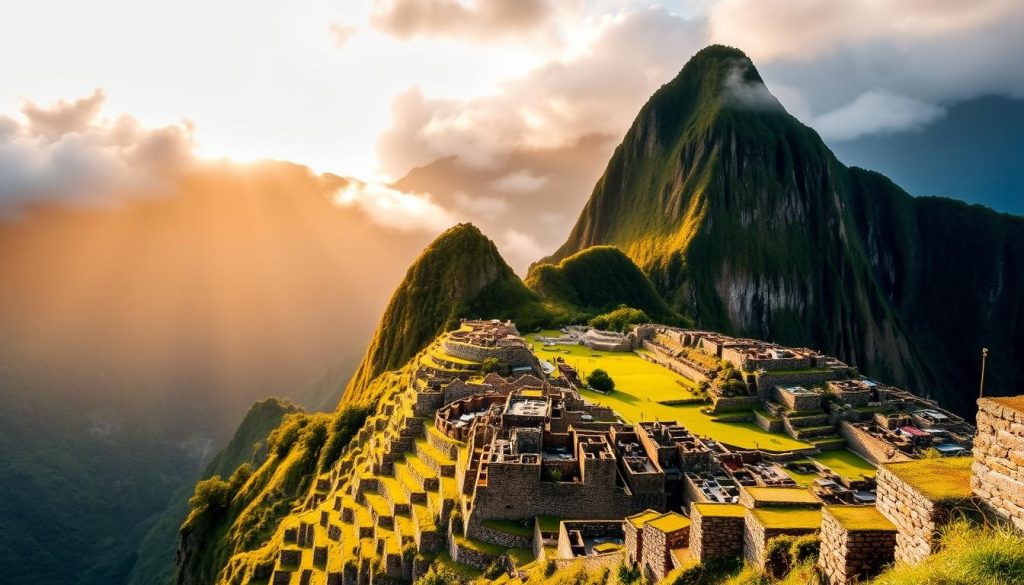
The best time to visit Machu Picchu is from April to November. This season offers clear skies and great hiking conditions. You can watch the sunrise or explore hidden spots. Every moment here is filled with history.
Planning Your Visit
It’s important to plan your trip well. Book your tickets and passes early, especially for Huayna Picchu. Machu Picchu is open daily from 06:00 a.m. to 05:00 p.m. The first bus starts at 05:30 a.m. Early visitors will enjoy the ruins without the crowds.
This guide suggests mixing hikes with relaxed exploration. Try different paths to see the citadel’s hidden gems. Visit key places like the Sun Gate for amazing views. Machu Picchu Mountain is quieter than Huayna Picchu.
Visiting the Sun Gate (Inti Punku)
The Sun Gate is a famous entrance to Machu Picchu. It stands 2,720 meters high, above sea level. People hiking to Machu Picchu pass through this historic spot. Inti Punku was used to check those coming and going, showing its importance.
History and Significance
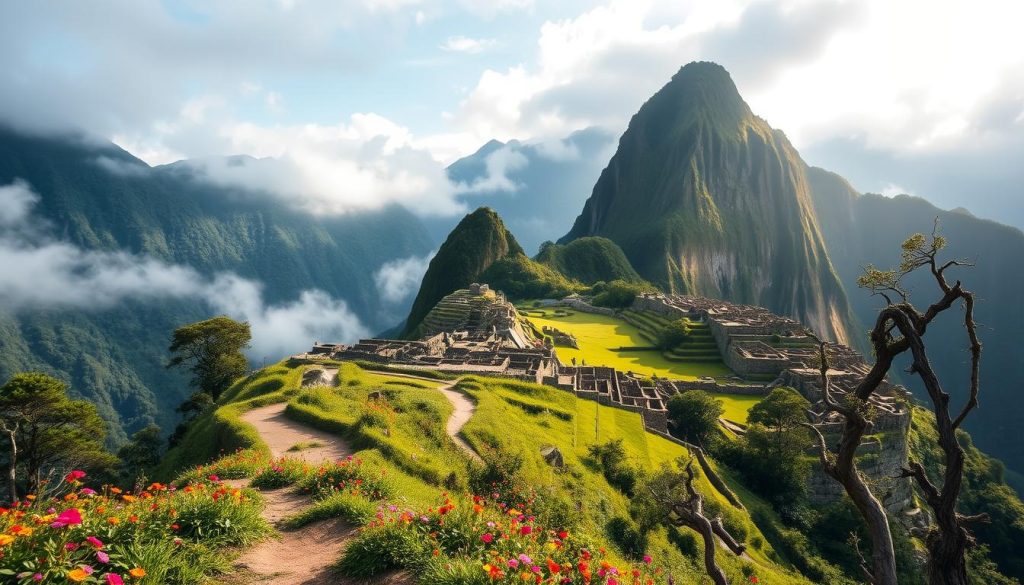
Inti Punku means “Sun Gate” and was key for the Incas. It’s 1.8 kilometers from Machu Picchu and offers stunning views. It was the main entrance for those on the Inca Trail. You need a ticket to Machu Picchu to visit it.
The hike to it is moderate and goes up about 300 meters. It takes 40 to 60 minutes. People often bring Coca leaves to offer, following an old practice. The path is gentle but gets steep for the last 15 minutes. Mist can hide the view in the morning during the rainy season.
Best Time to Visit
The dry season, from April to November, is best for visiting Inti Punku. To dodge the rain, plan your trip between May and October. The Sun Gate opens from 6 AM to 2 PM but closes from October 15th to May 30th each year.
For a special experience, arrive early to see the sunrise light up Machu Picchu. This also helps avoid the crowds. Bring 2 liters of water for the hike. Bird lovers might see unique species, making the trip even more exciting.
All these elements—history, beauty, and timing—make visiting the Sun Gate a standout experience in your Machu Picchu journey.
Climbing Huayna Picchu
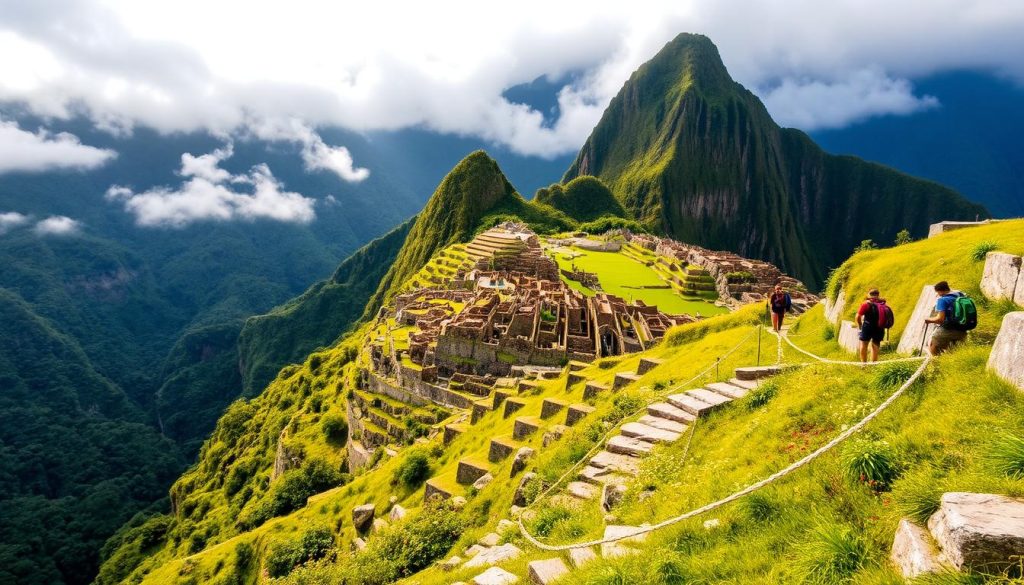
Taking on Huayna Picchu is thrilling for those visiting the sacred Machu Picchu. This steep trek offers breath-taking views from the top. It’s a must-do for keen hikers.
Booking Your Pass
Getting a pass for Huayna Picchu is essential due to demand. Each day, only 400 people can climb, in two groups of 200. After 2019, purchasing tickets early is vital. Machu Picchu hikes, including Huayna Picchu, offer two entry times. Planning for an overnight in Aguas Calientes is smart for early hikers.
What to Expect on the Hike
The hike reaches 2,693 meters high, standing 263 meters above Machu Picchu. Typically, it takes 2 to 3 hours to complete. The ascent is about 45 minutes to an hour. It’s a tough climb, featuring the “Stairs of Death”. Going down can take about an hour more.
Machu Picchu hikes, like Huayna Picchu, are best from May to September. Reaching the top is a proud moment. The view of a world wonder is unforgettable.
Exploring the Temple of the Sun
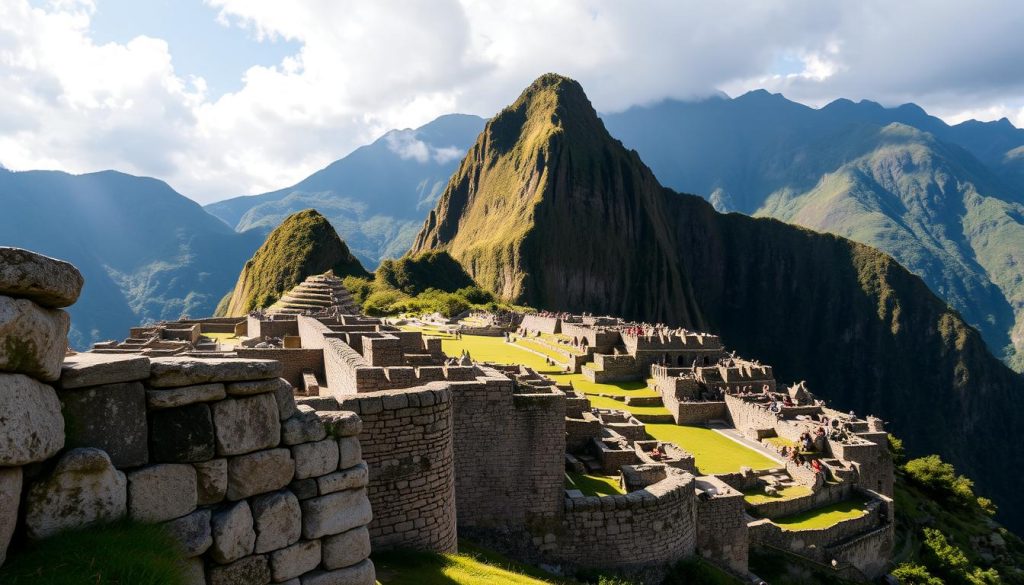
The Temple of the Sun at Machu Picchu shows the Incas’ deep knowledge of astronomy and architecture. It’s perfectly designed to align with key celestial events. This shows the strong link between Incan religion and the stars.
Astronomical Significance
The Temple of the Sun is known for its connection to the stars. It was built with amazing accuracy, showing the Incas’ understanding of the sky. A window in the temple lines up with the sunrise on the summer solstice. This was very important for Incan ceremonies and their calendar.
Architectural Features
The Temple of the Sun is a marvel in Machu Picchu because of its stonework. The stones are carved so well, they fit perfectly together. This shows the Incas’ amazing skill in engineering and architecture, which was key to their religious practices.
| Circuit | Tickets Available Daily |
|---|---|
| Circuit 1 | 1,100 |
| Circuit 2 | 3,050 |
| Circuit 3 | 1,450 |
In 2021, new routes were introduced to explore Machu Picchu better. These paths offer different experiences. For example, Circuit 3 takes you to the Temple of the Sun. This temple is a key spot for those interested in how Incan traditions were guided by the sky.
Discovering the Inca Bridge
The Inca Bridge at Machu Picchu is a lesser-known yet fascinating site. It displays Inca engineering genius. Set 20 meters above a deep canyon on a rocky cliff, this narrow path was a key defense. It shows how the Incas used the land to guard their holy city.
To get to the Inca Bridge, you take a short 20-minute walk from the main area. This walk offers stunning views of the Hydroelectric Valley and the end of the Salkantay trek. The route is mostly flat, with some stone steps and a climb to a lookout point. It’s pretty easy for most people to do, even if walking is hard for them.
Visiting the Inca Bridge requires a special ticket for Machu Picchu Circuits 1 and 2. For visitors from other countries, ticket prices are:
- Adults: s/ 152.00 soles
- Students: s/ 77.00 soles
- Children (ages 3-17): s/ 70.00 soles
- Children under 3 years old: Free
For people from Peru and CAN countries, the prices are cheaper:
- Adults: s/ 64.00 soles
- Students: s/ 32.00 soles
- Children (ages 3-17): s/ 32.00 soles
- Children under 3 years old: Free
The hike to the Inca Bridge is an incredible journey to a special part of Machu Picchu. It usually takes 20-30 minutes to walk each way. Although the trail is mostly flat, some parts are narrow and high up. You need to be in decent shape and not afraid of heights. It feels like a real Incan path, so it’s perfect for history buffs.
The best time to see the Inca Bridge is from May to October. You should buy tickets 3 to 4 months early because it gets busy. You can enter at these times:
- 8 – 9 am
- 9 – 10 am
- 10 – 11 am
- 11 – 12 pm
The Inca Bridge is not just a marvel of construction. It’s also a place of peace and beauty. It captures the creativity and spirit of the Incas. That makes it a top spot for adventurous travelers.
Top 10 Things to Do in Machu Picchu
Are you planning a trip to Machu Picchu? Include these top 10 must-see spots in your list. Experience the best of this ancient city. From the Sun Gate’s early mists to the site’s hidden wonders, here’s everything you need to see.
- Visit the Sun Gate (Inti Punku): The Sun Gate gives stunning views of Machu Picchu, often in mystical morning mist. The hike is about an hour. It’s a popular start for those on the Inca Trail.
- Climb Huayna Picchu: This hike, limited to 400 people a day, offers breathtaking panoramic views. Get your tickets early due to high demand.
- Explore the Temple of the Sun: A key site displaying exquisite Incan stone work. Its importance lies in its architecture and astronomical significance.
- Discover the Inca Bridge: This bridge, with a sharp drop and removable logs, showcases Incan engineering marvels.
- Tour the Royal Tomb: The Tomb reveals over 100 skeletons, providing insight into the area’s ancient rituals.
- Walk Through the Temple of Three Windows: This site is important in mythology and gives insights into Incan spiritual beliefs.
- Take in the Views from the Watchman’s Hut: This spot offers some of the best photo ops in Machu Picchu.
- Visit the Intihuatana Stone: Also called the Sundial of the Incas, it’s a significant cultural site, rich in spiritual heritage.
- Explore the Sacred Plaza: It’s a central spot, surrounded by major structures. It helps understand the Incan civilization better.
- Experience the Agricultural Terraces: These terraces highlight the Incas’ advanced farming methods, covering less than 25% of the site.
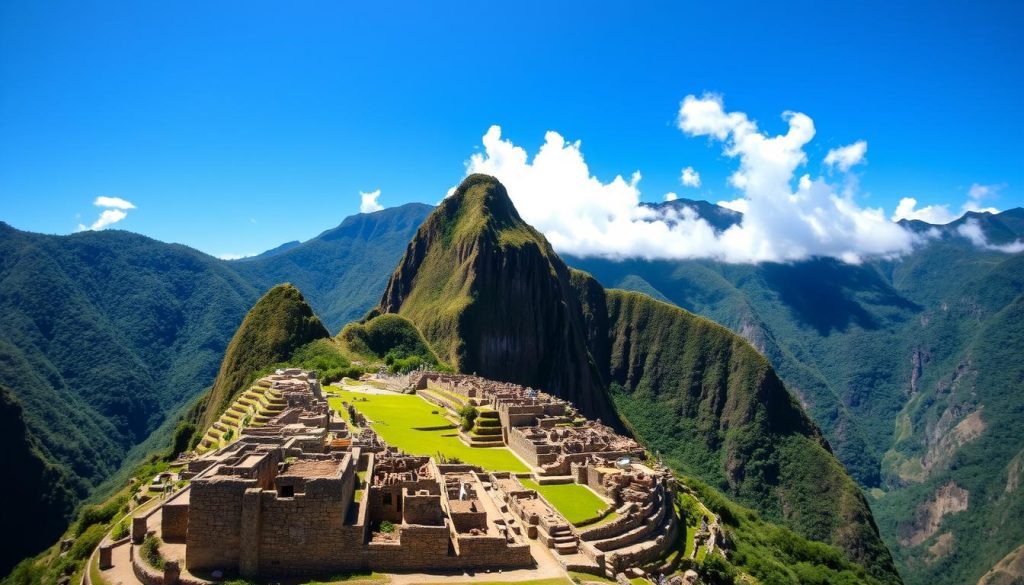
Planning your visit around these must-see spots will enrich your journey. Discover one of the globe’s most stunning archaeological treasures.
Touring the Royal Tomb – Palace of the Princess
The Royal Tomb, known as the Palace of the Princess, is a marvel at Machu Picchu. It showcases the Inca’s amazing stonework. This spot has intrigued historians and archaeologists alike. It’s called the Palace due to tales that it housed royalty or was a high priest’s retreat.

Legend and History
No human remains have been found in the Royal Tomb, making its true purpose a mystery. Hiram Bingham discovered Machu Picchu in 1911. He praised this spot for its unparalleled Inca stonework in South America. Many think it was used for ceremonies, given its elaborate design and strategic location.
Architectural Features
The design of the Royal Tomb hints at its importance for cultural rites. Its walls feature tall niches, likely used for sacred rituals. It stands out among Machu Picchu for its stone-cutting precision. This precision echoes in other remarkable structures like the Temple of the Sun and the House of Ornaments.
| Feature | Description |
|---|---|
| Niches | Used for offerings, indicative of ceremonial purposes |
| Stone Precision | Meticulous stonework comparable to other sacred sites |
| Historical Notes | Recognized by Hiram Bingham as exemplary Inca craftsmanship |
Walking Through the Temple of Three Windows
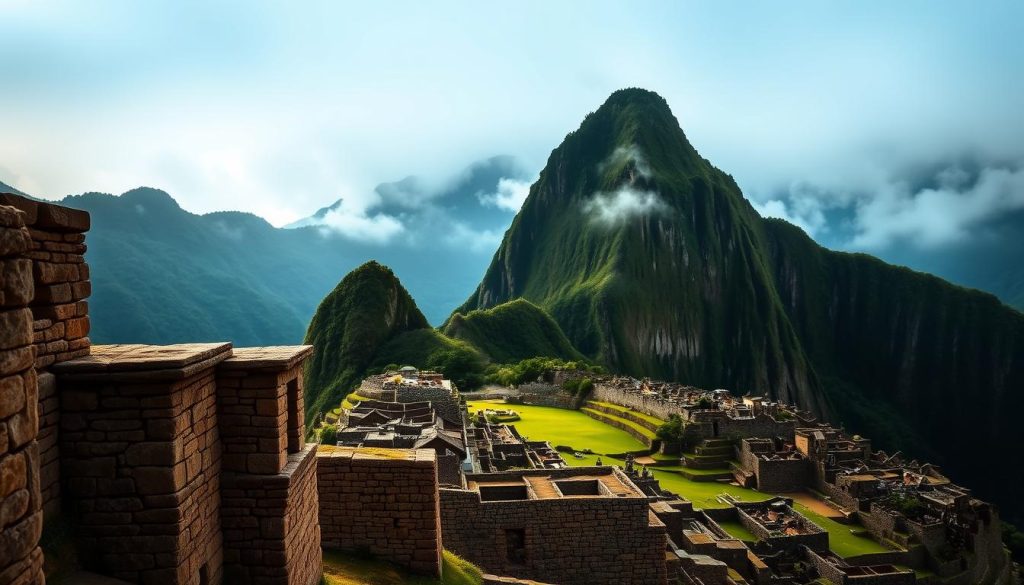
In the Sacred Plaza of Machu Picchu, you’ll find the Temple of Three Windows. It shows the Incan civilization’s peak. The Incas built with stones so perfectly they didn’t need mortar, even with earthquakes around.
Mythological Importance
The Temple of Three Windows is wrapped in myths. It reflects Incan creation stories. They believed three windows represent the caves from where the first Incas came. This ties back to how they saw the world and their beginnings.
Every part of Machu Picchu was placed with the stars in mind, including this temple. Its design shows the Incas’ deep knowledge of the stars. It highlights their cultural and spiritual beliefs through its architecture.
As you walk through the temple, you see how it’s stood strong over time. The Incas’ building skills meant earthquakes didn’t harm it. This temple is not just about their building skill. It invites us to see into the Incan spirit.
Taking in the Views from the Watchman’s Hut
At the Watchman’s Hut, you find one of Machu Picchu’s best views. From this high spot, you get a complete view of the site. It really shows off the Inca’s smart building and planning skills. Looking over the terraced fields and complex buildings, the amazing stonework stands out.
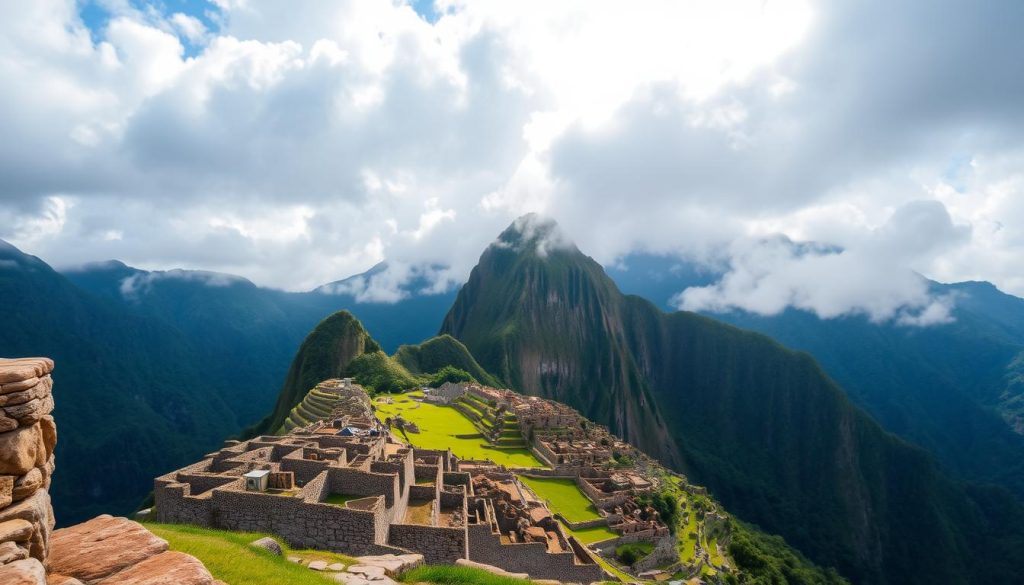
The Watchman’s Hut is perfect for taking photos. Picture the morning mist fading to reveal Machu Picchu’s famous sight. From here, you also get how well-placed each building is.
The design genius of Machu Picchu is clear from the Watchman’s Hut. Here are some key spots you can see:
- Temple of the Sun: It lines up with the sun during the solstice, showing the Incas’ space knowledge.
- The Sacred Plaza: It’s at the heart of Machu Picchu’s layout, mixing the sacred and everyday.
- Terraced Fields: Smartly made for farming and stopping soil erosion.
- The Intihuatana Stone: At the urban area’s highest point, it was key in Inca rituals.
- Network of Fountains: Their water system shows the Incas’ advanced engineering.
Going to the Watchman’s Hut isn’t just for the views. It’s to dive into the history and creativity of the Incas. By being at a top Machu Picchu spot, you get to deeply understand this old marvel. You appreciate its well-thought-out build and lasting cultural importance.
Visiting the Intihuatana
The Intihuatana is known as the “hitching post of the sun”. It stands out at Machu Picchu for its importance. The Incas showed their skill in astronomy with this carved rock. They also showed their spiritual bond with the sky.
The Sundial of the Incas
The Intihuatana cleverly matches important solar events. It’s angled off magnetic north and west. This makes it a precise solar calendar for solstices and equinoxes. It’s a sign of the Incas’ deep cosmic knowledge.
The Incas made the Intihuatana to track stars and months. It’s a key piece that shows their scientific progress. In 1920, astronomer Ralf Müller noticed its special alignment. Historians have proven its use as a sundial.
Cultural Significance
The Intihuatana is more than a scientific device. It holds great cultural and spiritual value. Inca priests held ceremonies here, showing its role in Machu Picchu’s spiritual life.
The Spanish didn’t destroy the Intihuatana like other Inca sites. This kept its history and culture alive. William Prescott in 1847 noted its use in astronomy. Visiting the Intihuatana deeply moves people by putting them in touch with Inca culture. Their skills in astronomy and spirituality are memorable.
Exploring the Sacred Plaza
The Sacred Plaza is a key spiritual site in Machu Picchu. It includes structures like the Principal Temple, the Temple of Three Windows, and the House of the High Priest. These buildings show the Incan talent in stone masonry and planning. They reflect the spiritual and social life of the Incas.
The Principal Temple is the tallest building in the area, showing the value placed on religious events. Despite earthquakes for over 500 years, it still stands, proving Incan architectural skill. Next to it, the Temple of Three Windows has a design filled with myth. Its windows align with stars, showing the Incas knew a lot about the sky.
The House of the High Priest is also important in the Sacred Plaza. It focuses on Incan administration and ceremonies. Visiting it, people feel connected to ancient Incan rituals and practices.
| Structure Name | Significance | Key Features |
|---|---|---|
| Principal Temple | Religious Center | Highest structure, earthquake resistant |
| Temple of Three Windows | Astronomical Alignment | Windows aligned with celestial events |
| House of the High Priest | Administrative and Ceremonial | Carved recesses for ceremonial objects |
The Sacred Plaza shows how the Incas combined spirituality with their social system. Seeing Machu Picchu as a spiritual place makes your visit more meaningful. It lets you appreciate its history and culture more deeply.
Conclusion
Your journey to Machu Picchu is a blend of nature and architecture. You’ve learned about its history, culture, and stunning views. From climbing Huayna Picchu to marveling at the Sun Gate, you’ve made unforgettable memories.
The Temple of Three Windows shows the Incas’ skill in architecture and astronomy. Its design and the Intihuatana stone’s use highlight their genius. These aspects add to the mystique of Machu Picchu.
Visiting Mandor Gardens or eating in Aguas Calientes adds to your experience. With its beautiful scenery and historical ruins, Machu Picchu attracts travelers from all over. Reflecting on your adventure, you see it offers more than history. It sparks a desire to explore ancient myths and wonders, deeply touching your heart.