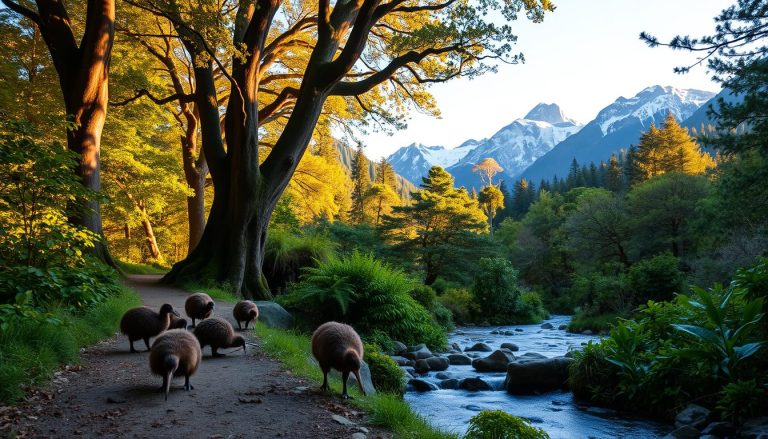
Find the Best Places to See Wildlife in Great Exuma
Planning a trip to the Bahamas? Wondering why Great Exuma is great for wildlife fans? It’s because of its unique spot in the Exuma Cays. This chain of islands is known for its diverse wildlife and marine life. Great Exuma has many places to see wildlife, from beaches to forests and coral reefs.
Exploring the island, you’ll find the best spots to see wildlife. You’ll see dolphins, sea turtles, and stingrays. Great Exuma’s coral reefs are also vibrant, making it a paradise for nature lovers.
Introduction to Great Exuma’s Diverse Wildlife Ecosystem
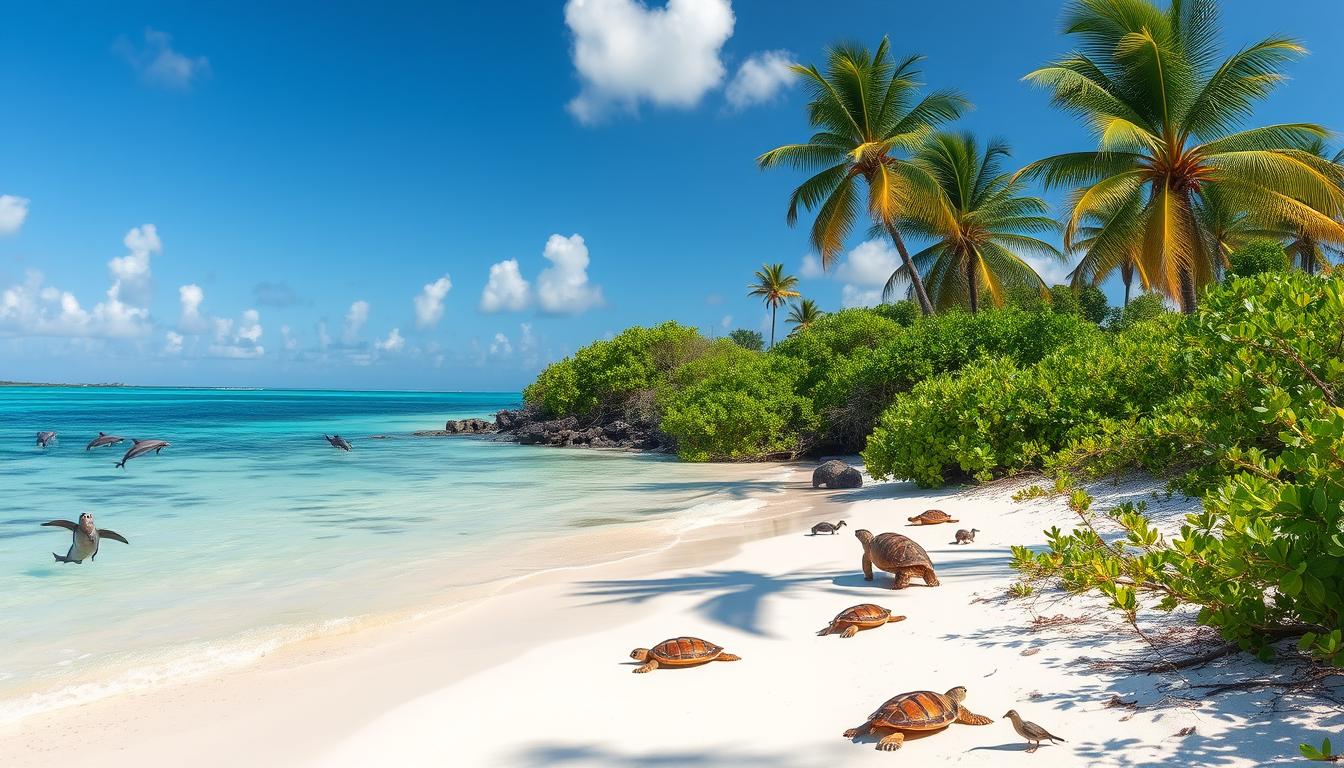
Great Exuma is a top spot for wildlife lovers. It’s home to many native species like colorful birds, sea turtles, and dolphins. Knowing the best times to see wildlife and the island’s ecosystems is key.
The Exuma Cays Land and Sea Park is a gem for wildlife fans. It’s filled with sea turtles, stingrays, and vibrant fish. Great Exuma’s clear waters make it perfect for snorkeling and diving.
Native Species You Can Encounter
Great Exuma is teeming with native life, including:
- Sea turtles
- Dolphins
- Colorful tropical birds
- Stingrays
- Various fish species
Best Seasons for Wildlife Viewing
The best times to see wildlife in Great Exuma vary by species. Winter (December to April) is great for sea turtles and dolphins. Summer (May to November) is best for birdwatching.
Understanding the Island’s Ecosystems
Great Exuma’s ecosystems are varied, covering coastal areas, forests, and waters. Its unique geography supports a wide range of wildlife. This makes it perfect for exploring and wildlife viewing.
| Ecosystem | Characteristics | Wildlife |
|---|---|---|
| Coastal Areas | Beaches, mangroves, and coral reefs | Sea turtles, stingrays, and fish species |
| Inland Forests | Tropical forests and woodlands | Colorful tropical birds and other terrestrial species |
| Surrounding Waters | Coral reefs and open ocean | Dolphins, whales, and other marine species |
The Famous Swimming Pigs of Big Major Cay
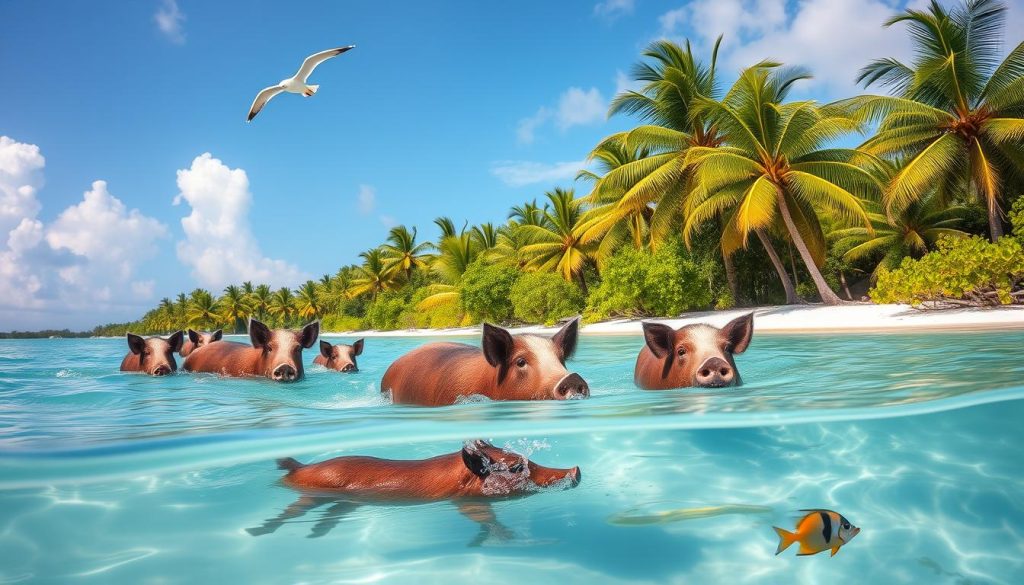
Exploring Great Exuma’s wildlife hotspots leads to the swimming pigs of Big Major Cay. This island, near Staniel Cay, is famous for its pig colony. Visitors can reach Big Major Cay by boat from Staniel Cay or Nassau, with various tour options.
The swimming pigs are a top attraction for wildlife enthusiasts. With 30 to 40 pigs, you can see them up close. The Official Swimming Pigs Association ensures their health, providing food and water.
For a great visit, plan for the morning and bring sunscreen, water, and snacks. Summer or the week between Christmas and New Year’s are the best times. For a personal touch, choose a private tour or visit off-season. Big Major Cay offers a unique wildlife experience and stunning views.
- Location: Big Major Cay, near Staniel Cay
- Number of pigs: Around 30 to 40
- Best time to visit: Morning, summer months, or the week between Christmas and New Year’s
- Tour options: Group tours, private excursions, and full-day trips
- What to bring: Sunscreen, water, snacks, and wide-brimmed hats
Big Major Cay is a must-see for its unique wildlife and beauty. It’s a top spot for anyone visiting the Exumas.
Marine Wildlife Sanctuaries and Coral Reefs
Exploring the waters around Great Exuma reveals a world teeming with life. You’ll see sea turtles, stingrays, and colorful tropical fish. The island’s best spots for wildlife viewing let you see its vibrant underwater world. The Bahamas, with its massive barrier reef system, is perfect for nature lovers and those who care about the environment.
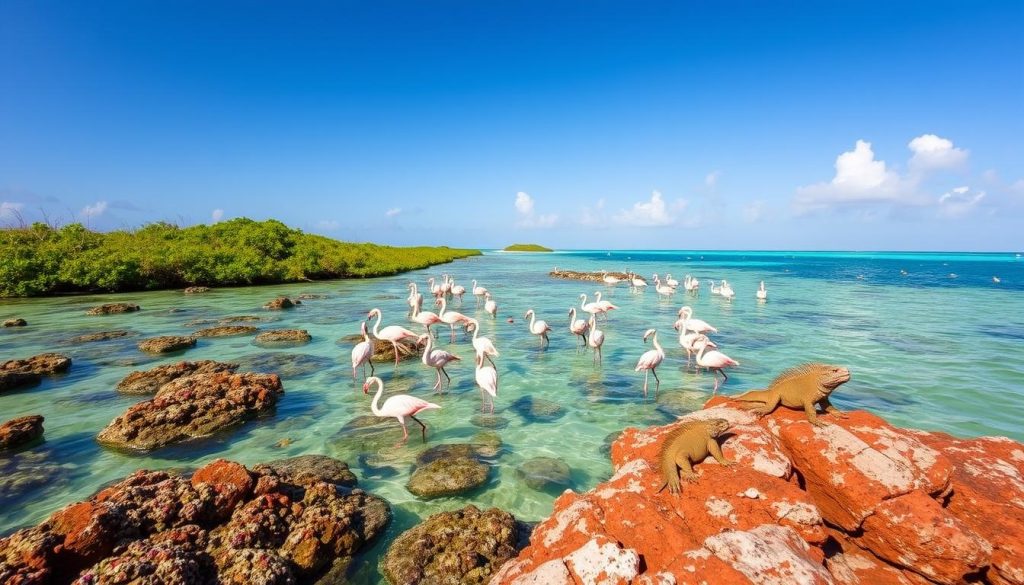
The marine sanctuaries around Great Exuma are full of amazing species. The Exumas Cays Land and Sea Park is a highlight. It has blue holes, freshwater springs, caves, and drop-offs. This park is a safe haven for fish and even the endangered Allen Cays rock iguana.
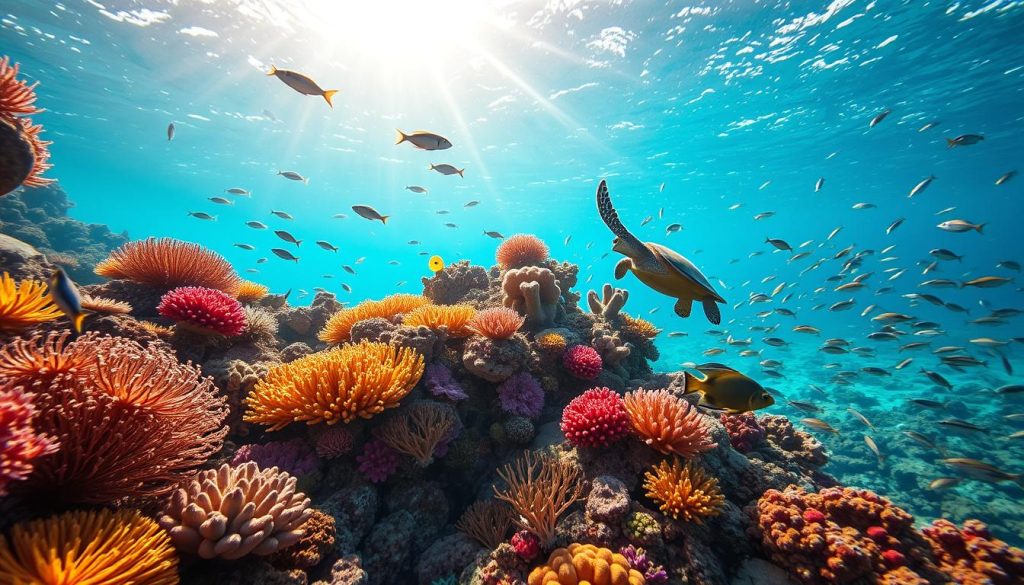
Visiting the best wildlife spots in Great Exuma means seeing the coral reefs. These reefs are home to 25% of all marine life. The Andros Barrier Reef nearby is huge, with over 164 fish and coral species. By supporting conservation and responsible viewing, we protect these vital marine habitats for the future.
Stocking Island’s Marine Life
Stocking Island is a top spot for marine wildlife in Great Exuma. It boasts tropical fish, coral, and more. Its clear waters make it perfect for snorkeling and swimming.
Best Places to See Wildlife in Great Exuma
Great Exuma is a paradise for wildlife lovers. The island has many spots to see animals like sea turtles, birds, and marine life. You can find these places on beaches, in the woods, and around the cays.
The Exuma Cays Land and Sea Park is a great place to see wildlife. It’s a protected area with lots of animals. Divers will love the underwater caves and blue holes. Coco Plum Beach is perfect for a calm day, with shallow waters for finding starfish and sand dollars.
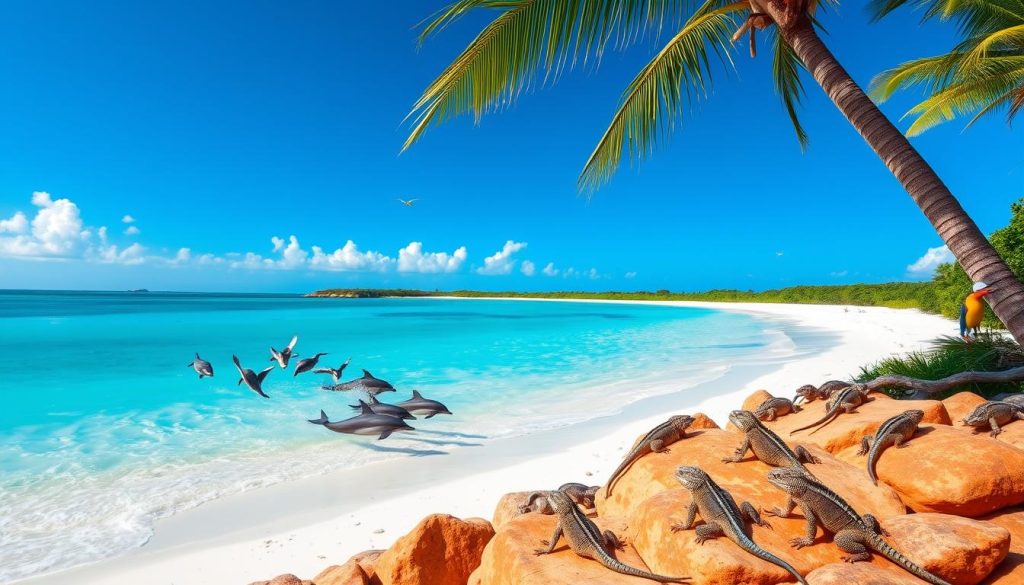
- Stocking Island, known for its marine life and snorkeling opportunities
- Big Major Cay, home to the famous swimming pigs
- Tropic of Cancer Beach, a must-visit beach known for its beauty
These spots are a must-see for anyone who loves nature. By visiting these places, you can see the beauty and diversity of Great Exuma.
| Location | Wildlife | Best Time to Visit |
|---|---|---|
| Exuma Cays Land and Sea Park | Sea turtles, birds, marine life | December to April |
| Stocking Island | Marine life, sea turtles | November to May |
| Big Major Cay | Swimming pigs | Year-round |
Bird Watching Hotspots Around the Island
Exploring Great Exuma reveals a world of bird species. With over 300 documented in The Bahamas, it’s a haven for birdwatchers. The island’s best spots let you see these birds in their natural setting.
Moriah Harbour Cay National Park is a top spot for bird watching. It’s home to the Bahama Parrot and Caribbean Flamingo. The park’s mix of mangrove forests, salt flats, and coral reefs supports many bird species.
Native Bird Species
Great Exuma is home to native birds like the Bahama Woodstar and Bahama Yellowthroat. You can find them in places like the Exuma Cays Land and Sea Park. The island’s unique landscape supports a wide range of birdlife.
Best Times for Bird Watching
The winter months, from November to February, are best for bird watching in Great Exuma. But summer also has its moments, with species like the Gray Kingbird and Antillean Nighthawk around. Visiting the island’s top spots lets you see its amazing birdlife up close.
Endangered Species and Conservation Areas
Exploring Great Exuma’s wildlife hotspots lets you see unique and endangered species. The rock iguana is one such species, found in protected areas. The Exumas, with over 365 cays, offer diverse habitats for many species.
Endangered species like the West Indian Whistling Duck and the White Crowned Pigeon call Great Exuma home. The Bahamas government has set up protected areas to save these species. The Exuma Cays Land and Sea Park is a key example, being the world’s first.
Visitors can help by respecting protected areas and following wildlife viewing guidelines. The Exuma Cays Land and Sea Park is a prime spot for wildlife, including sea turtles and dolphins. Moriah Harbour Cay National Park is another protected area, covering 13,400 acres.
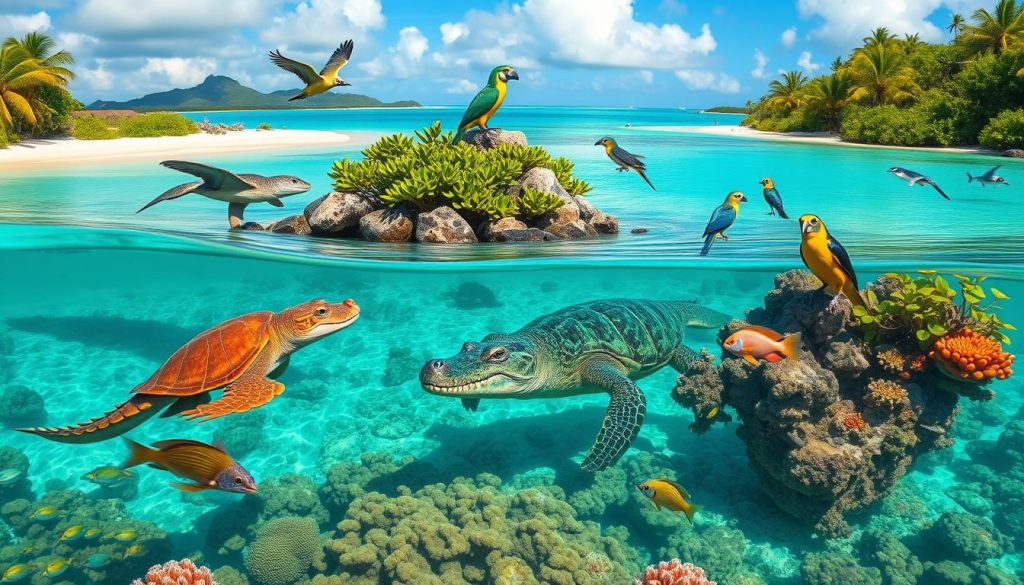
To learn more about conservation in Great Exuma, visit the Bahamas Reef Environment Educational Foundation (BREEF). You can also join guided tours to see wildlife in the Exumas. These tours showcase various bird species, like the White-cheeked Pintail and Bahama Woodstar.
Respecting wildlife and their habitats is crucial. By following responsible wildlife viewing guidelines, you help protect these species. This way, you contribute to the conservation of Great Exuma’s wildlife for future generations.
Guided Wildlife Tours and Excursions
Exploring Great Exuma’s wildlife is best with guided tours and excursions. Many tour operators offer wildlife viewing excursions, including boat tours. You can pick the one that fits your interests and preferences.
The best sites for wildlife viewing in Great Exuma let you see amazing marine life. This includes sea turtles and dolphins.
Here are some tips for choosing a tour operator:
- Research the operator’s reputation and reviews
- Check the types of tours and excursions they offer
- Look for operators that prioritize responsible and sustainable tourism practices
Popular tour operators like Exuma Cays Adventures offer various tours. They have half-day and full-day options. These tours take you to top wildlife viewing sites, like Elizabeth Harbour. It’s known for its diverse marine life.
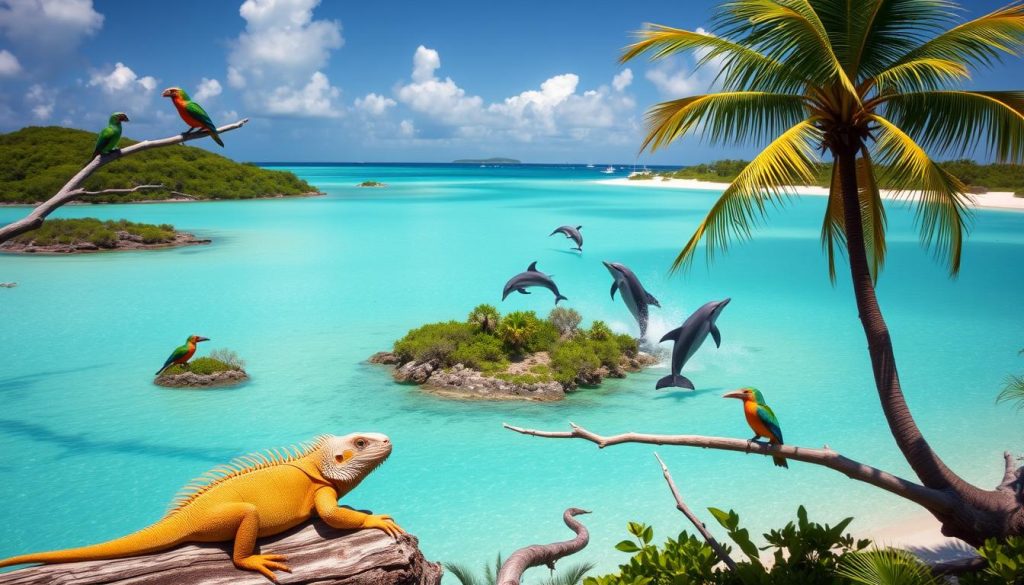
Choosing a guided tour lets you learn more about the island’s ecosystems and wildlife. You’ll also get unforgettable memories of your time in Great Exuma.
Essential Tips for Responsible Wildlife Viewing
Exploring Great Exuma’s wildlife spots requires responsible viewing. Keep a safe distance, dispose of waste properly, and reduce your impact on habitats. This helps protect the diverse ecosystems and species in Great Exuma.
Here are some important guidelines:
- Respect animals’ personal space and avoid feeding or touching them
- Stay on designated trails and avoid disturbing habitats
- Keep a safe distance from wildlife, even when snorkeling or diving
- Support conservation efforts and follow local guidelines
Visiting spots like the Exuma Cays Land and Sea Park lets you see marine life and tropical plants. Being mindful of your actions helps preserve these ecosystems for the future.
Responsible wildlife viewing is a team effort. Together, we can protect animal habitats and behaviors. This keeps Great Exuma’s wildlife spots healthy and thriving.
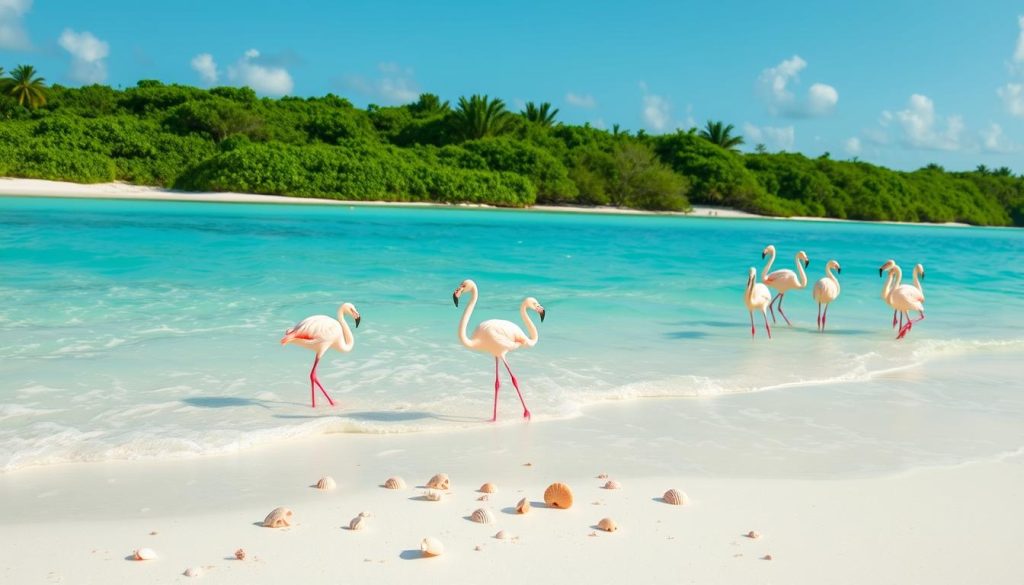
Exploring Great Exuma’s wonders means your actions affect the environment and wildlife. Choose responsible tours and support conservation. This way, you can enjoy amazing wildlife encounters while making a positive impact.
| Best Practices | Benefits |
|---|---|
| Maintaining a safe distance from animals | Reduces stress and minimizes habitat disruption |
| Proper waste disposal | Helps preserve water quality and protects marine life |
| Supporting conservation efforts | Contributes to the long-term protection of ecosystems and species |
Hidden Gems for Wildlife Encounters
Exploring Great Exuma reveals more than just famous spots. The island’s hidden gems are perfect for wildlife lovers. You’ll find sea turtles, stingrays, and tropical birds in its diverse ecosystem.
The island’s cays and inlets are home to marine life. Boat tours let you see this wildlife up close. The Exumas island chain, with 365 cays, is a treasure trove of wildlife.
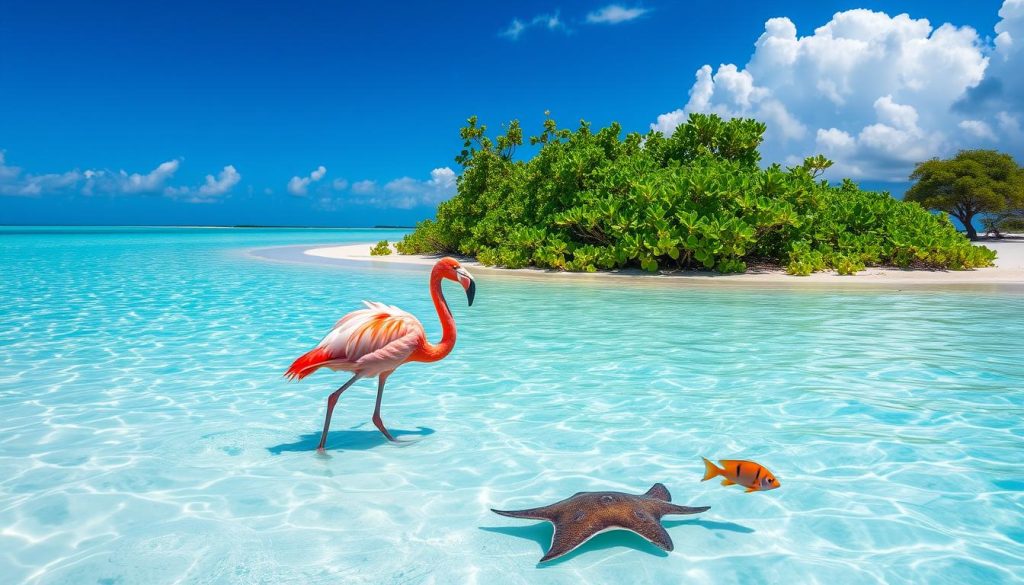
Secret spots like Tropic of Cancer Beach in Little Exuma are peaceful. They offer great snorkeling. Visit from November to April for the best wildlife viewing.
| Location | Wildlife | Best Time to Visit |
|---|---|---|
| Tropic of Cancer Beach | Tropical fish, sea turtles | November to April |
| Exumas Cays | Stingrays, tropical birds | Year-round |
What to Pack for Wildlife Watching
When you visit Great Exuma’s wildlife spots, being ready is key. You’ll need the right stuff and clothes for a comfy, safe time. This way, you can enjoy spotting the amazing animals without worry.
For a great trip to Great Exuma, don’t forget these must-haves:
- Binoculars for spotting wildlife from a distance
- Camera with a good zoom lens for capturing memories
- Field guides to help you identify the different species you encounter
- Comfortable clothing and sturdy shoes for hiking and exploring
- Sunscreen, insect repellent, and a first-aid kit for your safety
Check the weather before you go. The Exumas can get rainy from June to October. So, bring a waterproof jacket or umbrella. With the right stuff and some planning, you’re set for an amazing wildlife adventure in Great Exuma.
| Essential Item | Description |
|---|---|
| Binoculars | For spotting wildlife from a distance |
| Camera | For capturing memories of your trip |
| Field Guides | For identifying the different species you encounter |
Seasonal Wildlife Calendar
Planning your visit to Great Exuma? Knowing the seasonal wildlife calendar is key. The island’s climate and location are perfect for many species all year. Great Exuma is a haven for wildlife enthusiasts and adventure lovers.
The best spots for wildlife watching change with the seasons. Winter months (December to February) are great for seeing marine life. Water is between 68-73°F (20-24°C) then. Spring (March to May) is best for bird watching, with air at 79-84°F (26-29°C).
Here’s a quick guide to seasonal activities and events:
- Winter: Spot marine life, watch birds, and enjoy the beaches.
- Spring: See bird migrations, sea turtle nesting, and marine life peaks.
- Summer: Warm weather is perfect for swimming, snorkeling, and diving.
- Autumn: It’s hurricane season, but also great for shark and ray sightings.
Understanding the seasonal wildlife calendar helps plan your Great Exuma trip. Whether you love marine life, bird watching, or exploring, there’s something for everyone. Great Exuma is a paradise for nature lovers and adventure seekers.
Conclusion: Making the Most of Your Great Exuma Wildlife Experience
As you start exploring Great Exuma’s wildlife, you’ll find many unforgettable moments. You’ll see the famous swimming pigs of Big Major Cay and the colorful marine sanctuaries and coral reefs. This island is full of chances to connect with nature.
Make sure to check out the best places to see wildlife in Great Exuma. Look for the bird watching hotspots and the hidden gems for wildlife encounters.
When planning your wildlife trips, learn about essential tips for responsible wildlife viewing. Also, pack the right equipment and gear for your adventure. Keep an eye on the seasonal wildlife calendar to see the island’s creatures at their best.
Great Exuma is dedicated to protecting its wildlife. By sharing your experiences and supporting local conservation, you help preserve this island’s beauty. Dive into Great Exuma’s wonders and make memories that will last forever.