Navigating Turks and Caicos Hurricane Season Safely
Do you know how to enjoy Turks and Caicos while avoiding hurricane season challenges? The hurricane season in Turks and Caicos runs from June 1st to November 30th. It’s crucial to stay informed and prepared.
Understanding tropical storms in Turks and Caicos is vital for your safety. This knowledge ensures you have peace of mind while enjoying the island’s beauty.
When planning your trip, remember the historical patterns and hurricane preparedness tips. The peak period is from August to October. During this time, the islands face direct hits about every seven years.
By staying informed, you can enjoy up to 40% discounts on accommodations. This is during the off-peak period. You’ll also be ready for any unexpected weather changes.
Understanding the Turks and Caicos Hurricane Season
The Turks and Caicos hurricane season brings big challenges for everyone. It runs from June 1 to November 30, with higher risks of bad weather. Knowing about the hurricane season updates is key to staying safe while you’re there.
Duration of the Hurricane Season
The hurricane season in the Turks and Caicos lasts six months. This means there’s a chance for severe weather. On average, the area gets hit by a hurricane every seven years.
Storms nearby can affect the islands about every two years. So, it’s very important to keep up with the hurricane season forecast if you’re planning a trip.
Geographical Risks of Hurricanes
The location of the Turks and Caicos makes them more vulnerable to hurricanes. They’re southeast of the Bahamas, right in the path of Atlantic storms. Hurricanes like Irma and Maria have caused a lot of damage.
Storms like Fiona have shown different effects, like minor flooding in Providenciales. Storm surges are a big threat, but the underwater plateau helps reduce the damage. It’s crucial to be well-informed about the hurricane season to have a safe visit.
Key Dates and Hurricane Season Timeline
The hurricane season in Turks and Caicos starts on June 1st and ends on November 30th. Knowing this hurricane season timeline helps you plan your trips better. It ensures your safety and helps you make smart travel choices.
Official Season Dates
During these months, the risk of severe weather increases a lot. June starts the season, but storms are rare at first. As the months go by, storms become more common and intense.
Peak Activity Period
The busiest time for hurricanes is between August and October, with September being the worst. It’s crucial to stay alert during this peak activity period. Many storms hit the area, like Tropical Storm Bertha and Tropical Storm Cristobal in August 2014, causing a lot of rain.
Weather Trends During Hurricanes in Turks and Caicos
Knowing the weather trends during hurricanes in Turks and Caicos is key for a safe visit. Tropical storms here have unique traits that impact the environment and travel plans. They bring heavy rain, strong winds, and a flood risk. A hurricane tracking map can give you updates on storms.
Characteristics of Tropical Storms
Tropical storms in Turks and Caicos have certain traits, such as:
- Wind speeds over 74 mph, leading to damage.
- Heavy rain, with 33 inches a year, causing floods in low areas.
- More mosquitoes for weeks after heavy rain, mainly in some islands.
Temperature Patterns
Despite hurricane dangers, Turks and Caicos stays warm. The average temperature is 81°F (27°C). Water temperatures range from 78°F in winter to 85°F in summer. This warm weather offers chances for indoor fun during storms.
Remember, hurricane season is from June 1 to November 30. So, it’s wise to prepare for hurricanes to stay safe.
Preparedness Tips for Travelers
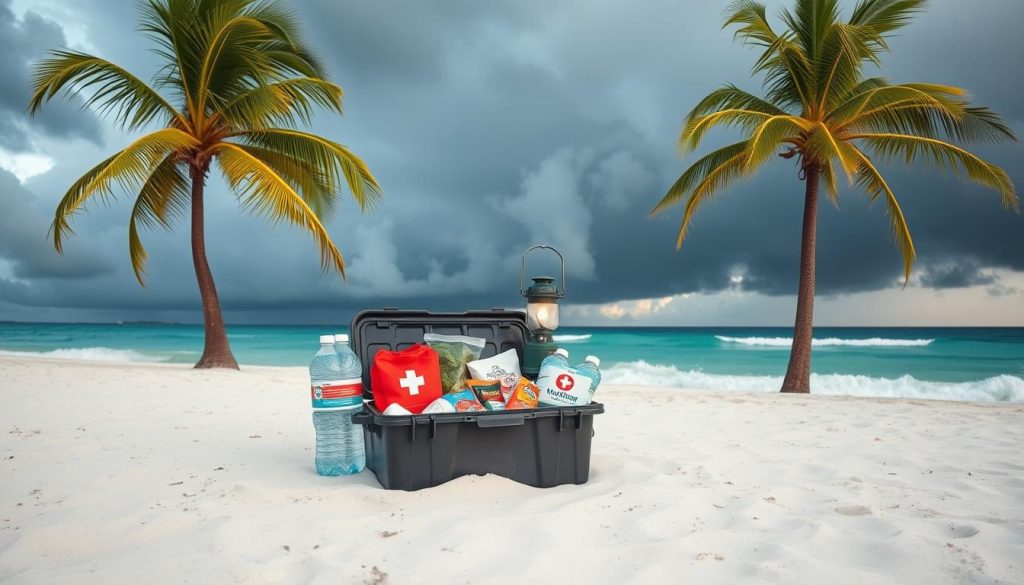
Planning a trip to the Turks and Caicos during hurricane season requires preparation. Good hurricane preparedness tips can greatly improve your safety. Key steps include getting travel insurance and packing an emergency kit.
Travel Insurance Recommendations
Travel insurance is essential during hurricane season. Look for policies that cover cancellations or interruptions due to storms. The cost is usually 4% to 10% of your trip’s total cost.
Choosing “cancel for any reason” coverage can offer more protection. It comes at a higher price, though. A plan that fully reimburses for trip cancellations is very valuable. It covers costs like flights and hotels.
Packing an Emergency Kit
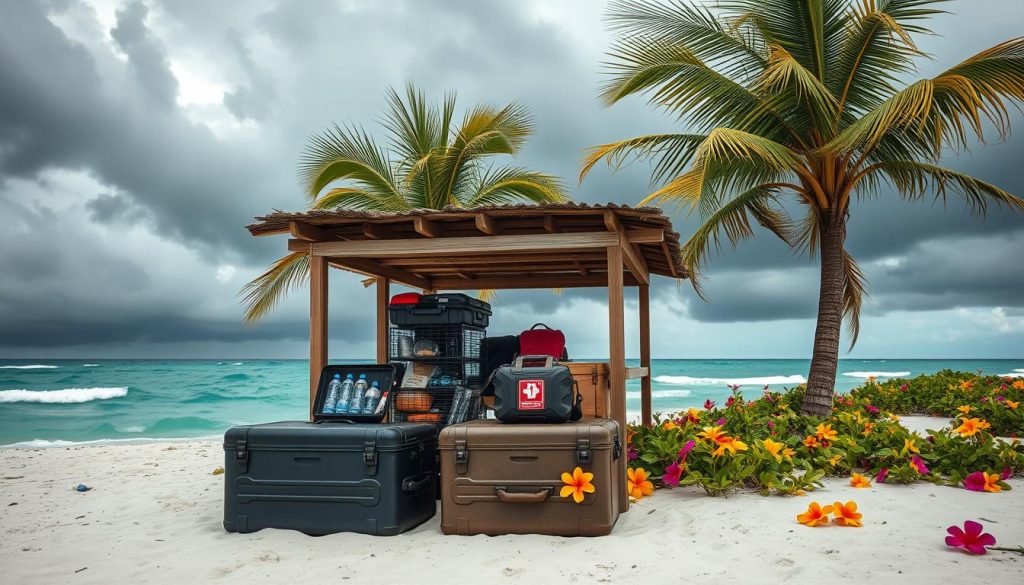
Along with insurance, an emergency kit is crucial for your safety. Include important items like:
- Flashlight with extra batteries
- Battery-powered radio
- First-aid supplies
- Non-perishable snacks
- Rain gear and sturdy shoes
- Extra water for hydration
By following these tips, you can enjoy the Turks and Caicos more safely. Make sure your insurance covers what you need. And have your emergency kit ready for any situation.
| Item | Description |
|---|---|
| Flashlight | Handheld light source for navigating during power outages. |
| Batteries | Extra batteries to power your flashlight and radio. |
| First Aid Kit | Medical supplies for treating minor injuries. |
| Non-perishable Snacks | Foods that do not require refrigeration for sustenance. |
| Water | At least one gallon per person per day for 3 days. |
| Rain Gear | Waterproof clothing to stay dry in adverse weather. |
Hurricane Safety Guidelines for Visitors
Knowing how to stay safe during a hurricane is key in Turks and Caicos. Keeping up with weather news is important. Check the National Hurricane Center for updates. This helps you make smart choices about your safety.
Staying Informed and Updated
Watch local weather reports often. During hurricane season, local officials and weather channels share updates. Use local radio and TV for alerts. Accurate news helps you know when to seek safety.
Evacuation Routes and Emergency Protocols
Learn about evacuation routes and emergency plans from your hotel. Hotels have hurricane plans, including shelter locations. Know where to go and what to bring, like food and water. This prepares you for any hurricane.
Accommodations and Hurricane Preparedness
Understanding accommodations and their hurricane plans is key to staying safe in Turks and Caicos. Choosing the right lodging can make your stay worry-free. Look for hotels and resorts with strong hurricane safety measures.
Choosing Safe Lodging Options
Focus on places known for their hurricane safety. They should have:
- A 100% refund policy, like The Sands at Grace Bay offers during hurricane season (June 1 – November 30).
- Clear refund policies if a Hurricane Watch or Warning is issued within 72 hours.
- Options for early departure if a hurricane hits, ensuring you get a refund for unused nights.
- A special rate for guests stuck due to airport closures from a hurricane.
Hotel Preparedness Protocols
Learn about a hotel’s emergency plans when you arrive. They should:
- Keep backup generators in good shape for power during outages.
- Train staff on handling hurricane emergencies.
- Invest in better buildings, with government help for maintenance and upgrades.
Staying updated is also crucial. Use the Turks and Caicos Islands National Weather Service for real-time info. Download the DDME app for alerts. Knowing your lodging’s hurricane safety plans can greatly improve your safety and experience.
Historic Hurricanes in Turks and Caicos
The Turks and Caicos Islands have faced many historic hurricanes. These storms have greatly changed their landscape and communities. Hurricane Irma is a prime example, with its Category 5 status and winds over 185 mph.
This storm’s destruction highlights nature’s power. It also shows the need for strong recovery plans.
Impact of Hurricane Irma
In September 2017, Hurricane Irma hit the Turks and Caicos Islands hard. It caused damage in South Caicos, Grand Turk, and Salt Cay. The storm destroyed a lot of infrastructure and disrupted life.
But, the islands quickly started to rebuild. They got help from around the world and from their own resilience. By November, power was back on in many buildings thanks to over 200 Canadian workers.
Long-term Recovery and Resilience
The recovery from these hurricanes is still going on. The community is working hard to build stronger buildings and prepare for emergencies. They are doing this through:
- Stricter building codes to handle strong winds.
- Comprehensive emergency plans that put people first.
- Teaching people how to prepare for storms.
These steps show the islands’ commitment to bouncing back stronger. They are turning weakness into strength against future storms.
| Hurricane Name | Date | Category | Impact |
|---|---|---|---|
| Hurricane Irma | September 2017 | 5 | Severe damage to infrastructure and displacement |
| Hurricane Dorian | September 2019 | 5 | No direct impact on Turks and Caicos |
| Hurricane Fiona | September 2022 | 4 | Minor flooding and wind damage, mainly on Grand Turk |
| Hurricane Oscar | October 2024 | Unknown | Details pending |
Navigating Travel During Hurricane Season
Traveling during hurricane season has its perks and challenges. Some might avoid it, but it can be a great time to travel. With fewer people around, you can save money on places to stay. Resorts in Turks and Caicos, for example, offer up to 40% off.
Benefits of Off-season Travel
Off-season travel is not just cheaper. It also offers a better experience. You’ll get:
- Less crowded places to visit
- Better rooms in hotels
- More personal service
This quieter time lets you dive deeper into local culture and nature. You won’t have to deal with the usual tourist chaos.
Flexible Booking Options
Being flexible is key when booking travel during hurricane season. Airlines and hotels often have special rules. This lets you change plans easily, keeping your trip safe and fun. Look for:
- Free cancellations
- Rescheduling without extra fees
- Insurance for travel disruptions
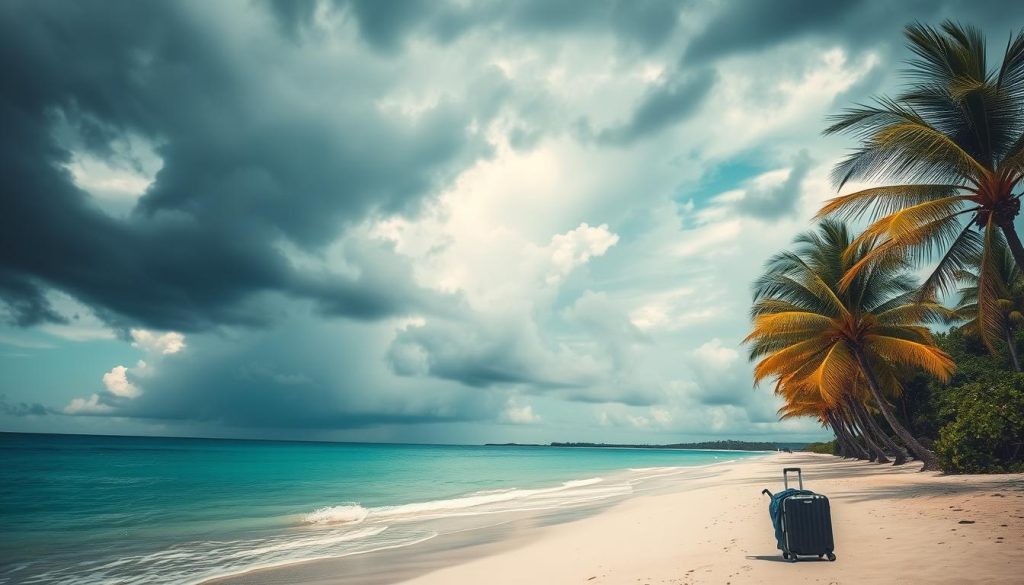
Traveling during hurricane season can lead to exciting surprises. Just remember to stay safe. With the right planning, you’ll make unforgettable memories in Turks and Caicos.
Post-Hurricane Considerations for Travelers
After a hurricane, it’s key to think about what comes next. Travel plans can get messed up because of transportation issues. Roads might be blocked, and airports could be closed. Always check your flight status and local transport options.
Dealing with Transportation Disruptions
Being ready for transport problems is vital after a storm. Wind and rain can damage roads and paths. Keep an eye on airline and local announcements. Look for other ways to get around and stay in touch with your travel company.
Use apps and local news to track the situation. If you’re staying at a hotel, ask for help with getting around.
Assessing Safety in Local Areas
Checking if areas are safe is a top priority after a hurricane. Know which places are okay to visit and which are not. Use government sites and disaster services for advice.
Watching the Turks and Caicos Islands Government’s Disaster Management webpage is a good idea. It helps you know about safety rules.
| Consideration | Details |
|---|---|
| Transportation Options | Check airport updates, road conditions, and local transport services. |
| Safety Assessments | Consult local disaster management resources for safety updates. |
| Evacuation Points | Familiarize yourself with the nearest evacuation sites to your location. |
| Communication | Stay in contact with your hotel/resort for ongoing support and information. |
Conclusion
Understanding the Turks and Caicos hurricane season is key. It’s a mix of knowing the risks and being ready. Knowing the season runs from June to November helps plan your trips. September and October are the busiest months for hurricanes.
Being prepared can make your trip enjoyable. It turns a potentially stressful time into a relaxing getaway. By getting ready, you can enjoy the beautiful beaches and activities without worry.
Grace Bay Beach is a must-see, with its clear waters and fun activities. Knowing how to stay safe during hurricanes is crucial. This knowledge makes your visit better and helps you deal with sudden weather changes.
Always check if your place to stay is ready for hurricanes. Also, think about booking options that can change if needed. This way, you can enjoy the local culture, food, and beaches safely.
Being aware and prepared is the secret to a great time in Turks and Caicos during hurricane season. With the right mindset, you can explore the vibrant culture and stunning beaches. Remember these tips for a memorable trip to this beautiful Caribbean spot.