Cebu City’s Best Sustainable Tourism Initiatives
Have you ever thought about the impact of your travel on the places you visit? Cebu City is tackling a huge challenge. It expects over 11 million tourists in 2023. This is an 87% jump from 2019. Cebu is now a leader in eco-friendly travel that balances environmental care and economic growth.
This article explores Cebu’s commitment to responsible tourism. It highlights community effort, ecological care, and new practices. These not only enrich visitors’ experience but also help locals and nature. Cebu is at the forefront with community-driven eco-tourism and green architecture. It’s making tourism and sustainability work together.
Introduction to Sustainable Tourism in Cebu City
Sustainable tourism in Cebu City works to limit environmental harm. It also promotes local culture and supports the economy. The goal is to benefit tourists and locals. This involves eco-friendly actions, conservation efforts, and highlighting local traditions.
The tourism sector is a key economic force in Cebu, right behind Manila. It creates jobs and increases income. Thus, there’s a push for sustainable tourism. This approach values local participation and aims for fair benefits.
The Tourism Act of 2010 and the Philippine Tourism Master Plan of 1990 pinpoint sustainable tourism’s core: economic, social, and environmental. Challenges like overcrowding at places like Kawasan Falls show the need for local involvement. Everyone from government to local businesses and communities must take part.
Cebu sees millions of visitors each year. This makes sustainable practices vital. Problems such as litter and too much tourist traffic harm nature. To deal with these, training for locals is vital. They learn to care for nature while benefiting from tourism.
Working with local communities shares tourism’s rewards fairly. It helps locals feel they have a stake in tourism. The United Nations World Tourism Organization (UNWTO) supports social sustainability. This approach seeks fairness and well-being in communities, fitting Cebu’s sustainable tourism goals. It shows a deep commitment to safeguarding Cebu’s culture and nature for the future.
The Impact of COVID-19 on Cebu’s Tourism Sector
The COVID-19 pandemic hit Cebu’s tourism hard, vital for its economy. Tourist numbers dropped, causing economic challenges. Looking ahead, Cebu’s tourism is bouncing back. By the end of 2023, over 11 million tourists are expected. This is an 87% jump from 2019.
The crisis showed the need for strong tourism plans. Cebu’s leaders met at the “Cebu ta Bai: A Summit on Tourism.” They discussed the importance of managing tourist numbers and being green. The youth’s role became clear, with 51% eager to tackle climate change.
Also, 49% of young people are ready to help reduce disaster risks. This shows more youth are thinking about eco-friendly recovery. Tourism is changing, with new tech like virtual tours and easy-pay options enhancing visits.
Cebu is focusing on eco-friendly travel, with five protected sites. This effort is boosting sustainable tourism. The Masungi Georeserve’s work saved 1,300 hectares from deforestation, showing what can be done.

Talks on resilient tourism put Cebu on a positive path. The aim is to mix economic growth with caring for nature. This balance is key for lasting success.
Resiliency and Recovery Strategies for Tourism
Cebu’s tourism recovery depends on sustainable strategies. The Philippines ranks third in disaster risks. This shows the need for strong plans and community efforts. Cebu City’s population density is more than 7,753 people per square kilometer. Managing tourism carefully is vital to reduce ecological damage and help the community.
Events like the 7.2 earthquake and Typhoon Haiyan were disastrous. They caused over 5,600 deaths. These events show we must make tourism resilient. Lessons from the pandemic stress the importance of responsible tourism. This means using resources wisely and minimizing our ecological footprint.
Key components of resiliency and recovery strategies involve:
- Strong political leadership to guide sustainable initiatives.
- Community participation to foster local engagement and better tourism experiences.
- Development of hazard mitigating infrastructure to prepare for future challenges.
- Supportive policies that focus on sustainability and resilience in tourism.
In building resilient cities, we need to analyze vulnerabilities and plan for uncertainty. The Sustainable Tourism Development Trainings are for local tourism officers. These programs emphasize sustainability in planning and policies. They follow the National Tourism Development Plan. This plan seeks a balance between tourism growth and community health.
Sustainable Tourism Initiatives in Cebu City
Cebu City is taking big steps in eco-friendly tourism. They focus on involving the community and celebrating cultural heritage. These efforts emphasize eco-tourism led by locals. This lets residents play a part in managing tourism, boosting the economy and safeguarding nature.
Community-Led Eco-Tourism Projects
Community-driven projects in Cebu are showing the way. They empower locals by involving them in tourism businesses. The province’s GDP hit P369.7 billion in 2021. The goal is to create jobs that care for the environment. The Philippine Green Jobs Act of 2016 is key, helping produce eco-friendly jobs in fields like making things and farming.
The Cebu Chamber of Commerce and Industry gives money rewards. This encourages local projects to follow eco-friendly practices.
Integration of Local Cultures and Traditions
Bringing local culture into eco-tourism is getting more focus. It helps travelers really get to know Cebu’s rich culture. Adding local arts, traditions, and foods makes the travel experience much deeper. The aim is to make the Philippines a top tourism place by 2028, with a spotlight on culture.

Educational projects, like the City of Mati Environmental and Eco-Tourism Center, teach locals about green tourism. This approach helps both the community and nature. It marks a new chapter in Cebu’s tourism industry.
Bojo River: A Model for Community-Based Tourism
Bojo River eco-tourism in Aloguinsan is a shining example of community efforts in sustainable tourism. For over a decade and a half, the locals have taken the reins of this project. It lets them protect their environment and earn money too.
Visitors and locals alike enjoy the eco-cultural river tour. It includes a friendly greeting with traditional lei, refreshments, and a scenic river cruise. There are also handicraft shows and Bisaya music. The tour showcases 20 types of mangroves and over 60 native bird species.

The project is profitable and promotes environmental care among the community. The income from the eco-tourism is shared with local governments, community funds, and suppliers. Everyone benefits. Despite some booking challenges, there’s room for improvement, promising a better future.
This sustainable tourism spot in Cebu is celebrated worldwide. It’s recognized by the United Nations World Tourism Organization (UNWTO) as one of the Best Tourism Villages. Bojo River scores high for its cultural, natural resources, and economic sustainability. It proves that eco-tourism can work well with community involvement.
Green Initiatives in Cebu City
Cebu City is leading the way in sustainability, aiming to reduce its environmental impact. It is doing this through innovative waste management and developing eco-friendly transport. These efforts are important for the environment and for the city’s future well-being.
Waste Management Practices
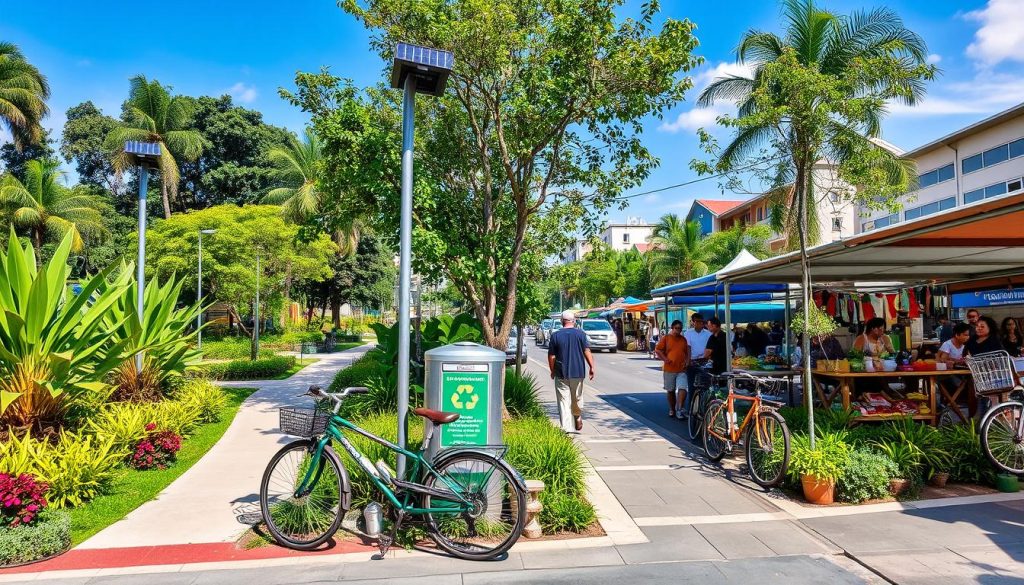
Keeping the environment clean is key in Cebu City. The city is tackling waste pollution through several innovative methods. These methods include:
- Comprehensive recycling programs that encourage residents to sort and recycle waste
- Educational campaigns aimed at raising awareness about waste segregation
- Community cleanup activities to proactively address littering and pollution
By tackling waste, Cebu City not only keeps the city cleaner but also involves the community in conservation. This makes for a healthier urban living space.
Eco-Friendly Transportation Solutions
Cebu City is working to fight emissions by improving public transport. A key project is the Cebu Bus Rapid Transit system. These projects have goals like:
- Reducing traffic congestion and carbon emissions
- Offering reliable and accessible public transport options
- Encouraging the use of eco-friendly transportation to promote sustainable tourism
Enhancing public transportation improves convenience and reduces environmental harm. It’s a big step towards the city’s sustainability goals.

| Green Initiatives | Description | Impact |
|---|---|---|
| Waste Management | Recycling programs and educational campaigns | Reduces pollution, increases community awareness |
| Public Transport Improvements | Development of the Cebu Bus Rapid Transit system | Lower vehicle emissions, enhanced public mobility |
| Community Engagement | Cleanup drives and environmental education | Encourages active participation in sustainability efforts |
Conservation Projects and Eco-Tourism
Cebu City is leading with its numerous conservation efforts. These efforts are key in boosting conservation while supporting diverse species. They help keep the balance between visiting tourists and protecting nature.
The city boasts several protected areas. These places are dedicated to protecting the environment. They ensure a balanced ecological system.
Protected Areas and Biodiversity Conservation
Protected areas in Cebu are vital for wildlife. They also boost conservation efforts across the region. The Coral Aggregation Program, for example, has brought together over 150 divers. They work to fix coral ecosystems damaged by Typhoon Odette.
With coral reefs declining by about 70%, these initiatives are crucial. They’re not just for the reefs but also for enriching eco-tourist experiences. This makes protecting marine biodiversity through these projects very important.
Mangrove Restoration Efforts
Mangrove restoration is a key part of Cebu’s conservation projects. It aims to protect coastlines, support wildlife, and better water quality. These efforts greatly benefit local communities and promote responsible tourism.
By joining these restoration initiatives, people help preserve Cebu’s rich biodiversity. They also ensure the ecosystem’s future sustainability. Everyone’s contribution makes a vast difference in these efforts.
Digital Innovations for Sustainable Travel
Embracing digital innovation in eco-tourism is key in Cebu City for boosting sustainable travel. Technology helps make processes smoother, lowers environmental harm, and offers travelers great convenience. For example, the Tourism Promotions Board (TPB) has funded smart tourism projects. They’ve given over PHP 111 million to local governments for this digital shift.
Places like Baguio City and Oriental Mindoro have started using digital tools. The V.I.S.I.T.A. app in Baguio is a great example. It shows how tech can improve communication between tourists and local services. This app is now helping multiple provinces and regions boost their tourism and service quality.
Travelers are also showing a big preference for modern conveniences. According to a study by the World Travel & Tourism Council, 83% of travelers like using digital payment methods. The Philippine Department of Tourism has made moves like subsidizing RT-PCR tests to encourage safe travel. Investing in technology in sustainable travel not only meets this demand but also helps the tourism industry stay strong.
| Digital Innovation | Description | Impact on Sustainable Travel |
|---|---|---|
| V.I.S.I.T.A. App | Mobile application enhancing tourist experience in Baguio and beyond. | Improves communication and reduces reliance on physical resources. |
| Digital Payment Solutions | Integration of secure online payment options for travel services. | Increases efficiency and convenience for travelers, reducing cash handling. |
| Travel Websites & Apps | Regional platforms offering travel information and booking services. | Encourages informed travel decisions while promoting local attractions. |
Cebu City is showing the world how digital innovation in eco-tourism can make visits better. It also helps us achieve our bigger goal of sustainable development. As tech keeps evolving, it will greatly change and help the tourism field.
The Role of Local Government in Promoting Sustainability
The local government in Cebu City plays a vital role in boosting sustainable tourism. They do this with various policies and projects aimed at being eco-friendly. These efforts not only help the planet but also improve tourism in the area.
One key action is adopting tourism policies that motivate visitors to be mindful of their impact. This includes building facilities that serve tourists and protect nature. A great example is the Cebu Bus Rapid Transit project. It aims to cut down traffic while encouraging people to use public transport, which is more environmentally friendly.
The local government’s strategies encourage teamwork between government bodies, communities, and businesses. This teamwork is essential for sustainable tourism that benefits everyone – locals and tourists. Here are a few main points:
- Community Development: Local governments work closely with communities to make sure tourism grows in a sustainable way.
- Job Creation: Tourism, supported by these initiatives, creates numerous jobs, boosting Cebu’s economy.
- Educational Programs: It’s important to teach both locals and visitors about eco-friendly practices, and the government prioritizes this.
With an expected 11 million visitors by the end of 2023, the local government’s role is more crucial than ever. Focusing on sustainable and fair policies, Cebu aims to set a positive example for the area. This approach also aims to enhance the experience for tourists.
| Initiative | Description | Impact |
|---|---|---|
| Eco-Friendly Infrastructure | Projects like the Cebu Bus Rapid Transit system | Reduced traffic congestion and carbon footprint |
| Community Engagement | Involving locals in tourism planning and operations | Enhanced local economy and fostering community pride |
| Sustainability Education | Workshops for tourists and locals on sustainable practices | Increased awareness and responsible behavior among visitors |
Collaborations with Organizations for Sustainable Development
In Cebu, working together is key for sustainable development. Local NGOs join forces with global groups to share important resources and know-how. This teamwork is critical for encouraging eco-friendly tourism. Local NGOs are at the forefront, leading various initiatives that make a real difference in the community.
Partnerships with Local NGOs
Teaming up with local NGOs is important for eco-friendly projects in Cebu City. A leading example is the Philippine Center for Environmental Protection and Sustainable Development, Inc. (PCEPSDI), founded in 2008. PCEPSDI leads many green projects like the “PUNO ANG SOLUSYON” tree planting effort. This effort shows how local NGOs motivate the community towards greener and sustainable living.
PCEPSDI works together with others for greater impact. For example, they run training on Life Cycle Assessment with WWF Philippines for food services. These initiatives boost local understanding and help businesses follow sustainable development rules.
Incentives for Sustainable Business Practices
Offering rewards for green business methods encourages local companies to join sustainable development in Cebu. As environmental awareness grows, companies are eager to adopt green practices. They see benefits like saving money and better brand reputation.
The Global Sustainable Tourism Council helps by providing specific industry training. The recent Hotel Sustainability Training in Cebu gave professionals the knowledge to make a difference. Focusing on sustainable tourism helps preserve the environment and strengthens the local economy.
Conclusion
The future of sustainable tourism in Cebu City is bright, thanks to efforts from local communities, the government, and hotels. With more than five million foreign visitors in 2023, Cebu must focus on sustainable travel. This is vital for balancing tourism growth with caring for the environment. Making eco-friendly practices common is essential.
The closure and fix-up of Boracay Island show that being proactive helps local nature. This, in turn, boosts tourism money. Spending on nature, like fixing mangroves, is worth more than it costs. Cebu City is setting an example in sustainable tourism for others to follow by doing this.
What we do now determines if Cebu City leads in eco-friendly tourism. Investing in training and working with the community shows strong dedication. For example, over 40 people in the hotel business learned about eco-tourism recently. Embracing sustainable habits means Cebu City can protect its unique culture and nature for the future.