Unraveling the Cultural Significance Plain of Jars
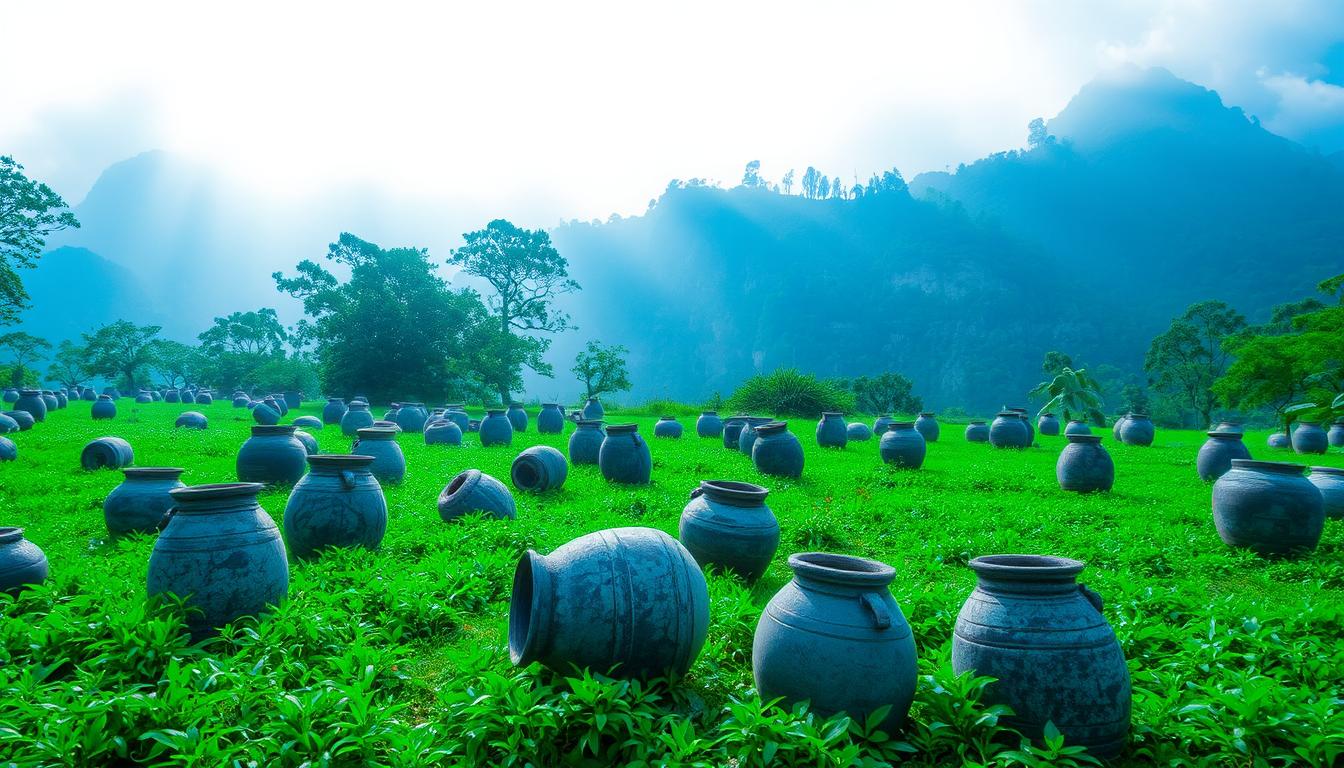
What secrets hide beneath the surface of the Plain of Jars in Southeast Asia? This site in Laos is famous for its thousands of giant stone jars. They offer a peek into a complex culture that has intrigued scholars since the 1930s.
The jars date back to a time of growing complexity, from about 500 BCE to 500 CE. They are more than just old relics. They are crucial for understanding ancient burial customs and Southeast Asia’s rich cultural heritage.
Recent digs at the Plain of Jars have uncovered more about these massive stone structures. Made from rock, some jars are as tall as 3 meters and weigh up to 10 metric tons. Over 90 jar sites across the area remind us of the ancient civilizations that once flourished here.
As researchers start new digs and use advanced methods, they aim to learn more about these enigmatic artifacts. But the big question remains: how do these stone jars fit into the larger story of Southeast Asia’s heritage?
Introduction to the Plain of Jars
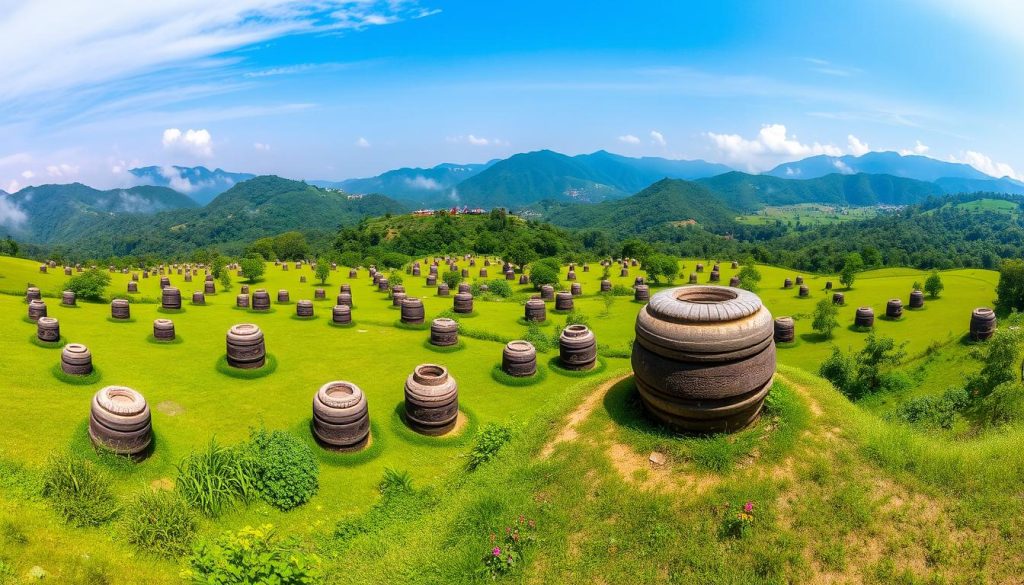
The Plain of Jars is a UNESCO World Heritage site in Laos. It’s a top tourist spot. The site is on the Xieng Khouang Plateau and has about 2,000 ancient stone jars. These jars are up to three meters tall and can weigh over 10 metric tons.
These jars are 1,500 to 2,000 years old. They still amaze historians and travelers today.
The Plain of Jars was named a World Heritage Site on July 6, 2019. It’s a key spot for cultural tourism in Laos. There are seven jar sites to explore, with Site 1 being the biggest and most visited. It costs 15,000 LAK to enter.
Site 1 has a cave that was once used for cremations. This adds to its mystery.
Visiting the Plain of Jars is now easier. Xieng Khouang Airport offers flights from Vientiane and Luang Prabang. Phonsavan has many ways to get around, like bikes and motorbikes.
Exploring the Plain of Jars is exciting. It lets you uncover the secrets of these giant stone jars.
The Landscape of Mystery
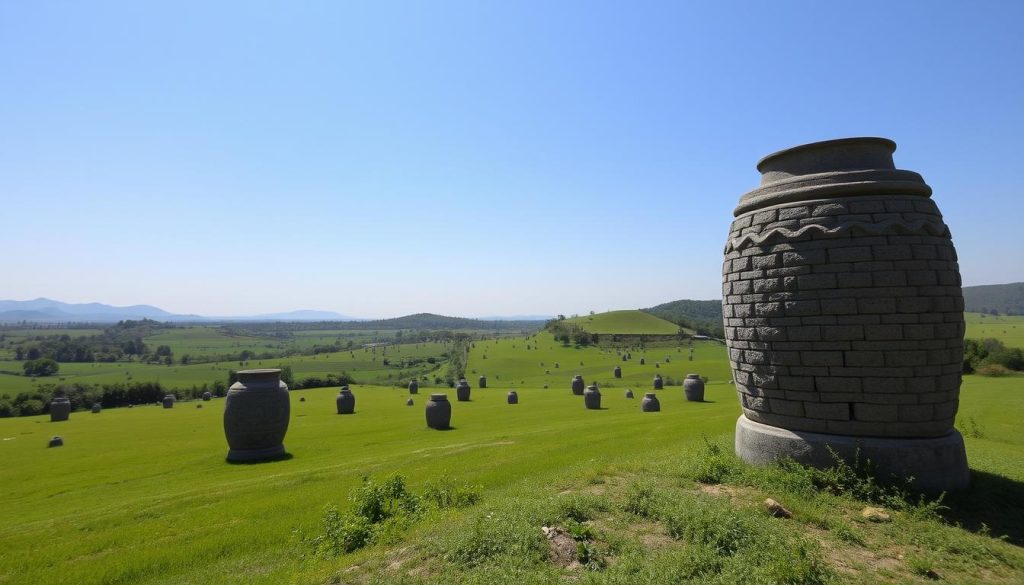
The Plain of Jars in central Laos is a mysterious megalithic site that fascinates everyone. It has rolling hills with thousands of giant stone jars. These jars are in 90 different groups, with sizes ranging from one to over 400.
The jars are made from sandstone and granite. They can be up to ten feet tall and weigh as much as 14 tons. This makes them truly impressive.
This site is also known for its ancient civilization remnants. The jars date back to between 500 BCE and 500 CE. Excavations have found human remains that are 2,500 years old.
This discovery has sparked many theories about the jars’ purpose. Some believe they were used as crematories. This mix of giant stone vessels and ancient history makes the site very mysterious.
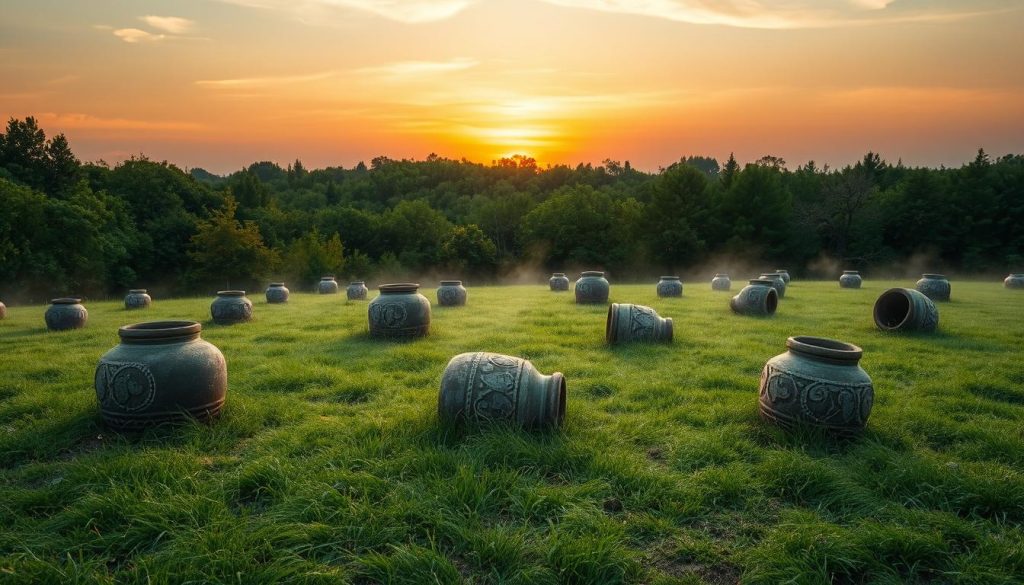
The Plain of Jars is not just a collection of ancient artifacts. It’s also a cultural heritage site in central Laos. Some jars have unique carvings and symbols. This adds to their mystery.
The area is full of curiosity. It invites both researchers and tourists to uncover the secrets of a long-lost civilization.
Historical Significance of the Plain of Jars
The Plain of Jars is a site of great historical importance. It links to ancient Iron Age cultures in Laos from 500 BC to 200 AD. Over 2,500 jars and fragments are spread across 90 sites, showing a widespread practice. These jars range in height, with some reaching up to three meters.
The jars are connected to ancient burial practices. This site was a burial ground, where jars held the remains of the deceased. Grave goods were also found with the jars. Unique items like stone discs and carved lids show the sophistication of these communities. One jar has a crouching human form carved in bas-relief, a rare decorative element.
Studying these burial practices gives us insight into Iron Age beliefs about death and the afterlife. The artifacts found at the site help archaeologists understand human activity and social customs during this time. Located about 250 km southeast of Luang Prabang, the Plain of Jars is a key archaeological site, connecting us to its ancient past.
| Aspect | Details |
|---|---|
| Number of Jars | Over 2,500 jars and fragments |
| Height of Jars | 1 to 3 meters |
| Jar Sites | More than 90 sites across hundreds of square kilometers |
| Dating | Constructed during Iron Age, potential origins as early as second millennium BC |
| Burial Items | Stone discs and animal-carved lids among other artifacts |
| Risks | Presence of unexploded bombs from the Vietnam War |
| Major Site | Site 52 – the largest with 392 jars |
Archaeological Discoveries at the Site
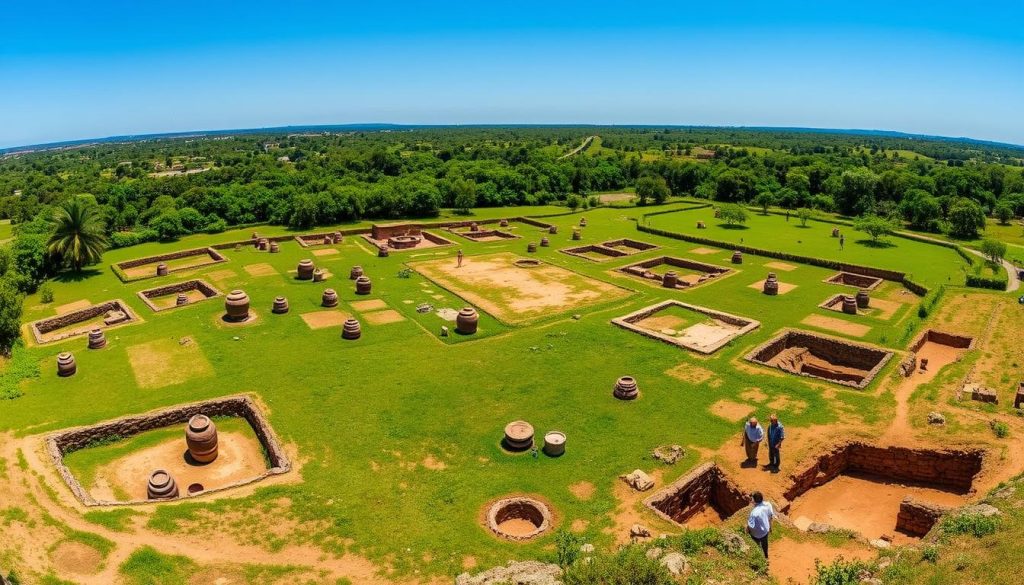
Recent finds at the Plain of Jars are uncovering the secrets of this mysterious place. Researchers have found clues about the stone jars, dating back over 2,000 years to the Iron Age. This time frame is from 500 BCE to 200 CE.
Excavations have shown a network of over 100 jar sites. The large number of jars suggests a significant cultural practice among ancient civilizations.
The Origins of the Jars
The stone jars, some weighing up to 20 tonnes, were moved from quarries eight to ten kilometers away. This shows the advanced technology of the ancient people who lived there. The jars’ existence points to complex societies and advanced construction methods.
One jar stands out because it has a decoration. It features a crouching human figure carved in bas-relief.
Dating and Cultural Context
To understand the Plain of Jars, archaeologists use advanced dating techniques. These include radiocarbon and chemical analysis of tooth enamel. These methods help us see how ancient people used the landscape and their diet.
Recent expeditions, like one in February, have found 15 new sites with over 100 jars. This has expanded research and sparked interest in possible connections with similar sites in northeast India, over 1,200 kilometers away.
| Finding | Details |
|---|---|
| Estimated Age | Over 2,000 years old (500 BCE – 200 CE) |
| Number of Jars | Approximately 2,500 jars and fragments |
| Known Jar Sites | Over 100 sites across hundreds of square kilometers |
| Transportation | Quarried from 8-10 kilometers away using iron tools |
| Decoration | Only one jar bears a bas-relief of a crouching figure |
| Future Discoveries | Use of drones and lidar technology for further exploration |
Cultural Significance Plain of Jars
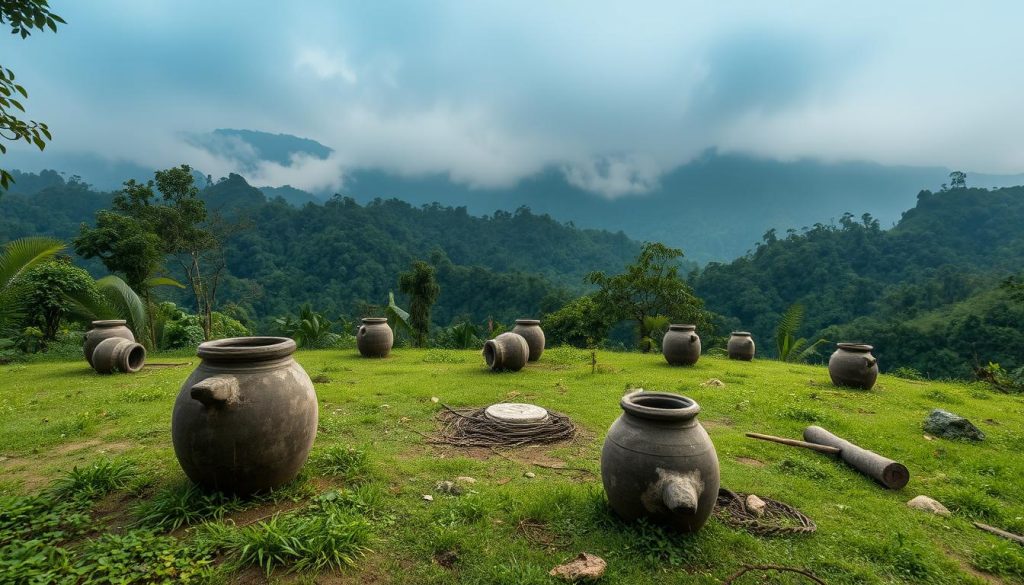
The Plain of Jars holds deep cultural meaning, showing us the burial and spiritual beliefs of old societies. Over 2,100 stone jars are spread out, showing the past’s rituals and customs. Each jar, some as heavy as six tons, is a marvel of engineering and spiritual connection.
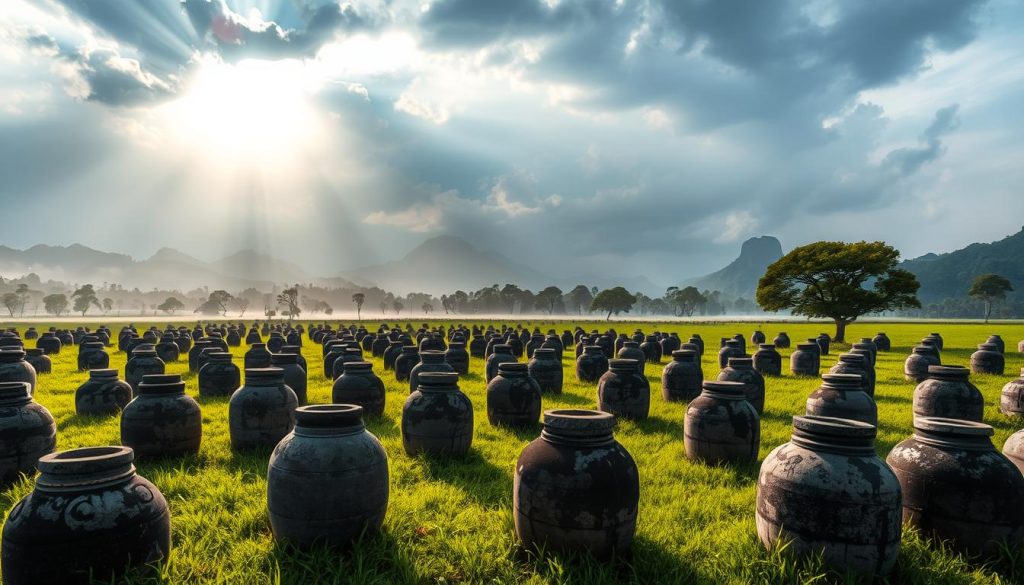
These ancient stones are more than just relics; they represent a deep respect for the dead. They mark sacred burial grounds, showing how much ancient people valued their ancestors. Studies suggest these practices lasted from 500 BCE to after 500 CE, highlighting a long tradition of honoring the dead.
As research goes on, we learn more about the jars’ spiritual importance. But, only a small part of the sites have been studied because of unexploded bombs. Visiting the Plain of Jars gives us a peek into ancient Southeast Asia’s spiritual and social systems. It shows the strong bond between life and the afterlife in these communities.
Theories Surrounding the Purpose of the Jars
Many theories have come up about the jars’ purpose through archaeology. Some say they were for funerals, rituals, or even storing things. Each idea helps us understand the jars’ cultural importance.
Funerary Practices and Mortuary Contexts
One theory is that the jars were for burials. Archaeologists found human remains and burial items near the jars. This shows the jars might have honored the dead.
Ceremonial and Ritualistic Uses
Others think the jars were for ceremonies. They found carved discs with symbols near the jars. These could have marked graves, showing their spiritual value.
Practical Uses for Storage and Brewing
Some believe the jars were used for everyday needs. They might have stored food and water. They also think the jars were used for brewing rice wine. This shows how the jars were part of daily life.
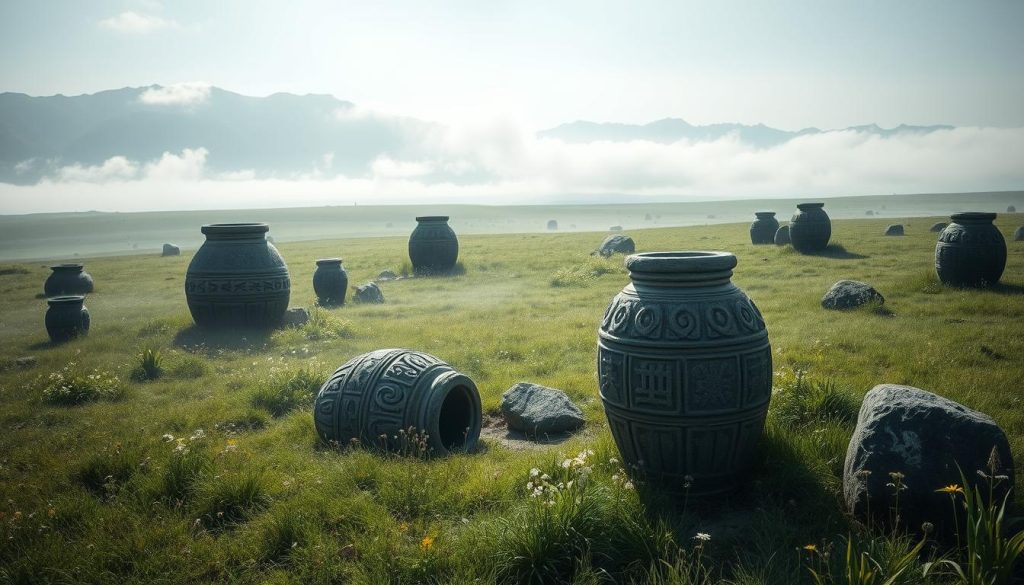
| Purpose Theory | Description |
|---|---|
| Funerary Practices | Jars used as burial vessels for human remains and burial goods. |
| Ceremonial Uses | Items and symbolism related to rituals observed in proximity to the jars. |
| Practical Storage | Function as containers for food and liquids, including rice wine. |
Challenges in Archaeological Research
The Plain of Jars faces many challenges in archaeological research. This is mainly because of the area’s troubled past. Over 2,000 large carved stone jars are spread across Xieng Khouang Province in northern Laos. These jars hold great cultural value, but the danger of unexploded ordnance makes excavation risky.
An estimated 80 million unexploded bombs from the Vietnam War still litter the area. This makes the site one of the most dangerous places for archaeologists. Only a small part of the land has been cleared of these dangers.
This limited clearance puts researchers at great risk. The local people also face dangers when they use the land. This limits not just archaeological studies but also the area’s development.
Environmental factors also make preserving the site difficult. Weather and soil erosion can damage the jars and other archaeological features. This requires careful preservation efforts to protect this valuable cultural site.
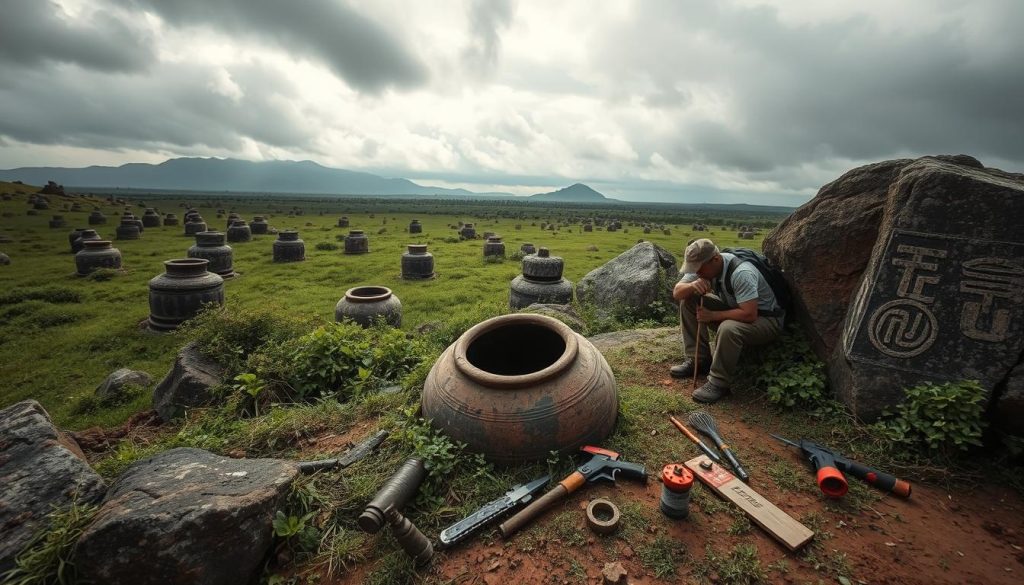
In 2020, the fourth field season aimed to find new insights around the jars. Despite the dangers, researchers found human burials and used advanced dating methods. Yet, the threat of unexploded ordnance remains a big challenge. Research here is vital for learning more about the site and keeping it safe.
Preservation Efforts and the Role of UNESCO
The Plain of Jars is a treasure in the world of cultural heritage. It has over 2,100 stone jars, telling a rich history. Preservation efforts are in full swing, showing its value as a UNESCO World Heritage site. Local and international groups work together to protect this important site.
Preserving the Plain of Jars is tough because of unexploded ordnance from wars. The Mines Advisory Group (MAG) is clearing these dangers. This lets visitors explore safely and learn about heritage management.
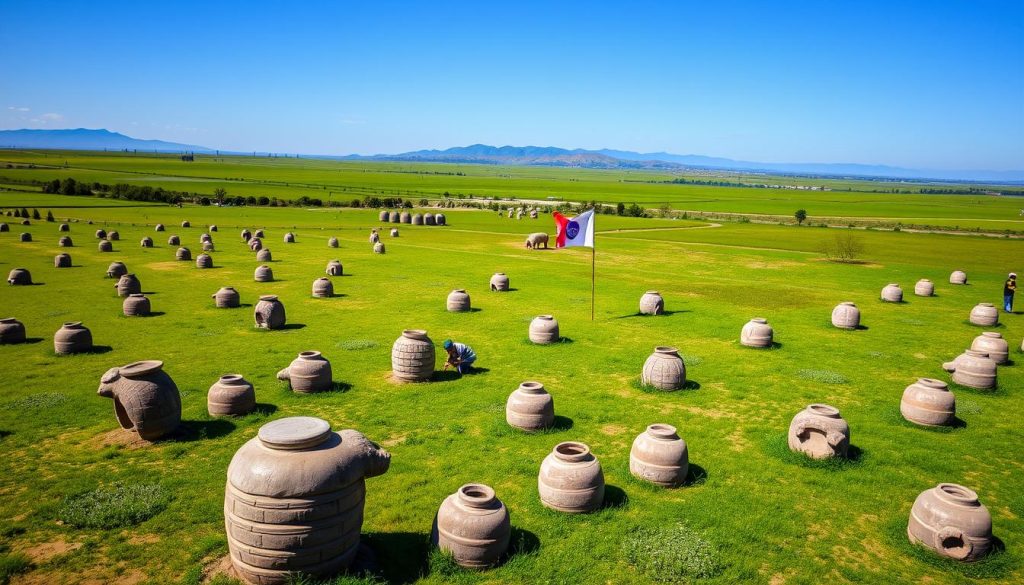
Trying to make the Plain of Jars a UNESCO World Heritage site shows a big commitment. It’s about keeping its architecture and culture alive. This effort also supports local tourism and helps the economy while protecting the area.
| Preservation Efforts | Description |
|---|---|
| Mines Advisory Group (MAG) | Works to clear UXO and ensure the safety of excavation and visitor access. |
| Community Education | Initiatives aimed at training locals in heritage management practices. |
| UNESCO Nomination | Efforts to achieve UNESCO World Heritage designation to safeguard the site. |
| Sustainable Tourism Development | Promotes tourism that benefits local communities while preserving cultural heritage. |
| Site Clearance | Clearance efforts at key sites to improve the safety and experience for visitors. |
These efforts show how important preservation is today. They help ensure the Plain of Jars’ cultural heritage is enjoyed by future generations.
The Development of Tourism at the Plain of Jars
The Plain of Jars is a top spot for tourists in Laos, attracting visitors worldwide. Tourism here brings jobs and helps local communities. It also highlights the need to protect cultural heritage. Sustainable tourism practices help keep the site beautiful for everyone.
Impact on Local Communities
Tourism at the Plain of Jars changes local lives for the better. It creates jobs in hospitality and guiding. This brings in money that helps improve education and homes, making life better for everyone.
Sustainable Tourism Initiatives
To keep the Plain of Jars safe, sustainable tourism is key. It aims to reduce harm to the environment and promote good travel habits. Efforts include:
- Training guides to share the site’s history and culture with visitors.
- Sharing some of the money from entrance fees for conservation.
- Letting locals help decide how tourism should grow.
These steps help locals feel proud of their heritage and environment. They ensure the site stays as fascinating as ever for future visitors.
| Initiative | Description | Community Impact |
|---|---|---|
| Training Programs | Workshops for guides on cultural and historical context. | Increases knowledge and pride among locals. |
| Revenue Sharing | Allocation of entrance fees to conservation. | Funds local development projects. |
| Community Involvement | Encouraging local participation in tourism planning. | Empowers residents and enhances decision-making. |
Tourism at the Plain of Jars brings in visitors eager to learn. It also boosts local economies and preserves culture. This balanced approach keeps the site a treasure for generations to come.
Recent Excavations and Discoveries
Recent digs at the Plain of Jars have uncovered a lot about ancient burial customs and cultural importance. These new findings help us understand the communities that lived there long ago.
New Human Remains and Burial Practices
Studies of human remains near the stone jars have given us key insights. Most burials happened between 700 and 1,200 years ago. Radiocarbon dating shows these were mainly from the ninth to 13th centuries.
Researchers are learning about life and death back then. They found artifacts like ceramic vessels and jewelry. These items help us see how these communities honored their dead.
Advanced Archaeological Techniques
A team of Australian and Lao archaeologists is using new methods. They’re studying diets and lifestyles through isotopic analysis. This shows us what people ate and their social status.
Optically stimulated luminescence dating has also been crucial. It shows human activity over 3,000 years. These advanced techniques are changing how we study the Plain of Jars.
| Dating Technique | Description | Date Range |
|---|---|---|
| Radiocarbon Dating | Used to date organic materials found in burial contexts | 9th to 13th centuries AD |
| Optically Stimulated Luminescence | Determines the last time sediments were exposed to light | 1350 to 730 B.C. and 860 to 350 B.C. |
| Isotopic Analysis | Examines the chemical signatures of dietary habits | N/A |
The Plain of Jars is at the heart of archaeological research. Each new discovery adds to its story. This is thanks to cutting-edge methods and creative research.
Conclusion
The Plain of Jars is a key part of Southeast Asia’s history. Each find gives us a peek into the lives of ancient people. They show us how communities used to live and honor their dead.
This site is now a UNESCO World Heritage site. It shows the skill and spirit of old civilizations. It also tells a story of survival through tough times, like the Vietnam War.
Keeping the site safe is crucial. It has faced threats from looters and damage. Today, 25% of Xieng Khouang province is still dangerous because of old bombs.
Efforts to save the site are ongoing. They help protect the jars and keep people safe. This work is important to avoid more deaths from old bombs.
As we learn more, the secrets of the Plain of Jars come to light. It lets us see the creativity and variety of ancient cultures. By helping to preserve it, we ensure it will inspire and teach others for years to come.