

Exploring Inle Lake Fishing Communities & Culture
Have you ever thought about the depth of fishing communities’ traditions? At Inle Lake, Myanmar’s largest state, Shan State, you’ll find a world of culture. The local people live in harmony with the lake, using sustainable fishing and farming methods.
Their unique leg-rowing and floating gardens show fishing is more than just a job. It’s a way of life that connects them to the environment.
Exploring Inle Lake, you’ll see the Intha people’s traditions go beyond fishing. They have many industries that help them thrive. Let’s explore the stunning landscapes and rich heritage of Inle Lake together. See how these communities live in perfect balance with nature.
Introduction to Inle Lake
Inle Lake is in Shan State, Myanmar. It’s a stunning place for travel experiences. The lake is 44.9 square miles (116.3 square kilometers) big. It has a unique landscape and a lively local culture.
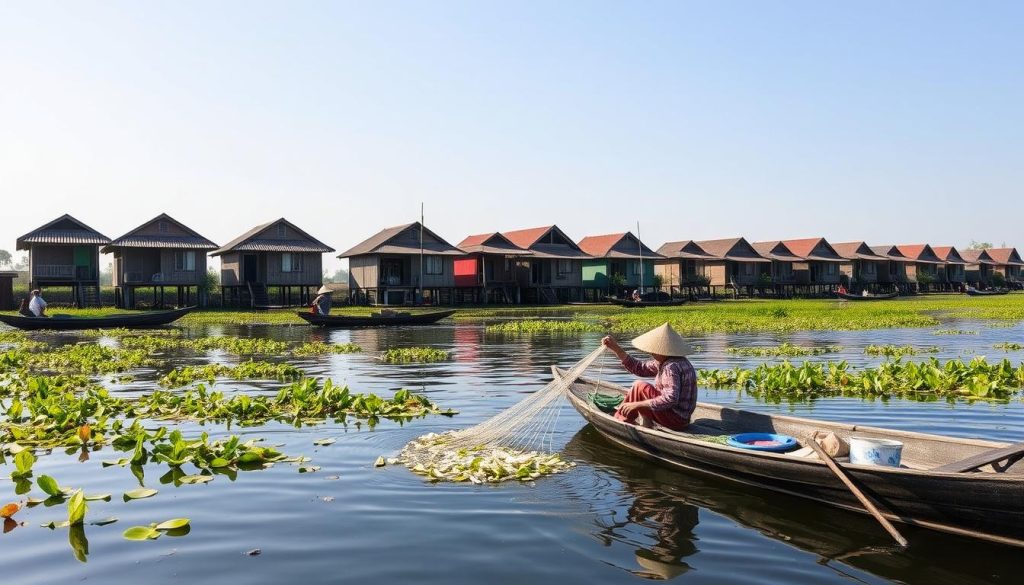
It’s famous for its stilt houses and floating gardens. These features make Inle Lake a must-see for visitors worldwide.
The lake is surprisingly shallow, with depths of about 2.1 meters (7 feet) in the dry season. During the wet season, the depth can rise. This shows how the lake changes with the seasons.
Inle Lake is at 2,900 feet (880 m) high. It has a mild climate, with temperatures around 26°C (78.8°F). The lake gets about 1,370 mm of rain each year, keeping it green and full of life.
The Intha people, about 70,000 strong, live here. They have lived by the lake for centuries. Their traditions are deeply connected to the lake and the community.
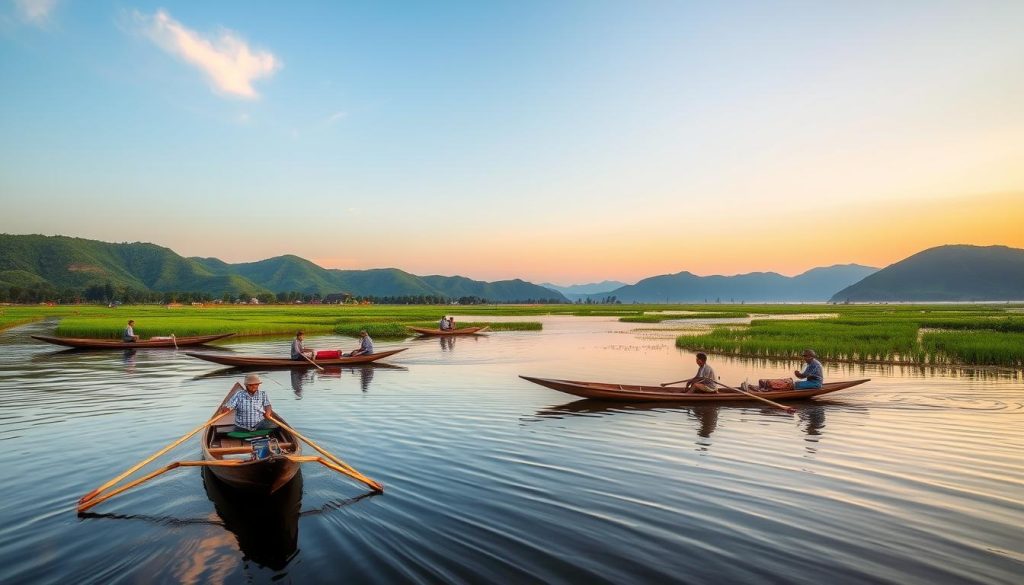
The lake is also a wildlife sanctuary. It’s home to over 35 fish species and many endemic animals. This makes Inle Lake a treasure for nature lovers and adventurers.
The Rich Culture of Inle Lake
The Inle Lake culture is built on a deep bond between its people and nature. The Intha people are at the heart of this place. They live in harmony with the land and water, using traditional fishing methods like leg-rowing.
This skill has been passed down for many years. It shows the Intha’s strength and ability to adapt. Their connection to the water is truly special.
Local traditions shine through in daily markets and festivals. Every morning, markets around the lake come alive. You’ll see vendors selling fresh food, fish, and crafts.
These markets are more than just places to shop. They show the community’s spirit and their deep connection to their heritage. The Intha’s skill in making handmade boats is a testament to their culture.
Their floating gardens are a unique way of farming. It shows their commitment to the environment. The area is also home to ancient temples and stupas, adding to its beauty.

Buddhism has a big impact on the local culture. Monasteries and monks add a spiritual layer to the area. Despite challenges, the Intha people’s traditions remain strong.
| Element | Description |
|---|---|
| Intha People | The indigenous community known for their unique leg-rowing technique and sustainable fishing practices. |
| Floating Gardens | Innovative agricultural methods developed to cultivate crops on the water, showing the community’s adaptability. |
| Daily Markets | Vibrant trade activities where locals sell diverse goods including vegetables, fish, and crafted items. |
| Buddhist Influence | Monasteries and pagodas reflect the predominantly Buddhist beliefs embedded in local traditions. |
| Architectural Heritage | Ancient stupas and temples overlook the landscape, representing a rich history intertwined with the community’s identity. |
Inle Lake Fishing Communities
The Inle Lake fishing communities are home to the Intha people. Their culture and lifestyle are deeply connected to the lake. Here, you’ll see unique fishing traditions passed down through generations.
Exploring the Inle Lake lifestyle, you’ll learn how these traditions shape daily life. They also support the local demographics.
Overview of the Locals
The Intha community lives around and on Inle Lake. They make a living from fishing and agriculture. Their fishing skills are a key part of their culture.
The lake’s resources are vital for the Intha people. It allows them to live in harmony with nature.
Demographics and Daily Life
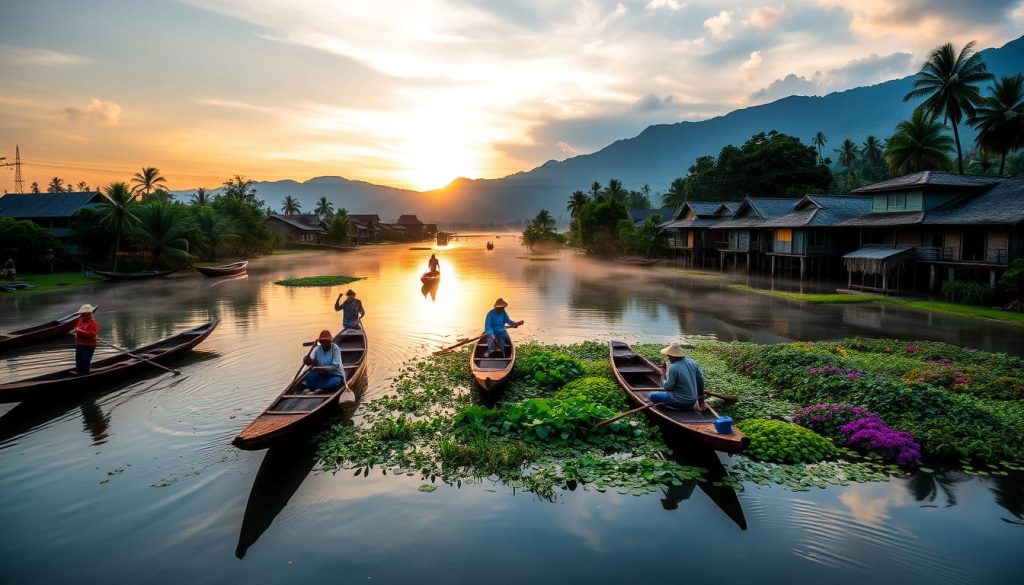
Life on Inle Lake is all about understanding the ecosystem. The Intha people fish using a special leg-rowing technique. This shows their skill and adaptability.
They also grow floating gardens and make traditional crafts like lotus weaving. The community’s knowledge of fish varies with age. Younger people know less due to environmental challenges.
| Aspect | Details |
|---|---|
| Lake Size | Second largest lake in Myanmar |
| Average Depth | 2.1 meters during dry season, increasing to 3.6 meters in rainy season |
| Elevation | 880 meters above sea level |
| Community | Intha people known for fishing and agriculture |
| Cultural Practices | Leg-rowing and lotus weaving |
| Fish Species Knowledge | Average knowledge varies with age; less for younger individuals |
| Environmental Impact | Introduced species like tilapia affect native fish populations |
Traditional Fishing Methods at Inle Lake
At Inle Lake, traditional fishing methods are both effective and skillful. Local fishermen use unique techniques that show their deep knowledge of the lake. The leg-rowing technique is one of these, allowing them to move through shallow waters while managing their gear.
Unique Leg-Rowing Technique
The leg-rowing technique is a key part of fishing at Inle Lake. Fishermen use their legs to propel the boat, keeping their hands free. This method is great for the shallow waters, with an average depth of 2 meters.
By using their legs, fishermen stay balanced and don’t harm the water. They can focus on fishing without disturbing the environment.
Use of Cone-Shaped Nets
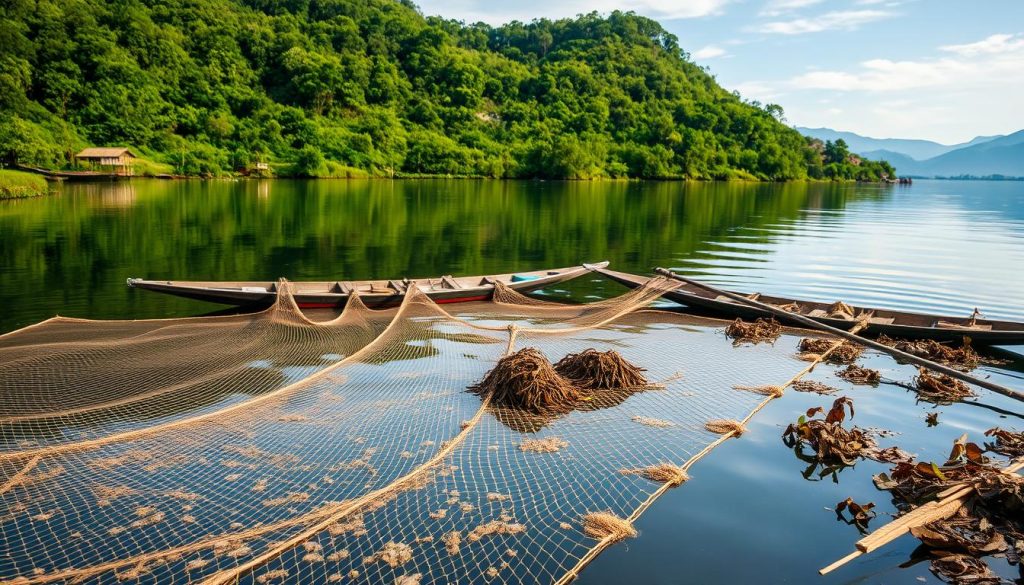
Inle Lake fishermen use cone-shaped nets in their fishing. These nets are made from bamboo and netting, showing the evolution from old methods. Now, one fisherman can catch fish efficiently with these nets.
This shows the fishermen’s ingenuity and respect for the lake’s ecosystem. They’ve found a way to be effective while protecting the environment.
| Fishing Method | Advantages | Historical Significance |
|---|---|---|
| Leg-Rowing Technique | Hands-free navigation, balance | Originates from 12th century |
| Cone-Shaped Nets | Efficient fish trapping | Evolution from labor-intensive methods |
These methods show the rich fishing tradition at Inle Lake. They help locals make a living despite environmental changes. The fishermen’s dedication is a big part of the region’s culture.
Inle Lake Fishing Industry
The Inle Lake fishing industry is key to local economies in Myanmar. It gives jobs to many families and brings people together. With over 1.7 million people living nearby, fishing is a big part of their lives.
Economic Impact on Local Lives
Between 2007 and 2011, Inle Lake’s fishing made up 26% of Myanmar’s fish production. This shows how important fishing is for the area. Fishermen catch tilapia and Inle carp, which are important for locals.
The average income here is under $1,500 a year. This makes sustainable fishing even more crucial for their future.
Trade Practices and Sustainability
Ethical fishing is vital for Inle Lake’s health. Fishermen follow rules to protect fish numbers. This helps the lake’s ecosystem and supports local jobs.
Fishing and trade are closely linked in local economies. Markets are lively, selling fish and farm goods. This attracts tourists and boosts trade. By focusing on ethical fishing, the community protects its economy and environment for the future.

Sustainable Fishing Practices in Inle Lake
Sustainable fishing in Inle Lake is key for its ecological health. Community efforts are vital for keeping the lake balanced. These efforts teach local fishers about conservation and managing fish populations well.
By working together, these programs ensure the lake’s rich biodiversity is preserved for the future.
Community Initiatives for Ecological Balance
Inle Lake’s region has seen many efforts for sustainable fishing. The community knows it needs to manage both the environment and economy well. These initiatives focus on:
- Monitoring fish populations: Regular checks help set fishing limits to avoid overfishing.
- Educating fishermen: Workshops teach fishers how their actions affect the environment.
- Promoting alternative livelihoods: Programs help fishers find other ways to make money, easing the pressure on fish.
- Encouraging community involvement: Getting locals involved in decisions makes them more committed to sustainability.
These practices help the Intha community work together to manage resources better. This improves the ecological balance around Inle Lake.
| Initiative | Description | Impact |
|---|---|---|
| Fish Population Monitoring | Regular analysis of fish stocks to prevent overfishing. | Improved species abundance; protection of endemic species. |
| Education Programs | Workshops on sustainable fishing techniques and ecological importance. | Enhanced awareness and better practices among fishers. |
| Alternative Livelihoods | Development of tourism and handicrafts. | Reduced fishing pressure and increased community income. |
| Community Engagement | Local participation in resource management decisions. | Strengthened collective responsibility and commitment. |
Environmental Impact of Fishing in Inle Lake
Fishing at Inle Lake is facing big challenges that harm its ecosystem. More tourists and urban growth around the lake worry about its future. Pollution and too much fishing have hurt fish numbers and water health.
Current Challenges Facing the Ecosystem
The ecosystem challenges faced by Inle Lake include:
- Overfishing, leading to a decline in fish stocks.
- Pollution from agricultural runoff impacting water quality.
- Encroachment from urbanization, reducing natural habitats.
- Changes in land use in the surrounding catchment area, causing habitat degradation.
Between 1990 and 2020, land use changes showed a worrying trend. Forests dropped by 13%, while agriculture and urban areas grew by 13% and 5%, respectively. These changes harm the lake’s environment.
Efforts to Mitigate Negative Effects
Local groups and governments have started many ecological projects to save Inle Lake. They aim to:
- Encourage sustainable fishing.
- Teach communities about pollution through education.
- Work with NGOs to create effective conservation plans.
- Protect unique species like the Inle carp from hybridization.
Even with these efforts, challenges persist. It’s important for locals and visitors to stay aware and involved. This helps keep the lake healthy and balanced for fishing and the environment.
| Year | Forest Area Change | Agriculture Change | Urban Area Change |
|---|---|---|---|
| 1990-2020 | -13% | +13% | +5% |
Exploring Floating Gardens and Agriculture
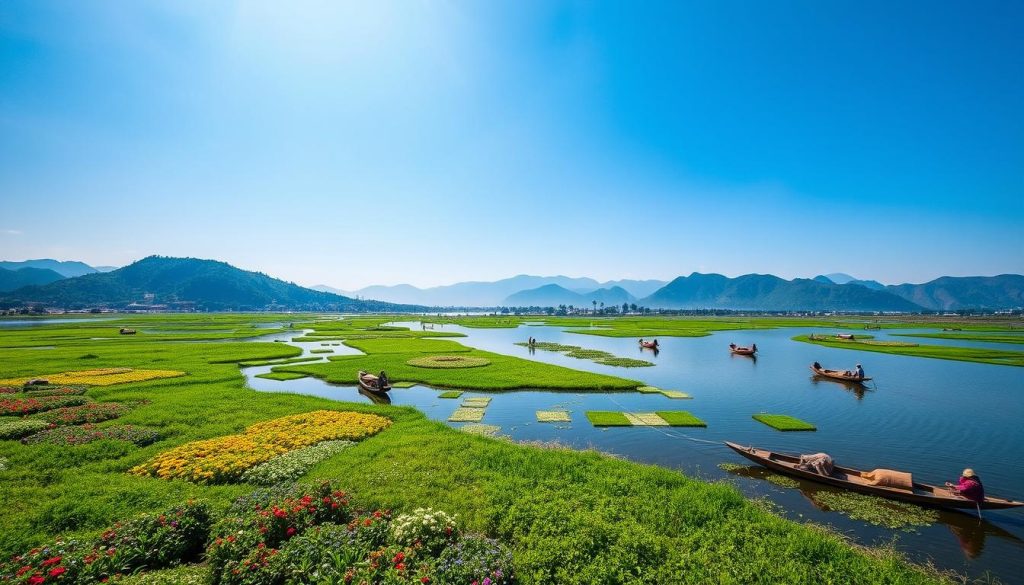
The people around Inle Lake are very clever. They use floating gardens to grow food, thanks to the Intha people’s skills. These floating gardens Inle Lake are a key part of their lives. They show how well the locals live with their surroundings.
The Role of Floating Gardens in Local Life
Floating gardens are more than just farms. They are a big part of the local families’ lives. Built from old plants and soil, they float on the lake. This way, farmers can grow veggies like tomatoes and squash.
This farming method has been around for over a hundred years. It’s helped the community grow, even with problems like erosion. Fishing is still important, but farming helps with food and money.
When you visit Inle Lake, you’ll see the floating gardens. They’re not just green spots; they show the people’s connection to nature. Watching farmers work there shows the beauty of their daily lives.
The Fishing Communities’ Connection to Nature
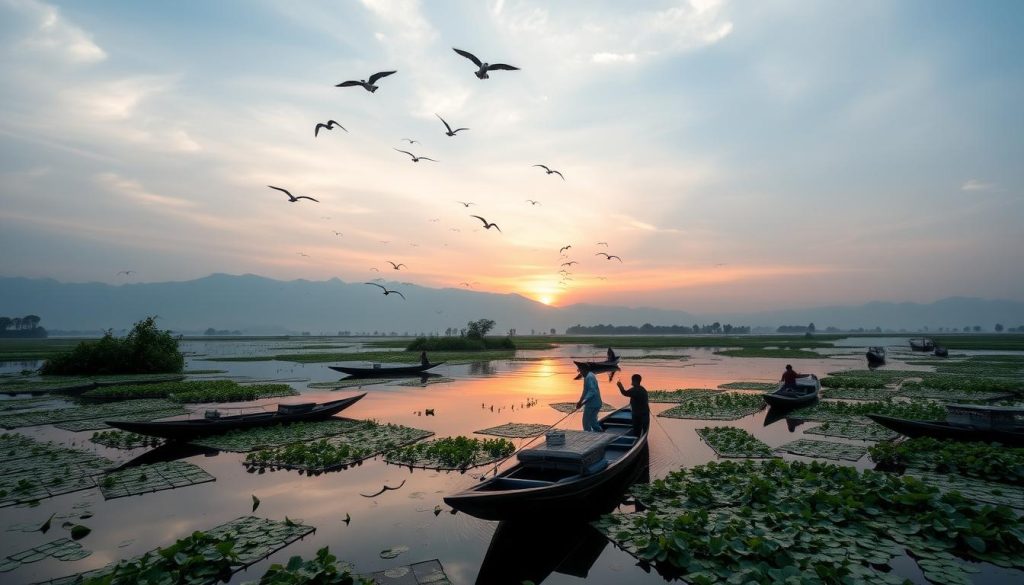
The fishing communities around Inle Lake have a deep connection to nature. This connection is a big part of their lives and culture. Inle Lake, the largest in Shan State, Myanmar, is about 116 square kilometers. It’s also one of the country’s highest lakes, at 890 meters.
These communities show great respect for the environment. They use traditional fishing methods, like leg-rowing, to live in harmony with nature. Despite challenges, they keep using sustainable fishing practices. This shows their environmental consciousness.
But, their connection to nature is facing challenges. The fish catch has been decreasing due to pollution and invasive species. This has changed their fishing ways and livelihoods.
Projects like the Fish for Livelihoods (F4L) are helping the fishing communities. It aims to improve local fisheries and community strength. Over 9,500 households are now involved in eco-friendly farming and fishery projects.
Visiting the lake, you see the fishing communities’ dedication to their environment. They face many challenges but hope to keep their connection to nature Inle Lake alive for future generations.
| Data Point | Statistic |
|---|---|
| Surface Area of Inle Lake | 116 square kilometers |
| Elevation | 890 meters |
| Households Engaged in Eco-Friendly Methods | Over 9,500 |
| Funding for Fishing Projects (2022) | 18,720,000 MMK ($10,000) |
Local Fisherman Livelihoods
The daily life of Inle fishermen is a mix of old traditions and new challenges. Around 200,000 people live near Inle Lake, and fishing is key to their survival. It’s not just for families but also for the local economy.
Day-to-Day Activities of Fishermen
Fishermen start their day before the sun rises. They use special ways to move on the lake. Their main jobs are:
- Fishing: They use old methods like leg-rowing and cone-shaped nets.
- Clearing Reeds: They keep areas open to find the best fishing spots.
- Market Trading: They sell their catch at Ywama Market, where you can find many goods.
The life of Inle fishermen is closely tied to the lake’s health. Sadly, more sediment and pollution harm their fishing. They must find new ways to adapt to these changes.

Watching these communities, you see their strength and cleverness. They are crucial in keeping their traditions alive. By joining in their fishing, you learn about a culture deeply connected to the water and nature.
Visiting Inle Lake: What to Expect
Visiting Inle Lake is an unforgettable experience. You’ll be surrounded by stunning scenery and vibrant culture. The lake, Myanmar’s second largest, sits at 884 meters above sea level. It offers breathtaking views and a unique climate.
Average temperatures range from 22 to 35 degrees Celsius. The best time to visit is between November and February. During this time, the weather is mild, and there are fewer tourists.
At Inle Lake, you can see over twenty native snail species and nine fish species found nowhere else. In 2015, it became Myanmar’s first UNESCO Biosphere Reserve. The area fee is 15,000 MMK per person, valid for a week.
The local markets are a highlight. Five towns have markets that open every five days. This means you can always find something to buy and try. Boat trips are also popular, with full-day rentals costing about 18,000 MMK.
- Accommodation at Remember Inn is approximately £14 per night.
- Breakfast at local eateries will only set you back about $2.
- For unique souvenirs, consider purchasing scarves made from lotus fiber at the weaving factory for around $10 each.
Local cuisine is a must-try. Dishes like avocado salad cost 3,500 kyat. This is more than in other regions, showing the area’s unique flavors. Visiting the cheroot factory is also a great experience, introducing you to local tastes and traditions.
Your travel guide to Inle Lake is your roadmap to a rich experience. It’s not just about the views. It’s about connecting with the local stories and traditions. Every corner has a story, making your visit both engaging and educational.
Conclusion
Inle Lake is a special place, showing the strength of its fishing communities. These communities have a unique way of life, where fishing is a big part. But, they face big challenges from climate change and more tourists.
New developments like hotels and farmland removal harm the lake. The fish numbers are going down, hurting local jobs and the ecosystem. When you visit, think about how you can help protect the lake and its people.
Visiting Inle Lake is more than seeing its beauty. It’s about understanding the importance of preserving its culture and nature. We hope your visit will help keep the traditions and lake safe for others to enjoy in the future.





