Explore Burmese Culture: Traditions & Lifestyle
Ever wondered how a country with a rich Buddhist heritage and diverse ethnic groups creates its unique culture? Learning about Burmese culture takes you on a journey through Myanmar’s cultural landscape. It’s a mosaic shaped by history, geography, and spirituality.
With over 34 million people speaking Burmese, the culture is built on shared stories and practices. Daily customs like wearing Thanaka paste and festivals celebrating heritage show Myanmar’s depth and vibrancy. You’ll learn about unique eating habits, traditional clothing, and the role of pagodas and temples in their lives.
Join us as we explore the remarkable traditions that define Myanmar and its people.
An Overview of Burmese Culture
The culture of Myanmar is a rich tapestry, woven from threads of Myanmar history and the diverse experiences of its ethnic groups. Over 130 ethnic groups, including the predominant Bamar, make up the landscape of Burmese customs. The Bamar people’s traditions are heavily influenced by Buddhism, which plays a central role in their daily lives, ceremonies, and art forms.
Among the distinctive components of the overview of Burmese culture are the traditional arts, which encompass ten recognized disciplines. These include:
- Blacksmithing
- Woodcarving
- Goldsmithing
- Stucco relief
- Masonry
- Stone carving
- Turnery
- Painting
- Lacquerware
- Bronze casting
In the realm of literature, as of 1976, there were 411 titles published annually in Burmese literature. This shows both a legacy and challenges faced due to censorship and economic conditions. Dance traditions are categorized into dramatic, folk and village, and nat dances, reflecting the beauty and complexity of the nation’s culture. Traditional music, organized in an orchestra known as hsaing waing, features unique instruments like the saung-gauk, an arched harp that highlights the essence of Burmese soundscapes.
Interaction within communities is often initiated with the greeting “mingalaba,” allowing for a warm and welcoming atmosphere. The longyi, a versatile piece of clothing worn by both men and women, stands as a symbol of Burmese identity. It establishes a connection to cultural heritage. The combination of these elements illustrates a vibrant and dynamic cultural fabric that continues to evolve while respecting traditional Burmese customs.
Geographical Influences on Myanmar Culture
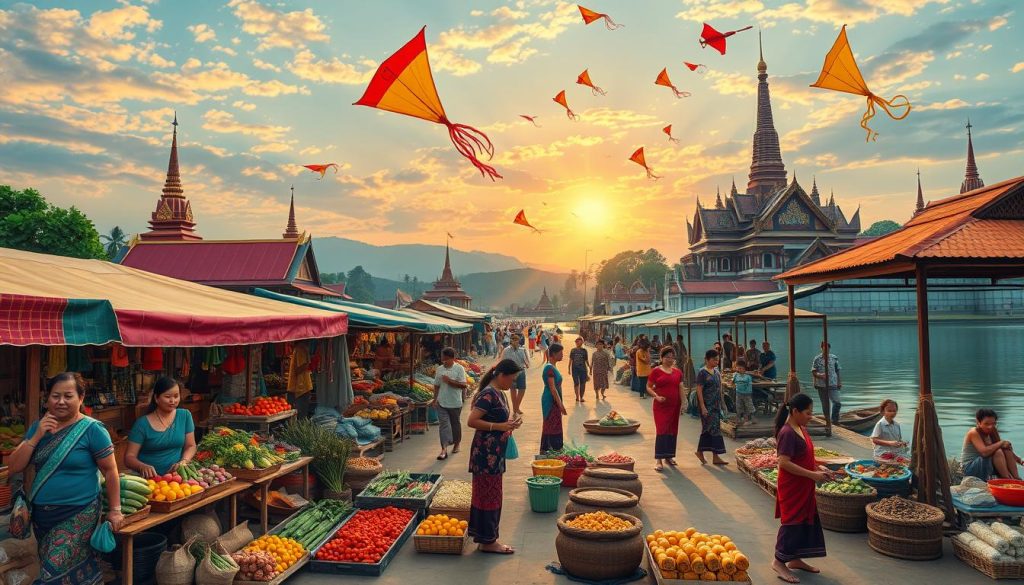
Myanmar’s diverse geography shapes its culture, making it rich and varied. The country spans 261,789 square miles, with mountains, valleys, and lakes. This variety leads to different lifestyles and traditions across the nation.
The famous leg-rowing fishermen of Inle Lake show how geography influences culture. They balance on one leg while rowing with the other. This skill shows how the environment shapes their daily lives.
Myanmar is close to many ethnic minorities, adding to its cultural richness. It has 110 distinct ethnolinguistic groups and 135 recognized ethnic groups. About 68% of the people are Burmese, but other groups like the Shan, Karen, and Arakanese also have a big impact.
Exploring Myanmar, you’ll see how geography and history blend. The Shwedagon Pagoda in Yangon and the Longyi traditional garments show Myanmar’s cultural depth. They reflect the country’s geographic and ethnic diversity.
Buddhism’s Impact on Burmese Traditions
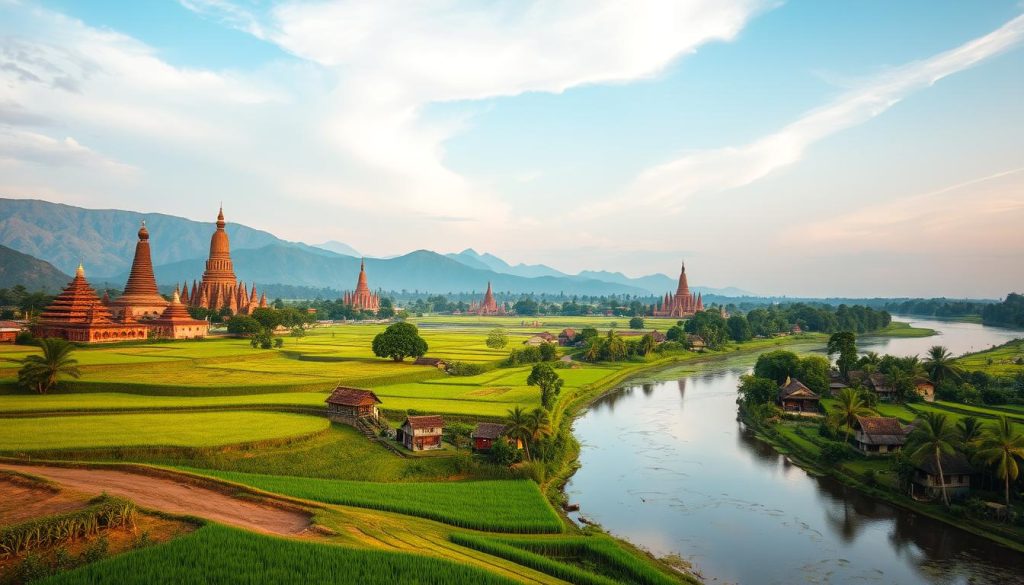
Buddhism has been a big part of Myanmar’s culture since the 1st century CE. It shapes many parts of life, like social customs and community interactions. You’ll see many pagodas and temples, like the thousands in Bagan, which are key for spiritual life.
The mix of Theravada Buddhism and local beliefs, like Nat worship, makes Myanmar’s spiritual scene unique. Monks are highly respected and often walk for alms in the morning. They show the strong bond between the community and monastic life.
Being Burmese and being Buddhist are seen as the same thing. This is shown in how they celebrate, like during the fasting season from July to October. Buddhist monks played a big role in fighting colonialism, as seen in the 2007 Saffron Revolution.
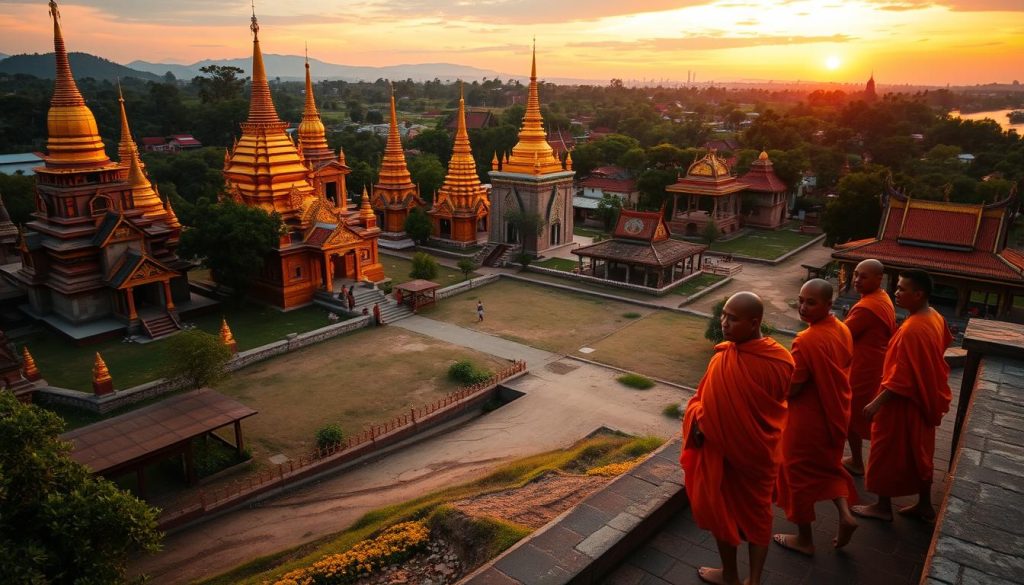
In recent years, more people are practicing meditation, like vipassana. This shows how deep Buddhism is in Myanmar’s culture and traditions.
| Aspect | Details |
|---|---|
| Religion | Buddhism |
| Practiced by | Close to 90% of the population |
| Type | Primarily Theravada Buddhism |
| Key Beliefs | Merit accumulation, pursuit of Nirvana |
| National Identity | “To be Burmese is to be Buddhist” |
| Influence on Activism | Prominent role in political movements |
Exploring Burmese Art and Architecture
Burmese art and architecture show the beauty of Myanmar’s culture. They mix traditional crafts with colonial styles, seen in cities like Yangon. This mix gives us a deep look into Myanmar’s history and identity.
Traditional Crafts: Wood Carving and Lacquerwork
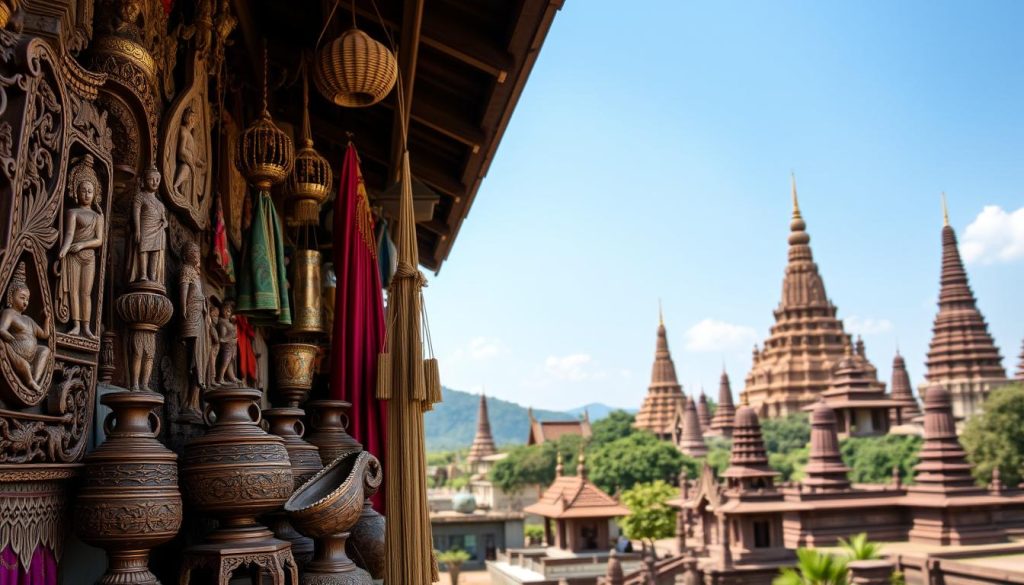
Traditional crafts are key to Burmese art, showing the talent of local artists. Wood carving is famous for its detailed designs, often showing religious themes or animals. Each piece tells a story of the culture.
Lacquerware is also important, with artisans making colorful bowls and trays from local trees. This craft is not only beautiful but also shows the importance of using local materials.
Influence of Colonial Architecture in Yangon
Yangon’s buildings mix local and Western styles, thanks to British rule. The Strand riverfront is full of neoclassical and gothic buildings. These buildings tell stories of history and culture.
Buildings like government offices and hotels show Yangon’s unique identity. They reflect Myanmar’s past and its changes over time. Exploring these buildings gives us a glimpse into the society’s growth.
Burmese Food and Culinary Practices
The culinary practices in Myanmar show a rich mix of culture and tradition. Meals often start with rice, making up 75% of what people eat. They are served with various vegetables and fish. Burmese food is all about sharing meals, which brings people together.
Learning about eating in Myanmar can make you appreciate its tasty dishes more.
The Unique Eating Habits of Burmese People
Burmese people usually eat with their right hands. They shape rice into small balls before eating it. This shows respect and is part of their dining etiquette.
Greetings involve hand-clasping and bowing, showing friendship and tradition. Food plays a big role in their social lives.
Traditional Dishes to Try in Myanmar
When you try traditional dishes, some stand out:
- Mohinga: Known as Burma’s unofficial national dish, it’s a fish-based soup eaten at breakfast. It’s full of rich flavors and textures.
- Nangyi Thoke: A favorite “dry” noodle dish, it has thick rice noodles, chicken, fish cake, beansprouts, and hardboiled egg. It’s a highlight of Burmese cuisine.
- Laphet Thoke: A salad made from pickled tea leaves, it shows how tea is used in Burma.
- Burmese Curry: These curries are milder than others, with delicate flavors. They are often made with small amounts of meat.
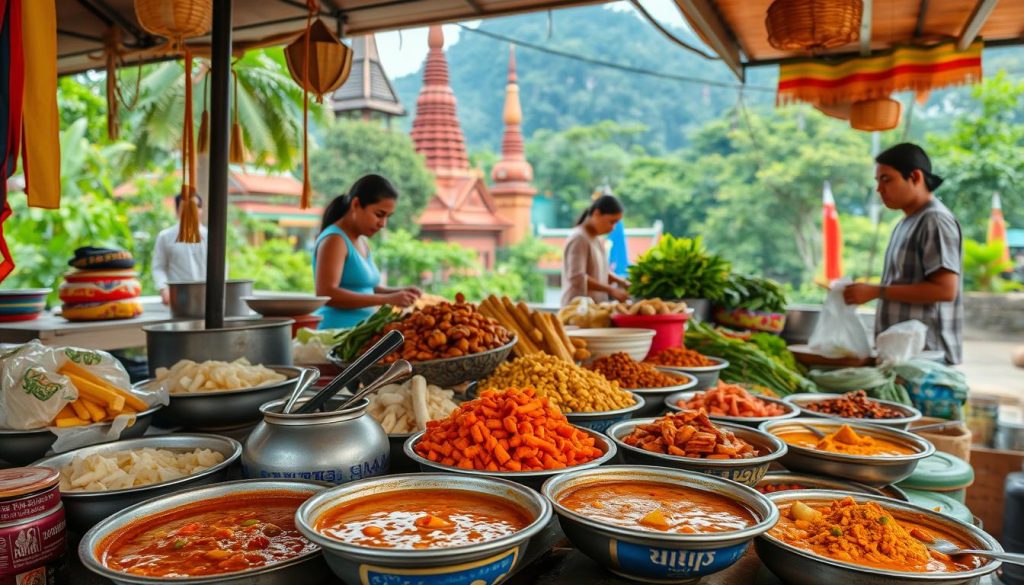
Burmese food offers a wide range of flavors and ingredients. It gives a glimpse into the country’s culture. Each dish not only feeds but also connects people, making meals a key part of life in Myanmar. Trying these dishes will deepen your understanding of this unique culture.
Festivals and Celebrations in Myanmar
Myanmar is known for its lively festivals and cultural events. These show the nation’s rich heritage and traditions. The Water Festival is a highlight, celebrated with great enthusiasm and spirituality.
The Water Festival: A New Year Tradition
The Water Festival, or Thingyan, marks the Burmese New Year in mid-April. It’s filled with water splashing, a way to wash away past troubles and start anew. People come together, enjoying with friends and family, and celebrating as a community.

Significant Religious Celebrations Throughout the Year
Myanmar also has many religious festivals throughout the year. These festivals show how culture and spirituality are closely linked. Some important ones include:
| Festival Name | Month | Description |
|---|---|---|
| Tipitaka Festival | June | A celebration of the Buddhist scriptures. |
| Taungbyon Nat Festival | August | A traditional gathering honoring local spirits. |
| Regatta Festival | September | A boat racing event held to commemorate local culture. |
| Festival of Lights | October | Celebrating the end of the Buddhist fasting period. |
| Tazaungdaing Festival of Lights | November | Marking the end of the rainy season with illuminated celebrations. |
| Kayi Ma No Festival | November | A festive time filled with playful activities and mischief-making. |
| Karen New Year | December | Marking the new year for the Karen ethnic group. |
| Kachin Manaw Festival | January | Celebrating the Kachin people’s new year. |
| Shwedagon Pagoda Festival | March | A nationally celebrated event held at the iconic pagoda. |
These celebrations show the lively spirit of Myanmar and its commitment to tradition. They bring communities together, celebrating their shared heritage.
Cultural Practices in Burma
Burma’s culture is a rich mix of beliefs and customs. These are deeply rooted in the nation’s history and traditions. Theravada Buddhism, the main religion, influences over 90% of the population. It shapes their daily lives and behaviors.
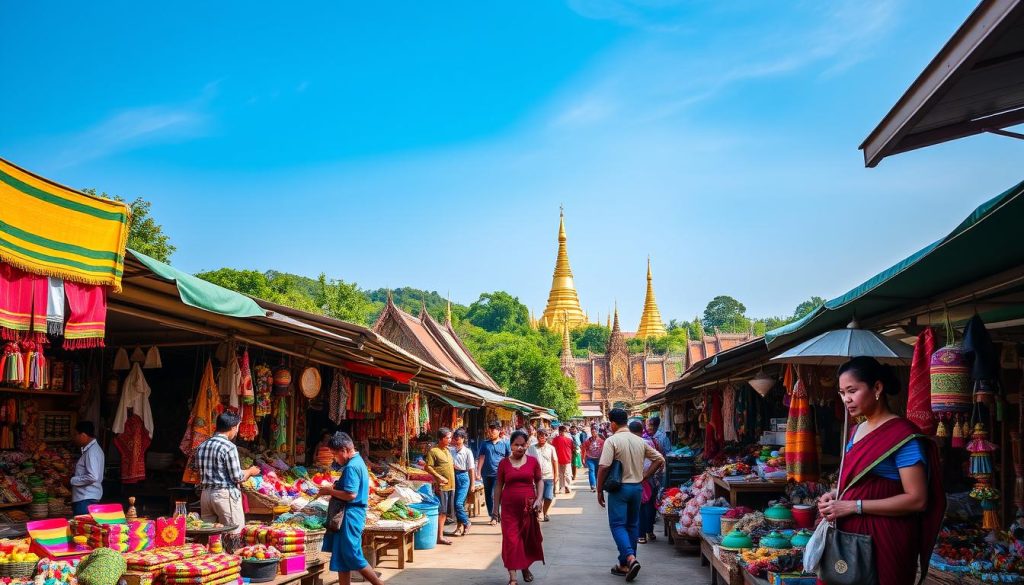
Thanaka paste is a key social custom. It’s a natural sunblock made from ground bark. It’s used for beauty and has cultural significance. Chewing betel leaf is also common, showing hospitality and social bonding.
Myanmar is home to 135 ethnic groups. Each group adds its own cooking styles to the national cuisine. Sharing meals is a big part of social gatherings, strengthening community ties.
The traditional dress, like the longyi, is very important. It’s worn by both men and women. It shows the Burmese values of modesty and respect.
Social interactions in Burma follow many customs. The greeting “mingalaba” shows a move towards national identity. Showing respect for hierarchy is key, like kneeling to those of higher status.
Cultural practices in Burma are more than just traditions. They connect people to their heritage and foster a sense of belonging. Respect is crucial, shown by removing shoes before entering sacred spaces.
| Aspect | Details |
|---|---|
| Primary Religion | Theravada Buddhism |
| Population Practicing Buddhism | Over 90% |
| Ethnic Diversity | 135 different ethnic groups |
| Traditional Dress | Longyi |
| Common Social Customs | Thanaka paste, betel chewing |
| Importance of Greetings | “Mingalaba” replaces English greetings |
| Respect Customs | Kneeling for higher-status individuals |
Learning about Burmese culture?
Exploring Burmese culture is fascinating. You’ll learn about important customs and social practices. These shape daily life and show the country’s rich heritage. The Longyi, a traditional garment, is a key part of this culture.
Key Customs and Social Practices
Understanding Burmese culture means grasping its social practices. These practices promote respect and unity. For instance, saying hello is a sign of politeness and warmth.
Eating is also a big part of culture. It’s important to eat with your right hand and pass food the same way. These traditions keep the community strong and Burmese values alive.
Traditional Clothing: Longyi and Thanaka
The Longyi is a key piece of clothing in Myanmar. It’s worn by both men and women. This sarong-like garment shows their cultural identity and is easy to move in.
Thanaka is made from a local tree’s bark. It protects from the sun and shows pride in beauty practices. Using Thanaka shows how beauty and tradition blend in Burmese society.
Music, Dance, and Theatrical Traditions
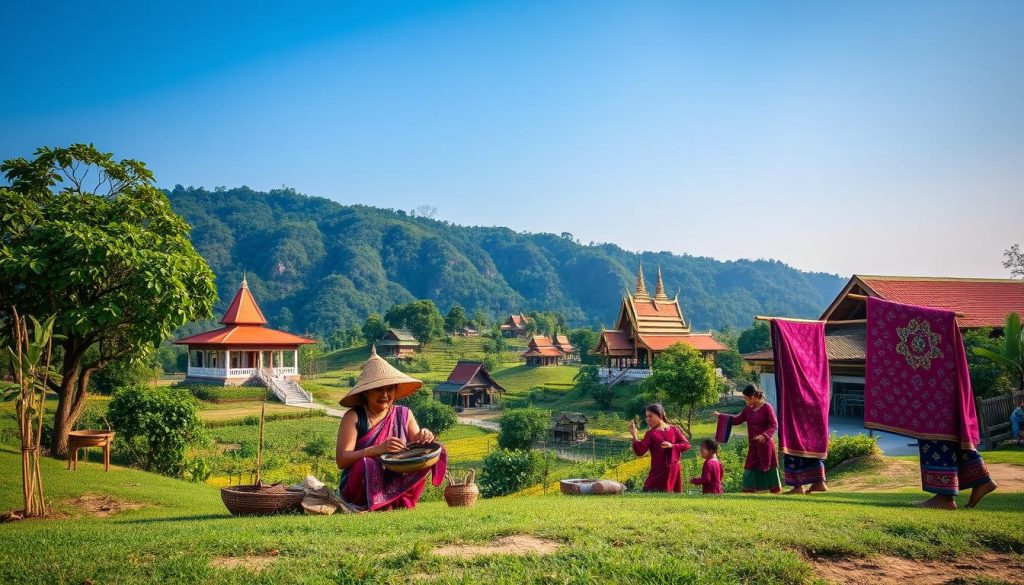
Burmese music and dance traditions are key parts of Myanmar’s culture. They mix spiritual and emotional feelings, giving us a glimpse into the country’s heritage. The hsaing waing instrument adds to the emotional depth of these performances.
Burmese music has many styles, showing the influence of nearby cultures. Myanmar’s dances have evolved over time, shaped by ancient cultures and invasions. This has made them unique.
Some notable dances include:
- Bilu Dance: One of the oldest, dating back to around 2000 BCE, with 24 demon forms.
- Bagan Dance: From the Pyu kingdoms, using simple instruments.
- Tai Bing Taing Dance: A solo dance showing a royal princess’s daily life.
- Oil Lamp Dance: Performed by the Rakhine, it presents a lighted wick to Buddha.
In the 1950s, formal dance schools were set up. This led to a structured way of teaching dance. Marionette shows also influenced dance, with its unique puppet-like movements.
The theatrical arts in Myanmar are lively, including marionette shows. These tell Buddhist Jataka stories, engaging audiences with beautiful visuals and stories. These performances help keep the nation’s heritage alive.
Burmese music, dance, and theatre show Myanmar’s cultural spirit. From ancient times to today, these arts reflect the country’s history and shape its future.
The Role of Literature in Burmese Society
Burmese literature is a deep look into the nation’s history, culture, and values. It spans over a thousand years, filled with local stories and cultural tales. These stories were first written on stone and later on palm leaves, showing how stories have lasted through time.
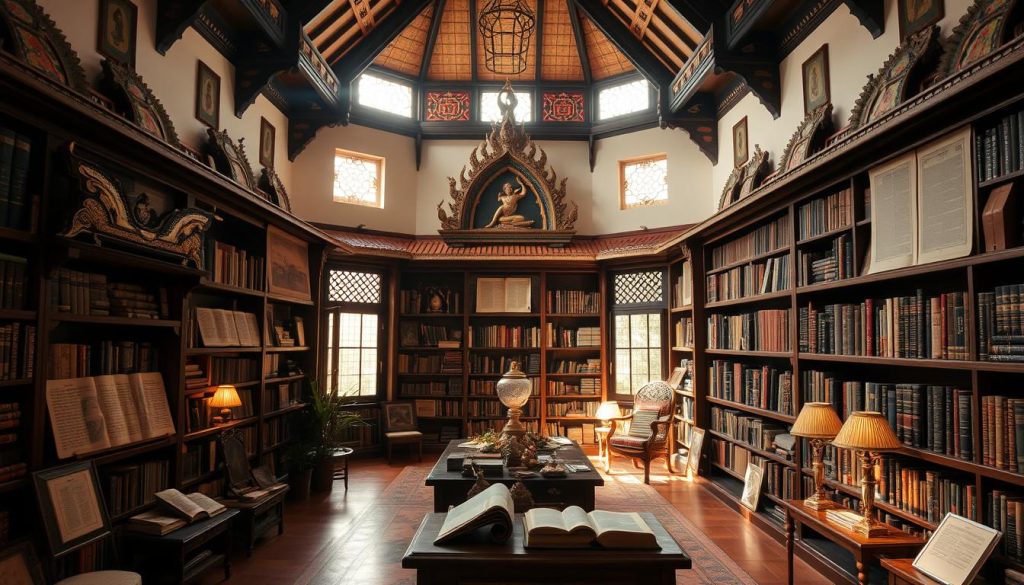
The Bagan dynasty was a key time for literature, with Theravada Buddhism making a big impact. Buddhist monks turned Jataka stories into verse, blending spiritual tales with cultural identity. The Konbaung dynasty, known as the ‘Golden Age of Literature,’ saw even more growth and creativity in writing.
The British colonial rule changed things a lot. They brought formal education, teaching both English and Burmese. The first printing press came in 1816, making writing easier. The monarchy supported literature, making it a big part of their culture.
But, government censorship has limited what writers can say. Yet, groups like the Khitsan in the 1930s fought for simple, pure language. Figures like U Sein Tin, U Thein Han, and U Wun pushed for freedom in writing and celebrated Burmese traditions.
The Burma Research Society started in 1910 to protect literature and culture. By the 1920s, these stories were taught in schools, keeping them alive for future generations.
In short, Burmese literature is a key part of their culture and history. It shapes society and shows the lasting impact of their past.
Conclusion
As you finish exploring Burmese culture, you’ve seen a rich summary of Myanmar’s traditions. These traditions show the heart of the nation. They come from the diverse ethnic groups that make up over thirty percent of the population.
Each tradition you’ve learned about is a key part of Myanmar’s identity. It shows the strength and richness of its people. This is a journey into the heart of Myanmar.
The socio-political landscape has shaped the culture. It has also led to a fight for ethnic political and cultural rights. So, learning about Burmese culture is more than just knowing practices. It’s about understanding the challenges and victories that have shaped it.
Your exploration of Myanmar’s culture gives you a deeper understanding. It shows how culture and identity are connected. The stories of survival, struggles, and collective memory are part of a culture that keeps evolving.
This conclusion invites you to dive deeper into Myanmar’s heritage. It connects the past to the present in our changing world.