Sustainable Travel in Punakha: Be a Responsible Tourist
Have you thought about how your travel choices affect the places you visit? When you travel to Punakha, a beautiful spot in Bhutan, it’s key to know about sustainable travel. This place, with its stunning views and lively culture, lets you travel responsibly. This way, you make your trip better and help the local area and people.
Bhutan values sustainable tourism, focusing on the happiness of its people and nature. By following eco-friendly and ethical travel tips, you help keep Punakha special. As you see this enchanting place, you’ll learn how your actions help protect it for the future.
Understanding Sustainable Tourism in Bhutan
Sustainable tourism in Bhutan shows the nation’s strong commitment to its culture and nature. It follows the Gross National Happiness philosophy, focusing on people’s happiness over money. The tourism model in Bhutan aims for travel that is low-impact but high-value, protecting the environment and promoting cultural exchange.
The SUSTOUR Bhutan project is a key example of Bhutan’s commitment to sustainability. It was funded by the European Union and works on the whole tourism chain. Over 90 tour operators took part in SUSTOUR’s free training, with 16 becoming Travelife Partners. This shows the tourism sector is working towards sustainability.
The Bhutan Green Hotels standard is another sign of Bhutan’s dedication to responsible tourism. It certifies hotels for their eco-friendly actions. Around 100 hotels and 200 suppliers have been trained, helping to cut down on carbon emissions. Since 2019, many travel packages have seen their carbon footprint drop by over 60%.
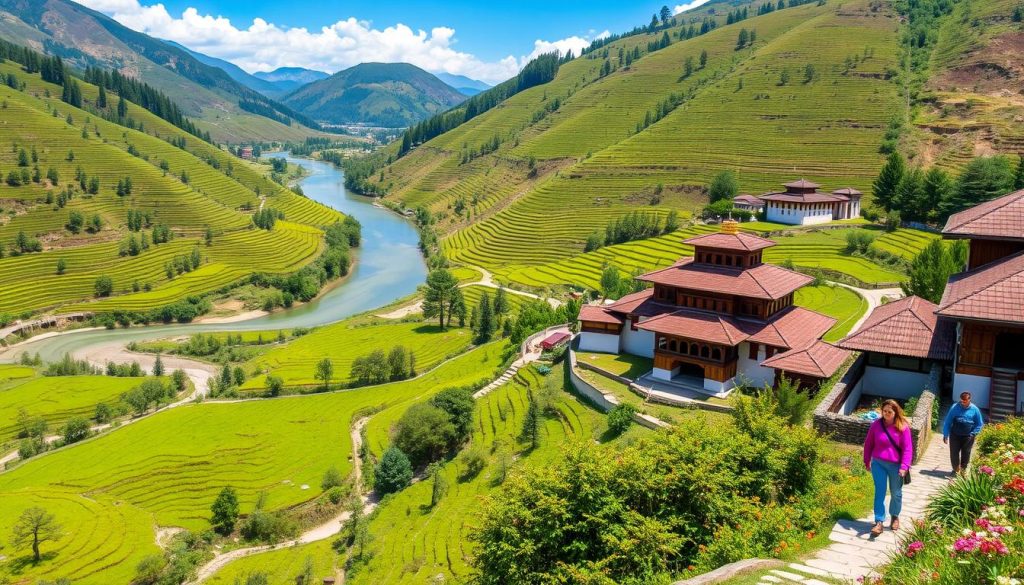
Bhutan is also using electric vehicles (EVs) in tourism, which helps reduce carbon emissions. The goal is to achieve “Net Zero” by 2030, showing Bhutan’s commitment to sustainable tourism.
This approach raises awareness about the need to balance tourism and conservation. By focusing on sustainable tourism, Bhutan protects its culture and environment. It also sets a global example for responsible travel.
The Importance of Responsible Tourism
Responsible tourism is key to reducing travel’s negative effects while boosting local communities. By choosing ethical travel, you help protect cultural heritage and the environment. It also supports local economies, ensuring resources are there for future visitors.
In Bhutan, the “High Value, Low Impact” tourism policy shows its importance. Tourists from many countries must get a visa and pay a Sustainable Development Fee (SDF) of $200 per night. This fee funds important services like healthcare, education, and environmental protection.
Traveling to Punakha costs between $250 to $350 per day. This includes your stay and guided tours. It helps keep the number of visitors low, protecting local resources. You get to see amazing places like the Punakha Dzong and support eco-friendly projects.
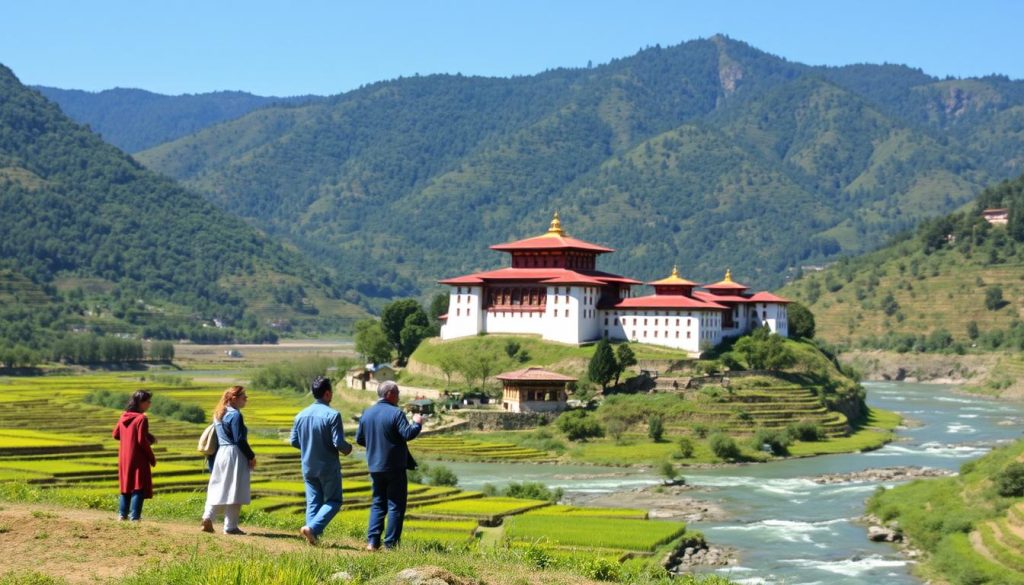
Traveling responsibly means more than just having fun. It makes you part of a global movement for ethical travel. By exploring Bhutan responsibly, you make your trip better and support sustainable travel worldwide.
| Travel Aspect | Responsible Tourism Practice | Benefit to Locals |
|---|---|---|
| Visa Requirements | Visa required for most tourists | Ensures regulated tourism flow |
| Sustainable Development Fee | $200 per night for tourists | Funds local services and conservation |
| Travel Costs | $250 – $350 per day | Supports local businesses and guides |
| Cultural Heritage | Visit cultural sites and festivals | Preserves local history and practices |
Sustainable Travel Practices in Punakha: How to be a responsible tourist?
Exploring Punakha is a chance to practice sustainable travel. By being a responsible tourist, you help local communities and reduce your environmental impact. You also get to enjoy Bhutan’s rich culture.
It’s important to understand and respect local customs and traditions. This makes your travel choices more meaningful.
Embracing local customs and traditions
Joining in local customs helps you connect with the community. Attending festivals or trying traditional food promotes cultural exchange. It makes your trip more rewarding.
Respecting local traditions supports cultural preservation. It also helps visitors and locals feel connected.
Making mindful travel choices
In Punakha, choosing eco-friendly travel options is key. Use bicycles or public transport instead of cars. Carry reusable items like water bottles and bags to reduce plastic waste.
Punakha encourages visitors to use electronic tickets, cutting down on paper waste. Be mindful of littering and use garbage cans. These actions help protect the environment and make your trip better.
Punakha’s Commitment to Environmental Conservation
Punakha is a leader in environmental conservation in Bhutan. It shows a strong dedication to keeping nature safe and promoting sustainability. By protecting at least 60% of its land as forest, Punakha helps keep biodiversity alive. It also protects the homes of endangered species.
Efforts to preserve forest cover
Punakha has many projects to restore forests and habitats. Local people help with these efforts, knowing it helps the environment. They also learn about growing food in ways that don’t harm the forests.
Prohibitions on plastic use
Punakha has banned plastic bags to reduce waste. This move is part of a bigger plan to live more sustainably. It shows Bhutan’s goal to be carbon neutral and keep environments clean.
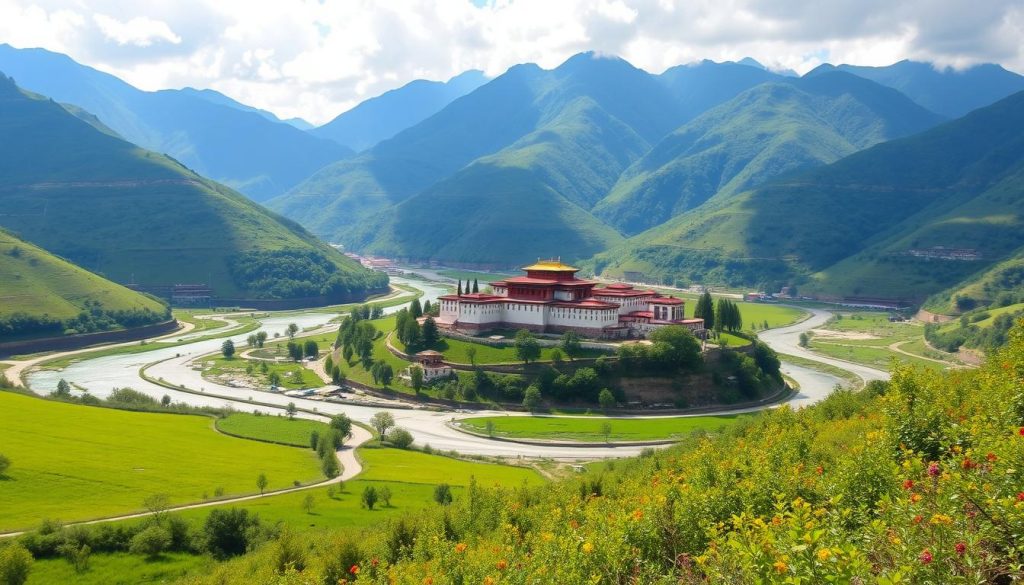
These efforts show Punakha’s strong commitment to the environment. They help keep the ecosystem healthy for the future. They also inspire others to take action in protecting nature.
Eco-Friendly Accommodation Options in Punakha
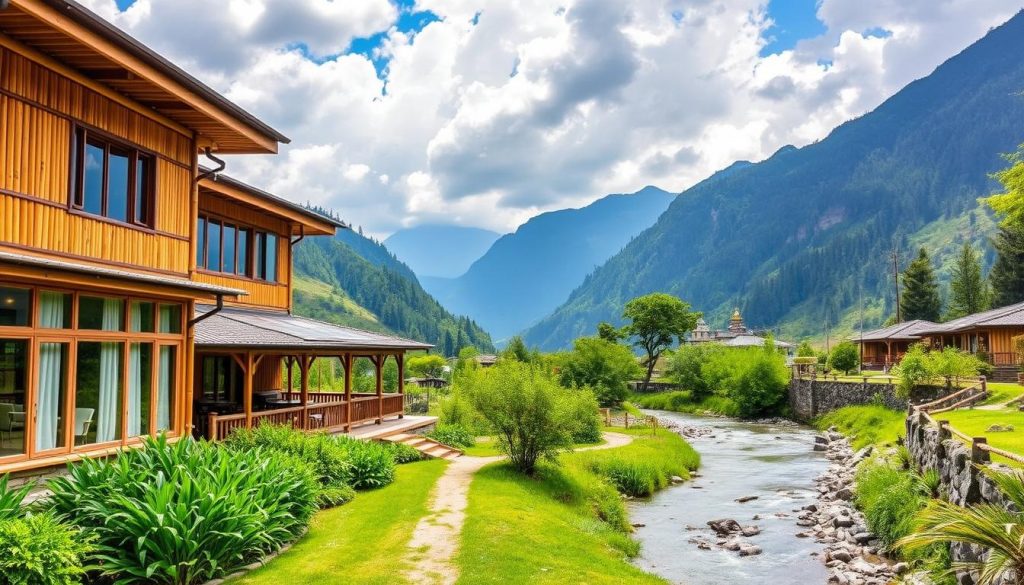
Punakha offers many eco-friendly places to stay. These options let you see Bhutan’s beauty while helping the planet. You can choose from cozy eco-lodges to welcoming local homes. They all aim to lessen your environmental impact and share local traditions.
Many of these places focus on being green. They manage waste, save water, and use clean energy. This makes your visit better for the planet and supports local culture.
Eco-lodges and local stays
The Punakha River Lodge is a top choice for eco-friendly stays. It offers luxury and green practices. Here’s what you can expect:
- Three daily meals from local ingredients, showing off Bhutan’s food.
- An organic farm for fresh produce using green farming methods.
- Fun activities like yoga, archery, cooking, and cultural shows.
- Beautiful views of the Himalayas and the Mo Chu river for relaxation.
Getting to the lodge is a scenic drive from Paro Airport. You’ll pass through valleys and rice fields, making your trip memorable.
Farm-to-table dining experiences
In Punakha, farm-to-table meals connect you with local farmers. These meals highlight:
- Organic dishes made with ingredients from nearby farms.
- Supporting local farming and reducing food transport’s environmental harm.
- Enjoying true Bhutanese tastes in a beautiful setting.
Choosing eco-friendly places in Punakha improves your trip and helps the community and environment. Live sustainably and explore Bhutan’s wonders responsibly.
Engaging in Community-Based Tourism
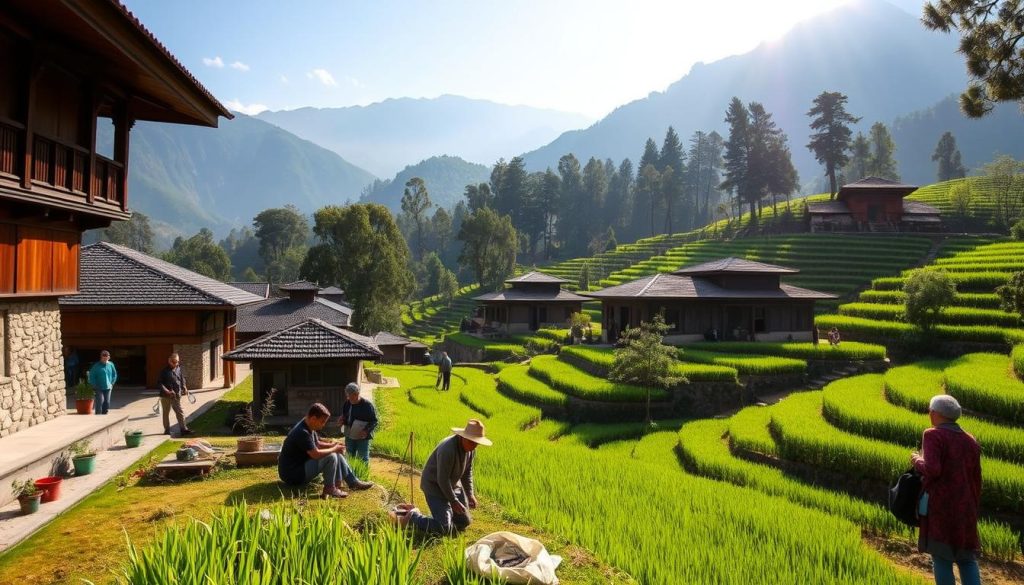
Community-based tourism in Bhutan is a chance for travelers and locals to grow together. You can dive into Bhutan’s culture through homestays, cultural exchanges, and workshops. These activities make your trip special and help local families and artisans.
About 65% of visitors take part in these community tours in Bhutan. Local families love hosting guests, with 70% of them joining homestay programs. Over 50 workshops and studios let visitors learn from skilled artisans.
Environmental care is a big part of these tours, with 90% focusing on green efforts. This has brought more jobs and money to locals, with a 30% rise in earnings. It shows how important it is for everyone to be involved.
| Benefit | Statistic |
|---|---|
| Travelers Engaging in Community-Based Initiatives | 65% |
| Local Families in Homestay Programs | 70% |
| Artisan Workshops Involved in Projects | 50+ |
| Projects Focused on Environmental Conservation | 90% |
| Increase in Local Income from Tourism Initiatives | 30% |
| Successful Community-Based Tourism Initiatives | Numerous |
Community tourism does more than just help the economy. It also fights poverty and builds strong local economies. Over half of visitors help with conservation, showing the teamwork in responsible tourism.
Exploring Punakha’s Natural Wonders Responsibly
Punakha is full of natural wonders, with valleys, rivers, and mountains. Exploring here lets you see its beauty while being eco-friendly. Eco-tours and hikes let you dive into this stunning world. They show off the area’s nature and teach about caring for it.
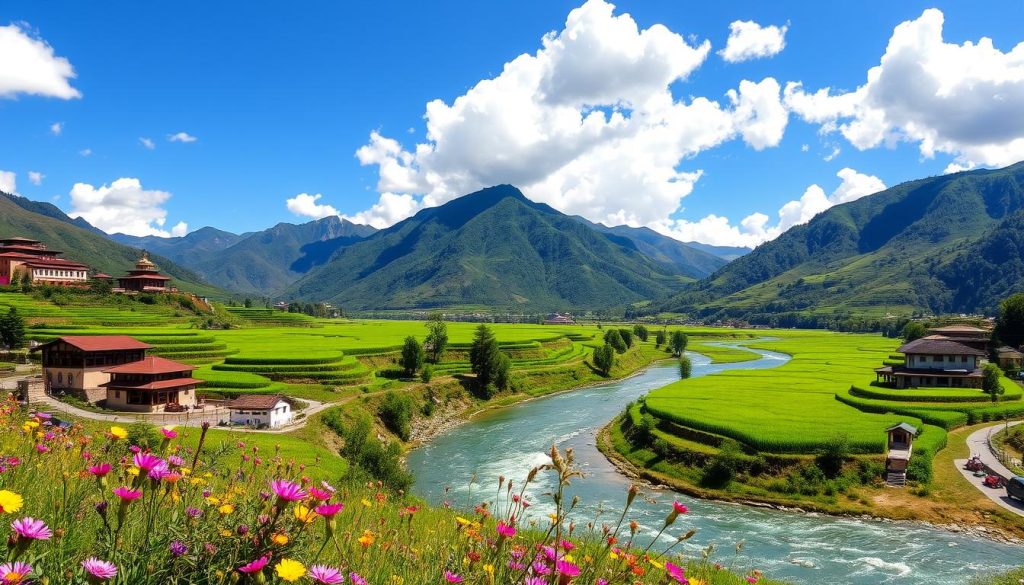
When you go on outdoor adventures, stay on the paths. This helps keep the environment safe. Don’t disturb animals, as they are important to the ecosystem. By following Leave No Trace, you help keep Punakha beautiful for others to see.
- Join eco-tours that support green practices
- Work with local guides for deeper insights
- Pick hiking trails that are good for the environment
Respecting nature in Punakha makes you appreciate Bhutan’s natural riches more. By choosing wisely, you help protect this amazing place. This way, its beauty will last for many years.
Participating in Local Cultural Experiences
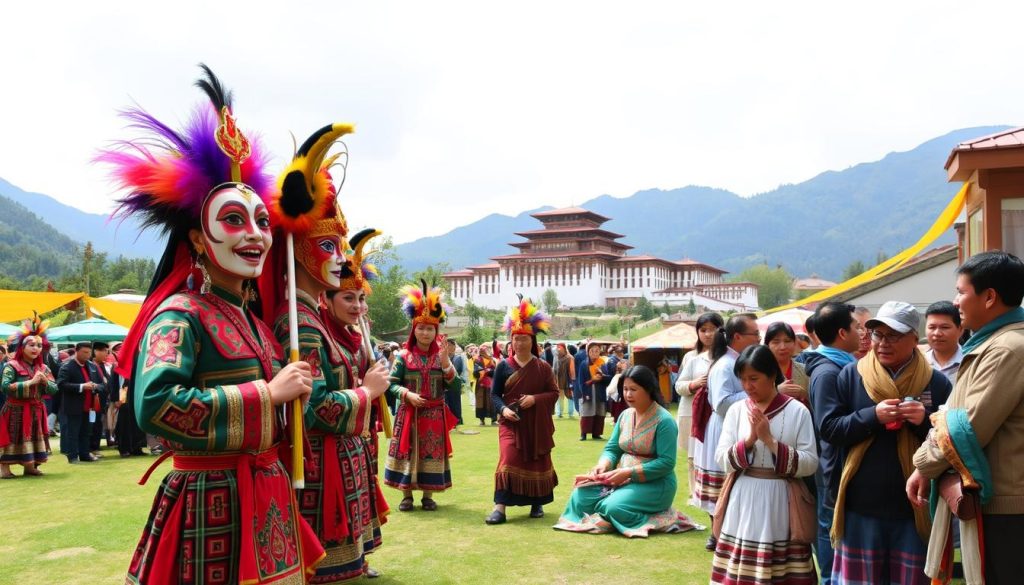
Visiting Punakha offers a chance to dive into its rich cultural scene. You can learn about Bhutan’s heritage by joining local traditions. Attending festivals and ceremonies gives you a special look into the country’s customs and celebrations.
Attending traditional festivals and ceremonies
The Punakha Drubchen festival is a highlight. It shows detailed rituals and community spirit. These festivals celebrate local spirituality with dances, colorful clothes, and ceremonies. They show the heart of Bhutanese culture.
Being part of these events is unforgettable. It connects you with local history and community spirit.
Learning from local artisans
Artisan workshops let you try traditional crafts yourself. You can learn from experts in Thangka painting and weaving. These experiences in Punakha enrich your trip by sharing culture and supporting old skills.
You help keep these unique Bhutanese skills alive. You also get to know the art forms up close.
Reducing Your Environmental Impact While Traveling
When you visit Punakha, you can help a lot by choosing sustainable travel practices. Making simple choices can really help keep this beautiful area natural. For example, using less plastic helps keep Bhutan’s landscapes clean.
Using public transport instead of cars also helps. Bhutan is working hard to be carbon-negative. By traveling eco-friendly, you help protect Bhutan’s beauty and support its conservation.
Conserving water is another big step. In places with lots of wildlife, saving water is key. It helps keep the balance of life in Bhutan’s amazing views.
Staying in places that care about the environment, like farm stays or eco-lodges, is great. These places use water and energy wisely. They help you enjoy your trip while also helping the planet.
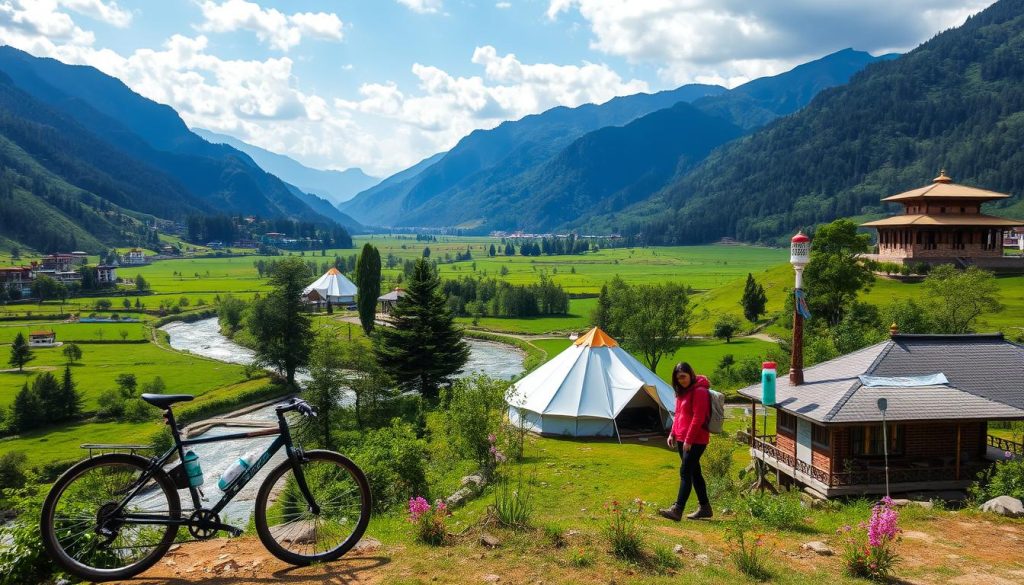
In Bhutan, caring for the environment is a big deal. It’s not just about what you do. It’s about working together to fight climate change. By being eco-friendly, you leave a positive mark on the places you visit.
| Sustainable Practices | Impact |
|---|---|
| Minimizing Single-Use Plastics | Reduces pollution and protects local wildlife |
| Using Public Transport | Decreases carbon emissions and traffic congestion |
| Water Conservation | Helps maintain local ecosystems |
| Choosing Eco-Friendly Accommodations | Supports local economies and promotes sustainability |
Supporting Local Businesses and Economies
Traveling responsibly in Bhutan boosts the local economy. By choosing local businesses, you help the community and see Bhutan’s true culture. Your choices, like buying at markets and eating at family-run places, support the economy and preserve culture.
Bhutan limits tourists to keep its culture and nature safe. This policy helps local businesses thrive without harming the environment. Agriculture is key to Bhutan’s economy, showing the importance of local businesses.

The country focuses on happiness and the environment. Your travel choices can help keep this balance. The Tourism Levy Act 2020 helps the local economy by investing in infrastructure and services.
Key Benefits of Supporting Local Businesses
- Preserves traditional arts and crafts
- Encourages job creation within the community
- Strengthens local cultural practices
- Supports economic diversification
- Enhances visitor experiences through authentic interactions
Supporting local economies in Bhutan helps the community and culture. Think about how you can make a difference during your visit. Every choice you make can help ensure a sustainable future for Bhutan.
| Actions for Travelers | Impact on Local Economies |
|---|---|
| Shop at local markets | Supports farmers and artisans directly |
| Dine at locally-owned eateries | Encourages culinary tradition and diversity |
| Use native guides for tours | Enhances cultural exchange and economic benefits |
| Participate in traditional festivals | Promotes cultural heritage and local engagement |
Strategies for Sustainable Travel Planning
Planning your trip sustainably makes your journey better and helps local places and cultures. It’s key to research before you travel. This way, you learn about Bhutan’s culture, customs, and conservation efforts.
You’ll know how to act with respect and care during your stay.
Researching before you go
Start by researching about Bhutan. Knowing local customs and environmental rules makes your trip better. Make sure you understand the tourism rules, like dressing modestly and not taking too many photos.
Learn about Bhutan’s green goals, like being carbon-neutral and having lots of forests. Over fifty percent of its land is covered in forests.
Contributing to nature conservation efforts
In Bhutan, look for ways to help with nature conservation. Many projects aim to protect the environment and support local development. Joining volunteer work or giving to green groups can connect you with the community.
The USD 100 per night Sustainable Development Fee helps fund these projects. It supports free education and healthcare. Your actions can make a positive difference for the environment and people.
Conclusion
Reflecting on your trip to Punakha shows how important sustainable travel is. Your actions greatly affect the environment and local people. By understanding Bhutan’s focus on sustainability, your trip becomes more meaningful. You get to support tourism that respects and keeps the culture alive.
The number of visitors to Bhutan has grown a lot. From 287 in 1974 to over 7,000 in 1999, it shows the need for careful tourism. It’s crucial to see how your actions help make tourism in Punakha better. By doing eco-friendly activities and supporting local businesses, you help protect this beautiful place.
Remember, every choice you make as a traveler counts. Choosing local places to stay and practicing eco-friendly habits makes a big difference. Your efforts help keep Punakha’s beauty and communities strong. Together, we can make sure future generations enjoy Bhutan’s wonders just like you have.