
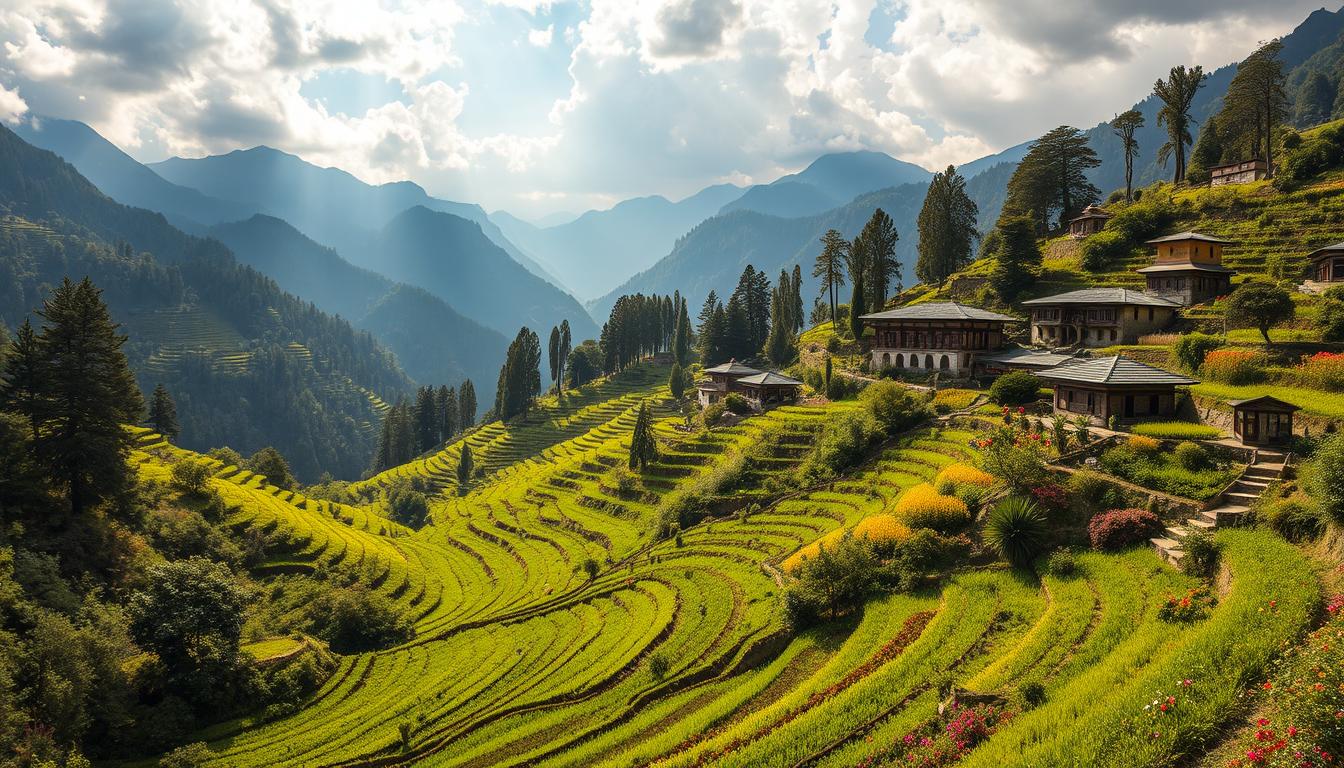
Thimphu’s Guide to Sustainable Farming & Eco-Tourism
Imagine traveling that not only enriches your life but also helps the environment and supports local communities. In Thimphu, Bhutan, sustainable farming and eco-tourism come together in a unique way. This guide will show you how these projects help the economy and protect the culture and environment.
In rural areas, the push for eco-friendly farming is growing. The Bhutanese are adopting organic farming, showing their dedication to sustainability. The government is also promoting green travel in Bhutan. This ensures tourists can explore responsibly while respecting local traditions and nature. Let’s explore how eco-tourism and sustainable farming benefit both visitors and Bhutan.
The Roots of Sustainable Farming in Thimphu
The history of farming in Bhutan shows a deep commitment to sustainable practices. This has shaped rural livelihoods. Traditional methods have evolved, influenced by policies that aim to preserve nature and promote sustainable farming in Thimphu.
The History of Agriculture in Bhutan
Since 1974, Bhutan has balanced its agricultural heritage with modern challenges. Farming practices were once deeply connected to nature and culture. It was not just for food but also for community identity.
Farmers worked with nature, creating systems that lasted for generations. This approach helped maintain biodiversity and natural cycles.
Shifts Towards Organic Agriculture Practices
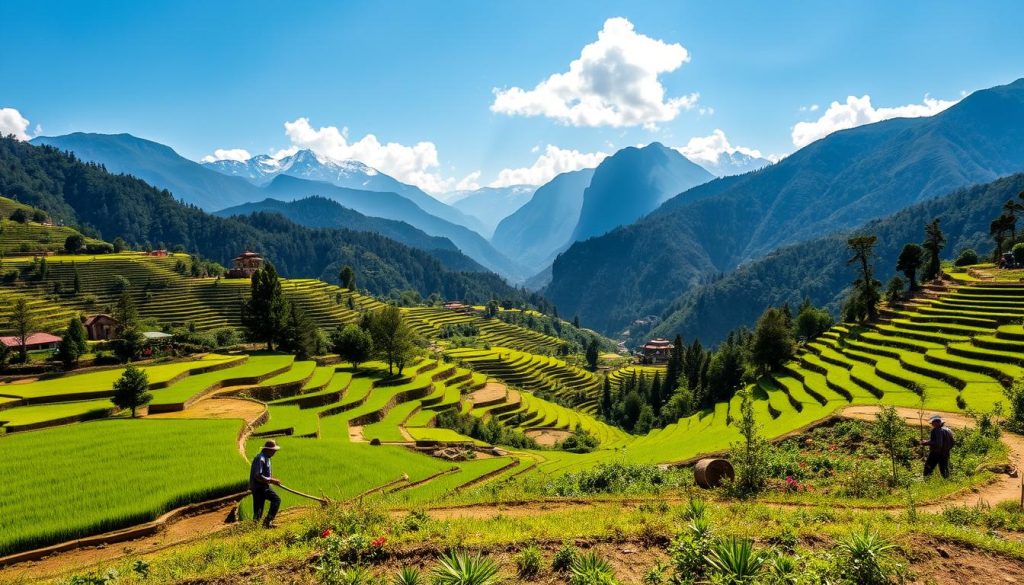
Bhutan has made big changes towards organic farming. The goal was to be 100% organic by 2020. This move was to protect the environment.
A study looked into organic farming in Bhutan. It involved farmers, scholars, and government officials. The research was done in Thimphu and Punakha, giving insights into sustainable farming.
Bhutan’s forests are growing, and deforestation is low. This shows the country’s dedication to environmental protection. Farmers are now using organic methods, working with nature to build community and ecological strength.
| Aspect | Traditional Practices | Organic Shifts |
|---|---|---|
| Farming Approach | Manual methods, multi-cropping | Ecological sustainability, chemical-free |
| Forest Coverage | High dependence on forests | Increased forest cover, low deforestation |
| Government Policy | Focus on subsistence | Target of 100% organic by 2020 |
| Local Economy | Low revenue from forests | Emphasis on sustainable agriculture |
Sustainable Farming and Eco-Tourism Projects in Thimphu
Thimphu combines sustainable farming and eco-tourism, showing a strong commitment to the environment and community. Local projects help rural areas and encourage eco-friendly tourism. This approach meets the needs of young people and enriches the visitor experience.
Overview of Eco-Friendly Initiatives
Thimphu boasts many eco-friendly projects that use its natural beauty for economic growth. These projects focus on empowering communities through green initiatives. With most people under 25, eco-tourism offers jobs and a chance for a sustainable life.
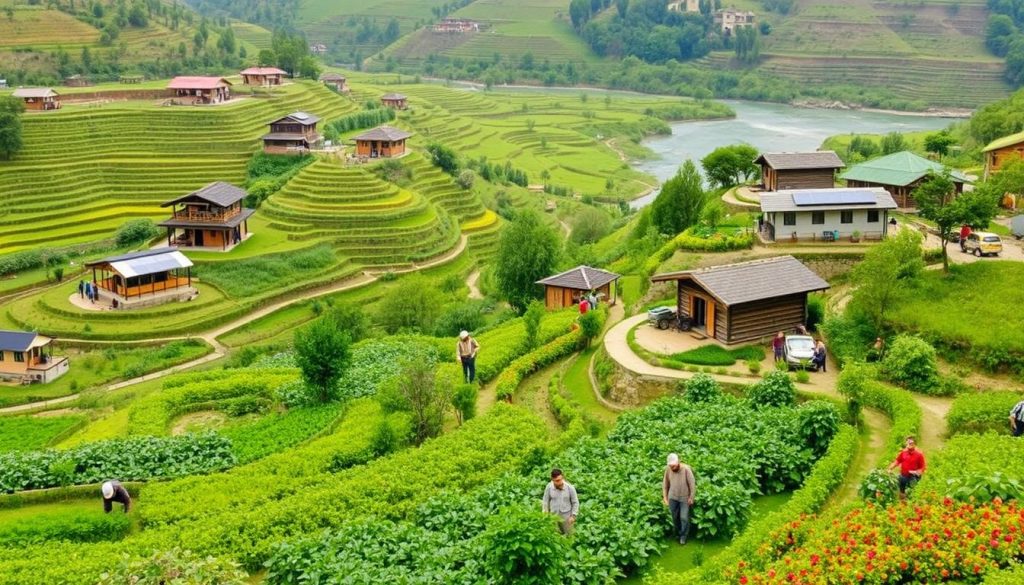
Places like eco-campsites and community-run homestays welcome those interested in cultural and sustainable tourism. They offer a unique way to experience Thimphu’s culture and nature.
Key Projects Promoting Rural Community Empowerment
Thimphu has several key projects in sustainable farming and eco-tourism. A USD 4.854 million ecotourism project covers five districts, focusing on wildlife and biodiversity. Working with WWF and UNDP, these projects aim to engage local communities, including women and the vulnerable.
This approach tackles youth unemployment and promotes local culture and environmental care. It’s a comprehensive strategy for a better future.
| Project Name | Focus Area | Empowerment Strategy | Community Involvement | Geographic Scope |
|---|---|---|---|---|
| Ecotourism Development | Wildlife Conservation | Job Creation | Local Participation in Tourism | Bumdeling & Sakteng Sanctuaries |
| Eco-Campsites | Cultural Tourism | Youth Engagement | Homestays and Community Festivals | Nationwide |
| Ecolodges in Zhemgang | Environmental Sustainability | Supporting Local Products | Operated by Young Locals | Zhemgang District |
Understanding Eco-Tourism in Bhutan
Eco-tourism in Bhutan focuses on being kind to the environment and respecting local cultures. It aims to show off Bhutan’s beauty while helping communities and nature. This way, visitors help protect Bhutan’s nature and culture.
The Concept of Responsible Tourism Practices
Responsible tourism is key in Bhutan’s eco-tourism. It involves working with local communities and caring for the environment. Visitors are encouraged to join in efforts that help the environment and local people.
This approach helps keep Bhutan’s nature and culture safe. Eco-tourism is a way to make a positive difference in the area.
Government Policies Supporting Eco-Tourism
The Bhutanese government has rules to help eco-tourism. They aim to attract fewer but wealthier tourists. This way, they make sure tourism benefits the economy without harming the environment.
In 1992, tourism brought in a lot of money, about US$3.3 million. This was 15-20% of Bhutan’s exports. The government also bans using firewood on treks and requires guides to be trained.
| Year | Tourist Arrivals | Tourism Revenue (USD) | Min. Daily Tariff (USD) |
|---|---|---|---|
| 1974 | 287 | N/A | N/A |
| 1999 | 7,000 | 7.98 million | N/A |
| 1992 | N/A | 3.3 million | N/A |
| 1998 | N/A | 7.98 million | N/A |
| Current | 75+ | N/A | 165 (Low Season) |
Green Travel Initiatives in Bhutan
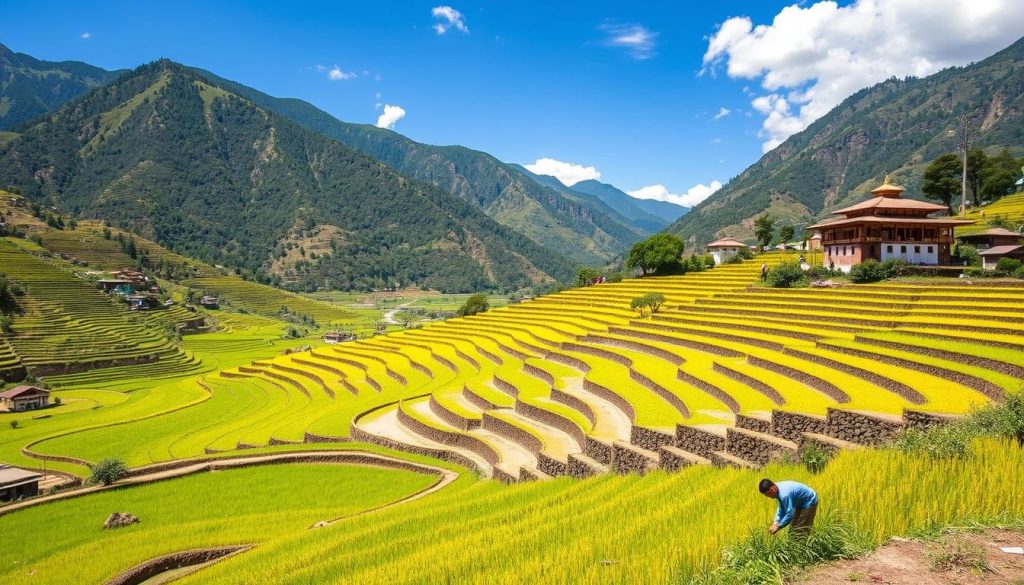
Bhutan is leading the way in green travel, showing its dedication to the environment and sustainable tourism. These efforts not only protect the country’s biodiversity but also improve travel experiences. Bhutan’s goal is to make tourism that respects nature, balancing visitor fun with environmental care.
Promoting Environmental Conservation Efforts
Bhutan is at the forefront of green travel, with projects like the Million Trees Project. This project aims to plant over 1 million trees in five years. It’s part of Bhutan’s effort to keep its forests healthy and provide resources sustainably.
With 60% of its land as forest, Bhutan is a carbon-negative country. This shows its strong commitment to the environment.
- The Clean Bhutan Project works on efficient waste management, aiming for zero waste by 2030. It’s making sure landfills are minimal.
- More electric vehicle charging stations are being added. Now, there are 21 stations across six dzongkhags for green travel.
- The Living Landscapes Project is dedicated to protecting biodiversity. It ensures that critical areas are well-protected.
Challenges Facing Eco-Tourism Development
Despite progress, eco-tourism in Bhutan still faces hurdles. Poor infrastructure in rural areas makes it hard for tourists to explore fully. Waste management is also a big problem, needing help from everyone to solve.
| Challenges | Impact on Eco-Tourism |
|---|---|
| Infrastructure Inadequacies | Limits access to remote areas, reducing tourist numbers. |
| Waste Management Issues | Pollutes natural sites, affecting the visitor experience. |
| Limited Local Engagement | Reduces community benefits from tourism, affecting support for conservation. |
It’s important to tackle these challenges for Bhutan’s green travel to thrive. By improving infrastructure and waste management, Bhutan can keep its nature intact. This will also help in promoting sustainable economic growth.
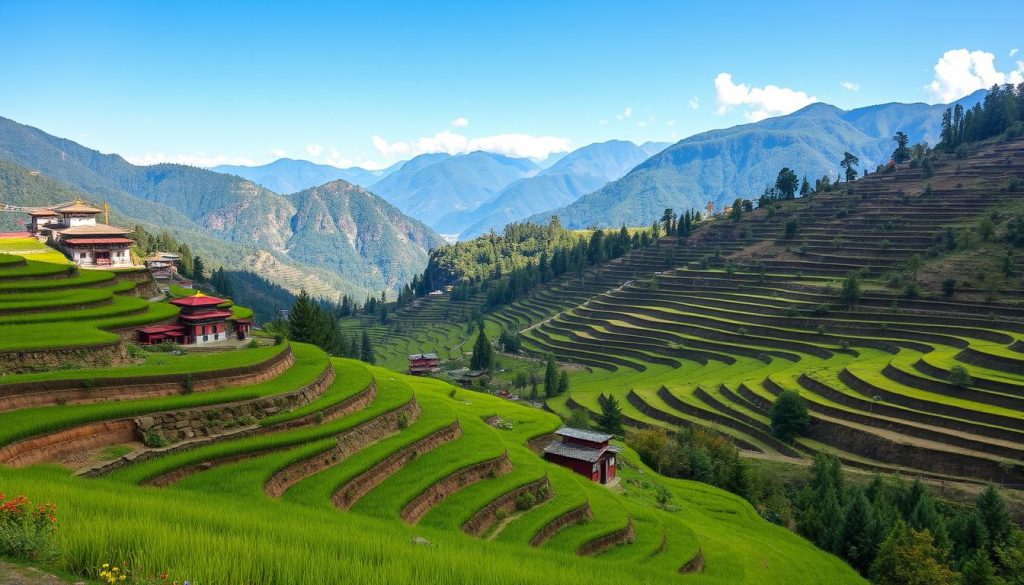
The Role of Local Communities in Eco-Tourism
Local communities are key to eco-tourism’s success in Bhutan. They help create projects that show off their culture and nature. By joining eco-friendly efforts, locals earn money and protect their traditions and landscapes.
Community-Based Eco-Tourism Projects
These projects let locals run tourism activities. They teach people about the environment and make money for the community. Here are some examples:
- Guided tours by local experts who share their culture and nature.
- Homestay programs where tourists live with locals in Bhutanese villages.
- Workshops on traditional crafts, helping keep cultural heritage alive.
Benefits of Involvement in Eco-Friendly Initiatives
Local communities gain a lot from eco-friendly projects. These benefits help make tourism better for everyone. Some of these advantages are:
| Benefit | Description |
|---|---|
| Economic Empowerment | More money from tourism helps locals invest in their communities. |
| Cultural Preservation | These projects help keep local traditions alive for future generations. |
| Environmental Awareness | Both locals and visitors learn about protecting the environment. |
| Improved Livelihoods | Access to resources and skills helps families live better. |
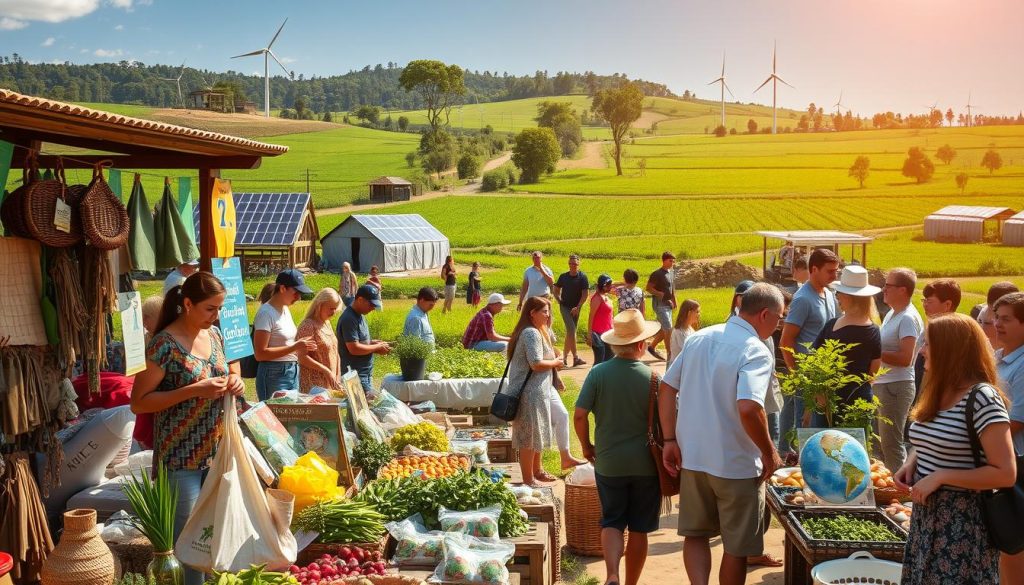
Highlighting Successful Sustainable Farming Practices
Success stories from Bhutan show how sustainable farming works. They inspire farmers and eco-tourists. These stories highlight how farming can be good for the environment and productive.
Local farmers in Bhutan are leading the way. They use sustainable methods and team up with eco-tourism. This mix helps their farms grow and helps the community.
Case Studies of Local Farmers
Local farmers in Bhutan are making a big difference. One farmer in Thimphu switched to organic veggies. This made the soil better and cut down on harmful chemicals.
His farm now grows more food and attracts visitors. Another farmer combined fruit trees with crops. This increased the land’s biodiversity and gave tourists a special experience.
Integration of Farming and Eco-Tourism
Farming and eco-tourism together are a big plus for rural areas. Visitors can pick fruits or learn about organic farming. This helps them connect with the land and the farmers.
Farmer-led tours also add to the experience. They show off sustainable farming methods. This way, tourists learn about Bhutan’s farming traditions and the need to protect its nature.
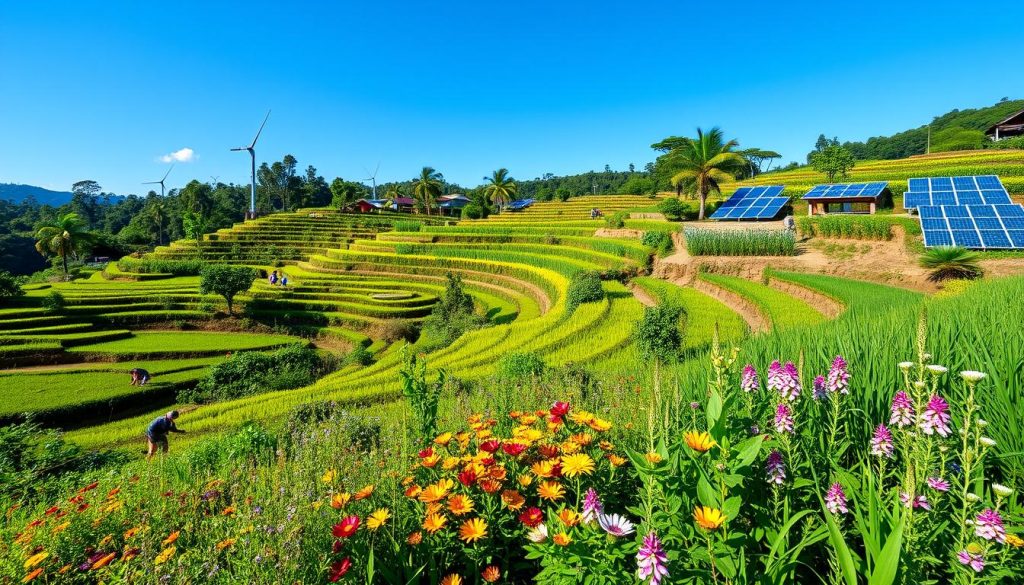
| Farming Method | Benefits | Eco-Tourism Impact |
|---|---|---|
| Organic Vegetable Farming | Increased yields, reduced chemicals | Attracts eco-conscious visitors for fresh produce |
| Agroforestry | Improved biodiversity, enhanced soil health | Offers interactive experiences for tourists |
| Permaculture | Efficient resource use, sustainable ecosystems | Workshops demonstrating self-sufficiency |
| Traditional Crop Rotation | Soil nutrient preservation, reduced pests | Educational tours on sustainable farming |
Working together, farmers and eco-tourists benefit a lot. These stories show how sustainable farming and eco-tourism can make a big difference.
The Environmental Impact of Sustainable Practices
Understanding the environmental impact of sustainable practices is key for conservation and responsible tourism. Bhutan is leading the way in sustainability, focusing on reducing climate change effects. Local efforts aim to manage waste in rural areas, showing the need for effective environmental stewardship.
Mitigating Climate Change Effects
Bhutan is known for its efforts to fight climate change. It keeps over 70% of its land as forests, protecting against global warming. Local communities and ecotourism help achieve these goals. Festivals and cultural tourism blend tradition with sustainability, making up 88% of tourism.
Waste Management Challenges in Rural Areas
Waste management in rural areas is a big issue, with more tourists coming. Zhemgang district shows how community-led initiatives can help. Five eco-lodges run by young locals offer lodging and teach sustainable practices, reducing waste.
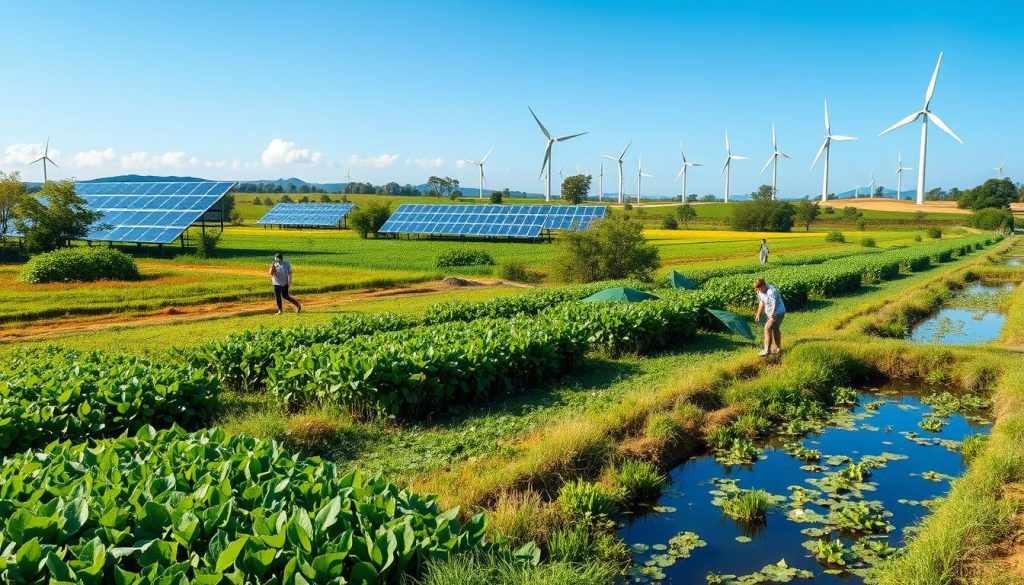
| Challenge | Impact | Solution |
|---|---|---|
| Waste Generation | Increased environmental pollution | Implement waste segregation and recycling programs |
| Lack of Awareness | Community reluctance to adopt sustainable practices | Educational campaigns on sustainability |
| Inadequate Infrastructure | Difficulty in waste disposal and management | Invest in proper waste management facilities |
| Tourism Pressure | Strain on local resources | Encourage responsible tourism behaviors among visitors |
Bhutan is working to create a sustainable tourism and farming environment. This will benefit both the ecology and economy, ensuring a better future. Solving waste management issues in rural areas will need teamwork from locals, government, and tourists.
Encouraging Engagement with Eco-Conscious Initiatives
Traveling to Bhutan is a chance to join eco-friendly efforts. By doing so, you make your trip better and help the local area and nature. Here’s how you can make a difference in this green tourism world.
How Tourists Can Participate in Eco-Tourism
In Thimphu, you can help with eco-tourism in many ways:
- Stay in hotels and lodges that use green materials and serve local food.
- Join tours that help local people and protect the environment.
- Walk the Trans Bhutan Trail, a 252-mile path, to see nature and trek responsibly.
- Go on wildlife tours that care for animals and their homes, including rare birds.
- Help learn about saving water on tours about local rivers.
Supporting Local Farmers through Eco-Tourism
You can also help local farmers during your trip. Here are some things you can do:
- Try agritourism to see how farming has been done for years.
- Shop at local markets for organic food to help the economy.
- Learn to make Ema Dashi, Bhutan’s dish, with local ingredients.
- Help with farming to meet farmers and learn while you work.
- Support green farming by donating or spreading the word about local resources.
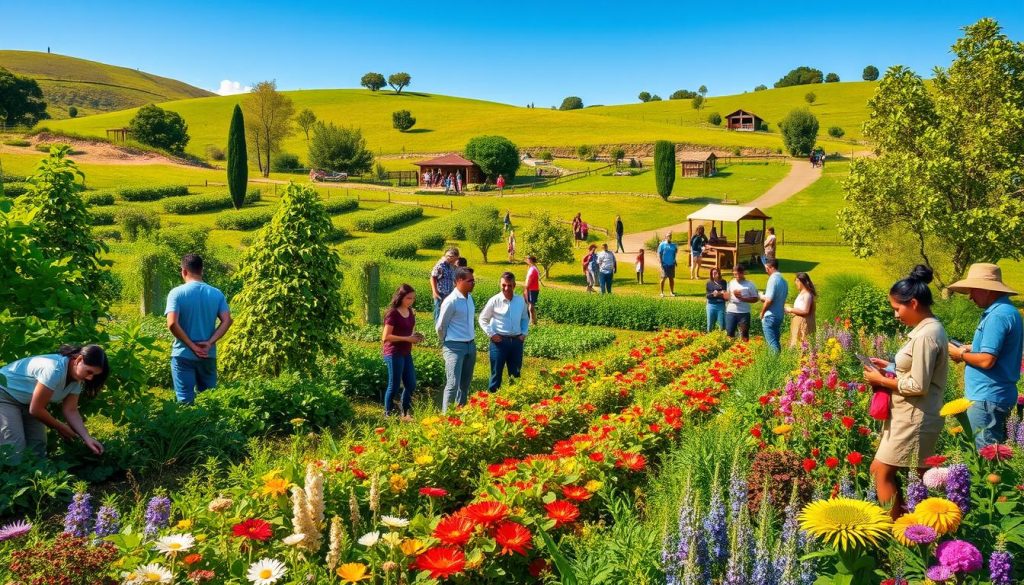
By adding these actions to your trip, you’ll make your visit more meaningful. You’ll also help make Thimphu and its people’s future greener. Your choice to join these efforts shows the heart of eco-tourism: the bond between travelers and the places they visit.
Conclusion
The journey through sustainable farming and eco-tourism in Thimphu shows how these efforts help everyone. They protect nature, boost the economy, and keep culture alive. When you visit Bhutan, think about how your actions can help these green efforts.
Eco-tourism and farming work together well. This partnership helps local farmers and keeps Thimphu’s farms green. Tourism has grown a lot in Bhutan, from a few hundred to over 7,000 visitors by the late 1990s. This shows how tourism can improve experiences and help locals.
Looking ahead, working together is key. By joining eco-tourism in Thimphu, you help create a sustainable future. Your actions support Bhutan’s dream of a prosperous, green kingdom. This shows that traveling responsibly can make a big difference.





