Dead Sea: Descend to Earth’s Lowest Elevation
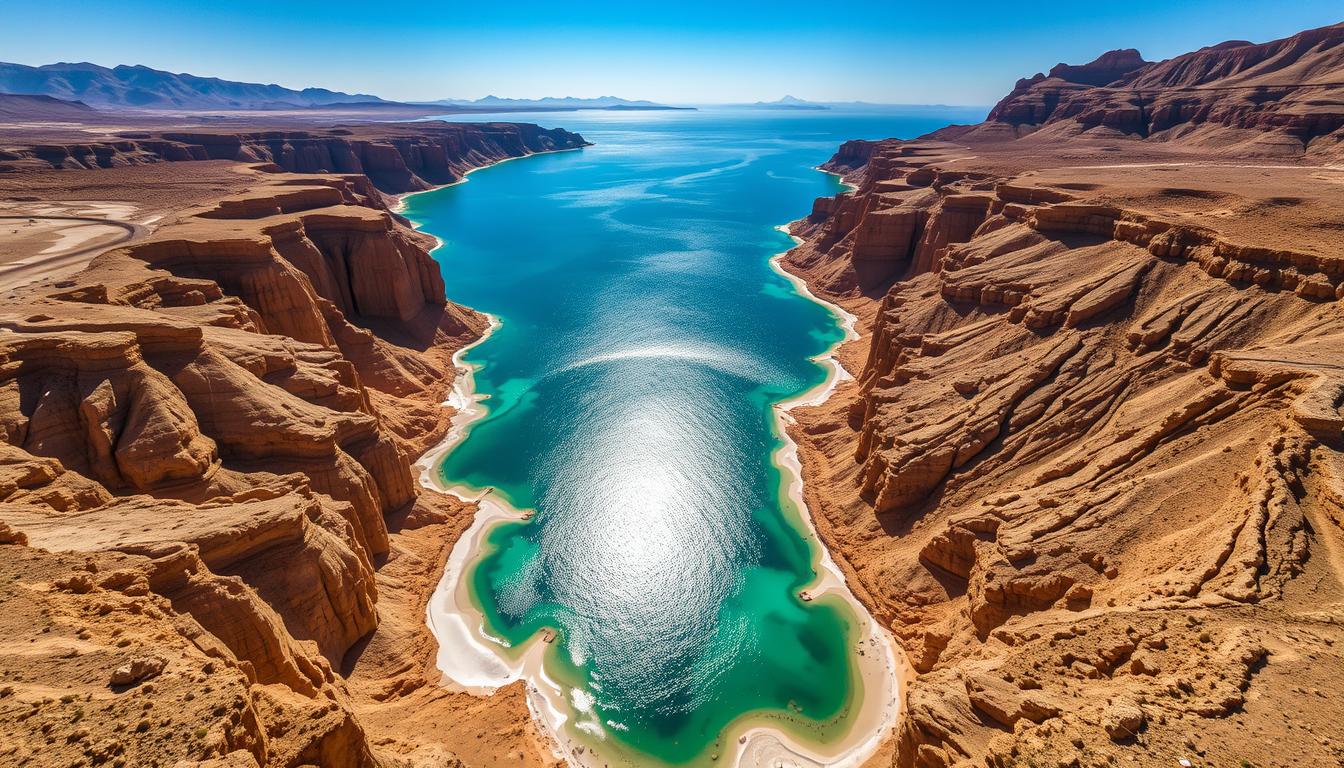
Ever curious about the lowest spot on Earth? The Dead Sea, known as the lowest point on earth, draws both travelers and scientists. Its deep purple waters and 430.5 meters (1,412 feet) below sea level elevation are remarkable. Located between Jordan and Israel, it’s not just a geographical marvel but also a place rich in history and nature.
Exploring this saltwater lake reveals a world full of mystery, challenges, and stunning views. It invites you to discover its depths and wonders.
What is the Dead Sea?
The Dead Sea is a unique body of water. It’s a salt lake in the Jordan Rift Valley. It’s known for its high salt levels and rich history.
Its water levels are dropping, but it still fascinates many. People are drawn to its natural wonders and historical significance.
Overview of the Dead Sea
The Dead Sea is not just any lake. It’s the lowest point on Earth, 430.5 meters below sea level. It’s also the deepest hypersaline lake, reaching 304 meters deep.
Its water is incredibly salty, 9.6 times saltier than the ocean. This makes it easy to float on its surface, a unique experience for visitors.
Geographical Location
The Dead Sea is about 50 kilometers long and 15 kilometers wide. It covers around 605 square kilometers. Its catchment area is much larger, at 41,650 square kilometers.
The Jordan River and other streams feed it. It’s surrounded by hills and plateaus, making it a fascinating place to explore.

Dead Sea Lowest Point on Earth
The Dead Sea is the lowest point on earth, sitting 430 meters below sea level. It’s a natural wonder with fascinating environmental and mineral properties. The lake’s maximum depth is 304 meters, making it significant in topography, health, and ecology.
Elevation and Depth Details
The Dead Sea’s depth and salinity make it unique among lakes worldwide. Its elevation details are remarkable:
| Measurement | Value |
|---|---|
| Surface Elevation | -430 meters (-1,411 feet) |
| Maximum Depth | 304 meters (997 feet) |
| Salinity Level | 34% (nine times saltier than regular seawater) |
Significance of Its Low Elevation
The Dead Sea’s low elevation affects its climate and mineral content. Its high salinity makes it hard for most aquatic life to survive. The water is rich in minerals like Magnesium, Calcium, and Potassium, which are good for the skin.
The water’s extreme buoyancy allows people to float easily. This makes the Dead Sea a popular spot for wellness treatments and therapeutic experiences.

Fascinating Dead Sea Facts
The Dead Sea is full of interesting facts that make it unique. It has the highest salt levels in the world. This makes it special for both its environment and health benefits.
Unique Characteristics of the Dead Sea
The Dead Sea is called the “Sea of Salt” and is the lowest point on Earth. It’s about 430 meters below sea level. Its saline characteristics are very high, making it ten times saltier than regular ocean water.
This high salt level means no marine life can live there. But, it’s rich in 26 minerals. These minerals are good for health and are used in many treatments.
Salinity Levels Compared to Oceans
The Dead Sea is the fourth saltiest body of water. It’s even saltier than Antarctica’s Don Juan Pond and Djibouti’s Lake Assal. The Mediterranean Sea, for comparison, has a salinity of only 3.5%.
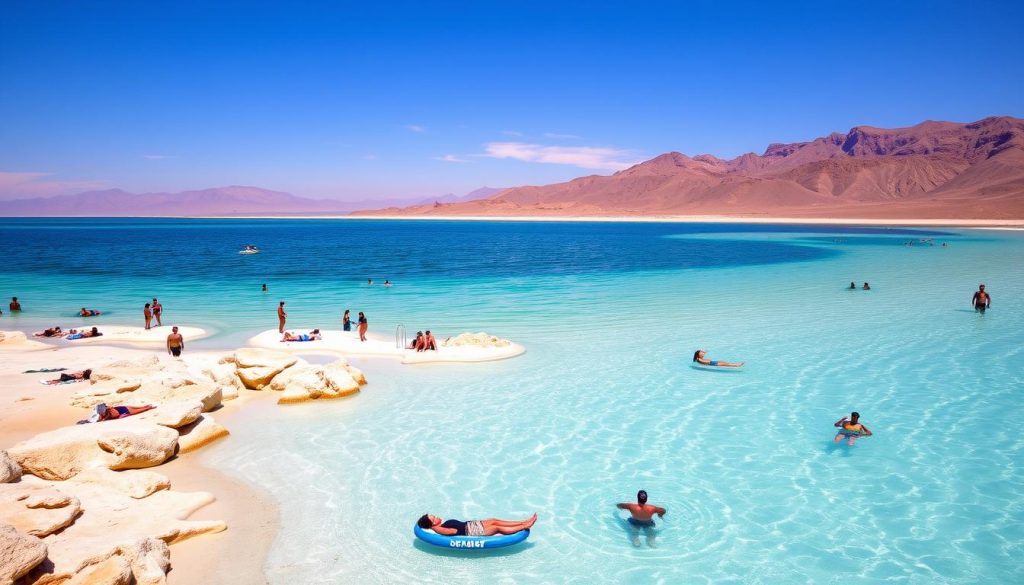
The Dead Sea’s high salt levels make its mud very mineral-rich. This has made it a famous health spa for centuries.
Geological and Hydrological Facts
The Dead Sea area has many geological formations. It’s located between the African and Arabian tectonic plates. This makes it a unique place.
Over time, the Dead Sea has shrunk a lot. It used to be 410 square miles but now it’s about 234 square miles. This shrinkage is due to evaporation and water diversion. It affects the area’s hydrology and ecology.
The Rich History of the Dead Sea
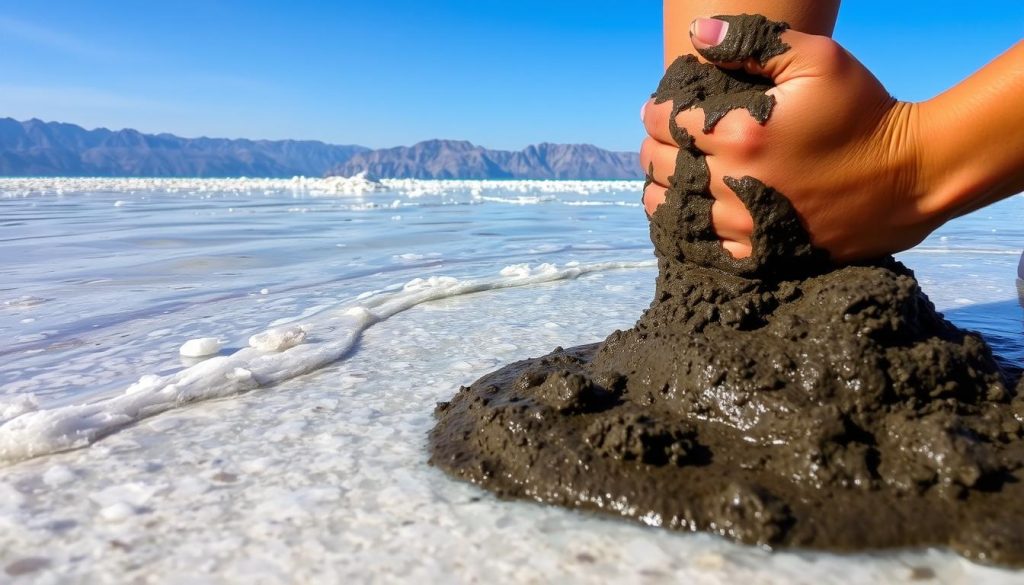
The Dead Sea has a rich history that shows its importance to ancient cultures. For thousands of years, people were drawn to it for its resources, wealth, and spiritual value. Learning about the Dead Sea’s impact on human history gives us a deeper understanding of the past.
Ancient Civilizations and Their Connection
The Egyptians and Romans saw the Dead Sea’s special qualities. They used it for health, starting its reputation for healing. The Bible often talks about this place, linking it to important stories and beliefs.
The Essenes, a Jewish group, lived near the Dead Sea. They left behind important texts that shape religious practices today.
Archaeological Discoveries
The discovery of the Dead Sea Scrolls in 1946-47 changed our view of history. These 981 manuscripts offer a glimpse into life during the Second Temple period. They are more than just old texts; they help us understand the time’s politics, culture, and religion.
Impact of the Dead Sea on Historical Geography
The Dead Sea’s location made it key in ancient trade routes. It helped in cultural and economic exchanges among nearby societies. Its unique environment shaped human life and settlements in the area. Today, the Dead Sea remains a popular spot, showing its lasting importance.
Dead Sea Attractions for Tourists
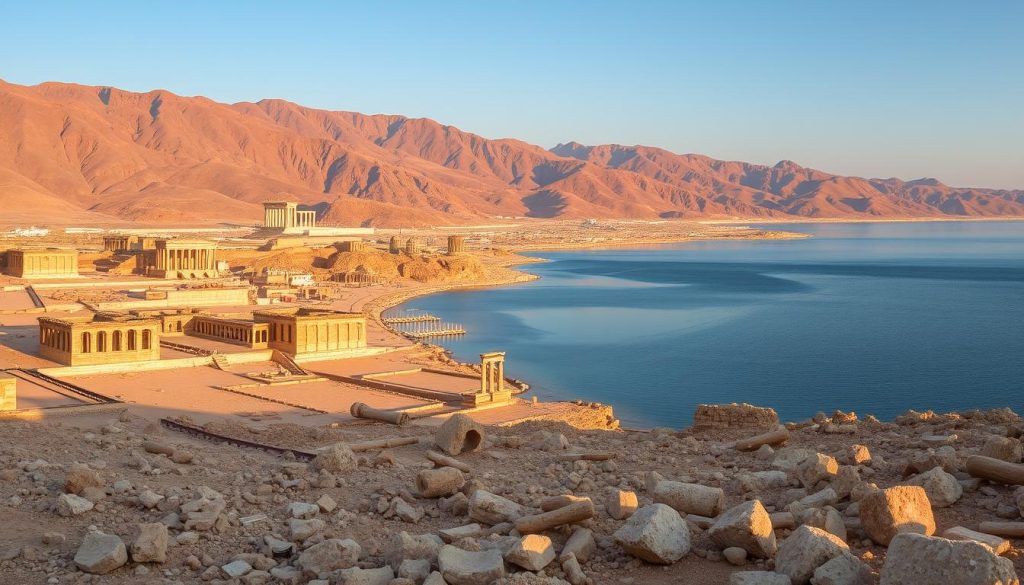
The Dead Sea is a unique spot, known for its natural beauty and health benefits. It’s a favorite among travelers. The area has many activities and experiences for everyone. Visitors can enjoy mud baths and mineral pools at resorts along the shore, surrounded by stunning views.
Popular Tourist Destinations
Resorts by the Dead Sea offer different places to stay, with prices from $60 to $300 per night. Day passes are also available, costing between $60 and $100. Some top spots to visit are:
- Ein Gedi Nature Reserve
- Masada National Park
- Qumran National Park
Activities and Experiences
There are many things to do at the Dead Sea. You can swim, float, and enjoy mud baths. You can also hike, get spa treatments, and explore ancient sites like Qumran and Masada.
- Swimming and floating in the high-salinity water
- Relaxing in mineral-rich mud baths
- Hiking along scenic trails such as the Israel National Trail
- Participating in spa treatments featuring Dead Sea minerals
- Exploring the nearby archaeological sites of Qumran and Masada
The best time to visit is any time of the year, but spring and fall are best for outdoor fun. Remember to wear water shoes because of the rocky terrain.
Cultural Sites Nearby
There’s more to see than just the Dead Sea. Nearby, you’ll find important cultural and historical sites. Some highlights include:
| Site | Significance |
|---|---|
| Masada | Famous for its historical importance during the Jewish Revolt against Rome |
| Qumran Caves | Site of the discovery of the Dead Sea Scrolls, important ancient manuscripts |
| Jericho | One of the oldest inhabited cities with rich archaeological heritage |
Health Benefits of Dead Sea Salt and Mud
The healing powers of Dead Sea salt and mud have long fascinated people. They are rich in minerals, offering great benefits for the skin and overall health.
Therapeutic Properties of Dead Sea Mineral Products
Dead Sea mud is known for its healing effects. Studies show it can help treat psoriasis by applying a mud compress. It also reduces arthritis symptoms, with benefits lasting up to three months.
People with chronic lower back pain see improvements after using Dead Sea mud. They apply it five times a week for three weeks.
Skincare and Health Treatments
Dead Sea mud is not just for specific ailments. It’s also great for the skin. Its minerals, like Silicon Dioxide and Calcium Oxide, nourish the skin.
The mud detoxifies the skin, removing allergens and pollutants. It works for all skin types, hydrating and reducing inflammation. It also helps with cellulite by improving circulation and elasticity.
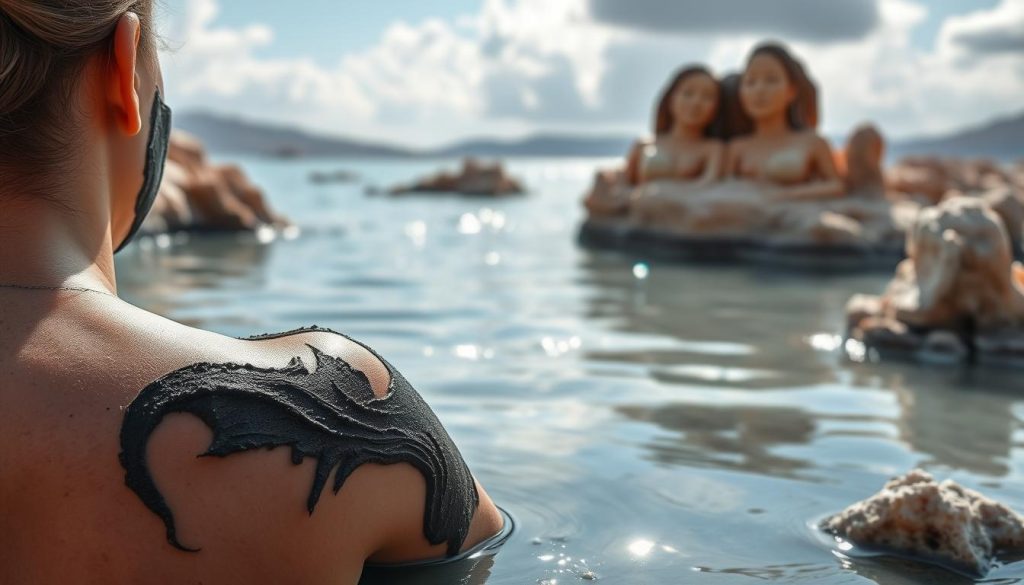
Dead Sea salt helps renew and communicate with skin cells. Its high salt content makes the Dead Sea a top health resort. Dead Sea products are becoming more popular, attracting wellness tourists.
Environmental Concerns Facing the Dead Sea
The Dead Sea is known for its special properties but faces big environmental challenges. Many factors are causing these problems, threatening its health and future. It’s important for us to work together to solve these issues.
Effects of Water Diversion from the Jordan River
Water diversion has greatly harmed the Dead Sea’s levels. About 40% of its loss comes from big industries like the Israeli Dead Sea Works and the Jordanian Arab Potash Company. These companies use a lot of water, reducing the natural flow into the sea.
Climate Change Impact and Receding Waters
Climate change makes things worse for the Dead Sea. Less rain and more evaporation speed up its decline. This results in a yearly drop of about three feet in water levels. Over 1,000 sinkholes have appeared in the last 15 years, posing risks to nearby buildings.
The mix of human actions and climate change raises the stakes for the Dead Sea. This makes it even more urgent to take action.
Sustainability Efforts and Current Initiatives
To tackle these problems, we need new ways to protect the environment. The Red Sea-Dead Sea Canal project is a step in the right direction. It involves Jordan, Israel, and Palestine working together to solve water issues and stabilize the Dead Sea’s levels.
It’s also key for countries to raise awareness and cooperate. This way, we can keep the Dead Sea safe for future generations.
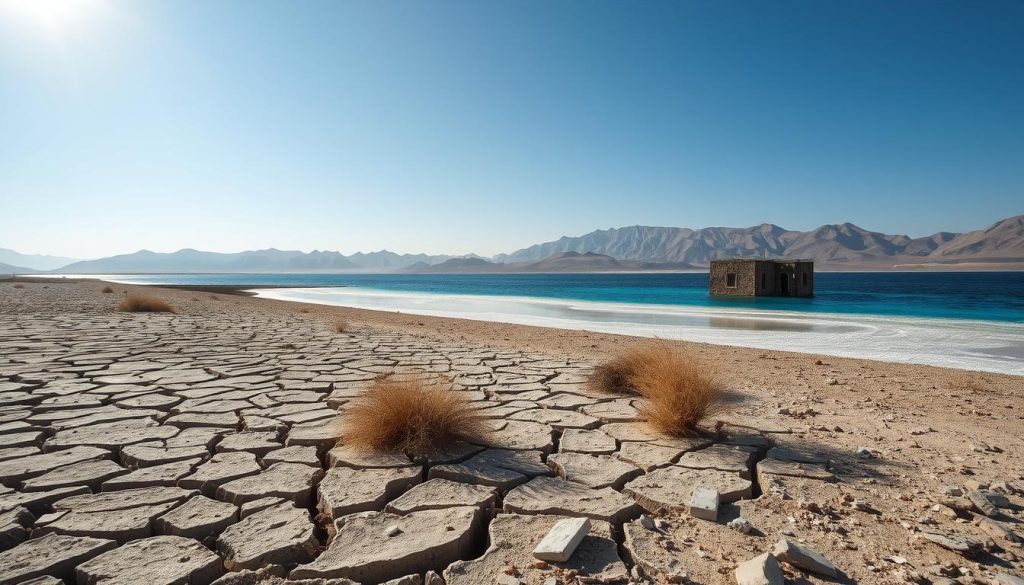
Exploring the Geology of the Dead Sea
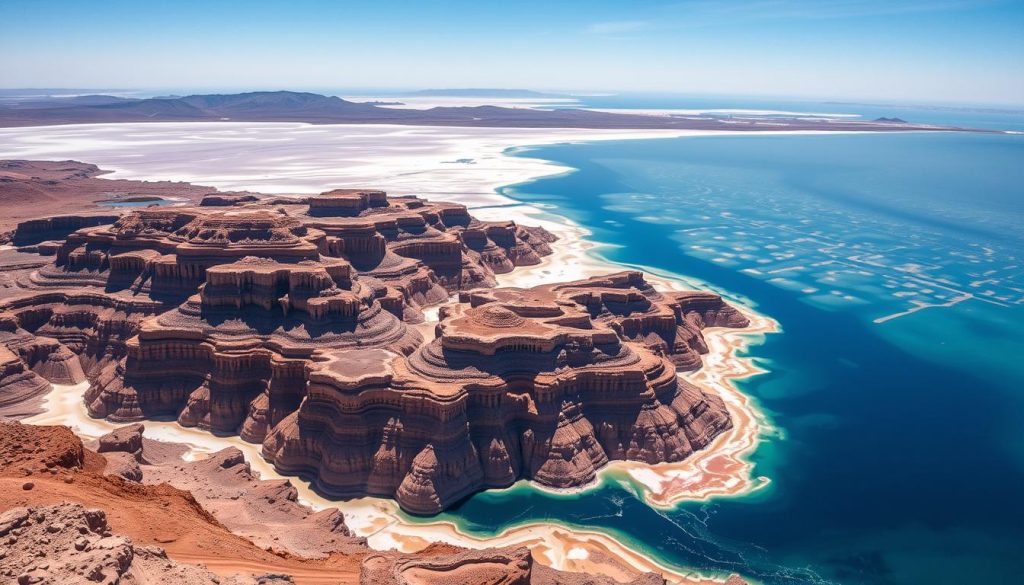
The Dead Sea is a fascinating place to study Dead Sea geology. It was shaped by tectonic activities in the Jordan Rift Valley. Over time, it formed through geological features like halite deposits from evaporated water.
The extreme conditions here affect both the geology and life. This harsh environment has led to the growth of unique flora and fauna. These organisms have adapted to survive in such challenging conditions.
Formation and Geological Features
The Dead Sea is the lowest point on land, over 400 meters below sea level. It has a very high salt concentration, about 34%. This makes it ten times saltier than regular ocean water.
This high salinity limits the types of life that can exist here. Yet, some microorganisms have adapted to survive. Over the years, the lake levels have changed a lot. This has created different geological formations in the area.
Unique Flora and Fauna in the Region
Despite the harsh waters, the area around the Dead Sea supports a variety of unique flora and fauna. Larger animals find it hard to survive in such salty conditions. But, species like storks, ibexes, and predators like wolves and hyenas can be found in the nearby mountains.
Interestingly, microorganisms in the Dead Sea’s water have adapted well to the salty environment. They play a key role in keeping the ecosystem balanced.
| Feature | Details |
|---|---|
| Location | More than 400 meters below sea level |
| Salinity | Approximately 34% salinity |
| Depth | Can reach nearly 1,000 feet |
| Surrounding Wildlife | Includes storks, ibexes, wolves, and foxes |
| Microorganisms | Adapted to hyper-saline conditions |
| Rainfall | Less than 10 cm per year |
Dead Sea Tourism Trends
The Dead Sea’s tourism has changed a lot. This is due to environmental issues, politics, and who visits. Looking at these trends shows both problems and chances for this special place.
Historical Growth of Tourism
Tourism at the Dead Sea has gone up and down over time. In the late 20th century, more people came for wellness. They wanted to try the waters and mud for health reasons. Even though numbers have leveled off, it’s still a popular spot for many.
Current Tourism Statistics and Demographics
Today, the Dead Sea is a key spot for different kinds of tourists. People come for health, religion, and adventure. It’s a big deal in Israel, with about a million visitors each year. Despite water levels dropping and environmental problems, it’s still a big draw.
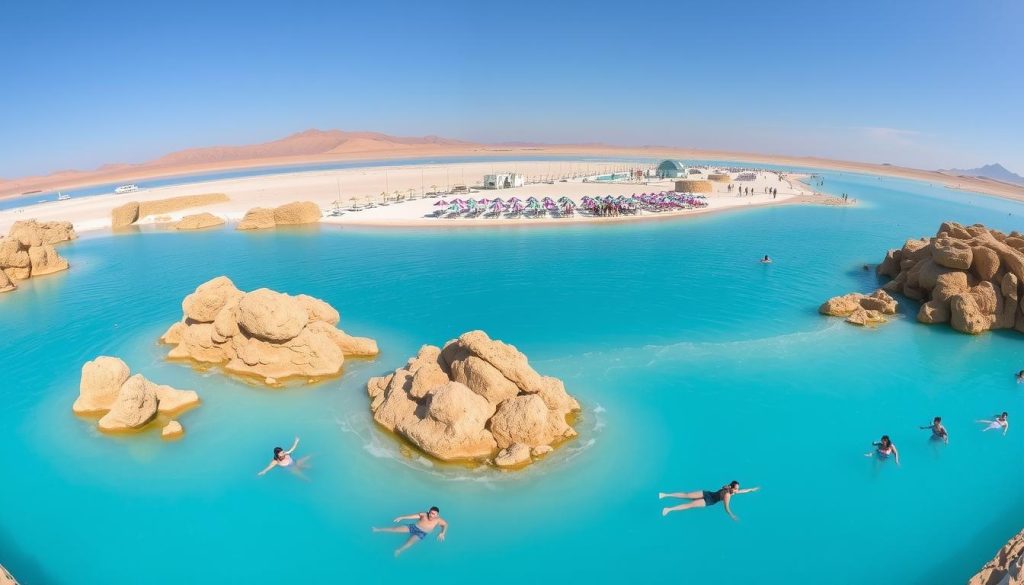
Looking ahead, how we handle tourism at the Dead Sea is key. The market for Dead Sea mud cosmetics is expected to grow to $2.6 billion by 2031. This shows the area’s economic promise, even with environmental worries.
Conclusion
The Dead Sea is a natural wonder, known as the lowest point on Earth. It’s also famous for its rich history and unique ecosystem. The Dead Sea has a high salt concentration and mineral-rich mud.
But, it faces big challenges. Water diversion and industrial activities harm the environment. The water level drops by about 110 cm each year.
Projects like the Dead Sea Revival Project (DSRP) aim to solve these problems. They work to protect the Dead Sea and its surroundings. By supporting tourism and sustainable practices, we can help the Dead Sea thrive.
By learning about the Dead Sea’s history and importance, we can help preserve it. We must protect this amazing place for future generations. Let’s work together to keep the Dead Sea’s wonders alive.