
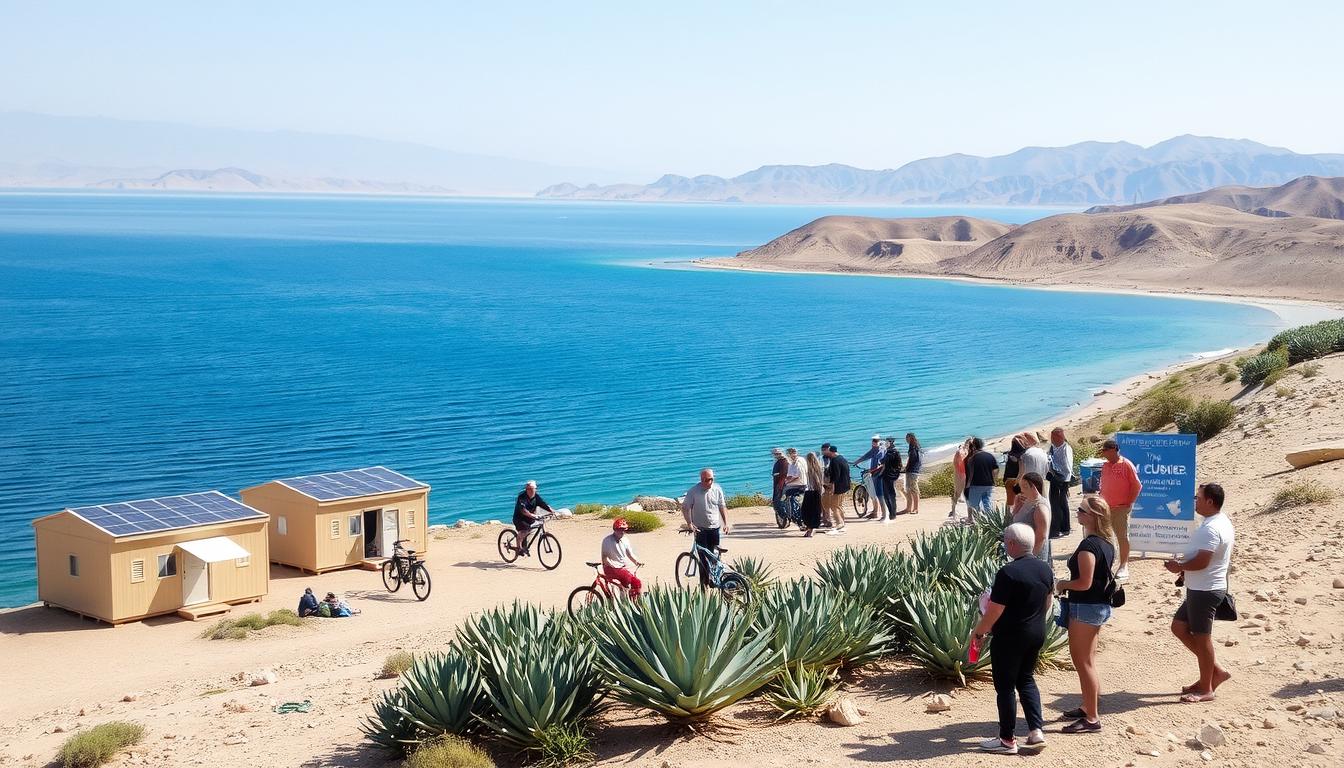
Eco-Friendly Dead Sea Visits: Sustainable Travel Options
Have you ever wondered how your travel choices impact the fragile beauty of places like the Dead Sea?
The Dead Sea is 1,412 feet below sea level. It’s famous for its mineral-rich waters that let you float. But, as tourism grows, we need sustainable ways to visit. It’s key to choose eco-friendly tours to help save the Dead Sea.
This article will show you how to visit the Dead Sea without harming it. We’ll talk about eco-friendly places to stay and activities that help protect the environment. Let’s learn how to enjoy the Dead Sea’s beauty while keeping it safe for the future.
Introduction to the Dead Sea
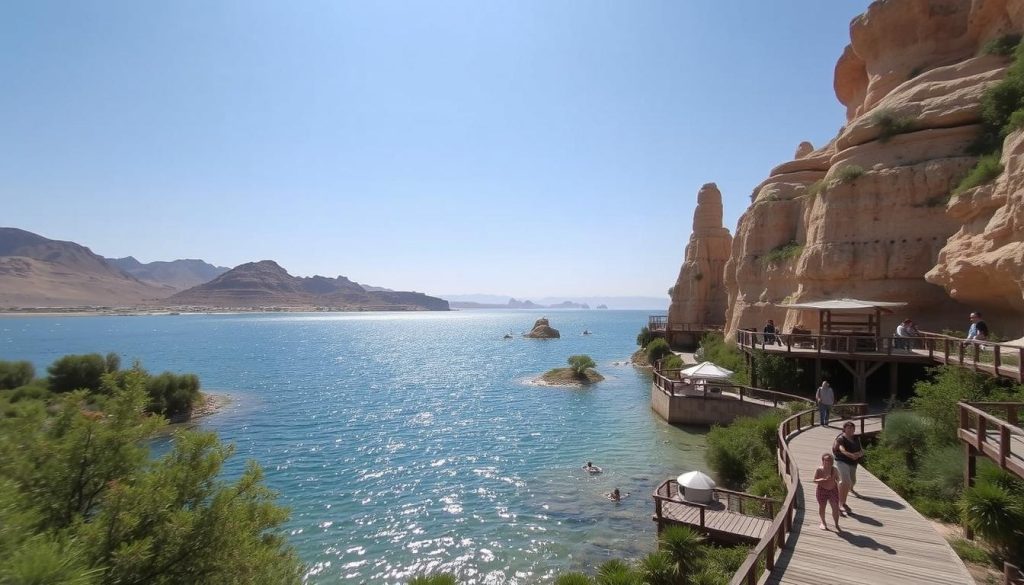
The Dead Sea is a unique spot, the lowest point on Earth. It’s located between Israel and Jordan. Its water is incredibly salty, about 33.7%, much saltier than regular ocean water. This makes it hard for most living things to survive, earning it its name.
For centuries, people have visited the Dead Sea for its healing properties. The minerals in its mud and water help with skin problems like psoriasis and acne. Around the Dead Sea, you’ll find historical sites like Masada National Park and Ein Gedi Nature Reserve.
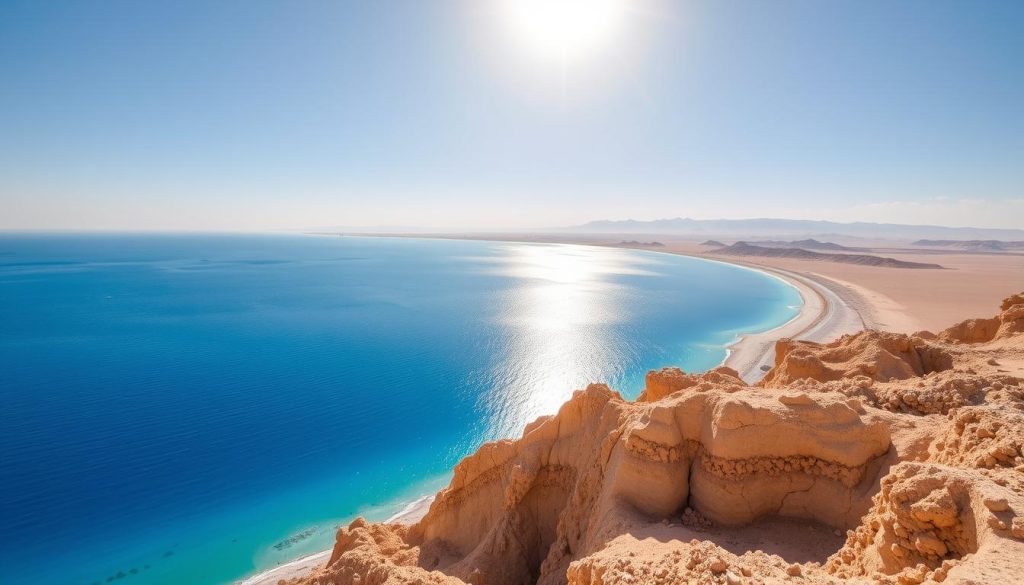
Visiting the Dead Sea requires some knowledge. Wear a swimsuit that’s okay for mineral-rich mud. Also, don’t swim on your belly to avoid eye irritation from the salt. With the right preparation, your visit can be both fun and refreshing.
The Importance of Sustainable Travel
Sustainable travel is crucial today. Tourism’s growth affects the environment and local cultures. The Dead Sea, for example, is facing big ecological problems.
Its water level drops by 1 meter each year. This means less surface area and coastline. Eco-tourism helps protect natural resources and local communities.
It promotes practices that reduce harm and boost benefits for the environment and economy. Jordan is training tour guides and operators. This effort aims to lessen tourism’s ecological impact.
Conserving the Dead Sea costs up to five billion dollars. Projects like the Red-Dead Sea canal aim to save it. Without responsible tourism, the Dead Sea might disappear in 50 years.
Travelers need to be mindful of their choices. This supports local economies and helps conservation. By choosing responsible tourism, you help protect places like the Dead Sea for the future.
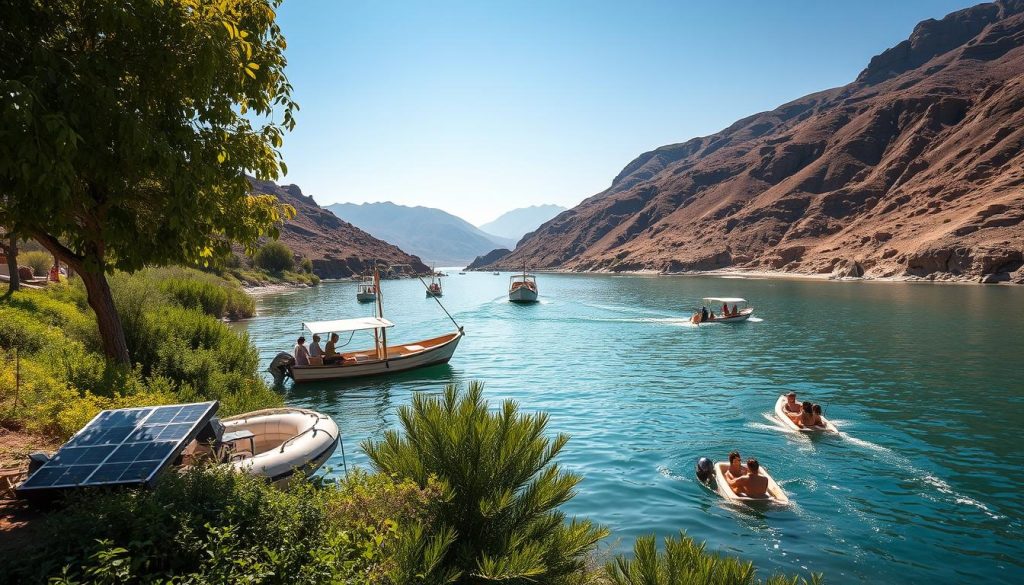
Sustainable Travel Options for Visiting the Dead Sea
Visiting the Dead Sea is a chance to see a natural wonder while traveling sustainably. By choosing eco-friendly options, you make your trip better for the environment and local people.
Eco-friendly accommodations
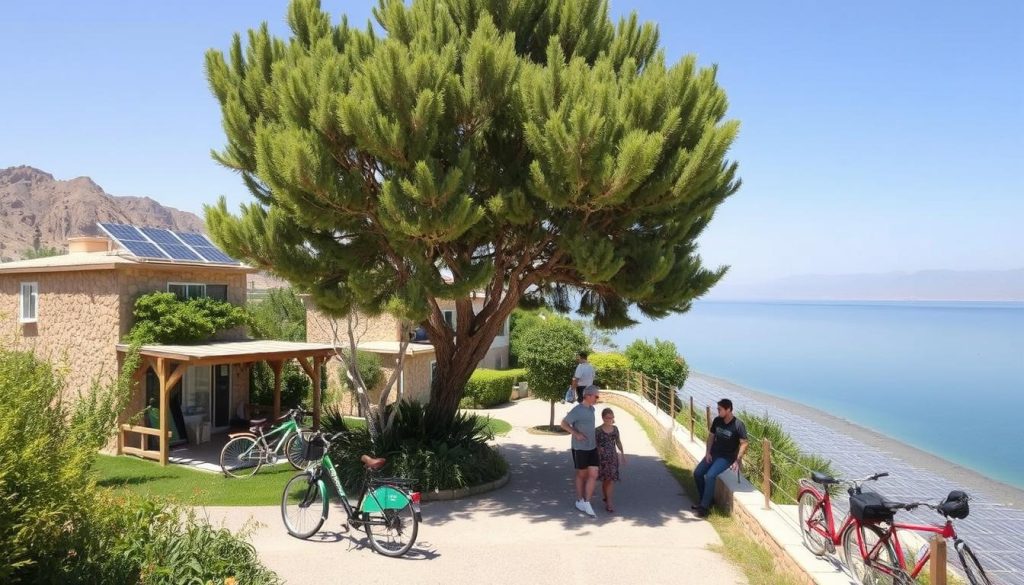
Choosing eco-friendly places to stay is key to reducing your carbon footprint. Eco-lodges use renewable energy and sustainable practices. Staying at places with Travelife certification means they’re serious about being green.
Supporting local businesses and artisans helps Jordan’s culture and economy.
Green transportation methods
Think about using green ways to get around. Public transport or carpooling cuts down on pollution. Jordan Classical Tours uses hybrid or electric vehicles for a greener trip.
Choosing responsible tours
Joining responsible tours lets you connect with local culture and nature. Pick tours from certified companies to support the local economy and conservation. Companies like Jordan Classical Tours are open about their green goals and achievements.
| Aspect | Details |
|---|---|
| Eco-friendly Accommodations | Utilize renewable energy, waste reduction practices, and support local artisans. |
| Green Transportation | Options include public transport, hybrid/electric vehicles, and carpooling. |
| Responsible Tours | Engage with local operators ensuring sustainability and community support. |
Eco-Friendly Dead Sea Tours
Exploring the Dead Sea through eco-friendly tours is a great way to travel. Local tour operators focus on sustainability, helping the community and preserving the area’s beauty. You become a part of protecting this amazing place for others to enjoy.
Local tour operators
Local tour operators offer unique experiences that respect the environment. They share the area’s culture, history, and natural importance. This lets you connect with the place on a deeper level.
Choosing these tours supports the local economy and reduces your carbon footprint. Small group tours are often more personal and meaningful, offering a closer connection with your guide and fellow travelers.
Small group and private tours
Small group tours are great for more interaction and a deeper experience. They focus on quality over quantity, avoiding the crowds of mass tourism. Private tours, on the other hand, let you create your own itinerary, making your trip even more special.
Both types of tours help you discover the Dead Sea’s hidden treasures. They ensure your visit is respectful of the local culture and environment.

| Tour Type | Description | Environmental Impact | Experience Level |
|---|---|---|---|
| Small Group Tours | Intimate adventures with fewer participants. | Lower carbon footprint, promotes local economies. | Moderate, ideal for social interactions. |
| Private Tours | Customizable itineraries for a personal touch. | Minimized crowd impact, supports conservation. | Easy to moderate, flexible to participant’s pace. |
Choosing eco-friendly Dead Sea tours makes your trip better and helps the community. It ensures tourism is sustainable and positive for the area. Your visit can be memorable and beneficial to this incredible environment.
Responsible Tourism at the Dead Sea
Visiting the Dead Sea responsibly lets you help the environment while enjoying its beauty. Many efforts are in place to protect this area. It faces dangers from climate change and too many tourists.
Conservation efforts
Many groups work hard to save the Dead Sea. They focus on cleaning up pollution and protecting animals. The Dead Sea is losing about one meter each year.
Helping local groups not only helps the environment. It also teaches you about the area’s big environmental problems.
Participating in local initiatives
Getting involved in local projects makes your trip better and helps the community. Visitors often join in cleaning the beach and learning about green living. These activities let you meet locals and understand their work.
By taking part, you help protect this special place. You also gain a deeper respect for the area’s culture and nature.
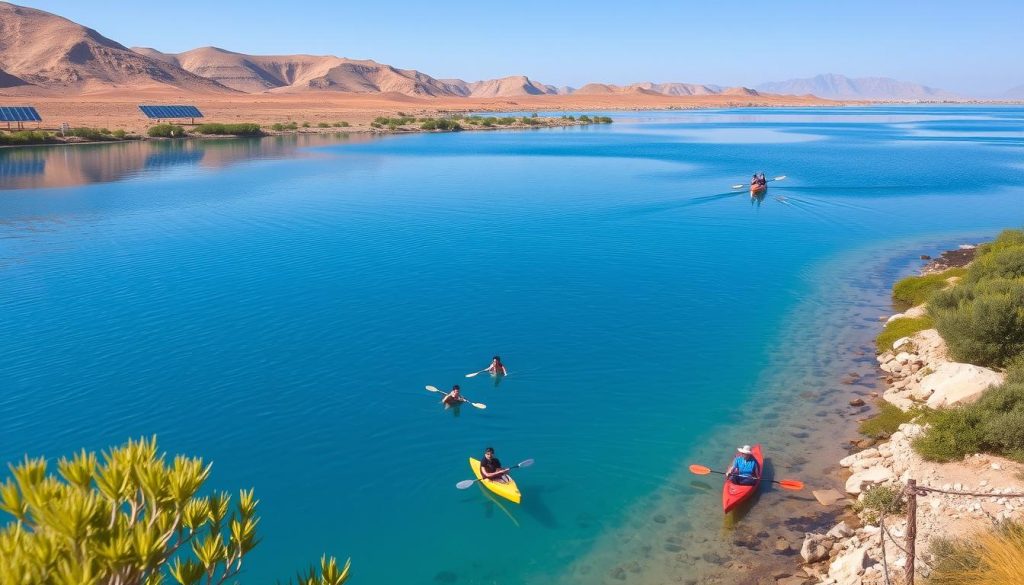
| Conservation Efforts | Local Initiatives |
|---|---|
| Pollution reduction programs | Community beach clean-ups |
| Wildlife protection activities | Workshops on sustainable practices |
| Research on climate impact | Supporting local artisans |
| Restoration of natural habitats | Education on ecological balance |
Environmentally Friendly Travel to the Dead Sea
Traveling to the Dead Sea in an eco-friendly way makes your trip better and helps the environment. A big part of this is cutting down on plastic waste. Simple steps like using a reusable water bottle can make a big difference.
By avoiding single-use plastics, you help keep the area’s stunning landscapes and diverse wildlife intact. This unique ecosystem is worth protecting.
Reducing plastic waste
Choosing products that use less plastic is key to reducing waste. Here are some easy ways to do this:
- Carrying reusable shopping bags for any purchases.
- Choosing restaurants that offer sustainable dining options.
- Engaging in local environmental initiatives that promote waste reduction.
Your efforts in reducing plastic waste help keep the Dead Sea region beautiful.
Supporting sustainable businesses
The communities around the Dead Sea rely on tourism. It’s important to support businesses that are good for the environment. Look for local places that use sustainable ingredients or buy from eco-friendly stores.
By doing this, you help the local economy and enjoy your visit more. Traveling in an eco-friendly way has a positive impact on the Dead Sea and makes your trip better.
Green Accommodations Near the Dead Sea
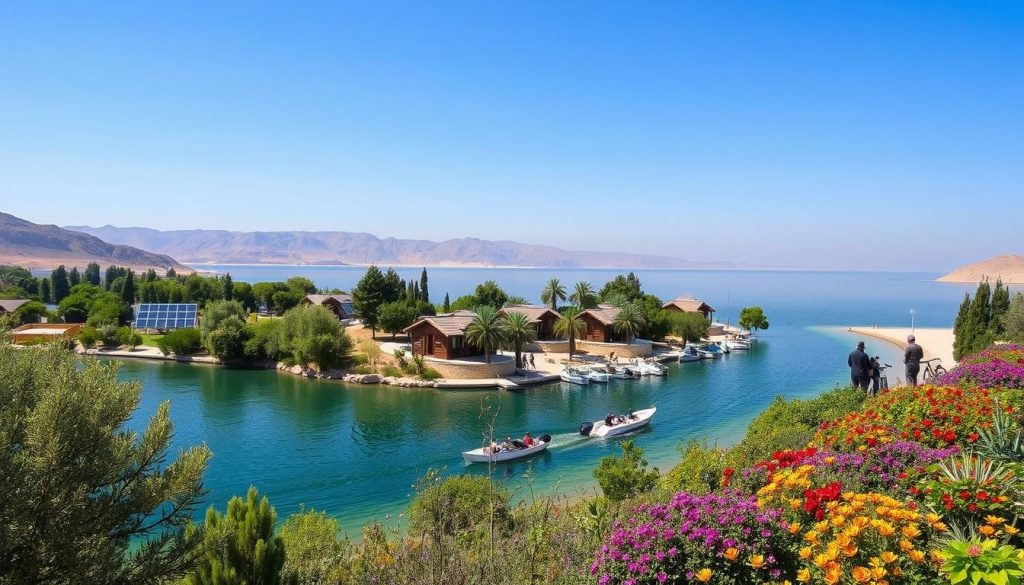
Choosing green accommodations near the Dead Sea lets you enjoy luxury while being kind to the planet. Eco-lodges and sustainable hotels make it easy to help the environment. These places work hard to lessen their impact on nature.
Eco-lodges and sustainable hotels
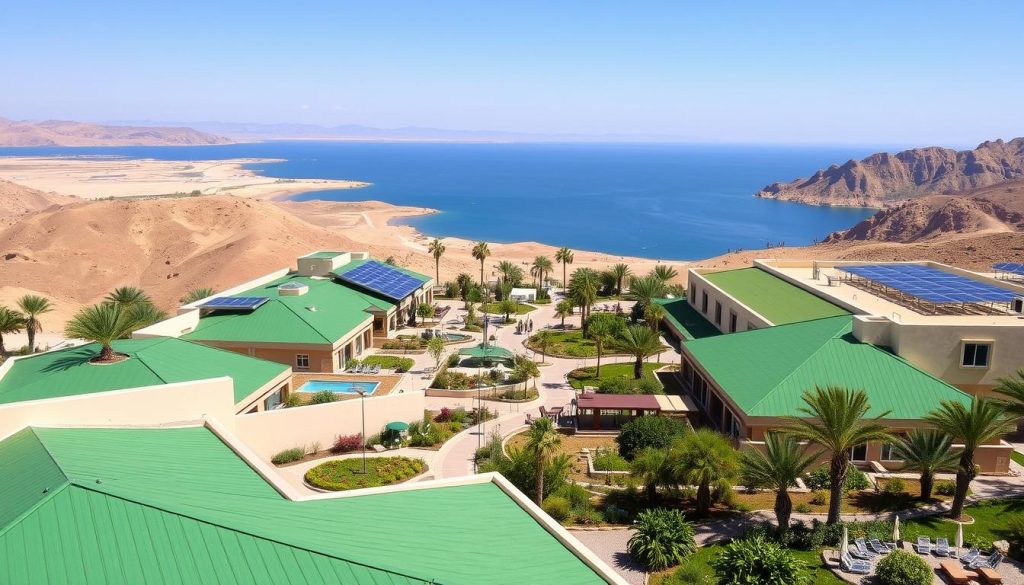
The Dead Sea Marriott Resort & Spa is a top pick for eco-friendly stays. It uses solar power to save a lot of fuel and cut down on emissions. It’s certified by Green Key and Blue Flag, showing its strong commitment to being green.
The resort also uses energy-saving lights and recycles a lot. It buys products from local places. Guests can relax in pools, including ones for families and a special infinity pool. The spa uses natural stuff and supports green living.
Benefits of staying in eco-friendly resorts
Staying in eco-friendly resorts has many perks. They help protect nature and offer a special experience. You can charge your electric car and get discounts and points for your stay.
For a peaceful stay, check out the Feynan Eco-Lodge in Dana Biosphere Reserve. It’s simple and runs on solar power. It’s a calm place that cares about the environment.
Eco-Conscious Activities at the Dead Sea
Exploring the Dead Sea through eco-conscious activities lets you enjoy its wonders while being mindful of the environment. The area is rich in natural beauty, history, and health benefits. Start your day with a mud treatment, a favorite activity where you apply mineral-rich mud to your skin.
This treatment not only makes your skin feel great but also shows the importance of using local resources wisely. It’s a way to care for the environment while enjoying the Dead Sea’s gifts.
After the mud treatment, try floating in the Dead Sea’s salty waters. Its water is ten times saltier than regular sea water. It takes about ten minutes to get used to the water’s buoyancy, thanks to its high mineral content.
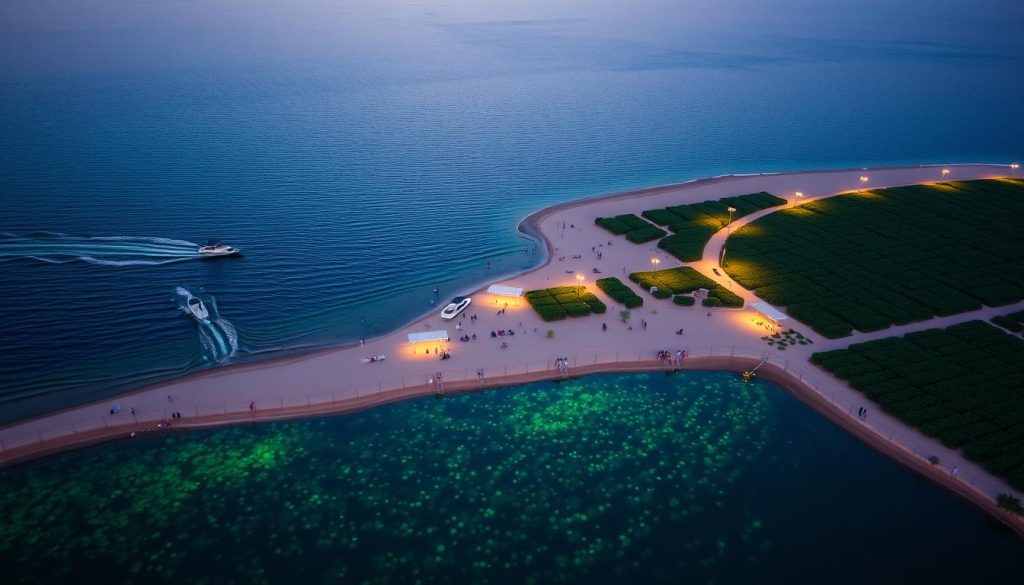
Hiking around the Dead Sea is perfect for nature lovers. It lets you see beautiful views and hidden springs. There are many trails to choose from, each offering a unique perspective of the area’s beauty.
Joining bird-watching events helps you connect with local wildlife. It also supports conservation efforts in the region. These activities make your trip more meaningful and help protect the Dead Sea’s natural wonders.
By participating in these activities, you not only enhance your travel experience but also contribute to sustainable tourism. You’ll appreciate the Dead Sea’s unique environment more and leave a positive mark on the area.
Exploring the Natural Wonders Responsibly
Exploring the Dead Sea region can be truly unforgettable. By joining guided hikes and nature walks, you get to see the unique landscapes up close. These activities also help protect the delicate ecosystems around the Dead Sea.
Guided hikes and nature walks
Guided hikes offer a chance to learn about the area’s rich biodiversity. Guides share their knowledge of local plants and animals, making your trip more meaningful. You’ll see amazing views and wildlife on trails in places like Dana Biosphere Reserve and Wadi Rum.
Every step you take shows the importance of caring for nature. It helps protect these special habitats for future generations.
Cultural experiences that support local communities
Experiencing local culture adds to your trip’s value. Visiting artisan cooperatives lets you see traditional crafts and support the local economy. Cooking classes help keep cultural traditions alive and build community bonds.
By taking part in these activities, you help the environment and the people living here. It’s a way to give back to this beautiful area.
Conclusion
Traveling sustainably at the Dead Sea makes your trip better and helps protect this special place for others. The Dead Sea is the lowest point on Earth, but it’s facing big problems like losing its shoreline and facing ecological dangers. By choosing the right places to stay, tours, and activities, you help the environment and support local people.
Choosing eco-friendly options lets you enjoy the Dead Sea’s beauty and culture without harming it. Using green transport, staying in eco-friendly lodges, and joining responsible tours helps reduce your impact. Your actions help make tourism better for the Dead Sea and for those who come after you.
Your trip to the Dead Sea shows how travel can be good for nature and people. It helps you appreciate the environment and supports local communities. When planning your next visit, think about how your choices can make travel more sustainable for everyone.





