Travel Safety: Is it safe to go to Petra?
As one of the New Seven Wonders of the World, Petra draws visitors from everywhere. But, with ongoing tensions and security worries, you might ask: Is it safe to visit this famous site? Knowing about travel safety in Petra is key for anyone planning a trip.
While Jordan is often seen as safe for Western tourists, threats like terrorism, petty crime, and local customs can impact your visit. Let’s dive into the current security situation and what you should know before heading to Petra.
Understanding Travel Safety in Jordan
Traveling to Jordan is a mix of history and culture, perfect for Petra explorers. Knowing about safety in Petra and Jordan is key for a good trip. While most of Jordan is safe for tourists, stay alert in certain areas.
The U.S. Department of State warns of a “Level 2: Exercise Increased Caution” for Jordan since October 2022. This alert is due to terrorism threats in some areas. Avoid the Jordan-Syria border and areas east of Ruwayshid because of crime and conflict.
Learn about the local area before you go. Places like Zarqa, Rusayfah, and Baqa’a neighborhood of Ayn Basha are risky. Also, skip Ma’an City and parts of Ma’an Governorate. Terrorists often target markets and transport hubs.
Be careful with your belongings to avoid pickpocketing and bag snatching, common in crowded places. Watch out for scams and unfair prices in tourist spots. Always negotiate and keep your things safe.
Outdoor activities, like diving in Aqaba, can be risky due to safety issues. Weather can be bad from November to March, so check local alerts. Use safe transport like hotel taxis or Uber for city travel.
Lastly, get travel insurance that covers theft, accidents, and health problems. This will protect your trip to Jordan. Enjoy the local culture while staying safe.

| Safety Consideration | Description |
|---|---|
| Advisory Level | Level 2: Exercise Increased Caution recommended by the U.S. Department of State. |
| Restricted Areas | Avoid travel near Jordan-Syria border and specific high-risk neighborhoods. |
| Common Risks | Pickpocketing, bag snatching, scams in tourist areas. |
| Weather Risks | Potential for flooding during the rainy season (November-March). |
| Transportation | Use trusted taxis or ride-hailing services for safer travel. |
| Travel Insurance | Essential for covering losses related to theft, accidents, or health issues. |
Current Security Situation in Jordan
The security situation in Jordan has changed a lot because of regional tensions. This is mainly due to Iran’s missile attack on Israel on October 1. The UK Foreign Office then warned against traveling near the Jordan-Syria border, within 3 kilometers.
As unrest grew in nearby countries, Jordan’s authorities became more careful. They watched the situation closely.
Recent military actions by the US and UK in Yemen have also led to a new travel warning for Jordan. These actions caused Jordan’s airspace to close temporarily. Jordan’s security forces have been working harder across the country. There have been protests related to these conflicts, showing Jordan’s worries about security.
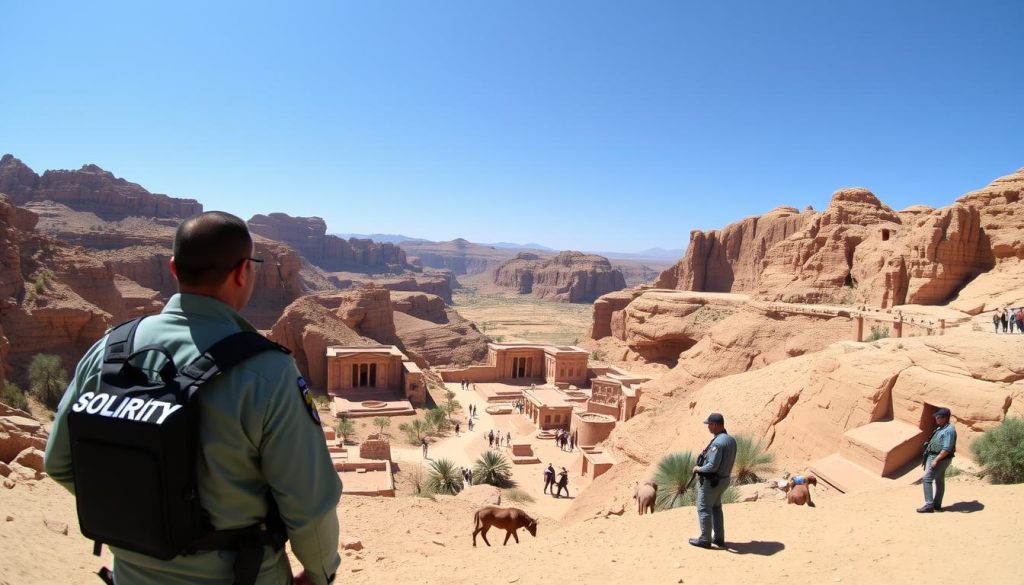
Even though Jordan is generally safe, there are still threats. Terrorists might target places tourists like, such as hotels and Petra’s archaeological sites. This makes people worry about safety in Petra.
Crime, like pickpocketing and bag snatching, happens sometimes. But most crimes don’t cause big problems. They usually result in small losses.
Travelers need to know about local customs and be careful during protests. Protests about the conflict in the area are becoming more common. Following local laws and customs, like not drinking too much alcohol or showing too much affection in public, helps keep you safe in Jordan.
| Security Concerns | Details |
|---|---|
| Regional Tensions | Increased military activity due to nearby conflicts. |
| Travel Advisories | UK advises against travel near the Jordan-Syria border. |
| Terrorism Threat | Possible targeting of tourist sites by terrorist groups. |
| Public Disorder | Regular protests; impacts on local security. |
| Common Crimes | Pickpocketing and theft from vehicles are common. |
It’s important for travelers to stay updated on the situation. This way, they can better understand the risks. They can then have a safer trip to Jordan and see places like Petra.
Is it safe to go to Petra?
Visiting Petra can be an amazing adventure. But, it’s important to know about Petra safety concerns for a great trip. Travel advisories offer key tips for planning your visit.
Overview of Travel Warnings and Advisories
Travel advisories for Jordan say Petra is safe for tourists. The northern borders with Syria have some risks. But, Petra, Wadi Rum, and Amman are still great places to visit.
As of October 2023, the Foreign, Commonwealth & Development Office (FCDO) warns against traveling near the northern border. But, this warning doesn’t apply to Petra, Wadi Rum, and Amman. These places are still welcoming to tourists.
General Safety Assessment for Tourist Regions
Key tourist spots in Jordan are considered safe. Here are some visiting Petra tips to make your trip better:
- Entry Fees: You’ll pay between 50-90 JOD to enter, with an extra 15 JOD for night visits.
- Jordan Pass: This pass lets you in for free and is cheaper if you stay longer.
- Best Times to Visit: Come around 6:00 am to miss the crowds and heat.
- Transportation: Walking is best in Petra. But, you can also use horse carts, donkeys, and camels.
- Accessibility: Exploring Petra’s higher areas can be tough for those with physical disabilities.

Jordan’s modern setup makes traveling easy. Buses from Amman to Petra take about 3-4 hours. Even with some recent political issues, tourist spots are still open to visitors. They offer deep dives into history and culture.
Petra Archaeological Park: Visitor Safety
Visiting Petra Archaeological Park is a unique chance to see history up close. But, knowing the safety rules is key for a great visit. This huge site covers over 40 square kilometers, filled with ancient wonders and trails. With over 500,000 visitors each year, keeping everyone safe is a top priority.
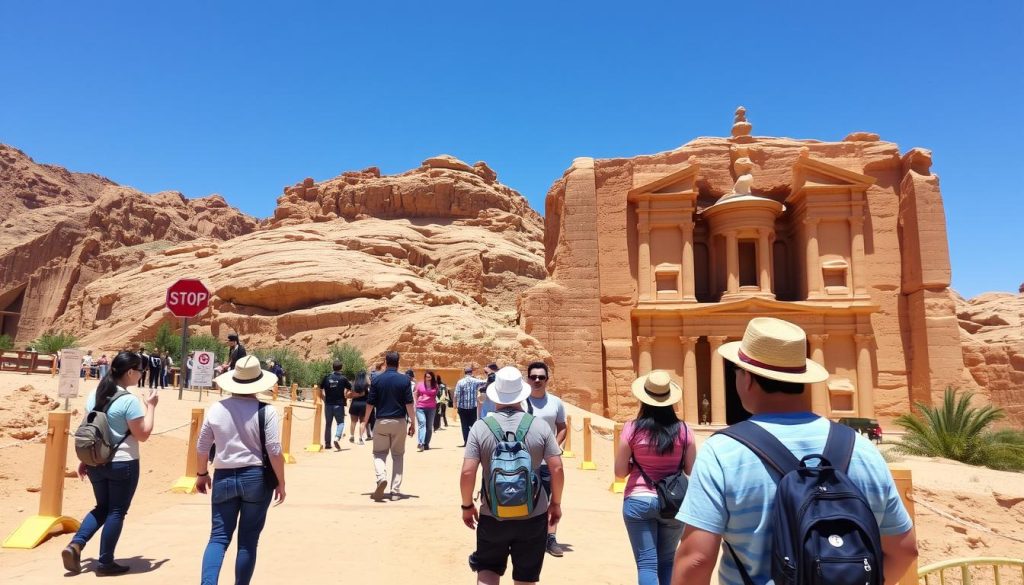
The park has rules to keep visitors safe. Gates open at 6 am, so you can make the most of your time. It’s important to know the park closes at different times depending on the season. This affects how much you can see.
Spending at least two to three nights at Petra is recommended. This way, you can see all its amazing sights, like the Monastery. It’s over 50 meters high and stretches 300 meters.
To stay safe while exploring, follow these tips:
- Stay on the paths to avoid dangers.
- Drink plenty of water, as it gets hot.
- Watch your things to avoid theft.
- Think about getting a local guide for a better experience.
Petra has hiking trails from 2 km to 8 km long. A good plan helps you see key spots like Al Khazneh (The Treasury). It’s 40 meters tall. If you need help, donkey rides and carriage services are available. Prices start at 20 JD for two people for a carriage ride.
In emergencies, knowing local emergency services is helpful. Knowing the rules also makes your visit better. It lets you enjoy Petra’s culture and history more fully.
Risks Associated with Traveling to Petra
Visiting Petra is an amazing adventure, but it has its risks. Knowing these dangers helps keep you safe. Issues like terrorism, crime, and natural disasters are big concerns. This part talks about the risks tourists might face in this ancient place.
Terrorism and Security Threats
US and UK advisories warn of terrorism risks in Jordan. Areas near Syria and Iraq borders are extra dangerous. Petra, though, is well-guarded by security. Still, it’s wise to stay alert for your safety.
Understanding the Risk of Crime
Crime in Jordan, like in Amman, is not common. But, petty crimes like pickpocketing can happen. Keeping an eye on your stuff and dressing modestly helps. Female travelers might face unwanted attention, so it’s good to be confident and aware.
Natural Disasters and Weather Conditions
Flash floods are a big risk from November to March. They can ruin travel plans, so check the weather. The best times to visit, April to May and September to October, have nice weather and fewer risks.
| Risk Factor | Description |
|---|---|
| Terrorism | Increased risks near borders with Syria and Iraq; significant security measures in tourist areas. |
| Crime | Low overall crime rate; pickpocketing and petty theft are common concerns. |
| Natural Disasters | Flash floods possible during rainy seasons; severe weather can affect travel safety. |
| Visitor Precautions | Maintain awareness, secure valuables, and choose reputable tour operators. |
Precautions to Take While Visiting Petra
Visiting Petra is an amazing experience with stunning views and rich history. To make your trip better, it’s important to take some safety steps. Whether you’re seeing ancient ruins or walking through busy areas, staying safe is key to a great adventure.
Personal Safety Tips for Tourists
Following some simple tips can help keep you safe while enjoying Petra:
- Carry Cash: Many places in Jordan don’t take credit cards, so it’s smart to have cash.
- Dress Modestly: Dressing right shows respect for local customs. It’s best to cover your elbows and knees.
- Stay Hydrated: Petra’s weather can get very hot. Drink water and use sunscreen to stay safe.
- Respect Ramadan: If you’re visiting during Ramadan, don’t eat or drink in public.
- Travel with a Guide: A guide can make your visit better and keep you safer.
Safety Measures in Petra Archaeological Park
Petra Archaeological Park has many safety features to keep visitors safe:
- Police Presence: You’ll find English-speaking police at main tourist spots, ready to help.
- Animal Welfare: Report any animal abuse to the Jordan Tourism Board.
- Prohibition on Drones: Flying drones without a permit is not allowed and can lead to confiscation.
- Guided Routes: Stick to the paths to avoid getting lost. Petra is big and needs more than a day to see everything.
- Weather Preparedness: In winter, wear warm clothes because it can be cold and rainy.
| Tip | Description |
|---|---|
| Carrying Cash | Many places only accept cash transactions, make sure to have sufficient Jordanian dinars. |
| Modest Dressing | Respect local customs by dressing conservatively, covering your body appropriately. |
| Hydration | Bring plenty of water to stay hydrated, specially during hot weather. |
| Traveling with a Guide | A guide can enhance your experience and provide valuable safety support. |
| Weather Preparedness | Dress in layers to adapt to changing weather, specially in winter months. |
Traveling to Jordan: Entry Requirements and Travel Preparation
Planning a trip to Jordan means knowing the entry rules and getting ready for your adventure. U.S. citizens should check visa rules, as they change based on your stay’s length and type. Also, you might need vaccinations, so check your health before you go. Following Petra travel advice will make your visit safer and more enjoyable.
Here are tips for safe travel in Petra:
- Learn about local laws to avoid trouble.
- Check if your destination is safe, avoiding risky areas.
- Wear modest clothes to respect local customs.
- Have a reliable way to communicate, like a local SIM or roaming.
- Bring bottled water and snacks for remote areas.
Plan your visit for the best weather. Spring (March to May) and fall (September to November) are great. A two-day itinerary is recommended. A one-day ticket is 50 JD, but a two-day pass is just 5 JD more, saving you money for more exploration.
Book your transport early. You can rent a car for freedom, take a private taxi for direct service, or join a guided tour for history and culture insights.
| Ticket Type | Price (JD) |
|---|---|
| One-Day Ticket | 50 |
| Two-Day Ticket | 55 |
| Three-Day Ticket | 60 |
| Jordan Pass (recommended) | 70-80 |
Lastly, have a plan for emergencies. Keep a list of local contacts and know where to find healthcare.
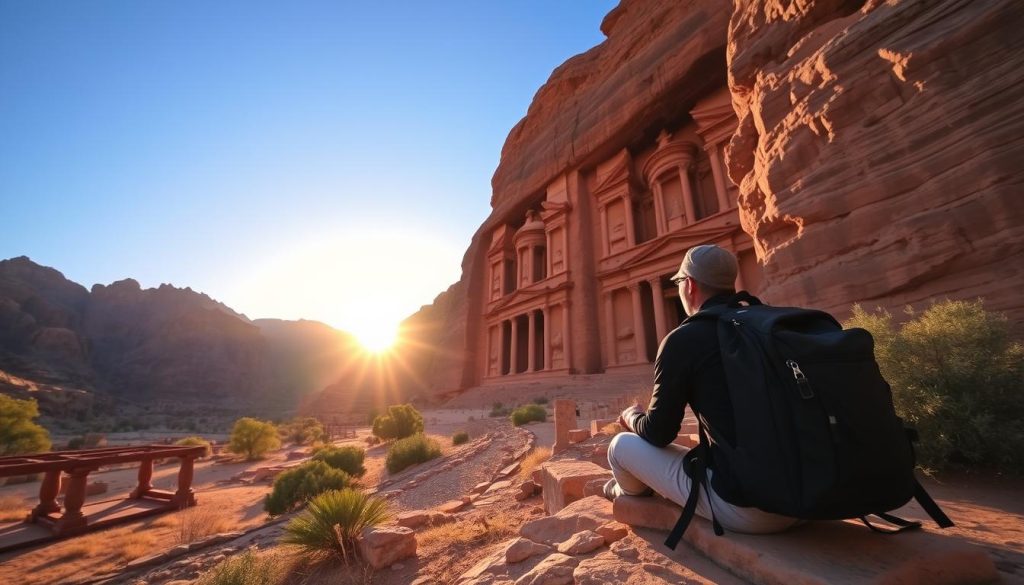
Transportation Safety When Visiting Petra
Travel safety in Petra is a top concern for visitors. Knowing your transportation options is key to a safe trip. We’ll cover the essential steps to make your journey to Petra stress-free.
Road Travel Considerations
Driving in Jordan comes with its own set of challenges. Familiarize yourself with local traffic laws, as they might be different from what you’re used to. The roads to places like Amman and Petra are mostly good, but watch out for drivers who don’t follow the rules.
Be extra careful, too, near the Jordan-Syria border. It’s known for security issues.
Safe Transportation Options
Choosing safe ways to get around Petra is important. Here are some good choices:
- JETT Bus: This bus service runs daily from Amman at 6:30 am for 10 Dinars each way. It returns at 5:00 pm.
- Public Minibus: It’s cheaper at 5 Dinars, with many trips a day. But, check the times, specially on Fridays.
- Taxi Services: Taxis in Wadi Musa cost more but are handy. A trip from Wadi Musa to Aqaba is 35 to 45 Dinars and takes about two hours.
For short trips in Wadi Musa, a taxi ride costs around 5 to 8 Dinars. But, prices can change a lot from Amman.
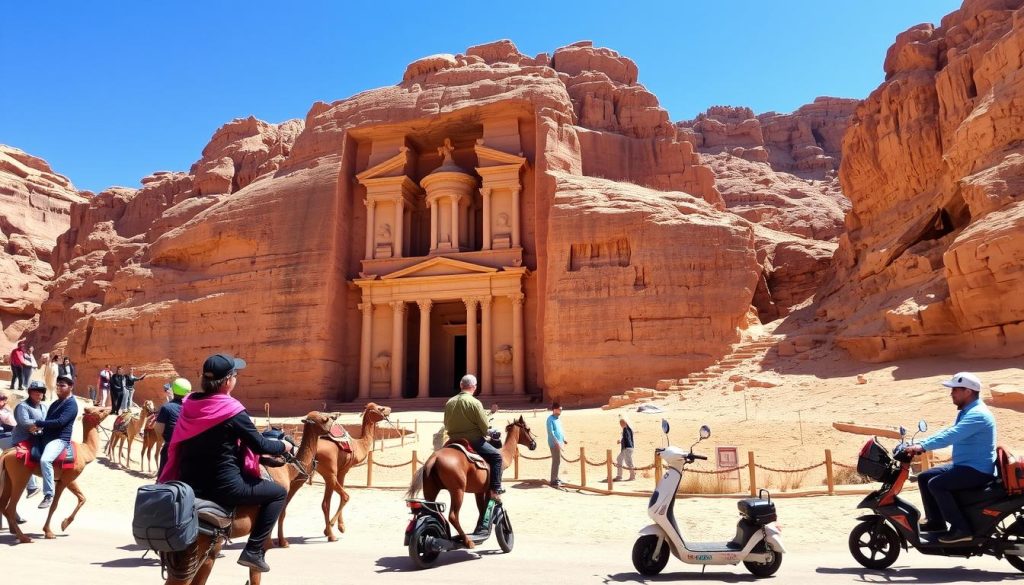
When traveling to Petra, it’s important to stay informed and pick safe ways to get around. Before you go, check the latest security updates and travel services to make your Petra visit better.
Health and Safety Considerations for Travelers
Your health and safety are top priorities when traveling, like visiting Petra. Knowing about medical facilities, emergency services, and travel insurance is key. Being aware of Petra’s safety concerns can make your trip safer and less stressful.
Medical Facilities and Emergency Services
If you need help in Jordan, call 911 for police, ambulance, or fire. Cities like Amman have good hospitals. Knowing where to find medical help quickly is important.
Here’s a list of health-related contacts in Jordan:
| Service | Contact Number |
|---|---|
| Police | 911 |
| Ambulance | 911 |
| Fire Department | 911 |
| U.S. Embassy | (+962) 6-590-6000 |
Travel Health Insurance Recommendations
Travel health insurance is a must for Petra trips. It protects you from unexpected medical costs. Make sure your policy covers your planned activities.
- Check if it covers pre-existing medical conditions.
- Ensure it includes emergency medical evacuation.
- Confirm if it covers repatriation in case of serious illness.
Stay healthy while traveling. Drink only bottled water and stay hydrated, as it’s very hot in summer. Get the right vaccinations, like for hepatitis A and B, and typhoid. These steps will help keep you safe and healthy in Petra.
Cultural Awareness and Respecting Local Customs
Knowing the importance of cultural awareness in Petra makes your visit better. It also shows respect for the locals. By following Petra travel advice and local customs, you ensure a safe and enjoyable time. This way, you’ll have positive interactions with the people of Jordan.
Understanding Local Laws and Norms
Jordan’s culture is deeply rooted in Islam, which influences its laws and customs. Learning about these helps you move through social situations smoothly. Here are some important things to remember:
- Dress modestly. Female tourists should wear loose, covering clothes. Male tourists should wear long trousers.
- Tipping, or ‘baksheesh,’ is about 10% in restaurants.
- Alcohol is only sold in hotels, bars, and licensed shops. Be careful not to drink in public.
- It’s common to chat and greet warmly. Say “As-salamu alaykum” when you meet someone.
- Accepting invitations for tea or meals is a sign of respect. Bring a small gift.
- Remove your shoes before entering homes. Use your right hand to eat.
- Always ask for permission before taking photos, even in public. This is important for privacy.
Following these tips helps you have a richer experience in Petra. It also shows respect for the local culture. This way, you’ll make lasting memories and have a fulfilling trip. Remember, knowing the local customs is key to a great travel experience.
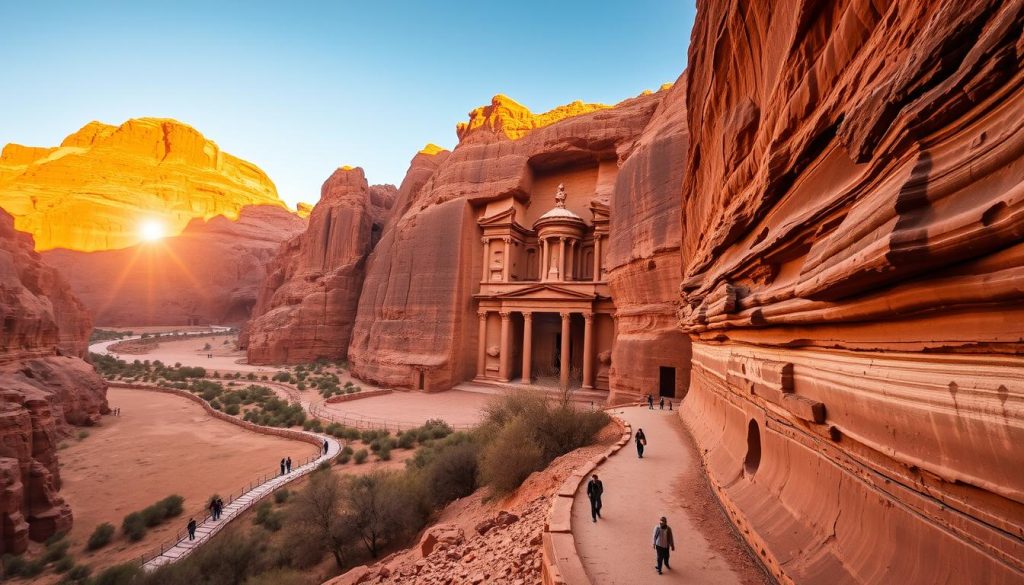
Tourism Safety: Feedback from Previous Visitors
Insights from previous visitors can greatly enhance your understanding of Petra tourism safety. Many travelers have highlighted the overall sense of security they experienced while exploring this ancient city. With Jordan’s high ranking on the Global Peace Index, which surpasses that of France, tourists often feel reassured about their safety.
As tourism continues to grow in Jordan, reports indicate a steady decline in crime rates. Visitors frequently report feeling secure during their trips, despite minor issues such as pickpockets in crowded urban areas like Amman. The low incidence of petty crime in Petra itself adds to its appeal, allowing travelers to focus on the breathtaking landscapes and historical structures.
While some safety concerns exist, such as potential harassment faced by female travelers or road safety regarding traffic accidents, most tourists find Petra to be welcoming and safe for exploration. Many have noted that dressing modestly can help mitigate unwanted attention. In addition, common advice includes remaining vigilant about personal belongings to avoid petty theft.
Tourists often recommend hiring a local guide, which can provide valuable insights into Petra’s rich history and enhance the overall experience. Whether you are venturing alone or in a group, the consensus is that the spectacular views and unique experiences far outweigh safety worries.
Based on the feedback from prior visitors, applying practical visiting Petra tips—such as remaining aware of your surroundings and avoiding isolated areas at night—contributes to a safe and enjoyable trip. The destination offers not just stunning scenery but also a sense of reassurance in regard to tourist safety.
Conclusion
When planning your trip to Petra, you can rest easy knowing it’s generally safe. Jordan is known for its peace and stability, even in a volatile region. The government puts a lot of effort into keeping tourists safe, making your visit enjoyable and secure.
Petra travel advice suggests being ready and mindful of your surroundings. While Petra is safe, it’s wise to be cautious near the borders with Iraq and Syria. Having good medical care and travel insurance can also give you peace of mind.
To make the most of your Petra visit, follow local advice and stay informed. Spending 2-3 days here lets you fully experience its beauty. By being cautious and prepared, you can have a safe and unforgettable trip to Petra.