Petra Accessibility for Disabled Travelers: A Guide
Have you ever wondered how one of the world’s most breathtaking archaeological sites can accommodate travelers with disabilities? Visiting Petra might make you think about the challenges of exploring this ancient city. It’s known for its stunning beauty and rich history, but what about Petra disability access?
Many travelers wonder, “Is Petra accessible for travelers with disabilities?” This guide aims to answer that question. We’ll look at the terrain, available resources, and what you need to know for an inclusive visit.
Understanding Petra’s Terrain and Challenges
Visiting Petra is a journey through ancient history. But, it has challenges for disabled travelers at Petra. The site’s terrain includes hilly areas, steep slopes, and uneven paths. These obstacles can be hard for those with mobility issues.
Knowing Petra’s terrain is key when planning your trip. It helps you choose accessible routes and transportation. This way, you can enjoy your visit more.
The village of Wadi Musa, where most visitors stay, is on a hill. This means you might face uphill walks on your way back. It’s important to be aware of the physical demands of Petra’s environment.
Getting a taxi to the Visitor Centre can help. It reduces the hard walking from your accommodation to Petra’s entrance. This makes the experience easier for those with mobility issues.
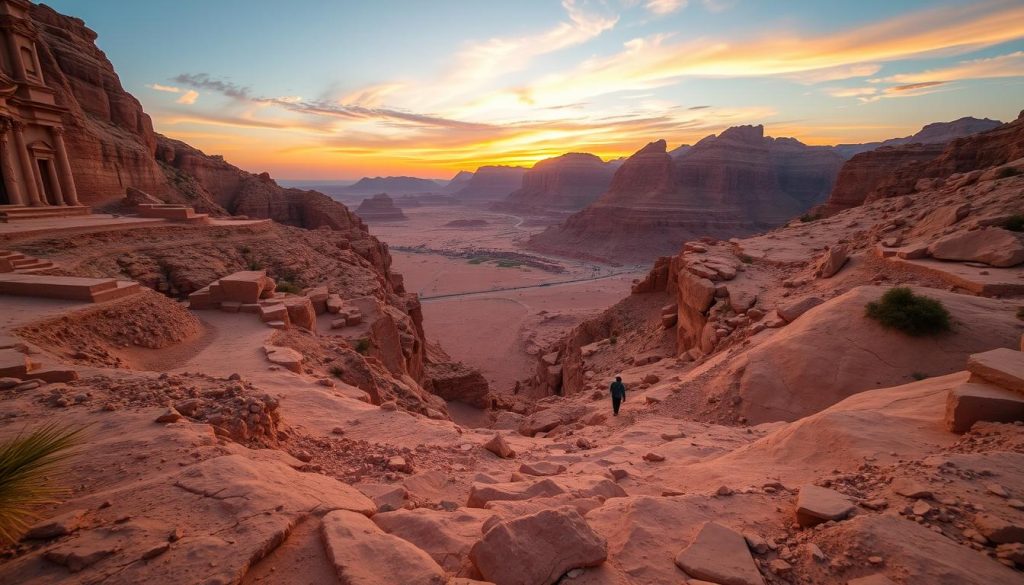
Knowing Petra’s geography is crucial. There are rental options like horse carts and electric golf carts. They can help you explore the site. But, people with mobility challenges should mainly stay on the valley floor. The higher areas might not have the right facilities.
Visitors should plan to spend at least two to three days at Petra. This allows you to enjoy the site without feeling rushed. It also helps you understand Petra’s history better and addresses accessibility concerns.
Essential Travel Preparations for Visiting Petra
Traveling to Petra with disabilities needs careful planning. Make sure you have all your travel documents ready, like visas. Look for accessible accommodations that fit your needs.
Local guides who know accessible routes can make your visit better. They can help plan your trip.
Queen Alia International Airport is great for disabled travelers. Plan your transport to Petra, as it’s about three hours from the airport. You can take a taxi for less than 3 JOD to the Visitor Centre.
Pack smart for a comfortable trip. You’ll need:
- Sturdy walking shoes
- Breathable clothing
- Sunscreen
- A sun hat
- Plenty of water
Petra’s hot weather and little shade make these items essential for your comfort.
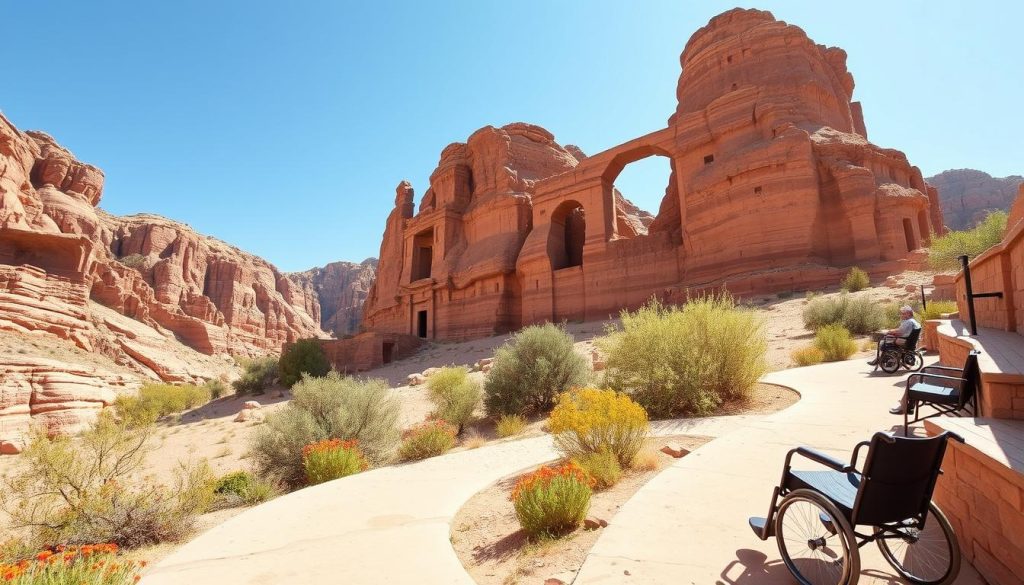
The main path from the Visitor Centre to the Basin Restaurant is 4.3km long. If you have mobility issues, you’ll need to prepare well and take breaks often. The Siq, at 1.2km, has both narrow and wide parts with benches for rest.
There are also seats on the way to the famous Treasury, 2km from the Visitor Centre. With these preparations, you can enjoy Petra’s beauty and history more easily.
The Accessibility Features at Petra
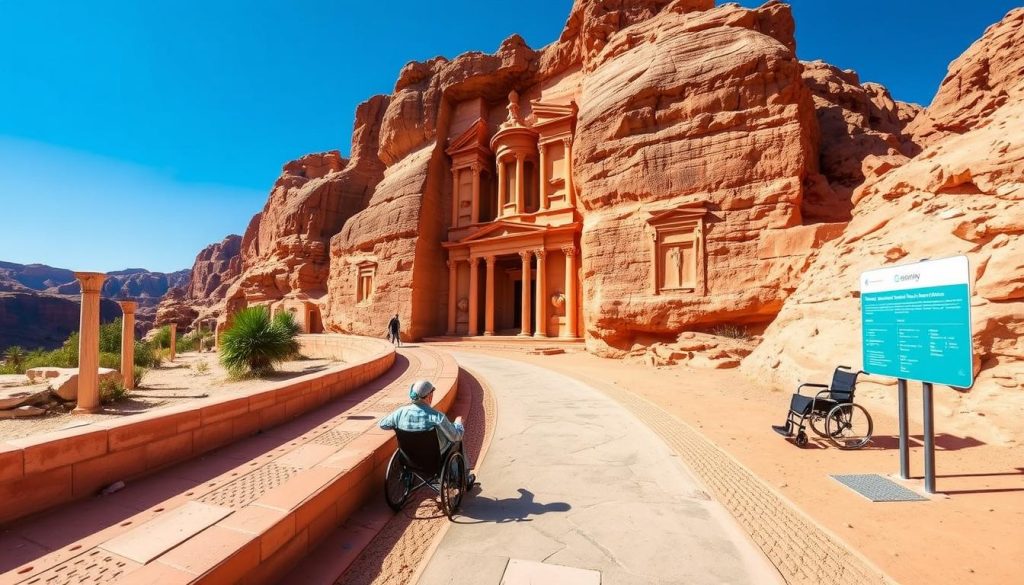
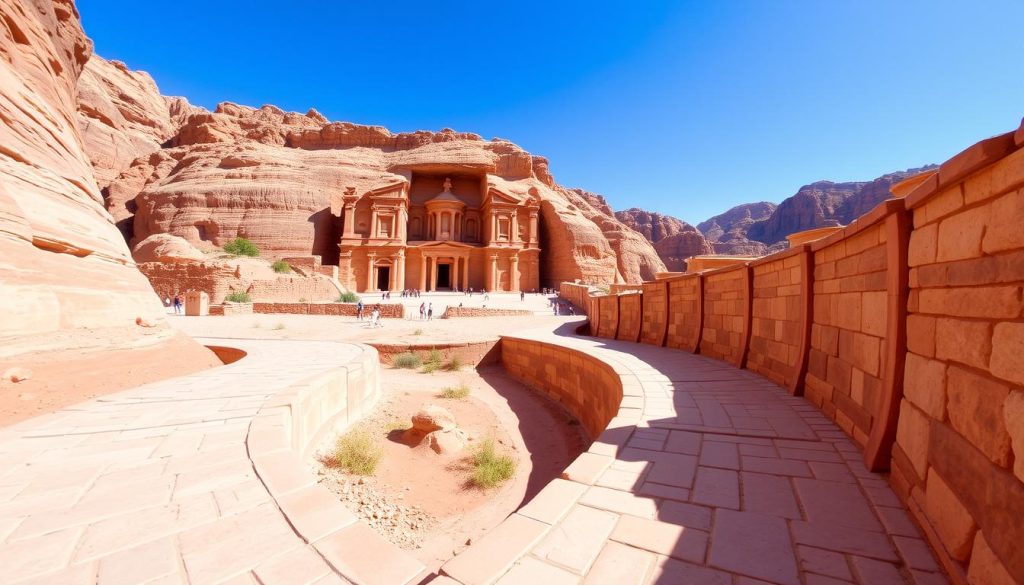
Petra is becoming more welcoming to travelers with disabilities. The Petra accessibility features include smooth gravel paths for better stability. There are also seating areas for rest, so you can take breaks whenever you need to.
Despite some challenges, Petra has special zones for wheelchair users. These areas have ramps to help with movement. This makes it easier for everyone to explore.
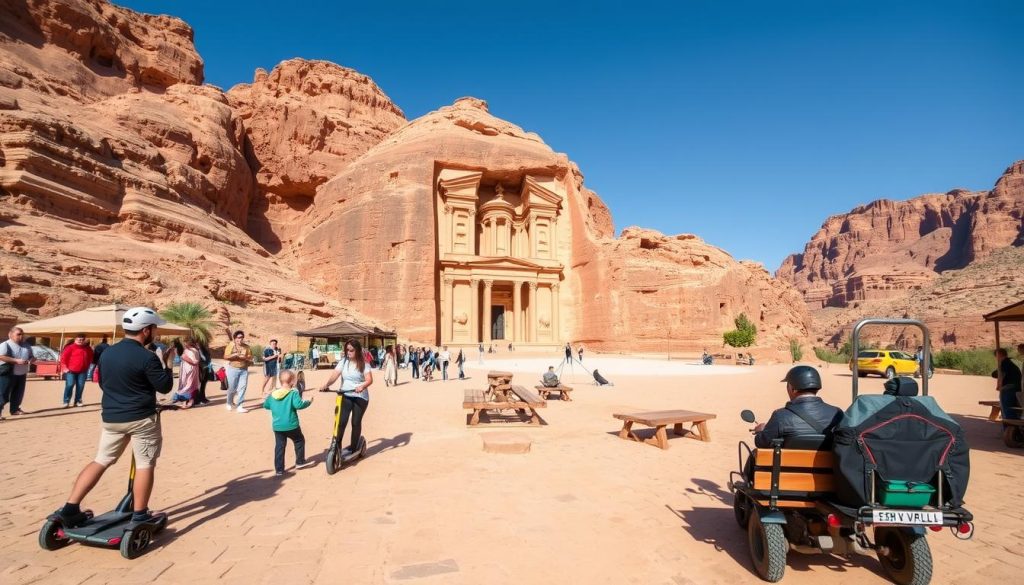
The site also offers electric golf carts for those with mobility issues. These carts can carry up to five people and a driver. This service helps those facing physical challenges during their visit.
Petra’s authorities are always working to improve accessibility. They aim to make the site welcoming for all visitors, including those with disabilities. This effort not only helps tourists but also meets international standards for inclusive travel.
| Accessibility Feature | Description |
|---|---|
| Compacted Gravel Pathways | Sturdy paths suitable for mobility aids |
| Seating Areas | Designated spots for resting along trails |
| Ramps | Facilitates movement for wheelchair users |
| Electric Golf Carts | Provides transportation for tourists with mobility issues |
| Rest Areas | Strategically located for convenience |
These features show Petra’s growing focus on travel inclusivity. As Petra improves its facilities, it aims to give everyone a better experience. This way, everyone can enjoy exploring this ancient wonder.
Is Petra accessible for travelers with disabilities?
Petra has many options for travelers with disabilities. These options make visiting this ancient site easier and more enjoyable. You can see its beauty without facing too many challenges.
Overview of mobility options within Petra
The Visitor Center at Petra has facilities for everyone. You’ll find wheelchair-accessible bathrooms and paths to major sights. But, reaching some spots like the Treasury might need help.
Some people use golf carts, but they’re not for wheelchairs. You’ll need extra help if you use them.
Transportation to the site and local accommodations
Getting to Petra is easy. Local taxis can take you to the Visitor Center. Inside, horse-drawn carts help those who need it.
Choose hotels in Wadi Musa close to Petra. They make getting to the site easier, thanks to their location near the Visitor Center.
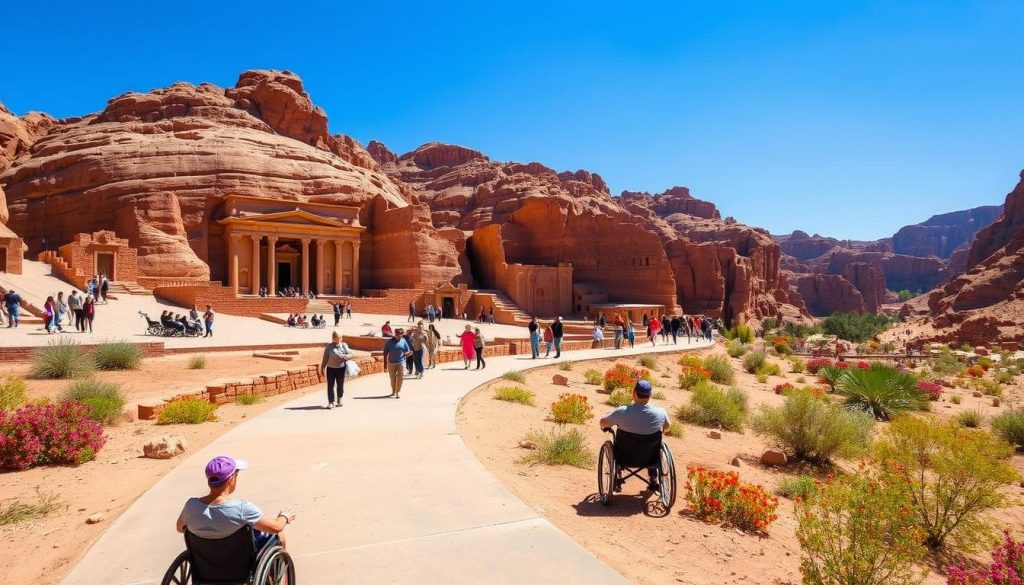
The Majd Initiative, led by Abdel Rahman Salameh, aims to make Petra more accessible. They work with others to improve Petra’s accessibility. Recent visitors say they’re doing a great job, making sure everyone can enjoy Petra.
| Accessibility Feature | Details |
|---|---|
| Visitor Center Facilities | Wheelchair-accessible bathrooms and pathways |
| Transportation Options | Local taxis, horse-drawn carts, golf carts (with assistance) |
| Accommodations | Hotels in Wadi Musa with easy access to Petra |
| Participating Organizations | Majd Initiative & Accessible Jordan |
| Total Participants in Accessibility Assessment | 40 (20 with disabilities and 20 volunteers) |
Accessible Routes in Petra: What You Need to Know
Planning your visit to Petra? Knowing the accessible routes is key for a comfortable trip. Petra has many paths, each with its own level of accessibility. This helps meet the needs of all travelers.
Main pathways and their accessibility
The path from the Visitor Centre to the Basin Restaurant is 4.3 kilometers long. It has a compacted gravel surface, making it easy for most visitors. The hike takes about 4-5 hours to complete.
If you want to take it easy, consider spending a couple of days exploring. This can make your visit more enjoyable.
Describing the Siq and access to key sites
The Petra Siq is a narrow gorge leading to the Treasury. It has varied terrain, but many find it manageable. There are rest stops with benches for breaks.
For those who don’t want to walk much, there are horse carts and electric golf carts. While the Siq isn’t fully wheelchair accessible, visitors with mobility issues can still enjoy the views from different spots.
| Pathway Name | Total Distance (km) | Accessibility Level | Estimated Duration |
|---|---|---|---|
| Visitor Centre to Basin Restaurant | 4.3 | Mostly Accessible | 4-5 hours |
| Little Petra to Monastery (Ad Deir) | 2.3 | Moderate | 45-60 minutes |
| Monastery to Visitor Centre | 5.6 | Challenging | 3-4 hours |
Knowing about Petra’s paths and accessibility helps plan your visit. It ensures a memorable experience in this amazing archaeological site.
Petra Mobility Assistance Options Available
When planning your visit to Petra, it’s key to know the Petra mobility assistance options. These help make your trip better. Petra has many ways to help visitors move around its unique terrain.
The horse carriage service is a favorite among visitors. You can rent one at the entrance for about 45 JD. It’s a comfy way to see the main trail, which is 4km long. You’ll also get to stop for an hour at the famous Treasury site.
Electric carts are another great choice for exploring Petra. They make it easier to get to important spots without walking too far. Local guides know a lot about the help available and what you might need. They make sure you get the right support.
It’s a good idea to ask about these assistance options in Petra before you go. Many people have said they got great help from the staff and guides. This makes their visit much better.
The table below shows the main ways to get around Petra:
| Assistance Option | Description | Cost |
|---|---|---|
| Horse Carriage | Transportation along the main 4km trail, with a stop at the Treasury. | 45 JD |
| Electric Cart | Allows deeper exploration of Petra’s key sites with ease. | Varies (inquire locally) |
| Local Guides | Knowledgeable assistance that helps navigate accessibility options tailored to individual needs. | Varies (depending on the duration and guide) |
Planning ahead and getting Petra mobility assistance makes your visit better. You can enjoy the ancient city without worrying about getting around.
Inclusive Travel to Petra: Tips for Disabled Travelers
Traveling to Petra is a great adventure, even for those with disabilities. Here are some tips to make your trip better and more inclusive.
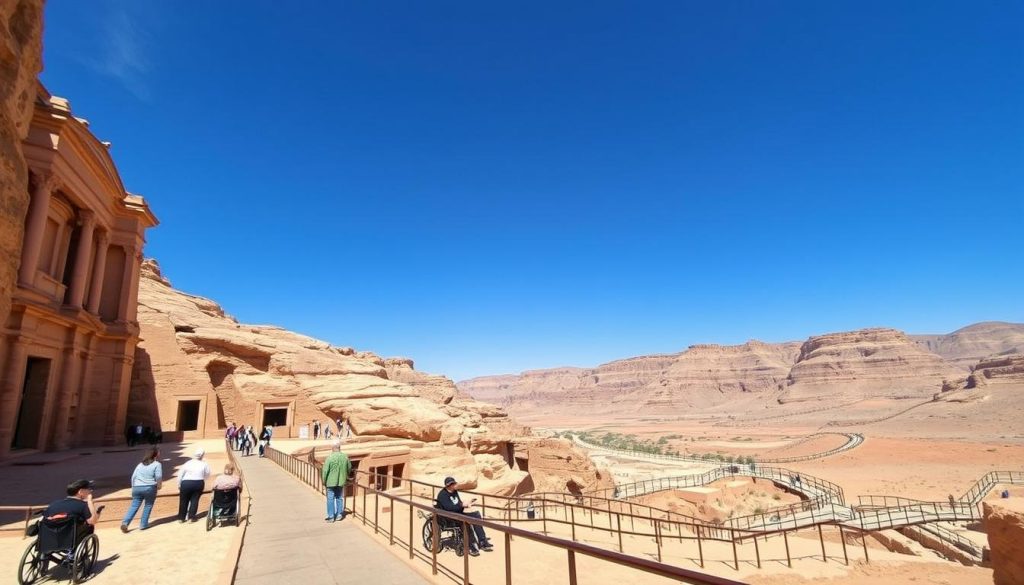
Plan your visit during the off-season. This way, you’ll face fewer crowds. Local guides who know the accessible paths are also a big help. They can show you the best routes and share interesting facts about the area.
- Take your time to enjoy the views. They are truly stunning.
- Carry portable seats or trekking poles for easier walking.
- Check if the transportation to Petra is accessible for everyone.
Accessibility is key when traveling. For instance, Baraka Destinations offers unique tours in Jordan. They focus on experiences like tasting local foods and touching the environment. This is great for blind travelers who want to explore in new ways.
Traveling can be tough, but it’s worth it. Places like Petra may not always be easy to get around. But, with the right attitude and help from others, you can overcome any challenge. Remember, asking for assistance is part of the journey.
By following these tips, you can have an amazing time in Petra. It’s a place of wonder and beauty, where adventure and accessibility go hand in hand.
Petra’s Disability-Friendly Options for Travelers
Visiting Petra can be a remarkable experience. It’s even better when you know about the help available for mobility and comfort. The site offers many options for travelers with disabilities, making it easier to explore its ancient wonders.
Types of assistance available at the site
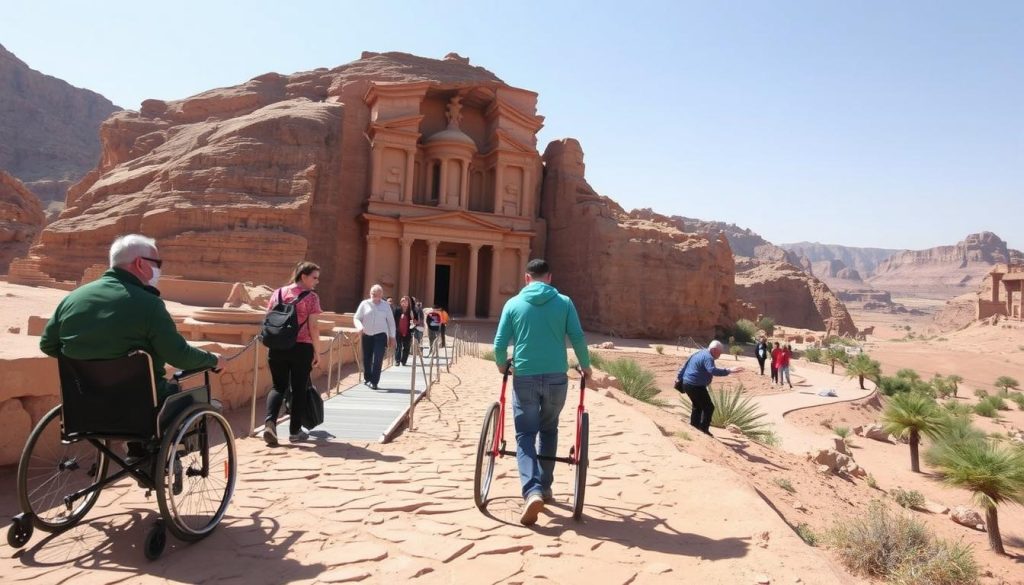
While Petra’s accessibility might be limited in some areas, there are still many ways to get around. You can use horse-drawn carriages or donkeys to travel in some parts. These are great for reaching important spots.
It’s also wise to book electric carts in advance. They make it easier to get to certain areas of the site.
What to expect from local guides
Local guides for disabled travelers are key to a great visit to Petra. They know the site’s unique challenges well. They show you the best routes and offer tips for a fun adventure.
These guides are all about inclusivity. They understand the needs of different visitors. They can take you to famous spots and hidden gems that are easier to reach.
| Type of Assistance | Description |
|---|---|
| Horse-Drawn Carriages | Available for transport in some areas, though welfare concerns exist. |
| Donkeys | Useful for navigating steeper paths within the site. |
| Electric Carts | Pre-booking options available for easier mobility. |
| Local Guides | Provide insights into accessible routes and key attractions. |
Conclusion
Visiting Petra with disabilities comes with its own set of challenges and opportunities. The site has been working hard to make it easier for everyone to explore. Programs like the Massar initiative show a big push for inclusivity.
Improvements, like ramps at the Roman Theatre, help wheelchair users a lot. These efforts show that making historic sites accessible is a top priority. The Ministry of Tourism and Antiquities has been working to make tourist spots more welcoming since 2010.
Even with challenges, like the need for better facilities for Deaf visitors, there’s a clear path forward. Projects like the $170 million downtown renovation show a strong commitment to making Petra accessible. This means your visit can be both memorable and fulfilling.
By understanding what’s available and the efforts to improve, you can explore Petra with confidence. With the right preparations, you’re ready to see the wonders of Petra.