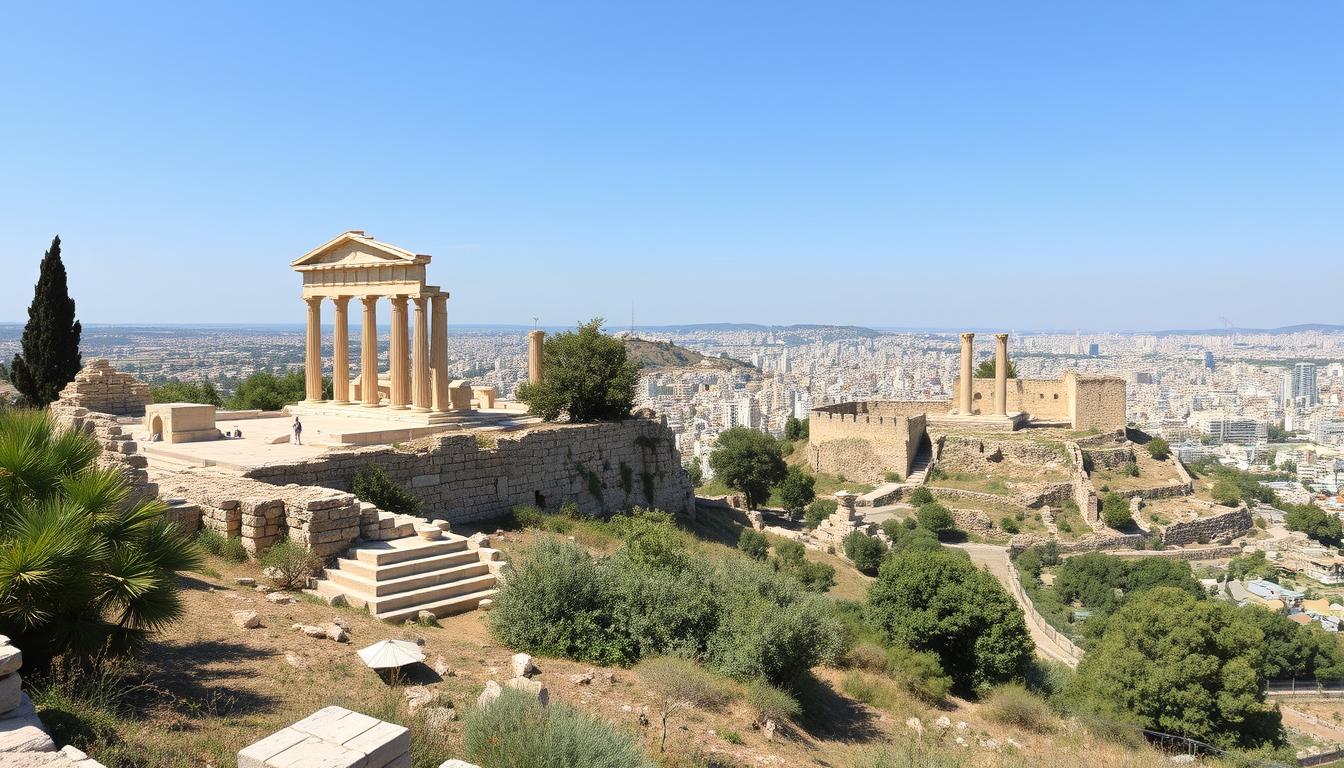
Top Historical Sites to Visit in Amman – Don’t Miss Out!
Ever wondered about the historical sites in Amman that are a must-see? Amman, the capital of Jordan, is a blend of ancient and modern. It’s filled with historical gems that showcase its rich past.
From Roman ruins to Islamic architecture, Amman’s attractions are incredible. They tell the stories of its ancient civilizations. Exploring these sites will connect you to Amman’s fascinating history.
Introduction to Amman
Amman is a lively city, home to over a third of Jordan’s people. It’s not just the capital but also a mix of history and culture.
The city’s past is fascinating. It was first called Rabbath Ammon in the Neolithic times. Over the years, Romans, Byzantines, and Umayyads have shaped Amman.
The best historical sites in Amman tell these stories. The Amman Citadel shows relics from 1500 B.C. The Roman Theater, built in 138 AD, can hold 6,000 people and hosts events like the Amman International Book Fair.
Walking through Amman, you’ll find colorful streets like Rainbow Street. They’re full of restaurants, cafes, and shops. You can try local treats like kanafeh. The city’s cafes are great places to relax, loved by both locals and visitors.

Exploring Amman’s Rich History
The history of Amman is a captivating tale filled with stories and cultural influences. Archaeological discoveries show that people have lived here since the Neolithic period. Over time, Amman grew from a small settlement to the capital of the Ammonites in the Iron Age.
Many empires, like the Greeks, Romans, and Byzantines, have ruled Amman. Each left their mark, adding to the city’s rich cultural heritage. Today, you can explore these influences in Amman’s historical sites.
Iconic sites like the Amman Citadel and the Roman Theater stand as testaments to the past. The Citadel sits high above the city, while the Roman Theater is in downtown. Both are architectural wonders and key to preserving Jordan’s cultural history.
Visiting these sites is best in Spring and Autumn, when the weather is mild. The Jordan Pass offers access to over 40 attractions, making your visit more affordable and fun. Remember to wear comfortable shoes for the climbs and uneven paths.
Having a local guide can make your visit even more special. They share stories and insights that bring history to life. From the Roman Theater’s grand performances to the Citadel’s role as a fortress, each site has its own story to tell.
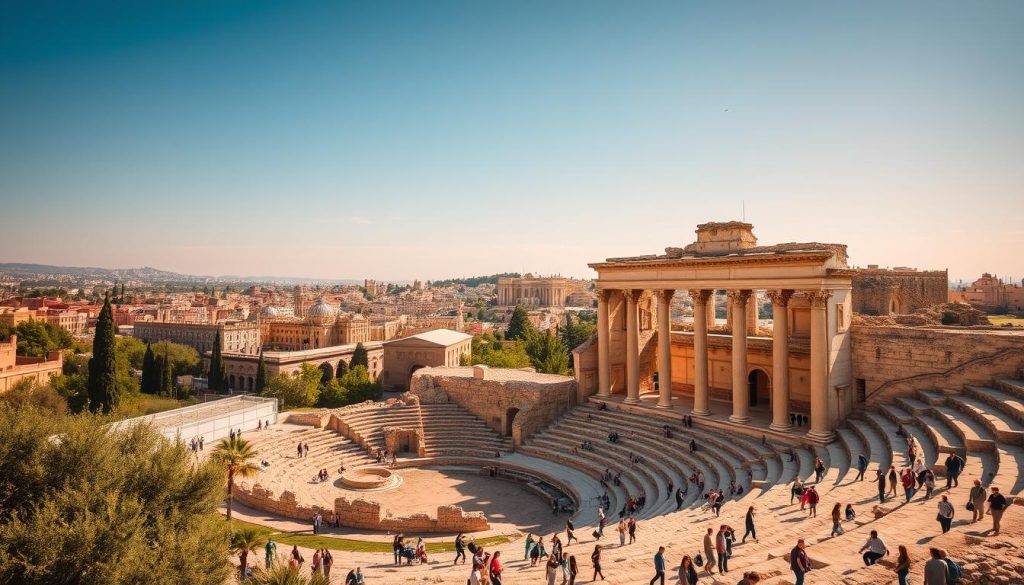
In summary, exploring Amman’s history is a journey through ancient cultures and modern life. It’s a chance to appreciate the legacy of past civilizations. Visiting these sites lets you step back in time and connect with Jordan’s vibrant heritage.
Must-See Historical Landmarks in Amman
Amman is one of the oldest cities in the world. It’s filled with historical landmarks that show its rich past. You can see everything from ancient Roman buildings to Islamic palaces.
Here are some key places to visit in Amman:
- The Citadel: Located on Jebel al-Qala’a hill, it’s been home since around 1800 BC. It offers amazing views and ancient ruins.
- Roman Theater: Built in 140 AD, it can hold about 6,000 people. It’s a top example of Roman architecture in the area.
- Umayyad Palace: This palace gives a peek into Islamic history. It’s known for its stunning stonework and the grandeur of the Umayyad dynasty.
- Qasr Amra: This eighth-century desert castle is a UNESCO World Heritage site. It’s famous for its beautiful frescoes.
These Amman historical landmarks are key to understanding Jordan’s history. The Citadel and Roman Theater give a glimpse into the ancient world. They also show how the city has changed over time.
The Citadel: A Historical Gem
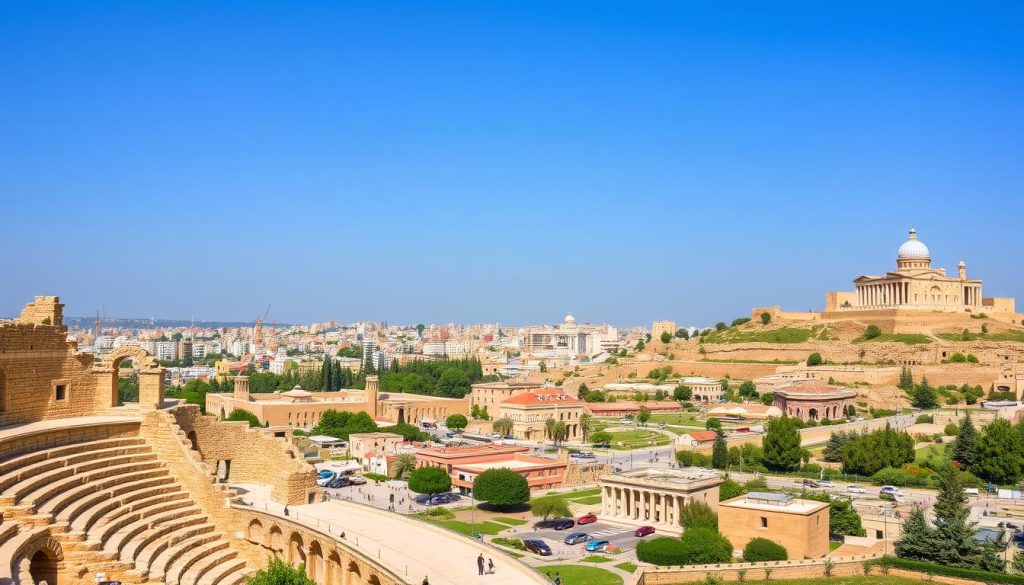
The Citadel of Amman is a key piece of history, standing tall for centuries. It’s a must-see for anyone who loves history and culture. From its high perch, 850 meters above sea level, you can see the whole city.
Overview of the Citadel
This ancient site shows signs of life from 1550 – 1650 BC. It’s surrounded by a 1,700-meter-long wall, rebuilt many times. The Temple of Hercules is a highlight, with a giant hand from a statue of Hercules.
Key Highlights at the Citadel
- Temple of Hercules: An iconic sight featuring incredible historical significance.
- Umayyad Palace: A stunning example of Islamic architecture situated within the Citadel grounds.
- Panoramic Views: Enjoy sweeping vistas of the city and its historical context.
Visiting Tips for the Citadel
Planning your visit to the Citadel of Amman can make it better. It’s open from 8 am to 7 pm on Saturdays to Thursdays from April to September. In winter, it closes at 4 pm. The entrance fee is 2 Jordanian Dinars, and the Jordan Pass gets you in for free.
Getting there by taxi costs about 1 Dinar. You’ll need around one to two hours to explore fully. Wear comfortable shoes and dress modestly. With good planning, your visit will be memorable.
Roman Theater: A Testament to Ancient Culture
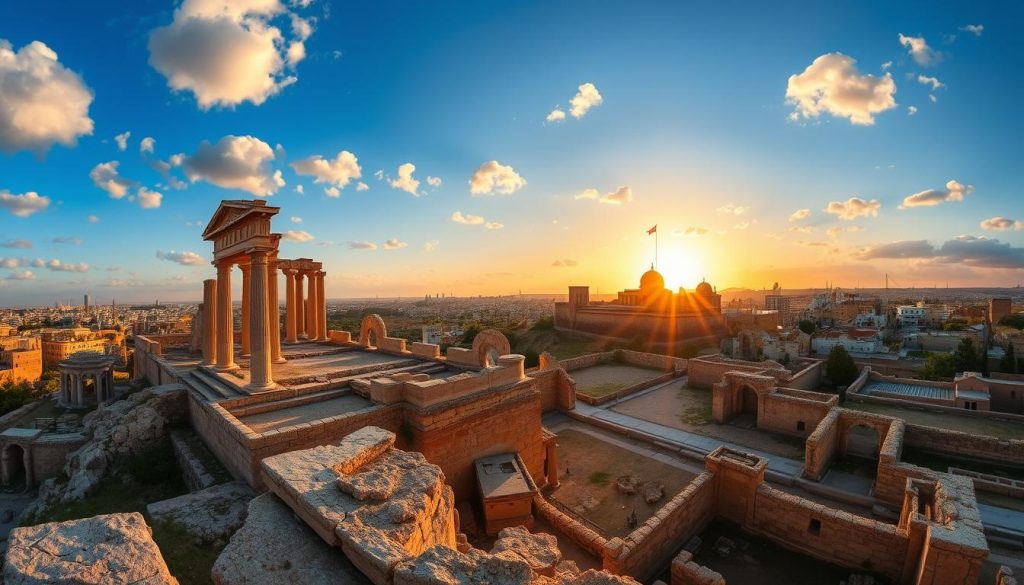
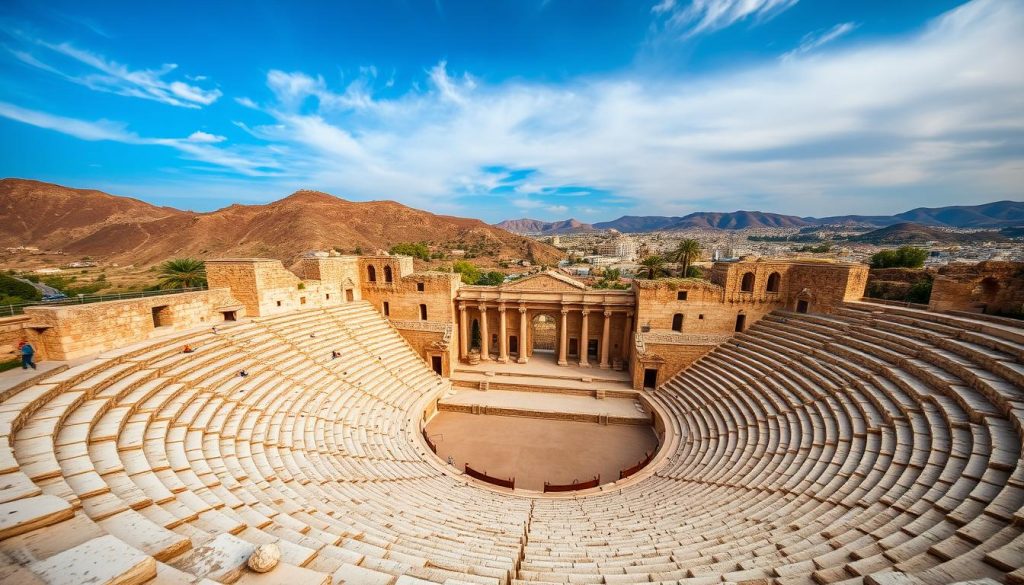
The Roman Theater in Amman is a marvel of ancient architecture. Built between 138 CE and 161 CE, it shows the skill of the time. It could hold up to 6,000 people, designed to face north to avoid the sun’s glare.
Architectural Features of the Roman Theater
The theater was more than just a place for shows. It showed the social order of ancient Amman. People were seated based on their status, gender, and where they were from. Even though it was restored starting in 1957, it still has many original parts.
Now, the theater hosts cultural events like the Al-Balad Music Festival. It mixes history with modern art. This theater is a top spot for tourists in Jordan and adds to Amman’s cultural richness.
What historical sites should I not miss in Amman?
Amman is filled with historical treasures. Knowing what to see is key. The Citadel, Roman Theater, and Jordan Archaeological Museum are must-visit spots.
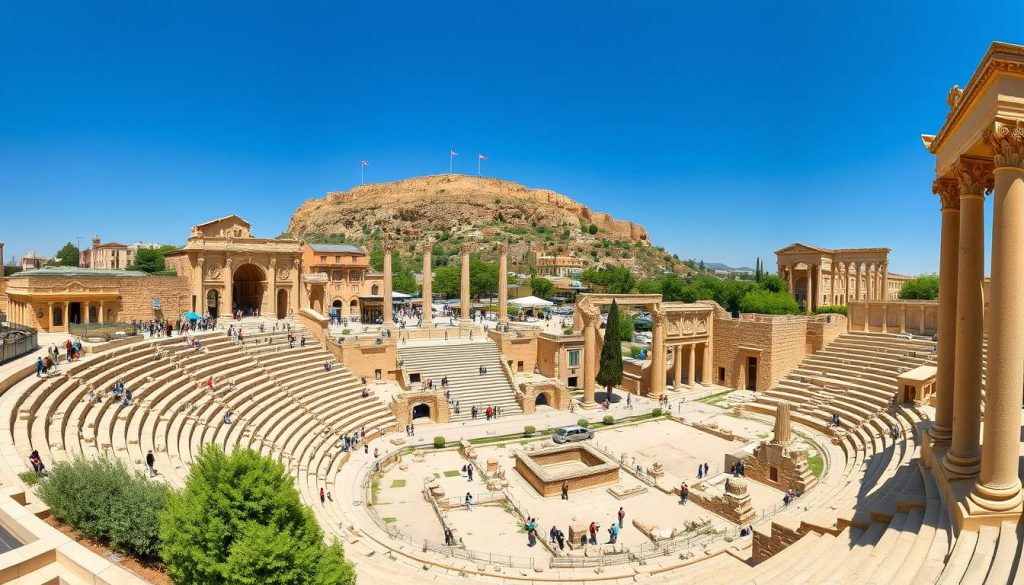
The Amman Citadel sits atop Jabal al-Qal’a, offering stunning views. It holds remains from the Roman, Byzantine, and Umayyad eras. It’s part of the Jordan Pass, making it easy for visitors to explore.
The Roman Theater was built in 140 AD. It gives a peek into ancient Roman life. The theater is well-preserved and hosts cultural events, showcasing Amman’s rich history.
The Jordan Archaeological Museum is a treasure trove of artifacts. It tells the story of Jordan’s history. It’s a key stop for those interested in the nation’s past.
In conclusion, Amman has many historical attractions. But focusing on these key sites will make your visit richer. You’ll gain valuable insights into the city’s history.
Temple of Hercules: Icon of Roman Architecture
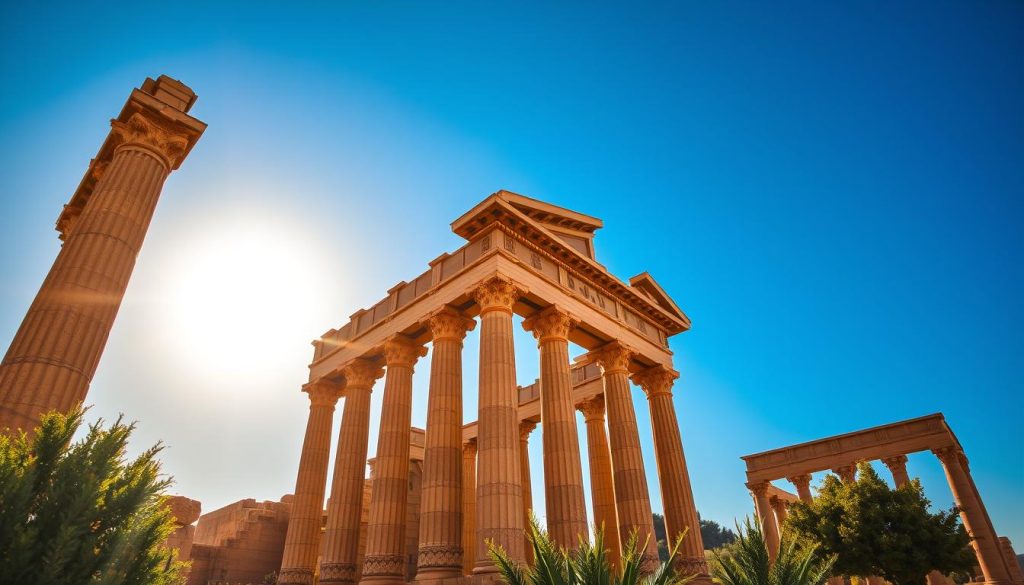
The Temple of Hercules in Amman is a stunning example of Roman architecture. It’s located in the Amman Citadel complex. This site shows the mix of art and engineering from the Roman era.
It was built in the 2nd century AD. The temple was important for both religion and culture. Today, visitors can see the remains and picture its former glory.
Significance of the Temple of Hercules
The Temple of Hercules is very important. It shows what ancient Romans believed and did. The temple’s design, with its tall columns, shows the power of Roman gods.
It was built during Emperor Marcus Aurelius’s time. The huge statue of Hercules is a sign of Roman sculptors’ skill. This statue was over 13 meters tall.
People should see the temple’s remains. They are some of the biggest in the world, outside of Rome. The temple is not just historic but also beautiful. It’s a key place to visit for those interested in ancient times.
A visit to the Citadel, where the temple is, takes 2 to 3 hours. This gives enough time to see the beauty of Roman architecture in Amman.
| Feature | Details |
|---|---|
| Location | Amman Citadel, Jordan |
| Built During | 2nd Century AD |
| Height of Columns | 13.5 meters (45 feet) |
| Height of Statue | Estimated 13 meters (43 feet) |
| Entrance Fee | JOD 3 (approximately $4) |
| Average Visit Time | 2 – 3 hours |
| Seasonal Hours | 8:00 AM – 4:00 PM (Winter), 8:00 AM – 7:00 PM (Summer) |
| Nearby Attractions | Umayyad Palace Complex, Byzantine Church, Jordan Archaeological Museum |
Umayyad Palace: A Glimpse into Islamic History
The Umayyad Palace Amman is a key piece of early Islamic architecture. It dates back to the 8th century. This structure gives us a deep look into Islamic history in Amman.
It was a time when the Umayyad Caliphate led in culture and politics. Visitors can see the remains of the palace complex. This includes a mosque and small rooms, each telling its own story.
The Umayyad Palace’s importance goes beyond its design. It was likely the home of an Umayyad official. This shows its role in the government back then.
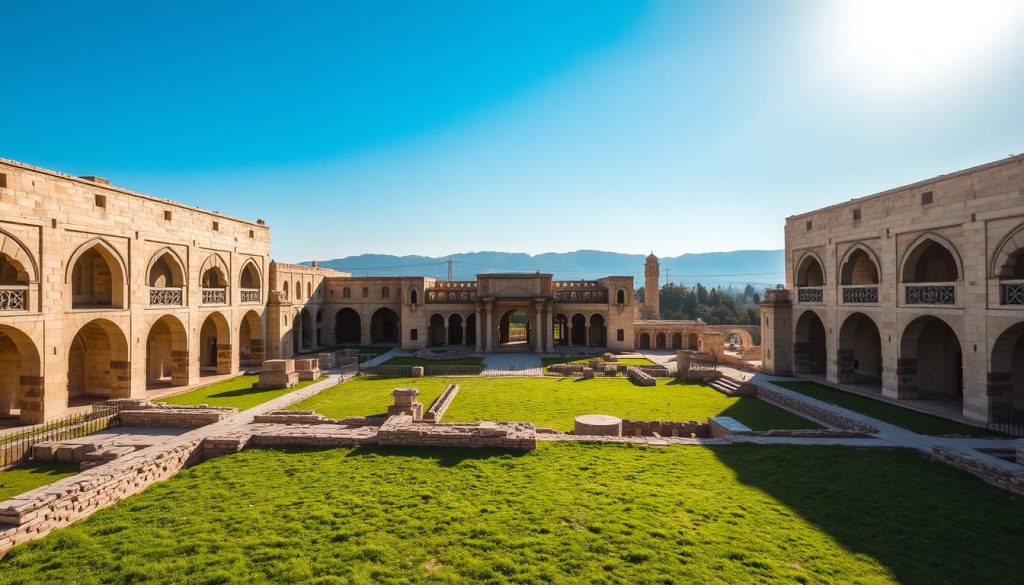
Visiting the Umayyad Palace is a chance to connect with Islamic history in Amman. The calm atmosphere is great for reflection. You’ll be surrounded by ancient ruins with a view of the lively city below.
Jordan Archaeological Museum: Uncovering Ancient Artifacts
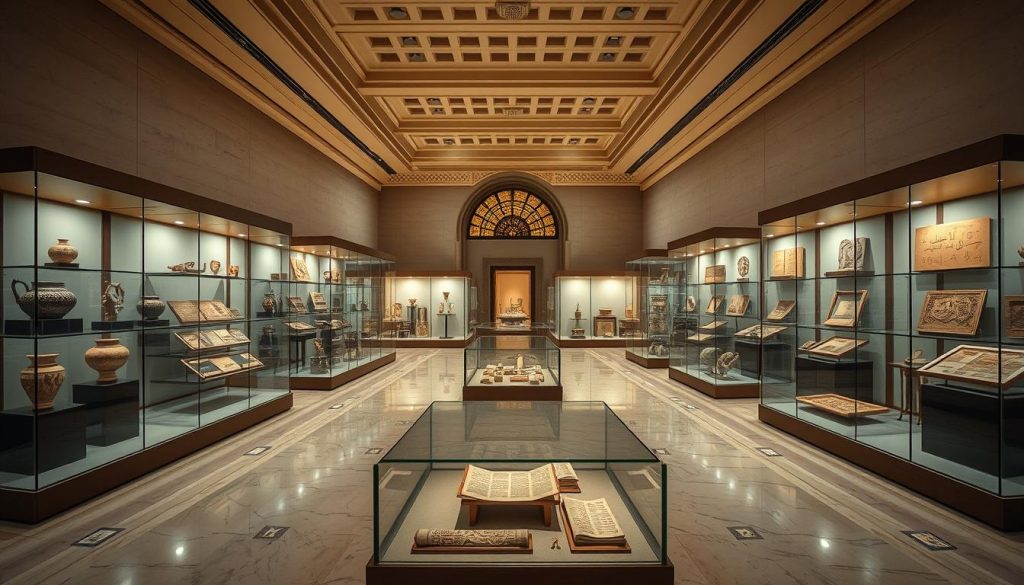
The Jordan Archaeological Museum is a treasure trove of ancient artifacts in Amman. It’s a must-see for anyone interested in the region’s rich history. The museum showcases artifacts from the Paleolithic era to the 15th century, offering a deep dive into Jordan’s past.
Notable Exhibits
Inside the museum, you’ll find incredible pieces like the Ain Ghazal statues. These statues are the oldest human statues in the world, dating back to 6750 B.C. The Dead Sea Scrolls, including the unique Copper Scroll, also highlight the site’s religious significance. These exhibits reveal the ancient cultures and artistry that have shaped the region.
Educational Insights
Every display at the museum is designed to engage visitors. You’ll learn about the importance of religious sites mentioned in the Bible. You’ll also discover the history of communities like the Druze and Bedouins in Jordan. The museum offers a chance to explore and appreciate Jordan’s diverse history.
| Exhibit | Details | Historical Period |
|---|---|---|
| Ain Ghazal Statues | Oldest human statues, 15 statues and 15 busts | Neolithic (6750 B.C.) |
| Dead Sea Scrolls | Including the only Copper Scroll | Hellenistic-Roman (2nd century BCE – 1st century CE) |
| Byzantine Mosaics | Colorful and intricate, including maps of the Holy Land | Byzantine (6th century CE) |
| Pottery Artifacts | Showcasing various styles and utilitarian forms | Various periods |
Exploring Amman’s Historical Neighborhoods
Amman’s historical neighborhoods are a treasure trove for those interested in local culture and heritage. Downtown Amman and Jabal Al-Weibdeh are perfect for experiencing the city’s unique charm. They offer a glimpse into the daily life of its people.
While exploring Amman’s neighborhoods, you’ll meet friendly locals and see bustling markets. You’ll also find hidden gems that tell the story of this vibrant city. From artisan shops to street vendors, Amman’s cultural experiences are unmatched.
Here are some highlights of what to expect in these historical neighborhoods:
- Local Crafts: Discover handmade pottery, textiles, and other artisan goods in various workshops.
- Street Food: Sample traditional dishes like falafel, shawarma, and mezze at popular stalls.
- Community Events: Participate in local festivities that celebrate Amman’s rich cultural history.
- Art Scenes: Visit galleries featuring works from Jordanian artists, reflecting the diverse influences that shape the city.
It’s not just about sightseeing. Talking to residents deepens your understanding of the local culture. This makes your journey through Amman’s historical neighborhoods truly rewarding.
Cultural Experiences in Downtown Amman
Exploring Amman’s culture is a unique adventure. Downtown Amman is a treasure trove of traditional markets, art, and delicious food. It’s a true taste of Jordanian culture.
Traditional Markets and Souks
The traditional markets in Amman are a must-see. Souk Jara, a lively market on Fridays, offers a wide range of crafts, antiques, and local foods. It’s a great place to find handmade items that show off Jordan’s heritage.
Next to these markets is the Roman Theater, a symbol of Amman’s ancient past. Walking through Al Balad, you’ll find stalls with spices and textiles. It’s a perfect way to dive into the local culture.
Art Galleries and Local Cuisine
Downtown Amman’s art galleries are a treasure trove of local talent. The Jordan National Gallery of Fine Arts, for example, showcases art from the Islamic world and more. It’s a great place to see contemporary and traditional art.
Make sure to try Hashem Falafel for its tasty hummus and affordable prices. Enjoy dishes like shawarma, and don’t forget to try mint tea in small glasses. It’s a refreshing way to end your meal.
| Activity | Location | Description |
|---|---|---|
| Souk Jara | Downtown Amman | A vibrant seasonal market featuring crafts and local foods. |
| Jordan National Gallery of Fine Arts | Downtown Amman | Exhibits contemporary artworks from the Islamic and developing worlds. |
| Hashem Falafel | Downtown Amman | Famous for best hummus and affordable meals. |
Conclusion
Amman’s historical sites offer a chance to travel back in time. They show a mix of cultures and history. As you wander through this lively city, you’ll find top spots that show how Amman has changed over time.
The Roman Theatre and the Citadel are just a few examples. Each place tells a story of Amman’s deep history.
When planning your trip to Jordan’s historical sites, think about visiting in spring or autumn. These seasons have nice weather. You’ll need two to three days to see everything Amman has to offer.
Entrance fees are low, so you can visit many places. The Jordan Pass makes exploring even better.
Amman is also one of the safest cities in the Middle East. Its markets and neighborhoods give you a real look at Jordanian life. Don’t miss these amazing places. They’re key to understanding Amman’s past and present.