Honoring Heritage: Top Destinations to Experience Native American Culture and Traditions
Discover the rich tapestry of Native American culture across the United States. From Southwest mesas to New York City, opportunities abound for heritage travel. This journey supports tribal heritage sites and enlightens visitors about indigenous cultures.
Over 560 federally recognized tribes offer unique customs and traditions. Explore this diversity through Native-owned hotels, resorts, and cultural centers. The National Park Service maintains sites showcasing ancient and living Indigenous cultures.
Museums are vital to indigenous culture tourism. The National Museum of the American Indian in Manhattan offers free daily admission. It features historical artifacts and contemporary Native American art. The Seneca-Iroquois National Museum in Salamanca focuses on Iroquois culture.
Timing matters for Native American heritage travel. November is Native American Heritage Month, featuring special events nationwide. This recognition began in 1916 with New York State’s “American Indian Day.
Exploring tribal heritage sites can be educational and transformative. Ancient cliff dwellings and living traditions offer unique perspectives. Ready to celebrate the first peoples of this land?
The Importance of Native American Heritage Day Travel
Native American Heritage Day travel offers a chance to explore America’s first inhabitants’ rich culture. This special day occurs on the Friday after Thanksgiving. It invites you to discover museums, explore ancestral lands, and appreciate indigenous art.
Understanding the Significance of Indigenous Peoples’ Day
Indigenous Peoples’ Day honors Native Americans’ resilience and contributions. It reminds us of their enduring presence and the need to preserve their heritage. Native American museums provide insights into the diverse cultures shaping our nation.
Exploring National Native American Heritage Day
National Native American Heritage Day, established in 2008, celebrates Native American achievements. It encourages exploration of ancestral lands. Visitors can walk where ancient civilizations thrived and understand their connection to the land.
The Role of Tourism in Preserving Native American Culture
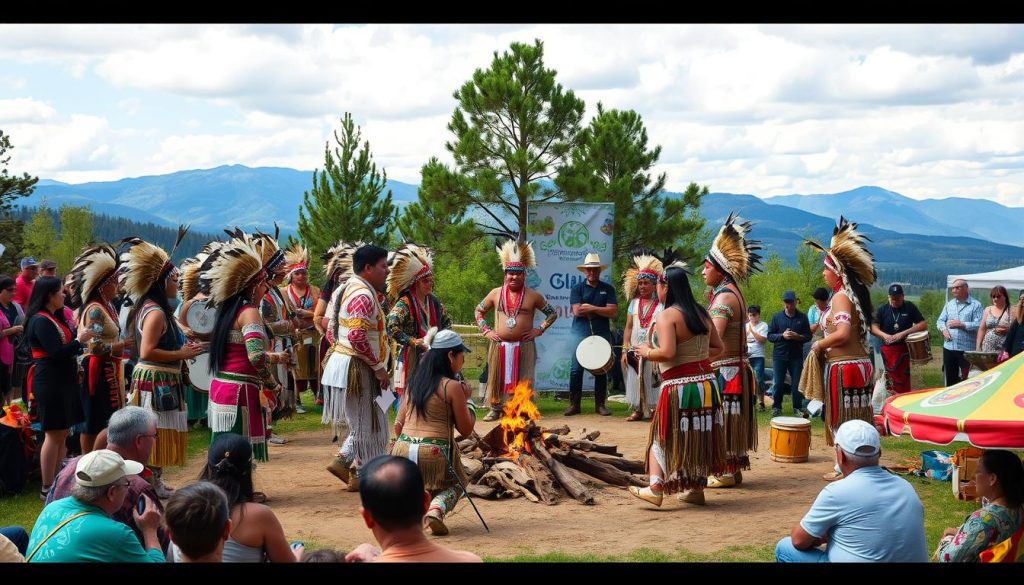
Tourism helps preserve Native American culture. Visiting indigenous communities supports local economies and protects cultural sites. Engaging with indigenous art provides a link to centuries-old traditions.
| Activity | Cultural Impact | Economic Benefit |
|---|---|---|
| Museum Visits | Education and Awareness | Funding for Preservation |
| Ancestral Lands Tours | Historical Understanding | Local Guide Employment |
| Art Purchases | Tradition Continuation | Artist Income Support |
Native American Heritage Day travel helps preserve a rich cultural legacy. Your journey through museums and ancestral lands supports important traditions. Engaging with indigenous art ensures these customs continue for future generations.
Navajo Nation: A Journey Through the Southwest
Discover tribal heritage sites across the vast Navajo Nation. This 27,000 square mile area spans Utah, Arizona, and New Mexico. Experience Native American culture and history in these ancestral lands.
Start your adventure in Kayenta, Arizona. Travel 100 miles to Monument Valley Navajo Tribal Park. Admire towering sandstone buttes and mesas, iconic symbols of the American Southwest.
Head 70 miles to Chinle, home of Canyon de Chelly National Monument. Navajo guides lead tours through this sacred canyon. They share stories passed down through generations.
Visit Window Rock, the Navajo Nation capital. The Navajo Nation Museum showcases the Code Talkers’ crucial World War II role.
Explore Leupp and Tuba City on your final stops. Don’t miss Tuba City’s Explore Navajo Interactive Museum. Here, you can immerse yourself in Navajo spiritual traditions.
| Location | Distance from Previous Stop | Key Attractions |
|---|---|---|
| Kayenta | Starting Point | Gateway to Monument Valley |
| Monument Valley | 100 miles | Iconic sandstone formations |
| Chinle | 70 miles | Canyon de Chelly National Monument |
| Window Rock | 68 miles | Navajo Nation Museum |
| Leupp | 129 miles | Traditional Navajo community |
| Tuba City | 102 miles | Explore Navajo Interactive Museum |
This 478-mile journey offers a deep dive into Navajo culture. Explore ancient cliff dwellings and contemporary art. Witness the Navajo people’s enduring spirit and their connection to these lands.
The National Museum of the American Indian: A Smithsonian Gem
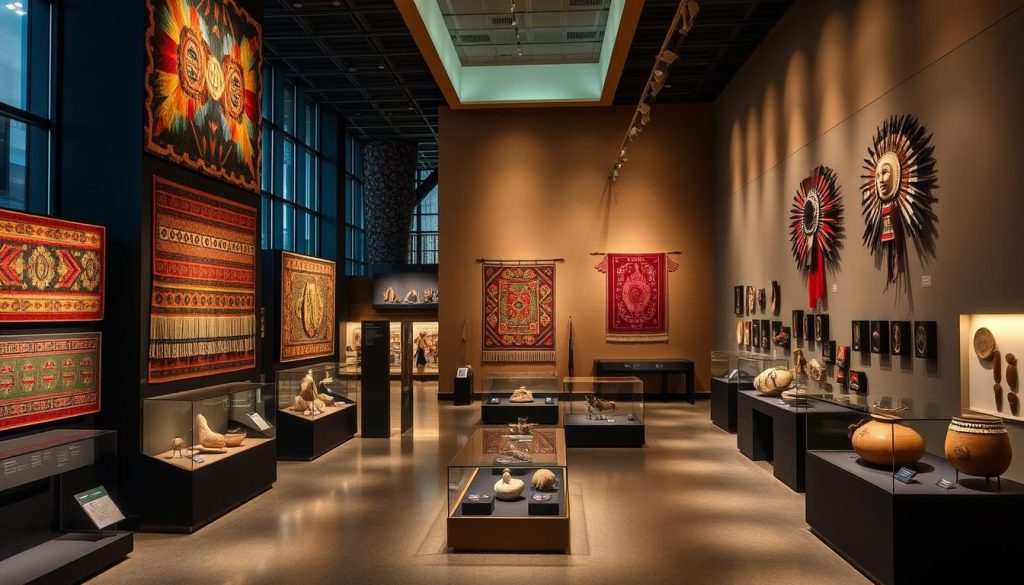
The National Museum of the American Indian showcases indigenous culture on the National Mall in Washington, D.C. This Smithsonian institution offers a unique look into Native American heritage. Visitors can explore the rich tapestry of indigenous history and traditions.
Interactive Exhibits and Immersive Experiences
Interactive displays bring Native American history to life. Explore a Comanche tipi for a hands-on connection to indigenous lifestyles. The museum’s internship program is highly competitive, accepting only 25% of applicants each year.
The Nation to Nation Exhibit: Understanding Treaties
The Nation to Nation exhibit explores relationships between the United States and Native American Nations. It examines how treaties have impacted indigenous communities over time. Visitors gain deeper insights into Native American history through this powerful display.
Culinary Delights at Mitsitam Native Foods Café
Complete your visit with authentic cuisine at the Mitsitam Native Foods Café. The menu features dishes from different U.S. regions using ingredients native to tribal cuisines. It’s a delicious way to experience Native American culture through food.
| Museum Feature | Description |
|---|---|
| Location | National Mall, Washington D.C. |
| Key Exhibit | Nation to Nation |
| Unique Experience | Comanche Tipi Exploration |
| Culinary Offering | Mitsitam Native Foods Café |
The National Museum of the American Indian is a standout among Native American museums. It offers diverse experiences that celebrate and preserve indigenous heritage. Visitors leave with a newfound appreciation for Native American culture and history.
The Heard Museum: Celebrating Southwest Native American Art
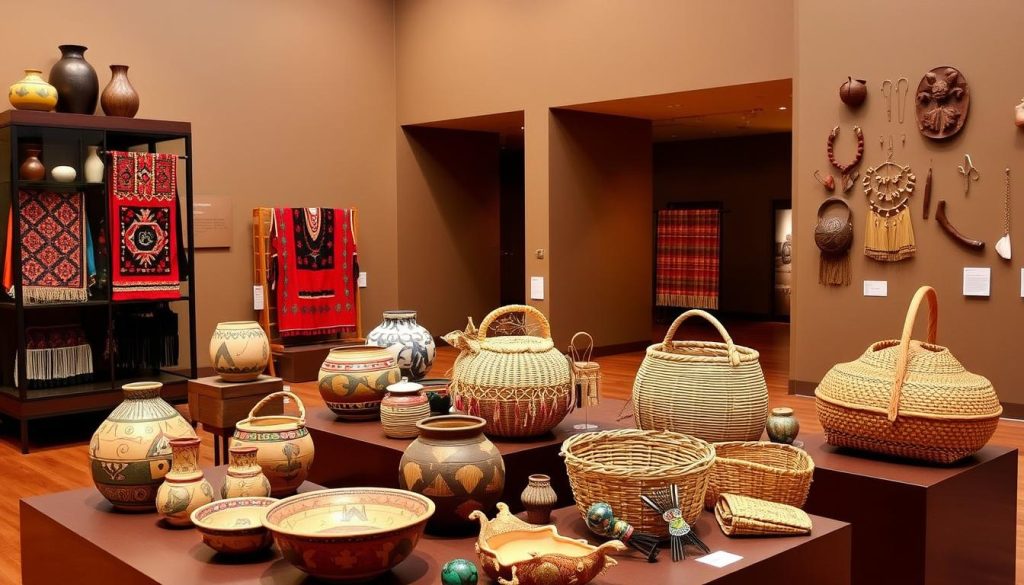
The Heard Museum in Phoenix, Arizona showcases indigenous art and crafts. It draws 250,000 visitors yearly to explore Southwest Native American heritage. The museum houses over 40,000 items across 130,000 square feet of exhibit space.
Eleven galleries feature treasures like the Goldwater collection of 437 Kachina dolls. The Mareen Allen Nichols collection displays 260 pieces of contemporary Native American jewelry. These pieces blend traditional techniques with modern designs.
Exhibits cover the culture and arts of 21 Arizona tribes. You’ll learn about Native American homes, pottery, and beadwork. The museum also highlights Native Americans’ contributions to U.S. armed forces.
“The Heard Museum is not just a building; it’s a living testament to the enduring spirit of Native American culture.”
A powerful exhibit addresses the boarding school era from 1879 to 1928. It reveals how children were taken from families for assimilation. This exhibit sheds light on an often-overlooked part of American history.
The Grand Gallery hosts large-scale exhibits in its renovated space. The Jacobson Gallery offers a 360-degree experience showcasing Indigenous videographers’ works. The Sky Dome uses projections to represent four nations’ environments.
After viewing exhibits, enjoy fresh food at the museum cafe. The Heard Museum offers a deep dive into Southwest Native American art and culture.
Mesa Verde National Park: Ancient Puebloan Cliff Dwellings
Mesa Verde National Park showcases ancient Ancestral Puebloan cliff dwellings. This Colorado gem preserves human-made structures, a first for national parks. Established in 1906, it offers a window into rich tribal heritage.
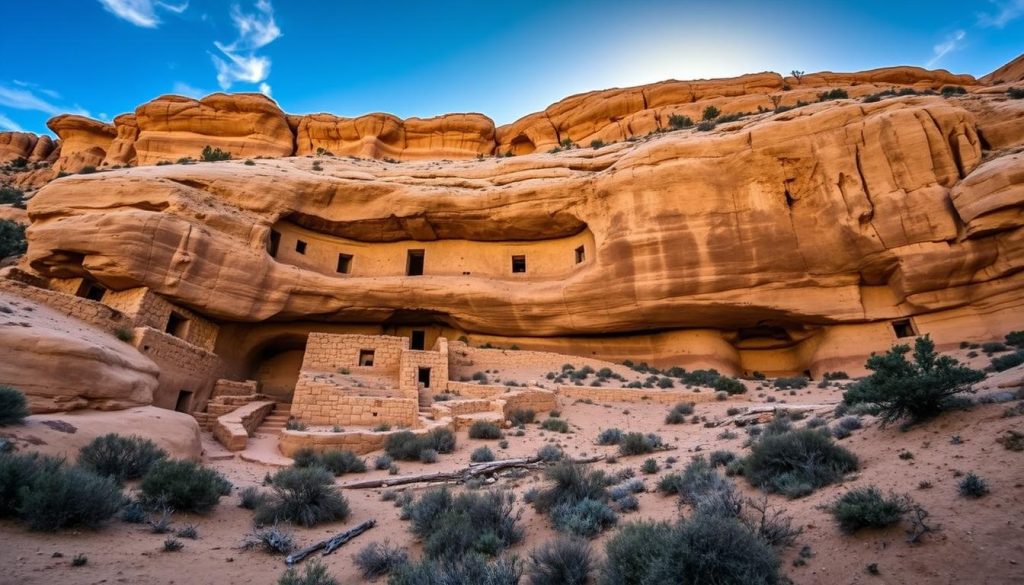
Exploring the Cliff Palace and Other Structures
The park houses over 4,700 archaeological sites, including 600 cliff dwellings. Built in the late 1190s, these structures range from small granaries to large villages.
Cliff Palace, the largest dwelling, offers ranger-led tours for 50 people. Backcountry tours, limited to 10 participants, provide a more personal experience.
The Chapin Mesa Archeological Museum
The Chapin Mesa Archeological Museum highlights Ancestral Puebloan culture. It displays artifacts from Mesa Verde’s 700-year history, spanning 550 A.D. to 1300 A.D.
Accommodation Options Within the Park
Mesa Verde offers on-site stays at Morefield Campground or Far View Lodge. These options let you enjoy the park’s peaceful atmosphere and beautiful views.
| Tour | Difficulty | Capacity | Special Features |
|---|---|---|---|
| Cliff Palace | Moderate | 50 people | Largest cliff dwelling |
| Balcony House | Strenuous | Varies | 32 ft ladder, 18 in tunnel |
| Square Tower House | Strenuous | 10 people | 120 ft descent, steep drop-offs |
| Backcountry | Varies | 10 people | Once daily, intimate experience |
The Museum of the Cherokee Indian: A Window into Cherokee History
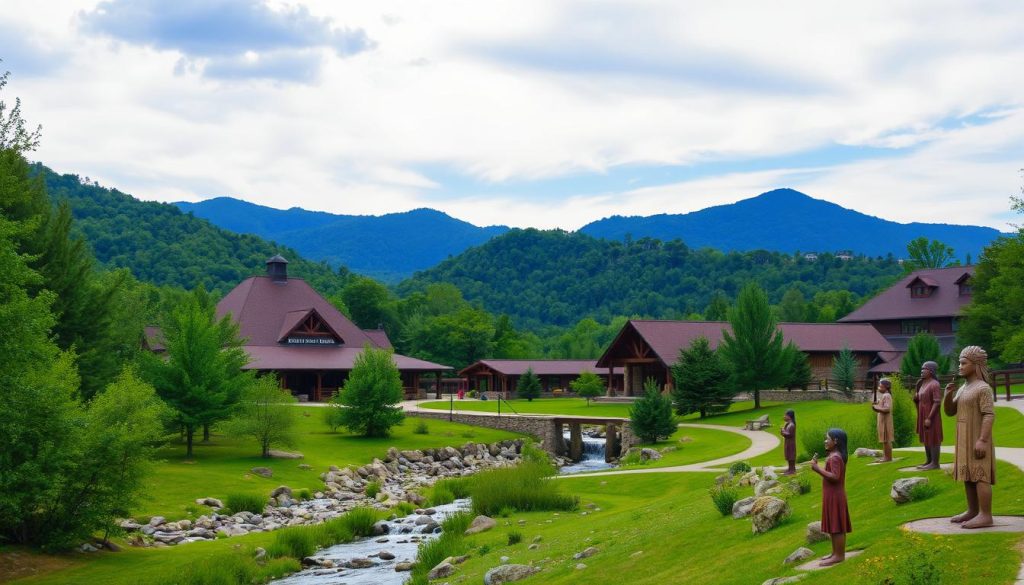
The Museum of the Cherokee Indian in Cherokee, North Carolina, offers a captivating journey through time. Since 1948, this native american museum has shared the rich heritage of the Cherokee people. Its exhibits span centuries, showcasing artifacts that tell the story of a resilient culture.
Interactive displays feature arrowheads, traditional beadwork, pottery, and baskets. The museum invested $2 million in the Resource and Education Building. This facility houses 25,000 image files and 12,000 pages of material from the 1830s Trail of Tears.
The museum offers a unique experience for those interested in indigenous culture tourism. Visitors can learn about the Cherokee language immersion program, which has attracted international attention. They can also discover the tribe’s 3,000-year-old pottery tradition, capable of creating 20-gallon vessels.
| Feature | Details |
|---|---|
| Established | 1948 |
| Investment in Resource Building | $2 million |
| Image Files | 25,000 |
| Trail of Tears Documents | 12,000 pages |
| Cherokee Language Material | 2,000 pages |
The Museum of the Cherokee Indian offers a fascinating look into Cherokee culture. You’ll explore ancient artifacts and contemporary exhibits. This visit will deepen your appreciation for Cherokee history and its lasting impact.
Chaco Culture National Historic Park: Ancestral Puebloan Astronomy
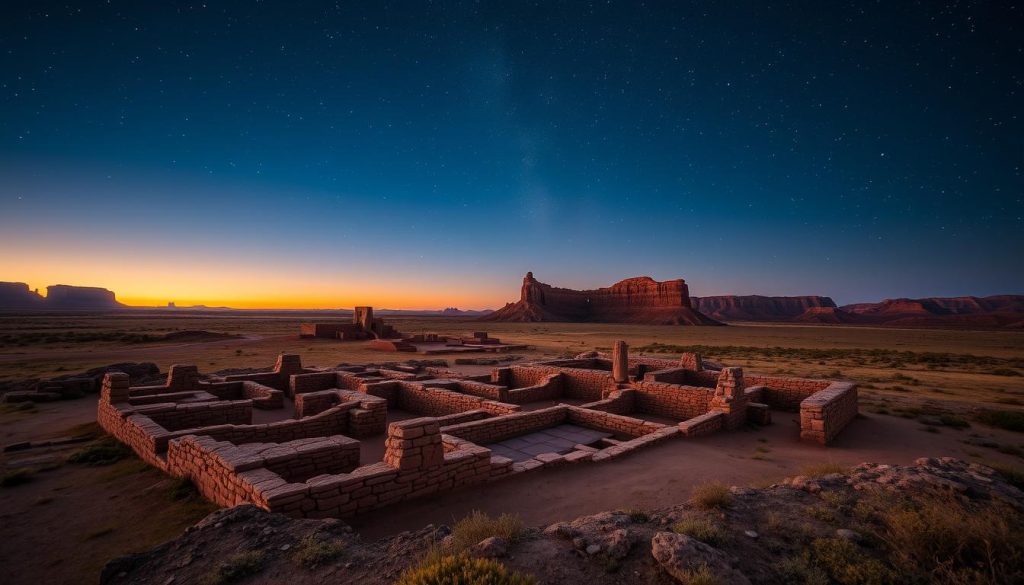
Chaco Culture National Historic Park showcases ancient Puebloan brilliance. This tribal heritage site in New Mexico brims with history. From 850 to 1250 CE, Chaco Canyon was a thriving civilization’s heart.
Chaco reveals a network of great houses and kivas. These structures highlight Chacoan architectural and astronomical skills. The park’s layout aligns with celestial directions, showing their cosmic understanding.
Pueblo Bonito stands out among Chaco’s wonders. This massive structure once reached 4-5 stories high. It covered 3 acres with over 600 rooms and 40 kivas.
Chaco’s influence spread far beyond the canyon. Over 150 great houses linked to Chaco through 400 miles of ancient roads. This network boosted trade and cultural exchange.
Chaco continues to amaze visitors today. Its Dark Sky Park status lets you see stars like ancient Puebloans did. This view connects you to the rich heritage of this unique landscape.
Santa Fe: A Hub of Native American Art and Culture
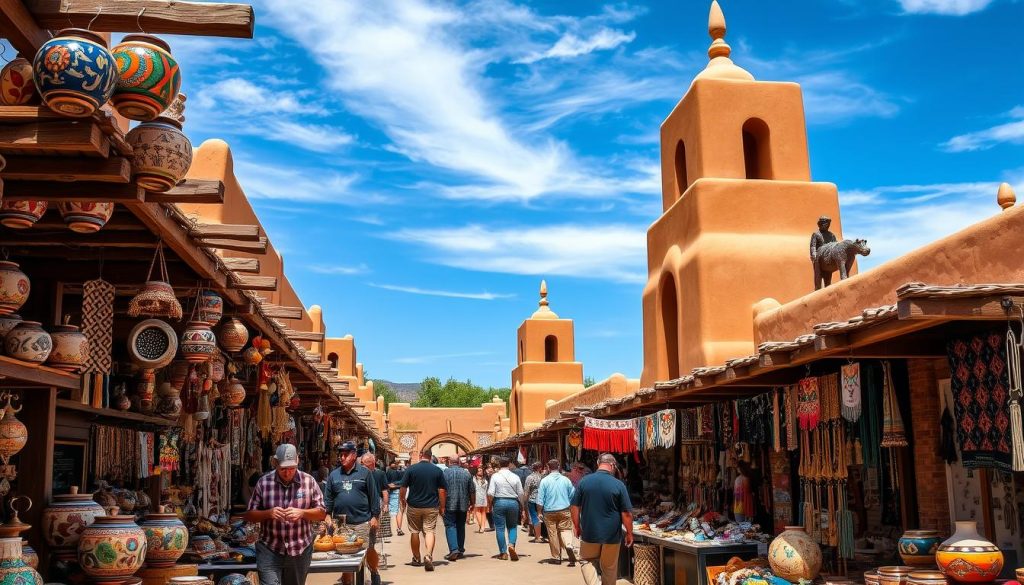
Santa Fe shines as a center for indigenous art and crafts. With over 250 galleries and 20+ museums, it showcases Native American culture. Here, tradition meets contemporary expression in a unique blend.
Exploring the 19 Native American Pueblos
Santa Fe is encircled by 19 distinct pueblos, each with its own heritage. These communities offer glimpses into traditional lifestyles and art practices.
At the Palace of the Governors, the Native American Artisan Portal Program features work from 1,500+ authorized artisans.
Contemporary Native American Art Galleries
Santa Fe’s art scene mixes old and new styles. The Railyard Arts District houses galleries like Blue Rain, featuring regional art.
The Museum of Contemporary Native Arts showcases innovative works by indigenous artists. It pushes boundaries in Native American art.
The Santa Fe Indian Market
Every August, Santa Fe hosts the famous Indian Market. Over 1,000 artists from North America gather for this event.
It’s a celebration of Native American creativity. Visitors can find traditional crafts and cutting-edge art pieces.
| Cultural Attraction | Key Feature |
|---|---|
| Museum of Indian Arts & Culture | Nearly 300 Pueblo ceramic vessels |
| Museum of Spanish Colonial Art | Over 3,000 Spanish Colonial objects |
| Railyard Park | Eco-centric public art installations |
| Native American museums | Rich displays of indigenous history and art |
Santa Fe’s food scene mirrors its cultural diversity. The Shed serves traditional New Mexican dishes with flair.
Kakawa Chocolate offers sweets inspired by indigenous recipes. This mix of art, history, and food makes Santa Fe unique.
Visitors can fully experience Native American culture in this vibrant city. Santa Fe offers a journey through time and tradition.
The Gilcrease Museum: Native American Heritage in Oklahoma
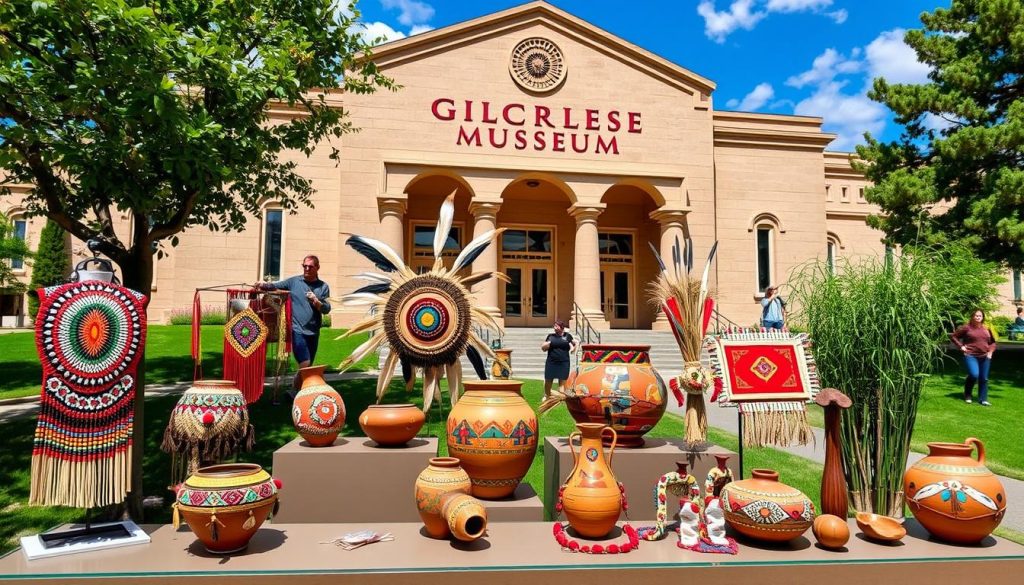
The Gilcrease Museum in Tulsa, Oklahoma, showcases Native American heritage. It houses one of the world’s largest collections of American Indian and Western art. This museum is a top spot for indigenous culture tourism.
Thomas Gilcrease, a Muscogee Creek Nation citizen, founded the museum in 1949. It has over 350,000 items from 12,000 BCE to the 21st century. Visitors can explore North and South American history here.
The museum’s collection is impressive. It includes 350 years of American paintings and sculptures. There are also many works on paper. It has the largest public collection of American West art.
The museum sits on 460 acres. It has 23 acres of themed gardens inspired by its collections. These outdoor spaces let visitors experience Native American culture naturally.
| Museum Hours | Admission |
|---|---|
| Tuesday – Sunday: 10:00 am – 5:00 pm | Free for members, children under 18, and school tours |
| Closed on Mondays, Thanksgiving, and Christmas | Discounts for seniors, military, and college students |
The museum offers free admission on “TU Tuesday” and “Funday Sunday”. These are the first Tuesday and third Sunday of each month. International visitors can book guided tours in French, German, Japanese, Russian, and Spanish.
At the Gilcrease Museum, you’ll learn about Oklahoma’s indigenous peoples. It’s a great example of how museums can preserve and celebrate Native American culture. Your visit will be both educational and inspiring.
Preserving Native American Sites: The Importance of Conservation
Native American culture thrives through the conservation of tribal heritage sites. The Antiquities Act of 1906 has been vital in protecting these locations. President Theodore Roosevelt approved numerous national forests, monuments, and parks on Indigenous lands.
Ancestral lands exploration unveils the rich history of Native American communities. Yellowstone National Park has historical connections to 27 Indigenous tribes. The National Park Service collaborates with local tribes for proper preservation of sacred spaces.

The First Americans Museum in Oklahoma City opened in 2021. It showcases the histories of Oklahoma’s 39 distinct First American Nations. Visitors gain a deeper understanding of Indigenous cultures through this museum.
| Conservation Effort | Impact |
|---|---|
| National Park Service partnerships | Celebration of Indigenous traditions and languages |
| Native American Heritage Month | Annual November observance |
| Rock Your Mocs In Parks | Indigenous staff heritage celebration |
| Red Shawl Day | Awareness for missing and murdered Indigenous peoples |
Your participation in conservation efforts helps preserve Native American culture for future generations. The National Park Service offers volunteer opportunities to engage with Indigenous history. You can also explore educational resources to learn more about this rich heritage.
Indigenous Cultural Centers: Connecting Past and Present
Indigenous culture tourism offers a unique way to explore Native American heritage. Cultural centers bridge ancient traditions and modern life. They provide enriching experiences for visitors eager to learn about indigenous cultures.
Duwamish Longhouse & Cultural Center
The Duwamish Longhouse opened in West Seattle in 2009. It showcases exhibits and hosts workshops about Duwamish history. Visitors can try traditional crafts and learn about the tribe’s fight for federal recognition.
Daybreak Star Indian Cultural Center
Daybreak Star sits in Seattle’s Discovery Park. Its Sacred Circle Gallery blends contemporary and traditional Native American art. The center hosts events celebrating indigenous cultures from across North America.
Hibulb Cultural Center & Natural History Preserve
The Hibulb Cultural Center in Tulalip offers a deep dive into Tulalip tribal heritage. Interactive displays and workshops reveal traditional practices. A 50-acre preserve lets visitors experience the natural environment that shaped Tulalip culture.
These centers join other notable Native American museums across the country. They play a key role in preserving indigenous heritage. Visitors gain authentic experiences that deepen their understanding of Native American cultures.
Conclusion
Native American Heritage Day travel offers a unique peek into indigenous culture tourism. You’ll gain appreciation for 573 federally recognized Indian Nations, each with distinct traditions and history. These destinations showcase the enduring legacy of Native American communities.
Mesa Verde’s ancient cliff dwellings and Santa Fe’s art galleries highlight Native American heritage. The National Museum of the American Indian provides immersive experiences of centuries-old achievements. From traditional pottery to modern contributions, Native American culture comes alive.
By traveling, you help preserve and celebrate these cultures. November is National Native American Heritage Month. It’s a perfect time to experience vibrant celebrations across the country.
Your journey through Navajo Nation or Cherokee history supports ongoing efforts to honor Native heritage. By visiting these destinations, you help keep Native American traditions alive for future generations.