Must-Try Foods in Nizwa for Every Foodie
Are you ready for a culinary adventure? What are the must-try foods in Nizwa? Nizwa, a historical town in Oman, offers a vibrant food scene. It’s influenced by Arabic, Persian, Indian, and Portuguese flavors.
As you explore, you’ll find dishes that tell the story of this multicultural heritage. This article is your guide to Nizwa’s food scene. You’ll discover dishes like Shuwa and Majboos, each with its own unique flavor.
Introduction to Nizwa’s Culinary Scene
Nizwa is a city with a lively food scene. It shows off its rich history and cultural mix. The city’s markets, or souqs, are filled with fresh food, spices, and local treats. Here, you’ll find a wide range of flavors, making it a must-visit for food lovers.
Omani spices add a special touch to traditional dishes, making them unforgettable. Nizwa’s food tells stories of old traditions and family recipes. Eating here is more than just food; it’s about enjoying warm hospitality and sharing meals with loved ones.
The city’s historic sites, like Nizwa Fort, offer a peek into Omani culture. The food markets add to the excitement. You can talk to local vendors, smell the spices, and taste the delicious dishes that make Nizwa’s food scene unique.
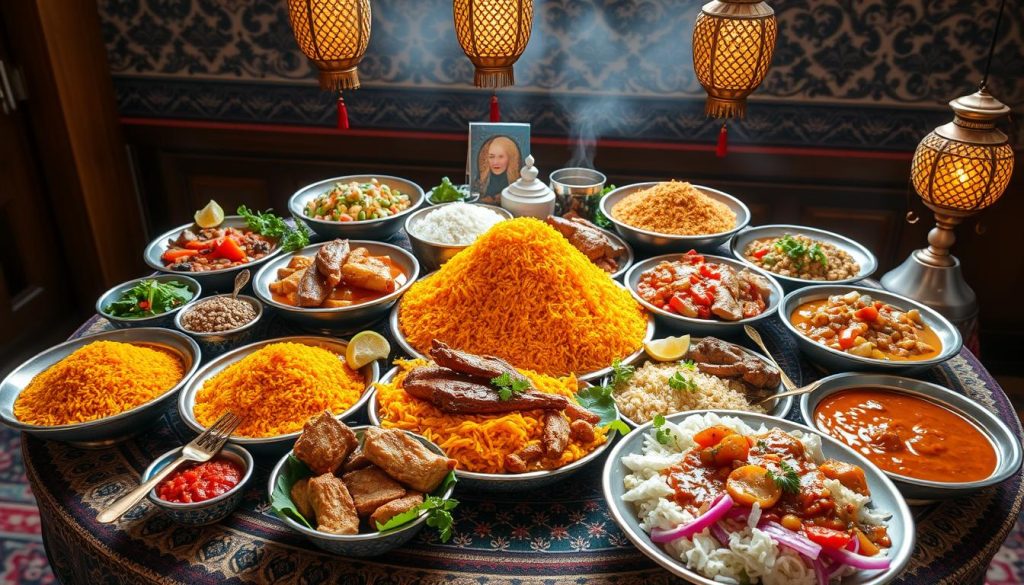
What are the must-try foods in Nizwa?
Nizwa, a gem in Oman, offers a rich tapestry of culinary delights. These delights capture the essence of Omani heritage. The top Nizwa food experiences revolve around traditional dishes. These dishes showcase the unique blend of flavors and influences from the region.
Overview of Omani Cuisine
Omani cuisine is famous for its diverse flavors. These flavors come from spices and cooking methods from neighboring territories. Key ingredients include rice, meat, spices, and unique cooking techniques.
Traditional dishes take center stage. You can’t visit without trying Omani Shuwa, a slow-cooked lamb dish. Majboos, a flavorful mixed rice dish, is also a favorite among locals. These dishes not only tantalize your taste buds but also reflect the meticulous cooking craftsmanship passed down through generations.
Importance of Traditional Dishes
Traditional dishes play an essential role in Omani culture. They act as a bridge between generations. These meals symbolize more than just sustenance; they represent Omani heritage.
They bring families and communities together for celebrations and gatherings. Sampling dishes like Shuwa and Majboos during special occasions highlights their importance in cultural rituals. These experiences provide a deeper insight into the culinary practices that define Omani society.
They illustrate the crucial role food plays in fostering connection and tradition.
Shuwa: The Grilled Delight
In Oman, Shuwa is a top dish to try in Nizwa. It’s known for its deep flavors and long cooking traditions. This dish is a big deal during festivals, loved by both locals and tourists.
Cooking Method and Tradition
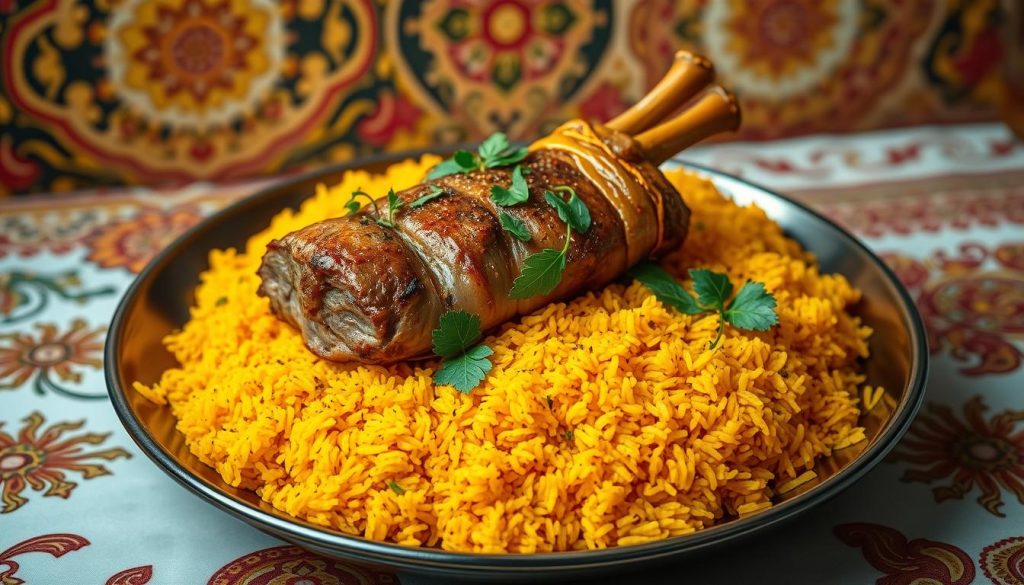
The Shuwa Omani dish starts with marinating goat or lamb in special spices. Then, the meat is wrapped in banana or palm leaves. It’s cooked in an underground sand oven for up to 48 hours.
This slow cooking makes the meat tender and full of flavor. The spices add a unique taste to the dish.
Flavor Profile and Serving Suggestions
Shuwa tastes rich and savory, thanks to spices like cumin, coriander, and garlic. It’s served with rice and salads that match its strong flavor. Trying Shuwa is a must when exploring Nizwa’s food scene.
Majboos: A Flavorful Rice Dish
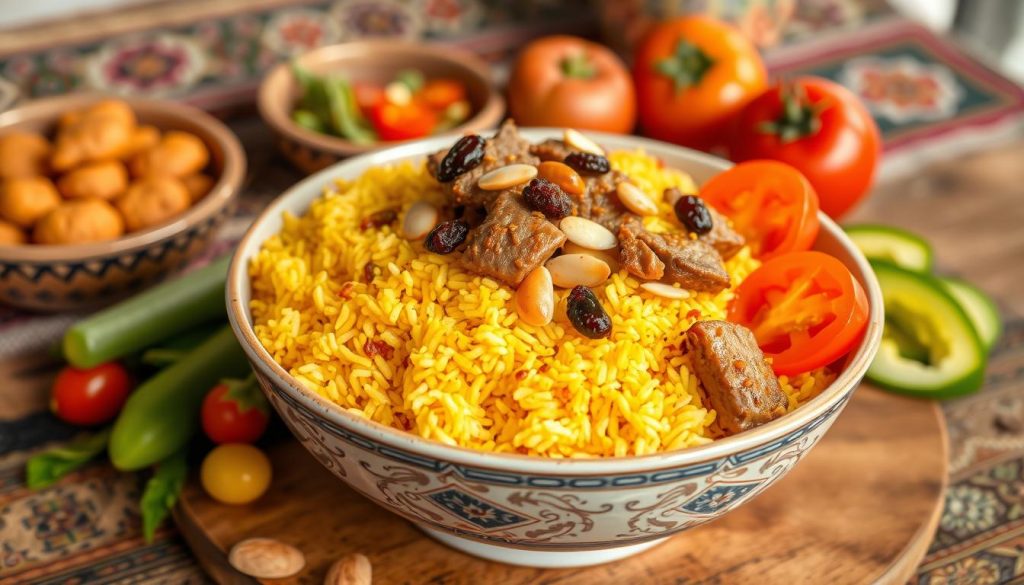
Majboos is a favorite Omani rice dish, loved for its mix of flavors and textures. It’s made with basmati rice and is a big hit at weddings and engagements. This dish has roots in tradition and remains popular today.
Ingredients and Preparation
The heart of Majboos is its ingredients. You’ll need:
- Basmati rice
- Chicken, lamb, or a mix of vegetables
- Onions
- Garlic
- Saffron
- Turmeric
- Local herbs and spices
To make Majboos, you layer rice and protein. This lets the spices soak into the dish. The result is a meal full of flavor, showing off Oman’s cultural richness.
Accompaniments and Variations
Majboos is often served with yogurt or a green salad. These sides help balance its rich flavors. Some like to add a tangy tomato sauce for extra taste. People also try different ingredients or cooking ways, making the dish their own.
Majboos is a key part of Omani hospitality. It’s a favorite at family events and celebrations. It brings people together, sharing its delicious flavors.
Omani Bread: A Staple at Every Meal
In Nizwa, traditional Omani bread is a key part of every meal. It comes in different styles and textures to suit various tastes. There are mainly two types of Omani bread that show the region’s diverse food scene.
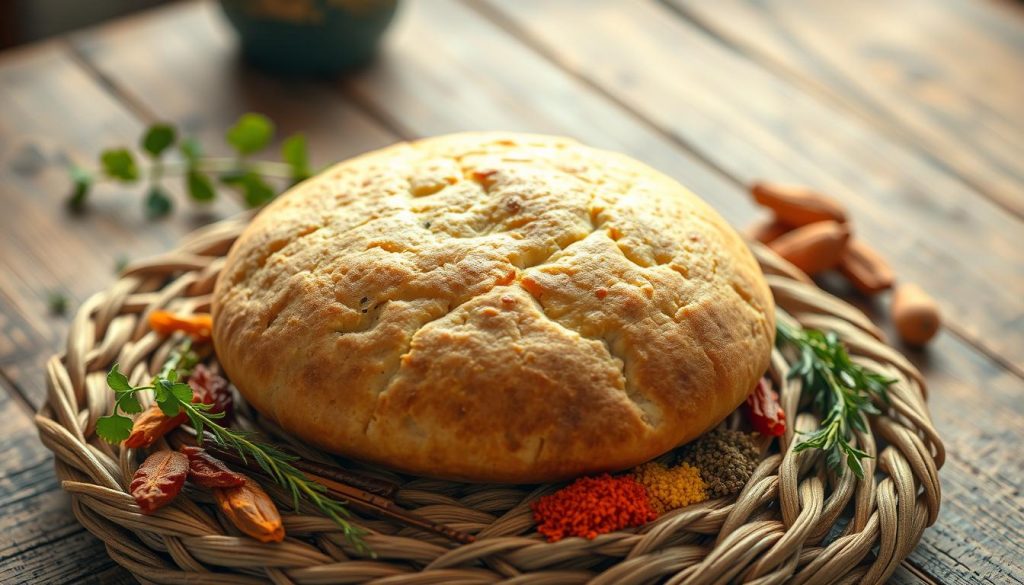
The common types are thick, circular flatbreads and thin, crisp ones like crepes. These breads are more than just sides; they’re central to dining in Oman.
Made from flour, water, and salt, traditional Omani bread has many uses. It’s great for scooping up tasty dishes, showing the shared nature of Omani meals. You can enjoy it warm with dips or with main dishes, making it a favorite for all.
| Type of Omani Bread | Texture | Common Serving Method |
|---|---|---|
| Thick Flatbread | Soft and chewy | Served with stews or grilled meats |
| Crisp Thin Bread | Crispy and light | Used for scooping or wrapping meals |
Exploring Nizwa’s food scene means trying types of Omani bread. Whether you like the thick flatbread or the thin, crispy version, each offers a special way to enjoy Omani flavors.
Dates: The Sweet Gift of Oman
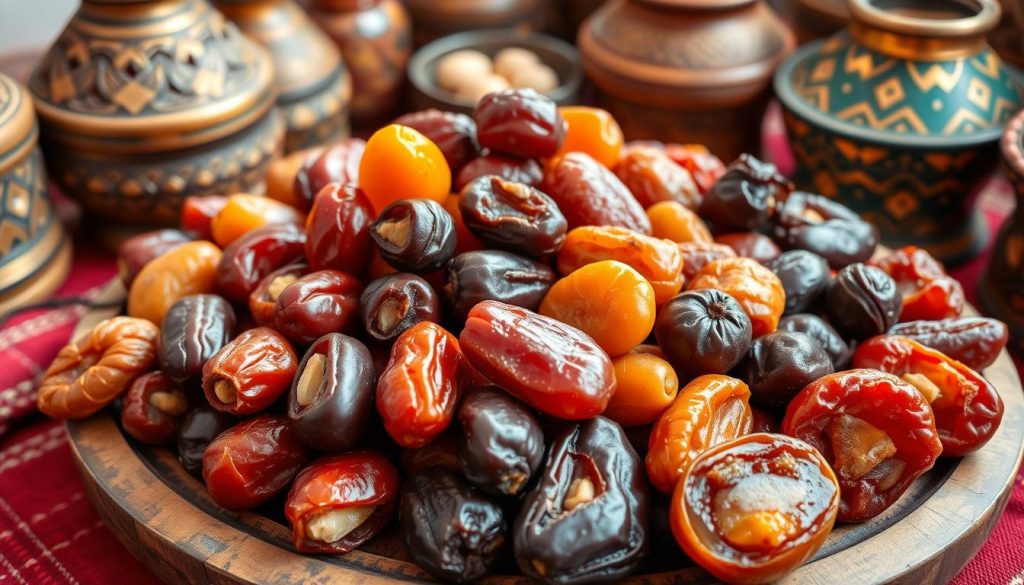
Dates are a big part of Omani culture. They symbolize hospitality and are a big part of local customs. Oman has many types of dates, showing its rich agricultural heritage. With over 8 million palm trees, Oman is among the top 10 in date production.
Types of Omani Dates
Three types of Omani dates are special because of their unique tastes and textures:
- Khulasi: Known for its sweet taste and chewy texture.
- Nabut Saif: Offers a rich flavor and is a favorite for snacking.
- Fard: Features a drier consistency, often used in a variety of dishes.
Nizwa is famous for its over 40 types of dates. It’s a top spot for date lovers. Each tree in Misfah Al Abryeen can produce up to 270 kilograms of dates a year. This adds to the variety found in local souqs.
Uses in Omani Sweets and Snacks
Dates are not just for eating fresh. They’re also key in Omani sweets and snacks. They’re used in:
- Madluka: a traditional dessert made from date paste mixed with ghee and sesame seeds.
- Pastries: Dates are a main ingredient in many Omani pastries.
- Salads and savory dishes: Dates add sweetness to salads and are used in fish recipes and sauces for slow-cooked meats.
Dates are also tied to Omani cuisine, like Kahwa. They’re given as a sign of hospitality during gatherings. Offering dates with coffee shows the warmth and generosity of Omani culture.
| Date Type | Texture | Flavor Profile | Common Uses |
|---|---|---|---|
| Khulasi | Chewy | Sweet | Snacking, Sweets |
| Nabut Saif | Soft | Rich | Snacking, Pastries |
| Fard | Dry | Mild | Savory Dishes, Sauces |
Kahwa: Omani Coffee Experience
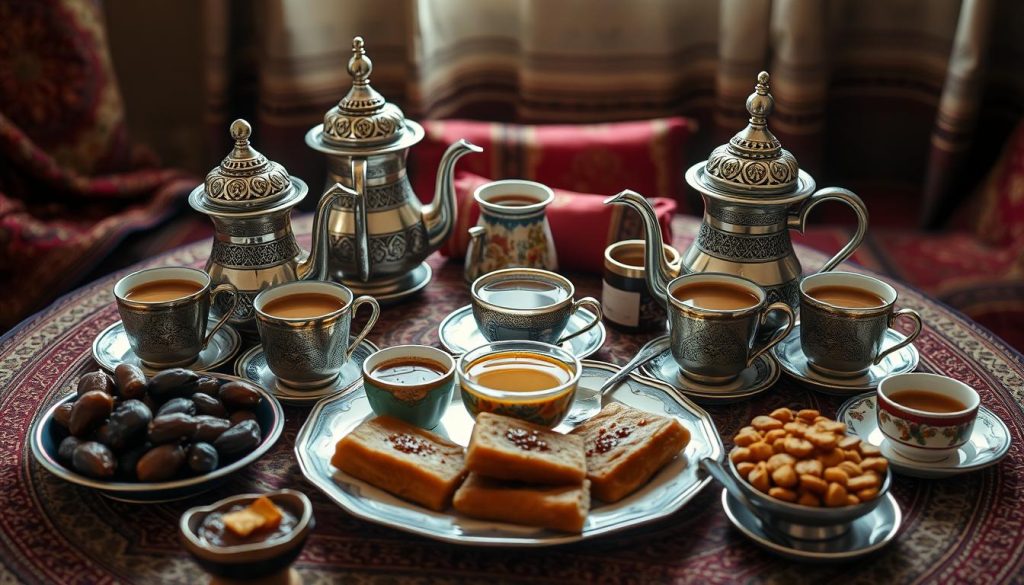
The Kahwa experience in Oman is more than just drinking coffee. It’s a deep part of the culture, important in social gatherings and showing hospitality. Made with lightly roasted beans and spices like cardamom, Omani coffee’s taste shows the country’s rich heritage.
Cultural Significance of Kahwa
Kahwa means warmth and friendship. It’s a sign of welcome, given to guests. This tradition shows Oman’s history and mix of Arab, Persian, and Indian cuisines. Enjoyed together, it brings people closer, making it key to community bonding.
Pairing Kahwa with Traditional Treats
Enjoying Kahwa with traditional treats is a highlight. It’s often paired with Omani Halwa and dates. These pairings offer a mix of sweet and savory, making the taste experience richer. Here’s what goes well together:
| Treat | Description |
|---|---|
| Omani Halwa | A rich, sweet confection made with nuts and spices, often enjoyed with coffee. |
| Dates | Sweet and chewy fruits, often served fresh or dried, symbolizing generosity and hospitality. |
When in Nizwa, don’t miss out on the Kahwa experience. It’s not just about the coffee. It’s about enjoying traditional treats that show Oman’s hospitality and culinary skill.
Meshkak: A Street Food Favorite
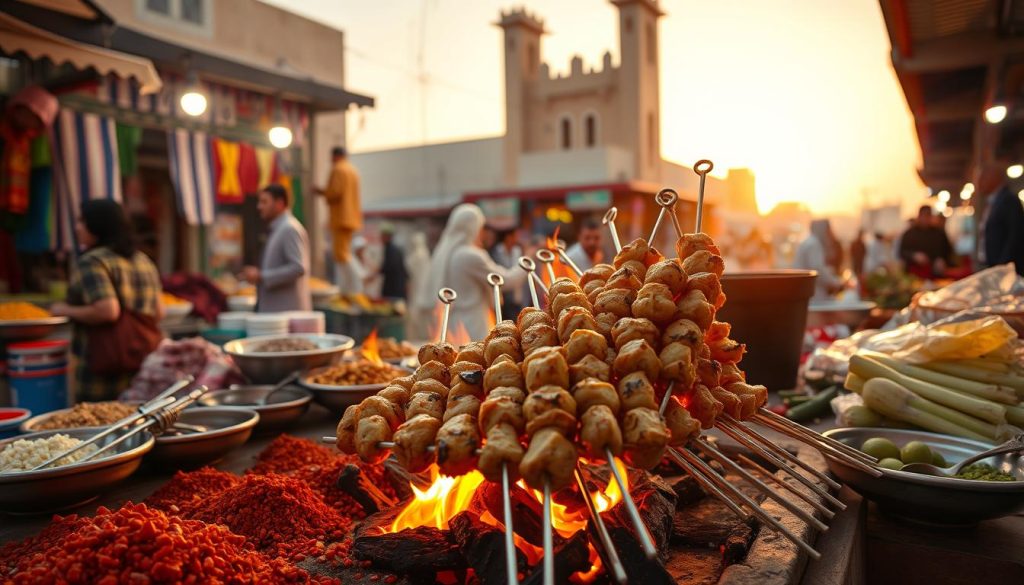
In Nizwa, Meshkak is a must-try street food. It’s made with marinated meat, often chicken, beef, or lamb. The meat is marinated in spices, giving it a unique flavor that everyone loves.
Preparation and Ingredients
The recipe for Meshkak starts with choosing the best meat. It’s then marinated in a special spice mix. The meat is skewered and grilled over an open flame, adding a smoky taste.
The marination includes:
- Garlic
- Cumin
- Black pepper
- Turmeric
- Lemon juice
Where to Find the Best Meshkak
In Nizwa, Meshkak is everywhere. You can find it at vendors and markets. For the best taste, look for lively stalls where Meshkak is grilled fresh.
| Location | Description |
|---|---|
| Nizwa Souq | A vibrant marketplace offering a variety of local street foods, including Meshkak. |
| Outdoor Food Stalls | Various stalls throughout Nizwa, perfect for sampling fresh, grilled Meshkak in an authentic setting. |
| Festivals and Events | Meshkak becomes a highlight, as it’s often served during local celebrations and gatherings. |
Trying Meshkak is a key part of exploring Nizwa’s street food. It showcases Oman’s rich flavors and the joy of local gatherings.
Halwa: The Sweet Treat of Oman
Omani Halwa is a beloved dessert in Oman. It’s made with ghee, sugar, rosewater, and saffron. Making it is a special process that takes up to three hours over a wood fire.
Omani Halwa has three types: Sultani, Special, and Original. Each type has its own flavor and texture. It’s a big part of Omani culture, enjoyed at weddings, Ramadan, and Eid.
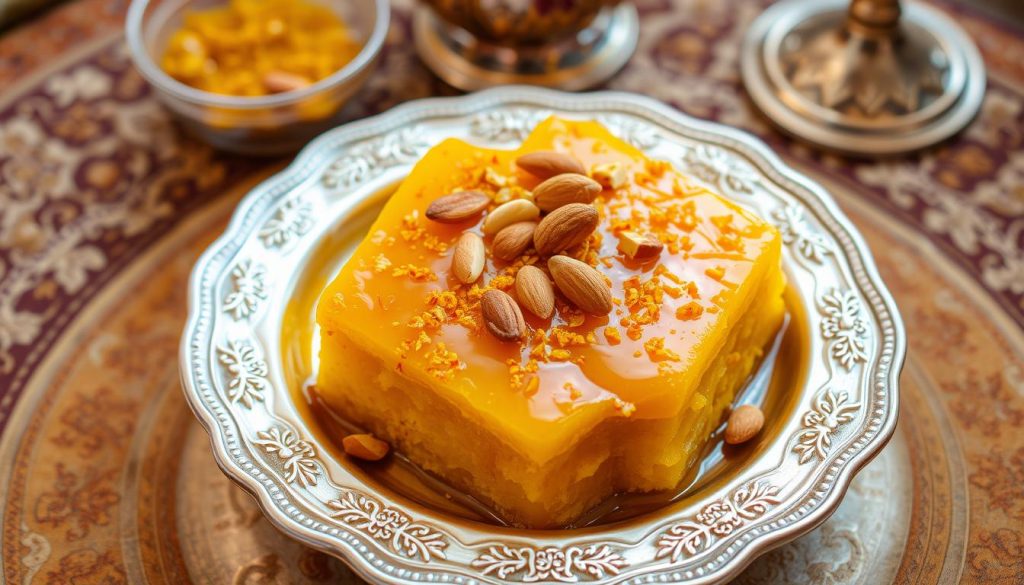
This sweet can last up to four months without refrigeration. It’s a favorite for gifting. In Muscat, you can find Halwa vendors in Muttrah Souq and Seeb markets. Bin Mohammed in Bowshar is famous for its Halwa.
Now, Sultan Qaboos University is working on a healthier Halwa. It will have less fat and sugar but still taste great. This shows how Halwa stays popular in Oman’s changing times.
| Type of Omani Halwa | Key Ingredients | Occasions for Consumption |
|---|---|---|
| Sultani | Rosewater, ghee, saffron | Weddings, Eid |
| Special | Walnuts, cardamom, sugar | Festivals, family gatherings |
| Original | Basic ingredients, simple flavor | Daily consumption |
Omani Laban: A Refreshing Beverage
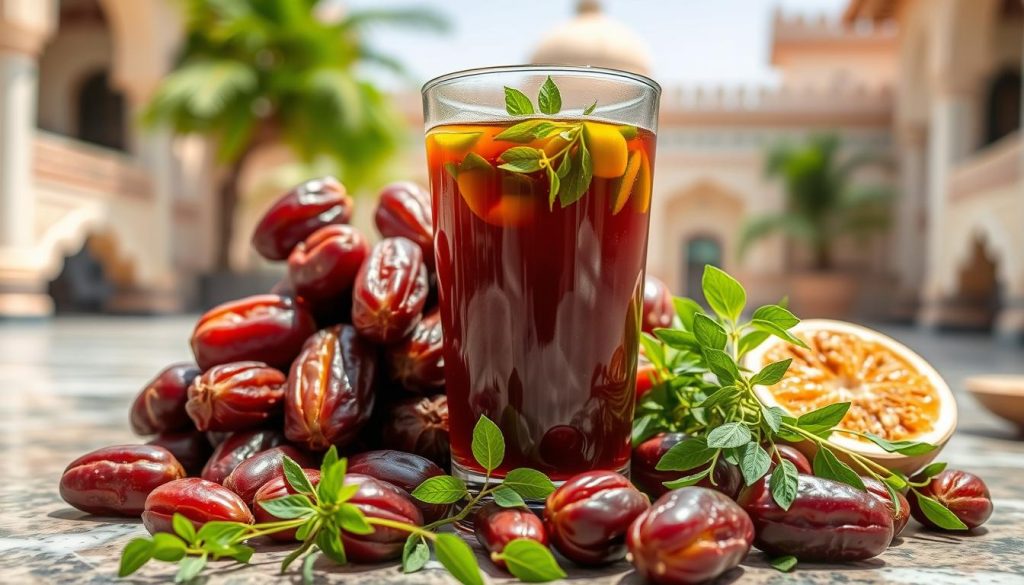
Omani Laban is a favorite drink in Oman’s warm weather. It’s a blend of yogurt and buttermilk, served chilled. The flavor is tangy, with a hint of cardamom and mint.
You can find it everywhere in Oman. It’s loved for its refreshing taste and health benefits.
Health Benefits of Omani Laban
Omani Laban is good for your health. It has probiotics that help your digestion and boost your immune system. Many people enjoy it on hot days to stay cool.
It’s also packed with nutrients like calcium and protein. These help keep your bones strong and muscles healthy. Drinking Omani Laban is a tasty way to improve your diet and connect with Omani culture.
Harees: A Dish for Special Occasions
When you think of festive times in Oman, Harees Omani dish comes to mind. It’s more than food; it’s a symbol of celebration and gathering. Its mix of wheat and meat offers a comforting warmth to both heart and taste buds.
Ingredients and Cooking Techniques
The making of Harees is a blend of ingredients, including:
- Wheat grains
- Meat (usually chicken or lamb)
- Ghee (clarified butter)
- Salt
Cooking Harees involves slow cooking. This lets the flavors mix well. The meat and wheat simmer for hours, turning into a creamy delight. This slow cooking highlights the dish’s cultural importance, making it a favorite at family events and celebrations.
Modern Interpretations of Harees
Modern chefs have added a new twist to traditional Harees. They’ve introduced:
- New spices for deeper flavors
- Unique sauces to enhance taste
- Modern presentation for better looks
These changes keep Harees relevant today while respecting its heritage. This creativity ensures Harees will continue to enchant future generations.
Mashuai: A Unique Fish Dish
Mashuai is a standout among Omani fish dishes. It combines grilled kingfish with a zesty lemon sauce. This dish shows Oman’s rich coastal culture, blending fresh fish with traditional spices and herbs. The Mashuai recipe is simple yet full of flavor, loved by seafood fans.
The dish starts with marinating the fish in spices. Then, grilling the kingfish adds a smoky taste. It’s often served with rice to balance the lemon sauce’s zestiness, making for a complete meal.
Trying Mashuai in Nizwa or Muscat is a culinary adventure. Places like Al Mandoos or Bait Al Bahar serve it. Enjoying Mashuai lets you experience Oman’s fishing heritage through a flavorful meal.
Conclusion
Nizwa is a treasure trove of culinary delights that every food lover should experience. Discovering the best dishes to try in Nizwa, such as the tender and savory Shuwa and the sweet indulgence of Halwa, allows you to immerse yourself in the region’s rich traditions and culture. Each dish tells a story steeped in heritage, showcasing the flavors that define Omani cuisine.
As you explore the Nizwa food experiences, you’ll find a delightful range of offerings—from the comforting Omani Laban to the street food favorite, Meshkak. Each meal is crafted with care, making even the simplest delights memorable. Venturing through local markets and restaurants like Bin Ateeq for a taste of dried shark fish curry at an affordable price enhances your culinary journey.
Savoring Nizwa’s culinary gems is more than just about the food—it’s about connecting with the history and people of Oman. Embrace each moment as you revel in the unique tastes and aromas that make this town a true foodie’s paradise, and come away with memories that linger long after the last bite.