Explore Salalah: Authentic Omani Food Experiences
Have you ever wondered how a single dish can tell the rich history of a region while tantalizing your taste buds? In Salalah, this is a daily reality. Here, authentic Omani food experiences are not just meals but a celebration of culture and tradition. Nestled in the Dhofar region, Salalah is your gateway to Omani cuisine.
This vibrant city is famed for its unique gastronomic offerings. From the bustling Salalah markets, where you can find everything from fresh seafood to exotic spices, to hidden gems among the local restaurants in Salalah, every bite invites you to explore the stories behind it. The culinary landscape here includes delightful dishes like Mishkak, featuring camel meat, and a variety of fresh seafood that thrives during the monsoon season.
Introduction to Salalah’s Gastronomy
Salalah’s food scene is a hidden treasure that challenges the idea of the region being dry. It’s actually lush and green, thanks to tropical rains and the khareef season. Here, you can discover a world of flavors that tells the story of its rich heritage and vibrant cultures.
The Arabian Sea nearby means there’s plenty of fresh seafood. Enjoy these dishes in Salalah’s local cafes and traditional homes. Here, you can try Omani coffee with dates, a cultural ritual that shows the warmth of Omani hospitality.
The street food scene in Salalah is lively and diverse. You’ll find everything from savory treats to sweet desserts. There are also local fruit juices and mocktails with exotic fruits like pomegranate, mango, and coconut.
This year, the Omani Culinary Arts Festival coincides with the Dhofar Khareef Season 2024. It’s a unique experience for tourists. The festival highlights Oman’s culinary heritage, offering traditional dishes and live cooking demos by famous chefs.
The festival has something for everyone, including cooking competitions and folk performances. It’s all about celebrating Omani culture. The “Food Tourism and Omani Culinary Arts” initiative aims to boost tourism and support local businesses. Dignitaries like His Excellency Faisal bin Abdullah Al Rawas support this important event.
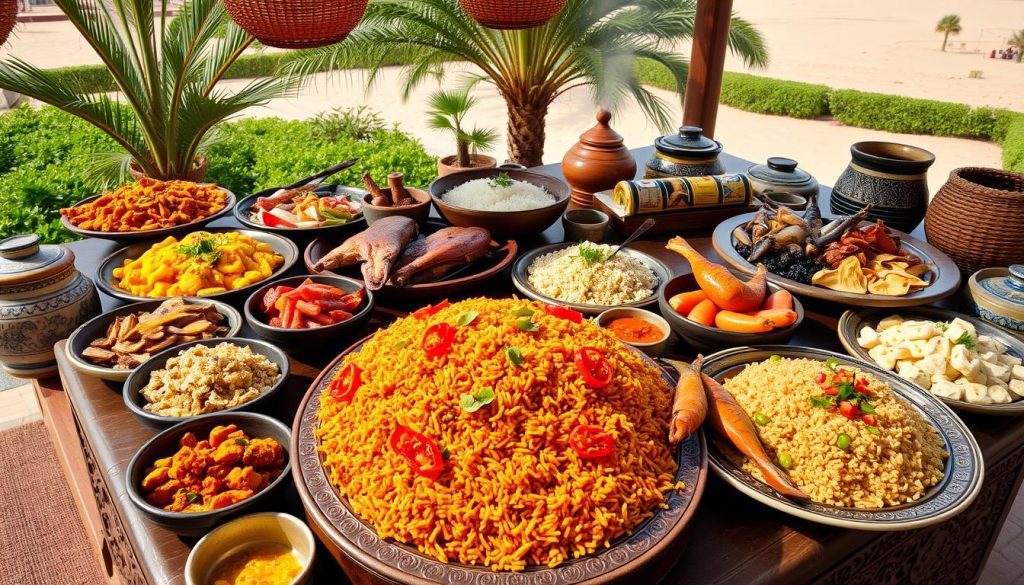
| Feature | Description |
|---|---|
| Seafood | Abundant fresh seafood dishes due to location by the Arabian Sea. |
| Omani Coffee Ritual | Experience Omani coffee with dates in local cafes and homes. |
| Street Food Scene | A variety of savory and sweet options to savor and explore. |
| Fruit Juices | Exotic mocktails featuring pomegranate, mango, and coconut. |
| Culinary Arts Festival | Annual event showcasing Omani cuisine during the khareef season. |
| Support for Local Businesses | Encouragement of tourism through local enterprises and cultural exchange. |
Discovering Traditional Omani Dishes
Exploring traditional Omani dishes in Salalah gives a peek into the Dhofar region’s rich food heritage. The flavors and cooking methods show a mix of cultural influences. This makes the food lively and welcoming. Ma’ajeen and madhbi are two dishes that highlight Omani cuisine’s essence.
Ma’ajeen: A Staple of the Dhofar Region
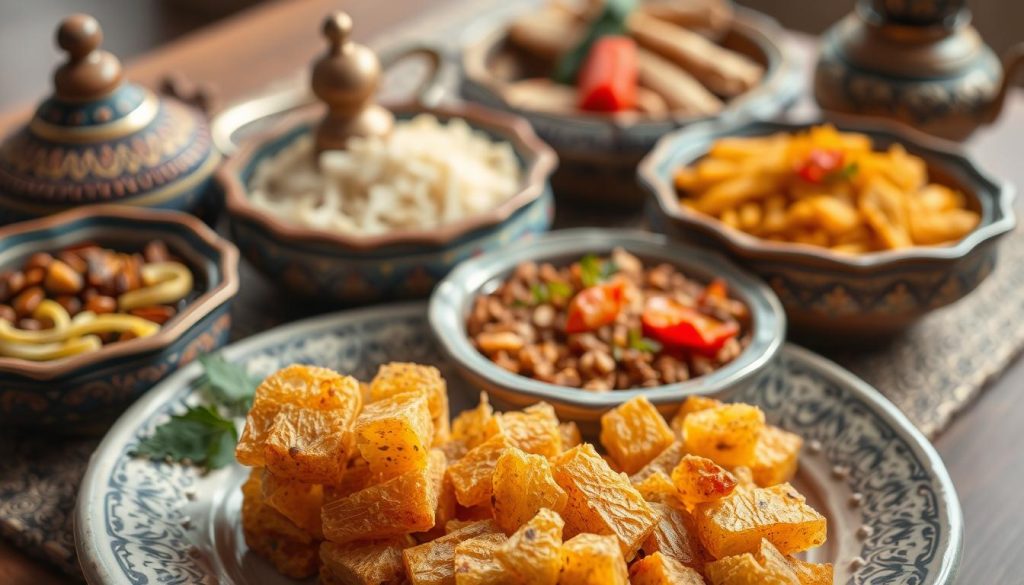
Ma’ajeen is a favorite in Salalah, made with beef or camel meat. The meat is salted and dried, giving it a special taste. After drying, it’s cut into cubes and fried, making a tasty treat that goes well with pittas and kak breads.
This dish is loved for its hearty flavor, making it a favorite among families.
Madhbi: Cooking with Stone
Madhbi is a dish that brings people together, cooked on heated stones. It’s made with marinated camel or goat meat. This cooking method is all about sharing, enjoyed by family and friends.
The long cooking time lets the spices blend perfectly. This creates a memorable meal that celebrates togetherness.
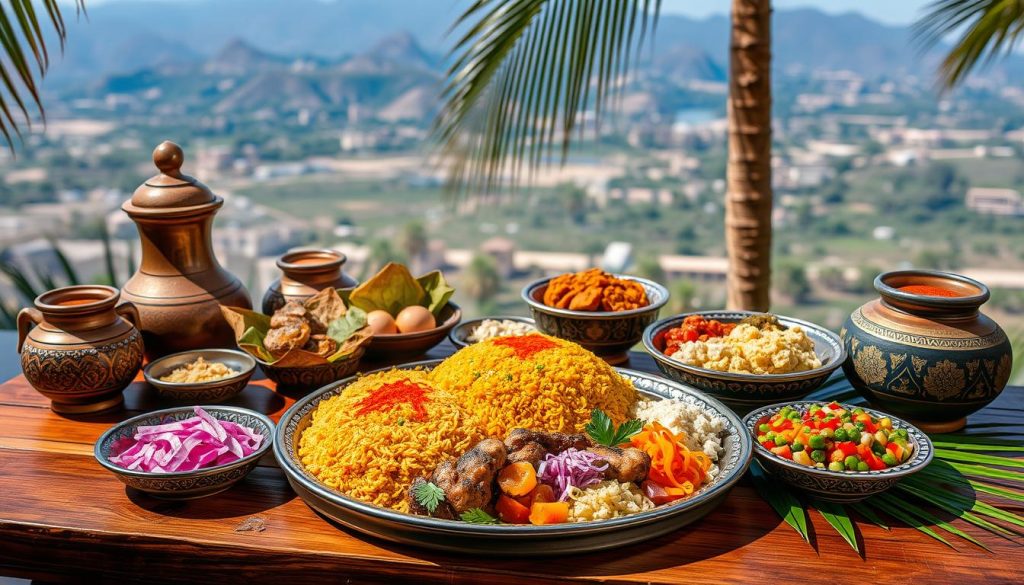
Ma’ajeen and madhbi show the deep culinary traditions of Omani cuisine in Salalah. These dishes do more than just fill bellies. They also bring people together, creating lasting bonds.
Authentic Omani Food Experiences in Salalah’s Markets and Local Restaurants
Salalah’s markets and local restaurants are the heart of its food culture. Exploring these places lets you taste a wide range of flavors. The city’s food scene is shaped by the Arabian Sea, offering dishes that are both simple and rich.
Exploring Salalah’s Food Culture
Walking through the souks, you’ll find a wealth of ingredients and local dishes. Shuwa, a slow-cooked lamb dish, is a favorite for special events. Majboos, a hearty rice dish with meat, shows the local taste. Laban, a yogurt drink, is a refreshing and salty treat.
These dishes highlight the importance of community and celebration in Omani food.
Noteworthy Local Delicacies
Omani Halwa, a sweet treat, is a must-try during festivals. You can find it in local restaurants or from street vendors. The seafood in Salalah is known for its firmer, sweeter taste during the monsoon season.
Enjoying Mishkak, spiced meat skewers, or taking cooking classes will give you unforgettable experiences.
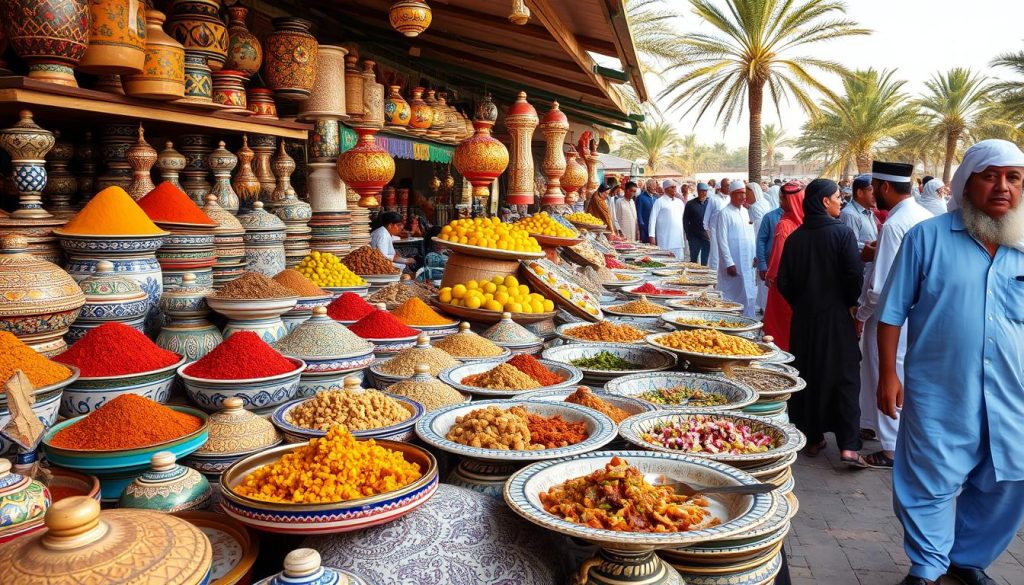
| Dish Name | Description | Special Occasion |
|---|---|---|
| Shuwa | Slow-cooked marinated lamb | Festivals and special gatherings |
| Majboos | Mixed rice dish with meat | Common among locals |
| Omani Halwa | Sweets made with starch and rosewater | Cultural celebrations |
| Mishkak | Spiced meat skewers | Street food favorite |
| Laban | Traditional yogurt beverage | Everyday refreshment |
Exploring Salalah Markets for Fresh Produce
The Salalah markets are full of life, even more so during the khareef season. This is when nature’s best is on display. Locals and visitors love to see the fresh produce available. The variety of seasonal fruits is a big draw, showing off the area’s rich farming.
Fruits of the Khareef Season
The khareef season, from June to September, brings a wide range of fruits to the markets. You’ll find:
- Coconuts
- Bananas
- Papayas
- Mangoes
These fruits are known for their quality. They are sweet and fresh, thanks to Salalah’s climate. This climate supports a wide range of crops.
Seafood Selection and Quality
The seafood in Salalah markets is another highlight. The seasonal rains make fishing great, offering a variety of fresh catches. The Mirbat fish market is a top spot for seafood lovers. Here, you can find:
| Type of Fish | Average Price (OMR) | Flavor Profile |
|---|---|---|
| Hamour | 3.0 | Delicate and mild |
| Sobaity | 2.5 | Firm and slightly sweet |
| Kingfish | 4.0 | Rich and flavorful |
| Tuna | 5.0 | Bold and meaty |
This market is key for those wanting to try Omani cuisine. It offers the freshest seafood along the coast. Whether cooking at home or dining out, Salalah’s seafood is top-notch.

Local Restaurants in Salalah: Where to Dine
Exploring Salalah’s culinary scene reveals many local restaurants. They showcase Omani cuisine’s essence. You’ll find traditional flavors and regional specialties here. Each meal, whether with fragrant spices or fresh seafood, is unforgettable.
Must-Visit Eateries for Omani Cuisine
For a true taste of Omani cuisine, check out these places:
- Bin Ateeq – Known for its rich, flavorful dishes that capture local culture’s heart.
- Al Mina – Offers a wide range of seafood, showcasing the area’s ocean bounty.
- Wadi Al Mughsayl – Famous for its ma’ajeen, a beloved traditional dish.
Sampling the Best Seafood in Salalah
Salalah’s coastal location means fresh seafood is always available. Local restaurants have a vast menu of ocean delights, best enjoyed during the Khareef season. Try these:
| Seafood Dish | Description |
|---|---|
| Hamur | A popular white fish, great for grilling or frying. |
| Shaari | Known for its sweet flavor and flaky texture, a favorite among seafood lovers. |
| Shatrook | A local delicacy, often served with aromatic spices. |
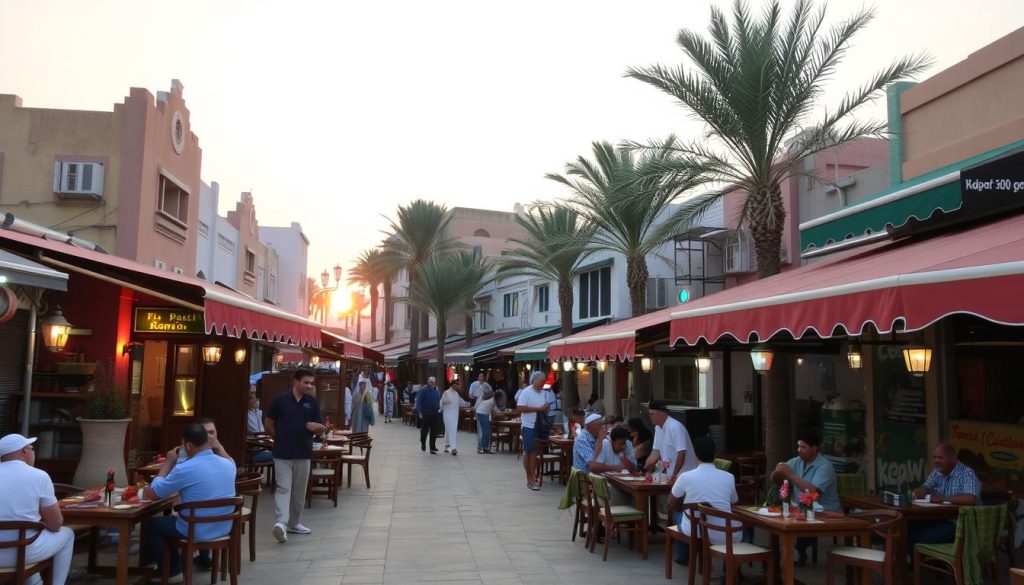
The Role of Frankincense in Omani Cuisine
Frankincense is a key part of Omani culture, blending well into local food. It’s known for its unique taste and historical value. In Salalah, it’s celebrated as the “City of Frankincense,” making meals special for visitors.
Frankincense does more than add flavor; it holds cultural significance. It’s linked to healing and rituals, making dishes more meaningful. You might see it in meat marinades or rice, highlighting Oman’s trade history.
Trying dishes with frankincense is a treat for the senses. It shows how well it works with other spices. Enjoying a meal with frankincense is like joining a tradition of community, hospitality, and Oman’s beauty.
Salalah Food Tours: A Culinary Journey
Salalah food tours take you on a journey through the region’s rich culinary world. You’ll get to try dishes filled with history and flavor. These tours let you visit markets, taste street foods, and learn cooking techniques from locals.
Guided Culinary Experiences
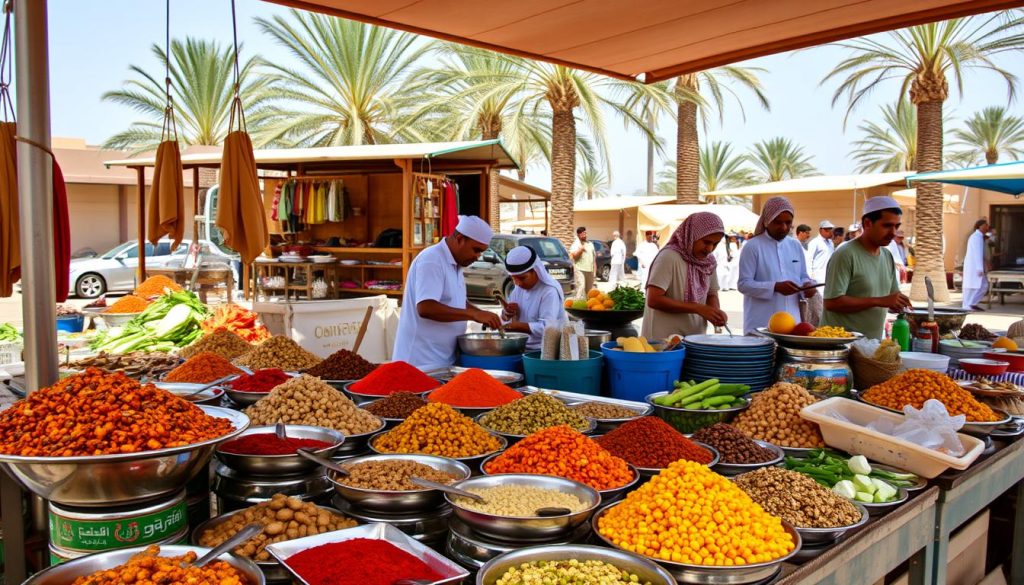
These tours introduce you to Salalah’s wide range of dishes. You’ll see everything from Omani food to international flavors. The Al-Haffa Souq is a highlight, with its fresh fruits, produce, and spices.
The Gardens Mall is another must-see, with its food stalls and restaurants. Here, you can try Muthbe, a traditional dish, or Ma’ajeen, a bread with cheese or honey. Talking to vendors adds to the experience, showing you the heart of local dining.
But there’s more to taste than just market food. Sayadiyah, a rice and fish dish, and fresh seafood at As Sammak Seafood Restaurant are must-tries. Enjoy grilled lobster and shrimp curry for a taste of Salalah’s coast.
During your trip, you’ll find places like Sakalan Restaurant at Al Baleed Resort. It offers Omani and international dishes with sea views. Try street foods like shawarmas and falafels, and end with Omani halwa for a sweet finish.
Understanding Omani Gastronomy beyond Food
Omani gastronomy is a window into the nation’s culture and history. Each dish shows the country’s diverse influences, from Middle Eastern to Indian and African. This shows how important Omani cuisine is, more than just food.
Meals in Oman highlight the value of hospitality and family. Sharing food is a tradition, with gatherings enjoying dishes like shuwa and majboos. These dishes are about more than taste; they’re about social bonds and community.
Learning about food rituals in Oman can deepen your appreciation for its traditions. Cooking classes or food tours offer a chance to learn from generations past. You’ll learn how lamb and fish are key to different regions, showing local preferences.

Oman’s markets, like Mutrah Souq, are full of fresh spices and traditional ingredients. Talking to local vendors lets you see the vibrant culinary culture up close. The mix of old recipes and quality ingredients tells a story of a land where food is deeply meaningful.
| Dish | Main Ingredients | Cooking Method |
|---|---|---|
| Shuwa | Lamb or goat | Slow-cooked in an underground oven |
| Majboos | Chicken, lamb, or fish | Spiced and cooked with rice |
| Mashuai | Kingfish | Spit-roasted with spices |
| Mishkak | Marinated meat | Grilled on skewers |
| Halwa | Semolina, sugar, and spices | Prepared as a sweet treat |
| Halawet Ahmad | Sweet dough | Stuffed with cream |
Omani gastronomy is not just about flavors; it shows the cultural importance of Omani cuisine. Every meal and gathering strengthens bonds, enriching the nation’s social fabric. Seeing this context makes your culinary journey in Oman more than just eating; it’s a heritage exploration.
Salalah’s Unique Culinary Influences
In the heart of Oman, Salalah’s food scene is a mix of many cultures. This comes from its spot on the historic Spice Route. Modern Omani dishes blend flavors from different places, showing the area’s rich history.
The Spice Route’s Legacy in Modern Dishes
Salalah’s food is known for its spices, like cloves and cardamom. These spices add depth to many dishes. They come from Persian, East African, Zanzibari, and Portuguese cooking styles, making Omani food special.
Seafood is big in Salalah because of Oman’s long coast. Fish dishes are common, with spices adding flavor. Lamb and goat are also favorites, with slow-cooked shuwa being a highlight of Bedouin traditions.
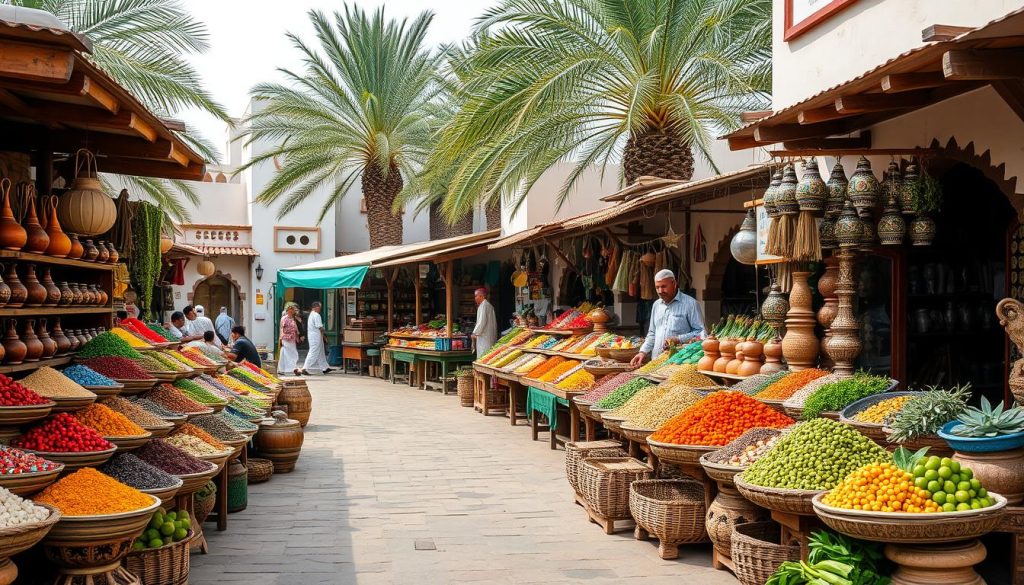
Oman has many traditional foods, like dates in desserts. The food scene reflects the Omani people’s diversity. Local meals show how important food is in Omani culture. Exploring Salalah’s food scene is a journey through history and community, making every meal unforgettable.
Conclusion
Your journey through Salalah’s authentic Omani food experiences is a treat. It shows a mix of flavors and traditions from the Dhofar region. Enjoying traditional dishes and fresh produce in markets lets you see the depth of Omani food culture.
Exploring Salalah means every meal has a story. Each ingredient reflects the local surroundings. Try Halwa and Mishkak to experience the city’s rich culinary heritage.
When you visit, get ready for an amazing food adventure. Let Salalah’s flavors lead your way. You’ll leave with memories of the Omani food culture that will last a lifetime.