Discover Historical Sites in Nizwa – Tour Guide
Have you ever wondered how a single city can hold centuries of history, stunning architecture, and natural beauty? Welcome to Nizwa, the ‘Pearl of Islam,’ in Oman’s Ad Dakhiliyah Governorate. This city, once the capital in the 6th and 7th centuries, shows Oman’s rich past through its sites.
From the Nizwa Fort, a UNESCO World Heritage site, to the lively Nizwa Souq, this guide opens the door to Nizwa’s wonders. You’ll explore landmarks that deepen your understanding of Omani culture. It’s a journey that will make you question the essence of Omani life.
Introduction to Nizwa
Nizwa is a city in Oman known for its rich history and culture. It was the capital from the 6th to the 7th centuries. Today, it’s a key spot for those interested in Oman’s past.
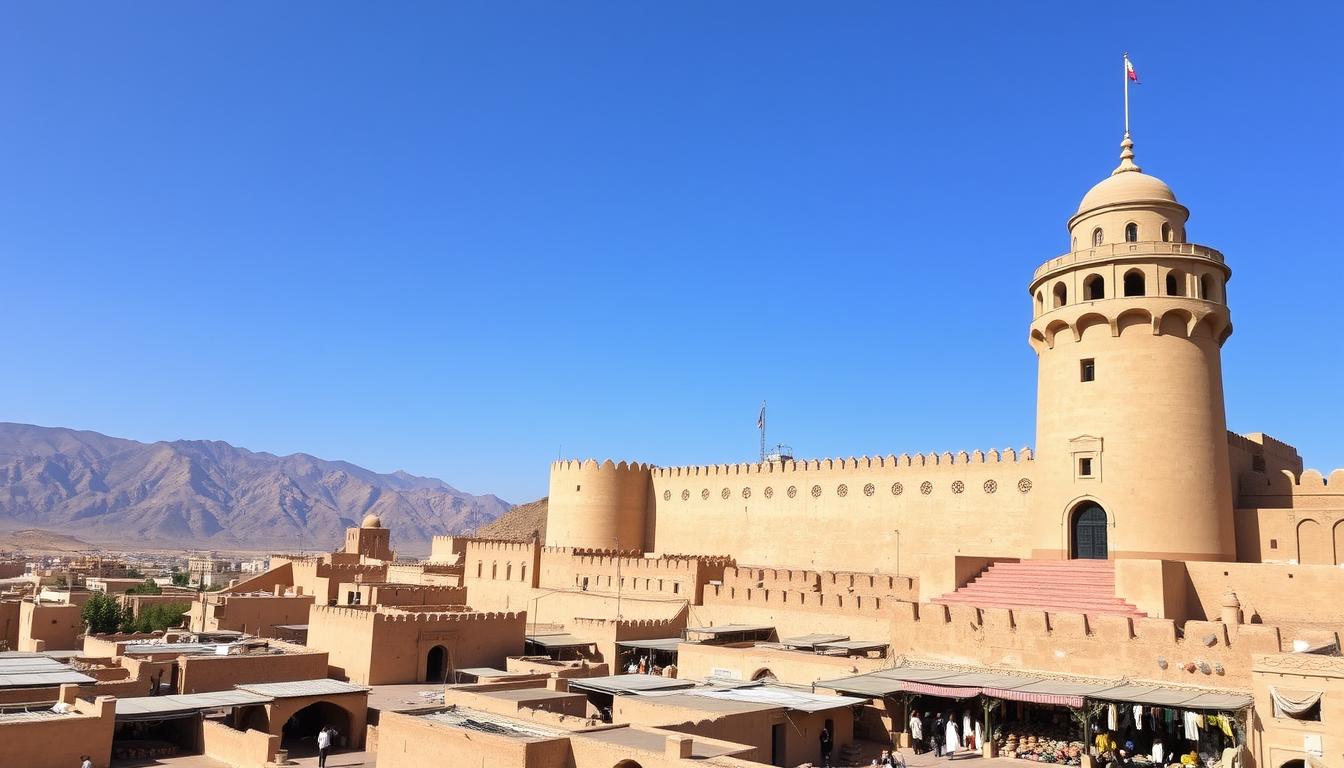
Walking through Nizwa, you’ll see ancient forts and bustling souks. These streets tell the story of its past. You’ll find the Nizwa Fort, a 17th-century tower that stands 34 meters tall. The Nizwa Souq is also a must-see, with its old market vibe and local goods.
Nizwa is also a gateway to beautiful natural spots like Jebel Akhdar. This area is famous for its terraced farms and hiking trails. The city’s beauty is enhanced by the mountains around it, making it a unique place to visit.
The Rich History of Nizwa
Nizwa has a rich history that helped Oman grow. It became a key center for trade, education, and religion in the 6th and 7th centuries. As the capital of the Oman Sultanate, it made big strides in culture and Islamic teachings.
The University of Nizwa is a testament to its legacy. It shows how important this time was for the area.
The Role of Nizwa in Oman’s Development
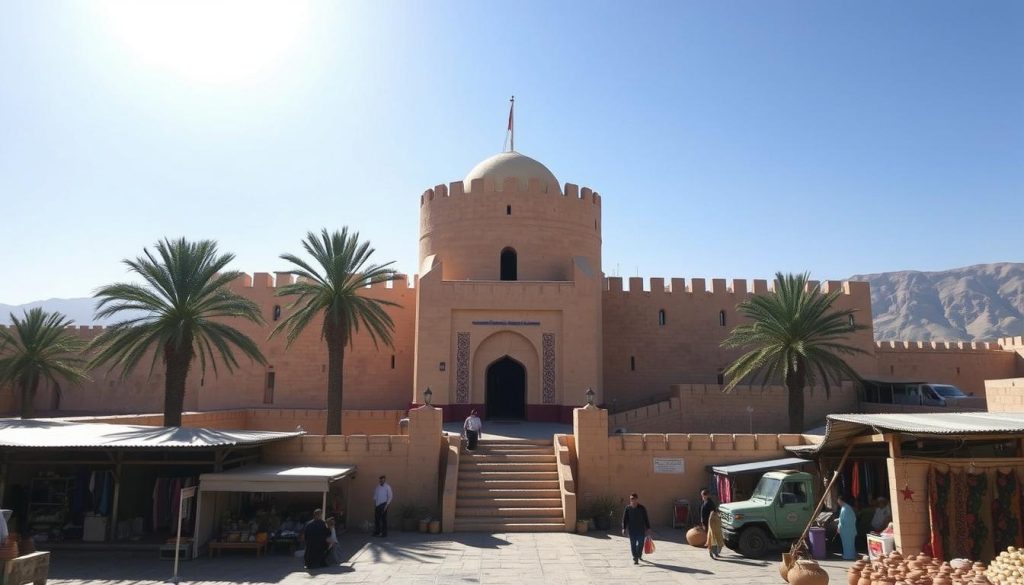
Nizwa played a big role in Oman’s growth. The Nizwa Fort, built in the 17th century, is a symbol of Omani strength. It shows off advanced defense designs and was a key place for rulers.
The Falaj Daris irrigation system is another important landmark. It was named a UNESCO World Heritage Site in 2006. It shows Nizwa’s smart ways of managing water and farming.
Key Historical Events in Nizwa
Nizwa has seen many important events in its history. The Nizwa Fort was finished in 1668 AD. It’s now Oman’s most visited national monument.
Jabreen Castle, built in the 17th century, is another highlight. It’s known for its beautiful woodwork and paintings. It was a place for learning and community.
Bahla Fort, built in the 13th century, is also a UNESCO Heritage site. It shows Nizwa’s role in trade and defense. These events make Nizwa a treasure trove of history.
Discover Historical Sites in Nizwa
Nizwa is a city full of history, just under 90 miles from Muscat, Oman’s capital. It has many historical sites, showing its importance as a trade and culture center since the 6th century. This guide will help you explore the key landmarks, revealing Oman’s rich heritage.
Overview of Nizwa’s Historical Attractions
Nizwa Fort is a standout landmark from the 17th century. It offers a glimpse into ancient defense strategies. Visitors pay 2 OMR if they’re local, and 5 OMR if they’re not.
The Nizwa Souq is another must-see, known for its beautiful silver jewelry. You might find a stunning silver dagger for about $700 USD there.
The Al Khodari Mosque is also a historical gem, built in the 7th century. It’s one of the oldest mosques in the world. The friendly locals make your visit even more special, with their warm welcome.
Nizwa Fort: A UNESCO World Heritage Site
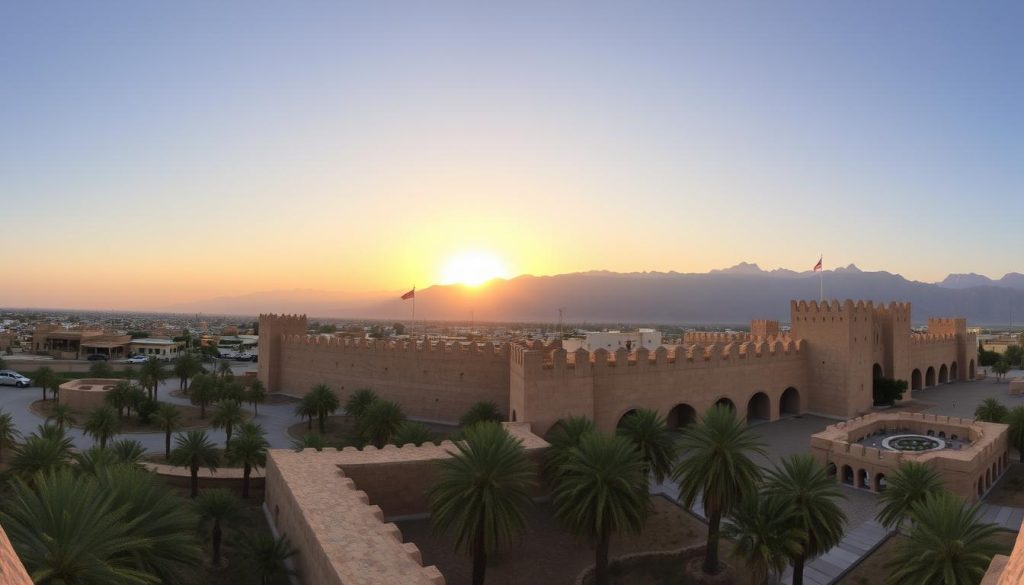
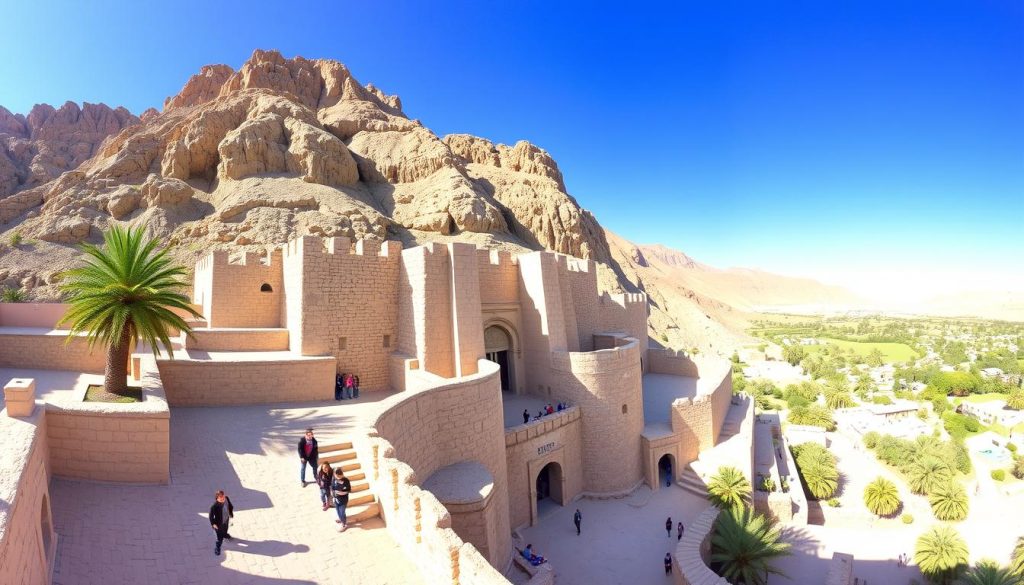
Nizwa Fort is one of the oldest and finest forts in Oman. It attracts many tourists to the Dakhiliyah region. This historic site shows Oman’s rich cultural heritage, located in Nizwa, a key trade and cultural exchange center.
As you explore Nizwa’s history, the fort’s architecture stands out. It showcases the design and strong fortifications that have lasted for centuries.
Architecture and Design of Nizwa Fort
The fort took over twelve years to build during the Ya’ruba Dynasty. It shows the dedication to craftsmanship. Its citadel is 36 meters high and wide, with a circular gunnery platform and twenty-three cannons.
Visitors can see an exhibition hall in the former prison area. It has twenty galleries that tell Nizwa’s history. Multimedia displays, historic maps, and artifacts teach about Omani forts and castles.
Visiting Information and Access
Nizwa Fort is open daily from 9 am to 6 pm. Entry is free, making it easy for travelers to explore Oman’s history. The best times to visit are October to April, when the weather is cooler.
Local artisans hold workshops in the fort. You can see traditional crafts like date palm basket weaving and silver work. The castle armory displays traditional weapons, like antique khunjars and swords.
Don’t miss the chance to buy unique souvenirs at the Omani Heritage Boutique during your visit.
The Nizwa Souq: A Cultural Gem
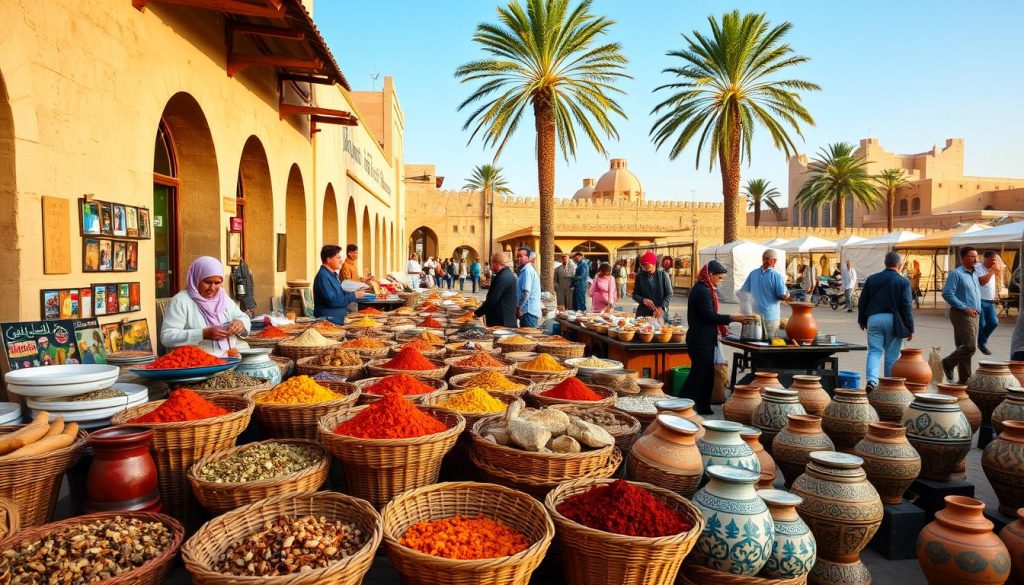
The Nizwa Souq is a lively market that draws both locals and tourists. It offers a wide range of goods. You can find traditional Omani handicrafts, spices, textiles, and beautiful silver jewelry here.
This souq is a standout among Nizwa’s historical attractions. It beautifully combines culture and commerce.
Types of Goods Available
Exploring the Nizwa Souq, you’ll find many products that show Oman’s rich heritage. Some of the main items include:
- Traditional Omani pottery
- Fresh dates, known for their quality
- Frankincense resin with its aromatic scent
- Handwoven mats and baskets
- Goat’s wool textiles
- Intricately designed glass lamps
- Omani antiques and taqiyah skullcaps
These items make sure visitors take home a piece of Oman’s history. Each shopping trip is a memorable experience.
The Souq’s Historical Significance
The Nizwa Souq is more than a market. It has been a key spot for trade and cultural exchange for centuries. Its traditional architecture and lively market activities show Oman’s rich history.
On Fridays, the goat market is bustling with people in traditional clothes. This adds to the souq’s cultural richness.
Visiting the Nizwa Souq is free. It’s best to spend about two hours here to fully enjoy the market. An extra hour is great for checking out the fresh produce, like the date market. The Nizwa Souq is a must-see on your Nizwa journey.
Explore Other Historical Monuments in Nizwa
Nizwa is home to many historical monuments that show Oman’s rich past. Jabreen Castle and Bahla Fort are two key sites. They give us a look into Nizwa’s history, with their architecture and defense systems.
Jabreen Castle: A Historic Landmark
Jabreen Castle was built in 1675. It was a place for learning, teaching subjects like astrology and medicine. Its beautiful murals show life in Oman back then.
Walking through, you see rooms for planning and studying. It gives a deep look into royal life and learning in the past.
Bahla Fort: UNESCO Heritage Status
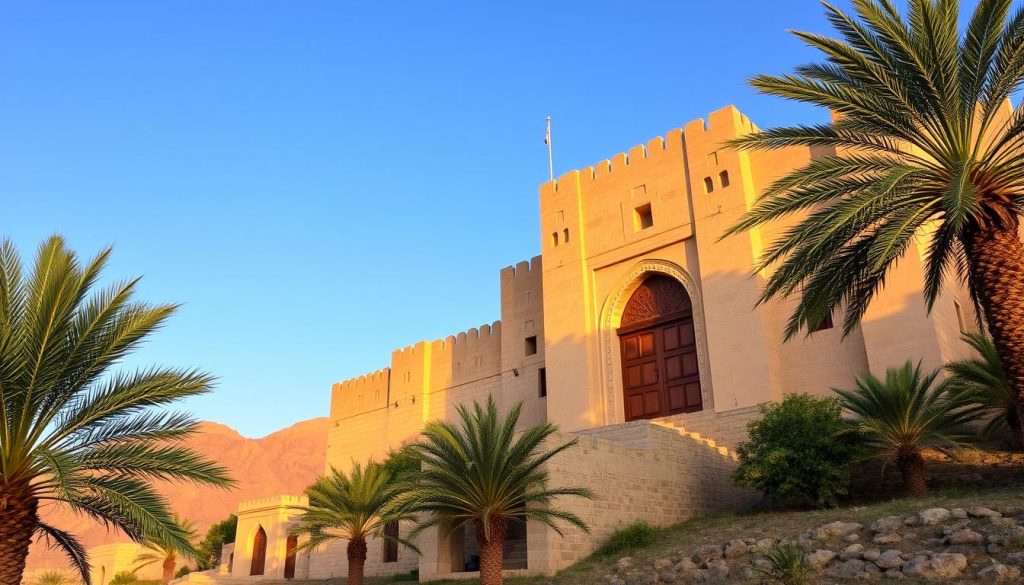
Bahla Fort is about 40 kilometers from Nizwa’s center. It was the first fort in Oman to be listed by UNESCO in 1987. Built in the 12th century, it’s one of the biggest forts in the country.
Its location offers stunning views of palm groves and landscapes. It’s a great spot for photos and exploring. The fort shows Oman’s history and the strength of its people.
| Monument | Year Constructed | Significance | UNESCO Status |
|---|---|---|---|
| Jabreen Castle | 1675 | Historic learning center | No |
| Bahla Fort | 12th century | Significant fortification | Yes, since 1987 |
Nizwa Heritage Sites: A Glimpse into the Past
Nizwa is a treasure trove of culture and history. It shows off its heritage through many traditional structures. The traditional mud houses are a prime example of ancient Omani society’s architectural brilliance.
These homes were built with local materials, showing how people lived and styled their homes back then. The skill in these buildings is a testament to the artistic talents of the area.
Traditional Mud Houses and Architecture
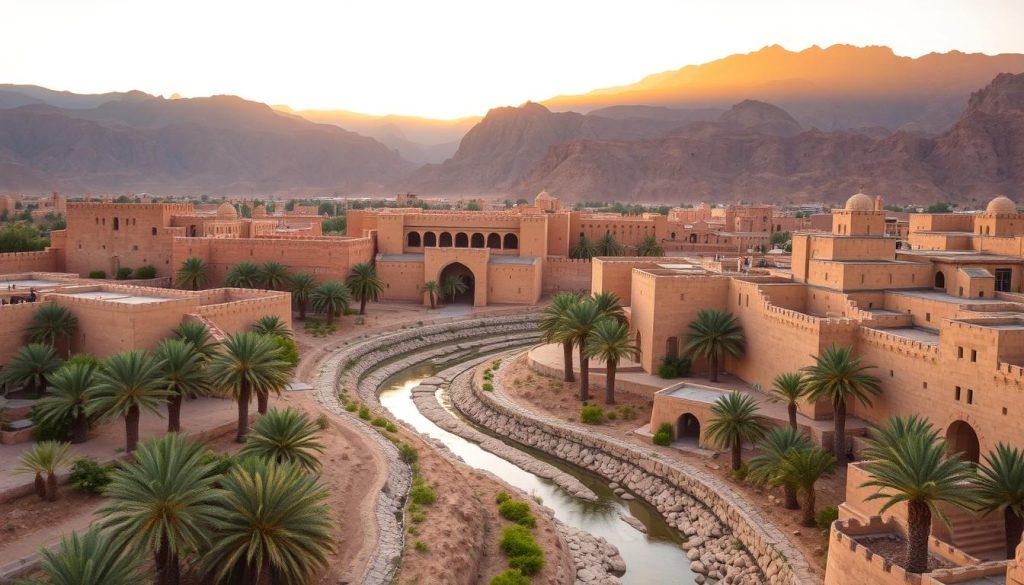
The traditional mud houses of Nizwa are a marvel of local ingenuity. They were built to withstand the harsh climate, blending function with art. Visitors can see the detailed architecture and learn about community life back then.
The Falaj Irrigation System: An Ingenious Solution
The Falaj irrigation system is another highlight of Nizwa’s heritage. It’s a UNESCO World Heritage site, showing how Omani ancestors managed water. The system guides water from mountains to fields, supporting life in dry areas.
The Falaj’s design shows the adaptability and ingenuity of Omani culture. It’s a reminder of the historical practices that shaped this region.
These elements highlight the need to preserve Nizwa’s cultural heritage. They also deepen your understanding of the history that made this region so remarkable.
Outdoor Activities Near Historical Sites
Nizwa is not just rich in history but also in outdoor activities. Exploring the outdoors around historical sites makes your visit even better. The beautiful landscapes and scenic paths are great for trekking and enjoying nature.
Trekking in the Surrounding Mountains
The mountains near Nizwa have trails for every hiker. You can pick from easy walks to tough treks. Many paths lead to amazing views and old settlements.
The Balcony Walk at Jebel Shams is a great example. It’s about 8 kilometers long and offers stunning views of the Hajar Mountains and canyon. It’s perfect for those who want to mix outdoor fun with history.
Exploring the Desert Oasis
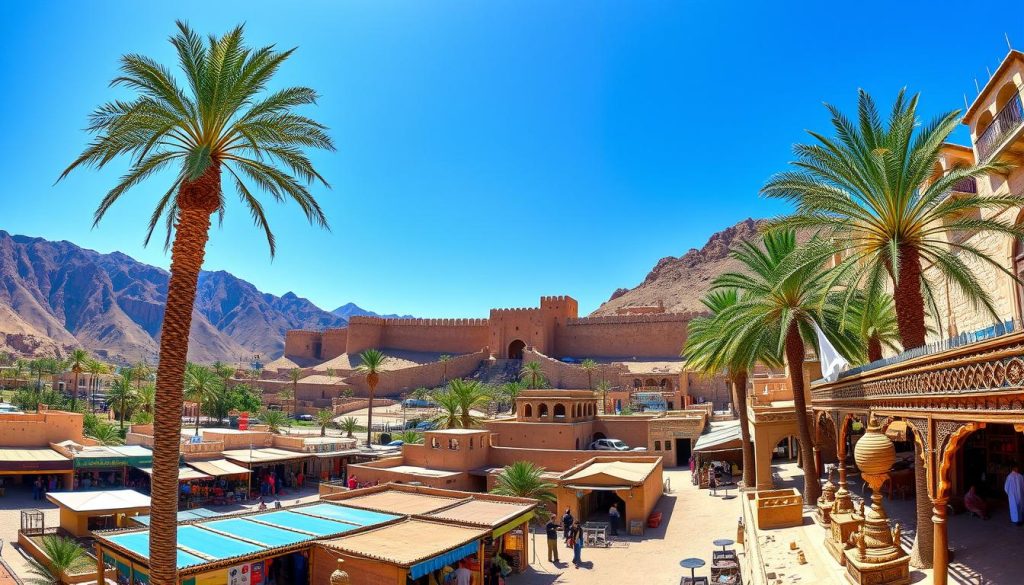
Outside the city, there’s a peaceful desert oasis with palm trees and complex irrigation systems. Walking through this calm area, you’ll see local plants and animals. This tells part of Nizwa’s natural story.
Leisurely walks or guided tours help you learn more about Nizwa’s history. You’ll discover how nature and culture are connected.

| Activity | Duration | Cost (USD) |
|---|---|---|
| Via Ferrata and Zip Line | 2 hours | $150 |
| Half-Day Private Experience in Tanuf Arch | 4 hours | $470 |
| Lost Village Hike | 7 hours | $220 |
| Mirage in the Mountain | 3 hours | $220 |
| Jabal Shams Tour (Grand Canyon) | 8 hours | $347.37 |
| Trekking Jebel Akhdar | 8 hours | $152.83 |
| Private Full Day Guided Tour to Nizwa City | Full day | $170 |
| Private Heritage Tour Around Nizwa | Half day | $10.9 |
Practical Tips for Visiting Nizwa
Nizwa is a city filled with history and culture. To make the most of your visit, here are some helpful tips.
Best Time to Visit Nizwa
The best time to visit Nizwa is from November to March. The weather is cooler, perfect for outdoor adventures and visiting historical sites. You’ll also catch the local festivals, adding to the city’s charm.
Travelers love the weather during this time. It’s ideal for exploring Nizwa’s beautiful landscapes and heritage sites.
What to Pack for Your Trip
When planning your trip to Nizwa, pack the right things for a comfortable stay. Here’s what you should bring:
- Lightweight clothing for daytime wear
- A light shawl for cooler evenings
- Comfortable walking shoes for exploring
- Sunscreen to protect against the sun
- A hat for added sun protection
- Water bottles to stay hydrated
Also, wear modest clothing when visiting cultural and religious sites. It shows respect for local customs. Nizwa’s blend of history and culture makes the right clothes important.
| Item | Purpose |
|---|---|
| Lightweight Clothing | Comfortable daytime attire for warm weather |
| Light Shawl | To keep warm during cooler evenings |
| Comfortable Walking Shoes | Perfect for exploring historical sites |
| Sunscreen | Protection from sun exposure |
| Hat | Extra sun protection and comfort |
| Water Bottles | Stay hydrated while sightseeing |
Culinary Experiences in Nizwa
Nizwa is a place where food lovers can dive into a world of flavors. It’s known for its traditional Omani cuisine. Here, you can try local dishes that blend old traditions with new twists.
Every meal is a journey through the region’s culture. You’ll find dishes that show off the area’s rich heritage. It’s a feast for your taste buds and a way to connect with the local culture.
Traditional Omani Cuisine to Try
While exploring Nizwa, make sure to try these dishes:
- Shuwa – A slow-cooked lamb dish cooked in a sand oven. It’s a true taste of Nizwa’s heart.
- Halwa – A sweet treat often enjoyed with Arabic coffee. It’s a burst of sweetness.
- Harees – A hearty dish made from wheat and meat. It’s full of flavor.
- Machboos – A rice dish with spices and meat or fish. It captures the essence of Omani cooking.
Dining Options Near Historical Sites
Many places near historical sites offer local cuisine and more. You can find both traditional dishes and international flavors.
| Restaurant | Highlight | Cuisine Type |
|---|---|---|
| Tamrah Restaurant & Cafe | Cozy ambiance with rooftop seating | Traditional Omani, International |
| Al Ghawas Restaurant | Best restaurant in Nizwa | Omani, South Indian, Continental |
| Al Arzaq Restaurant | Authentic Omani dishes in a welcoming environment | Traditional Omani |
| Bella Vista | Italian and Mediterranean cuisine with scenic views | Italian, Mediterranean |
| Majestic Burger | Gourmet burgers with fresh ingredients | Fast Food |
Nizwa’s dining scene is diverse, offering a range of experiences. You can enjoy meals with stunning views of historical sites. Each dish is a celebration of Nizwa’s heritage, making your visit unforgettable.
Transportation Options in Nizwa
Nizwa has many ways to get around the city and nearby areas. Whether you want to see historical sites or enjoy local spots, knowing how to get around is key. It makes your trip smoother.
Getting Around Nizwa: Local Tips
Walking is a great way to see the local culture and history. It’s perfect for areas near big attractions. For faster travel, taxis and Uber are good choices. They’re great for seeing many places in one day.
The city also has an electric bus service now. It makes traveling faster, up to 30% quicker than regular buses.
Using Public Transport and Ride-Sharing Services
The city’s buses connect different parts of Nizwa. The bus system is getting better, with more frequent rides, even to Muscat. Shared taxis are another good option, carrying up to 85% of people.
A smartphone app helps book seats in these taxis. It makes waiting times much shorter.
| Transport Type | Details | Benefits |
|---|---|---|
| Walking | Explore at your own pace | Immerse in local culture |
| Taxis | Available locally and via app | Convenient for short trips |
| Ride-Sharing (Uber) | Easy booking through app | Flexible and often faster |
| Buses | Connects major areas | Cost-effective public option |
| Shared Taxis | Efficient routes with high capacity | Accessible and affordable |
Accommodation Choices in Nizwa
Nizwa offers a wide range of places to stay, from luxury to budget-friendly options. You can find something that fits your budget and preferences. Many places are close to Nizwa’s historical sites, making it easy to explore.
Types of Accommodation Available
You can choose from modern hotels to traditional lodgings. Here are some options:
- The Golden Tulip – A mid-range hotel with comfortable amenities.
- Damask Resort – Situated 19.45km from the Gateway of the Past Museum, offers modern comforts.
- Omani House Inn – Provides cozy stays with views of Nizwa Fort and good proximity to local attractions.
- Cloudy Cloud Farm Resort – Located in Izki, ideal for families seeking a peaceful retreat.
- Highness Villa Nizwa – Offers spacious accommodations with private pools and scenic mountain views.
Recommendations for Historical Ambiance
For a stay that feels like a step back in time, choose places with traditional architecture. Here are some recommendations:
- Alila Jabal Akhdar – An ultra-luxurious resort located high above sea level, perfect for breathtaking views.
- Jabreen Fort – Nearby, this fort showcases Oman’s rich history with period artifacts.
- Bahla Hotel Apartments – Located 3.2 miles from Bahla Fort and close to Jabrin Castle, it combines comfort with historical exploration.
No matter what you’re looking for, Nizwa has the perfect place for you. It promises a great stay and invites you to explore the area’s rich history.
Conclusion
Nizwa is a key part of Oman’s history and culture. It’s a must-see for those who love history. The Nizwa Fort, built in 12 years, offers stunning views. The Nizwa Souq is alive with old trade traditions.
Visitors can enjoy Omani food and join in local customs. The weekly livestock market is a highlight, showing the community’s traditions.
Nizwa is about 150 km south of Muscat and is Oman’s second biggest tourist city. It mixes old architecture with new, welcoming visitors. Outdoor lovers can explore the Jabal Akhdar Mountains for hiking and camping.
This experience lets you connect with locals and learn about Omani life. It’s a chance to see the city’s history and culture up close.
When planning your trip, think about all Nizwa has to offer. History, culture, and food make it a memorable place. Don’t miss out on exploring Nizwa’s rich history and landscapes.