Discover Lumbini’s Peak Spiritual Seasons
Ever wondered why Lumbini, the birthplace of Gautama Buddha, draws thousands seeking deep spiritual journeys? As a UNESCO World Heritage site, Lumbini is not just historically significant. It also offers unique experiences all year round. Knowing when to visit Lumbini can make your pilgrimage truly enriching.
This article explores Lumbini’s sacred landscape and seasonal highlights. It helps you understand the importance of timing in your quest for enlightenment.
Introduction to Lumbini: The Birthplace of Buddha
Lumbini is a key part of Buddhist culture. It is where Buddha, Siddhartha Gautama, was born in 623 B.C. Every year, many people visit this place, making it a top sacred site worldwide. The Maya Devi Temple is where Buddha was born, filled with history and spirituality.
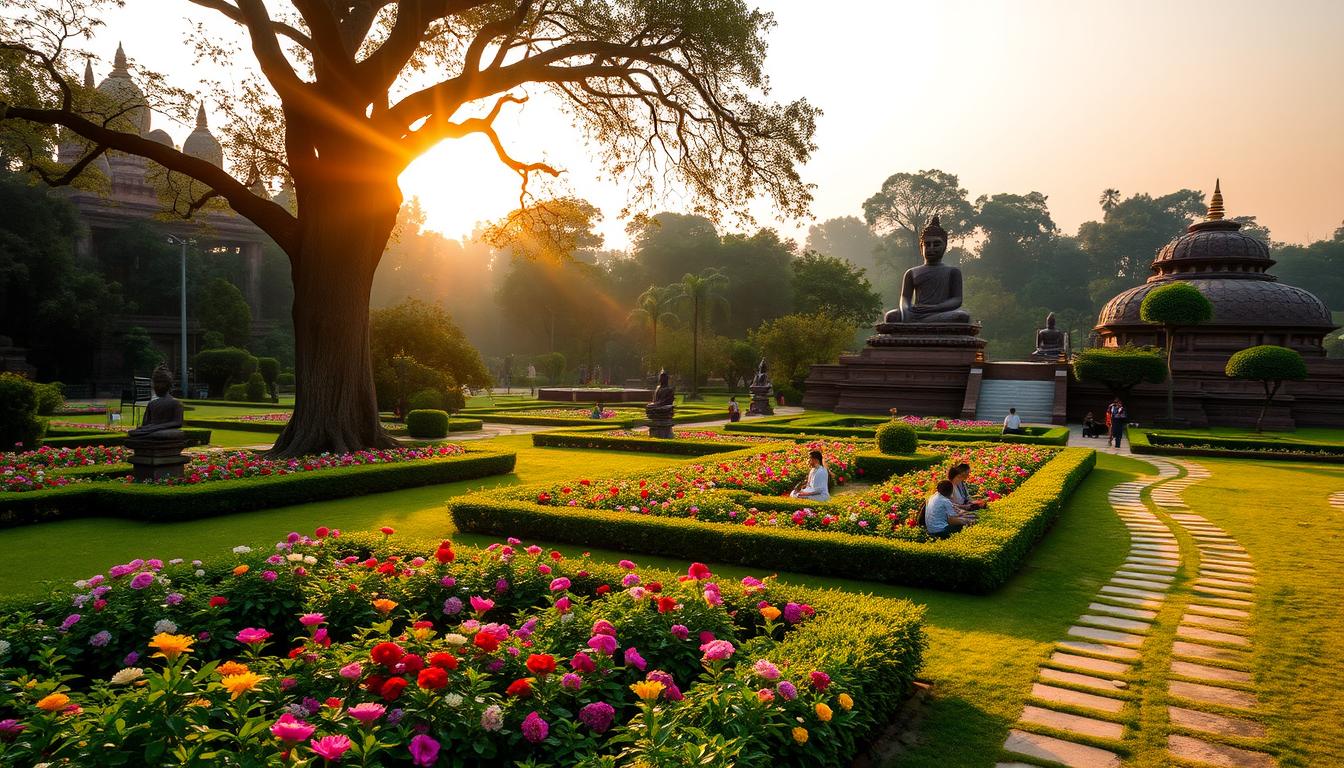
The area around Lumbini is beautiful, with green gardens and calm ponds. These spots encourage visitors to learn about Buddhist teachings. Walking here, you see monasteries that show the variety of Buddhist traditions.
In Lumbini, you find a mix of worship and thought. It’s a place where the old and new meet. It’s a space for those looking for peace and understanding. Visiting Lumbini lets you connect with Buddha’s teachings and learn about his life.
Historical Significance of Lumbini
Lumbini’s history is closely tied to Siddhartha Gautama, also known as the Buddha. This place is a key spot for those interested in Buddhist history. It’s not just a spiritual site but also a place of great events and recognition over time.
The Life and Times of Siddhartha Gautama
Siddhartha Gautama’s birth in Lumbini started a journey that changed the world. His search for enlightenment and the start of Buddhism had a huge impact. Lumbini was more than where he was born; it was the heart of his teachings of peace and kindness.
Imperial Acknowledgment by Emperor Ashoka
In 249 B.C., Emperor Ashoka visited Lumbini, marking its importance in Buddhism. He built the Ashoka Pillar to show where Buddha was born. This act made Lumbini a key place for pilgrims and travelers looking for spiritual connection.
UNESCO World Heritage Site Recognition
In 1997, Lumbini was named a UNESCO World Heritage Site. This shows its value as a historical and cultural treasure. It ensures that future generations can feel the deep meaning of Siddhartha Gautama’s teachings during their own spiritual journeys.
| Year | Significance |
|---|---|
| 563 B.C. | Birth of Siddhartha Gautama |
| 249 B.C. | Emperor Ashoka’s pilgrimage; Ashoka Pillar erected |
| 1997 | Designation as UNESCO World Heritage Site |
Spiritual Importance of Lumbini
Lumbini is a place of deep spiritual meaning, attracting many who seek to understand Buddha’s teachings. It offers a peaceful setting for those on a journey towards enlightenment. This site is rich in history and serenity.
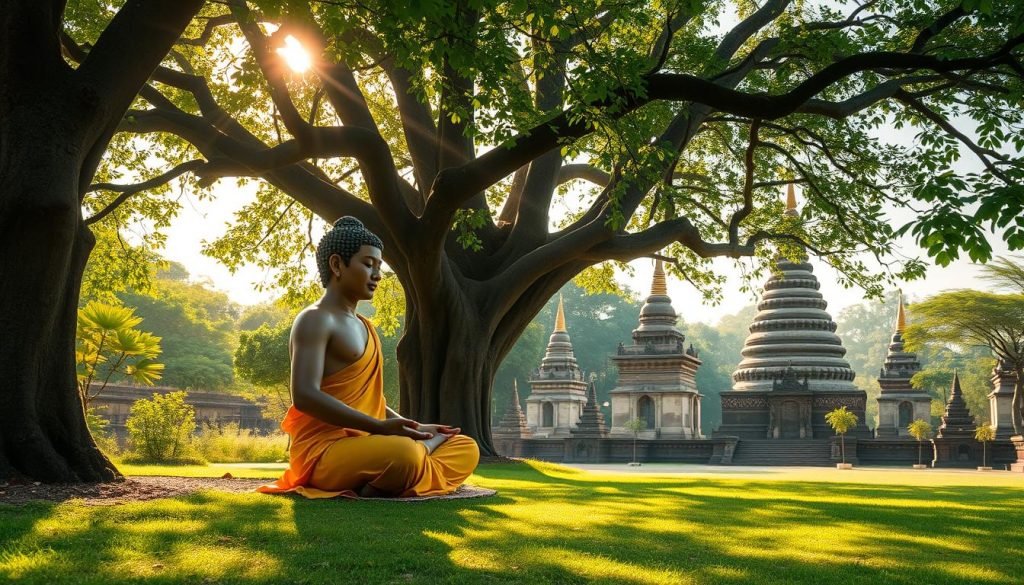
The Bodhi Tree is a symbol of enlightenment here. People come to meditate, connecting with Buddhism’s core. The calm environment is perfect for self-reflection and spiritual growth.
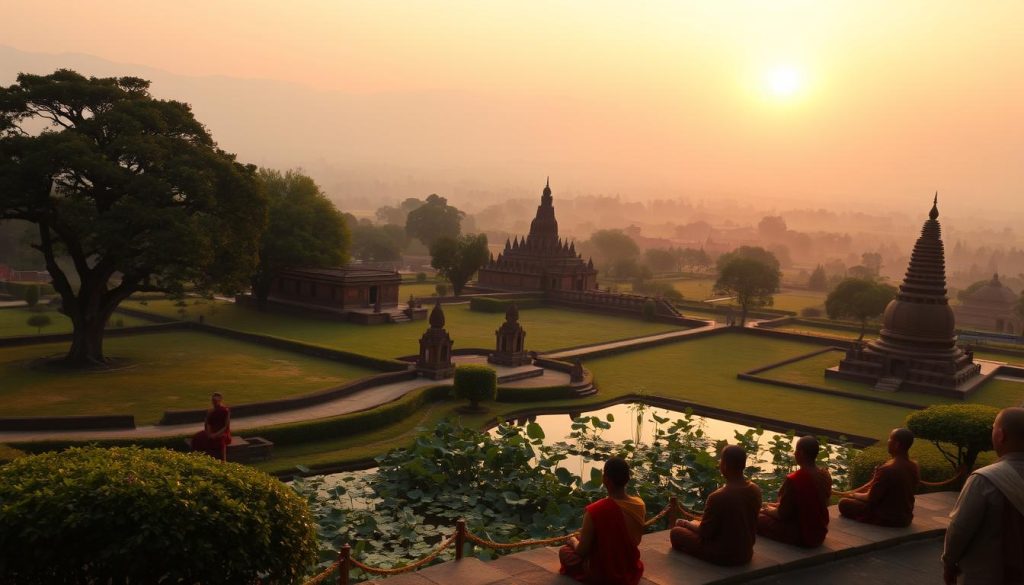
Daily prayers and rituals make Lumbini a center of devotion. These acts create a special atmosphere, helping visitors find inner peace. It’s a way to connect deeply with Buddha’s teachings.
Lumbini is more than a historical site; it’s a living symbol of the search for enlightenment and peace. It blends culture, spirituality, and community, offering a rich experience.
| Aspects of Spiritual Significance | Details |
|---|---|
| Location | Sacred birthplace of Buddha |
| Meditative Practices | Focus on achieving inner peace |
| Buddha’s Teachings | Live through interactions and rituals |
| (Re)Connection with Spirituality | Engagement with daily prayers |
| Experience of Enlightenment | Pursuit through mindful meditation |
Best time to visit Lumbini for spiritual experiences?
Figuring out the best time to visit Lumbini can deepen your spiritual connection. The best seasons for visiting are when you want to reflect and explore. Choosing the right time for your spiritual journey can greatly enhance your experience.
Optimal Seasons for Pilgrimage
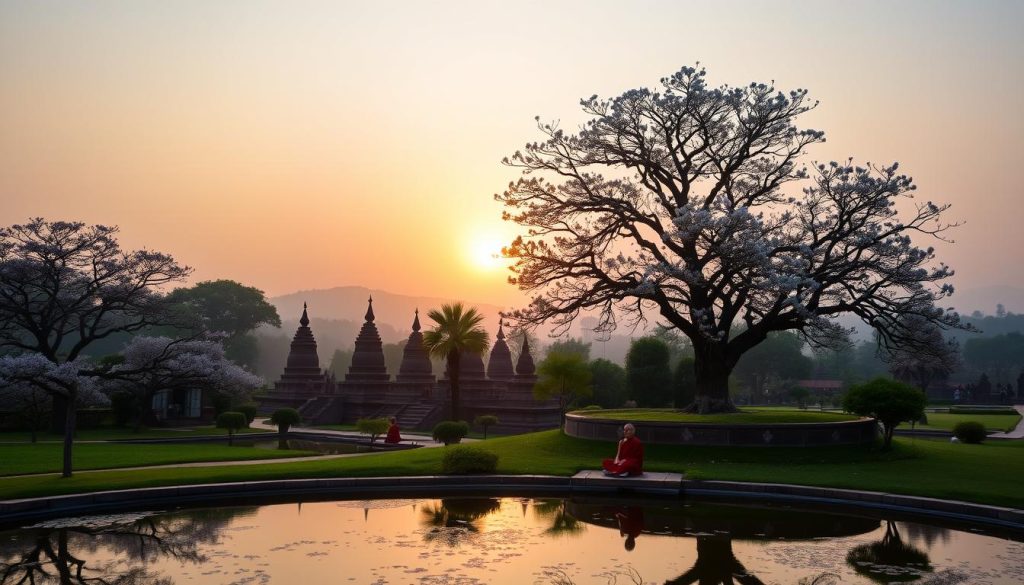
Spring and autumn are the best times to visit Lumbini. In spring (March to May), the gardens are full of life and color. Autumn (September to November) offers mild weather, perfect for quiet reflection.
Weather Conditions and Visitor Comfort
These seasons offer the best weather for your visit. You’ll enjoy mild temperatures that make exploring easy. Summer is too hot and humid, while winter is cooler but not ideal for outdoor activities. Knowing this helps you plan your trip better.
| Season | Temperature Range (°F) | Notes |
|---|---|---|
| Spring (March to May) | 70-85 | Perfect for exploring gardens with blooming flowers. |
| Summer (June to August) | 80-95 | Hot and humid; less comfortable for outdoor activities. |
| Autumn (September to November) | 65-80 | Ideal for spiritual experiences and pleasant weather. |
| Winter (December to February) | 50-70 | Cool temperatures; may deter some travelers. |
Influence of Seasonal Festivals on Spiritual Journeys
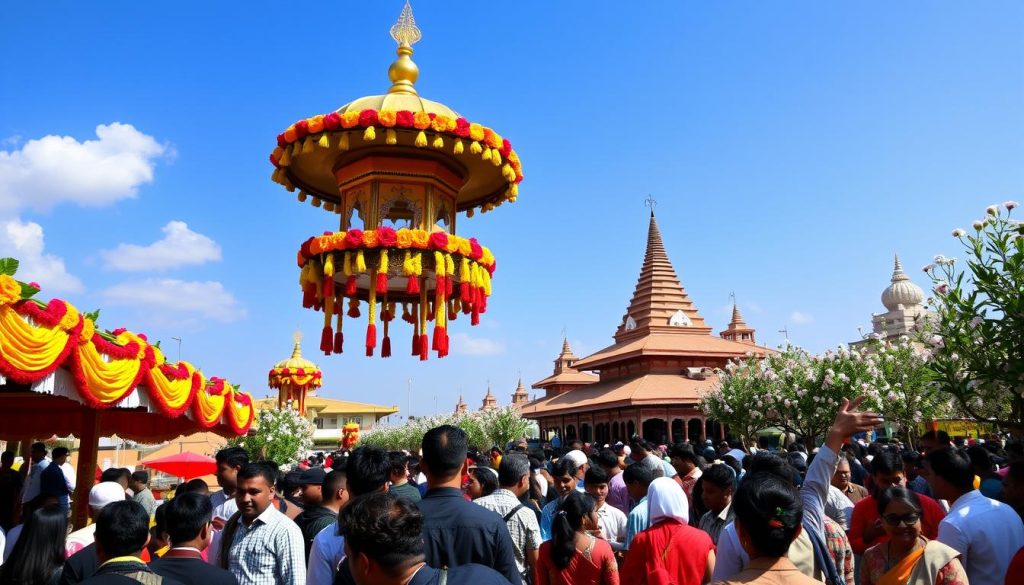
In Lumbini, seasonal festivals connect deeply to the spiritual heart of the place. They make your spiritual journey richer. These festivals bring together visitors and locals, creating a lively atmosphere of devotion and unity. Key events include Buddha Jayanti and full moon observances.
Buddha Jayanti Celebrations
Buddha Jayanti honors the birth, enlightenment, and death of Siddhartha Gautama, known as the Buddha. It’s celebrated with great enthusiasm. Many pilgrims and tourists join in sacred rituals.
- Chanting prayers and mantras at temples
- Offering flowers and candles in homage
- Participating in meditation sessions
- Engaging in community feasts and cultural programs
This celebration honors the Buddha’s teachings. It also brings people together in their search for spiritual fulfillment.
Significance of Full Moon Observances
Full moon nights are significant in the Buddhist calendar. Monasteries in Lumbini hold special rituals and meditation practices. These rituals include:
- Devotional prayers performed by monks
- Luminous lantern processions symbolizing enlightenment
- Offering food and necessities to the less fortunate
Participating in these observances offers deep spiritual insights. It strengthens your bond with the Buddhist community. Each full moon is a chance to reflect on teachings and grow spiritually.
Exploring Sacred Sites in Lumbini
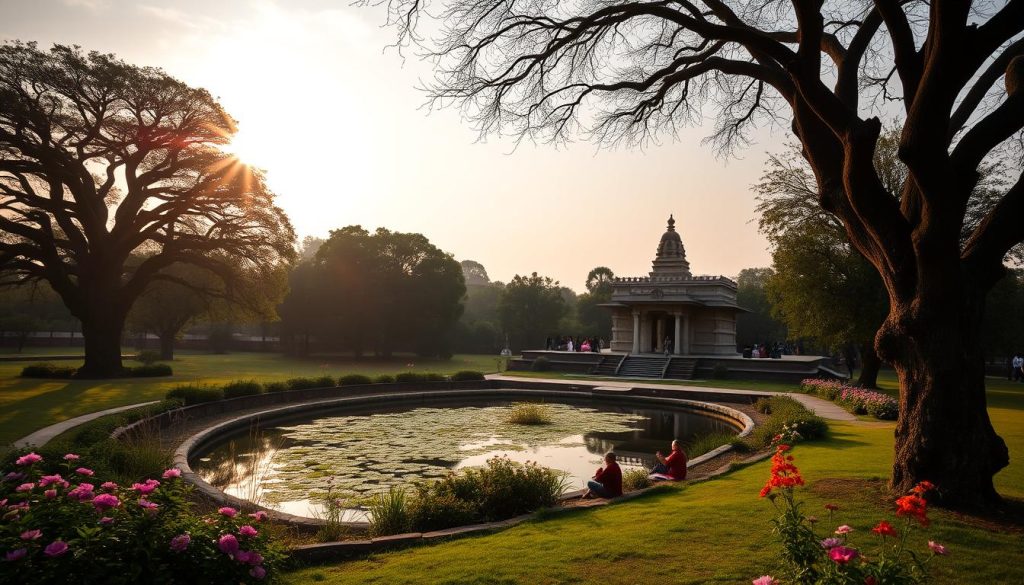
Lumbini is a special place for those seeking spiritual growth. It has many sacred sites, including the Maya Devi Temple, where Buddha was born. This temple is surrounded by beautiful gardens and an old pond. It’s a peaceful place for reflection and meditation.
The Ashoka Pillar is another important site. It shows Emperor Ashoka’s support for Buddhism. This pillar has ancient writings that tell us about Buddhism’s influence on old civilizations. It also shows why Lumbini is so important spiritually.
There are also monastic ruins from different countries. These ruins show off different Buddhist styles. Each one adds to the spiritual richness of the area, inviting you to learn about Buddhism’s heritage.
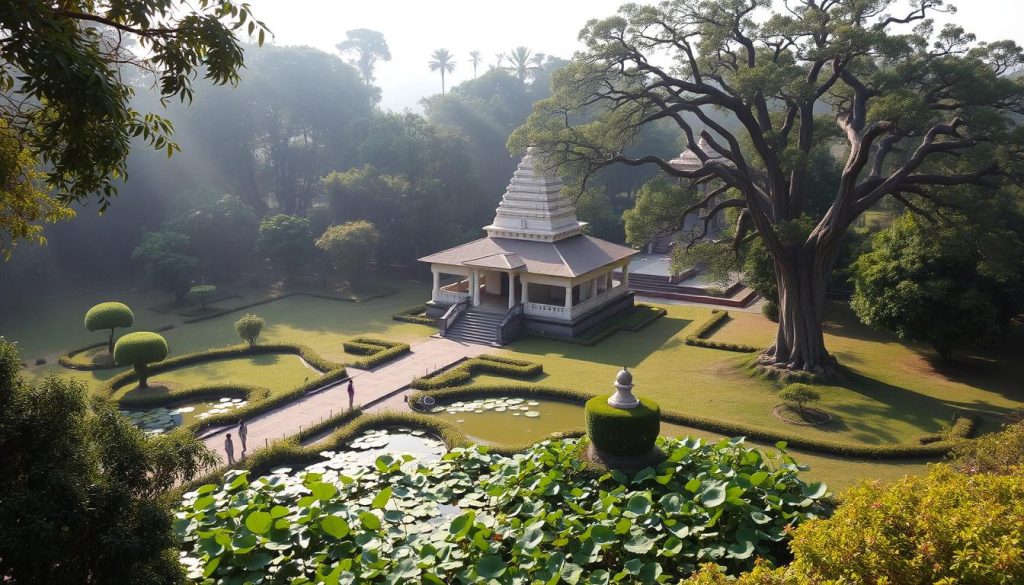
Visiting these sites in Lumbini helps you understand Buddhism better. It makes your spiritual journey more meaningful.
| Sacred Site | Significance | Unique Features |
|---|---|---|
| Maya Devi Temple | Birthplace of Buddha | Ancient pond, serene gardens |
| Ashoka Pillar | Emperor Ashoka’s reverence for Buddha | Historical inscriptions, monumental structure |
| Monastic Ruins | Reflection of diverse Buddhist traditions | Unique architectural styles, cultural insights |
Buddhist Meditation Retreats in Lumbini
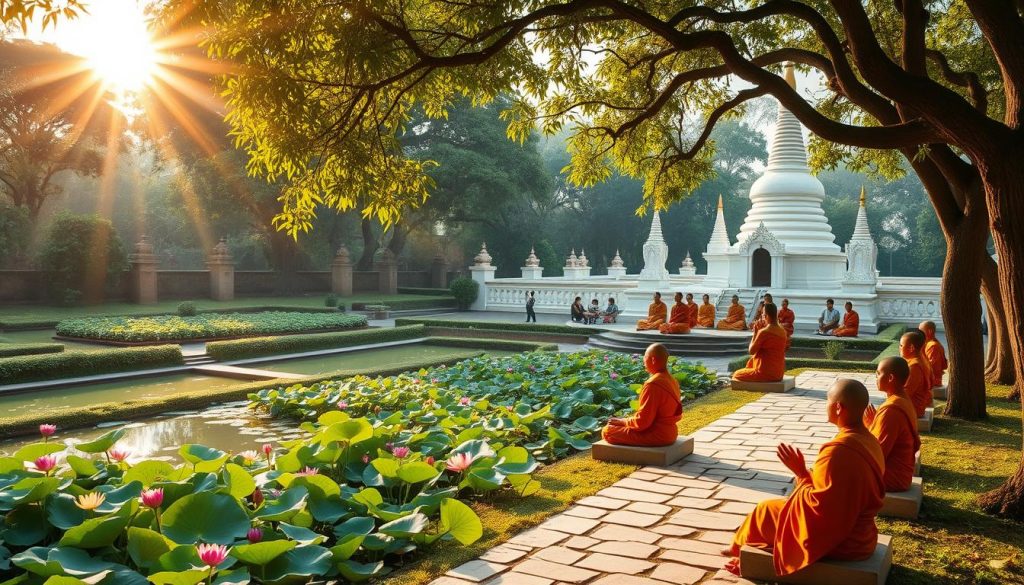
Lumbini is a place of deep spiritual journey, especially through its famous Buddhist meditation retreats. These retreats let you explore different meditation types in a peaceful and sacred place.
Types of Meditation Available
In Lumbini, you can find many meditation types to meet various spiritual needs. Some popular ones are:
- Vipassana meditation: This focuses on insight and self-awareness, helping you understand existence.
- Theravada meditation: Based on the Buddha’s teachings, it uses mindfulness and concentration.
- Mindfulness meditation: Common in many places, it helps you stay present with your thoughts and surroundings.
Benefits of Meditation in a Sacred Environment
Doing a Buddhist meditation retreat in Lumbini’s spiritual setting makes meditation better. The calm and peace help you connect with your inner self. You can get:
- Clearer thinking that changes how you think every day.
- More peace, helping you manage emotions and stress better.
- Deeper understanding of Buddhist teachings, leading to personal growth.
Meditating in Lumbini’s historic and sacred setting often leads to big changes. It brings a sense of belonging and spiritual fulfillment.
Seasonal Activities and Experiences in Lumbini
Visiting Lumbini in different seasons brings new activities and experiences. Each season, like spring, offers special chances to connect with nature and local culture. These activities help you understand Buddhist teachings better and provide a peaceful setting for reflection.
Nature Walks in Spring
Spring in Lumbini is stunning, with the Sacred Garden full of colors and greenery. Nature walks here show off beautiful landscapes and offer a calm place for thinking. Walking these paths lets you feel closer to Buddha’s teachings and enjoy the beauty of this place.
Cultural Immersion During Festivals
Local festivals in Lumbini, like Buddha Jayanti, offer a deep look into the community’s traditions. Joining in these celebrations lets you see the community’s rich culture up close. You can take part in rituals, try local food, and meet other pilgrims, feeling a sense of belonging and learning more about Buddhism.