Discover the Best Way to Get Around Japan: Your Ultimate Guide
As you plan your trip to Japan, one of the most important considerations is how to get around the country efficiently and cost-effectively. With so many transportation options available, from high-speed trains to local buses, it can be overwhelming to determine the best way to navigate Japan’s vast landscapes.
But fear not! In this ultimate guide, we will explore the various transportation options and provide you with all the information you need to make the most of your journey. Whether you’re a first-time traveler or a seasoned explorer, this guide will help you navigate Japan with ease and efficiency.
From exploring the bustling streets of Tokyo to uncovering the charm of Japan’s rural areas, we will cover it all. You’ll discover the convenience and comfort of Japan’s renowned bullet trains, navigate complex transportation networks in major cities, and find hidden gems on the country’s beautiful islands.
And if you’re on a budget, don’t worry. We’ve got you covered with cost-effective transportation options, including regional passes and discounted tickets.
So, get ready to embrace Japan’s diverse transportation options and create unforgettable memories in the Land of the Rising Sun. Let’s dive in and discover the best way to get around Japan!
Traveling in Japan: An Overview
Traveling to Japan can be an exciting adventure, but it’s essential to understand the basics before you start your journey. Japan has a unique culture and fascinating history, and it’s crucial to respect their customs and values as a visitor.
One of the first things you will notice when traveling in Japan is the efficiency and reliability of their transportation system. It’s an intricate network of trains, buses, and subways that are interconnected, making it easy to get around the country.
Japan Transportation Tips
To ensure a smooth journey in Japan, follow these transportation tips:
- Get a Japan Rail Pass before your trip if you plan on using the train system extensively. It can save you a lot of money in the long run.
- Be prepared to walk. Japan’s transportation system is excellent, but sometimes the easiest way to get around is on foot.
- Carry cash with you for public transportation. Not all trains and buses accept credit cards or IC cards.
- Learn basic Japanese phrases, especially those related to transportation. It will make communication easier and more efficient.
Understanding Cultural Norms
Japan has a unique culture that’s different from most Western cultures. As a visitor, it’s essential to understand their customs and values to show respect. Here are some cultural norms to keep in mind when traveling in Japan:
“In Japan, it’s crucial to remove your shoes when entering someone’s home, traditional restaurants, and some temples. Additionally, it’s customary to bow when greeting someone instead of shaking hands.”
Language Considerations
The official language of Japan is Japanese. While many Japanese people speak English, it’s essential to learn a few basic Japanese phrases for communication. Here are some helpful phrases:
| Phrase | Japanese | English |
|---|---|---|
| Hello | こんにちは | Konnichiwa |
| Yes | はい | Hai |
| No | いいえ | Iie |
| Excuse me | すみません | Sumimasen |
| Thank you | ありがとうございます | Arigato gozaimasu |
By following these basic tips, you’ll be better prepared for your adventure in Japan. Now that you have an overview of traveling in Japan, it’s time to dive into the various transportation options available.
Public Transportation in Japan: The Lifeline of the Country
Getting around Japan is a breeze, thanks to its efficient and reliable public transportation system. Whether you’re exploring the bustling city streets or venturing out into the serene countryside, there are plenty of transportation options available to suit your needs.
Trains
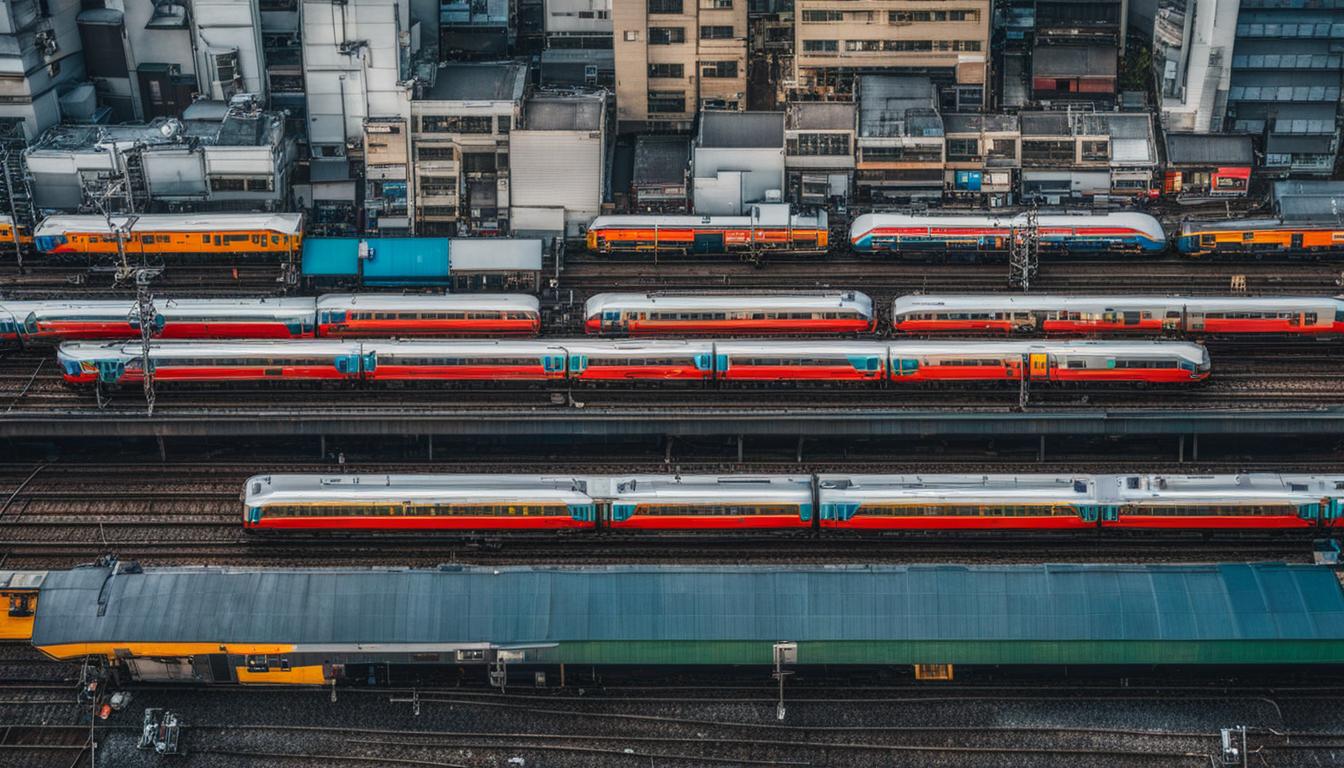
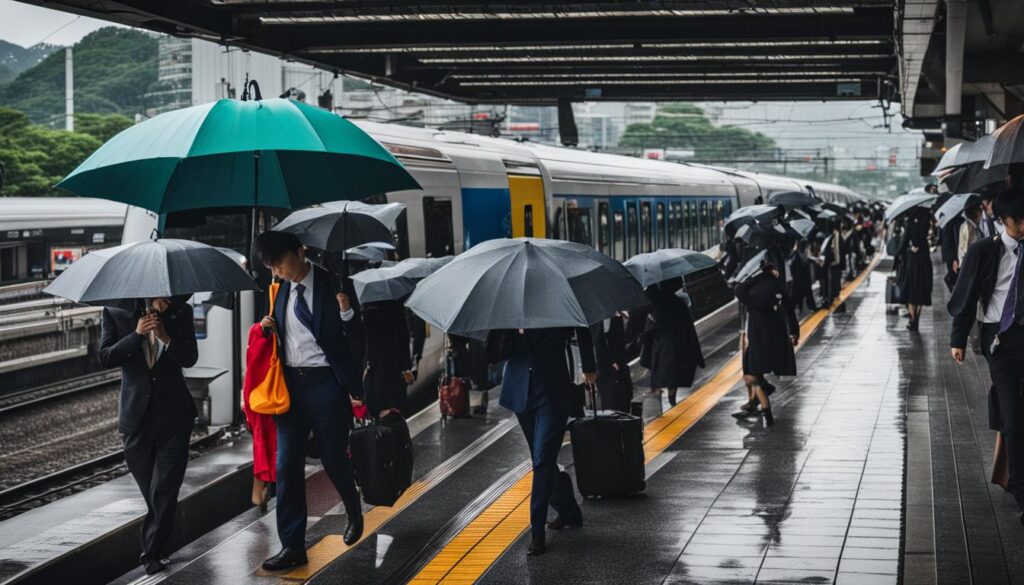
Trains are the backbone of Japan’s transportation network. Japan’s high-speed bullet trains, or Shinkansen, are known for their speed and efficiency, reaching speeds of up to 200 mph. They connect major cities all over Japan, making it easy to get from one place to another quickly and comfortably.
For shorter distances, local trains are a great option. They cover smaller areas and stop at local stations, serving as a convenient mode of transportation for those living in suburban or rural areas.
Buses
Buses are another popular mode of transportation in Japan, particularly for travelling to destinations not accessible by train. Local buses are a great way to explore small towns and villages, while long-distance buses are a budget-friendly option for those travelling on a tight budget.
The majority of buses in Japan have a reserved seating system, which ensures a comfortable and hassle-free journey. You can book bus tickets online or in person at bus terminals or convenience stores.
Taxis
Taxis are a convenient mode of transportation for short distances or when travelling in a group. They are readily available all over Japan, and you can easily flag one down on the street or find one at a taxi stand.
However, taxis in Japan can be expensive, so it’s best to use them sparingly and consider other transportation options for longer journeys.
Rental Cars
Renting a car is a great option for those who want to explore Japan’s countryside on their own terms. Japan has a well-maintained network of highways, making it easy to travel between cities and towns.
However, driving in Japan can be challenging for those not used to driving on the left side of the road. It’s also important to note that parking in Japanese cities can be expensive and hard to find.
Shinkansen: The Bullet Train Experience
When it comes to getting around Japan efficiently, the Shinkansen is a must-try mode of transportation. This high-speed rail network connects major cities with trains running at speeds of up to 200 mph.
Introduced in 1964, the Shinkansen is not just a mode of transportation but also a symbol of Japan’s technological prowess. The trains are known for their punctuality, safety, and comfort, making them a popular choice among locals and tourists alike.
The Shinkansen has several lines, with the Tokaido Shinkansen being the most popular and the busiest. It connects Tokyo and Osaka, two of Japan’s largest cities, with several stops in between. The journey time between Tokyo and Osaka is around 2.5 hours, making it a convenient way to travel between the two cities.
If you want to explore more of Japan, the Japan Rail Pass is a cost-effective way to travel on the Shinkansen and other Japan Railways (JR) trains. The pass is available for 7, 14, and 21 consecutive days and can be used on all JR trains, including the Shinkansen.
| Pros | Cons |
|---|---|
| Fast and reliable | Can be expensive for individual tickets |
| Comfortable and spacious seating | May not stop at smaller towns and villages |
| Scenic views of Japan’s countryside | Can be crowded during peak travel seasons |
Among the tips for utilizing the Shinkansen is to reserve your seats in advance, especially during peak travel times. You can do this at JR ticket offices or online. At the train station, look for the Shinkansen platforms, which are separate from the regular JR platforms.
If you want to experience Japan’s innovative transportation system, the Shinkansen is a great choice. With its speed, punctuality, and comfort, it is a convenient and exciting way to get around the country.
Navigating Tokyo: The Megacity Maze
Tokyo is a bustling metropolis with a complex transportation network that can be overwhelming for first-time visitors. However, with a few helpful tips and tricks, you can navigate the megacity maze like a local.
Using the Subway
Tokyo’s subway system is one of the most efficient and cost-effective ways to get around the city. With 13 different lines, it can seem daunting at first, but there are a few things you can do to make it easier.
First, familiarize yourself with the color-coding of the different lines. Each line has its own designated color, making it simpler to identify which train to take.
Second, purchase a prepaid Suica or Pasmo card. These cards can be used not only on the subway but also on buses and trains, making it a convenient and time-saving option. Simply tap the card at the entry and exit gates, and the fare will be automatically deducted.
Lastly, avoid rush hour if possible. The subway can get incredibly crowded during peak hours, and you may find yourself squeezed in like a sardine.
Taking the Bus
Buses in Tokyo are a great option for short-distance travel or for reaching destinations that are not easily accessible by train.
To use the bus, look for the designated bus stops that are usually marked with a sign. There, you can wait for the appropriate bus number. Alternatively, you can use a route-finding app or website to plan your journey.
Upon boarding the bus, you will need to take a numbered ticket from the machine near the entrance. This ticket corresponds to your fare, which is calculated based on the distance traveled. When you reach your destination, simply look at the fare board for the corresponding fare and insert your ticket and coins into the machine.
Hailing a Taxi
Taxis in Tokyo are readily available, but they can be quite expensive. They are best used for short distances or for traveling during off-peak hours when traffic is not a concern.
To hail a taxi, look for the designated taxi stand or hail one on the street. Taxis with their red light on are available, while those with their green light on are already occupied.
When entering the taxi, you will be greeted with a polite bow from the driver. You can then tell the driver your destination, or show them a written address if you don’t speak Japanese.
Pro Tip: If you plan on taking a taxi frequently during your stay, consider using the Japan Taxi app. This app allows you to book and pay for taxis with ease, as well as providing an estimated fare beforehand.
Getting Around on Foot
Tokyo is a pedestrian-friendly city with plenty of walking paths and sidewalks. If you have the time and energy, consider exploring the city on foot.
Some attractions are located close together, making it possible to see multiple sights in one day. For example, the popular Shibuya crossing and the Meiji Shrine are within walking distance of each other.
- When walking, be sure to keep to the left side of the sidewalk to avoid blocking other pedestrians.
- Also, note that jaywalking is not allowed in Japan. Cross only at designated crosswalks to avoid being fined.
- Lastly, bring comfortable walking shoes as you’ll be doing a lot of walking.
With these Tokyo transportation tips, you’re well on your way to exploring all that the megacity has to offer. From the subway to buses and taxis, you have a variety of options to choose from.
Exploring Kyoto: The Traditional Gem
Steeped in history, Kyoto is a city that showcases traditional Japanese culture. From beautiful temples to serene gardens, Kyoto has something to offer for everyone. While exploring this city, it’s essential to choose the right transportation options to make the most of your experience.
Transportation Options in Kyoto
The most popular transportation options in Kyoto are buses and bicycles. The Kyoto City Bus is an affordable and reliable way to travel around the city with multiple lines that stop at major tourist attractions. Don’t worry about the language barrier, as the buses have English announcements and notifications. If you’re looking for a more active option, renting a bicycle is a great choice. Kyoto is a bike-friendly city with numerous bike rental shops available.
Getting Around Kyoto: Tips and Tricks
When visiting Kyoto, it’s important to keep in mind that the city is vast, and it’s not possible to explore it entirely on foot. Plan your itinerary in advance and choose your transportation options wisely to save time and energy.
Pro tip: You can use the ICOCA card, an IC smart card that allows you to use various modes of transportation across Japan, including buses and trains in Kyoto.
Another helpful tip is to consider the time of day when traveling. Avoid rush hour (around 8-9 am and 5-6 pm) and travel during off-peak hours for a more pleasant experience.
Exploring Kyoto’s Temples and Shrines
Kyoto is home to numerous temples and shrines, each with its unique charm and history. Some of the must-visit temples include the Kiyomizu-dera temple, the Fushimi Inari-taisha shrine, and the Kinkaku-ji temple (also known as the Golden Pavilion). Depending on the temple’s location, you can either opt for a bus or a bicycle to get there.
Island Hopping: Exploring Japan’s Hidden Gems
While Japan’s major cities are undoubtedly impressive, the country has much more to offer. From the tropical beaches of Okinawa to the rugged terrain of Hokkaido, Japan’s islands are full of natural wonders and cultural experiences. Here’s a guide to the best modes of transportation for exploring Japan’s hidden gems.
The Ferry System
The ferry system is a popular and affordable option for island hopping in Japan. The country has an extensive network of ferry routes that connect major islands and smaller, more remote locations. While not as fast as other transportation options, ferries offer a unique experience, allowing you to take in the stunning scenery from the water.
| Route | Operator | Travel Time | Price Range |
|---|---|---|---|
| Okinawa to Ishigaki | Anei Kanko | 3.5 hours | $40-$100 |
| Kagoshima to Yakushima | Toppy | 2 hours | $30-$80 |
| Osaka to Kitakyushu | Camellia Line | 18 hours | $50-$150 |
Pro tip: Many ferries offer overnight options, allowing you to save money on accommodations while also enjoying a unique travel experience.
Domestic Flights
If you’re short on time or looking for a faster mode of transportation, domestic flights are a popular choice for island hopping. Japan has an extensive network of airports, with several airlines offering flights to major and minor islands throughout the country.
Pro tip: Book your domestic flights in advance to take advantage of special discounts and promotions.
Rental Cars
For ultimate freedom and flexibility, consider renting a car for your island adventures. Rental cars are readily available on most major islands, and Japan’s highways are well-maintained and easy to navigate. It’s important to note that some islands, such as Okinawa, drive on the opposite side of the road than in the United States.
Pro tip: Make sure to book your rental car in advance, as availability can be limited during peak travel seasons.

With a little bit of planning and an adventurous spirit, exploring Japan’s hidden gems is just a ferry ride, domestic flight, or car rental away. Happy travels!
Rural Adventures: Embracing Japan’s Countryside
If you’re looking to escape the hustle and bustle of Japan’s cities, exploring the countryside is a must. With serene landscapes and traditional villages, you’ll get a glimpse of Japan’s rich history and culture.
When it comes to transportation, the best way to get around rural areas is by local train or rental car. Japan Rail Pass holders can use local JR trains for free, and it’s an excellent option for those wanting to take in the picturesque views.
If you prefer to have more flexibility with your itinerary, renting a car is a great choice. Keep in mind that Japan has left-hand traffic, and some roads can be narrow, so be sure to familiarize yourself with Japanese road signs and traffic laws beforehand.
Another popular way to explore Japan’s countryside is by cycling. Renting a bicycle allows you to cover more ground than walking while still being able to take in the stunning scenery. You can rent a bike from local shops or tourist centers, and some accommodations even offer bicycles for their guests.
As with any travel destination, it’s essential to do your research ahead of time. Japan’s rural areas are full of hidden gems, and knowing what to see and do can make all the difference. Consider planning your itinerary around famous landmarks such as Mount Fuji, the historic village of Shirakawa-go, or the scenic Iya Valley.
Whatever transportation option you choose, exploring Japan’s countryside is an unforgettable experience that should not be missed. Take in the tranquil surroundings, immerse yourself in traditional Japanese culture, and create memories to last a lifetime.
Budget-Friendly Options: Saving Money While Traveling
If you’re looking for ways to save money while getting around Japan, there are plenty of budget-friendly transportation options available. Here are some Japan transportation tips for traveling on a budget:
- Regional passes: Consider purchasing a regional pass if you plan on traveling to multiple cities within a specific region of Japan. These passes usually provide unlimited use of local trains and buses, as well as discounts on other transportation options like ferries.
- Discounted tickets: Look for discounted tickets for trains and buses. For example, overnight buses are often cheaper than trains and can save you the cost of a night’s accommodation.
- Bike rentals: Many cities and towns in Japan offer bike rentals, which can be a fun and cheap way to explore the local area. Just be sure to follow the traffic rules and wear a helmet!
While taxis in Japan can be expensive, they can be a good option if you’re traveling in a group. Splitting the fare between friends can make it a more affordable way to get around.
Remember, it’s essential to plan ahead when traveling on a budget. Researching transportation options and prices in advance will help you make the most of your travel budget.
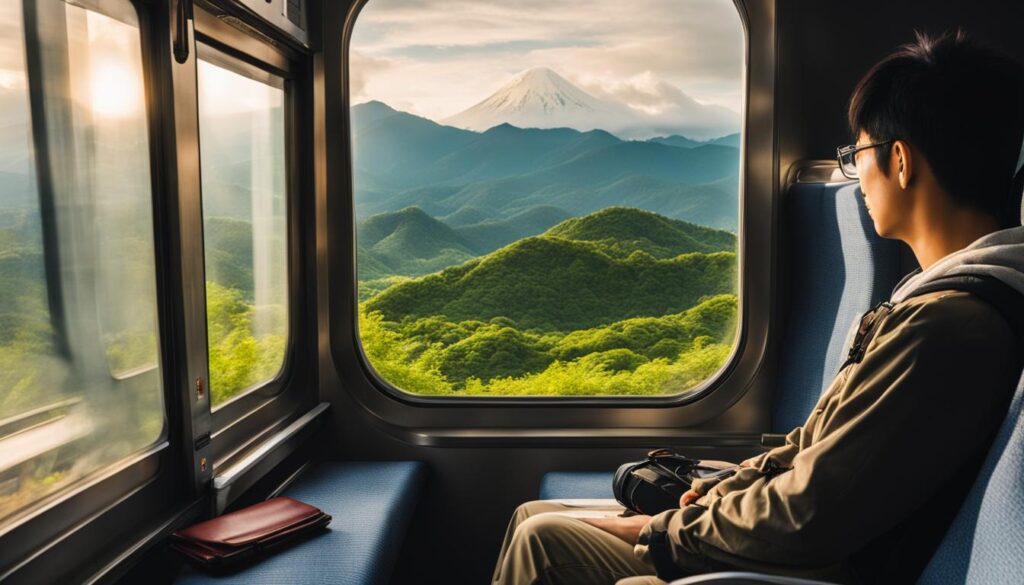 Save money while getting around Japan with these budget-friendly transportation options.
Tips for a Smooth Journey in Japan
Traveling in Japan can be an exciting and rewarding experience, but it can also be challenging, particularly for first-time visitors. To help you navigate the country like a pro, here are some tips for a smooth journey:
1. Learn Basic Phrases in Japanese
While English is widely spoken in major cities, knowing a few basic phrases in Japanese can go a long way in making your travels easier. Phrases such as “hello,” “thank you,” and “excuse me” are essential. You can also use translation apps, but it’s always helpful to know some local phrases.
2. Carry Cash
While credit cards are accepted at most places, carrying cash is still essential in Japan, especially in rural areas. ATMs can be found at convenience stores and post offices, but not all of them accept foreign cards, so it’s best to carry enough cash with you.
3. Follow the Rules
Japan has a strong culture of following rules and etiquette. For example, eating and drinking is not allowed on public transport, and smoking is prohibited in many areas. Always pay attention to signs and follow the rules to avoid any trouble.
4. Get a Japan Rail Pass
If you plan on traveling long distances by train, getting a Japan Rail Pass can save you a lot of money. This pass allows unlimited travel on Japan Railways trains, including the Shinkansen bullet train, for a set period of time.
5. Use a Suica or Pasmo Card
For local transport within cities, using a Suica or Pasmo card is convenient and saves time. These cards are rechargeable and can be used on trains, buses, and even at convenience stores.
| Suica | Pasmo | |
|---|---|---|
| Issued by | Japan Railways | Private railways |
| Validity | Valid nationwide | Valid in Tokyo and surrounding areas |
| Refundable | Yes | Yes |
6. Download Useful Apps
There are many useful apps that can make your travels in Japan easier, such as Google Maps, Hyperdia for train schedules, and Japan Connected-free Wi-Fi for free Wi-Fi hotspots.
7. Take Off Your Shoes
Japanese homes, temples, and some restaurants require you to take off your shoes before entering. It’s important to respect this tradition and wear easy-to-remove shoes when exploring the country.
By following these tips, you can have a smooth and enjoyable journey in Japan. Remember to plan ahead, be respectful of local customs, and embrace the unique experiences that Japan has to offer.
Conclusion
Congratulations! You are now equipped with the knowledge and information to explore Japan like a local. By following this ultimate guide, you can embrace the efficient, cost-effective, and diverse transportation options available and create unforgettable memories in the Land of the Rising Sun.
Get Around Japan with Ease
Remember, when it comes to getting around Japan, the best way is to plan ahead and choose the transportation option that suits your needs. Whether you’re navigating Tokyo’s bustling streets or exploring the serene countryside, there is a reliable transportation option available for you.
Choose Your Adventure
Japan is a country with something for everyone – from the bustling cities to the serene countryside, there’s a world of adventure waiting for you. And with the right transportation choices, you can explore it all with ease.
Make the Most of Your Journey
No matter where your travels take you in Japan, remember to embrace the unique culture and customs of this incredible country. By following our tips and insights, you can make the most of your journey and create unforgettable memories that will last a lifetime.
So what are you waiting for? Plan your trip to Japan today and discover the best way to get around Japan for yourself!