Urban Agriculture: Community Gardens in Indianapolis
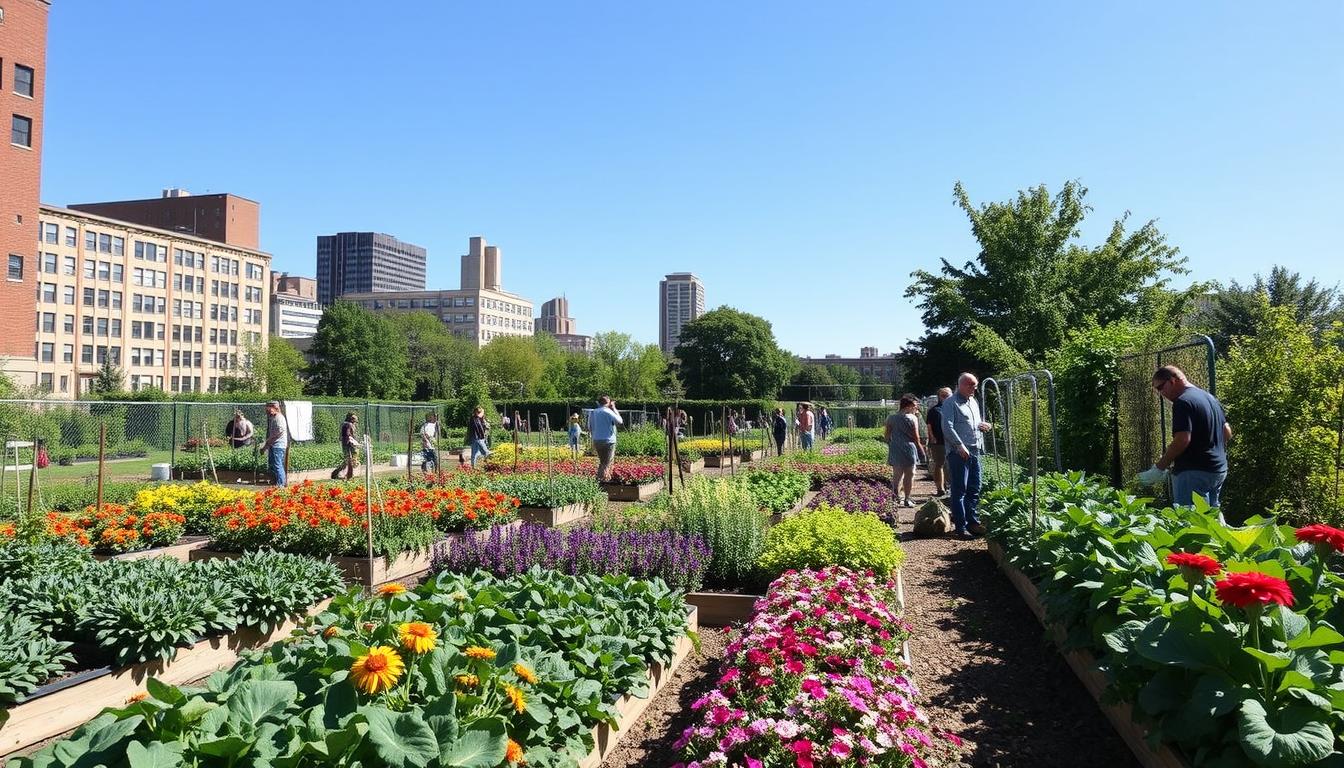
Have you thought about how urban agriculture could change your community? In Indianapolis, community gardens and urban farms are key for food security, sustainable living, and bringing people together. This piece explores the growth of urban agriculture in Indianapolis. It shows how these spaces improve access to fresh food, community health, and our planet.
The Importance of Urban Agriculture
Urban agriculture is key in today’s cities. It helps with community food security and environmental sustainability. As cities get bigger, people want more fresh, local food. Urban agriculture services meet this need well.
Enhancing Community Food Security
Food deserts are places where finding affordable, healthy food is hard. Urban agriculture solves this by letting people grow their own food. This makes communities more food secure.
It cuts down on the need for long food chains. This makes communities more self-sufficient.
Promoting Sustainable Practices
Adding sustainable practices to urban farming makes food systems better and helps the environment. Methods like composting and using rainwater help create greener cities. By getting people involved, cities can grow food and teach about caring for the environment.
Understanding Community Gardens
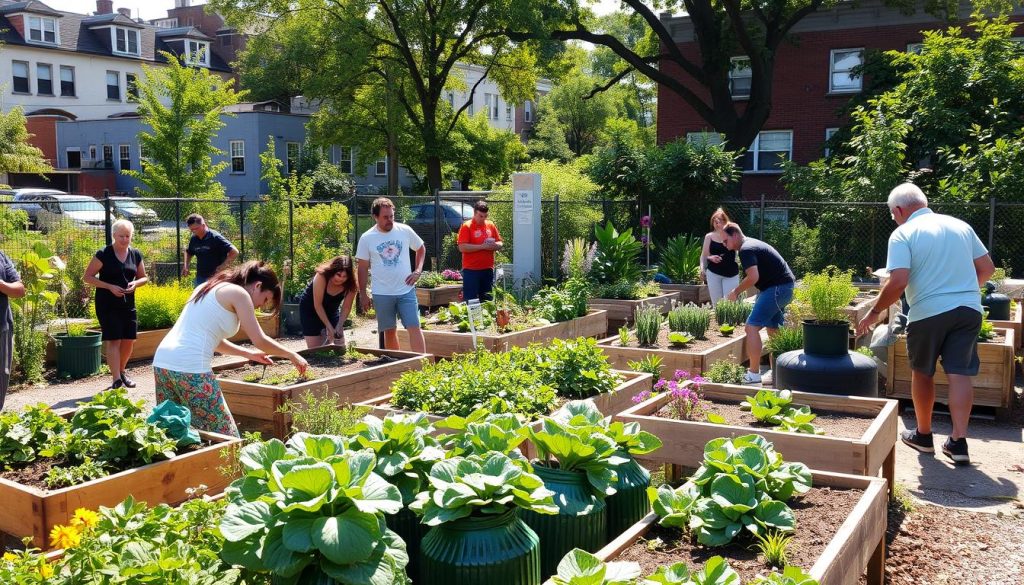
Community gardens and urban farms are key parts of neighborhoods. They bring people together and teach them to care for the environment. These spaces give out fresh produce and help people connect, making neighborhoods more united and supportive.
Definition and Purpose
Community gardens are places where people grow plants for their own use and to share with others. They aim to build a community where folks can grow their food, share tips, and learn from each other. Urban farms are bigger versions of these gardens. They focus on growing food for the community, making sure everyone has access to healthy food.
Benefits to Local Neighborhoods
Community gardens bring many good things to neighborhoods. Here are some of the main benefits:
- Enhanced Community Ties: People form bonds while gardening together, feeling like they belong.
- Beautification: Gardening makes cities look better, drawing in both locals and visitors.
- Promotion of Local Food Production: Growing food close by is good for the planet, cutting down on the need for long food transports.
- Economic Stimulation: Local food can boost business at community markets and help local farmers.
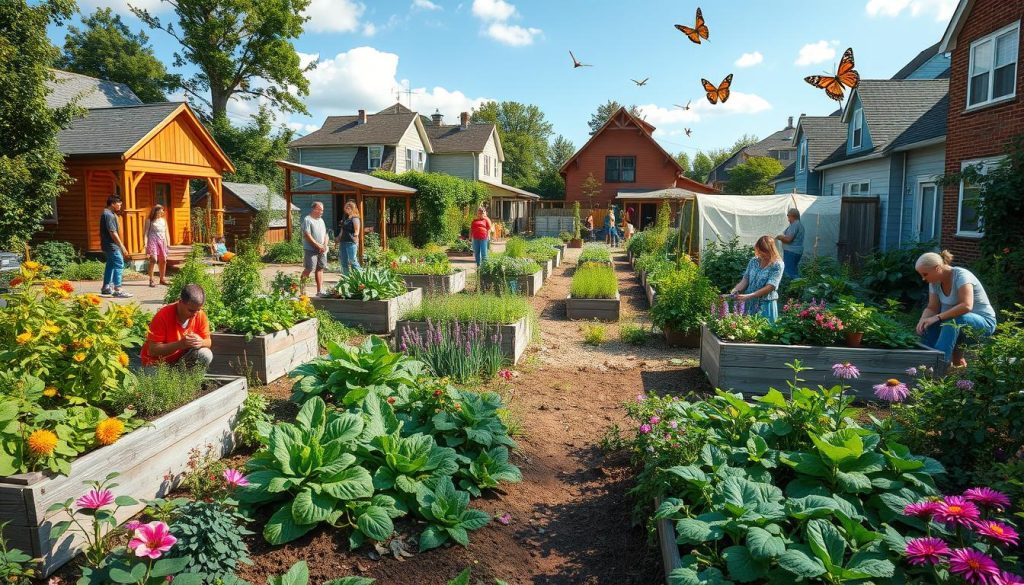
Community gardens and urban farms help neighborhoods work together and live healthier. They turn places into lively and welcoming spots to call home.
Community Gardens and Urban Farms in Indianapolis
Indianapolis is home to vibrant urban farms and community gardens. These places are key to bringing people together and promoting sustainability. They offer fresh produce and teach people about sustainable farming.
Key Locations and Their Contributions
Some spots in Indianapolis are especially known for their urban farms. For example, Growing Places Indy at Boner Fitness and Learning Center offers workshops and garden plots. White River State Park also has community gardens, attracting locals and tourists alike. These spots help with food and community building.
Notable Community Projects
Indianapolis has many projects that fight food insecurity and support local farming. The Indy Winter Farmers Market lets people get fresh produce all year and helps local farmers. Youth programs also offer hands-on learning in sustainable farming. These efforts boost community involvement and foster a sense of responsibility for local food systems.
| Location | Type | Main Contributions |
|---|---|---|
| Growing Places Indy | Urban Farm | Educational workshops, fresh produce |
| White River State Park | Community Garden | Urban greening, public engagement |
| Indy Winter Farmers Market | Farmers Market | Year-round access to local food |
| Various Youth Programs | Educational Initiative | Hands-on gardening experience |
Creating Green Spaces in an Urban Environment
Urban areas often face the issue of urban heat islands. These areas get hotter because buildings absorb and hold heat. Green spaces in cities help solve this problem.
By adding community gardens and parks, cities can cover less asphalt. This makes areas cooler and more comfortable. It also helps with sustainable city growth.
Impact on Urban Heat Islands
Green spaces are key in fighting urban heat islands. They provide shade, cool the air, and lower the area’s temperature. This means less energy is needed for cooling and fewer greenhouse gases are released.
This focus on green spaces makes cities more sustainable.
Enhancing Biodiversity in Cities
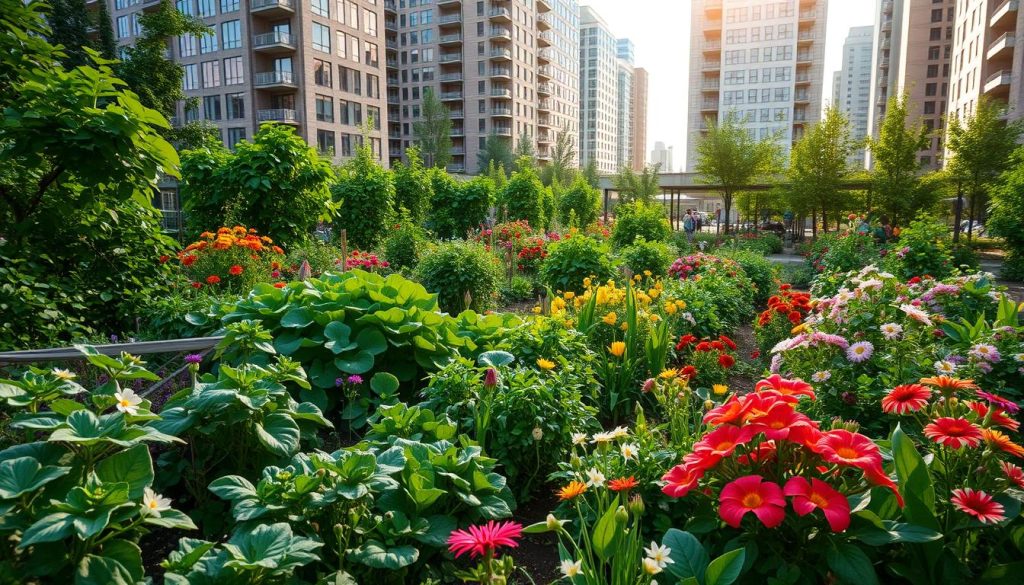
Green spaces also boost city biodiversity. Community gardens become homes for bees and butterflies. By using native plants, you help local wildlife thrive.
These spaces are crucial for a balanced urban ecosystem. They connect nature with city life.
Accessing Fresh Local Food
Getting fresh local food boosts community strength. Community gardens connect city folks with where their food comes from. They help local economies and give out fresh produce. Supporting local farmers and artisans helps the planet and your health.
Support for Local Farmers and Artisans
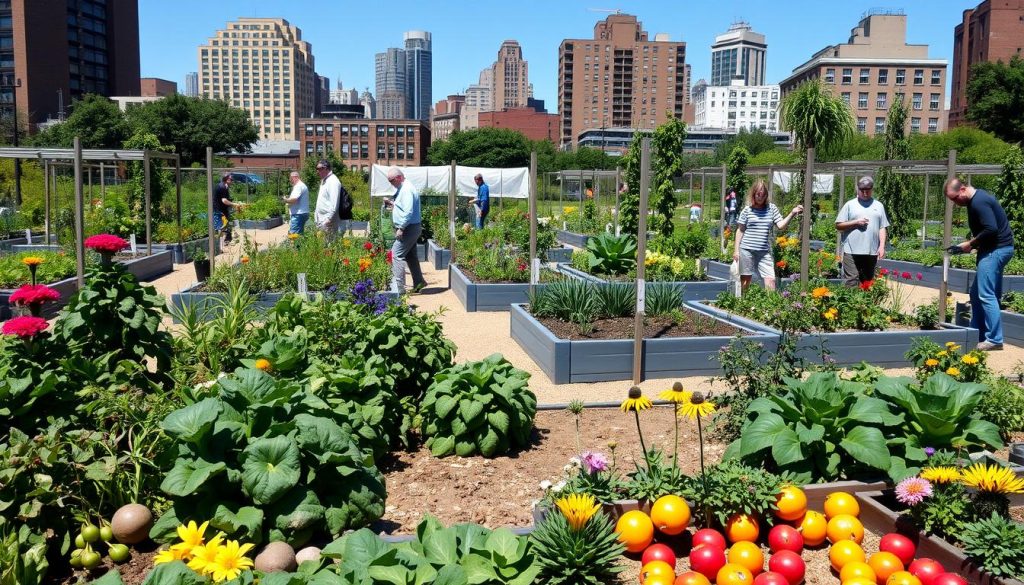
Being part of community gardens means you meet local farmers and artisans. These gardens are more than just green spots. They let small producers sell their goods directly to you. Buying local food helps farmers and makes your community stronger.
Linking Urban Residents with Gardening Education
Community gardens teach city people how to grow their own food. These programs teach you about green living. They offer workshops and training to bring people together and share knowledge on health and the environment.
Urban Gardening Resources in Indianapolis
For those wanting to garden in the city, Indianapolis has a lot to offer. There are programs and workshops that teach about sustainable gardening and how to garden well. Groups like Growing Places Indy and the Soul Food Project lead these efforts, giving great support and advice.
Available Programs and Workshops
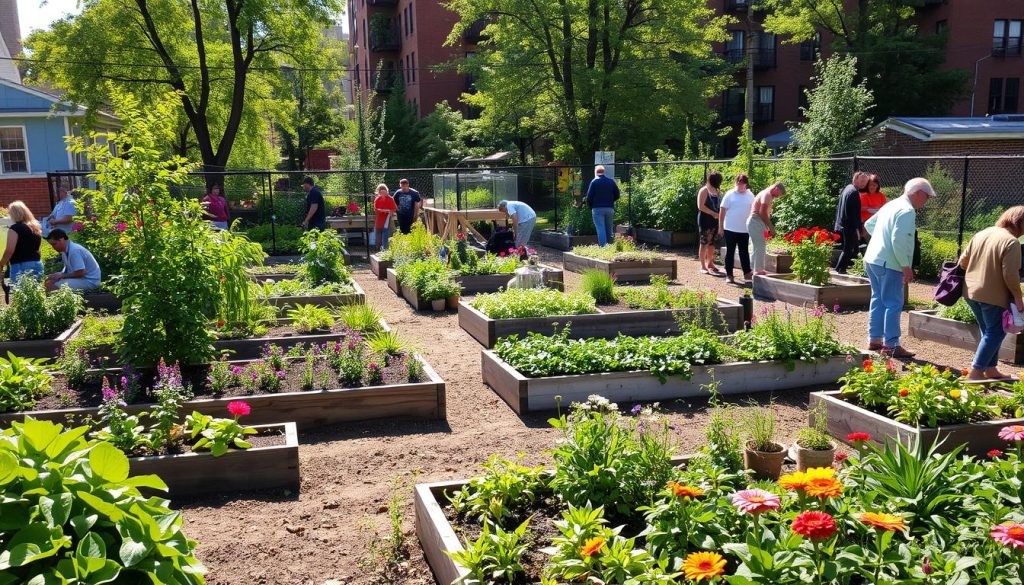
These programs give you hands-on knowledge and help you meet others. You can join workshops to learn about organic gardening and the value of local food systems. Talking with other gardeners makes the experience better and helps with sharing ideas.
- Growing Places Indy: Focuses on holistic approaches to urban gardening.
- Soul Food Project: Emphasizes culinary gardening and nutrition.
- Indianapolis Urban Garden Initiative: Offers training for beginners and advanced gardeners alike.
With so many Indianapolis gardening resources, there’s something for everyone. Whether you’re new to gardening or have been doing it for years, you’ll find programs that fit your level and interests. These resources are key in turning empty lots into beautiful gardens, making the city prettier.
| Organization | Focus Area | Target Audience | Contact Information |
|---|---|---|---|
| Growing Places Indy | Holistic Urban Gardening | All Ages | [email protected] |
| Soul Food Project | Culinary Gardening | Families | [email protected] |
| Indianapolis Urban Garden Initiative | Gardening Education | Beginners & Experienced | [email protected] |
Getting involved in these programs and workshops gives you the skills and tools you need for urban gardening. Whether you want to make your area look better or help with local food security, Indianapolis has a lot to offer through its various initiatives.
Community-Supported Agriculture Programs
Community-supported agriculture (CSA) programs connect consumers with local farms. They let people or families get fresh produce directly from farms all season. It’s a way to understand how important CSAs are in the community.
What is CSA?
CSA stands for community-supported agriculture. It’s a partnership between consumers and farmers. People pay upfront to get parts of the harvest all season. This way, both sides share the risks and rewards of growing food, building trust and teamwork.
Benefits for Participants
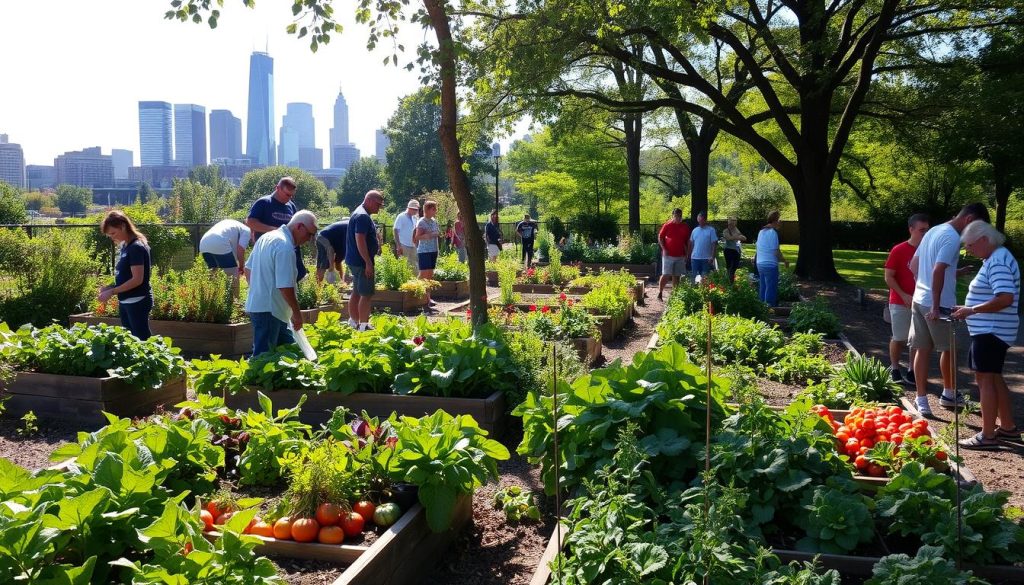
Being part of a CSA has many perks. You get fresh, seasonal produce, making your diet healthier. It helps local farmers and boosts the local economy. Plus, it connects you with the local food scene, building community bonds and food security.
Sustainable Gardening Practices
Sustainable gardening is key to a healthier environment in cities like Indianapolis. You can use eco-friendly farming methods that help your garden and the local ecosystem.
Eco-Friendly Farming Methods Used in Indianapolis
Using organic gardening and crop rotation has many benefits. These methods can:
- Reduce the need for harmful chemicals.
- Make soil better for plants.
- Help more kinds of plants and animals live together.
Community gardens in Indianapolis use smart pest control to keep the ecosystem balanced. This supports sustainable gardening city-wide.
Incorporating Native Plants for Sustainability
Native plants are essential for sustainable gardens. They fit well with local conditions, making them tough and easy to care for. The benefits of using native plants are:
- Supporting local wildlife, like bees and butterflies.
- Less need for chemicals while keeping gardens beautiful.
- Making your garden more sustainable.
Adding native plants to your garden helps create a biodiverse environment. This can flourish even in the challenges of city life.
Local Food Production Initiatives
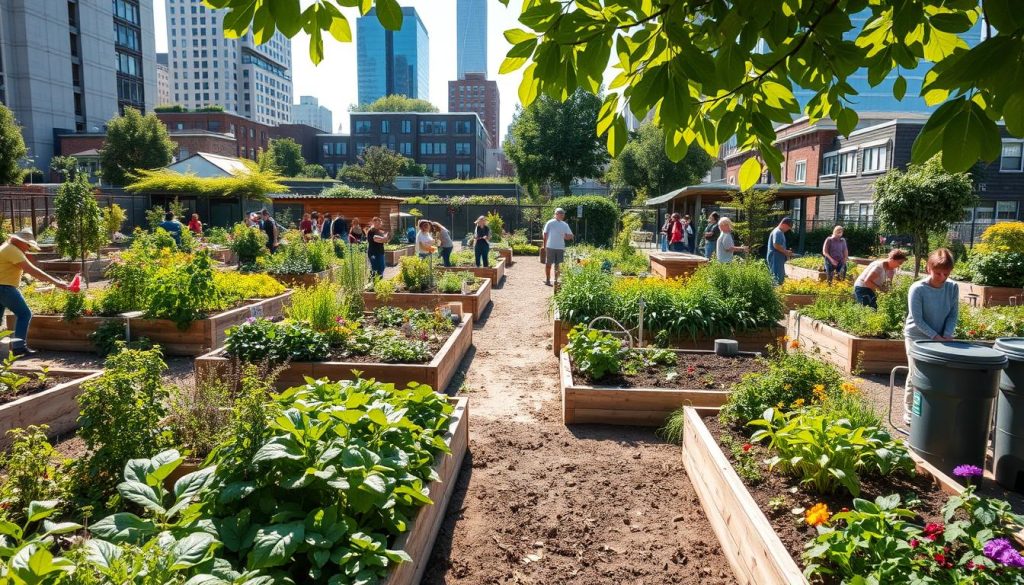
In Indianapolis, local food production is key to improving urban agriculture. It brings together different groups to fight food insecurity and support sustainable living. These efforts make a big difference in the community.
Collaborative Efforts among Various Organizations
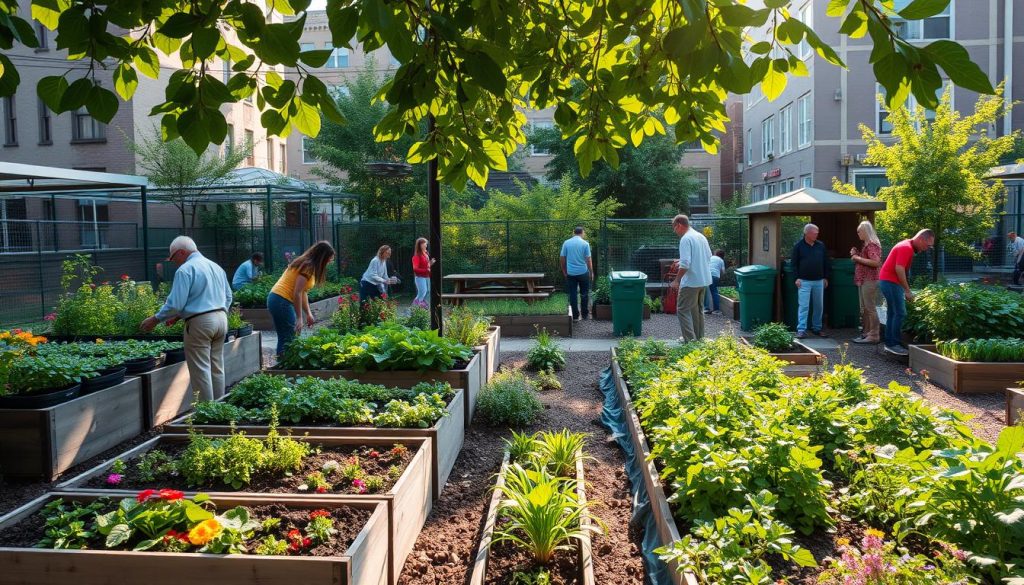
Community groups, schools, and farms work together to make a big impact. This teamwork helps the local economy and strengthens community bonds. For example, the Indy Winter Farmers Market shows how these partnerships can succeed.
- Indy Winter Farmers Market: A place for local produce and handmade goods, showing off what local farmers offer.
- Educational Workshops: Hands-on classes that teach people how to garden sustainably.
- Community Events: Events where people can meet neighbors and learn about local food, building a sense of community.
These local food projects do more than just provide food. They build a strong, self-sufficient community. They teach people the value of buying local and living sustainably.
| Initiative | Organizing Body | Objective |
|---|---|---|
| Indy Winter Farmers Market | Local Farmers Association | Provide access to fresh, local produce |
| Urban Gardening Workshops | Community Garden Coalition | Enhance gardening skills |
| Neighborhood Food Drives | Faith-Based Organizations | Address food insecurity in local communities |
The Indianapolis Urban Growing Movement
The Indianapolis urban growing movement is changing how we connect with local food. It’s all about community, getting people to help out in gardens and farms. This makes everyone feel more connected to the land and responsible for it.
Community Involvement and Engagement
Being part of these projects brings people together. You’ll find local groups and citizens hosting events and workshops. These activities make neighborhoods look better and fight for food justice.
Community gardens teach us about living sustainably. They let us share our knowledge and skills with each other.
Future Prospects for Urban Agriculture
Urban agriculture in Indianapolis is looking up. More people are putting their time and effort into local farming. They see the good it does for the planet.
As this movement grows, Indianapolis is becoming a leader in urban farming. It’s showing other cities how to do it right.
Conclusion
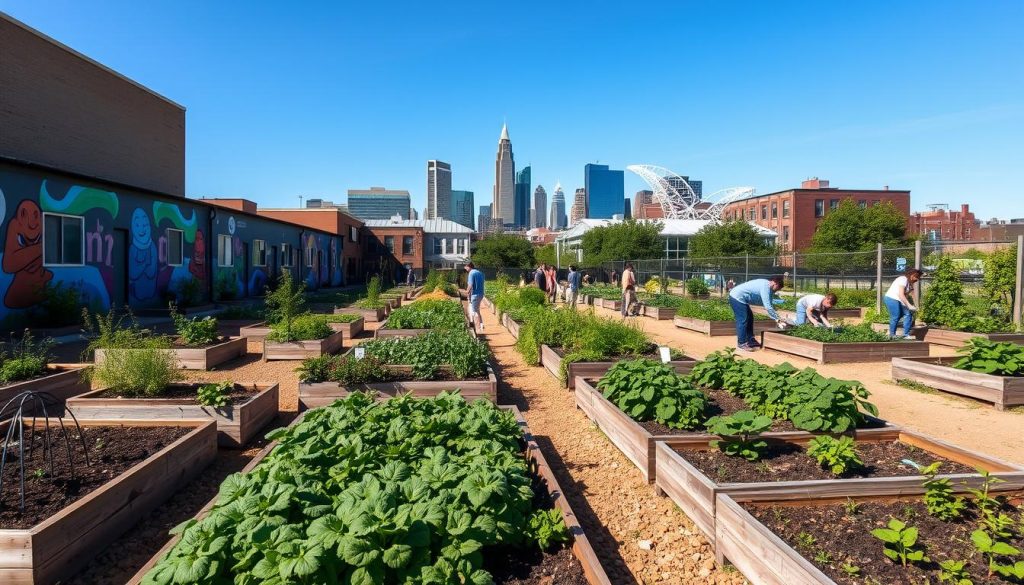
Community gardens and urban farms in Indianapolis are key to the city’s growth. They help make sure everyone has access to fresh food and support green living. These places let people get close to where their food comes from and live more sustainably.
These projects do more than grow food. They bring people together, teach about nature, and make life better for everyone. As they grow, they show how important urban farming is for a healthier, more active city life.
The future of these gardens and farms looks bright in Indianapolis. By supporting them, we build a community that cares for the earth and connects with nature. This creates a healthier city for all of us now and for the future.