Your Guide to the Best Time for Whale Watching in Mombasa
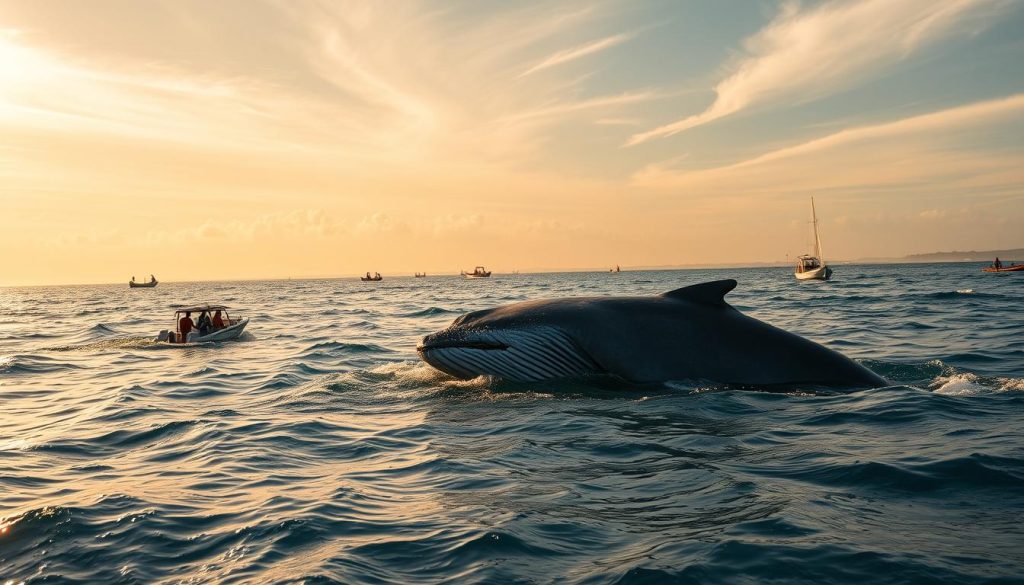
Are you ready to see whales in their natural home? Imagine being surrounded by the vast ocean, with whales gliding effortlessly beneath your feet. Mombasa, a coastal city in Kenya, is a great place for whale watching. But, what makes a whale watching trip unforgettable?
The key is timing. Knowing the Mombasa whale watching season can turn a good trip into a great one. Our guide will show you the best times to visit and how to make the most of your adventure.
Understanding Whale Migration Patterns in Kenyan Waters
As the seasons change, whales migrate to the waters off Mombasa. This creates a spectacular display of marine life. It’s a key part of the marine ecosystem and a big draw for tourists.
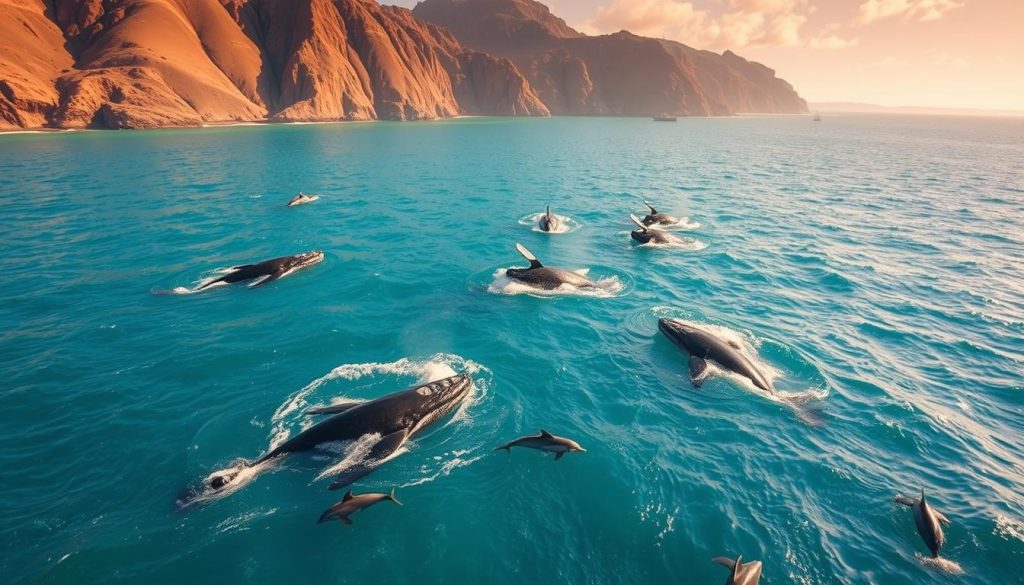
Species of Whales Found Near Mombasa
The waters around Mombasa are home to a diverse range of whale species. Humpback whales are among the most commonly seen, known for their acrobatic displays.
Humpback Whales: The Stars of Mombasa
Humpback whales migrate over 4,000 kilometers from Antarctica to the warm waters off Mombasa. They come to calve and mate. This journey shows their endurance and navigational abilities.
Other Whale Species in the Region
Apart from humpback whales, other species like blue whales and minke whales can also be spotted. They add to the rich marine biodiversity.
Annual Migration Routes Along the East African Coast
The whales follow established migration routes along the East African coast. This journey is influenced by factors like food availability and breeding grounds.
The Antarctic to Kenya Journey
The journey from Antarctica to Kenya is long and complex. It’s driven by the whales’ instinct to reach warmer waters for breeding.
Coastal Navigation Patterns
Whales navigate the coastal waters using celestial navigation and geomagnetic cues. This ensures they reach their destination.
Understanding these migration patterns is crucial for conservation efforts. It’s also important for planning the best time for whale watching in Mombasa.
When is the Best Time of Year to Visit Mombasa for Whale Watching?
Planning a trip to Mombasa for whale watching? Knowing the best time to visit is key for a great experience. The best time is when the whales migrate.
Peak Season: July to September
The peak season for whale watching in Mombasa is from July to September. The waters are calm, and whales are easier to spot.
August: The Prime Month for Sightings
August is the best month for whale watching. The humpback whales migrate along Kenya’s coast then. It’s the perfect time to see these amazing creatures.
Frequency of Whale Encounters During Peak Season
During peak season, spotting whales is more common. Tour operators have a high success rate. It’s a great time for whale watching enthusiasts to visit.
Secondary Opportunities: December to March
While the peak season is the best, December to March offers secondary chances. This time has fewer tourists and a unique marine environment.
What Makes This Period Different
The secondary period has warmer waters and different marine life. It’s perfect for those who want fewer crowds and a relaxed whale watching experience.
Success Rates for Off-Peak Sightings
Off-peak season sightings are less common. But, dedicated tour operators still offer a good chance. It’s ideal for those with flexible travel plans.
The Humpback Whale Migration to Kenyan Waters
Humpback whales migrate to the warm waters off the Kenyan coast. Mombasa is a prime spot for whale watching. This migration draws many tourists and marine life fans.
Why Humpbacks Choose the Kenyan Coast
The Kenyan coast is perfect for humpback whales. Two main reasons make it ideal:
Breeding and Calving Grounds
The warm, sheltered waters are safe for humpback whales to give birth and nurse their young. This environment is vital for the survival of newborn calves.
Nutritional Benefits of Local Waters
The waters off Kenya are rich in nutrients. They support a diverse marine ecosystem. This ecosystem feeds the humpback whales during their migration.
Behavioral Patterns During Migration
During their migration, humpback whales show interesting behaviors. Some notable activities include:
Breaching and Surface Activities
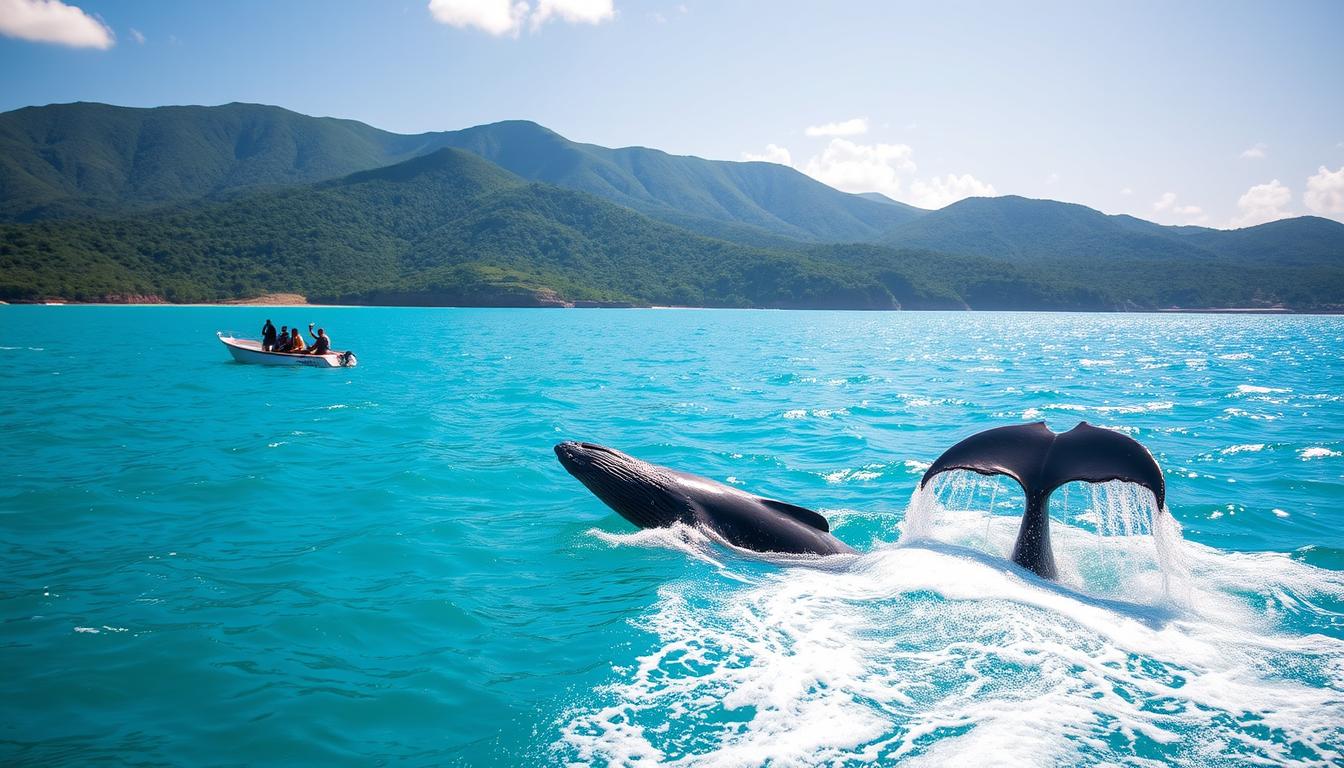
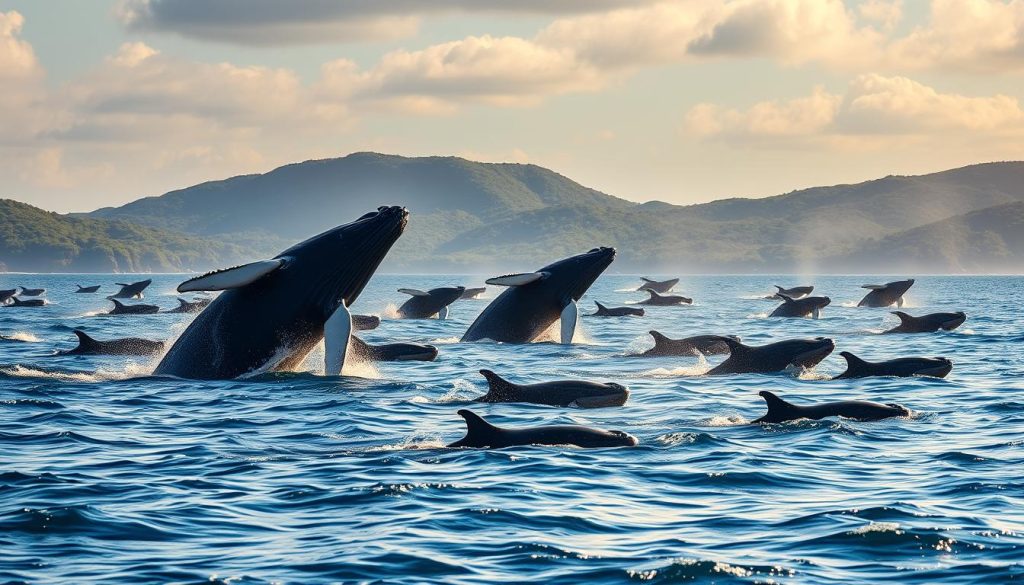
Humpbacks are known for their acrobatic displays. They breach the surface and slap their tails. These actions are believed to be forms of communication and courtship.
Mating Rituals and Calf Care
The migration is also a time for mating rituals. Males compete for females. Females care for their newborns, teaching them essential survival skills.
Other Marine Life You’ll Encounter During Whale Watching Season
The Kenyan coast is full of amazing marine animals. The Indian Ocean off Mombasa’s coast is rich in biodiversity. It’s a great place for marine enthusiasts to explore.
Dolphins and Porpoises
Many species of dolphins and porpoises live in the waters around Mombasa. They add excitement to whale watching tours.
Indo-Pacific Bottlenose Dolphins
Indo-Pacific bottlenose dolphins are often seen. They are known for their playful nature with humans.
Spinner Dolphins and Their Acrobatics
Spinner dolphins are famous for their acrobatic tricks. They leap and spin in the water.
Sea Turtles and Exotic Fish Species
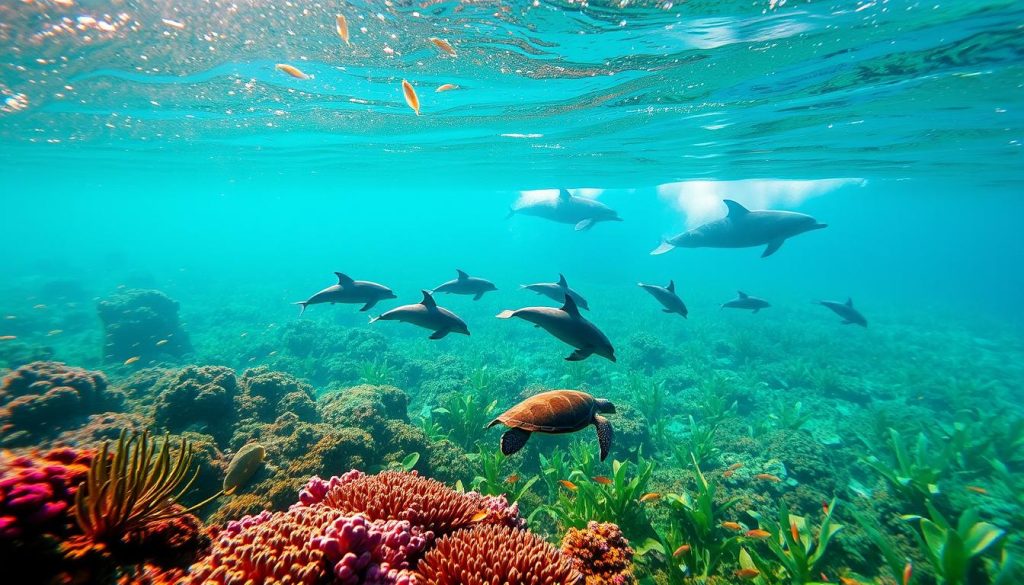
Off Mombasa’s coast, you’ll find sea turtles and colorful fish. The marine ecosystem is diverse and vibrant.
Green and Hawksbill Turtles
Green and hawksbill turtles swim in the waters or nest on beaches. They are a common sight.
Colorful Reef Inhabitants
The coral reefs are full of colorful fish species. They create a stunning underwater world.
Top Whale Watching Spots Around Mombasa
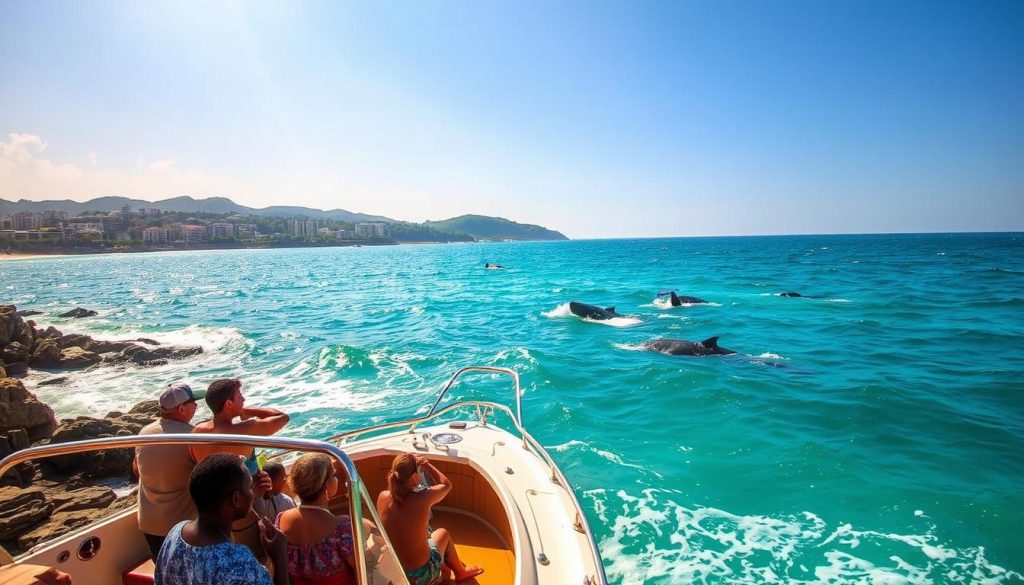
Planning a whale watching trip in Mombasa? You’ll want to know the best spots. The area has several great places for seeing these amazing creatures.
Watamu Marine National Park
Watamu Marine National Park is a top spot for whale sightings, best in August. Its protected waters are a safe place for whales.
Best Viewing Points and Access
The best spots in Watamu are from guided boat tours. These tours go through the park’s clear waters.
Park Facilities and Services
Watamu has many facilities. You’ll find well-equipped tour operators and conservation centers.
Malindi Marine National Park
Malindi Marine National Park is also great for whale watching. Its diverse marine life makes it perfect for whales.
Unique Features for Whale Watchers
Malindi is famous for its coral reefs. These reefs attract many marine animals, including whales.
Tour Options from Malindi
There are many tour operators in Malindi. They offer guided whale watching tours.
Diani Beach Area
The Diani Beach Area offers a calm whale watching experience. You can watch from the shore or on a boat.
Shore-Based vs. Boat Observation
Boat tours get you close to whales. But, shore-based watching can be rewarding, too, during peak season.
Local Guides and Their Knowledge
Local guides in Diani know a lot about whales. They share valuable insights about their behavior and habitats.
| Location | Best Time to Visit | Observation Type |
|---|---|---|
| Watamu Marine National Park | August | Boat Tours |
| Malindi Marine National Park | July to September | Guided Tours |
| Diani Beach Area | December to March | Shore-Based and Boat |
Choosing the Right Whale Watching Tour in Mombasa
There are many whale watching tours in Mombasa. Picking a good one is important for a great trip. The quality of your experience depends on the tour operator you choose.
Reputable Tour Operators
Not all whale watching tours in Mombasa are the same. It’s important to choose operators known for their quality and commitment to the environment.
Eco-Certified Companies
Choose tour operators that are eco-certified. These companies follow strict environmental rules. This ensures your tour is fun and doesn’t harm the ocean. Eco-certification shows a company cares about the marine ecosystem.
Reading Reviews and Making Comparisons
Read what others have said before you decide. This helps you see the good and bad of different tours. It’s a way to find the best fit for you and your budget.
What to Look for in a Quality Whale Watching Experience
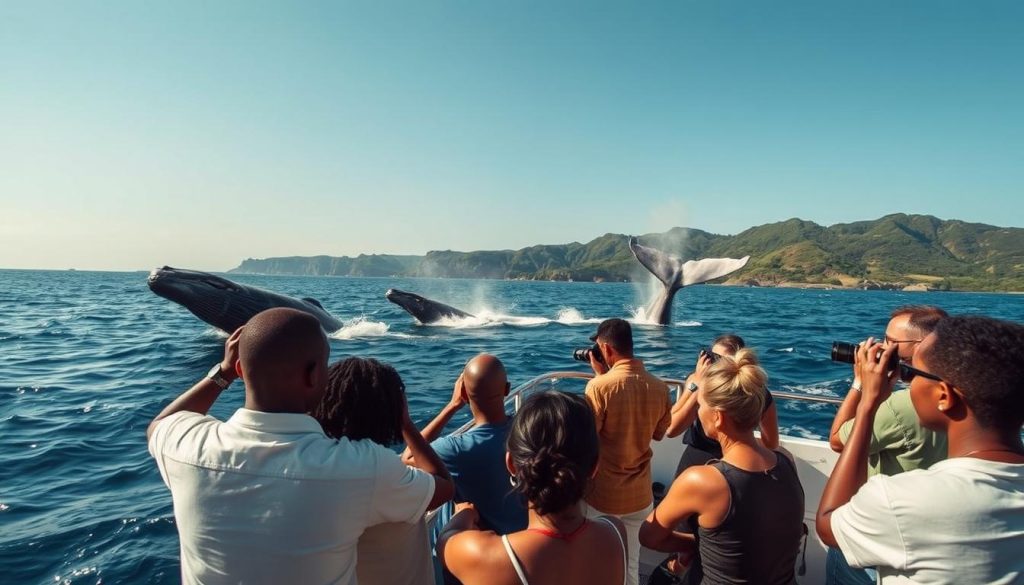
A great whale watching trip is more than just seeing whales. It’s about the knowledge you gain and the comfort of the tour.
Boat Size and Passenger Capacity
The boat’s size and how many people it can hold matter. Smaller boats offer a closer experience, while bigger ones have more amenities.
Marine Biologists and Educational Components
Having marine biologists on your tour makes it better. They teach you about the whales’ lives and how to protect them. This makes the trip educational and memorable.
| Tour Operator | Eco-Certified | Marine Biologist On Board | Max Passenger Capacity |
|---|---|---|---|
| Ocean Adventures | Yes | Yes | 12 |
| Mombasa Whale Watchers | Yes | No | 20 |
| Coastal Explorers | No | Yes | 15 |
What to Expect on a Mombasa Whale Watching Excursion
When you go on a Mombasa whale watching trip, you’re excited to see what it’s like. Your adventure begins when you get on a whale-watching boat. There, you’ll have an experience you’ll never forget.
Typical Tour Duration and Structure
Whale watching tours in Mombasa usually last 2 to 4 hours. This depends on the tour and what you want to do. You’ll get a safety briefing first. Then, you’ll go on a guided tour to see whales.
Morning vs. Afternoon Excursions
Morning tours are popular because the sea is calmer. Afternoon tours are better for photography because of the light. It really depends on what you prefer.
Safety Briefings and Protocols
You’ll get a detailed safety briefing before the tour starts. It covers life jacket usage, emergency procedures, and how to interact with marine life. This makes sure you have a safe and fun time.
Boat Types and Viewing Platforms
The boat you’re on can make a big difference. Modern boats are stable and have ample viewing platforms. This helps you see whales and other sea creatures better.
Advantages of Different Vessels
Rigid inflatable boats (RIBs) are great for getting close to whales. But, some tours use bigger boats for comfort and amenities.
Positioning for the Best Views
The crew will place the boat for the best views of whales. They make sure to keep a safe distance. This way, you can see the whales without disturbing them.
Photography Tips for Capturing Whales in Mombasa
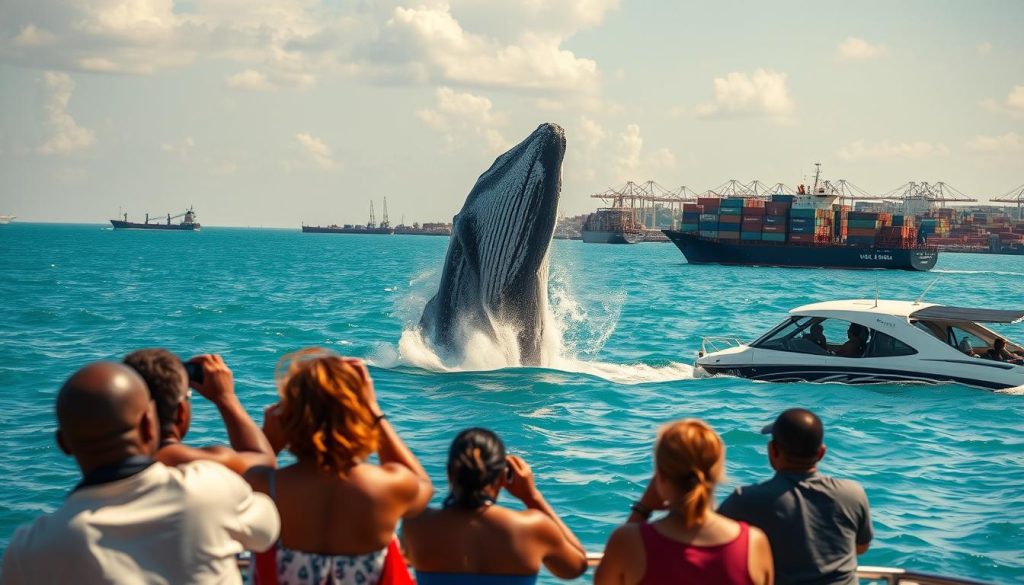
To get the best photos on your whale watching tour in Mombasa, you need the right gear and skills. Good photos of whales come from the right equipment, knowing whale behavior, and using the right photography techniques.
Essential Camera Equipment
Choosing the right camera is key for amazing whale photos. A DSLR or mirrorless camera with a good zoom lens is best.
Lens Recommendations for Marine Wildlife
A telephoto lens with at least 200mm focal length is best. It lets you take photos of whales without disturbing them.
Protecting Your Gear from Salt Water
When taking photos by the sea, keep your gear safe from salt water. Use a waterproof camera housing or a protective cover to avoid damage.
Techniques for Photographing Marine Wildlife
Knowing how whales behave helps you get the perfect shot. It’s all about anticipating their actions.
Anticipating Whale Behavior for Perfect Shots
Watch how whales move and act. This way, you can guess when they will surface or breach.
Lighting and Composition Considerations
Think about the light and how you compose your shots. Include the boat, other whales, or the landscape to make your photos interesting.
Here’s a quick guide to the best photography tips for whales in Mombasa:
| Tip | Description |
|---|---|
| Use a telephoto lens | At least 200mm for capturing whales without disturbing them |
| Protect your gear | Use a waterproof housing or cover to prevent salt water damage |
| Anticipate whale behavior | Observe and predict their movements for perfect shots |
| Consider lighting and composition | Pay attention to lighting and include interesting elements in your shots |
Weather Considerations for Whale Watching in Mombasa
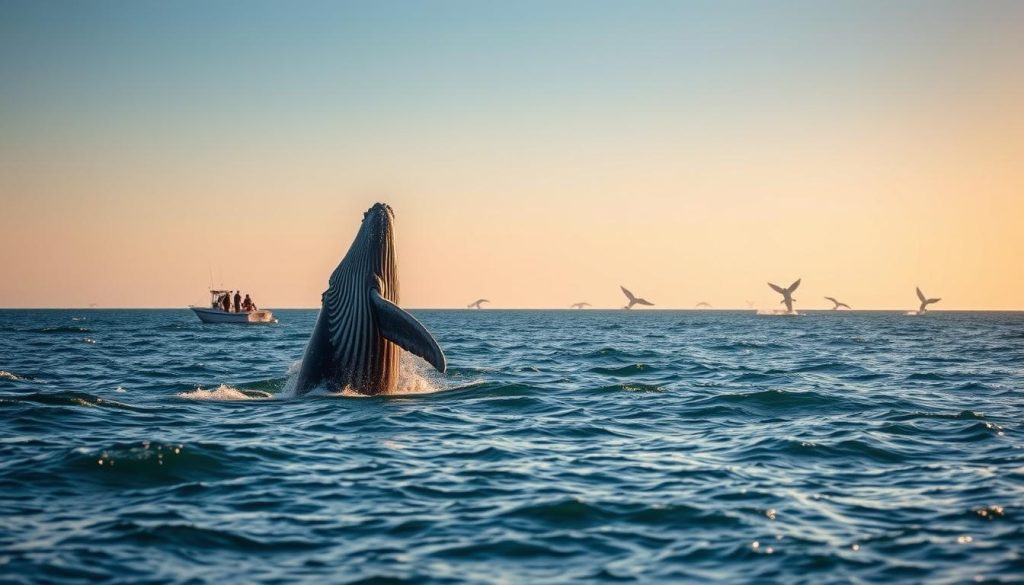
To see whales, knowing Mombasa’s weather is key. Kenya’s coast is always humid and hot. But, certain weather patterns can help or hinder whale watching.
Seasonal Weather Patterns
Mombasa has two rainy seasons. The long rains are from April to June, and the short rains from November to December. Monsoon seasons also shape the weather.
Monsoon Seasons and Their Impact
Monsoon winds change the sea. From April to October, the seas are calmer. This makes whale watching better.
Temperature and Sea Conditions by Month
Sea temperature changes all year. Warmer months (December to March) see more whale activity.
How Weather Affects Whale Sightings
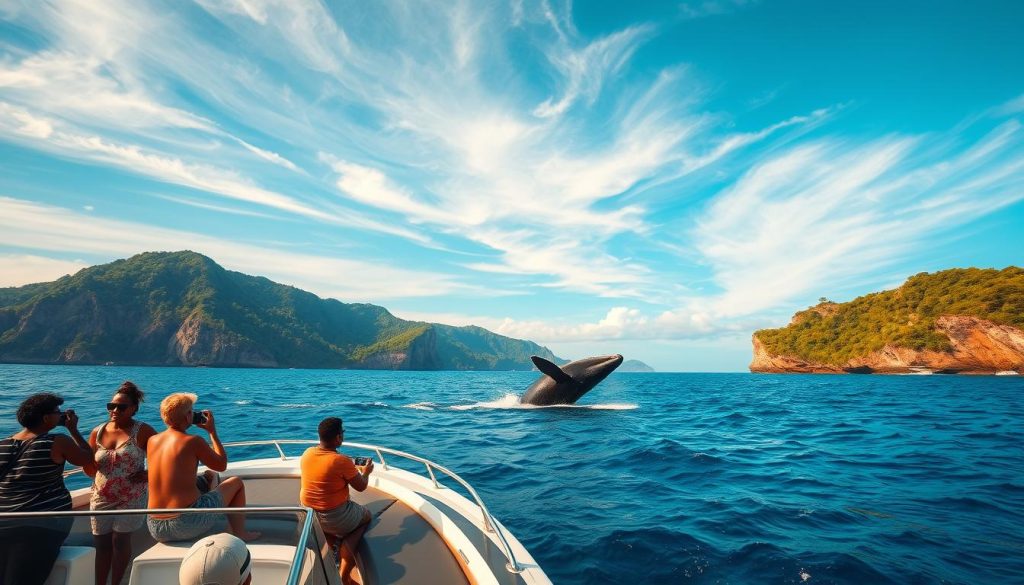
Weather greatly affects whale watching success. Clear skies and calm seas are best. But, rough seas make spotting whales hard.
Ideal Sea States for Observation
For whale watching, calm seas are best. This happens during the southeast monsoon.
Planning Around Weather Forecasts
Always check the weather before whale watching. This way, you avoid bad weather and see more whales.
Conservation Efforts Protecting Whales in Kenyan Waters
Conservation efforts are key to protecting whales in Kenyan waters. This ensures a safe whale watching experience in Mombasa. For nearly a decade, non-profit organizations in Kenya have worked together. They aim to protect marine mammals and promote responsible whale watching.
Local and International Protection Initiatives
Both local and international efforts support whale conservation in Kenyan waters. These efforts are vital for the health of marine ecosystems. They help ensure the long-term survival of whale populations.
Kenya Wildlife Service Marine Programs
The Kenya Wildlife Service (KWS) leads in marine conservation, including whale protection. KWS runs programs to monitor whales, protect marine areas, and involve local communities in conservation.
International Partnerships for Whale Conservation
International partnerships are crucial for whale conservation in Kenyan waters. These partnerships bring resources, expertise, and technology. They boost the impact of local conservation efforts.
How Tourism Supports Conservation
Tourism, like whale watching, supports conservation. It promotes responsible interactions with marine wildlife and boosts local economies.
Responsible Whale Watching Practices
Responsible whale watching is key to minimizing tourism’s impact. Tour operators in Mombasa follow guidelines. These ensure safe distances, reduce noise, and offer educational experiences.
Citizen Science Opportunities for Visitors
Visitors to Mombasa can help with whale conservation through citizen science. Many tour operators let guests help with data collection and research. This helps us better understand whale behavior and habitat needs.
| Conservation Initiative | Description | Impact |
|---|---|---|
| Kenya Wildlife Service Marine Programs | Monitoring whale populations, enforcing protected areas | Enhanced protection of marine habitats |
| International Partnerships | Collaborations for resource sharing and expertise | Increased effectiveness of conservation efforts |
| Responsible Whale Watching | Guidelines for safe and educational tourism | Reduced impact on whale populations |
| Citizen Science Initiatives | Visitor participation in research and data collection | Enhanced understanding of whale behavior |
Planning Your Entire Mombasa Trip Around Whale Watching Season
Planning your trip to Mombasa around whale watching season is key. It’s not just about seeing whales. It’s also about enjoying the Kenyan coast and its beauty.
Accommodation Options During Peak Season
During peak whale watching season, Mombasa has many places to stay. You can find something that fits your budget and preferences.
Coastal Resorts with Whale Watching Packages
Coastal resorts in Mombasa offer special packages. These include whale watching tours. They often work with local tour operators, making booking easy.
Booking Strategies for the Busy Season
To get the best spots, book early. Use travel agencies or online platforms for safari and beach holidays.
Complementary Activities to Enhance Your Visit
Mombasa and its surroundings have lots to do. It’s not just whale watching.
Cultural Experiences in Mombasa
Explore the local culture. Visit the Old Town or join cultural events. They show the region’s heritage.
Other Natural Attractions Along the Coast
The Kenyan coast has natural wonders. There are marine national parks, beautiful beaches, and coral reefs for snorkeling or diving.
Conclusion: Making the Most of Your Mombasa Whale Watching Adventure
When planning your trip to Mombasa, timing is key for whale watching. You’ve found out the best times are from July to September and December to March. These periods offer the best chances to see whales.
To enjoy your whale watching in Mombasa, follow some tips. Choose a trusted tour operator and get ready for the weather. This will make your trip better and help protect whales.
Learning about humpback whales and other sea creatures will make your trip even more special. With good planning and the right help, your whale watching in Mombasa will be unforgettable.