Your Guide to Navigating the Fes Medina
Imagine walking through a site so big, it covers 2.5 x 2.5 kilometers. It has over 9,000 streets and alleys. The Fes Medina, a UNESCO World Heritage site, is like a huge maze.
When you plan to visit this ancient city, you might wonder how to make the most of your journey. With effective travel tips, you can find the hidden treasures of the Fes Medina. You’ll get to experience its rich history and culture.
To navigate the Fes Medina, you need more than a map. You need to know its layout and some insider tips. This will help you avoid getting lost in its vast area.
The Magnificent Maze: Understanding Fes Medina’s Layout
The ancient walls of the Fes Medina hold a complex network of streets and landmarks. It’s a fascinating yet intimidating place to explore. To uncover its many hidden gems, understanding its layout is key.
The Historical Significance of UNESCO’s Largest Car-Free Urban Area
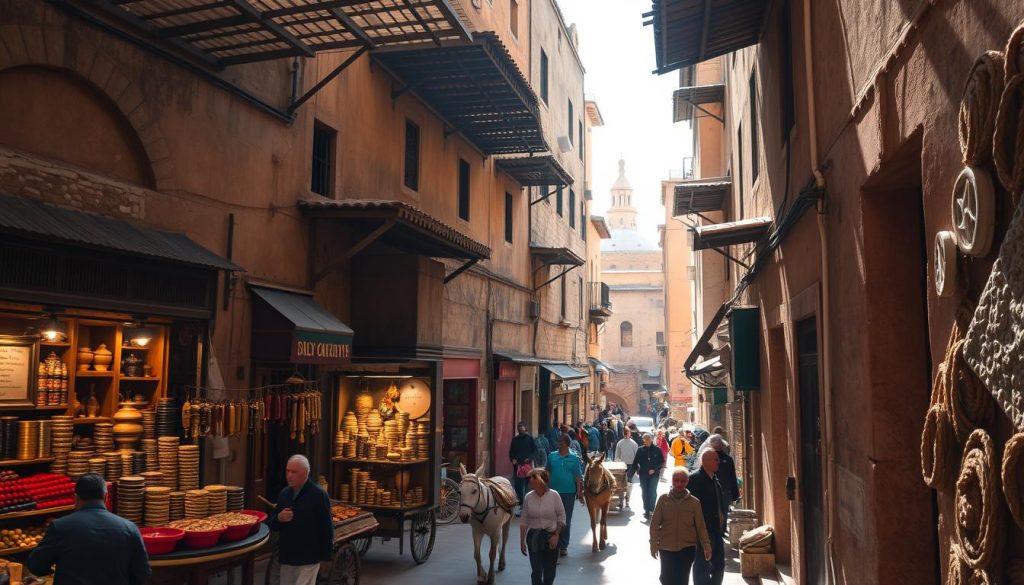
The Fes Medina is UNESCO’s largest car-free urban area. It holds significant historical and cultural importance. This designation preserves the Medina’s ancient architecture and enhances its charm, making it a unique place to explore on foot.
Decoding the Medina’s Organizational Structure
The Medina is divided into distinct neighborhoods or derbs, each with its own character and landmarks. Knowing this structure helps you navigate more efficiently. You learn to identify key areas and their connections.
The Difference Between Fes el-Bali and Fes el-Jdid
Fes is divided into two main areas: Fes el-Bali (the old city) and Fes el-Jdid (the new city). Fes el-Bali is the historic heart, with famous landmarks like Al-Attarine Madrasa and Al-Qarawiyyin Mosque. Fes el-Jdid is known for its mellah (Jewish quarter) and the Royal Palace. Knowing the difference between these areas is crucial for a comprehensive exploration.
| Area | Key Landmarks | Characteristics |
|---|---|---|
| Fes el-Bali | Al-Attarine Madrasa, Al-Qarawiyyin Mosque | Historic heart, narrow alleys, bustling markets |
| Fes el-Jdid | Mellah, Royal Palace | Historically significant, distinct cultural influences |
By understanding the layout and distinctions within the Fes Medina, you can plan your visit better. This ensures a more rewarding and less confusing experience as you explore this magnificent maze.
Essential Preparation Before Your Medina Adventure
To enjoy your Fes Medina adventure, getting ready is crucial. This historic area offers a rewarding experience. But, you need to take some key steps to be ready for your journey.
Must-Have Items in Your Day Pack
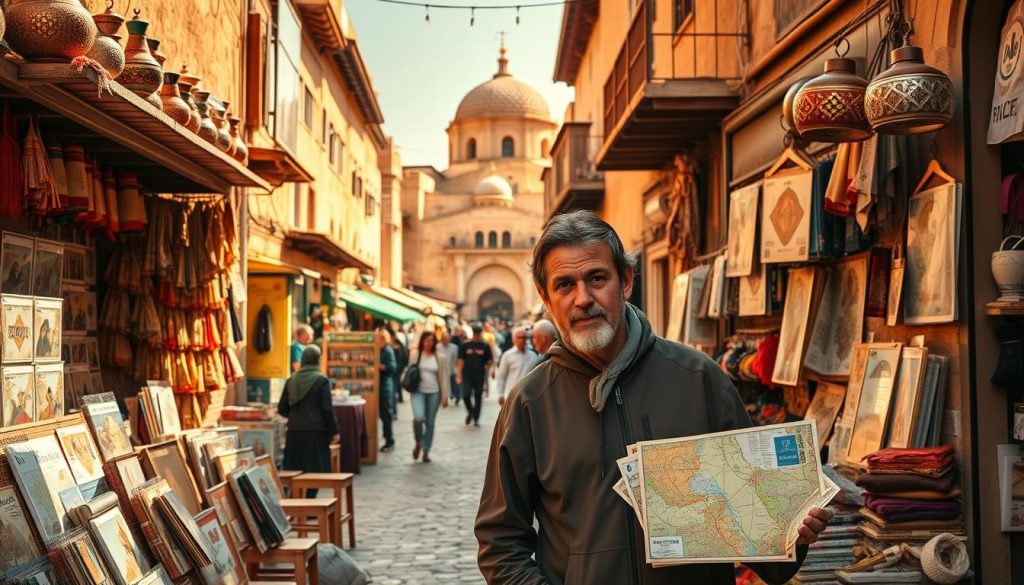
Having the right items in your day pack is vital. Carry a day bag with water, snacks, and a map to stay hydrated and find your way. Also, wear comfortable shoes since you’ll be walking a lot.
Appropriate Attire for Cultural Respect and Comfort
Wearing modest clothes shows respect for the local culture and keeps you comfortable. Choose loose, breathable clothing that covers your shoulders and knees. This way, you’ll blend in and avoid unwanted attention.
Basic Arabic and French Phrases That Will Help You
Learning basic Arabic and French phrases can improve your interactions with locals. Saying “hello” (Marhaba in Arabic, Bonjour in French) and “thank you” (Shukraan in Arabic, Merci in French) shows respect and appreciation for the culture.
How to Navigate the Fes Medina Without Getting Lost
When you enter the Fes Medina, knowing how to find your way is key. The old streets can be confusing, but with some tips, you can enjoy exploring.
Understanding the Medina’s Directional Logic
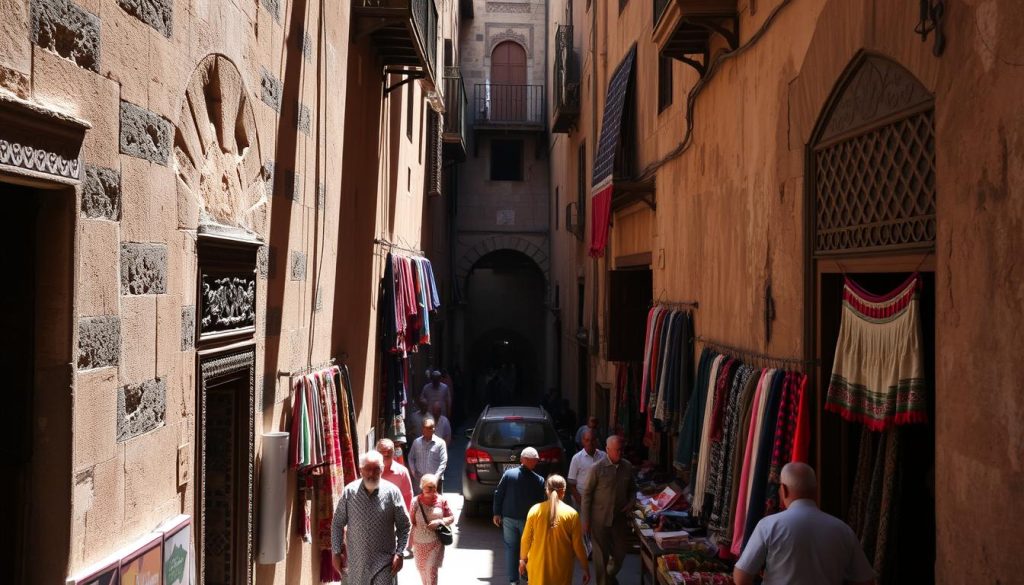
The Fes Medina has a special way of being laid out. It’s divided into different areas, each with its own feel and sights. Knowing this can help you move around better.
Key districts are around big landmarks and gates. Learning about these areas can help you plan your path.
Using Major Landmarks as Navigation Points
Big landmarks are important for finding your way. Think of mosques, old buildings, and gates. For example, the Blue Gate is a great place to start your journey.
On your first day, think about getting a guide. They can show you the importance of landmarks and how to use them to navigate. This will help you find your way easier later on.
The Five-Point System for Maintaining Orientation
To stay oriented in the Medina, use a simple five-point system:
- Know where you start and where you’re going.
- Use big landmarks to guide you.
- Remember the main gates and use them as references.
- Notice the layout of alleys and streets.
- Check your direction often using landmarks.
By following these steps, you can greatly lower the chance of getting lost.
Digital Tools and Traditional Methods for Medina Navigation
To explore the Fes Medina, you’ll need to find your way through its winding streets. There are digital and traditional methods to help you. The right tools can make your journey better, letting you discover the Medina’s secrets and landmarks.
Recommended Navigation Apps and Their Features
Many apps can guide you through the Fes Medina. Google Maps offers detailed coverage, but it might not always be right in the narrow alleys. Apps like Maps.me have offline maps, which are great when you’re offline. They include GPS and points of interest, helping you see the Medina.
Offline Maps and Their Limitations in Narrow Alleys
Offline maps are useful in areas with no internet. But, they might miss the narrow alleys and small streets in the Medina. 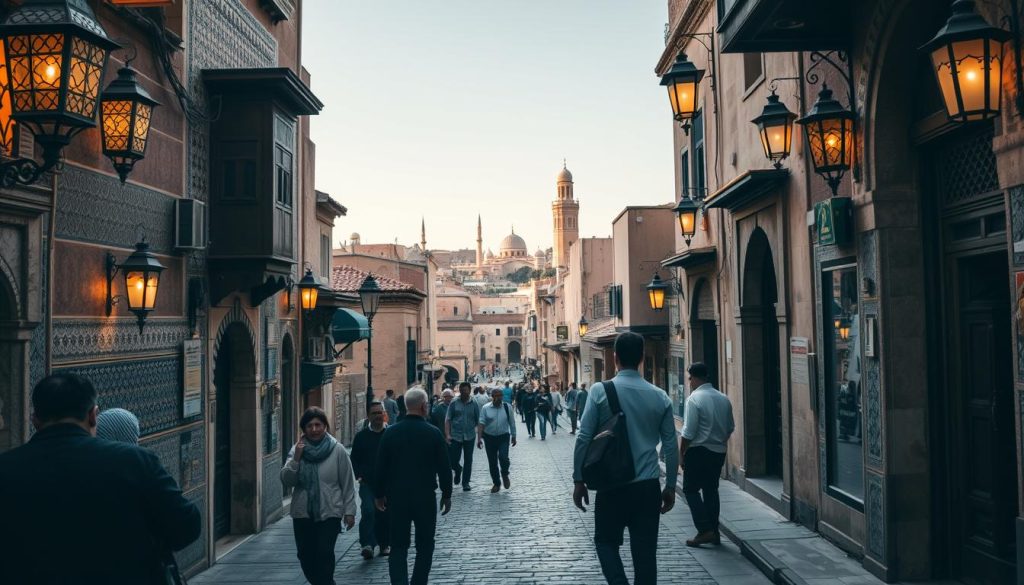 You might need to ask locals or use old ways to get around these spots.
Traditional Navigation Methods Used by Locals
Locals in Fes use old ways to navigate, like knowing landmarks and following paths. Using these methods can make your trip better. It helps you understand the Medina’s layout and culture.
Major Gates and Landmarks for Orientation
Exploring the Fes Medina means knowing its main gates and landmarks. The Medina’s layout can be tricky. But, knowing key gates and landmarks helps you navigate easily.
The Main Gates (Babs) as Directional Anchors
The main gates, or “Babs,” are key for navigating the Medina. They’ve been the main entry and exit points for centuries. Knowing where they are helps you find your way through the narrow alleys.
Bab Boujloud (Blue Gate) and Surrounding Area
Bab Boujloud, or the Blue Gate, is a famous landmark in the Fes Medina. It’s not just a historical site but also a key spot for navigation. The area around Bab Boujloud is lively, perfect for getting your bearings.
Other Important Gates and Their Locations
There are more gates like Bab Boujloud that help with navigation. Bab Ftouh, Bab Guissa, and Bab Mahrouk are located around the Medina. Knowing where these gates are helps you understand the Medina’s layout and plan your path.
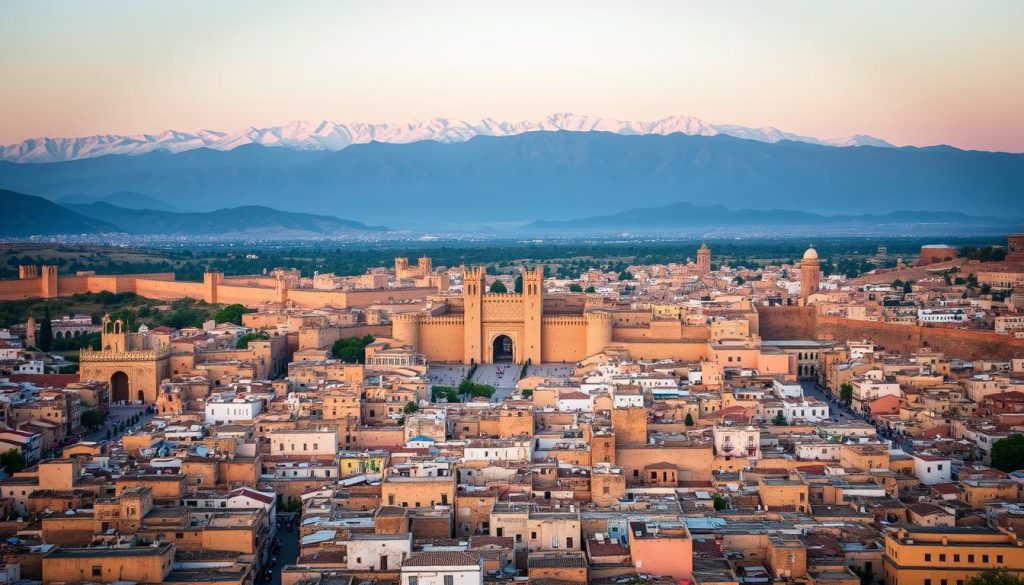
Notable Landmarks Within the Medina
Inside the Medina, there are landmarks that guide you. These include historic mosques, squares, and architectural wonders.
Kairaouine Mosque and University
The Kairaouine Mosque and University is a key landmark in the Fes Medina. It’s one of the oldest universities in the world. Its location is a useful reference for navigating the Medina.
Nejjarine Square and Fountain
Nejjarine Square, with its stunning fountain, is another landmark for navigation. It’s a favorite spot for locals and tourists. It’s a great place to take a break and get your bearings.
Navigating the Commercial Heart of Fes
Exploring the Fes medina reveals a maze of souks and markets. To move through this area, you’ll need to walk down narrow alleys and find hidden passages. It’s all about being ready and flexible.
Understanding the layout of souks and landmarks is key to not getting lost. The medina is full of unique shops and products. Keeping your direction clear helps you see everything the medina has to offer.
Being open to new discoveries is also important. The best shops and products are often hidden. Take your time to enjoy the local craftsmanship and culture.