Who is Johannesburg Named After?
Ever wondered about the name of South Africa’s lively city? The tale of Johannesburg’s naming origin is tied to the country’s past.
The city’s name comes from Johann Rissik and Christiaan Johannes Joubert, two key figures of the Zuid-Afrikaansche Republiek (ZAR). Their roles in the area’s early growth earned them the honor of having the city named after them. They are the Johannesburg namesake.
Learning about this city’s history reveals how these two names became part of its identity.
The Origins of Johannesburg’s Name
Ever wondered how Johannesburg got its name? The story is quite interesting. “Johannesburg” comes from “Johannes” and “burg,” an old Afrikaans word for “fortified city.” This etymology gives us a peek into the city’s history and cultural roots.
First Mentions in Historical Records
The name Johannesburg first appeared in records in the late 19th century. Back then, the city was a booming mining center, linked to the gold rush. Historical records tell us the name was first for the mining camp that became the city we see today.
Etymology of the Name “Johannesburg”
The name “Johannesburg” has Germanic roots. “Johannes” was a common name among Dutch settlers. “Burg” means a fortified city or settlement.
Germanic Roots and Meaning
The name “Johannesburg” shows its Germanic origins clearly. “Johannes” comes from the Hebrew “Yochanan,” meaning “God is gracious.” “Burg” is from Old Germanic, meaning “fortress” or “city.” This mix shows the city’s early days as a fortified place.
Pronunciation Evolution
The way we say “Johannesburg” has changed over time. Today, it’s pronounced with an Afrikaans twist, showing the city’s rich history and culture. 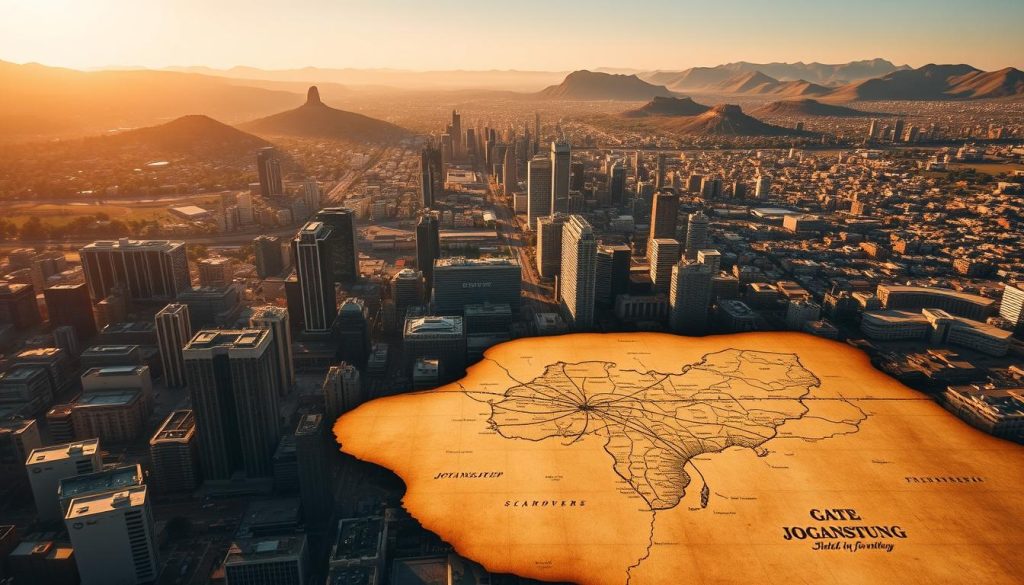
Key points about Johannesburg’s name are:
- The mix of “Johannes” and “burg”
- Its Germanic origins
- The change in how we say it over time
These points help us understand the city’s history and cultural identity better.
Who is Johannesburg Named After?
Ever wondered who inspired the name ‘Johannesburg’? The city’s name comes from Johann Rissik and Johannes Joubert. They were key figures in the Zuid-Afrikaansche Republiek (ZAR). Their work helped shape Johannesburg’s history.
Johann Rissik: The First Namesake
Johann Rissik was a key clerk in the ZAR’s surveyor-general office. He played a big role in mapping the area. This helped find and use the region’s natural resources.
Rissik’s Background and Career
Rissik was dedicated to the ZAR’s administration. As a clerk, he worked on land surveys. This was crucial for Johannesburg’s development.
His Role in South African Government
Rissik’s job was vital for Johannesburg’s early growth. His work set the stage for the city to become a major urban center.
Johannes Joubert: The Second Namesake
Johannes Joubert was a Volksraad member and head of mines. He greatly influenced the mining industry in the ZAR.
Joubert’s Position and Influence
As a Volksraad member, Joubert made important decisions for mining. His leadership in mines helped shape policies. This boosted Johannesburg’s growth.
Historical Documentation of His Contribution
Records show Joubert’s impact on mining and the Volksraad. His work helped mining thrive. This led to Johannesburg’s fast growth.
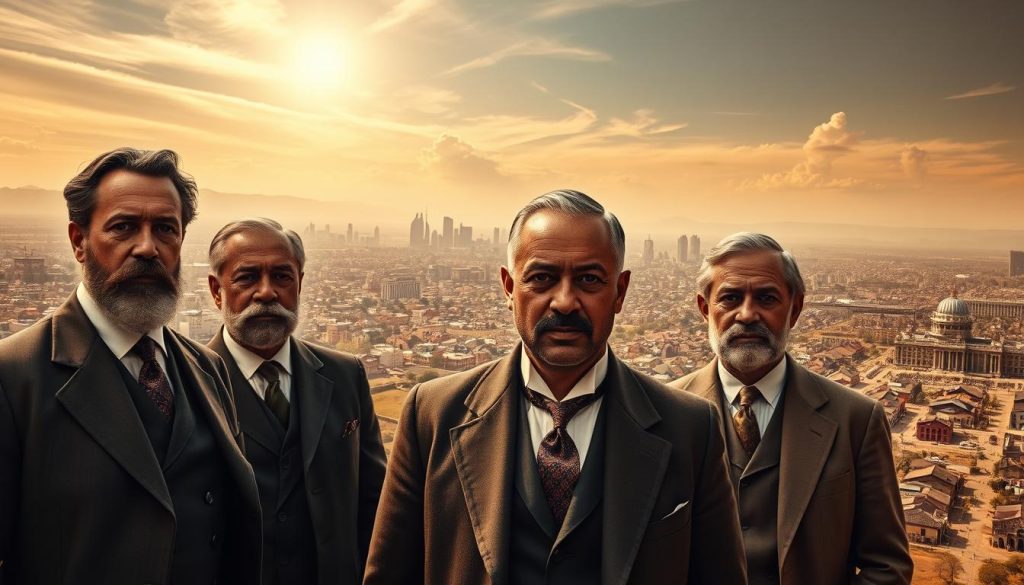
Johann Rissik and Johannes Joubert’s work greatly influenced Johannesburg. Their efforts in surveying, administration, and mining were key. They helped make Johannesburg a major economic center.
The Gold Rush That Birthed a City
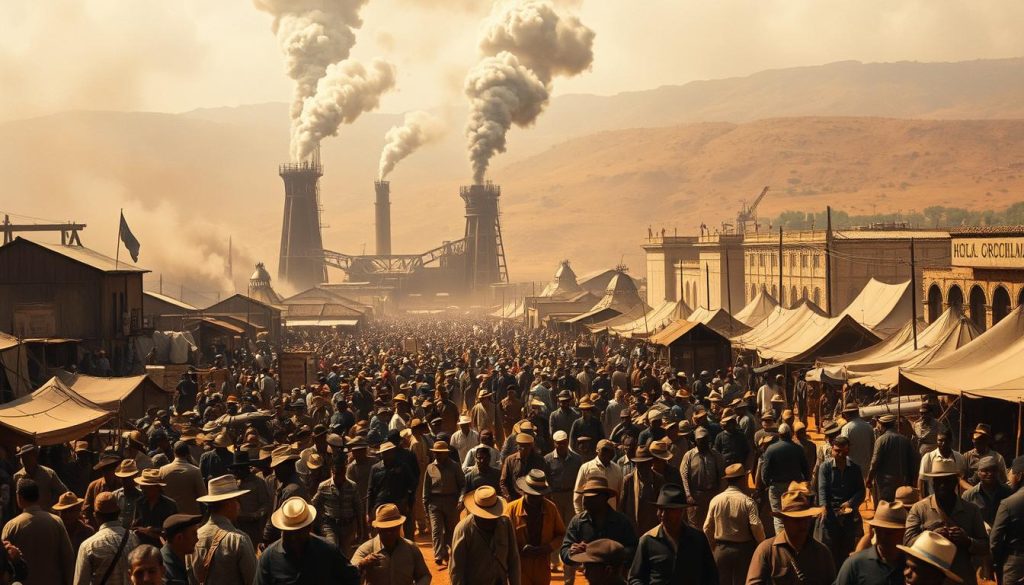
The gold rush was the start of Johannesburg’s story. Gold found on the Witwatersrand in 1886 changed everything. It turned the area into a busy mining camp and then a growing city.
Discovery of Gold on the Witwatersrand
The gold find on the Witwatersrand was a big moment in South Africa. George Harrison’s discovery in 1886 is often seen as the spark for the gold rush.
George Harrison’s Pivotal Find
George Harrison, an Australian prospector, found gold that changed the area. His discovery on Langlaagte farm brought many prospectors and miners.
The Main Reef’s Significance
The Main Reef was key for gold mining. It was the main gold source in the Witwatersrand. This made Johannesburg grow.
From Mining Camp to Urban Settlement
The gold rush made the mining camp grow into a city. Early infrastructure development was key for the growing population.
Early Infrastructure Development
Building roads, homes, and services was vital. It helped the city grow. This foundation helped shape the modern city.
Population Explosion
The gold rush brought many people to Johannesburg. People from all over came. This diversity helped the city grow culturally and economically.
| Year | Event | Impact |
|---|---|---|
| 1886 | Gold discovery | Massive influx of prospectors |
| 1887 | Infrastructure development | Growth of urban settlement |
| 1890s | Population explosion | Diverse cultural and economic growth |
South Africa’s Historical Context During Johannesburg’s Founding
Exploring Johannesburg’s history means understanding South Africa’s context in the late 19th century. This time was marked by turmoil and change. It saw the mix of politics, economy, and colonial powers.
The Zuid-Afrikaansche Republiek
The Zuid-Afrikaansche Republiek, or ZAR, was a Boer state from 1852 to 1902. Its capital was Pretoria. It was key in the region’s politics and economy.
Political Structure and Leadership
The ZAR had a President and a Volksraad, chosen by Boer citizens. This setup aimed to keep Boer autonomy and culture.
Relations with British Colonial Powers
The ZAR’s relations with Britain were complex and tense. Britain wanted more control over South Africa, causing conflicts like the First Boer War (1880-1881). The discovery of gold in 1886 made things worse, attracting many British and foreign miners.
Socioeconomic Landscape of the 1880s
The 1880s in what would become Johannesburg saw many changes. Indigenous populations and European settlers and migrants were present.
Indigenous Populations
Groups like the Sotho, Tswana, and Zulu had lived there for centuries. European settlement and mining changed their lives and interactions with newcomers.
European Settlers and Migrants
People from the Netherlands, Britain, and Europe came for the gold rush. “The gold rush changed the area’s culture and society, mixing many backgrounds.” A historian said,
“Gold’s discovery changed South African society, bringing people from different places together in a complex society.”
Johannesburg’s Official Establishment
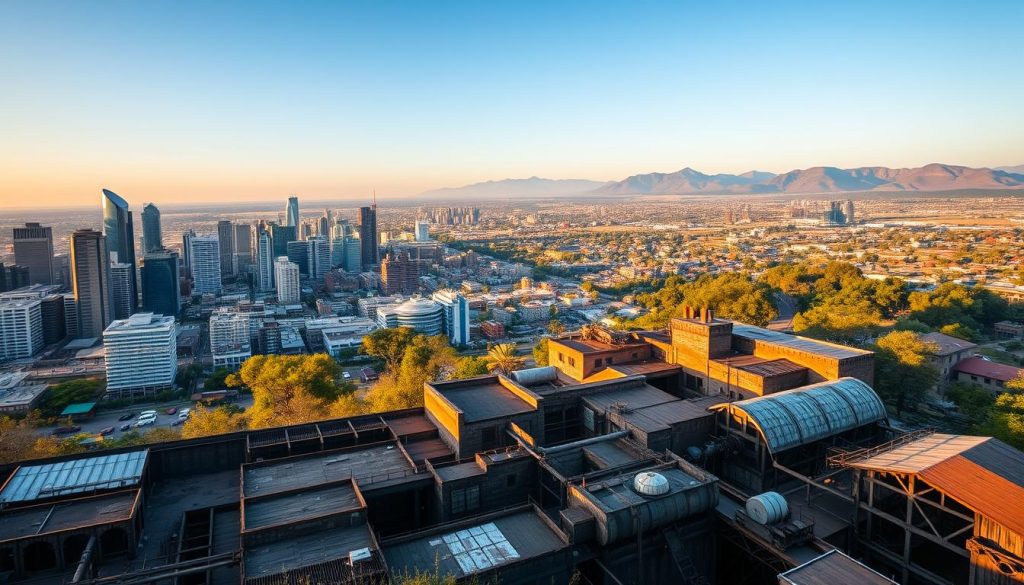
The official establishment of Johannesburg was a key moment in its history. You are about to learn how this event shaped the city’s future.
The Declaration of the Township
In 1886, Johannesburg was officially declared a township. This marked the start of a new era. It was a response to the gold rush on the Witwatersrand.
The discovery of gold sparked rapid development. This led to the need for a formal settlement, creating Johannesburg.

Early Municipal Development and Governance
As Johannesburg grew, so did the need for governance. The first city council was established in 1897. This was a crucial step in managing the city’s growth.
First City Council
The first city council played a vital role. It oversaw the city’s infrastructure and services. It made key decisions that shaped Johannesburg’s future.
Initial Urban Planning
Initial urban planning focused on creating a functional city. It included developing roads, housing, and public services.
The establishment of Johannesburg and its early governance laid the foundation for its growth. Today, it is a thriving metropolitan area.
| Year | Event |
|---|---|
| 1886 | Declaration of Johannesburg as a township |
| 1897 | Establishment of the first city council |
Alternative Theories About Johannesburg’s Name
Exploring Johannesburg’s history reveals many theories about its name. The official story is known, but other claims and debates add to the mystery. These stories make the city’s naming origins even more fascinating.
Disputed Claims and Historical Debates
Some say Johannesburg was named after a different person or event. These disputed claims come from different views of history and stories passed down. For example, some believe it was named after a local leader or a key event in the area’s past.
Folklore and Popular Misconceptions
Folklore and popular culture add to the mix of stories about Johannesburg’s name. Common naming myths spread through books, movies, and local tales. These myths mix fact and fiction, making it hard to know the city’s true name origins.
Common Naming Myths
- Myths linking the name to a local legend or folklore figure.
- Claims that the name comes from an indigenous word or phrase.
Historical Inaccuracies in Popular Culture
Popular culture, like movies, books, and art, often gets history wrong. These historical inaccuracies can stick in people’s minds. They make it harder to understand Johannesburg’s real name origins.
Evolution of the Name Through History
Did you know Johannesburg has had many names over the years? As the city grew, so did its name, showing off its cultural and historical roots.
Colonial Era References
In the colonial days, Johannesburg was called different things by its people and rulers. These names often tied back to the gold mining that started it all. For example, “Johannesburg” was named after Johann Rissik and Johannes Joubert, key figures back then.
Colloquial Names and Nicknames
Today, Johannesburg is known by many nicknames that show its spirit and what people think of it. Two well-known ones are “Egoli” and “Jozi.”
Egoli: City of Gold
“Egoli” means “City of Gold” in Sesotho, pointing to Johannesburg’s gold mining roots. Locals love this name, seeing it as a nod to the city’s wealth and history.
Jozi and Other Modern Monikers
Recently, “Jozi” has become a favorite nickname for Johannesburg. It’s used around the world, showing the city’s modern vibe and lively culture. These nicknames show Johannesburg’s ability to change and grow with the times.
How Johannesburg Grew Into Africa’s Economic Powerhouse
Johannesburg started as a small gold mining town. Now, it’s a big city leading Africa’s economy. This change came from its industrial growth and the rise of its financial sector.
From Gold Mining Town to Metropolitan City
The discovery of gold in 1886 sparked Johannesburg’s growth. As mining grew, so did the city’s people and buildings.
Key Industrial Developments
Several key industries helped Johannesburg grow, including:
- Mining equipment manufacturing
- Chemical production for the mining industry
- Engineering services
Financial Sector Emergence
The financial sector’s growth was key to Johannesburg’s development. The Johannesburg Stock Exchange (JSE) started in 1887. It helped mining companies get money, boosting the city’s growth.
Economic Evolution Through the Decades
Johannesburg’s economy has changed a lot over the years. This change was due to both inside and outside factors.
Apartheid Era Economics
During apartheid, Johannesburg’s economy was unfair. But, the city still grew thanks to its industries and finance.
Post-1994 Transformation
After apartheid ended in 1994, Johannesburg’s economy changed a lot. The city connected more with the world economy. It also worked to fix the unfairness from apartheid times.
| Year | Economic Indicator | Growth/Decline |
|---|---|---|
| 1886 | Gold Production | Rapid Growth |
| 1887 | JSE Establishment | Significant Growth |
| 1994 | Post-Apartheid Reforms | Structural Changes |
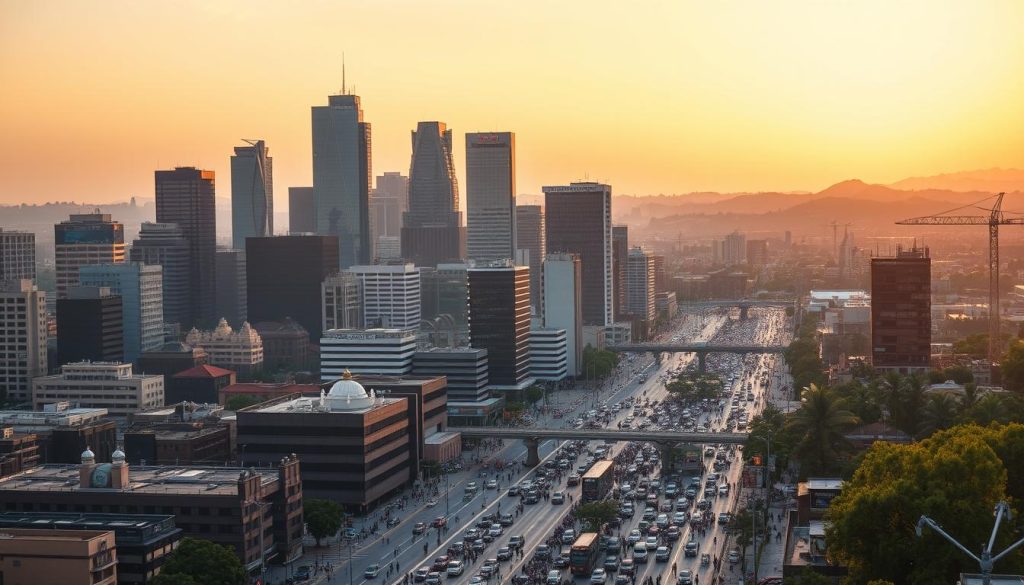
Modern Johannesburg and Its Historical Connections
Exploring modern Johannesburg reveals a city deeply tied to its past. Johann Rissik and Johannes Joubert, the city’s namesakes, are still celebrated today.
Preserving the Legacy of the City’s Namesakes
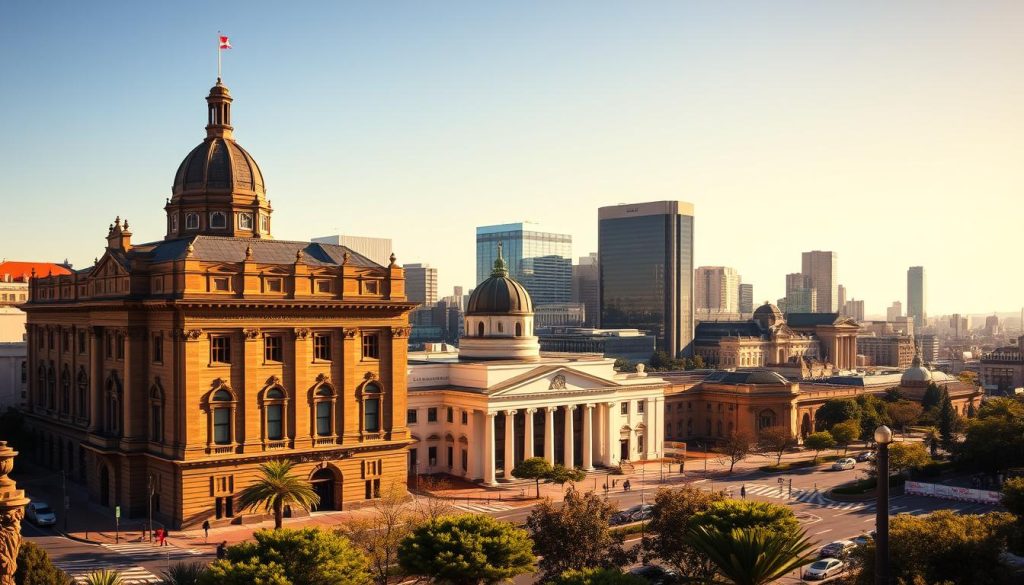
The legacy of Johann Rissik and Johannes Joubert lives on through historical sites and monuments. You can visit museums and heritage sites to learn about Johannesburg’s early days.
Historical Sites and Monuments
Johannesburg boasts many historical sites and monuments. These reflect the city’s rich history. Some notable ones include:
Museums and Heritage Sites
- The Johannesburg Museum, which showcases the city’s history from its founding to the present day.
- The Constitutional Hill precinct, which includes the Old Fort, the Women’s Prison, and the Constitutional Court.
Street Names and Landmarks
Many streets and landmarks in Johannesburg are named after important figures and events. For instance, Rissik Street honors Johann Rissik, a founder of the city.
| Historical Site | Description |
|---|---|
| Johannesburg Museum | Showcases the city’s history from its founding to the present day. |
| Constitutional Hill | A precinct that includes the Old Fort, the Women’s Prison, and the Constitutional Court. |
| Rissik Street | Named after Johann Rissik, one of the city’s founders. |
Conclusion
You now know that Johannesburg was named after two important figures: Johann Rissik and Christiaan Johannes Joubert. Their work helped shape the city’s early years.
The story of Johannesburg’s name is closely tied to its history and culture. The city grew from a mining camp to a major economic center. This shows the vision of its founders.
Learning about Johannesburg’s namesakes gives us a special view of the city’s identity. Johann Rissik and Johannes Joubert’s contributions are still celebrated today. Their legacies live on through historical sites and monuments.
Reflecting on Johannesburg’s history helps us see the value of preserving cultural heritage. It shows how important it is for the city’s future.