What Wildlife Can You Spot at Lake Nakuru?
Are you ready to witness one of Africa’s most spectacular wildlife havens?
Lake Nakuru National Park is a magnificent place for birdlife and wildlife. It hosts many bird species and several animal species.
Exploring the park, you’ll see many Lake Nakuru animals. You might see lions or giraffes.
The park’s unique features and diverse Lake Nakuru national park wildlife make it unforgettable. It’s perfect for nature lovers and wildlife enthusiasts.
The Natural Wonder of Lake Nakuru National Park
Lake Nakuru National Park is a stunning example of nature’s beauty. It’s located in Kenya’s Great Rift Valley. As you explore, you’ll see its unique features and diverse ecosystem.
Geographical Location and Ecosystem Features
Lake Nakuru National Park sits on the Great Rift Valley floor. It’s one of Kenya’s top wildlife parks. The park has diverse habitats, like grasslands, woodlands, and the alkaline lake. These places support many animals and birds.
The park is perfect for nature and wildlife fans. It has:
- Diverse habitats supporting a wide range of wildlife
- A unique alkaline lake ecosystem
- Grasslands and woodlands providing shelter for various species
The Alkaline Lake and Its Ecological Importance
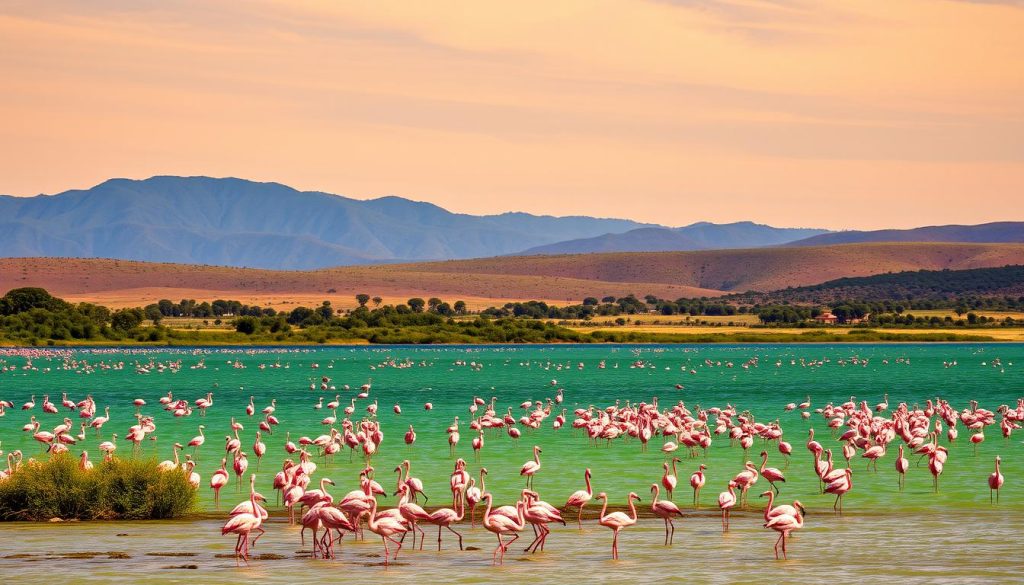
The alkaline Lake Nakuru is a key ecological component of the park. It attracts millions of flamingos with its algae. The lake’s chemistry supports a rich food chain, making it vital to the ecosystem. You’ll see its importance when you visit.
The lake’s ecological role is huge. It:
- Supports a rich food chain, from algae to flamingos and other birds
- Provides a habitat for numerous aquatic species
- Plays a crucial role in the park’s overall biodiversity
What Wildlife Can You See in Lake Nakuru?
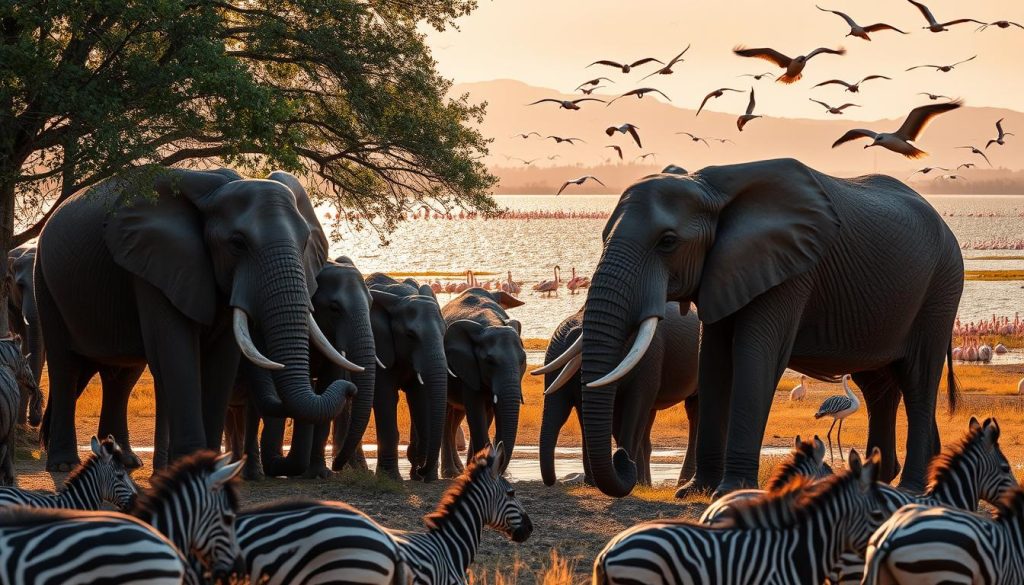
Lake Nakuru National Park is a haven for wildlife enthusiasts. It boasts over 50 mammal species. The park’s varied landscapes, from savannah to euphorbia forests, host a wide array of wildlife. Exploring here lets you witness animals in their natural settings.
Overview of Species Diversity and Habitat Zones
The park is a haven for mammals, from large herbivores to carnivores. Its different zones, like grasslands and woodlands, are home to diverse wildlife. The lake itself is a key habitat for many bird species.
Endangered Species Protection Programs
The park is dedicated to saving endangered species. It runs programs like habitat protection and anti-poaching efforts. For instance, it’s part of the Black Rhino Conservation Program to boost the black rhino population.
Seasonal Wildlife Variations and Migration Patterns
The park’s wildlife changes with the seasons. In the dry season, animals gather near the lake, making them easier to see. Migration patterns also affect the park, with species moving based on food and weather.
| Species | Habitat | Conservation Status |
|---|---|---|
| Black Rhino | Grasslands and woodlands | Endangered |
| Lion | Grasslands | Vulnerable |
| Leopard | Woodlands and rocky outcrops | Vulnerable |
The Famous Flamingo Flocks of Lake Nakuru
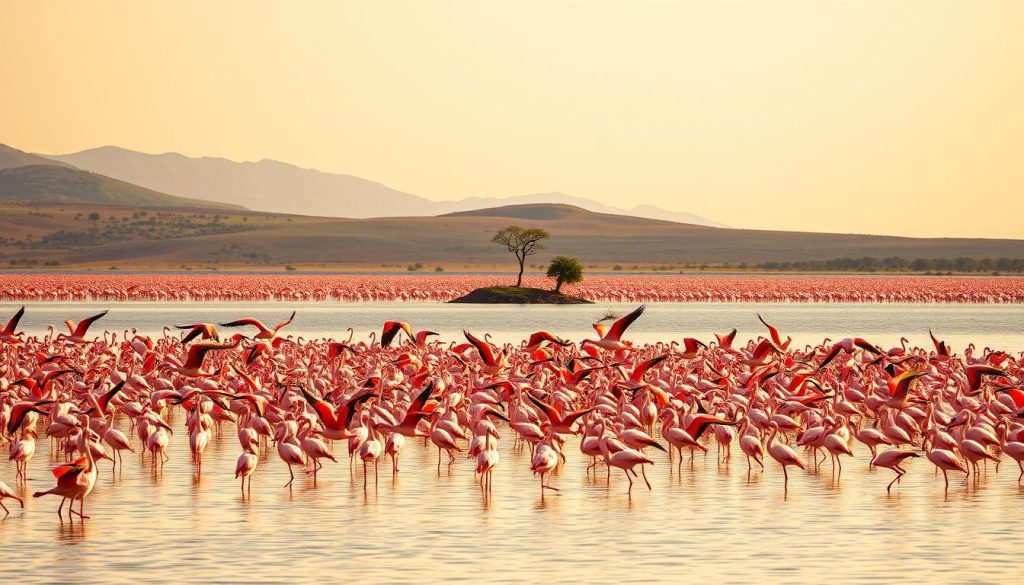
When you visit Lake Nakuru, you’ll be amazed by the many flamingos. This lake in Kenya’s rift valley is famous for its flamingos. It’s a big draw for tourists in the park.
Lesser and Greater Flamingos: Identification and Differences
Lake Nakuru has both lesser and greater flamingos. The lesser flamingo is smaller and has a deeper red color. The greater flamingo is bigger and has a pinkish color. Knowing these differences helps with flamingo identification.
You can tell them apart by their beak shapes and sizes. Also, their feeding behaviors are different.
Flamingo Feeding Patterns and Social Behavior
The flamingos at Lake Nakuru have interesting ways of eating and socializing. They eat algae and small invertebrates. They use their beaks to filter food from the water.
Their social behavior is also fascinating. They live in large flocks and show complex interactions. Watching them, you can learn about their flamingo behavior, like mating rituals and migrations.
Learning about Lake Nakuru’s flamingos helps you appreciate these amazing birds and their home.
Rhino Sanctuary: Black and White Rhino Conservation
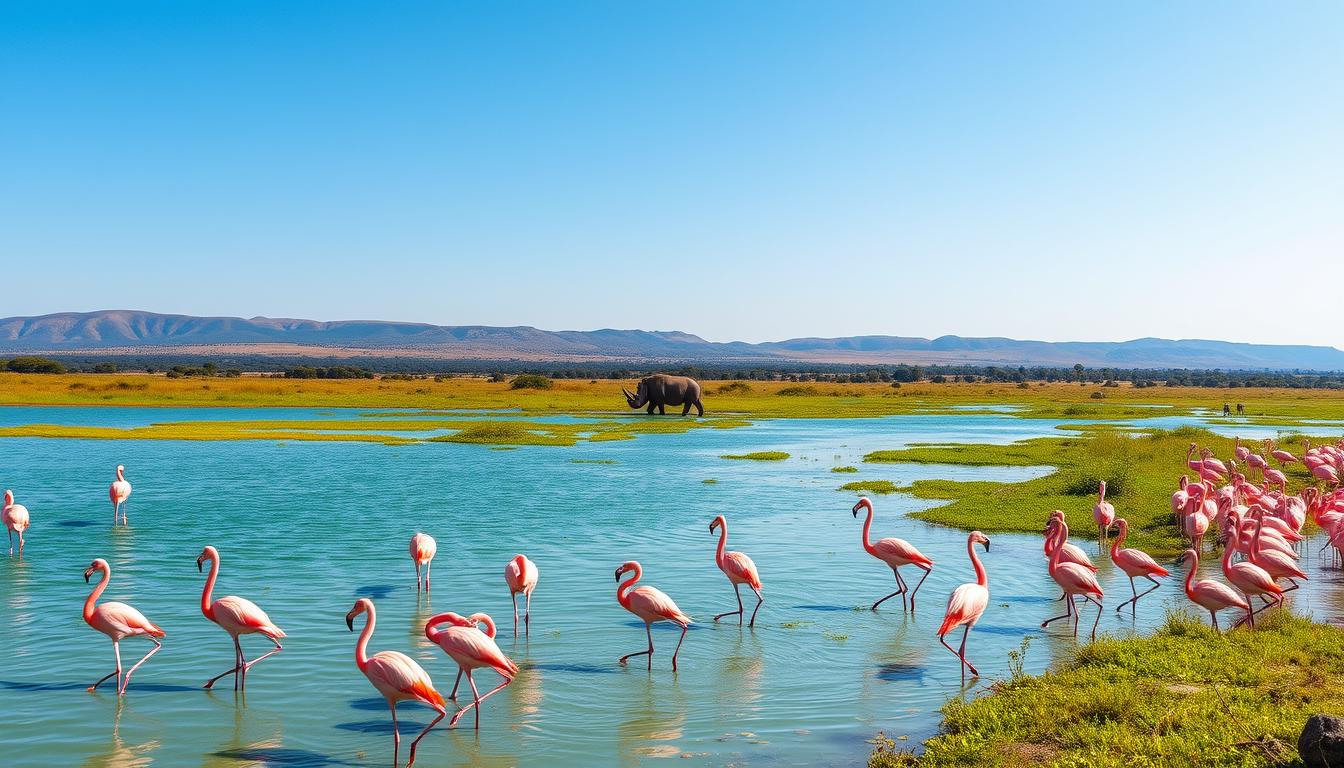
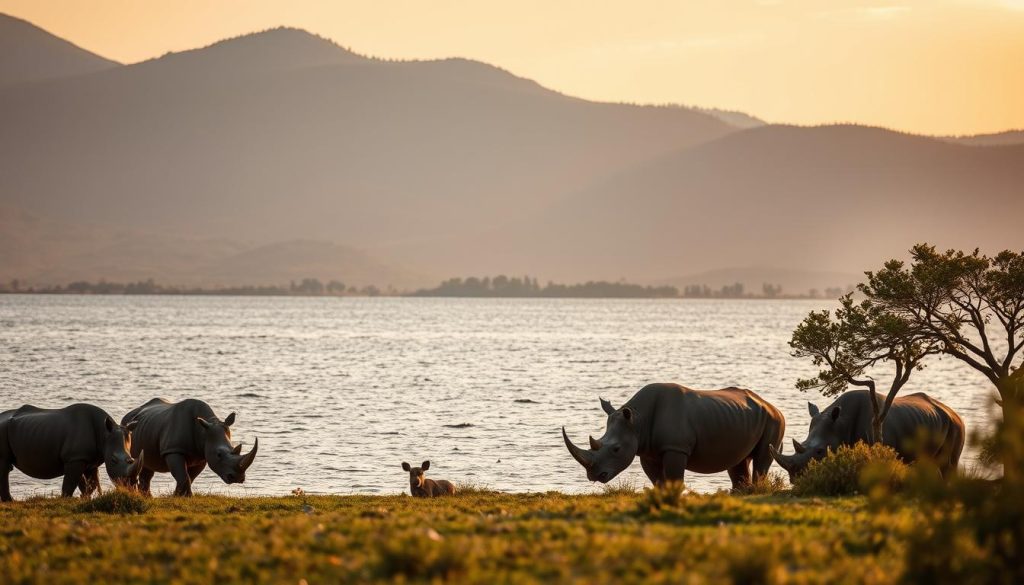
The rhino sanctuary in Lake Nakuru National Park is a key part of conservation efforts. It houses a mix of black and white rhinos. With about 150 rhinos, it’s a major safe place for these animals.
The Rhino Protection Program and Anti-Poaching Efforts
The rhino protection program at Lake Nakuru is all-inclusive. It includes anti-poaching, habitat care, and working with local communities. Conservationists are always on the lookout to keep the rhinos safe and their homes intact. This has made Lake Nakuru a secure place for both black and white rhinos.
“Conservation is a long-term commitment,” say experts. The anti-poaching work in Lake Nakuru involves constant patrols and teamwork with law enforcement. They work hard to stop and deal with poaching threats.
Best Locations and Times for Rhino Sightings
To see rhinos, visit the open grasslands and wooded areas of the park early morning or late afternoon. The Rhino Sanctuary is a top spot for sightings. Guides and rangers share tips on where to find rhinos.
Knowing about rhino habitats and behaviors can make your visit to Lake Nakuru better. Whether you’re experienced or new to safaris, seeing a rhino in the wild is a memorable moment.
Big Cats and Predators of Lake Nakuru
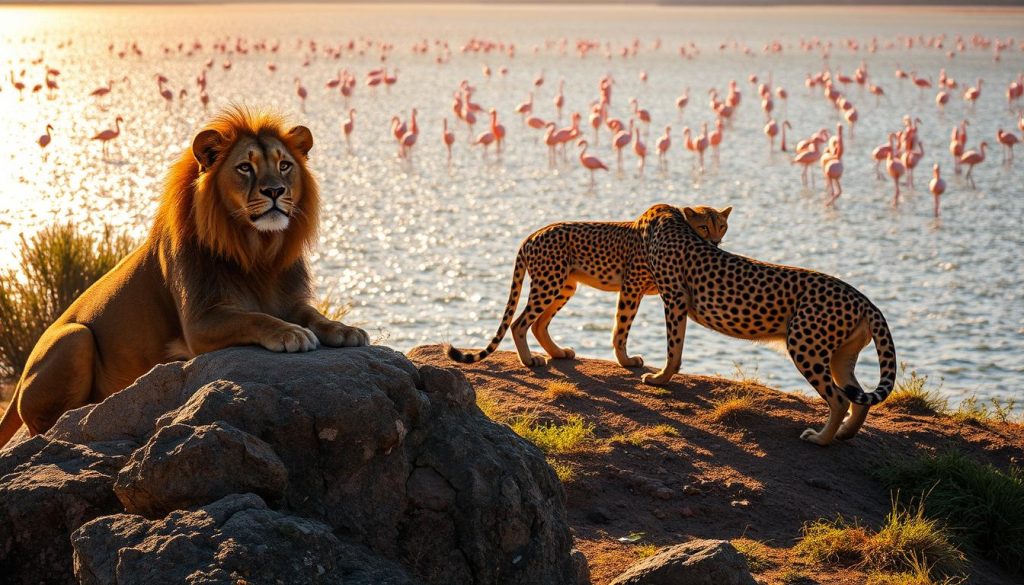
Lake Nakuru National Park is a home to many predators. You can see big cats and smaller hunters in their natural setting. Exploring the park lets you witness these animals up close.
Lions and Leopards: Hunting Territories
Lions and leopards are iconic in Lake Nakuru. Lions live in prides, while leopards hunt alone. Look for leopards in the acacia forest behind Mikingo Hill.
Hyenas, Jackals, and Smaller Predators
Smaller predators like hyenas and jackals also call Lake Nakuru home. They help keep the ecosystem balanced. Spotted hyenas are smart and good at finding food.
Predator Viewing Safety Tips and Etiquette
It’s important to be safe and respectful when watching predators. Keep a distance and avoid sudden movements. Stay in your vehicle and listen to your guide.
| Predator | Hunting Territory | Viewing Tips |
|---|---|---|
| Lions | Grasslands and open savannah | Look for prides in open areas |
| Leopards | Acacia forests and woodlands | Search for leopards in trees or behind Mikingo Hill |
| Hyenas | Varied, including grasslands and forests | Be patient and keep a safe distance |
Herbivores and Grazers Around the Lake
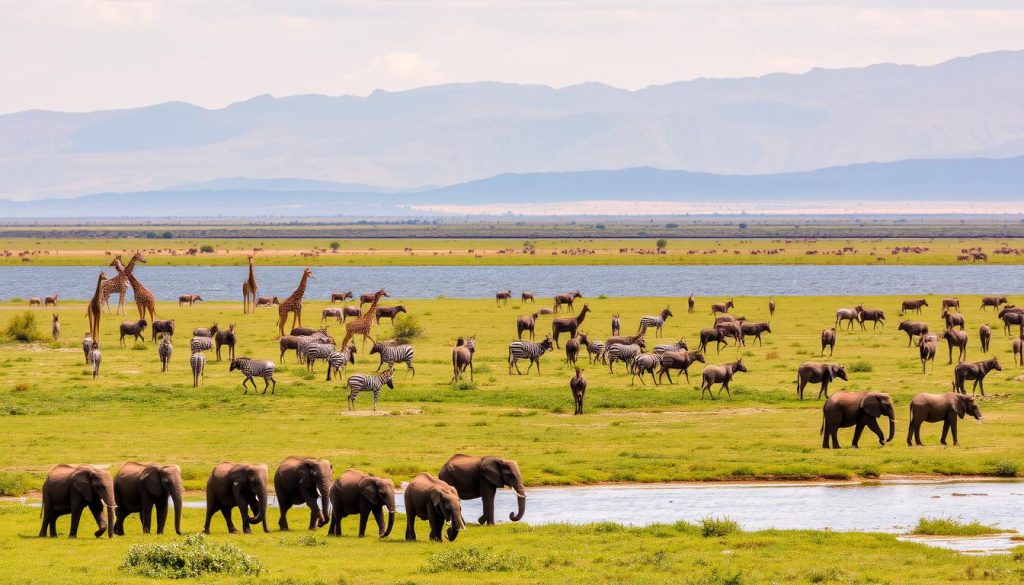
Exploring Lake Nakuru National Park reveals a wide range of herbivores and grazers. The park’s varied landscapes, from grasslands to woodlands, support a rich community of wildlife. Some herbivores are more common than others.
Buffalo, Zebra, and Waterbuck Populations
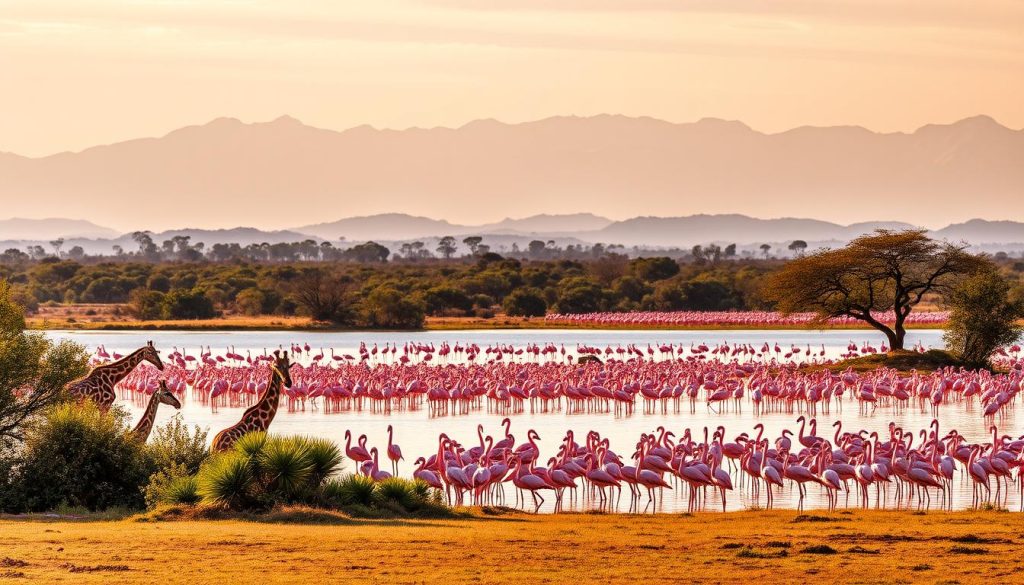
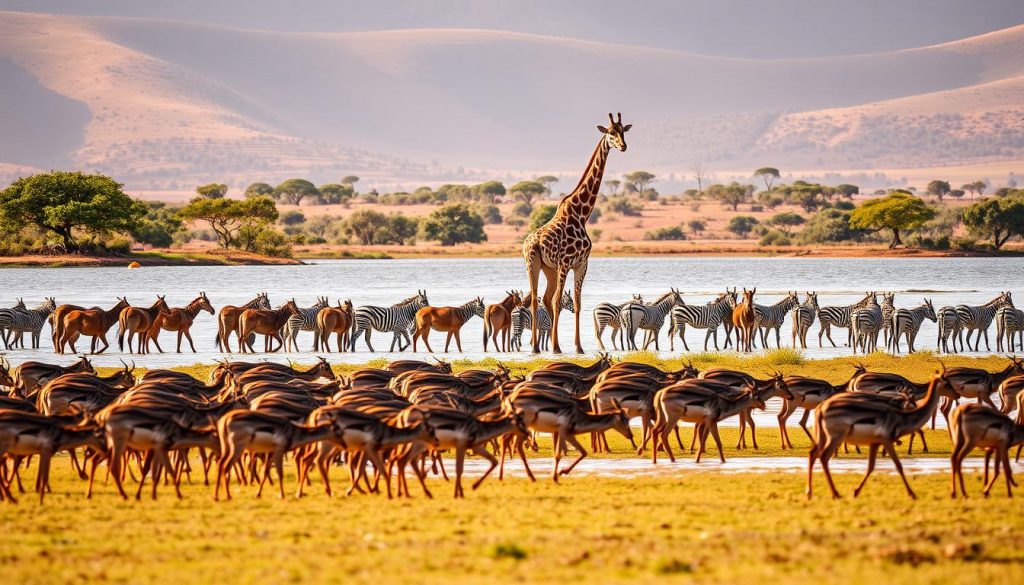
The grasslands of Lake Nakuru are home to large herds of buffalo and zebra. Buffalo, with their distinctive horns, can often be seen grazing near the lake’s shores. Zebras, known for their striking black and white stripes, are also abundant, and their populations can fluctuate with the seasons. Waterbuck, recognizable by their white rings on their rumps, are another common sight, often found near water sources.
Giraffes, Impalas, and Other Antelope Species
Giraffes roam the open woodlands and grasslands, their long necks allowing them to reach leaves that other herbivores can’t. Impalas, known for their impressive jumping ability, are common in the park’s grasslands. Other antelope species, such as the bushbuck and the dik-dik, can also be found in the park’s diverse habitats. These herbivores play a crucial role in the ecosystem, serving as a food source for the park’s predators.
Observing these herbivores and grazers in their natural habitat is a highlight of any visit to Lake Nakuru. The park’s diverse landscapes and abundant wildlife make it an ideal destination for nature lovers and wildlife enthusiasts.
Bird Watching Paradise: Beyond Flamingos
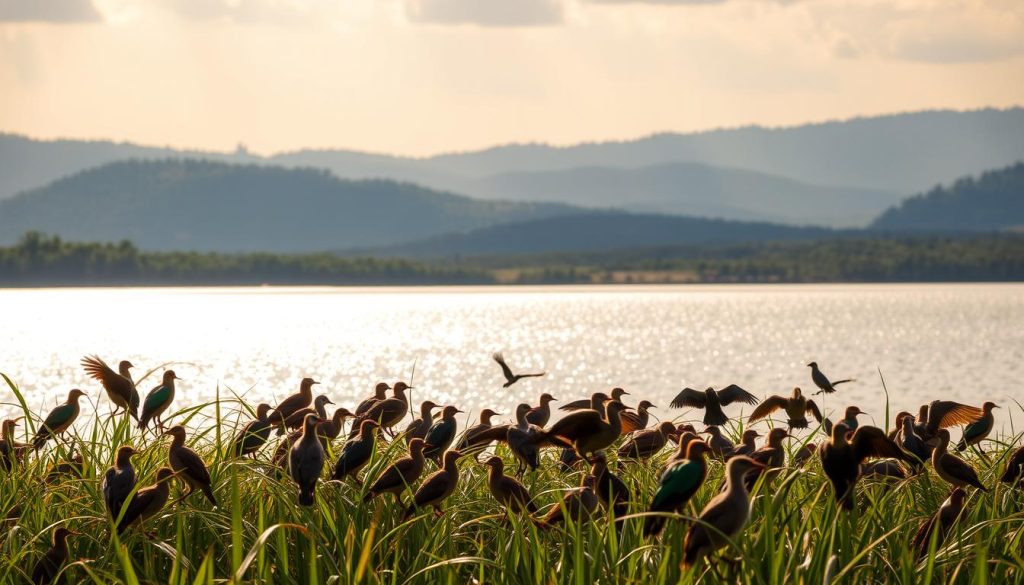
Lake Nakuru National Park is more than just flamingos. It’s a bird watcher’s dream with its diverse species. The park’s unique mix of an alkaline lake, woods, and grasslands draws many birds.
Water Birds, Pelicans, and Waders
The lake’s edge and wetlands are full of water birds. You’ll see African spoonbills, black-winged stilts, and avocets in the shallow waters. Look out for great white pelicans and pink-backed pelicans as they fish.
Raptors, Eagles, and Forest Birds
The park’s woods are home to raptors, eagles, and forest birds. Watch for Verreaux’s eagles, martial eagles, and African fish eagles. Also, keep an eye out for crowned eagles and black-and-white casqued hornbills. The forests are also where you’ll find starling and weaver species.
Migratory Species and Seasonal Birding Calendar
Lake Nakuru is a key stop for migratory birds. The park’s bird life changes with the seasons. For example, lesser flamingos are always here, but more come during the dry season. A seasonal birding calendar can help you plan your visit for the best bird watching.
Wildlife Photography Tips at Lake Nakuru
To get the most out of your wildlife photography at Lake Nakuru, preparation is key. It’s important to know how animals behave, when to take photos, and what equipment to use.
Best Camera Equipment and Settings for Safari Photography
For safari photos, a DSLR or mirrorless camera with a 200mm telephoto lens is best. Your camera should have fast autofocus and burst mode for quick animal shots.
Camera Settings:
- Aperture: f/5.6 to f/8 for sharp photos
- Shutter Speed: At least 1/1000th of a second
- ISO: Keep it low, below 400
| Camera Setting | Recommended Value |
|---|---|
| Aperture | f/5.6 – f/8 |
| Shutter Speed | 1/1000th of a second or faster |
| ISO | 400 or less |
Ethical Wildlife Photography Practices
Ethical wildlife photography means respecting animals and their homes. Don’t use bait or change the environment for photos. Keep a safe distance to not stress the animals.
Following responsible photography practices helps the animals and makes your experience better.
Planning Your Lake Nakuru Safari Experience
To get the most out of your Lake Nakuru safari, planning is key. Lake Nakuru National Park is famous for its stunning views and wide variety of wildlife. It’s a top spot for wildlife lovers.
Best Times of Year for Wildlife Viewing
The dry season, from June to March, is the best time to see wildlife at Lake Nakuru. During this time, animals gather near the lake, making them easier to spot. The dry season also brings clearer skies and more comfortable weather for safari-goers.
Guided Tours vs. Self-Drive Safari Options
At Lake Nakuru, you can choose between guided tours and self-drive safaris. Guided tours come with experienced guides who know the park well and can help find wildlife. Self-drive safaris, on the other hand, give you the freedom to explore at your own pace. Both options have their benefits, and the choice depends on what you prefer.
| Tour Type | Benefits | Considerations |
|---|---|---|
| Guided Tours | Expert guides, in-depth knowledge | Less flexibility, guided schedule |
| Self-Drive Safaris | Flexibility, personal exploration | Requires navigation skills, potential for getting lost |
Accommodation Choices Inside and Outside the Park
Lake Nakuru has many places to stay, both inside and outside the national park. Staying inside the park means you’re close to the action, with some lodges offering beautiful lake views. Outside the park, you can find more amenities and a variety of prices. Think about how close you want to be to the park, what amenities you need, and your budget when choosing where to stay.
“The right accommodation can enhance your safari experience, providing a comfortable retreat after a day of exploring the wilderness.”
By thinking about these things, you can plan a Lake Nakuru safari that fits your needs and gives you a memorable experience.
Conclusion: Experiencing the Wildlife Wonders of Lake Nakuru
Lake Nakuru National Park is a unique and fascinating wildlife destination. It offers an unforgettable experience for visitors. As you explore the park, you’ll see a wide range of animals and birds.
From the famous flamingo flocks to the endangered black and white rhinos, you’ll have a chance to spot them all. The park’s rich biodiversity shows the importance of conservation efforts.
By supporting conservation programs and respecting the park’s wildlife and habitat, you help preserve Lake Nakuru’s wonders. Whether you’re a seasoned safari-goer or just starting, Lake Nakuru National Park is a must-visit. It promises to leave you in awe of its natural beauty and wildlife richness.